
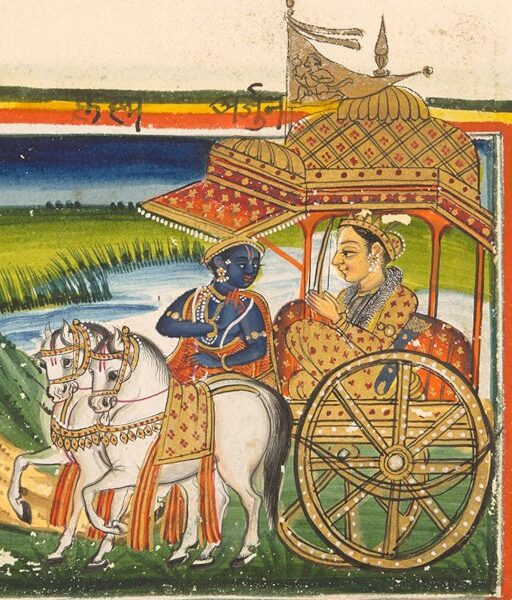
Vibhāvasu means fire. Without fire, we cannot run factories, we cannot cook, etc., and that fire is Kṛṣṇa. The heat in the fire is Kṛṣṇa. According to Vedic medicine, indigestion is due to a low temperature in the belly. So even for digestion, fire is needed. In Kṛṣṇa consciousness, we become aware that earth, water, fire, air, and every active principle, all chemicals and all material elements, are due to Kṛṣṇa. The duration of man’s life is also due to Kṛṣṇa. Therefore, by the grace of Kṛṣṇa, man can prolong his life or diminish it. So Kṛṣṇa consciousness is active in every sphere.
So here, again, we’re getting back to the essential point that makes everything function. So this functioning here, then, we see so in the original fragrance in the earth, because from the everything has an original flavor, has an original taste. So that’s Kṛṣṇa.
Like that. Of course, it means now all these ones that are being mentioned are ones that can be easily understood and appreciated, because you’re dealing with, you know, that original nature. Other things will mean that you’re taking that and then doing the inverse, right? Like there’s the front of Kṛṣṇa, which is religion, but the back of Kṛṣṇa is the source of irreligion, right? Not that He’s irreligious, but just it has to come from somewhere, right? So the natural elements and all that, the potency of it, that’s Kṛṣṇa, right? So then what we have to see is that it doesn’t function without it. That’s the point to get. Just like the heat in the fire, if there’s no heat in the fire, then you can’t digest things, you can’t run a factory, you can’t cook, right? If you have fire and it didn’t make any heat, you know, I mean, it would look nice, you know, like that. You know, everyone would have it on the coffee table like that, a nice little fire burning like that. It would look great, you know. You could put it on the mantelpiece, maybe, or… You can get it for the TV, like DVDs with fire. Oh, okay. Yeah? Okay. Cool. Yeah. Like that. So that’s fire without heat, right? You know, so it looks nice, but, you know, that’s about it. So all you’re gaining from it is the form, right? Because sight comes from fire, right? So you get the form of it, but you don’t actually get the heat. So the essential point is the heat, because that’s what, you know, is considered important.
Like that. The life of all that lives means that someone’s living, but the reason that they’re living is because of Kṛṣṇa. Kṛṣṇa establishes the life, how long the life will be, right? So if you’re more pious like this, then you can extend it. You’re less pious, then you can shorten it, right? Like that. Like I think it’s said that of all the occupations in the world, that the most dangerous and short-lived of any occupation is to be a gang member, like that. So that is, you know, I think it’s an average lifestyle, or either it’s an average or maximum, I’m not sure which, but of two years, so it’s quite short, right? You know, even in the army, you have these old, you know, 60-year-old generals and stuff like that. They somehow or another survive. You know, and they’ve been on the battlefield, they’ve been out there, but these guys, it’s two years and that’s it.
Like that. So it’s a matter of what you’re doing, you’re piety or not, then you can extend or not, but that’s still based on Kṛṣṇa, like that.
Yeah.
So what we’re establishing here is that the jīva and the material energy is subservient to the Lord, because it’s, Kṛṣṇa is the greater one, He’s the controller of it, He’s also now in this case, He’s establishing, He is the essence of it, right? So there’s nothing in any way that Kṛṣṇa is not the central, or, you know, the greater element of it, the greater position, the greater control, like that. Doesn’t make sense. So we’re trying, we, in other words, we’re trying to change our vision from a simply, we see matter, and based on our particular values and what it is we want to accomplish, then we give importance to what we’re perceiving, right? It has to be that what we’re perceiving is Kṛṣṇa, and then the practical application of what we perceive in Kṛṣṇa’s service, then you have applied the values. Does that make sense? But because Kṛṣṇa is what we’re being seen, we adjust these values to be in line with Kṛṣṇa’s values. Does that make sense? Yes. Can you say that this is the function of intelligence, that we’re working that way? Yes, yes, intelligence. So because Gītā, what it’s presenting, is it’s giving all the yoga systems, but it’s presenting, by combining them in Kṛṣṇa consciousness, then this is what we call buddhi-yoga, you know, the yoga of intelligence. So that’s being designated as separate, because we could say, well, jñāna-yoga means intelligence, but jñāna means to see a specific aspect, you know, with the intelligence, right? Just within the area of intelligence, so you’re kind of neglecting the mind, the senses, like that. So, but buddhi-yoga means it’s intelligently done in that whatever’s required, right? When you’re dealing with activity, then you’re dealing that with intelligence, you’re dealing with, with intelligence, you’re intelligently using that, you know, in connection with all these others. The mind is being engaged, you know, focused on the Lord. So body, mind, and words are engaged in the Lord’s service. So when that’s being done, you could say, in the way of, of, as Vaiti, then you would, you would consider this buddhi-yoga, right? It means the same principle would be applied, but with time, one becomes more comfortable at it, and so then it would be, you would consider that, that raga-mūḍha spontaneous, right? Does that make sense? But the, the element within sadhana-bhakti is that you’re trying to establish that whatever is the situation, that you find the connection to Kṛṣṇa and engage yourself in the Lord’s service.
Is that, does that make sense? So it is. So intelligence is the most important. So that’s why Prabhupāda is always focusing on the intelligence, right? It means the aspect of absorbing the mind in Kṛṣṇa is, is there, but it’s through intelligence that we’re actually going to do that, or through intelligence we’re actually going to, how do you say, find the, the position to endeavor from. Does that make sense?
Because, in other words, we, we kind of miss the window for just hearing about Kṛṣṇa and just completely surrendering on the spot because He’s just the most attractive and there’s nothing else of interest within the material realm. So we kind of miss that window. So that’s not happening. Then the next is to follow the rules and regulations and all that and use your intelligence, like that. Does that, does that make sense? But it doesn’t mean that by doing that the other one won’t come, the opportunity won’t arise again, that it’ll arise based on our understanding that there’s nothing here and then, then the taste of Kṛṣṇa consciousness is so much better. So rūci means is that the taste for Kṛṣṇa conscious activities is, is noticeably greater than anything for the material, right? So therefore, one just naturally and very quickly drops the material taste, right? Because it just doesn’t have it, you know, it’s just like, let’s say one has, you know, as a kid there was something in, in wherever you were, you know, in that environment there was something, you know, special that you consider as a kid to eat, right? And so, but then, you know, one’s moved from that and moved on and one’s not there. So it didn’t, it was just there when you were small. Then, you know, you’ve grown up and that and, you know, become more developed and sophisticated and everything. Then somehow now there’s an opportunity, either you go back to that situation or someone comes in that situation and, you know, remembering that you like that so much, you somehow or another, you know, it’s arranged that that item of eating is there. So now, much of the time you find that when you eat it again, now as an adult, it doesn’t quite have the same draw, you know, that same aesthetic, you know, element, you know? So then, so that’s the point is that, it’s so, it’s not that, you know, you continue, it’s just like it doesn’t have any interest anymore and you’re able to drop that. Otherwise, the mind is always thinking, yeah, it was good, it was great, we’re like that, you know, but then you find out, no, it’s not so good, you know, and then it’s just kind of, okay, it was a childish thing, but, you know, it was fun, you know, it doesn’t mean that, like that, does that make sense? So point is, is that with Ruchi, then we see is that the idea that we’ll be happy in the material world and whatever we define as happiness that we’re gaining from it, then it’s not very, is not actually that developed, you know? Not having any other alternative, then it seemed great, you know what I’m saying? But now having an alternative, then there’s not much draw or attraction, so very quickly any material taste is given up, does that make sense? So then one is able to take advantage again, but the point is, is the mind, because it just becomes attached to something, right, and it’s not necessarily intelligently applied or logically applied, one wants to make sure that all options of the mind becoming attached to the material energy is removed, right, so that when one comes in contact, I mean by that constant contact with Krishna, then we will be able to appreciate that taste in Krishna consciousness, does that make sense? That’s why we avoid all these other tastes, because they have a tendency to be quite overwhelming, because they seem to encourage the concept that I can be the controller and enjoyer, you know, it’s possible, like it happened for that moment, why can’t it happen again? You know, like that, but it’s, no, it’s just these moments that are here like we discussed yesterday, where just when you’re about to drown in frustration of, you know, the material endeavor, then maya gives you that moment so that you are refreshed in your enthusiasm, like that.
Because something’s only learned through endeavor, right, like that, means, endeavor means you’re either contemplating it, or you’re doing something, right, you’re thinking about it, you know, observing it, involved in it yourself, so first class is by hearing, second class by seeing, third class by being involved, but all three of those require enthusiasm.
So if you’re so disturbed by the lack of, how do you say, results or return from your material involvement, then, and one doesn’t have a taste in Kṛṣṇa consciousness, then one will give up and do nothing, right, and so then that won’t be progressive, you can’t learn from that, you know, it itself, of course, is a kind of suffering, but at some point someone has to come out of that, become active again, how do you know that the person is, you know, finished with his, you know, slumming around, you know, how do you say, term in that situation, it’s when they become active, you know what I’m saying, that make sense? So the point is that she keeps one, just brings one to that point, and then does something so that you become active, because it’s only when you’re active can you learn, because then that inspiration is supposed to be used in Kṛṣṇa consciousness, but since we won’t, therefore then, you know, there’ll be, you know, an ocean of suffering for that little drop of, you know, nectar, like that, but as we take up Kṛṣṇa consciousness, then we see that you can have a majority of everything’s very nice, because you’re using a drop of it, does that make sense? But it doesn’t mean that materially everything’s going to be perfect.
You know, always looking for that best of both worlds, kind of, like that, but there is not two, it’s not that, you know, the real world and then the reflection in the mirror are actually two worlds, there’s only one world, right, like that, does that make sense? You know, that’s, we’re not making any inferences that Star Alliance is bad, right, you know, so the thing is, is there’s only one world, the other, that there’s a second world, that’s an illusion, right, the reflection in the mirror isn’t actually a world, like that, maybe if you’ve snorted enough cocaine, it becomes a world, and then you document it in a book called Through the Looking Glass, but other than that, then it’s not real, you know what I can understand in the material world how the real world, the physical world that we’re in, and then the world that we see in the mirror is the same, but I don’t understand, it seems to me, like we’re not doing what we’re doing here in the spiritual world.
No, no, reflection means that it’s based on the same principle, it’s not exact. The point is, is his mother just showed an attachment to her child, and what does she do for the child to express that attachment?
Yeah, but in which ways?
Yeah, yeah, so feeding him, dressing him, bathing him, seeing that, you know, anything else he’s taken care of, making nice arrangements, making clothes, making situations, so do mothers here do that? But is it real here, technically?
It means the body’s there, the kid’s there, but the point is, is the soul doesn’t require any of that, so it’s not soul to soul, so it’s not real, it’s body to body, you understand? And the soul isn’t actually doing that activity, the modes of nature are doing it, you understand? Well, in theory, I hear you. Yeah, so this is why Bodhi Yoga is used, because the mind doesn’t grasp it very easily, because of attachment, you know what I’m saying? Because we identify with it, therefore we get the feelings, you know, it’s just that we can say, so that makes it real, but you watch a movie, and if you can identify with the characters and what’s going on, there’s feelings. So is that movie real?
No. It means there were real actors, but what’s presented, that’s not real. And yet you’re feeling. That’s the whole point. So that’s what we’re saying, is that parent and child interaction is basically just a little bit, you know, less removed than a movie, because the soul and the other soul, it’s the bodies, these bodies and the modes of nature are controlling. You desire to have, experience that kind of attachment, the modes of nature arrange it.
It is, isn’t it? That’s what’s going on. But because we identify with it, through the senses, then we think we’re part of it, just like we think we’re part of the movie. Well, sometimes when you’re giving examples, and I’m thinking, but if somebody’s going to cut me with a knife, how am I going to deal with it? Because you identify with it. I have no choice, do I? Yeah, you could, like Hari Das Thakur, he just thinks you’re Krishna. Yeah, that’s a hard one for me, too. Yeah, yeah. But the point is, is it’s…
In fact, I pray to Krishna, please, you know? No more complacency. Okay. At least not 22 of them, right?
Well, it depends on whether you’re being beaten or you have money and you’re buying things. 22 markets are okay. What to the austerity of shopping in 22 marketplaces? It was a tough one. So somehow, we can use the example of Srila Prabhupada, who we hear at the end, actually, his body was in a state where there should have been excruciating pain, and yet… The point is, is even if that means, because there’s a connection there, but it’s not yourself, so you can perceive it. But it’s just a matter of what is the value there. And so, therefore, it’s not that it can’t be perceived. The point is, is that’s not important.
You know what I’m saying? It’s just like, you know, or you give an example of… Because the consciousness is somewhere else. Let’s say something happens, there’s an accident, and the car is on top of the kid. Okay? So you have this, you know, petite mom. She runs over the car, picks the car up, and moves it. So does she notice it weighs a lot? No.
But does it weigh a lot? So why doesn’t she know it? Why doesn’t she notice? She’s absorbed in something else, based on relationship. So the point is, when you’re absorbed in a relationship with Krsna, then what’s here doesn’t really have much significance.
Does that make sense?
Yeah. Well, that’s why all those songs are there, right? But the point is, is we have to accept that. You understand? Now, just take this few minutes. When we gave the first example, it was quite far away. Right? And then as we kept going with it, then it’s like, okay, when will I have that? You know, you could relate with it. So that’s why this constant association with guru, sadhu, and shastra is there, so that we come to the point of focusing that, yes, there is nothing here, that whatever is real is actually there. You understand?
That’s the idea.
Like that. Because we’re determined, no, there’s something here. You know, a little something here, there, somewhere, you know, like that. And because of that, that’s what holds us back, when we give that up. So that’s what it says, the gopis, they saw Krishna, and it’s just, they just dropped every idea that there’s anything else. And so then they just immediately said, so that’s why it is possible to do in a moment. But if you don’t accomplish it in a moment, then Krishna recommends, therefore follow the rules and regulations of the Pancharatra. You know, so you’re associating with devotees, hearing Bhagavatam, chanting, worshiping the deity, all those five main elements are being done in a regulated fashion, as opposed to being done in a spontaneous fashion from the Bhagavata platform. So, like that. But if that doesn’t work, then you work for Krishna. So you consider your conditioned nature as, you know, quite a prominent element, but the work is being done for Krishna, so it’s still sannyas. But he says, if that doesn’t work, then the next one is renunciation. So it’s your work, your attachments, all this, but you give the results to Krishna, like that. So it always just keeps, you know, means coming back, but the idea is that it can be, it just goes further and further into our material needs, right? But the idea is that if that connection to Krishna is there, then that knowledge and that detachment will come, it will gradually, gradually move forward.
Does that make sense? Because we talk gradually, gradually, because we think one lifetime is a long time, but we look at, you know, who knows how many lifetimes that we’ve been in the material existence, it’s not much time at all. So that’s why it just says, you know, something very quickly, very simple, easy, and we’re going, why do they talk it so simple and easy? It’s because if you see the bigger picture, you know, a hundred year lifespan and then you can go back to Godhead. Well, you know, the sages, you know, they live for millions and billions or trillions of lifetimes, like that, and then that’s just one lifetime in a whole, you know, string of lifetimes, you know. So it’s, the quickness that something can be done here is very great.
But it’s also by Krishna’s mercy. I hear, I read that actually it’s by Krishna’s mercy. Ultimately, the realization is not by what you’re doing, but Krishna will be merciful and open up. Yes, but what you have to add in that equation is Krishna’s mercy not by what you’re doing, but what you are thinking. You understand? That’s what we were discussing a few days back, is that we have the tendency to think the activity itself is the devotional service. No, that’s the expression of the devotion. The devotional service is the attitude to please Krishna, like that. So when you have that attitude consistently, he can show his mercy. Because if it’s not consistent, how much mercy can you show?
You know what I’m saying? If you’re attached to the material, how do you say, environment, and Krishna gives you knowledge and detachment, you won’t be satisfied. You have to actually be convinced that it’s not, and want to be more and more closer to Krishna. You know what I’m saying? Because otherwise, it’s no big deal. Like you take a small child, you know, you have the four-year-old girl, and you give her a Louis Vuitton bag and those Christian Louis Vuitton shoes, right? Okay, you’re not going to get better than that, right? The supermodel would be in ecstasy with that, but does she care? No. Like that. So that’s the whole point, is Krishna can be merciful to that degree that we are surrendered. That’s why, as we surrender, he said he can reciprocate. So he’s waiting to reciprocate. The problem is, is we’re not waiting to make the endeavor.
So that’s why Prabhupāda says, if we take one step, Krishna will reciprocate with ten, but we still have to take the one.
You know, does that make sense? You know, it’s like the guy is praying to God that he’ll win the lottery, right? And then he keeps praying and praying and praying, he’s been going on, and one day he’s saying, you know, God, I’ve been praying to You for years, and You’ve never, you know, allowed me to win the lottery. I mean, everybody else is winning in that, and God then says, yeah, but when are you going to buy a ticket?
Okay.
Yeah, yeah, it’s the same principle, unless you make the endeavor, because we just say, God, make this happen, but you have to make the endeavor, because the endeavor is the expression of that desire. You know what I’m saying? We thought giving everything up and moving into the ashram was the endeavor. Yeah, so that is, no, no, no, but that is the endeavor for that day. What are you going to do the next day?
I mean, that’s the point.
So every moment there’s an endeavor. See, we have, due to mode of ignorance, we have this idea that I’ll do something once, and then eternally it’ll give results, but it doesn’t work like that. You know, you do something once, and you have to keep working. This is, just thinking about it the last few days, this is the meaning when it says, you know, na sundarim, because it’s kind of like some of the ladies go, you know, why am I saying I don’t want beautiful women? But the point is, sundarim means opulence, and we have this idea from the masculine point of view, I’ll do something once, and then the feminine element will just respond eternally with gratefulness, like that. You know, it’s a common illusion amongst the men, and the women are kind of like, well, that was yesterday, now what are you going to do today? You know, you want me to smile, do something, you know, like that. So that’s the whole point, is we’re dealing with Krishna’s potency, his energies. And we think, I’ll just do this service, and now the internal potency should just shower blessings eternally. But that’s the purusha mood, right? The feminine mood, one knows is that how you endeavor is how you’ll be dealt with. You know what I’m saying? Does that make sense? You know, you please the senior lady, and she’s nice. You don’t please, it’s not nice. So if you please, you’re dealing with Yogamaya. You don’t please, you’re dealing with Mahamaya. And how about when you’re saying the prayer, and you realize that your heart’s not really there. Yes, so then make it there. All you have to do is do it. It’s not a matter of, oh, I can’t do it, and this and that, because then that becomes the identity. Oh, I’m the one that can’t do devotional service, so therefore… So how does Krishna reciprocate? No, like when we’re saying, you know, I don’t want wealth, I don’t want… And how about, like, you really, you know, you’re poor, and you really do want someone. Yeah, no, but the point is, is that, but the point is, is what do you want money for? Well, okay, yes, because you have to make that point, but often it’s not the activity so much as the need. That’s the point, so if you want the wealth for Krishna, but that’s a different prayer. You understand? One is that some money is required to be able to perform the basic, you know, services and other things that you’re doing. That’s one thing. The idea that money has a value other than in connection with Krishna, that’s what’s being given up. You know what I’m saying? Because the point is, is, you know, no women, but it’s like the spiritual world, all it is is women. You know what I’m saying? So that’s not the point. It’s the idea that I will get enjoyment from money or women or fame, you know, or followers. That’s what you’re talking about. So that’s a different prayer, you know, like that, because the point is, is you need some facility. Who else are you going to go to? Absolutely. Right, you know what I’m saying?
I remember one time, I’m from Philadelphia, it’s called Nirmala Chola Gan, and I went before Lord Jagannath and I said, you know, we’re not supposed to, like, you already know what we need, we’re not supposed to ask you for things that we need, but you know what, I don’t know this thing at all, No, no, no, but it’s two different things.
See, due to the mode of ignorance, we have a tendency to apply the wrong aspect of intelligence to the situation. Right? Where we should be seeing the difference, we see the commonality. Where we’re supposed to see the commonality, we see the difference.
Does that make sense? So, in here is that, just because it’s money, doesn’t mean it’s the same thing.
Yes. The point is, is, there is the one aspect is that I don’t want the, I don’t want attachment to money thinking that I’m going to get some material benefit from it and therefore be happy and that way separate myself from Krishna. That’s one thing. Another one is that money is required for doing service, so, you know, how is that going to come except by Krishna’s grace? Right. But they’re two different things. You know, so that’s why in the analysis of the philosophy, then these fine points are separated. That’s all we’re doing all this time is separating these points. You know, because otherwise, if you say for most devotees, the activity itself is the devotion, but technically it’s the expression of the devotion. So the two go together, is that the mood can’t be expressed without form. So you count the two as one, because that’s the platform of rasa. But technically, they’re two different things.
Does that make sense? So that is, that is, the advantage is, is that, yeah, the advantage is, is then anything can be connected to the Lord. But then the problem is, is then, when it gets to anything, if it’s outside our sphere of values, then we consider that can’t be connected.
You know, like the brahmacharis, they’ll think that, you know, being a grhastha and all the, you know, interaction of the family can’t be connected to Krishna, it’s all maya. And the grhasthas think, you know, that the brahmachari is, you know, being renounced and that has no value because they’re not being honest, let’s get real, you know, so all that kind of stuff. So this is all coming from one’s own conditioned values that has nothing to do with reality. The point is, is we, we’re not accepting when we say anything, everything’s Krishna, everything can be connected to Krishna, we don’t accept it. Because what we mean is that everything that I’m doing can be connected to Krishna, but anything anybody else is doing, now that’s up for my judgment. You know, like that. Does that make sense? So that’s the idea of going through these things, then slowly, slowly we see actually what’s real. You know what I’m saying? Just like, like discussing yesterday, nutrition can be connected to Krishna, but nutrition on its own doesn’t actually have any real value. You know, let me say, does that make sense? But we’ll take it that things that are more towards the mode of goodness, that they have inherently a good value, a goodness in their own, they stand in their own right. You know, equality and, you know, fraternity, liberty, you know, organic, you know, organic tea, and, you know, all these different things like that, that they’re all perfect in themselves.
Does that make sense? But they aren’t, they’re just nicer material facilities, that’s all. Because otherwise, if we take that attitude, then that means the heavenly planets, because only through piety you’re there, then it’s not really a bad thing.
You know what I’m saying? But, you know, we’ll say, no, yeah, there’s demigods, there’s cassettes and joyers and all that, as long as it’s not, we don’t have it. You know, but if we somehow come into that wealth and power and fame and beauty, we don’t mind. It’s like, you know.
One thing, we’re not vegetarians, we’re Krishnatarians. Yeah, that’s the point. So that’s why sometimes it’s that devotees are preaching, yeah, we made a vegetarian. The point is, do they chant? We’re working on that. We don’t want to introduce it too quickly, you know, like that. You know, like that, isn’t it?
So that’s the difficulty, is what’s really of value in Krishna consciousness is missed. And these other things, the forms, are of value because those are the natural expressions of the mood of devotion.
Right? What we call tradition is what is the natural forms that the great devotees use to express their devotion. That’s called tradition. But we’ll take tradition means something old and archaic because it doesn’t matter actually what it is because it’s just always changing. But that’s the material perspective. So to say, oh, that was, you know, we could do that back in the 60s, you can’t do that now. That’s purely material. I mean 101%. You know, it doesn’t have any reality to it. Like that. Detail you may adjust.
You know? Like that. You know, you may change the presentation.
You know, you’re not just going to sit there and go, I mean, man, you know what I mean, man? I mean, man, you know what I mean? I mean, do you know what I mean? You won’t use that one. That worked in the 60s. But you’ll adjust it, you know, to a little bit more. You know, you got to seem a little bit more cool and everything like that. But the principle is that you’re trying to communicate. That never changes. Humans don’t change. Animals, air doesn’t change. Water, all this, nothing changes. It’s complete, total illusion that time changes. One of the things I was really shocked about is in a few different readings of things, there’s a consistent element, if you’re dealing, means if you get into the area where it’s being defined about the middle class, the up-and-coming middle class, they always mention the up-and-coming middle class. Bhaktisiddhanta Saraswati Thakur mentions it. So this would be early 1900s. Bhaktivinoda Thakur writes about it in the mid -1800s.
You know, this emerging middle class, then they’re more absorbed in the material things. They’re not so interested in religious things and God consciousness. You know, educators of that age are saying, you know, the students, they don’t know respected teachers and things like that. If you go back, they’re talking about this in the Middle Ages.
You know, like this, this emerging middle class. Because when there’s peace time, there’s a middle class. If there’s no peace time, there’s no middle class, you know.
So whenever there’s peace, there’s always an emerging middle class, you know, until there’s, you know, some war catastrophe, and then it disappears, and then it emerges. So this idea that this, you know, this, no, this emerging middle class, you know, has money and has education and all that, it’s a new thing, phenomena that never happened before. So we can’t apply all those old archaic Vedic concepts. No, it’s always an emerging middle class. Why did the Senate kill, what’s his name, Caesar? Because he was supporting that emerging middle class, and he was coming up and taking power, and they wanted to retain the old power of the old, you know, the old senators, you know, that they were, how do you say, you know, for generations they had been in that time. It’s the same thing, you know. The Greeks had the same thing. It’s always been there. So this idea that it’s something new, something special and all that, you know, it’s just, it’s like, it’s so sad that, and the ones that fall prey to it the most are the ones that are supposedly intelligent, or at least, you know, identify themselves as intelligentsia.
So this idea has always been there. You always have that, you know. You know, it’s like now it’s a new thing, the new age. Now the only reason you hear about it is because they don’t burn you at the stake for it. Otherwise, new age was always there, you know. And then before that, actually it seems to be a Christian problem, because new age was standard lifestyle for everyone on the planet until the Christians came along, and then, you know, they kind of like snuffed that, you know. And then when it, you know, rose again, then you get burnt at the stake, you know, like that.
Does that make sense? So this idea that there’s something new, that’s not at all, you know.
It’s not, yeah.
New age was like popular in the 1930s, but amongst the intelligentsia it had already been there, you know, before that 100, 150 years, where you dabble in the oriental kind of culture and philosophies and that. So, I mean, it’s always been around, but the devotees deal with it as if they just bumped into, you know, some of these things. It just happened now, you know. It’s kind of like, you know. And it is a fact about Christianity, because there used to be mysticism in their theology, and they, I mean, over the decades. Well, it didn’t work out so well with them. I know. They just did a lobotomy on their whole, you know, body of philosophy. Well, they did a lobotomy by somebody got burnt at the stake, or that would have been the alternative.
Like that. So this means that you could probably say that they have crushed more varieties of philosophy than they’ve, you know, sanctioned. You could most likely say that. Like that. Therefore, you have Christians in India, and you have Christians in America, because they were getting away from the church. Christian means the Christians, first thing, they were all, you know, America, you know, the Blackfeet, this, that. But the first ones came to India. They’re Christians that have been here for 2 ,000 years.
Like that. Small group. Like that. There’s also, when the, what do you call it, the Inquisition came up, then there’s Jews that are here from that time. Like that. So it’s a particular group of Christians. Like that. That’s not, you know, particularly, you know, was authorized. I think they’ve been acknowledged for the last, you know, some time. But they were also a group that was persecuted. Like that. I’m not sure what was the group, but there’s, maybe you hear go nuts, but I’m not sure. So the point is, is that we have the idea by the material vision to see the form and action as the, how do you say, as the reality. But it’s not. It’s the actual desire that manifests that form. So in the spiritual world, they have the mood to serve Krishna. But because it’s to serve Krishna, then the manifestation of the forms and activities are actually real.
The conditioned living entity, he has a desire to taste these various kinds of exchanges, but they’re not in connection with Krishna. So the external potency manifests them, but they’re not real. They’re not alive. Means Mother Yashoda, you know, how you say, the form of Mother Yashoda is Mother Yashoda. But here the form of the mother is not the mother. The mother is the soul. Who’s identifying with the body.
Does that make sense? So that’s why it’s a reflection.
And then we have, because the whole mood is that to enjoy rather than in the spiritual world, to taste that particular exchange is for Krishna’s pleasure. Well, here we want to chase that exchange for our pleasure.
Right? So then, because of that illusion, then the mode of ignorance is prominent. Then the element of laziness comes up. So that’s why the Shastra is always talking about endeavor. It’s always about activity. It’s never about sitting back.
You know, unless it’s meaning about not being engaged materially, but it doesn’t say to not be engaged spiritually. That’s the Mayavadis. They say that. And then, as we discussed here, the Purusha element that we think that I’ve done something once, now I can sit back and enjoy the results, because I’ve been the catalyst for this ongoing activity that will keep going forever. And so what we’re actually doing is recognizing that we’re not the actual cause of the results. Right? We’re just the catalyst, or we’re just involved in it. But we want to take the credit of getting the results. You know? Because if we say, Oh, you didn’t actually do that the most. No, no. No, I did it. But if it’s wrong, No, I didn’t actually do it.
Like that. You know, you’ve heard the story of the man who killed the cow? No? They probably told this story.
So there was this man. He had this garden. And he was really into his garden. And so many nice flowers and arrangements and all that. And this cow came into the garden and was eating the garden. So he’d kick it out, and then he’d come back, kick it out. So one day he became so angry, he killed the cow, and then buried it in some place in the garden. So like that. Now he had his life, no cow eating his flowers and all that. And then when the time of death came, then the Yama who just came and said, Okay, like that. And he said, Why? What’s the problem? Why? Like that. I’ve been a good man. Like that. Look at my garden. Like that. He says, No, but you killed the cow. He says, No, that wasn’t me. He says, The soul is not involved in these things, but it’s just that the body does all these things. You know, he’s quoting the Shastra. And so it wasn’t me that killed the cow. It’s the modes of nature that killed the cow. So why should I be, you know, how you say, blamed for this act that I was only, you know, just a witness to? Right? So then the Yamadudas became bewildered.
You know, because they’re forefathers. They’re not philosophers. You know, they’re pious people. So then they went back to Yamaraja. And he says, Okay, where’s the guy? And he says, No, but he said all these things. And Yamaraja says, Okay, come with me. So then they all get this. So Yamaraja takes this nice form and then kind of wanders into the garden and he’s admiring the flowers and all these different things and the arrangements. And he comes. Then he sees the guy and says, Oh, wow. He says, Do you know anything about this garden? It’s such a nice garden. I mean, you know, who made this garden? He said. And the man said, Oh, I made this garden. He says, Really? Oh, couldn’t that? Look at these arrangements, all these flowers here, these roses. So wonderful. I mean, how could that? It’s like it came from heaven. No, no, I did that. My own hands. No, what about these creepers? How it goes? And he just goes on and on. And the guy, No, no, it’s me. You know, like this and that. And then he says, You know what? What about over here? This and that. Like that. And the guy says, No, yeah, no, I did it all. He said, And who killed the cow?
So, like that. You know, so the guy has nothing to say.
So like that. We also tend to use the philosophy for our own purpose. Like that. Not that the point isn’t correct, but its application isn’t being properly applied. Like that.
Okay.
So the point is that Kṛṣṇa consciousness is active in every sphere. Because here is that we look for Kṛṣṇa in the positive quality, the superior quality. All the other things are following that as, you know, just slowly, slowly going down. You know, does that make sense? You know, it’s just like, you know, what they serve at Joe’s, you know, greasy spoon, like that, means it’s a reflection of what is food, right? You know, so it has, you know, it has those components, like that. So, does that make sense? So it’s just, but there is such a thing as real food. Like an ambassador. Yeah, like an ambassador, you know, like that. Call him that, a car, you know.
Asana-pīta. Okay, now 7.10. So this was 7, oh, 13 through 17. So, okay, so we’re giving the whole list of this.
Asana-pīta, know that I am the original seed of all existences, the intelligence of the intelligent, and the prowess of all powerful men.
Explain, giving Vedic evidence, how Kṛṣṇa is the maintainer of everything.
Kṛṣṇa is the source of everything, He is the root. As the root of a tree maintains the whole tree, Kṛṣṇa, being the original root of all things, maintains everything in this material manifestation.
So this is how, He is the root of it, so He’s maintaining it all. But now these other manifestations are only because of the taste of the living entity. Right? In the spiritual world, then that maintenance of all the different forms and facilities is on the highest standard, because they, the devotees, just want to please Kṛṣṇa. So it’s the best what can be, you know, is available. Right? And that’s their taste. But in the material world, because it’s not for Kṛṣṇa, you know, a few may have that taste of that higher element, but most have more, it goes down and down and down. Of the 400,000 human species, only a few of them are civilized. Right? So civilized means they follow the Vedic culture. So in the Vedic culture you see, you know, as close as you can get to the standards of life, you know, in this, and lifestyle of the spiritual world. Right? So that means most, the tastes are lower than that. Right? And so that just means there’s enough piety to keep them in the human form, but their tastes are border-lining on the animal. Right? And so, and then you have those that act like animals, so they have those tastes, so there’s that manifestation. You know, is that, does that make sense?
I say, you know, it’s just like, you know, the pig eats stool, but then, you know, human beings, generally speaking, aren’t going to do that. So, but you have to find something that would be close enough to give you that kind of a thing. Therefore, you know, the Limburger cheese was, you know, created. Yeah, like this, you know. So it’s like that. You know, so it has these things that it’s, you know, it’s really, really funky. Right? You know, like that. Yeah, so you understand the principle? So, but the root of it is Kṛṣṇa. The principle of taste is Kṛṣṇa, not just whether it’s human taste, or it’s devotional taste, or whether it’s animal taste. And so, but the root of taste is Kṛṣṇa.
This is also confirmed in the Vedic literature, Kātā Upaniṣad 2 to 13. He is the prime eternal among all eternals. He is the supreme living entity of all living entities. And he alone is maintaining all life. So when he says all life, he means all. You know, because we’ll look at it in that kind of sentimental, you know, religious kind of way. Yes, it’s all, it’s this and that, but we say, what about this? No, no, not that.
You know what I’m saying? So it’s like that, you know, it’s like, what do you call it? You know, if you accept the Lord, then you’ll be saved, like that, you know. So, okay, but, you know, so the Jews are also accepting, you know. So are the, you know, the Buddhists. No, no, they’re not. That’s not going to work. You know, it’s got, you got to be Christian. Okay, great. So all these Christians. No, no, you have to be this denomination.
Like that. Because according to Christianity, one denomination, the other denomination is going to hell. Even though they’ve accepted Jesus and all this and that, they’re going to hell.
You know what I’m saying? So this is the funny thing, you know, because you don’t take the glass and you wash it and then wait before putting the wine like they do. That’s all. Made a mistake. Huh? Made a mistake. Yeah, made a mistake. So, does that make sense?
Okay.
Yeah, I never figured that out. It’s kind of like where it comes from, the Jewish, you wash the glass before the ceremony, but the Catholics, they wash it during the ceremony. I haven’t quite figured that out. You know, it’s very important. It makes all the difference. Just to show everybody that it’s clean. Yeah, yeah.
Of course I washed it.
You don’t believe me? I’ll wash it right now. And then that becomes part of the ritual.
It’s like the cat under the basket. Yeah, the cat under the basket. One cannot do anything without intelligence, and Krishna also says that he is the root of all intelligence. So to do anything requires intelligence. Right? Like that. So the point is that he’s the intelligence of the intelligence. So he’s what makes intelligence work. So that’s the point, is all these key points you can find anywhere in anything. That’s why Krishna mentions this particular group of them. In fact, he does it like three times. Right? You get in the 7th chapter, 10th chapter, 11th chapter. Right? So this is all 7th. No, excuse me. No, that’s 7th. What is this? 13th. Yeah, this is 7th, and then there’ll be 13th chapter. Oh, I didn’t see the thing up. 7th, 8th through 11th, and then 13th, 13th through 17th.
Unless a person is intelligent, he cannot understand the Supreme Personality of Godhead, Krishna. Because you have to be able to discern what’s matter and what’s spirit. That’s the whole point. But the point is that matter is still coming from Krishna. Right? But it’s inferior spirit. Right? So when we say matter and spirit, then we’re talking about the inferior spirit has been manifest in a particular way for the inferior taste of the superior infinitesimal living entity.
Does that make sense? But, ultimately, it’s the Supreme Lord. He is the Lord of both of them. Right? So He is what makes it work.
I am the strength of the strong, devoid of passion and desire. I am sex life, which is not contrary to religious principles. O Lord of the Bharatas, Arjuna. Strength of the strong, devoid of passion and desire. So when the strength itself being manifest, that’s what it is. That passion and desire, that’s added by the living entity. Right? So then you’d have to take that in as another thing. But that’s strength. Strength being used in a noble sense, or in its pure sense.
Like that. Sex life, not contrary to religious principles. The point is that sex life somehow or another amazingly produces children. Like that. So, therefore, the concept is this bed being used to please Krishna by producing a child that can be raised in Krishna consciousness. Then it’s not a problem. You know, the brahmacharis may have a problem with this concept that, you know, how to be hasta, that can be Krishna conscious. But Krishna here is saying, here He says, I am. Right? In the other place where He talks about, I am the cause of, you know, sexual engagement as Cupid.
Like that. He doesn’t say He is the sexual activity. He says He’s the cause of it. You understand? There’s a difference.
Right? Because the one, the quality is not good. The other, the quality, it may be same activity. But the consciousness of the one is according to religious principles. The other one is not. So, therefore.
Thirteen, thirteen. I shall now explain the knowable, knowing which you will taste the eternal.
Is that a comma or a period? Oh, okay. Brahman, the spirit, beginningless and subordinate to me, lies beyond the cause and effect of this material world. So, the cause and effect is the Maya’s application of the modes of nature, taking the material world and, means the material energy, and transforming it into all the shapes and forms and activities that go on. So, Brahman is beyond that. So, that means actually material energy is even beyond that. Because this is just a manifestation, in particular, according to the modes of nature, according to our desire. But the material energy, as a substance, is beyond that. That’s the Pradhan. Yes. That’d be Pradhan. So, it’s beyond. But that’s Brahman. Right? But that’s not what we’re dealing with. We’re dealing with the illusion. It’s here. It exists. These are real. But the idea that I’m going to enjoy this, that’s not real.
Right? But it’s connected to Krishna. Then it becomes real. Right? That’s the reality.
How can one relish the nectar of life and what are the two kinds of Brahman? What is the difference between them? Okay. So, nectar of life. By knowledge of the knower, where is that? Oh, down at the bottom. By knowledge of the knower, both the soul and the Supersoul, one can relish the nectar of life. So, Prabhupada says, you know, just so easily, just one sentence. This is, we’re talking about is that the idea of trying to learn, you know, how to think, how to express, you know, the reason that, you know, essays are so short, is that one learns to be able to get down to the essential points and say it very clearly. Like that.
So, knowledge of the knower, and that means both the soul and the Supersoul, because the soul knows, but in a small way, and the Supersoul knows in an unlimited way. Right? So, as explained in the second chapter, the living entity is eternal. This is also confirmed here. There is no specific date at which the jiva was born, nor can anyone trace out the history of the jivatma’s manifestation from the Supreme Lord. Therefore, it is beginningless. Right? So, notice he makes these out as two different points. You know, they’re connected, but he says when he was born means, you know, when he was his first, you know, first form within the material energy. Nor it says when the jivatma’s manifestation from the Supreme Lord. Right? Does that make sense? So, it’s two different aspects. Same principle, but two different aspects.
Therefore, it is beginningless. The Vedic literature confirms this. na jayate mriyate va vipascit kathupanisad. 1, 2, 18, I think the rest of the verse is exactly the same, just that it uses, instead of kadacin, it uses vipascit. The knower of the body is never born and never dies, and he is full of knowledge. Because of cit, yes. I said, one schism from Escon says that the jiva falls from the brahmajyoti. Falls from the brahmajyoti. Comes to the material world to learn how to perform sacrifice for Vishnu. That’s what they say, but then Prabhupada says, back to Godhead. Back to Godhead, yes. So, that’s the whole point is, do we want to take Prabhupada’s idea or their mundane idea that their intelligence is not purified enough to be able to understand the citta, veda, medita, tattva.
In other words, they’re very intelligent on the mundane platform, but spiritual intelligence, at least in this point, is lacking to a great degree.
Because the point is, Brahman is what? God’s Brahman, God’s manifest in four manifestations. In self, internal potency, external and jiva, all of that’s Brahman. So, that’s the whole cause of manifestation. So, saying we’re falling from Brahman, what does that mean? So, they can’t even define Brahman.
You know what I’m saying? And the liberated platform means, tattva means, it’s not in the spiritual world and not in the material world. How do we define the Brahman in general usage? What’s in between the spiritual world and the material world?
You understand? Very simple point is not appreciated.
Like that. So, the element is that Brahman is simply what’s not spiritual and what’s not transcendental and what’s not material. But it’s spiritual. But the point is now, if we understand this from what we’re discussing devotional service, is devotional service the form? And the activity or is devotional service the attitude? It’s the attitude. So, now here’s the point that comes that they can’t understand. Right? So, therefore, we’ll say it’s a less intelligent approach. Is that one can be on the spiritual platform with form, but not have the devotional mood.
So, that means you’re situated in Brahman.
Does that make sense? So, that’s right there is the limit of their intellectual ability. Because they’re saying is that if it’s Brahman, there can never have been any form. But this is Mayavad philosophy.
It’s Mayavad. It’s not anything less.
You know what I’m saying? So, all it is is they can’t accept the point that we were foolish enough to have the opportunity to develop love for Krishna and we didn’t. Right?
The other party is saying that we were in love of God and fell from there. They’ve missed the point also. But at least they’re in their mind. They’re supporting the Acharya here. So, they’re better situated.
Does that make sense?
Some do. That’s what the contention is. Is you have two parties arguing over both what they’re presenting is wrong. You know, it’s just like saying two plus two is five. No, it’s seven. No, it’s five. Like that. You know, and then it’s like, you know, what are we dealing with here? They both don’t know what they’re talking about.
The point is this. For the one is, you can’t fault, you know, both parties. It means in both parties, the spiritual world exclusively means Goloka.
Neither party acknowledges that Bhaumavrindavan, the Bhaumalila, is non-different from the spiritual world. But you do have demons and you do have people that are not that absorbed in Krishna.
You know, you do have those in a spiritual form, in their Saru, and don’t take advantage of Krishna consciousness. It’s right there in Krishnabhau. But neither party catches that. So one tries to say, no, it’s from Goloka. But then the acaryas say you can’t fault from Goloka. So then they’ll say, see, we’re saying what the acaryas are saying. Says no, but Prabhupada said we were with Krishna and felt from there. But in both of them, they’re arguing that it’s Goloka. But that’s why I say, you know, two plus two is five or seven. No, Bhaumalila, that’s the Tathastra place. Goloka is not Tathastra. Bhauma is. You have the material and you have the spiritual. And you have those who are descended. They’re dealing on the transcendental platform. You have the demons and all that. They’re purely on the material platform. And then you have those in the middle that are trying to develop love of God or, you know, not.
Right? The husbands of the, I mean, the yogic brahmins, Krishna came to them and asked for stuff. Did they give anything? No. Are they in the spiritual world? No. So there’s an example. They’re neutral. And then when they found out their wives became pure devotees, they were saying they’re so fortunate, we’re so unfortunate. But did they surrender? No. So they’re still neutral.
That’s the point. You fall from that position.
You could have taken it out. But you don’t. So the jiva is dependent. So you either have to be under the spiritual or under the material. You can’t function independently. So as soon as it’s not, not leaning towards the spirit, the transcendental, then it takes on the qualities of material. Right? It means the internal, the svarupa shakti deals with you either as yogamaya or mahamaya. Does that make sense? Do you understand? So in other words, it’s all these points that are being made by the acaryas that create the difficulties in understanding.
So that these kind of mistakes are made. But we can see these mistakes are material. Right? It means we’ll get really into analyzing them next year. Right? It means what are all the variety of material concepts on both the mental and the intellectual platform. Like that. Because now we understand the principle. And there we’ll get into exact detail of how they manifest. And then you can see, they’re just manifesting this philosophy. Like there, it’s mayavad. Because you can’t be in the spiritual world and fall down. So you can’t have a form.
So brahman means that there’s no form. It’s just mayavad philosophy. That’s right. So one’s coming from karma, one’s coming from jnan. That’s all. So karma and jnan are fighting with each other.
Of course, to take it seriously, it’s got anything to do with reality.
You know. But of the two parties, we’ll take the side of karma over the jnan. Because they’re saying, you know, Prabhupada’s saying we fell from the spiritual world. They don’t understand how, they don’t understand what that means. But at least they’re accepting that the acaryas said. Well, the other ones are saying, no, but Jiva and other acaryas before. But you can’t approach the previous acaryas without your acarya. So even though they’re quoting the acaryas very nicely, and they’re correct on that point, but they’re totally wrong in that they’re not approaching Jiva Goswami through their own acarya. They’re using Jiva Goswami against Prabhupada. That will never be tolerated. So there’s no question that they’re even engaged on the spiritual platform.
Right. They just are an illusion thinking they are. But they’re not actually performing devotional service.
Devotional service, Rupa Goswami makes it very clear. You have to approach the previous acaryas through your acarya. And they don’t do that. Therefore, it’s not actually devotional service. So at least the ones performing devotional service, but they don’t really know that technical points. And it’s not a big deal, because it’s not a topic of discussion. But the other party is that they’re actually, they’ve missed the whole point.
Intellectually very developed, but devotionally, basically nothing.
Does that make sense?
Why do we get distracted?
Why do we get distracted?
It’s taste. It’s just a matter of interest. Why haven’t you become a pure and aloy devotee already? You can’t do it, but you haven’t. Why not? There’s other things, you know. Life’s great.
Like that.
So that’s all. We’re just distracted. Look at it, it means the spiritual world, we have a problem, the material world is a problem. Right? Okay? Having the planets is better. So how good will the spiritual world be? Yeah, it’ll be good. There is nothing wrong there.
Right? So now, if you get distracted about what you’re interested in being in the spiritual world, then what does that mean? You’re not absorbed in Krishna.
Does that make sense? So you have your family, you have your duties, and you do them all, and you do them all nicely. Right? So you’re a pious person.
But the interest to, that taste to develop love for Krishna is not there. It’s dormant, but you’re not taking advantage. So then you’re not, so you’re enjoying being in the spiritual world, so you’re not actually dealing with the transcendental realm. Right? It means the elements that are there are made out of internal potency, but the control of it is being done by the external potency, because you’re seeing it as something separate from Krishna.
Right? It goes both ways. Just like the devotee here is fully absorbed in Krishna, the elements that he deals with are made out of external nature, but he’s working under the internal potency. Does that make sense? So the point is, it’s not whether you have a spiritual body or a material body, it’s what you do with it. We take it just like we take, I did this service, the service, the mechanics of the service itself is the devotion. No, it’s the mood in which you engage the mechanics, that therefore makes the combination of devotion. So in the same way we’ll say, I have a spiritual body, therefore I am devotional.
Or I have a material body, therefore it’s not. So that’s why we have problem, right? With, you know, the Acharyas appear in the world in a material form. The body is made by the elements of the external potency, but it’s fully under the control of Yogamaya, the internal potency. So it’s your consciousness that finds whether you are under the control of the internal potency or external potency, not whether your body is material or spiritual. So that’s the thing. You can have your spiritual form, but be under the control of Mahamaya.
Therefore when that body ends, then you come here. Just like when this body ends and you’re, you know, absorbing Krishna, you’ll go there.
But we say, no, it can’t be like that. Why not? Because in Mayavada philosophy that spiritual can’t be anything like what’s here. No, this is the reflection, why it won’t be the same, right? In the mirror you have a nice nose, so in reality your nose should be different, right? According to Mayavada philosophy. Or even better, there’s no nose.
Does that make sense? How the spiritual body will end. How the spiritual body will end. It’s just the time, the pastimes are over, so everyone’s going to leave. So it’s not going to, you know what I’m saying? It’s just going to be floating around there.
So it’s just kept on the side. I think Jiva Goswami gives the example of just like when you go into a place, you know, you hang up your coat at the door, so then the spiritual body is just kind of left there.
You know what I’m saying?
The whole process is way more personal than we want to attribute to it. We want to keep it all mystical and unknown and, you know, plenty of ignorance involved.
You know what I’m saying?
Doesn’t it mean that all of the Jiva’s constitutional positions involve the spiritual?
Okay, now where we’re going? Where we’re moving out of the fall of the Jiva into free will and predetermination, predestiny.
When Prabhupada says, he says, Yes, so then what’s the problem?
Yes, see? Free will. No, but what if I don’t want, what if I don’t want the, you know, you know, billion dollars and a mansion in every major city of the world and, you know, the top car of whatever there is in the world? What if I’d rather have, you know, a run-down, you know, 1940s bicycle?
You know what I’m saying? Well, somehow or other this free will is always a problem. Point is, if taste changes, then the form changes. What is the form of manifestation of?
Yeah, yam kama krodha sahaja pramayati diti. So it’s a matter of your taste is what it is. So that’s your natural taste. So therefore you have that form. You change the taste, you change the form. It’s not a big deal. The point is, is why would you change your taste? It’s already perfect.
You know what I’m saying? This one likes bananas, that one likes strawberries. It’s not that you have to change your taste. No, you like that, the other one likes that. It’s perfect.
Does that make sense?
If that could transmortify into something else of the other issues. If anybody else can now take that one and get it into the barn ashram. Yeah, yeah, how to take like that.
We could cover all these. But notice the point. It’s been because of time. Then because we understand these fundamental principles, we can deal with the topic in just a few minutes. Like that. While previously this would have been just these two, this would have been two to three weeks.
Means last year, the beginning of last year it would have been that long. Yes. Sorry, Maharaj. I’m not sure if I heard it correctly, but did you say that us Jivas, we didn’t fall?
Us Jivas.
Weans. Usans.
You’re saying all the homeboy Jivas, did they fall like that? You fall from the spiritual platform. But that spiritual platform is personal. But the spiritual platform is Brahman. Means it’s not material desire and engagement. And it’s not, you know, pure love and engagement based on that. So the spiritual form is there. Activities are there. But you’re not seeing them in relationship to Krishna. So because of that, the place where you deal with the Lord’s energy and not see it in relation to Krishna is here.
in a superior way, you’ll be given inferior energy. And it’s just like, you know, the opportunity is there to cook. So nice kitchen, nice facilities are there and you do a bad job with it. Then you won’t get that kitchen again. You’ll get another kitchen and other facilities, you know. Does that make sense?
That’s what we’re saying. One can’t tell which it is that are correct. But they don’t know how to apply that point in its completeness. You know what I’m saying? So they’re taking truths but only able to apply them to half of the equation. You know, and one side of the equation, one does the other side of the equation. But neither of them can complete the whole equation. Therefore, they’re arguing with each other.
You mentioned that neutral shall show favor to Krishna.
No, it’s not that Krishna won’t be tolerating that there’s these varieties of lack of absorption. You know, it means that anything below prema is that the internal potency won’t tolerate it.
It’s not possible. That’s why Jiva makes it very clear that you can’t fall from Goloka because there are only those on the platform of prema. You know, once you’re in prema then no one will fall. But before prema you can fall. You know what I’m saying? You know, but being in material consciousness that’s already fallen. So Prabha’s point is you can’t fall from Brahman meaning brahmajyoti because for the Jiva to be in brahmajyoti is already a fallen situation. So you can’t say that’s the neutral position, the tattvastha position of choice. That’s why to pursue that in that one you don’t need any basis at all because they can’t define brahman. They’re looking at brahman as simply meaning brahmajyoti. But brahman means the spiritual quality of everything.
Right? Now whether you deal with that spiritual quality in relation to Krishna then we call it transcendental. You deal with that spiritual quality not in relation to Krishna we call it illusion or mind. What would be the neutral state?
You mentioned. Yeah, we mentioned is that you’re dealing with the spiritual energy but that idea that it should be in relationship to Krishna and trying to dynamically move forward is not that important.
It’s just like what is the situation it mentions of those gopis who didn’t go to the rasa dance. They’re in the house and what are they absorbed in?
No, those are the ones that went.
Yeah, but what does it say they were absorbed in? These are things we don’t, their duties, taking care of the children of the house, doing like that. So they’re distracted by that. It’s not that there’s not because the point is they have love for Krishna but it’s not that prominent.
You know what I’m saying? I mean someone’s if you take a neophyte devotee we’ll say they’re a devotee. Why? Because they have an interest to develop, you know, love and things like that but why do we call them neophyte? Because they’re distracted so much. Does that make sense? But we’ll say there’s one serious at the madhyama platform because then one is trying to deal very dynamically to avoid distraction.
Not that distraction isn’t there but one’s intent is not to be distracted. Does that make sense? So therefore, it’s not that that idea of Krishna and all that is not there but the thing is it’s not the prominence.
So if it’s more prominent towards Krishna, less towards that then, you know, there’s the most attractive place of the world. They’ll go and get that association. If not, then then they’ll be stopped but then in being stopped they completely absorb themselves in Krishna. They come to the platform of samadhi right, in samarana dasa and that qualifies them to go to where they’ll have that association right? and be able to interact with Krishna. Right? Now there’s those that it’s even less than that. So if you’re neutral towards Krishna then, you know, then you won’t be able to maintain in the spiritual world because as we said, you can’t be just remain just in the middle. Right? Middle is just a moment from going from one side to the other. Right? So for the devotee coming from the material world then that is just a moment going through that stage of liberation until he gets to the point of that purvarabha, that full attachment to Krishna and then it just moves on to praying. Right? But if you’re going the other way it’s there, the opportunity but you’re not taking it and so there’s that moment where it’s in between and then one is, you know, comfortable and happy being situated within the spiritual realm but not looking at it in connection to Krishna. So then technically one’s actually working under Maya.
Does that make sense? So then one will then go to Brahma.
Does that make sense? Because it’s just like, let’s say you have a family they’re in the same house, same activity, right? One member of the family is really absorbed in Krishna and bringing up this and that and someone else is wondering, keeps looking at their phone wondering if the boyfriend’s going to send a message and all that and keeps looking and all that and what are you looking at?
So the point is since Prema means full absorption so someone who’s interested in that though they don’t have it will get the association of the eternal associates and by their association you’ll develop that intense desire.
Does that make sense? But if one doesn’t have one doesn’t get the association. What would you say just in connection with this this is a major difference between someone who we say is nicely situated in Krishna conscious and someone who’s not. The difference being is how much do they associate with devotees.
The one is that when you come to the temple on Janmashtami night for prasad you can’t avoid devotees but if you kind of could and go around the back and just get some prasad and just take darshan and sneak out that would be great.
That’s why you consider the one more advanced than the other.
So it’s the association of devotees that makes everything work. That’s why it’s always met. So even on the spiritual platform on the transcendental platform that’s what makes things work. So the whole process is simply the jiva associating with devotees serving Krishna. That’s the whole process.
Does that make sense? So you have a connection there so you have guru you have authority because that service at one point gets directly connected to Krishna so that’s the head of that whole line. So that’s where all these different things come in. But what it is it’s just the jiva assisting devotees serving Krishna.
Does that make sense?
Yes. Shankya.
Shankya. Shankya.
Narada Muni. Narada Muni also. No, he’s servitorship.
No, he’s servitorship.
Shukadeva Goswami is Shankara. So it means they can be in any pastime but they will appreciate particular qualities so they have a natural situation in a particular pastime. And Shukadeva Goswami is the highest person.
Is that a problem?
But he can appreciate something.
You’re appreciating the quality of it.
It’s just like this. You weren’t involved in it. It didn’t happen to you and you definitely wouldn’t be involved in it but you can really get down to real details about some juicy gossip talking to someone else.
Right? Right. So that’s the point is that it doesn’t mean that appreciation doesn’t wear you off with gossip or something.
Does that make sense?
So the point is Shukadeva Goswami is who? A parrot. And whose parrot? Radharani’s parrot. So does that mean that they’re around for all their pastimes?
If intimate pastimes are going on you’re going to have a problem if there’s another human being there. Right? But if there’s a parrot there do you care? No. So that means they see things and know things that even the others don’t know. So the others hear from the parrot what’s going on. You understand? Means in the morning when the gopis get up then the parrots are sitting there talking about what happened last night in the kunj. And so then they’ll all gather around to hear what the parrots are talking about.
No, they’re neutral therefore they’re parrots.
You understand? Trees, parrots cows grass you know that’s all shantaram.
But there’s sandhinipotency.
You know what I’m saying? Sandhinipotency that’s what sandhini is. It’s the existence.
No, but he would be it means we haven’t necessarily said he’s a jiva.
You know what I’m saying? All the cows it’s not that they’re all jivas. They can be manifestations of the sandhinipotency for the past time. You know what I’m saying? That’s stage props.
Yeah, but they’re conscious and they have their affection for Krishna and they can move around on their own. You know every Broadway director’s dream.
Yeah, yeah.
No, this is even they can just understand beforehand and move over.
That’s good. No, that’s vaadheel. That’s vaadheel.
Vaadheel?
They could be either. Doesn’t matter. They could be jivas. Means their jiva is situated within the internal potency but this specific aspect technically they’re functioning under the sandhini like that. Does that make sense?
So, yeah.
Does that make sense? So, the sandhinipotency deals with all the devotees that are in shantarasa because it’s existence like that. The sambhit deals with all devotees in servitorship, friendship, and parental. Right? And vladhini then is dealing with conjugal.
Does that make sense? But the point is on that platform no one makes any distinction.
They don’t say one’s better than the other?
No, but it’s just you don’t need to distinguish.
You know what I’m saying?
Yeah. So you don’t need to distinguish. It’s not that each aspect is like that. Okay, I’m making the chants the more the passion is here because the mode is working that because we’re creating something here. But now I’m throwing the vegetables so that’s a further thing. But now I’m just stirring the vegetables so now it’s more the mode of goodness is working here like this and that. And then, you know, I turned around and bumped and some of it fell on the floor. That was the mode of ignorance. So then, like that. You don’t do like that. That’s what we do.
That’s what we do. No, you analyze when you’re trying to see but when you’re actually you’re relating with the person. You’re not doing that as soon as you go as soon as you bring those out. Hey, we’re doing this. It’s kind of like Oh, I gotta go.
You know what I’m saying? In other words, analyzation is for when one’s contemplating but interaction there’s no analyzation.
You know, I mean, you use your intelligence to deal with the situation in its present moment but that’s called the mode of goodness because that’s where knowledge is applied.
Right? But in the relationship analyzation is not there.
Analyzation is used to understand everything like that so that when you do interact you’ll do so at a better quality.
Does that make sense?
Okay. The living entities are eternal The living entities are eternally in the service of the Supreme Lord. This is also confirmed by Lord Caitanya in his teachings. Therefore, the description of Brahman mentioned in this verse is in relation to the individual soul and when the word Brahman is applied to the living entity it is to be understood that he is Vidyāna-Brahman as opposed to Ananda-Brahman. Ananda-Brahman is the Supreme Personality of Godhead. So within Brahman there is variety just like in the Vedic grammar like when we say here we’ll say Brahman right? But in the Sanskrit grammar when the verses because you have the svaras the svaras change whether it’s Brahman meaning the Supreme Brahman meaning Brahman or Brahman meaning just the unmanifest.
It has three different way the svaras are so you can tell.
The svaras mean The svaras means the note what note it’s on. Like you know one will be Brah-ma one will be Brah-ma like this and things like this so they have different there’s two of them are short and then one has a long syllable like that. So that all comes from grammar like that.
Brahmajyoti means Vidyana-Brahman? No this Vidyana is the soul.
Brahmajyoti what is Brahmajyoti? Brahmajyoti is called Brahmajyoti Which Brahma is that? Brahmajyoti-Brahman Brahmajyoti is the effulgence of the Lord so it’s counted as part of the Lord.
But when we think of Brahman then naturally you just think of that like if we say Shakti then one just thinks of Durga but Shakti just means energy.
Does that make sense? Or we say Tantra then we think of you know Shakta-worship but Tantra just means ritual.
So we’re used to being applied in certain ways but the term can be applied specifically but it also has this generic usage.
Does that make sense? So here Prabha is giving the Jnana-Brahman and Ananda-Brahman So Brahmajyoti is Ananda-Brahman?
Yeah, it’s an aspect of Ananda-Brahman because someone can be on the platform of Anandamayi but only understand the Brahman element or the Paramatma element but the real situation of Anandamayi is to understand the personality of Godhead which includes the other two. So the impersonals they go to the Brahmajyoti?
That’s the theory. So they are under which maya? Yogamaya or Mahamaya? Mahamaya because Yogamaya means it’s connected to Krsna as a person and Mahamaya means it’s anything else because they’re not acknowledging that the Brahman is Krsna. For the devotee he deals with Brahman he’s dealing with Yogamaya but for the impersonals because he thinks there is no personality therefore it’s Mahamaya.
So Yogamaya is about relationship Yogamaya is about relationship with the Lord and relationship not connected to the Lord that’s Mahamaya.
Does that make sense? It all comes down to relationship that’s why the first point of discussion is Sambandhagyan relationship because it’s all about relationship understanding the relationship acting in the relationship and the result of that or the experience of acting in that relationship. It’s all about relationship but the point is is that relationship with Krsna or not? Right? And then if it’s not we can say okay is it with you know living entities or is it with dead matter? But technically even the living entities you’re interacting with the dead matter but you know there’s some you know conscious interaction from there.
Yes? So I’m just trying to understand what you’re saying correctly. So we all have an eternal birth?
Right.
Yes.
No it means the svarupa is revealed when you’re on the liberated platform.
It means to function within within bhava-bhakti then you’re in your svarupa either directly by you’ve left your thought of Krsna left your body go to where Krsna’s pastimes are and then you’re in your svarupa or here you’ve come to that point of liberation while within this body and through meditation you’re in your svarupa and you’re part of the pastimes.
Yes. Yes.
You have the potential of it but it’s not a matter you take advantage of it. Just like let’s say that you have the father he’s a big you know big very rich very powerful very influential he has his son. Now the son naturally is going to take over the business and all that and take up that same position so he can if he has that interest then it moves forward very nicely but if he doesn’t have that interest does he get everything? No. Then generally what happens? Does that son hang around? No he generally leaves.
Does that make sense? Yes. So the potential is there. When the baby is born the natural propensity is to love the mother.
Right? But it’s still until that interaction is there it doesn’t develop.
Basically. But the point is is that the opportunity is there to take advantage of it. We don’t take advantage of it so you know you’re given that lifetime to get it together and if you don’t then you come here and if you do you go there. So 9 out of 10 living entities you know choose to go towards Krishna and 1 out of 10 I don’t know if you call them the winners or the losers but here we are.
The point is is that we have a natural relationship you know so any other alternative being part of the material you know endeavor or whatever or being part of you know liberation these aren’t natural the living entity. Developing love for Krishna is the nature. So if that’s the interest then we try to cultivate devotion to Krishna. That means when we come to that position again we will progress towards Krishna because that’s the mistake last time. We didn’t take it seriously so we didn’t progress towards Krishna. We came this side. But now when you go back to that position then you can progress towards Krishna. You know what I’m saying? That’s why it says you can fall from that platform. It says the uttamadakari can fall. It doesn’t mean the uttamadakari in the platform of Prema is the uttamadakari in the platform of Baba. So that’s how Bharata Maharaja fell. You know so it means all good intention but he got too distracted by the deer. Not that he wasn’t seeing the deer on the Brahman platform but still he’s not thinking of Krishna he’s thinking of the deer.
Eternal is eternal means you’ve always been around. But the point is so in other words you can understand you’ve been here a long time.
The point is is you’re in that you’re you appear in that environment and so as long as that past time runs which generally speaking is one is the manifest lifetime of those involved in the past time then it moves on and goes to another universe. So it goes to another universe you don’t.
Once you develop prema you won’t fall down.
No. That’s the point.
But it doesn’t mean that the opportunity is not there to express that that affection. But we didn’t take it so seriously. It’s just like here other examples you know what I’m saying what I’m trying to do is because we’re working on the principle that if you’re in that situation that is a natural situation of affection the only opportunity the only thing that could be done is expressing that. But let’s say you have the man right he’s out working very hard making money for the family he you know does twelve hours of work a day he’s moving up in the company he’s thinking yeah when I get to this position then I’ll be have plenty of time I can sit back I can relax I can spend the time with the family like that so you know I need another five years and all that but is he spending time with the family? So when he’s in the home does he spend the time?
Right you know the kids say hey daddy come do this oh sorry daddy’s got to make an important phone call you know what I’m saying? So the point is and what’s the wife thinking? What are the kids thinking?
Yeah he’s thinking he doesn’t care he’s an idiot you know like that you know I mean that’s what the wife thinks the kids don’t think he’s an idiot oh that’s another thing no no that’s after the five years when they’re teenagers and he hasn’t spent any time with them then he’s an idiot no matter what he does yeah yeah does that make sense? So in other words there’s plenty of opportunities we’re in the temple for Darshan Arthik and we’re worried about something else you know we’re offering the Arthik and we’re thinking about something else you understand so the point is that’s what God is here was being engaged in activities that should naturally be connected to Krishna but not being absorbed in Krishna and not being worried about that we’re not absorbed in Krishna you know what I’m saying it’s not neutral state that has nothing to do with Krishna and this and that no it’s there but Krishna’s not the important element you know what I’m saying like in that case he’ll say ultimately he’s the family but it’s his job you know getting the facilities for the family so he’s absorbed in facilities but he doesn’t recognize that the facilities are only there to interact with the family you know what I’m saying so in other words the problems that got us here are the problems that are keeping us here and the problems of we’re not actually even having a good time here you know what I’m saying because whatever you’re doing you’re thinking of the other thing no why would you leave it that means you got to be really stupid no the point is you have this wonderful relationship but you have to take advantage of it yeah it’s just like the father never took advantage of interacting with the family it’s all there he could but he doesn’t so when he wakes up to it then he can so when he all it takes is waking up that’s all it’s not that oh but now it’s lost no the point is we’re eternal we have that relationship with Krishna eternally it’s just when are we going to take advantage of it so it doesn’t lessen the whole point it makes it more clear as that whatever got us here we’re still doing it now and so it’s the point is we’re not focused we just think if I just kind of do the activities and all that then automatically Krishna consciousness will happen no it’s because you want Krishna consciousness to happen it happens automatically you’ll be purified and you’re moving forward but it’s not necessarily that dynamic but when you want it to move forward that’s when it becomes dynamic so when you want that’s when it gets serious and then when it comes to the platform of getting that eternal association of the eternal associates that brings us to the point of developing that prema because they have the prema so by associating with them we develop the prema but we don’t take that association so seriously you know what I’m saying it’s like here now so many senior devotees come through and this and that maybe we take advantage maybe we don’t it’s the same principle you know the community of devotees here do we take advantage of the association or not so when we’re serious about taking advantage that’s when things become dynamic and when we’re not then that’s when it’s neutral and when we really don’t ignore it then maya takes over you know what I’m saying if you ask the devotee who comes to the temple once a year in his mind he’s you know quite dynamic in devotional service you know I come regularly to the temple you know once a year he comes every year yeah he comes every year you know what I’m saying in his mind he’s quite you know active does that make sense so it’s just maya covers so much you don’t see that’s the meaning if you don’t if you don’t connect it to krishna then you’re dealing with maya because you have two choices maha maya yoga maya it’s not that there’s a third choice you know I’m saying the switch between the two is a moment that’s why in a moment you can become krishna conscious but in a moment maya can trick you does that make sense so all it is is the determination to become krishna conscious that’s what’s going to carry you through all the way to prema you know if that’s there you will get to prema that’s what Prabhupada says it’s automatic but at the same time it’s being pointed out to not you know be distracted by maya otherwise how maya deals is it’s also automatic does that make sense but the jiva’s superior energy they don’t have to be under the control of the external energy it’s that they voluntarily put themselves there because the thought is if I interact with nature that will make me happy rather than I interact with nature to please krishna that will make me happy in other words krishna’s happiness makes me happy because we’ll say yeah making krishna happy makes me happy but I’ll interact with this nature you know and you know that will make me happy you know we don’t connect the two are if you love krishna how do you express it by engaging nature in his service why am I using the term nature because that can mean spiritual and material you know I’m saying the one person is doing the art to please krishna the other person is you know everybody will notice them that they’re up here and they’re the big pajari so one is working under mahamaya one’s working under yogamaya but the paraphernalia everything is spiritual but they’re not getting the spiritual benefit because this internal potency the external potency are the same person so depending how you deal with them you know it’s like you’re talking to your friends and it’s all nice and all the energies and some guys you know over here eat it so what was this this was the friend what was this this was you know not so friendly you know I’m saying so it’s just like that it’s just how you deal is how the same person they can in a moment deal either way you deal devotional you’re dealing with yogamaya you deal not devotional you’re dealing with mahamaya it’s that simple so it’s not that oh it’s lost it wasn’t there and I thought this and the romantic no it’s still there but now what’s being pointed out is the technical details of what went wrong while you’re here so that you make sure you don’t do them that’ll get you back there does that make sense is that okay okay sir oh so tomorrow there will be a meeting students yeah means those who have registered students will have a short meeting tomorrow if that’s possible like at eight o’clock you know here yes it’s like that they have forgotten everything so they don’t realize hey here’s a great opportunity to be the center of attention so they’ll figure it out within some short time and these are the people that’ll give it to me so they’re very valuable so the point is Krishna he sees that relationship with the living entity so in his mind this is a relationship but the point is the living entity doesn’t take it up you know dynamically so it doesn’t fructify you know I’m saying the kid is sitting around the house just playing doing this and that you know the father’s you know he’s got this big empire but the day the kid goes you know how can I be involved then that day bang then that’s when everything starts so that’s why it says the super soul is just waiting for us to turn our face towards him then everything will be taken care of but you have to ask that’s the way it works well we didn’t even get to the footnote yeah I guess that’ll be it one day um Hare Krishna Hare Krishna Krishna Krishna Hare Hare Hare Rama Hare Rama Rama Rama Hare Hare Shila Prabhupada ki Samaveta Bhaktivedanta ki Jaya Nityai Gaura Prema Rama Nityai Jaya Nityai