
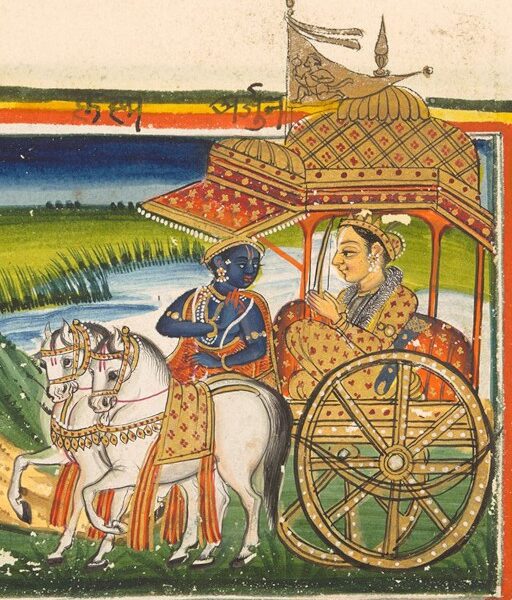
Lesson 3 There is no need of unnecessarily observing austere penances for spiritual advancement. The spiritually situated devotee is transcendental to material existence in all circumstances of life, because austerity is meant to elevate. So if you’re already elevated, then there’s no need for that, right? But the point is, is they’re already included in devotional service. That’s why you don’t separately need to do them. They’re already, they’re already there. So whatever is required, in other words, doing the activities themselves, even though you don’t know their connection to Krsna, is purifying, it’s elevating, right? If you know it’s connected to Krsna, then it develops, you know, transcendence in devotional service. Right? Does that make sense? Following authority, it’s elevating. Following authority, understanding the transcendental position, it liberates you. Understanding, following authority, understanding transcendence and doing it for Krsna, that gets you devotional service.
Does that make sense? So therefore, it’s already included. Devotional service, it’s not that each time it’s something different, no, it’s the same thing. It’s just how much you understand of it. Right? Like that.
That’s why each time it’s coming back and back, so you’re expanding. Yeah. You should always say you’re expanding. So it means the devotional service means it’s already situated on the transcendental platform and it already means that good qualities are being performed, right? So when you follow authority, you follow these processes, then it develops the good qualities, right? So that you can, you can function. So we’ll say detachment, we’ll say tolerance, we’ll say, how do you say, humility, but these are good qualities, right? So we may use them as a way to elevate ourselves so that the quality of life is better, but the point is it’s still an illusion if you don’t see the connection with God. You see that and you act in that without desire for result, that itself gives you liberation, but that not being done for yourself, but being done for Krishna goes beyond liberation, that it’s, it gets you devotional service. Do you understand? Because Krishna is the superior qualities. That means that his interaction is on the platform of superior qualities. That means you require superior qualities to interact. So it means devotional service already includes the activities that develop the elevated position, right? Devotional service is already transcendent situated, therefore you automatically come to the liberated platform. Does that make sense, right? You’re doing it for Krishna, to please Krishna, that’s devotion, right? You are doing the act, but to do it for Krishna means that you have to not do it for yourself, right? By not doing it for yourself or naisakarmya, that gets you liberation, right? Or in the spiritual world, that’s the platform they remain on, right? Then you have to follow authority, right? In spiritual world you’re following spiritual master, the previous acharyas, all the great devotees, and you’re doing what they say to do, right? That pleases Krishna. So that develops all the good qualities, you understand? So if we take it in reverse engineering, devotional service already includes everything, right? But when we see those parts not connected to Krishna or we overemphasize them, then we think it’s different aspects of the same thing, right? Okay, because we can understand being pious, working according to authority, having good qualities, therefore social interaction, everything will go nice, everything will be heaven on earth, right? But the point is it’s still illusion, it’s not connected to the Lord, but it will develop good qualities, right? So people who are talking about restraint and considering others, that’s nice, but the problem is it’s still an illusion because that all is still coming from the Lord.
Does this make sense, right? So one has to see that, so devotional service already includes it. But devotional service, we don’t focus on that, we focus on doing it to please Krishna.
Does that make sense, right, like that? So then that makes it prayogin, right? So doing proper activity means you develop proper qualities. Someone who has those proper qualities can perform those qualities without a desire for result, because if you have proper qualities and you do it for a desire to result, it’s called fruitive, right? It’s pious activities, right? So then, yeah, so the Lord is already, then you’re doing the pious activity without a desire for result, that would give you liberation, right? So therefore performing pious activities according to authority of the Veda, that’s karma. Acting according to the Veda without a desire for result, that’s jnana, right? Acting according to the Veda without a desire for result to please Krishna, that’s called devotion. So it already includes the others, so if we don’t bring it to that point or don’t emphasize that point, it takes on those others. So in other words, if it is following authority, but there’s also the element of, you know, we like that situation or conditioning of the results we’ll get, it’s karma yoga, right? It’s devotional service mixed with karma, right?
You know, we’re talking about karma mister, not taking karma yoga, meaning all activities are fully connected with the Lord. But then even if we take it like that, it means the activities are connected. So all aspects of working according to authority and therefore developing the pious qualities of being purified is already included. So whether karma yoga is pure or mixed, right? Jnana yoga means then the emphasis is on the element of the knowledge and the detachment. So now whether that’s pure or mixed, right? If it’s mixed, you know, if it’s pure, it means devotional service already includes that. So jnana yoga and devotional service are synonymous, right? Or karma yoga and devotional service are synonymous. But if they’re mixed, it means it’s devotional service, but there’s too much emphasis on the karma yoga. If the two of them are put together, that’s bhuta yoga, right? So if it’s pure, it’s non-different from devotional service. If it’s not, those aspects are. So since it’s a gradual process, we’re defining it from that it is devotional service, but at the same time it’s the process to get to it, right? Like we say the name is the goal, but at the same time the name is the process.
Right? So devotional service is the goal, but devotional service is still the process, like that. So simply then we need knowledge that I’m not the body, I’m the soul, I’m servant of God. That’s my natural position. With that, then you can perform devotional service.
Anandamaya could be the origin, we have anandamaya, and then it breaks down into the other ones? Yeah, well that would be the mix, it means the consciousness. If you’re looking at it from consciousness, then pure consciousness is anandamaya, in devotional service. But impure may be anandamaya, meaning the impersonal concept, or vijnanamaya, trying to get to that impersonal concept, or get to the liberated platform. Dharma, you know, you’re comfortable with the pious elements of your conditioning, right? The artha, you’re simply interested in the results of your conditioning, right? And you want to see that that’s secure, you know, so your gain in safety is there. Or, anandamaya, where you’re just interested in yourself and what you get out of it. So the lower ones would be more towards karma? Yes, the lower ones are more towards karma, the higher ones are more towards… But the basic principle of action is dharma, right? Because that’s the social system. So whether it’s used materially, or used spiritually, that’s not the point. That’s why for us, sanatana dharma and varnashrama are synonymous. But for those who don’t understand this point that’s being given here, they think that all these processes are something separate, then it’s a separate thing. But at the same time, it’s okay, we’re devotees, we don’t care for varnashrama dharma, great, fine. What’s your social system? How do you define who does what in your devotional line? Okay, if everybody goes off and, you know, lives in the forest and doesn’t bump into each other, no problem. But if they do bump into each other, how are they going to interact? You know, if they’re going to find that to cooperate together, then they can do devotional service and enhance Krishna’s pleasure. What’s the social system?
You understand? So, as we said, the system is the process and is also the goal. Means that the varnashrama system, as sanatana dharma, can elevate you, and on the perfectional platform, it’s still your social system.
But it’s not elevating you, it’s just the environment you function in.
Does that make sense? So that’s why some people say, varnashrama didn’t work. Didn’t work because it wasn’t used transcendentally. It simply looked at a very simplistic kind of form. Okay, I’m in charge, that means whatever I think and, you know, feel and say, that’s what everybody has to do. And, okay, if I’m good enough at organizing and convincing, people do do it. But then, socially, what I was telling them was that actually up to the standard of someone in the position of being in charge. Right? And if that’s not there, there’s a good chance they weren’t up to the standard being followers. Though they might have been, but not necessarily.
You know what I’m saying? The apple doesn’t fall very far from the tree. So, right? So that means then they were using some forms of varnashrama, but they didn’t actually understand what the forms were for. You know, just like I’m taking the knife and using it as a screwdriver. And then it broke, so therefore it’s not very useful. You know, these knives are useless. But they’re not meant for, you know, use as a screwdriver. They’re meant to cut things. But you have to know the purpose. Then it works. Being in charge simply means that people will get mental. If there’s 20 devotees in the temple and each one could do whatever they wanted, nothing will happen. So you make someone in charge to make direction. There’s focus. If there’s focus, then the endeavor then can get, proper endeavor, you can get result. So that’s why there’s an in charge. But he’s simply to see that in charge means that everybody, according to their nature, is being engaged, according to their capacity in the devotional process, in a cooperative spirit. So therefore it can be organized and you can get something nice.
But the goal is pleasing Krishna. Yeah, the goal is pleasing Krishna. You know, Sadhguru is just sitting here in Mayapur. And he knows how to do construction. You know, Ambrish Prabhu is sitting in America. He’s got money and a desire to please Prabhupada by building the temple. Right? You know, Bhavananda Prabhu knows how to connect these two things. And, you know, what is aesthetics and how to get something done. Right? So then you put the three together and then they can build a temple. But on their own, none of them would build a temple. Right? Does that make sense? So that’s the point. That’s why cooperation is important.
Oh, okay, yeah, yeah. You have a gourd, a stick, and a wire. Yeah, then you can make a vena.
Yeah, there are three separate things that don’t necessarily… Like a gourd doesn’t have much value. People don’t place gourds as highly. Sticks either, you know, and a piece of wire also. If you saw each one of them separately, you would think that they’re not much. But if you put them together properly, then you have a very valuable instrument.
So the manager would have to really know his twenty personal… Personally know his twenty devotees. The more he knows, the more efficient he’ll be. It means the manager has to know what management is. He has to know also how to engage… If he’s dealing, managing people, he has to know how to work with people. If he’s managing numbers, then he just has to know math and the formulas for accountancy. Right? Or if he’s managing a go-down, then he has to just know what goes where. And the book’s a little bit of math also. And if there’s people working there, if not, if he does it himself, very easy. But if he’s dealing with people, then people have to be what he knows. It’s just like… Let’s say if you’re selling cloth, you need to know cloth. If you’re selling cars, you need to know cars. But the important point is you know business. Otherwise, even if you have cloth, you have cars, it doesn’t make it a business. So the temple manager means he has to know management. And then, because he’s working with people, working with deities, working with book distribution, working with the devotional process, the more he understands that, the better he’ll be. But if he’s at least a manager, he could start. Right? And then, naturally, it would be by association and contemplation, he would develop those things. Like that. But if we look at it just as management, then it won’t get very far.
Because being in charge is a fact, it’s not dynamic. It’s a static element. Okay, he’s in… Oh, I’m in charge. Okay, so that shows your position. But what’s that got to do with the interaction?
Interaction is how you engage people.
So if someone new came along, he would take the time to get to know what you’re going to do? Maybe make that offer as a service? Yes, but at the same time, if he’s dynamic, he’ll be watching because everybody’s developing. But it’s not the emphasis is on, he’s just getting to know everybody. You know what I’m saying? That is also… becomes a social issue, it’s overbalanced. No, it’s he’s getting to know because he’s supposed to organize those persons to do devotional service. So he doesn’t know what he’s dealing with. If he only knows potatoes and he has to cook and the pantry’s full of variety of vegetables, then he could cook them like potatoes. But then somehow the squashes and that release water and it comes out wetter than he expects. So if he knows that’ll happen, okay, then he’ll put less water and the water will come out of those and boil the potatoes. Does that make sense? Or he’ll cook them separately because they cook in one way and potatoes cook in another. So, does that make sense? The idea is you always have to get that balance. But the point is, is you start. If you start, then you can correct it. So we should also not have the idea that until one gets to either know everybody or until he’s a perfect manager or until he’s an advanced devotee or until he knows puja perfectly, he can’t start. No, you can start if you have potential. That’s the difference in devotional service. In the material world, no, until you’re a great manager and you’ve been doing it a long time, greatly, then you’ll be noticed and then things will start to happen. But in devotional service, if you have potential, you start. And by performing the devotional service, they’ll develop. But if you forget that and think that whatever you’re doing is good enough, then, as I said before, there’ll be trouble.
Right? Because the trouble will come is you’re not acting in a balanced way. You’re not acting in a detached way. So, what was that thought again? That you should always be improving yourself? It means you’re always trying to please Krishna. Like that. So naturally, as you do something, your skill increases. So that means your ability and what results you can get increases. So it comes, as this verse is saying, it comes as an automatic secondary point. To bring those points out of someone is not noticing it. But its application needs to be in this balanced way. In the beginning, it may be out of balance, as you say. Just like the neophyte, you know, over-emphasizes things. You know, but with time, then it comes into a balance. If it’s understood properly. Otherwise, it just kind of evolves into this kind of devotional rut.
I’m not talking about crazy elephants.
Like that. I mean, that’s what it should develop into. As I said, a very enthusiastic devotional service.
So it’s the Sambandha element, which the more I’m acquainted with Sambandha, the better I can do. The more we’re acquainted. That’s why Sambandha Jnana is important. But, at the same time, is that Sambandha Jnana has to be seen as its only value is its support to Prayojana.
Then Abhidheya has meaning.
Because Sambandha means you understand the forms and the goal and the usages and everything.
But Abhidheya means you’re applying it. So if the Sambandha is not right, then we’ll over-emphasize. Just as we will over-emphasize our knowledge, we’ll over-emphasize our endeavor. Because you’ll endeavor with what you’re conscious of.
Does that make sense? So these things are enthusiastic. If you’re trying to create inspiration, you may over-emphasize something or focus on something. Because it’ll create the inspiration. But in the application, it’s got to be balanced.
Does that make sense? Yeah?
One who is not envious, but is a kind friend to all living entities. So kind friend, not even just a friendly kind. He’s considerate. That will be your status. Someone who can be kind means they’re considerate. He’s envious means you’re considerate of yourself. Who does not think himself a proprietor. So you’re thinking, I’m servant of Krishna. And is free from false ego. So if you think yourself, I’m servant of Krishna, you’re free from false ego. Therefore, you’re not the proprietor.
Then, who is equal in both happiness and distress. So whether it’s good or bad, you’re balanced. Because you know, I’m just serving Krishna. So whatever needs to be done, it still has to be done for Krishna. Whether it’s going nicely or not, you still have to work out how to do it for Krishna. Who is tolerant. So it doesn’t become, how you say, things happen, but you know, you use your intelligence and understand what’s the bigger picture so that you don’t get disturbed. Always satisfied. That means whatever you’ve gained, like that, whatever you’ve gained, then that’s what will be… Nice to meet you.
I’m not sure why they have to talk on the bridge.
Always satisfied, that’s the thing, is that all these different places, it seems so complete in itself, you don’t realize it’s connection with everything else.
Always satisfied. So whatever situation you’re in, you’re comfortable that that’s what will be used in devotional service. And if by working with that, you can create more facility, great. But it’s not that the more facility is the focal point. The focal point is on the service. Self-control means that you yourself understand what has to be done. And so therefore, you do what is correct according to the direction of authority, what is recommended. Because otherwise then we just do our own thing and that’s another. And engage in devotional service with determination. So devotional service is the goal, but determination. So you’re engaged, abhidheya, in devotional service, which will be your prayojana, with determination, your sambandha. So that means you have proper understanding, so therefore you can focus. His mind and intelligence fixed on me. Because that means that the mind and intelligence, that means everything, everything is connected. Because the mind controls the senses, the intelligence is how, the mechanics of the senses. So what the body does, what you think about, and what you speak, then that’s all connected to Krishna. Such a devoted mind is very dear to me. So there’s dear, and it means Krishna’s equal with all living entities. But those living entities that act in this way, they become very dear.
So if you’re making the endeavor, it’s dear, but someone who is like this is very dear. He by whom no one is put into difficulty, and who is not disturbed by anyone. So if you don’t put any people in difficulty, you won’t be disturbed by anyone. The reason people bother you is because you bothered others.
It’s simple.
It’s like by whom he is not put into difficulty. So suppose, like when authority is giving some instruction to somebody, he’s not following, so he’s chastising him, or he’s giving him hard words, so that is, and he’s feeling bad, so something like that he’s in difficulty? No, no, because the point is, is if whatever is there is the authorized method, then it’s only you think you’re in difficulty, you’re not.
You know what I’m saying? You know, just I was explaining, you had those Kuwaiti aristocracy that during the Kuwait war they got stuck in London. That’s where they were at the time. And they were staying in, you know, you know, one of these, whatever the fanciest hostels, and they would go out on the town and go shopping, and go to the casino and gamble, and, you know, just, means, you know, renting a car. Whatever they’re doing, they would spend 10,000 pounds a day.
Right? So, when the Kuwait war happened, all the banks got, all the money’s frozen and all that, so they’re stuck there, and they’re in anxiety, because they can’t spend 10,000 pounds a day. You know, it’s like if they have whatever money they have, they’re going to have to stretch that out, because they don’t know how the war is going to go. You know, so they might have to live on, you know, 500 pounds a day, or 200 pounds a day, you know what I’m saying? So, that was a great inconvenience, but if I gave you 200 pounds, you know, while you’re in London, or 500 pounds and sat here, you know, knock yourself out, you might not be able to spend it all. You know what I’m saying? Does that make sense?
So, that’s the idea, is that one, you may consider it difficulty, but it doesn’t necessarily mean it is.
You know what I’m saying? Put into difficulty means, by your lack of either consciousness or following of Shastra, you know, your behavior is putting the other person into there. But if you’re doing what you’re supposed to do, you know, it’s just like, if it’s up to the child, he’ll play all day. Right? It means you just, you know, have the cookies on the table, you know, and he just plays all day, and when I was telling him, come get a few cookies, like that. That would be perfection, you know? Like that. You know, not complain when he, you know, knocks a baseball through the television or through the front window, or, you know, like that. Knocks over the lamp, you know, anything like that. So, that would be perfection. But the point is, is then he’ll grow up not understanding what’s right and wrong. Right? So, it’s not actually affection. So, you have to train him properly. So, then he may feel it’s difficulty, but it’s not. Right? But, same time as how you do direct them, you have to see that that’s according to proper etiquette and tradition.
And if it is, then there’s nothing to complain about. People may complain anyway. People complain about God, though he’s doing exactly what he’s supposed to do. God doesn’t do anything wrong, but still people complain.
Does he have to worry about those situations? No. It means if you’re working, but you should still be analyzing, am I working? Because it’s also possible they shouldn’t get disturbed, but there is another way I could do it that even though they are getting disturbed, that means, even though they don’t really have a right to get disturbed, I could do it in a different way and they wouldn’t get disturbed.
Right? It still would be a proper way to do it. Then, I should consider doing it in that way.
Does that make sense? So, in other words, the leader should always be looking at what will work best for developing the juniors. Right? The temple is simply a facility. Not that the juniors are there for you to build a temple in. No. The temple is there to create facility for the juniors to take part in devotional service. Does that make sense? So, now, more people, that means as they’re there and they are happy and they are sharing this, naturally more people come. That’s why the temple needs to be bigger. Not that it’s our goal to build a big huge temple and that’s preaching. No. Cultivating the devotees, that’s preaching. You just need facility. You know, we could also use a big monster barn. That would also work. Right? Does that make sense? So, I didn’t know preaching means that I build a temple like this and so many things like that. Nice. But the point is, are you seeing that in connection to the devotees? Like, one would have to probably admit.
Let’s see.
Yeah, you probably have to admit that the Chopati temple is the most, as far as building goes, the most opulent temple in the movement. Hands down.
You know, as far as the facility goes. But how did it start? They weren’t worried about the temple at all. They just need a place for devotees to hang out. And then, when the community reaches, you know, I think it was around 2,000, 3 ,000 devotees, then they decide, why don’t we make the temple, the place that we’re using, because it’s just a house. Nice. So, then they organized and they did all the stone and this and that and made it into the temple. Does that make sense?
Yeah. I mean, it’s the same group, so therefore they’re naturally going to use the same kind of method. You understand? So, it starts with the devotees. So, if devotional service is there, then it works. But now, there’s, you know, in Bombay, there’s 5,000 or 6,000 devotees.
So, then they have a temple like that. But now, if you have a temple president and 10 brahmacharis, and then he wants a temple like that, and then it’ll be preaching, because everybody will come because we have a temple like that. No. Nobody comes to Chopari because they got a nice temple.
You know, they come because they like the association. Otherwise, Birlas, they just, there’s nobody there, and they build a temple. All marble. All Birla temples are always marble. Right? Nice, big, they get an architect to build a nice, even one. It’s all marble, but it’s all air-conditioned. They worked it out in all the jolly work and all that. Those are the things where the air comes out. You know, they worked it out. Very, very clever. I think that was Hyderabad one. Like that. They all look good. There’s one in Calcutta. I don’t know if you’ve seen it. It’s white sandstone, I think. Wrong choice for Calcutta.
Probably should have gone with black granite. That would have been the right color for Calcutta.
But very elaborate carving. It took a long, long time to make. But the problem is, is there’s nobody there. You know, there’s nothing happening. It’s just the temple. You know what I’m saying? So temple is a facility for devotees. So you have to see that you’re managing devotees. So then it’s the devotees that’s more important.
You know what I’m saying? If the devotee program is there, then it happens naturally. Otherwise, then you artificially have to… You know, they’re in Bombay. They’re in that part of Bombay. And from that part of Bombay, the people there in that part, then they got the money together, and they organized, and they built it. Right? But for generally most temples, they want to do something big. They don’t do it locally. You know, they’re halfway around the world to collect the money. Right? And still, you know… I know some temple, they collected the money in Dubai. Right? You know, built a nice big temple and everything. Very nice. Like that, but it’s still just the devotee who did the collection, and his family, and a few others. And that’s all there is. And still, it’s been there for 20 years.
You know what I’m saying? So the point is this. You work on the devotional element, everything else is automatically included. You know, so that’s the focus. It’s not that any of these other forms that we’re interested in, we don’t use. That’s the meaning of conditioning. Right? It means varnasrama, means we engage whatever is that conditioning, those areas. But they’re only in support of devotional service. Does that make sense? Yes.
On an individual basis, if someone, apparently, was in a difficult situation, what would be the right mentality to do?
At least, it depends what the situation is. Okay. General question, general answer. If you are in a place and a dispute or opinion comes, either retract, which wouldn’t be so beneficial because the situation wasn’t proper? What you have to see is, it means there’s the battle and then there’s the war. Okay.
So, you know, do you want to win the battle and the war in one shot? Or would you do better by, you might lose this battle, but you’ll still win the war.
So that’s what you have to see, what’s going to work best for that.
You know what I’m saying? So, if by continuing, the person will get so disturbed that they won’t be able to relate, you know, or be able to adjust. Point is, if you want them to adjust, you have to deal with them so that they do. But even if you’re telling them what’s right, but they won’t adjust in that, then you leave it. You know? So that’s why I was saying, is the facts, or truth, or this, is not the prominent element. The prominent element is the devotional aspect.
Yeah?
Okay.
My devotee who is not dependent on the ordinary course of activities, means to be a devotee, you don’t have to depend, it’s not that everything’s going right, that’s why I can be a devotee. So it’s just what happens in the unfolding, natural unfolding of the devotional process. I mean, yeah, the devotional process, and therefore it’s working with the material energy, how it just manifests, you’re not dependent upon that. You know, it’s not that, oh, if everybody else is Krishna conscious, I can be Krishna conscious, or, you know, if the temple is managed properly, then I can do that. You know, sometimes I’ve heard that. Well, if devotees would, you know, act like this or think like this, then I could come back to the movement and feel inspired. But then the point is, you’re not distracted by actually devotional service, you’re distracted by something that’s not. You know, so only when the material elements are all gone and everybody is purely spiritual, then I can come in with my spiritual potential and feel comfortable, because everybody else is spiritual, they won’t mind me not being spiritual.
Right? But if I’m not spiritual and everybody else is not so spiritual, then they might be disturbed by my not being spiritual, because in any case, I’m disturbed by them not being spiritual. So, you understand? So, things were not dependent on the ordinary course. You can still remember Krishna no matter what happens. Like Yudhisthira Maharaj, they’re still Krishna conscious, now they’ve just been booted out of their kingdom and they’re put in a forest.
Who is pure, means that everything is being done for Krishna, and everything. Expert, means then your, how do you say, your endeavor, the knowledge and skill is up to a particular element where the endeavor that you make gives good results. Right? Because the results are for Krishna, therefore you should be expert, no matter what it is. Without cares, means it’s not for you, it’s for Krishna. But it doesn’t mean that therefore you’re not responsible.
Free from all pains, because nothing bothers you because you’re not attached.
And not striving for some result. Right? So, you see, all these different things are, means the devotee is not, the ordinary course of activities, he’s not there. He’s pure, so that means he’s doing it for a particular, you know, a proper purpose. Under authority, he’s expert, he’s good at the activity. Without cares, you know, the results. Free from all pains, means there’s no pain after not getting the results you want. Right? Because you’re not identifying yourself with that. Not striving for some result, meaning for themselves. So, you see, Krishna’s going through and bringing out different aspects of the sambandha-abhidaya-prayoja.
You know, places where we can focus. Right? Because it’s unlimited, so he gives those places we can focus. You catch those as the major points. I think someone was giving a thing of… Yeah. Okay.
Is very dear to me. Right? One who neither rejoices nor grieves. Right? Because that was what was before on the not being elated in happiness or lamenting in distress. Oh. Who neither laments nor desires. Right? And who renounces both auspicious and inauspicious things. Such a devotee is very dear to me. Means you’re not doing it because it’s auspicious. You’re not avoiding it because it’s inauspicious. You’re doing it because it pleases Krishna. You’re not doing it because it doesn’t please Krishna. Right? Because then they’ll say, Oh, no, but, you know, what about, you know, those good things, you could use them, or inauspicious is bad. Why would you use that for Krishna? No. It’s… The point is, you’re looking at Krishna, so if it’ll please Krishna, you do it. That’s auspicious. It’s not pleasing. You won’t do it because it… So that’s how it’s defined, inauspicious.
One, it was equal to friends and enemies. Right? Because it’s equal to be… It’s easy to be equal to friends, but, you know, friends and enemies. In other words, you’ll deal with them properly. It doesn’t mean they get the same facility. You spend as much time, but it means if you have to deal with an enemy, then… I mean, how do you say? It’ll… As far as etiquette goes, it’ll be very difficult for them to feel you’re an enemy. Right? Because there’s always the point that someone who’s an enemy today might be a friend tomorrow.
Right? Does that make sense? And vice versa. Yeah, and vice versa. So there’s no… There’s no better friend than someone who is an enemy who is now a friend. And there’s no worse enemy than someone who is a friend and is now an enemy. Like that.
Maharajah, I’m striving for result. Actually, in life, I’ve seen that this result motivates me to do some work. But the result for you or the result for Krishna? No, I haven’t analyzed something like… Yeah, but the point is it’s not striving for result means not striving for a result for yourself.
You’re like Prabhupada wanted a city and a temple built here in Mayapur. So that’s a result. But it’s not for him. It’s for Krishna. So when we say these things, it means you have to see them in light of Krishna consciousness.
So here, if you’re looking at the negative, it means it’s not material. Therefore, it’s spiritual. So material means I’m striving for a result for myself. Spiritual means I’m striving for a result for Krishna. So if it’s put in the negative, generally it means… You know, it’s dealing with the negation… How you say? Not forgetting Krishna. Right? And if it’s positive, generally remembering Krishna.
Whose equal poise and honor and dishonor. Right? You’re still going to do devotional service. It’s not dependent on ordinary course of activities. Because sometimes it’s nice, sometimes it’s not. Sometimes it’s auspicious, sometimes not. Sometimes it’s honorable, sometimes dishonorable. Because sometimes people appreciate, sometimes they don’t. It’s just the way life is. Because you do something, it’s very appropriate, but someone else feels it’s not. Because they have, you know, some issues, so… They can’t deal with the overall picture, they can only deal with certain forms. And so because you’ve dealt with the form, how they wouldn’t deal with the form, though they’re not seeing the situation. Right? Does that make sense? You know, it’s just like the cow’s been in the barn. It caught on fire. So fire’s red. So now anytime the cow sees anything red, it thinks it’s fire. So it can’t tell the difference between, you know, the side of the barn that’s red, you know, the red cloth, you know, anything like that, red bird, you know, like this. It just… Does that make sense? So it can’t see the context. So issues generally mean we can’t see the context. We just see a particular thing.
Yeah, yeah. And that’s why they don’t like to discuss that, because what’s the inspiration of an issue?
To get a point through. Well, that’s a point through. That’s the result. But why the drive? Why it’s an issue? Because issue means mind. So what is the mind looking for?
Would you be inspired by an issue that, you know, you had an issue, but there was no feeling towards it? No. Right? Because then you’d have to just… Intellectually it’s right, so therefore I would have to act out of duty, because this would be correct. Right? So it’s not an issue then. So issue means… Personal attachment. There’s attachment. So therefore it creates a whole emotional feeling, and when you’re fighting for your issue, you feel you’re really accomplishing something, because the accomplishment is simply the intensity of what you experience is extremely great.
Does that make sense? So by bringing in intelligence, by bringing in, you know, context, by bringing in these things, it dilutes the issue. So if someone actually has an issue, but looking for an actual solution, they won’t mind it. But if someone… It’s the issue that gives them their identity and their taste, they won’t like it at all.
Or they’ll… It’s not they won’t like it, they’ll just ignore it, because to them it doesn’t fan the fire of their issue, therefore it’s not something to consider.
Does that make sense?
So it’s bodily connection. Yeah, it’s bodily connection. Yeah. Okay. So that’s… Issues are always… That’s what it means. When you say issues, it means misgivings. Prabhupada uses the word misgiving. Issue is the modern term. But misgiving means… Because doubt means it’s an intellectual point, it just doesn’t make sense. You know? Like when I say 2 plus 2 is 57, it doesn’t make sense, right? It’s not an issue. It’s a doubt. But an issue is that, you know, it’s like… You know, you get something Vedic like that, you know, so, you know, women are less intelligent. That’s an issue. What do you mean they’re less intelligent? Because it’s… You know what I’m saying? So, therefore, the attachment makes it that one can’t understand. So if you try to put it into context, it may or may not work. That’s why the point of devotional service, it already includes that, it goes beyond. You know what I’m saying? It goes beyond. So the point is, is… Being a devotee, that’s intelligent. You know what I’m saying? Like that. Does that make sense? So in this case, the feminine element of being less intelligent means we’re connected with the material world. So the material consciousness is the less intelligent feminine position as opposed to the superior feminine position of being situated in the spiritual. You understand? Like that.
That’s…
Happiness, distress, fame and infamy. Right? In other words, in duality is not disturbed. Who is always free from contaminating association, he only associates with, you know, who’s appropriate to associate with. Right.
Always silent and satisfied with anything. Silent means, you know, not being absorbed in the mundane. Satisfied with anything means whatever Kṛṣṇa provides. It means whatever situation you’re in, you’re going to deal with that for Kṛṣṇa because you’re not dependent on the ordinary course of activities. You understand? It doesn’t mean that the particular activity you wanted to do can be done. It may be the situation in the ordinary course of activities. What you wanted to do is not available. Right? You wanted to go and purchase a ticket to go to, you know, the Ratha-yatra.
But when you get there, the counter is closed. The person has gone to lunch or it’s, you know, Labor Day weekend or, you know, something, so there’s no ticket. Right? Or the… whatever that transport system is, is on strike. So, now, it’s not that, well, because of that, now you can’t be Kṛṣṇa conscious. Right? But you can’t do what you want to do. So it doesn’t mean that not dependent means that… So then, in that case, since it’s devotional service, it’s a value, you find another way to get there. Or if all avenues aren’t there, then, okay, Kṛṣṇa didn’t want you to go. There was something else for you to do.
Does that make sense? So, it always works out.
So, the devotee shouldn’t be caught in the situation where he feels impotent and is dependent. Yeah, no, it’s impotent. Because what does it mean? If I’m impotent, it means I identify that I am, by nature, potent.
And now, by situation, I am impotent.
So the identity is wrong. The knowledge is wrong. No. I am simply part and parcel of Kṛṣṇa. Kṛṣṇa is the potent one. So, now, if I assist in His potency, then we’re empowered.
But if we don’t assist in potency, we’re not. So, even if we consider sometimes I am potent, it’s an illusion, because you’re not. We’re not potent on our own. We’re potency. But, you know, how much is one ten -thousandth of the tip of the hair going to do anyway?
You know what I’m saying? In comparison, we’re comparing to the, you know, whole cosmic creation. You know. And Kṛṣṇa is the whole cosmic creation and us. So He’s even bigger.
Right? Does that make sense?
But we shouldn’t be then thinking, no, but what about, you know, the solace is, you know, bright as the sun, like this, like that. No, we’re not talking about that. We’re talking about, compared to illusion, the soul is so much more powerful, unlimitedly more powerful. Because dead matter doesn’t do anything. So the soul can do something. So that means it’s unlimitedly greater. But when the soul identifies as dead matter, that’s why it can’t do much. So depending on what dead matter you identify with, therefore you have more or less potency. So we’ll say others are empowering or not empowering us. No. We’re empowering or depowering ourselves.
Right? Because we identify with a certain quality of the material energy that gives us that much power. Right? I am the temple president, so I give myself a certain amount of power. You know, and then, then if I feel that others aren’t supporting that, then I don’t feel empowered.
The point is, is I can do devotional service. It doesn’t matter if I have all things or nothing. I will do devotional service. You know what I’m saying? So the connection to Krishna is always there. So there’s no question of, of, being insecure.
Right? Because Krishna’s always there. Now you can feel that, okay, that wasn’t the correct decision, that that’s connected with expert. That was the wrong way of manipulating, not manipulating, but moving the material energy for service to Krishna. Right? So the skill was not right, or the knowledge was not right, or the combination wasn’t right. Therefore it didn’t work. So this would be better.
You know? And so then that may have been situation, or just not understanding the knowledge and mechanics. Right situation, wrong understanding mechanics, or it could have been right understanding mechanics, wrong situation. So the understanding needs to be expanded.
Does that make sense? Right? It was distinguishing between, you can always do devotional service, no matter what.
I think it was, I’m not sure where it was, maybe. I heard about it, I’m not sure exactly where it was, I think it was Indonesia.
Somebody had become a devotee, and was, you know, like that, and somebody didn’t appreciate, I don’t know if it was parents or who, and they, you know, somehow they caught them, and put them, they thought they were crazy, so they, you know, because they bring them home, and they’re always talking about Krishna, this, that. So they put them in a, you know, some kind of mental institution, or something. So then, because, and also because it’s a Muslim country, so they don’t really necessarily appreciate all this. So they gave them some drugs to, that basically clears the memory. Right? So they gave them that, and so he didn’t remember anything, or this or that, but he still would chant. Right? Because chanting is on the transcendental platform. It’s nothing to do with your memory. So then they really didn’t know what to do after that. They hadn’t bumped into that one before.
Who doesn’t care for any residence means whatever, whatever arrangement Krishna makes, that’s where you live. So you might be in the same place forever, or you may be regularly changing, it doesn’t matter. It means whatever you have, then you’re satisfied.
Right? Like that. Who is fixed in knowledge, so it’s not that he thinks today, and then you think, oh, that didn’t work, so this knowledge is bogus. No, it’s, if you’re fixed, you know this is what the authority says, this is fixed. And who is engaged in devotional service. So you’ll take all that and engage in devotional service. Because simply being not disturbed by fame and infamy, if you’re not engaged, because it says, and who is engaged in devotional service. So all these different qualities, and he’s engaged in devotional service. So devotional service becomes the primary. Such a person is very dear to me. Those who follow this imperishable path of devotional service, you know, again like this, this is the way of the spiritual and godly life.
And who completely engage themselves with faith, completely, making me the supreme goal, are very, very dear to me. So now if you take all this, then they’re very, very dear. Each one of those you’re very dear. But if you combine all that and are always engaged, therefore, then you’re very, very dear.
The Lord is pleased by the activities of the pure devotee. A pure devotee is never disturbed in any circumstance. As it says, no positive or negative, auspicious or inauspicious, fame or infamy. Nor is he envious of anybody. So even though his situation may be good or not good, he’s not just worried about others who he would consider as better. Because just like Indra, we would consider, who would he be envious of? But he’s envious of the ones on Janatapa and Mahalokas.
Because they’re actually more powerful, though they don’t use their power to exercise it for enjoying or controlling the universe. Like he does. So he’s the best of the controllers and enjoyers of the universe, we could say. Because he’s got a job where he can do that. Right? So it works out, it’s pious. But, you know, Bhrigu and all them, they’re higher. So the residents of the heavenly clans are actually jealous of them.
Because they’re independent. They don’t need anything.
Yeah, yeah, yeah, yeah. Like that. Yeah, it was that.
Yeah, his position. Well, it’s seemingly. But here’s the Supreme Personality of Godhead. Or let me, I’m not sure of the Supreme. I think they just use the term Personality of Godhead. Like that. So, so then, he’s performing them. So it’s just a show example and this and that. But he’s still worried about his position as a Pre-Tumar’s care. Because after Pre-Tumar’s left, he went back to Godhead. It’s not that he stopped by in some heavenly planet. As close as he could get. Means he couldn’t get into his position. But, you know, he could have gotten Agni or Vayu or someone else, I’m sure. But no, he just went back to Godhead.
Nor does a devotee become his enemy’s enemy.
His enemy’s enemy. Oh, okay. Means if somebody is your enemy, he doesn’t become inimitable towards them. Just because they’re your enemy doesn’t mean you have to be theirs. You know. You understand the principle. Is this there. It doesn’t mean you’re not on the political platform aren’t careful. Or not clever. But you’re not doing it to bother them. You know, you’re just protecting whatever is your environmental service. But you don’t become their enemy. They see you as an enemy. But you don’t have to see them as an enemy.
This person is acting as my enemy due to my own past misdeeds. So it is better to suffer than to protest.
You know, protest means if it’s nothing you can do about it, then it’s just the way it goes. Isn’t this Arjuna’s argument in the Bhagavad Gita? Better to suffer rather than fight against my guru and my teachers? No, but his duty is to them. So in other words, this means that I have my duties and someone is, you know, causing suffering to that. But it’s not within my duties that I have to do something to him. But within my duties, if there’s problem, then he would continue doing his duties. You know, no matter what. So he’s a kshatriya, he’s there on the battlefield, it’s his business to fight. So that he would continue. Like that. That would be the point. Because the decision of his seniors to put themselves on an equal level by being on the battlefield, that’s their decision, not his. Like Drona sits in the tent and just gives advice. You know, they come back every evening and they make a plan. You know, and he gives some inspiration in the morning. Or they come during the day, they don’t know what to do. He’s there. No one will bother him. You can’t complain. According to kshatriya code, you can’t go and, you know, kill him or something. But if he comes out on the battlefield, then he’s like any of the other kshatriyas. You know, maybe more respectable, but he’s still a kshatriya. When he comes out to fight, it doesn’t matter who it is, senior or junior, the fight is still there.
In the Srimad-Bhagavatam, 10.14.8, it is stated, tat te nupakam su samiksamano bunjana evat evatma krtam vipakam Whenever a devotee is in distress or has fallen into difficulty, he thinks that it is the Lord’s mercy upon him. He thinks, Thanks to my past misdeeds, I should suffer far, far greater than I am suffering now. So it is by the mercy of the Supreme, mercy of the Supreme Lord that I am not getting all the punishment I am due. I am just getting a little. By the mercy of the Supreme Personality of Godhead. So that’s how one thinks. Therefore, he is always calm, quiet and patient, despite many distressful conditions. Because he just sees, I should be getting worse, but by the grace of the Lord, I am getting only a little bit. So if we consider it’s a lot, then consider how much we should have been getting. So therefore, we are doing okay.
A devotee is also always kind to everyone, even to his enemy.
Nirmana means that a devotee does not attach much importance to the pains and trouble pertaining to the body. Because he knows perfectly well that he is not the material body.
It means you just deal with it. Right? It means whatever you have to deal with, the pains and troubles of the body, so you can do your service, that you deal with, but it’s not important.
He does not identify with the body, therefore, he is free from the conception of false ego, and is equal poised in happiness and distress. He is tolerant, and he is satisfied with whatever comes by the grace of the Lord. Right? Because you’re endeavoring, and if things aren’t coming, he’s still tolerant, or he’s being disturbed, he’s tolerant. So whatever does come, he’s satisfied.
He does not endeavor much to achieve something with great difficulty. It means you do something to please the Lord, that is authorized, that is, you know, there, but otherwise, it is going to be too much trouble. Then you find other methods that are not going to be as troublesome, but you’re always engaged.
Does that make sense? You know, it’s just like you want the Ratha Yatra in this particular place, and the government’s not giving the permission, because who knows what, either last year we didn’t do things nicely, or there’s some other parade going on at the same time, or this or that, so we end up in some other part of town, so we don’t now have to keep going through more and more to try to get that and get the other party moved. No, we just, okay, so then we do that.
You know, or, you know, she’s having great difficulties, something for ourselves, we want to, you know, some kind of element, a position, a facility, or that, we don’t make great endeavor to get that. We do, you know, we do what comes naturally, you know, as it comes. Therefore, he’s always joyful, right? Because you lack joy if your things are distressful, but if things aren’t distressful, then one is happy.
That’s why it’s also said a brahmana’s always happy.
He is completely, he is a completely perfect mystic because he is fixed in the instructions received from the spiritual master. And because his senses are controlled, he is determined. Right? Senses controlled, then determined. Senses aren’t controlled, then the mind is all over the place. So vyavasayatmika-buddhi means the senses have to be controlled. If the intelligence is fixed, it means the senses have to be controlled. If the senses aren’t controlled, fixed, the thing is fixed is less. So he might be able to be very fixed and determined on something because we are going to get something from it. But the process, he still has to control the senses. Let’s say the businessman has decided, you know, there’s an opportunity coming up for a big, you know, you know, kind of deal, and that way he could get ahead. But there’s another company who’s also, you know, working in the same area, and they’ve also recognized the same opportunity. So then he’s working 16 hours a day, you know, and getting his people to work, and he’s, you know, like that, really working hard to secure his position.
So can you enjoy, let the senses run wild if you’re going to be working 16 hours a day? No, you have to be very… So because the senses are controlled, you can be focused. But now if he decides in the middle, hey, I can go to a party, you know, like that, then he’s going to miss out, because then he’s going to miss points there, the next day he’s going to be back, it’s going to take a few days to get back into the rhythm. So he’s not focused. So the point is, focus only happens because the senses are controlled. So as we see in devotional service, you focus on that service to Krishna, and you’re determined to do that, automatically the senses are controlled. It’s not a separate endeavor.
I’m thinking about different options. Different options? Yeah, like this option, this won’t happen, I’ll do this… But that’s a plan. That’s strategy. Whoever has a better strategy wins.
Right? That’s Niti. We’ll get into that after Dharma embarking.
So a few years.
He is not swayed by false arguments.
Like if someone comes up, and they give… means their rhetoric may be good, but their points are wrong. Right? You know, say somebody comes up, they’re very good at arguing, or very good at conversing, communicating. But what they’re communicating is wrong, we’re still not swayed by it, because the principal point of Krishna being the center of the activity, you know, the goal of the activity, like the basis of the activity, that’s wrong, so therefore he’s not swayed by these kind of arguments. I heard that’s one of the definitions. Guru means heavy, means it can’t be swayed. Oh, okay, heavy meaning it can’t be swayed. Okay. Yeah, that’s a nice way of heavy. Not just heavy means he gets on your case. Heavy hammer.
Because no one can lead him from the fixed determination of devotional service. Right? So he may not be, that’s the meaning like, let’s say, the third class devotee. He may not be able to defeat the other person’s argument, but he’s still not swayed. Then he’s a third class pure devotee. If he’s swayed, then he’s just third class.
Like Kashimisha, he’s one of the Lord’s eternal associates, but he’s not swayed. But he’s not known for a study of scriptures, so when these Mayavadi yogis, you know, Mayavadi swamis come up with all kinds of shastra things, he doesn’t know all these shastras. He knows the purpose of the shastras that could serve Krishna, so he knows he’s not swayed by their arguments because it has nothing to do with devotional service, but he doesn’t know how to argue back, so he just walks off. Right? You know, so it’s not a matter of honor or this or that. He doesn’t go, you know, how do you say, go kill himself.
What’s it called?
What’s it? Sepuku? Yeah, I think he knows that. Yeah, yeah.
He doesn’t cut their tongues out either. Yeah, no, that’s the king’s thing. He is fully conscious that Krishna is the eternal Lord, so no one can disturb him. He’s fully conscious of that. He’s fixed in that because he’s fixed in the instructions of the spiritual master.
All these qualifications enable him to fix his mind and intelligence entirely on the Supreme Lord.
So, all these things allow one to fix the mind. That’s why they’re useful. They’re not useful because, I would say it’s so good to not be your enemy’s enemy, you know, we should all be peaceful, we should all work together and live together. It sounds nice, but why? Because then you can fix, everybody can fix their mind on Krishna and be absorbed in the Lord. Be absorbed in devotional service. It’ll make a very nice environment for us to all live together and hang out together. Wouldn’t that be wonderful?
Yes. You’re using the example of the businessman who doesn’t get diverted by the party. For a devotee, it’s often, oh, come to this kirtan, let’s go on this yatra. It’s a lot of options and variety of devotional activities there which can sway us from our service. And the argument’s always given that, oh, but this is direct, you know, hearing and chanting, what you’re doing. But why is their hearing and chanting direct and yours is not? It means you come on this traveling party, but, you know, you have to drive. How is that direct? You know, you have to go into the Kmart and buy stuff to eat. You know, you have to find some place to sleep. You know, you’ve got to go to the toilet. You know, you’ve got to deal with the toilet paper. You know, all these different things. So how is that direct? It means any activity has its direct and indirect. The point is, is you’re at this kirtan program, sitting down there and chanting. That’s direct. But all the things that they’re saying you should be doing, that’s not there. But that’s the point of samkirtana. If there isn’t the indirect, how do they do their direct? You know what I’m saying? You say, oh, no, just sitting down and chanting, that’s the real thing. Okay? How is that hearing and chanting going on? Right? Let’s take this last program. How did all that happen? All we have to do is come there, sit down, chant for, you know, however long, up to 12 hours, and go back to where we came from. That’s all we have to do. Right? Like that? No, I’m saying, one says that’s all we have to do. But how did that all happen? There were two people. Yeah, there were two people that were working, you know, most of the time, had been working on it for weeks or months to make it happen. So without that, without that all that indirect, there wouldn’t have been any direct.
You know what I’m saying? So that’s why I say in kirtana, everything’s ultimately connected to the direct. So it’s all useful. So did those two people get the benefit of all those people getting that direct service?
Wow. Are you going to get jealous?
Inspired, maybe. Inspired to start your own. Yes, of course. Even if they can’t sit down in any of the kirtans that they arranged that everybody else could, they’ll get the benefit. You know, it’s just like, the businessman gives money, and because of that money, then you can worship the deity. You know, so that the person’s having Mangalati. So the person who donated that that Mangalati could happen gets the same benefit, even if he’s not there, as the person’s offering. That’s the thing is they don’t consider. The pancharatric elements generally aren’t considered. You see the arti, you get the same benefit of the person doing. So that’s all these elements are not necessarily appreciated. So in understanding, not everybody needs to bathe the deity. Not at all. It means those who know how to bathe the deity should be bathing the deity. And those who are only up there to get the mercy should be watching. That’s pretty simple. It is, but see, it’s like you’re standing behind the deity. So most people pour where they can see what’s being poured. So they pour so it goes down the back of the deity because they can see that. Going down the face of the deity, they can’t see it, but everybody else can. So most people pour in the back of the deity. They pour too close to the head. So then it, you know, goes. They pour too slowly. Or they’re always, you know, they get the feet, oh this one, oh then that one, and he’s bathing, oh I want to do that one, and like that. So you’re not even getting a proper bathing. Right? Does that make sense? Then there’s always the conch bonking into the deity’s head.
You know what I’m saying? So, it’s not, I mean, it’s easy enough most people aren’t conscious of those elements. Just like when all those devotees come up in those lines and bathe, out of them who come, then one, two, three, four, at this door pointing, at that center altar.
Four people who aren’t the ones that were a fixed part of the Abhishek, who had to bathe. Four.
And how many were coming up? The four did it, did it properly. All the rest of them you have to tell, you know, this and that. You know, they’re not as bad as they used to be. Like that. But still, only four, it would be what I would consider something that would make the Abhishek, you know, nice to, you know, the deity would be happy, the devotees would be happy. You know, make it into a festival. Most everybody else is just, they’re there to get their own mercy and that’s all. It’s not so much to please Krishna as it is to get the mercy. There’s a difference. You get, by pleasing Krishna, you automatically get the mercy. But trying to get the mercy, unless you do a really good job of it, then how are you sure it’s going to please Krishna?
Does that make sense?
Like that.
So, it’s not that easy.
Like that. But anybody can learn how to do it. It’s just most don’t, the idea to do it, improve the quality of their bathing of the deity, isn’t part of their conscious effort. It means whatever they’re doing is good enough. And we say do this and do that, it’s just, you said that. But at the last Abhishek they were at, and, you know, whatever part of the world they were at, no one said anything.
But they don’t consider, is that all the other Abhisheks are not standing behind the deity, they’re standing to the side of the deity. Very rare is they’re standing behind.
So that, okay. All these qualifications enable him to fix his mind and intelligence entirely on the Supreme, Supreme Lord. Such a standard devotional service is undoubtedly very rare. But a devotee becomes situated in that stage by following the regular principles of devotional service. So, it’s undoubtedly very rare that he’s like this full package, this, you know, 13 to 20. These, what do you call them? Yeah, seven, eight verses. So that that is there. That’s very rare. But a devotee becomes situated on that stage. Situated, not necessarily that you’re perfect at it, but situated by following the regular principles of devotional service. So it’s by following Vaidhi, not say, by sadhana bhakti. The sadhana bhakti is regular, regular. Okay? Now, you’re following the regulations because you should do it, that’s Vaidhi. You’re following the regulations because you like doing it, that’s raga.
But, unfortunately, that doesn’t satisfy the sentimentalists.
Because it’s got to be, oh no, there’s the whole mood, the bhava. No, yeah. His point is you like doing it, that’s a bhava. But they don’t like it so simple because it’s no, it’s a whole trip, it’s a whole, you know what I’m saying? Furthermore, the Lord says that such a devotee is very dear to Him, for the Lord is always pleased with all his activities in full Krishna consciousness. So he’s in full Krishna consciousness, therefore, all the activities he does, the Lord’s very pleased. So that’s why the Lord favors such a devotee, because he’s always acting in such a way just to please the Lord.
Vrti. In his Bhagavad-gita analysis, Srila Prabhupada established that the highest reality is the Supreme Personality of Godhead, Sri Krishna. The living entities are His parts and parcels, identical in quality with Him and eternally subordinate to Him. The material energy works under His supervision, right? Because that was in the first part. The living entities have a tendency to enjoy separately from the Lord, and this is the cause of their suffering in the material world, right? So this is their position, but they tend to enjoy separately. That’s why they become, that’s why they suffer, because they get entangled. Once conditioned by matter, they cannot free themselves by their own endeavor. It doesn’t matter what you do, you know, how do we think? What do you call it? You know, all the king’s horses and all the king’s men, you know, couldn’t get… Humpty Dumpty. Yeah, Humpty Dumpty still didn’t get liberation. Didn’t matter, right? Only the Lord or His representative, okay, that was in the second part, right, can restore them to the original position of transcendental loving service. The living entities can attain to this position by performing their duties in connection with the Lord. So that means you take your conditioning, what are the duties ascribed to that conditioning, do that for the Lord. Because otherwise, then how do you start? How do you know? It means, if we made a thing to know, only if you have this qualification can you serve. That might cut out a lot of people in the world. But the point is, whatever your nature is, that can be connected. Like I mentioned before, we had that, when London was shaving, this devotee has this long line of all the brahmacharis, this one brahmachari was shaving him. Yeah, man, I forget, 45 seconds or something, he shaved your whole head, perfectly. Not one hair left on your head and not a cut, nothing. And he’s going through so fast. And I was thinking, wow, this guy’s very expert. I said, you know, what did you do before that you were so expert? You used to be a barber before or something? You did that? And very nonchalantly, he’s shaving my head so fast, he says, no, a butcher.
So that ability with a knife, he’s able to use nicely in Krishna’s service. He can shave all the brahmacharis probably in an equal amount of time that one brahmachari would shave the other. He can shave all of them.
The living entities can attain to this position by performing their duties in connection with the Lord. This is made possible because the Lord is all-pervading through His potencies. Because now, any activity you’re doing by your conditioning, the potency for it is still the Lord. So you can recognize that and do that for the Lord.
Very dynamic. Since all living entities are parts and parcels of Krishna, their duty is to cooperate with Him by performing loving service. So now you’re doing your duties, then you do it for Him. So you’re cooperating by doing that in connection with Him, rather than just doing it for yourself. Even you recognize it’s God’s potency that I can do this, but if you still do the activity for yourself, that’s more pious. There’s a Brahman understanding, but it’s not devotional. So you can get to the Brahman or Paramatma platform by understanding our philosophy. So our philosophy will make anybody else, the materialists, the jnanis, the yogis, be able to do what they’re doing better. But the problem is, since you’re making that endeavor, why not get the complete package?
All other processes of spiritual advancement have a value only if they lead to devotional service. So they only have a value if they lead to devotional service, because you’re coming from the conditioned side. But devotional service already includes them anyway, so you don’t actually have to endeavor separately. You only endeavor separately because of our conditioning.
One performs devotional service in the association of devotees, following the instructions of the spiritual master.
Because you’re working under authority in association, because that’s how it works in the spiritual world. You’re associating with the eternal associates under authority.
As a result of such faithful following, one attains love of God, the ultimate necessity and perfection of life. So you can take this vritti, and you can go anywhere, in any situation, and give a class.
And probably it would be hard to get through the whole vritti in one sitting. So we read through it very peacefully, because we’ve already done two volumes in this.
Does that make sense?
It’s also all this, all the Asatikaranas. We’ll go through that on Thursday.
We’ll open with this, just so that we understand how this and this connected.
That’s the Adhikaranas.
Yeah, I’m not sure if this is…
Unless this is just the…
This may be just part one. We have to look and see if these are the Adhikaranas or part two.
Part two, I think it’s only three Adhikaranas.
Adhikarana one, Adhikarana two, Adhikarana three. No, three, four. Four.
Yeah, there’s four for the day, and one for the night. How many lessons in total? Yeah, so this is just the… This is just from the first part. So then… There’s some more. Yeah.
So, like that. And now, at least…
I’ll finish that one. Next is the nature of God.
God. Yeah.
That’s it. That itself, this could go on and on and on, but because we’ve heard so much, then it just flows very nicely. Just see how simple is the philosophy. So all these two volumes of work here were only explaining that one little bit. But to appreciate that, then there’s so much background that has to be given so that we understand it. And that can be influenced into a sutra, right? Yeah, yeah. Well, I mean, that becomes the Dasa movement. Yeah, yeah, like that. Yeah, just so you can go… Yeah.
Condensed down to Hare Krishna.
Om Hare Krishna Hare Krishna Krishna Krishna Hare Hare Hare Rama Hare Rama Rama Rama Hare Hare Jai Śrīla Prabhupāda ki. Jai. Śrīla Vṛndāvana Bhaktivinoda ki. Jai. Jai Vṛndāvana Bhaktivinoda ki.