
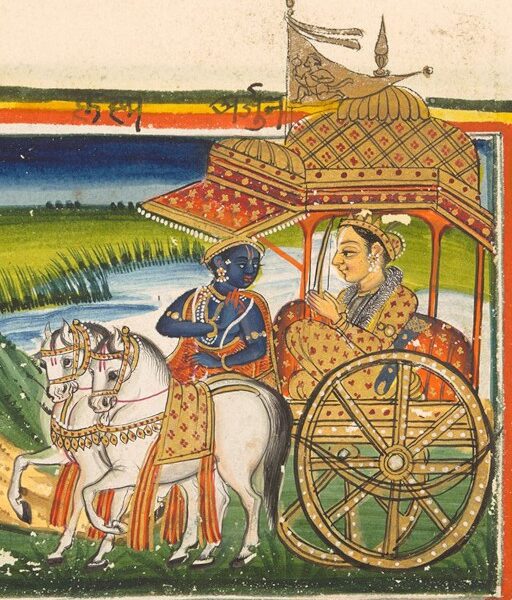
63. While contemplating the objects of the senses, a person develops attachment for them, and from such attachment, lust develops, and from lust, anger arises. From anger, complete delusion arises, and from delusion, bewilderment of memory. When memory is bewildered, intelligence is lost, and when intelligence is lost, one falls down again into the material pool. Only a devotee can control the senses. One who is not Kṛṣṇa conscious is subjected to material desires while contemplating the objects of the senses.
The senses require real engagements, and if they are not engaged in the transcendental loving service of the Lord, they will certainly seek engagement in the service of materialism.
One who is not, therefore, in Kṛṣṇa consciousness, however powerful he may be in controlling the senses by artificial repression, is sure ultimately to fail, for the slightest thought of sense pleasure will agitate him to gratify his desires. So, only in Kṛṣṇa consciousness can the senses actually be engaged and they not be entangling. So, it’s not a matter of if they’re just a little engaged or a lot engaged. It’s a matter of if they’re engaged, they’re entangling. But if they’re engaged a little bit, they entangle a little bit. If they’re engaged a lot, they entangle a lot. So, the idea is that the devotee is able to contemplate objects of the senses because the objects of the senses are for his senses.
So then, it’s very easy. It’s just like, let’s say, you want to buy something for yourself. It can be quite confusing. You know, because it could be this, it could be that. But if you’re thinking about someone else, you know what they like, what they’re looking for and all that. Then it’s very easy. You go in there and, okay, this matches, that doesn’t. Because you’re not looking at it from the perspective of what you can get from it. All right? Does that make sense? So, it makes it very easy. So, the point is, contemplating the object of the senses, it’s not technically, we would call it objects of the senses because it’s not the object of your sense. It’s object for Krishna. So, therefore, we’re saying contemplating what would be the best way to serve Krishna. So, we wouldn’t call it contemplating the objects of the senses. But technically, that’s what you’re doing. You’re looking at a situation, well, how can we make nice flower arrangements and nice decorations or other things like that for Krishna? So, it’s not technically contemplating the objects because it’s not the object for you. Does that make sense? Like before. So, we don’t call it sense gratification. Because if it’s for Krishna, it’s not sense gratification.
Is it the nature of some person that they like to speculate or contemplate more than the others? Yeah. It’s just, for them, it’s nothing like certain. They’re never sure of what it is. Yeah. No, it means, contemplation means everyone has their nature. So, people have different things. People like to think about things more and this and that. The point is that, does it come to a conclusion or not? That’s the important element. Because, as we were saying before, What was that?
The word muni means one who can agitate his mind in various ways for mental speculation without coming to a factual conclusion. So, there is a taste in that. And so, some people will do that. They don’t like, you know, whether it’s intellectual, whether it’s emotional. It’s just a matter of absorbing yourself that way. So, you know, it just disturbs the mind and creates some kind of situation for yourself that you somehow or another find…
How do you say? You’d say, I mean, comfortable would be the wrong word because it might be that it makes you comfortable, it might make you uncomfortable, but you actually like making yourself comfortable or uncomfortable. It’s a kind of self-identification. Yeah, it is. So, it means it’s there. Much of the time, if it doesn’t come to a conclusion, if it’s intellectually, it means then they like to, then the whole focus is for… They just want to speculate more and more. It’s the taste of that. Or maybe it doesn’t come to an emotional conclusion.
So, it just means your taste would be that it wouldn’t be intellectual, you just look at it from various ways of emotional. You know, they said this, or did they mean this, or they could mean that, and if it means that, then it means this, and then so many problems would be that way, and then this will happen, and then you lose everything here, but then what if they meant this, and there’s always… You know, it could just go on and on. So, it’s the same thing, but you’re just… Is the conclusion that’s being avoided emotional? Is the conclusion being avoided as intellectual? Because in either one of them, then you have to do something afterwards because generally if one is doing this, then one doesn’t do anything, right? Because the person who’s intellectually doing, then he’s not going to perform any activity because he’s speculating, he’s happy that way. The other one who’s doing the same thing, but emotionally, then they’re not going to act because the emotions are still moving, so until it settles, you can’t make, therefore, a direction and then do something. So, in either way, then we see that you have the element that they’re not being engaged. But it appears, you know, within the field it appears, seemingly appears glorious because the person’s very intellectual or they’re very emotional or… Does that make sense? It’s just… But the point to note is the conclusion, you know? Just like if you’re doing something, it’s not what you’re doing, it’s what’s the conclusion of that, who’s the result for, right? Then it makes it it’s devotional or it’s spiritual or it’s pious or it’s impious, like that. So the same way is that in here, the result or the goal of contemplation is conclusion. Because if there’s conclusion, then there’s action, right? So in both these, there’s no conclusion. So that’s where the problem is. That’s why you don’t have to look at what they’re contemplating or why they’re contemplating. It’s what’s the result.
Does that make sense? You know, so it’s just… That’s the nice thing. It means you go in from there and then from there you can expand it, whatever is, you know, the weaknesses or anything else. But if there’s no conclusion come to, that’s the problem. Because if there’s one thing, work on that. And if it’s not that, then you put it together. You know, that’s the thing. Intellectually you look at it. Okay, it looks like it’s like this, so therefore now act. And if you find it’s not like that, then you make adjustments. You know, same emotion. If you think it’s like this, then you act in that way. And then if you find it’s not, make adjustments.
Sometimes these people, devotees, they complain that if you give them conclusion, then it’s, you know, it’s no fun. It’s boring. You know, it’s straightforward and then where is the fun? So they don’t really like it. No, so you don’t get involved. That’s the best thing. When they’re doing that, then you always have something else to do.
That’s the thing. You can always check your japa and watch the fun when they go back.
You know, in other words, you do something else. Don’t get involved, because it means if you try and you see that that’s actually a thing, in other words, they just want to intellectually taste the intellectual contemplation or taste the emotional contemplation. So if that’s it, then they’re doing what they want to do. Because one will look at it, or they’re contemplating it to come to a conclusion to figure out what they want to do. But if when you give conclusion, that’s not appreciated, it means they’re already doing what they want to do. You know what I’m saying? So now it’s just a matter if you want to take part in that or not. So, it’s not so important then to do something else.
So that’s there. Because then, if it’s intellectual, it means the intellectualizing stops. If it’s emotional, it means then the emotion, the whole experience, the intensity stops. So the intensity of either the intellectual engagement or the emotional engagement stops. Because then you have to act. So as you act, then it kind of diffuses things since you have to put together the intelligence, the senses, the situation. So it doesn’t have the same necessarily absorption. You know, it can, but it doesn’t necessarily. So that’s why then, especially if the… Well, neither of them like it. Neither of them like it. Academics really hate it when you throw out a conclusion. They just really hate it. They just really hate it. Yeah, yeah. So you just don’t. You know. But then you can understand, OK, that’s where they’re… So don’t worry about dealing on that. But if you’re in a class, do what you like. If it’s personally talking with them, then boy, if you’re in a class, say what you like. You know, what can you do? If they don’t like it, then they can ask a question. If they dare.
Like that. But then that means they’ll hear another conclusion, so better to keep your mouth shut because then there’s less conclusions.
Yes? Could you say that such speculation and without conclusion is pretty much in the mode of ignorance? Oh, well, it means you have… Ultimately, there is the element of ignorance because without conclusion or without connecting to the Lord, then it doesn’t have any substance. But it’s not necessarily that’s what you’re working with. You know what I’m saying? Because the intellectual… Technically, intelligence is working with goodness. You know, in emotions, you’re working with passion. You know, like that. But it also can be… You have to just see what’s… And in that, what is their conclusion? You know, in not concluding, what’s their purpose? You know, is it just that like the academics get something intellectual and just keep going on and speculating. It makes them more and more inspired, so they get more enthusiastic and all that. So then, you know, that would be… They’re dealing with that aspect of the emotions. It gets intense, or this or that. As long as it’s… There’s a continuance. But if by absorbing yourself like that, it ends up as a destructive kind of element, then you could say that would be ignorance. The others would be… But it’s not… Ultimately, even if it’s… They’re using goodness, but their conclusion is not. Because it’s for their own purpose, so therefore, it comes back into passion.
You understand what I mean?
The mind is in goodness? The mind’s in goodness, yes. So the intelligence works with the goodness of the mind. Well, no, see, it’s just it’s made from goodness, but it doesn’t mean that you’re using it for goodness. You know what I’m saying? Like that. So it’s just what something’s made from, but it doesn’t mean that that’s what you use it for.
You know, like a shamataka jewel is there, so that has value, but the kid’s just playing with it like anything. It could be a rock.
You know what I’m saying? So it’s… All these things give an indication so you know how they function, and how to deal with it. So let’s say, like you’re saying there, the mind is goodness, is produced from goodness, right? So then that means then the element of dealing in the present, what’s present is important. Okay?
So, and…
Yeah, and so that would mean generally there’s knowledge, in which there is regularity, all these different things. So that is looking at the positive things, but then let’s say the same position, then the feminine nature is the mind. So it is therefore obsessing about some particular, you know, emotional element. So that’s been happening in the present, so it doesn’t matter what the past was. You know, two seconds ago they were in ecstasy and now they’re completely annoyed. It doesn’t matter what the past was. It doesn’t matter what you say what can happen in the future. It’s all about what’s happening right now. You understand? But if you don’t deal with the present, because you have to deal with the present in knowledge, then they’re going to say something connected with knowledge. No, they’re going to say, you don’t understand. But it’s not a matter of intelligence, it’s a matter of emotion. You know what I’m saying? But it means you’re not seeing the field.
Right? Because then the man, he’ll use intelligence. That’s his central position. But intelligence means engagement and getting a result. But here the present is not about getting a result, it’s about the experience.
Passion is you do something and get a result. So therefore it doesn’t match. So he’s trying to say, well this and that, to get a result. But that’s not the point. The woman is not about getting a result, it’s about the experience. It’s now and it’s natural transformations.
Does that make sense? Yeah. So therefore it means you have all these qualities that you know come from intelligence, or from mind and passion and goodness, but it’s a matter of how they’re manifest in that particular situation.
So if you understand, you understand how they function.
Does that make sense? It doesn’t mean you know what to do, it just means you know how to work it.
Okay, so then footnote 65. Śrīla Prabhupāda writes in his purport, Śrīmad-Bhāgavatam 4.22.14, in this material world the auspicious and inauspicious are simply mental concoctions, because such things exist only due to association with the material world. We say that something’s auspicious, something’s not auspicious, but it’s actually only because you’re in the material world you consider this thing auspicious or inauspicious. So actually, therefore it’s a mental concoction. It’s dead matter, so it doesn’t really, you know, it’s like, you know, is this rock auspicious or inauspicious? You know? So like that. So it’s just mental concoction. Oh, it’s very auspicious. Oh, no, it’s inauspicious. You know, like that. Is that the same thing, Śrīla Prabhupāda, that this world is the product of your mental speculation? Yeah. The world is a product of mental speculation because you’ve contemplated how you’ll enjoy, so therefore you have desires, you make your endeavor and move in that direction. So then the modes, then will create the whole, unfold the whole situation. So it appears that, no, I’m doing so many things, so many, but it’s all just the mental, yeah. Because if you thought differently, the situation you’d be in would be different.
You know what I’m saying? You know, it’s just like, somebody thinks in one way, they will, you know, go to certain places in a city. Someone thinks in another way, they’ll go to different places in the city. They’re both just thinking, I’m in the same, they’re in that city. But the manifestation is totally different.
This is called illusion or ātmā-māyā. We think ourselves created by material nature exactly as we think ourselves experiencing so many things in a dream. The dream we think is real, so then we identify with it, we have the experiences. It’s not real, but we have the experiences.
The spirit soul, however, is always transcendental. There’s no question of becoming materially covered. This covering is simply something like a hallucination or a dream. It means that they’re not actually covered. It means every living entity is pure, but they, in their illusion, think that they’re covered.
And is therefore… Does that make sense? So we can see is that element is then, means the impersonal concept is, or the mind-body concept, it’s all illusion. What’s illusion is how you perceive it, not what you’re perceiving.
What you’re perceiving is there. What you perceive of it, that’s where the illusion is. But they’ll say it’s just all illusion, there’s nothing there at all.
Does that make sense? But if they were really true to their philosophy, it would all be Brahman. So if you’re illusion what you think it is, but it exists and it’s Brahman, but then they’ll have problems, so it’s just easier to say this doesn’t exist.
In Bhagavad Gita 2.62 it is said, saṅgat sañjāyate kāma. Simply by association, we create artificial material necessities.
They’re not necessary. We say, oh, I have to have this or I have to… The soul doesn’t need any of that.
You know, we have to have our house, we have to live in Malibu and… No, you don’t have to. Does that make sense? No? Yeah, Paris is fine. Why have to go to Malibu? jāyato viśvayān puṁsās saṅgastheṣu pajāyate.
When we forget our real constitutional position and wish to enjoy the material resources, our material desires manifest and we associate with varieties of material enjoyment.
We forget the constitutional position, then we wish to enjoy the material resources. Because the resources are there. When we see I’m serving the Kṛṣṇa, then the resources are… You have to contemplate them connected to Kṛṣṇa. But if you don’t see them in relationship to Kṛṣṇa, then you contemplate how to enjoy them for yourself. So then, therefore, the desire will come up, then the attachment, then the lust, then the anger, like this. And we associate with varieties… As soon as the concoctions of material enjoyment are there, because of our association we create a sort of lust or eagerness to enjoy them. And when that false enjoyment does not actually make us happy, we create another illusion known as anger.
Because now we’re very angry about… Our dream didn’t work out the way we want, and now in the dream we’re really upset.
And by the manifestation of anger, the illusion becomes stronger. Because then you really identify with it, you really… You narrow it down and you take steps that maybe you wouldn’t otherwise. When we are illusioned in this way, forgetfulness of our relationship with Kṛṣṇa follows. And by thus losing Kṛṣṇa consciousness, our real intelligence is defeated.
Like the sac-cid-ananda. So the real, the cid, nature of the soul, then that’s defeated because we become under illusion.
In this way we become entangled in the material world. In Bhagavad-gītā 2.63 it is said, by material association we lose our spiritual consciousness. Consequently, there is the question of the auspicious and inauspicious.
So spiritual consciousness, though it’s not auspicious or inauspicious, it’s just what pleases Kṛṣṇa. In the material world there is auspicious and inauspicious, because auspicious means what’s going to be good for us. Because it’s good. You do something auspicious means it gives benefit. Material benefit accrued. And who will get the benefit of the material benefit? Ourselves.
Either ourselves or our extended identity. You know, as family, friends, community, nation, humankind, life, like that. But those who are ātmārāma, or self-realized, have transcended such questions. The ātmārāmas, or self-realized persons, gradually make further progress in spiritual bliss.
Gradually making further progress in spiritual bliss, come to the platform of association with the Supreme Personality of Godhead. That is the perfection of life. In the beginning, the Kumāras were self-realized and personalists. But gradually they became attracted to the personal pastimes of the Supreme Lord. The conclusion is that, for those who are always engaged in the devotional service of the Personality of Godhead, the duality of the auspicious and inauspiciousness does not arrive.
Does that make sense? So, in other words, the question of piety or ina-piety, it’s not a matter of that, because the material world is an illusion anyway, that it’s pious or impious. So the only value to something is that śāstra says it should be done. So what śāstra says, that’s always auspicious. But for us, it’s only auspicious because it’s connected to Kṛṣṇa. Otherwise, even if we follow auspicious things defined by the Vedas, it’ll still keep us in illusion, because we’re not seeing that auspicious is meant for Kṛṣṇa. Inauspicious means the lack of doing things for Kṛṣṇa. But still, even we’re doing auspicious, we’re leaving Kṛṣṇa out of it. So ultimately, it’s still inauspicious.
Yeah, there wouldn’t be any questions otherwise. You know, the forest fire is there, but what happens when the forest fire is there?
Yeah, it means everybody remembers Kṛṣṇa, and now Kṛṣṇa interacts with the devotees. So there’s nothing inauspicious. Because here, inauspicious means there’ll be a loss.
So that’s why the devotee, technically, there’s no inauspiciousness, because there’s no loss. It means material facility may not be there, but the point is, you can still remember Kṛṣṇa.
So it just makes it that much easier. How can one be a self-realized impersonalist? Self-realized impersonalist. What would you want them to realize?
Self means… Yeah, that’s there. But they understand the self is Brahman. That’s their understanding. So, you see, here’s the difference here. The impersonalist means there is no illusion. It’s just all Brahman. It’s an illusion to think that it’s not Brahman.
But for the Māyāvādī, you have this kind of element of duality that there is an illusion that doesn’t exist.
What you’re in illusion about is not there. But for the impersonalist, what you’re in illusion about is you think it’s something for enjoyment or this and that, but actually it’s just Brahman.
So this building exists, but it’s Brahman. But for the Māyāvādī, they’ll say it doesn’t exist, there’s only Brahman. That this building can’t be Brahman.
So it’s quite selective. And then the people, I am God, you’re God, we’re all God. But somehow or another, the forms and everything else is not also part of God. Or they’ll use it and then everything is God, so therefore you can enjoy anything you want. So it doesn’t work very good. So here self means they understand that the individual, them as a soul, is part of Brahman. So all there is is Brahman.
You know what I’m saying? So whether this themselves is Brahman, the complete Brahman, but it’s just Brahman, so it doesn’t matter. It’s one rock, there’s many rocks, but it’s rocks. So it’s not a problem if there’s one rock, but the point is it’s rocks.
But the Māyāvādīs just say there are no individual rocks.
There’s only rock.
You know what I’m saying? But the impersonalism is not a problem if there’s rocks. The point is if you think it’s ice cream or something, then you have a problem. Like a pad for your teeth.
Does that make sense?
So what the impersonalists are discussing and what we’ll discuss will actually be the same thing. The only problem is they’ll stop at Brahman, while for us that’s where it begins. We begin with Brahman. That’s like you’re situated spiritually. And then you paramaṁ bhagavān. So you’re trying to get to the bhagavān platform. So for us, Brahman is just where we start. Just like when we preach. Sarva-dharmaṁ puruṣaṁ, just where we start from. But in other sampradāyas, that’s their secret mantra, and they tell that to somebody when they’re old and give up family life and are going to sit down and do bhajans. Then they hear that mantra.
Does that make sense? So for us, we just start on Brahman.
Brahman is the quad, all-pervading. It’s everywhere. Everything’s connected to the Lord. So universal form is where we start the discussion.
So for us, it’s not like getting to Brahman. We start from Brahman. We’re trying to get to bhagavān. Because it all is Brahman. So it’s not a matter of thinking it’s Brahman or not thinking it’s Brahman. It is Brahman. It’s an illusion that it’s not Brahman. It may be little kid Brahman, or it may be kids throwing Brahman rock through the lady next door’s window Brahman. Like that, but it’s all Brahman.
So for them, it’s not a problem. So rock Brahman has gone through window Brahman. So what’s the big deal? It’s got nothing to do with the soul anyway. It means as far as that this window is something important other than it’s Brahman-ness.
But because of dealing with bhagavān, then you can look at the whole culture that goes along with it. They can identify. Okay, you identify within it, so you’re feeling a problem there, but you just have to give that up and become neutral. But for us, it’s though that window can be engaged in the Lord’s service. So that’s why you don’t want rock Brahman going through window Brahman. Because then when rock Brahman goes through window Brahman, the window is not very good use in Krishna’s service. All right? Does that make sense?
Is that okay?
I’m just thinking about, we haven’t, it’s probably always been there, big push of chanting, it’s very purifying, but now we have Harinam, and we have Gita and all that. Right, right, right. I’m just thinking that it’s talking about devotional service, yes, chanting is devotional service, but I’m thinking maybe we have to see a real balance in performing service and chanting. Yes, yes. Yes. See, the point is, as long as the conditioning is there, it means of the two, it’s just absorbing oneself in the name, form, qualities, pastimes, paraphernalia, associates, dhamma. That’s what we’re trying to do. So now, of all the processes to uplift one to that, then the chanting process in the association of audience is the best. But the point is, is if one’s conditioned, that conditioning is what is keeping you, is the distraction that you’re not remembering Krishna. So by engaging those distractions according to the do’s and don’ts that Shastra gives, then they are connected to Krishna. So instead of taking us away from Krishna, they are purifying and connect us to Krishna. So then we’ll be more inclined to be absorbed in the direct process, right? So occasionally you have something like they have the kirtan mela, you have it, you know, there are those who may travel around, they’re always in a kirtan mela, like the ones that they list on the, you know, who will be singing, they’re generally at most of the kirtan melas. But most everybody else who comes, is that however often the kirtan mela comes through, that’s how often they’re in one. Right? Does that make sense? Yeah, well I’m saying it’s another thing. So that’s conditioning, right? Otherwise you can always walk, right? You know, as long as they’re not too close together. Okay, maybe you miss one, but you get the next one. But then that one’s too far away, and by the time you get there, then we’ll be, yeah, so walk fast, maybe.
Get a bicycle.
Yeah, it’ll speed things up a lot.
Does that make sense? Yeah, it’s a balance. It’s not just kirtan, kirtan, chant, chant, chant. It means if you can do that, that would be the best. But the point is, if one’s not doing that, then the balance is all those other aspects, you’re seeing how to connect them to the Lord. Right? Otherwise then it’s kirtan, and then you’re spiritual, and then you go back to normal life. But there isn’t, as we said here, that the concept of normal life is actually an illusion. So it’s when those things are connected. So the idea is as much as you can absorb yourself. In other words, if you could absorb yourself in kirtan, or you could sit at home and do something not so glorious, then better to do the kirtan. But if it’s a matter of you’ve done as much kirtan as you can do, now you need to do something else because of your conditioning, then do something else, but see that what you’re doing is connected to the Lord. Does that make sense? Because it’s like, the family went to the kirtan mela, and then afterwards they come home and talk about how nice it was being at the kirtan mela. So I mean, it’s connected. But why are they at home? Hungry? Yeah, could be hungry. It’s finished. It’s finished. Like that, what if it’s 24 hours?
And it’s finished. Yeah, so the point is, what we’re missing here, the subtle thing is, they need to be at home. There’s an attachment of being at home with the family members, but that’s being used properly because now they’re discussing about the kirtan mela.
You understand? But the point is, is the attachment is still there. So as long as that’s there, there’s not a problem that they go home. You know what I’m saying? But if they had more and more taste, then they’d all stay out.
You know what I’m saying?
So it’s just a matter of how it’s… Yeah, you have to have a balance. Like Lord Chaitanya, they would do kirtan, but then at some point they would stop, and they would take prasad, and rest a little bit, and all that, and whatever duties they had to take care. Then they’d come back together in the evening. Like that. Generally, those kirtans are quoted for the kirtan mela. They quote Nityananda Kapoor’s 72-hour kirtans, and stuff like that. But generally speaking, Lord Chaitanya, they did kirtan in the morning, stop, like that. Then in the evening again, start. Like that. So he said he’d do 12 hours kirtan, but that was 12 hours in a day, not in a stretch. You don’t really hear of Lord Chaitanya doing 12 hours in a stretch. Nityananda, yes. 72 is not uncommon.
But he’s an amateur. Lord Chaitanya would kind of work within the cultural framework.
So even if they did 12 hours a day, but they would do it in the morning, then they’d do it in the evening. Like that.
Yes.
So you can only do kirtan in Kṛṣṇa. There’s nothing else to do in Kṛṣṇa either.
You have to remember, they’re not sādhakas.
We’re discussing Harinanda is the best, because we sit down and do kirtan. We’re not doing something else. Right? What’s the example? Arjuna was sleeping. When he went up close to Arjuna, his hair was chanting.
Right? That makes sense. The point is, these devotees are always hearing and chanting about Kṛṣṇa, but then there’ll be the form of doing kirtan. Samkīrtana, the kīrtana, like that. So that’s done some of the times. But they’re always doing kīrtana. There’s no question of them ever not doing kīrtana.
Right?
Because the point is, the kīrtana’s nice, but also sitting down afterwards and having something to eat is nice. Or resting, or sitting and talking, or going for a walk is nice. You know, or playing in the jimuna is nice. They’re all nice. Because it’s all connected to Kṛṣṇa. But for us, there’s a chance that most everything else, except kīrtana, is not necessarily connected to Kṛṣṇa.
You know what I’m saying?
Right? It means you’re sitting at your house, so in the morning, you know, you do 20 minutes kīrtana, or half an hour kīrtana with the family, and all this, and then you get ready, you know, breakfast, kids go off to school, you go off to work, and that. And then in the evening, you know, you come together, and then there’s a little, you know, or artique, somebody does the artique, this and that, and maybe you sit there and read a little bit of something, and like that, you know. Does that make sense? Is that too, a too archaic presentation here? Right? Like that. In other words, the point is, is even though we go, wow, that’s so, you know, who does that? But, you know, you’re talking about maybe an hour here of kīrtana, in a day, in 24 hours. Right? Does that make sense? But if there’s a kīrtana mela, then we’ll go and sit there for, you know, eight hours or 12 hours or whatever it is. Right? You know, it comes up for, you know, one day or, you know, here four days or whatever it is. And then we’ll go back to our, you know, one hour a day. Does that make sense?
Okay.
Okay. But a person free from all attachment and aversion and able to control his senses through regular principles of freedom can obtain the complete mercy of the Lord. Right? So that means these regular principles are important. But they’re regular principles of freedom because they free one from the senses just doing whatever they like. So it appears, we’ll take it as from the perspective of the mode of ignorance that it’s restriction. But Krishna is calling the regulated principles of freedom. Means they restrict the material and then bring you to the transcendental class, so you’re free.
You understand? But due to mode of ignorance we’ll think, oh, it’s too much.
Some.
Some are conditioned. I see.
Oh, in a particular way. Oh, but only some. Most are conditioned in general ways, but only some are conditioned in very specific ways.
Okay.
Depends which ones you’re talking about. Are you talking about the ones right in the very center or the ones a little bit outside of that or which ones are you talking about?
Well, I mean, the guys there, they’re showing off their tats and, you know, their muscles and all that kind of stuff and doing all that kind of stuff. So it’s because they’re musicians and therefore they’re better situated?
Yeah. So the point is any conditioning has its good and bad points. So because the musician, because it’s a form of music, therefore they can sit there for the 12 hours. But the point is how much of that they’re actually absorbed in the kirtan.
But the point is is because even whatever they’re absorbed in it’s of support to the kirtan they’re getting benefit for that. And they’re hearing the name so whether they’re hearing it purely or not they’re getting benefit. So you could say yeah, that would put them there.
You know, but that’s just a musician. But at the same time is then if it’s not that kind of kirtan they might not go to another kirtan that someone else who is a little bit farther out in the circle might go to. You know what I’m saying? Because someone else is singing and so it doesn’t matter who’s singing. You go to the kirtan they’ll only go if it’s a particular level of, you know, singing in the dhamma or the tune. You know, so it also depends upon the taste whether it’s specific or general. You know, in other words there’s two kinds of tastes of the name. One is that if it’s done in a particular way you have a taste. And the other is that if it is it doesn’t matter. It’s the holy name so you know. It’s nice.
You know what I’m saying? The point is that if you can focus on the name it doesn’t matter who you are because focusing on the name is, you know, the natural quality of the soul. So if someone has good sadhana they can also sit there. Or at least they like chanting then they can sit there.
So I’m saying everything has its advantage and disadvantage. So if that’s an advantage for them so that they can be in the kirtan great.
But then when they’re not in the kirtan you may or may not want to know what goes on.
You know what I’m saying? Like planning your next tattoo how much that’s, you know.
Yeah.
A devotee is transcendent to all attachment and detachment. It is already explained that one may externally control the senses by some artificial process. But unless the senses are engaged in the transcendental service of the Lord there is every chance of a fall.
Although the person in full Krishna consciousness may apparently be on the central plane because of his being Krishna conscious he has no attachment to sensual activities. In other words he’s engaging because here it mentions attachment and detachment. Because we take it that detachment is automatically spiritual. No. It’s just a different form of attachment.
Right? But it may be progressively you know, up to a point. But the difficulty is is that Krishna consciousness means the senses are engaged in the Lord’s service. So sometimes the attachment to detachment doesn’t allow you to engage the senses in the Lord’s service. Like sometimes very detached persons can’t appreciate prasad. Right? I mean it’s prasad so they take it as spiritual but they can’t appreciate that it tastes nice or it’s well cooked or because that would be maya. You know. It’s not. It’s Krishna. Yes, it’s maya. It’s yoga maya. You know, because it’s Krishna. Does that make sense? So the idea is that it may appear they’re acting on the essential platform but they have no attachment for it because it’s connected to Krishna.
Krishna conscious person is concerned only with the satisfaction of Krishna and nothing else.
Therefore, he’s transcendental to all attachment and detachment. So he’s transcendental to the one person’s attached. The karma is attached to his particular activities the results they get, those experiences. Right? And the person who is detached is attached to being detached.
Right? Does that make sense? You know, in other words, the person who’s attached is willing to go through all the trouble that goes with grhastha life. The person who’s detached is attached to being detached from that. You understand? So both is fine. But the point being made here is that attachment or detachment that’s not the Krishna consciousness. It’s that whatever is you’re doing is connected to the Lord. If it’s connected then it will be then one will be properly situated. Then you can get the complete mercy of the Lord.
Therefore he’s transcendental to all attachment and detachment.
If Krishna wants the devotee can do anything which is ordinarily undesirable.
It means, you know, Lord Caitanya wouldn’t associate with Maharaja Prataparudra because he’s a king. So kings are just, you know, he said pounds, shillings and pence. They’re just interested in you know, money, power and this and that. But at the same time Yudhisthira is emperor of the world. He’s not just king of a little part of you know, India. He’s emperor of the world. So it would be in that way normally undesirable but they can do. Ambrish Maharaj to these other great devotees. And if Krishna does not want he shall not do that which he would have ordinarily done for his own satisfaction. If Krishna doesn’t want he won’t do it.
Therefore to act or not to act is within his control because he acts only under the direction of Krishna. Because otherwise maybe you’ll do maybe you’ll not the mind gets attached then you go that way. But here it’s for Krishna so therefore you know, it would be nice for Krishna you’ll do. If it’s not nice for Krishna you won’t do. Like Yudhisthira Maharaj to tell a lie that wouldn’t be considered desirable.
Like that. But that’s what Krishna wanted to be done. Because you’re dealing with all these Nityists. You’re not dealing with Dharmic people. Right? And so therefore if you use Nitya against a Nitya person what’s the problem?
Does that make sense?
This consciousness is the causeless mercy of the Lord which the devotee can achieve in spite of his being attached to the sensual platform. So here is the causeless mercy of the Lord so you want it Krishna can give it even if one’s attached to the sensual platform. Because once you get it you won’t be attached anymore. But you have to want it.
Does that make sense?
Which desires?
No, it means it depends on what you call getting something done. You know what I’m saying? So there may be lots of activities. The point is it doesn’t matter if there’s more activities or less activities. It’s just full engagement.
So someone who’s very scholarly he may just sit down and read a book all day. And then the next day he’ll give a class. So it doesn’t look like a lot’s happening. But he’s fully absorbed.
And someone else they may be managing this and that making a million phone calls running all over and doing that. So that’s their nature. They’re engaging it. The point is whatever the conditioning the senses are engaged in that way. Does that make sense?
Okay. Then footnote 66. Śrīla Viśvāna Cakravartī Ṭhākura writes in his commentary to 2.64 The Lord explains that it is not a fault to accept the objects of the senses if it is done with controlled senses with absence of attachment of the objects of the senses.
In other words for the sthita-prajñā accepting the renunciation of enjoyment of objects either by withdrawal of the senses or by engaging the senses is beneficial. So if there’s nothing to use for Kṛṣṇa’s service you withdraw the senses. If there’s something to use the senses for in Kṛṣṇa’s service they engage the senses. So for them it doesn’t matter which way it is. So they are transcendental to attachment and detachment because they can use either. Whichever is best for Kṛṣṇa’s service that’s what they use. Does that make sense?
265-66 For one thus satisfied in Kṛṣṇa consciousness the threefold miseries of material existence exist no longer. It doesn’t mean the modes of nature aren’t functioning but the miseries that they create don’t exist anymore. In such satisfied consciousness one’s intelligence is soon well established. Notice here it says satisfied it doesn’t say happy because it’s satisfied. Because you can’t be happy you can be satisfied. Happy is a momentary means when something you want that you don’t have you obtain that moment is called happiness. And depending on how great it is and how long you’ve been desiring it then you can kind of stretch it out for a little bit. Right? But that’s why it goes away. The satisfaction that’s something that can remain.
Because then on the spiritual platform you can be happy but on the material platform happiness is simply removal of pain. So therefore that pain is removed be satisfied.
Right? There’s no pain be satisfied.
Unhappy and satisfied.
Yes, no as I mentioned yesterday it goes back to the training of your mother.
You know because that’s the whole thing is how to always means the perfection is how to be always insecure always look at yourself as, you know useless and then but at the same time be satisfied with that identity and therefore be upbeat about it.
Isn’t that what every…
Yes, so that’s that’s the whole point. What am I saying? So the point is whatever the situation you’re satisfied because, you know it could be something different.
Like that. You know, it could be better but it could also be worse so whatever it is be happy with that.
Satisfaction is beyond Satisfaction is beyond Yeah, yeah you could say but at the same time it’s within you could say it’s goodness. You know, like that at least on the material platform is goodness that you are with knowledge you know that this is what’s there and that’s it’s not necessarily going to be better and even if it is better it’s just it’s just a matter of conditioning. You know someone who has more facility for them that’s ordinary someone who has less facility that’s ordinary. You know, so if one gets what the other has then one is happy one is not happy so it’s just a matter of so it’s not the facility that makes you happy or not it’s what, how it’s the that illusion that you project upon it that this will make me happy or not this is auspicious or this is inauspicious.
Right? So therefore if we’re satisfied it’s just it doesn’t matter what the situation is then we’re satisfied and that we just how to serve Krishna in this situation.
Then why is there people who are never satisfied?
The illusion that you can be happy within the material world is I guess too strong. You know because why would you be unsatisfied? Because you think I can be materially happy.
You know but if you think this is as good as it gets then, you know because happiness is just is an experience that, you know is just connected with what you are what you’re with the situation you’re specifically in because how you perceive it it’s happy someone else perceives the same situation as not happy. You know what I’m saying? The guy sitting there down on the beach you know at the Bahamas there you know got his, you know the chair he’s got his drink with a little umbrella he’s got his sunglasses on you know like that he’s got this coconut tree he’s happy but you know sitting next to him the polar bear is very unhappy.
Even he’s got got his, you know shades on it’s still it’s just not working for him.
You know what I’m saying? So that’s the point is it just it doesn’t it’s we are just perceiving what’s auspicious and what’s inauspicious so when it’s understood that there there is no auspicious and inauspicious it’s simply what is useful for serving the Lord and what’s not then it becomes a problem. Right? So one’s always dissatisfied that just means they have so much material desire and it can never be fulfilled.
You know.
Because this phenomena actually happens to regular people and devotees as well. Yeah. I mean we’re only discussing in the context of devotees. Yeah. Even most of my examples that seem exceedingly mundane I’m giving example from devotees lives you know but it’s being said in that way so it’s amusing.
Yeah. No it it bothers everybody because the point is this material world is not satisfying.
You know like Yayati he was you know young when he was you know got cursed by his father-in-law.
So then he you know arranged got from his youngest son his son’s youth for a thousand years. So then if you count it as if it’s Satyuga you live a hundred thousand years so a thousand years you know that’s not so bad. Even if he only lived ten thousand years still a thousand years you know okay. You know. So he for a thousand years then according to you know what’s proper he engaged his senses to the maximum that they could be engaged. Right. And being a king then that gives you know a lot of variety a lot of facility. Right. And after a thousand years he came and gave the youth back to his son because he was satisfied now that there’s no satisfaction in the material with immaterial sense practication. So the satisfaction is there isn’t any.
You know not because we’re in anxiety because we think there is. And we’re not and it’s it’s not happening to us. Or it happened or you know and it’s not happening now. In other words the present we’re not experiencing. So when we’re satisfied that there is no satisfaction therefore then whatever comes along it doesn’t it doesn’t matter. It’s like that the python saga you know he’s there he said sometimes I’m fat sometimes I’m thin sometimes people come and bring me food sometimes they don’t. You know. So it doesn’t it doesn’t really matter.
Does that make sense?
So these are all things to contemplate and it’s in other words they kind of put a they throw out an idea or an option or a doubt that you know that the mind just running you know on it’s natural rampage is fine. You know and that will make us happy. So all these things that slowly it’s well it’s so then you know we contemplate now and again then we’re able to connect them and that slowly slowly becomes more and more so then it it does that make sense? You know it’s like you know they’re slowly waking up.
Because it’s a reality that’s why Krishna was talking about it. You know the great saintly persons they’ve done it that’s why Arjuna mentions all these great personalities. So they it’s a fact it’s used it’s done it’s been it’s been experienced.
Just we’re not necessarily you know accustomed to it. You know it’s like that but it’s a reality.
It’s just like how are the old people they’re satisfied.
You know because but at the same time they can’t do something new to make themselves happy.
You know what I’m saying? They’re just satisfied you know this is it you know this is the way it is we’re old the ones that don’t like being old they’re not satisfied.
The ones that it’s kind of we’re old hey you know we’re cool. You know what I’m saying? Because it’s so it’s satisfaction is a state of mind it’s not getting something or losing something.
Yes?
But how much can you do to be satisfied? Because when they’re younger it doesn’t matter how much you do you have to do more.
No no but I’m saying no but it’s a matter of whatever they did they’re satisfied with. You know because somebody just you know they were at home and grew up in the area and they you know raised their family and you know they’re all grown up now and they all have kids and you know they’re moving on in life and someone else you know was in the great war and he did something for his country and all that and he sits around and satisfied and he did something you know he thinks so it’s you know it doesn’t matter it’s a matter of whatever they did it’s a matter if you’re satisfied with it you’re comfortable if you’re not satisfied with it it’s not what you did it’s not how much you did it’s a matter of they’re satisfied with whatever they did. Yes?
Yeah but satisfied means you’re satisfied with what it is you know it’s not too cold because it could be colder and it’s not too hot because it could be hotter you know because some people say I like this kind of weather it’s not too hot it’s not too cold but if you’re satisfied it means that it could be hotter it could be colder but whatever it is you’re comfortable does that make sense? there’s a difference what if someone else is bothered by that I mean I’m satisfied but someone else is is bothered so what what can you do about it?
sing a song I mean I change my parents’ love life or something like that no but what does that got to do with your self-satisfaction? you know what I’m saying because we’re discussing self-satisfaction you know the point is whoever’s satisfied is peaceful whoever’s not satisfied is not peaceful means this is what you have so you can you can either be dissatisfied and be miserable though you’re going to stay in the same it’s like it’s not by being dissatisfied and miserable it changes the situation so you might as well just okay that’s the way it is yeah because that’s so that you’ll continue means it’s not that you’re not satisfied by the process of it but you’re not satisfied it’s been enough but we’re talking here about material desire and stuff like that so that means in other words good work you know is always seen as that one is always it’s just like Krishna conscious one is never satisfied that I’ve done enough Krishna conscious now I can sit back no the devotees are always engaged because it’s so nice that it’s ever increasing but the material dissatisfaction is there is because there isn’t any anyway you know what I’m saying so it’s a matter of to so that you will be inspired to further proper performance of activity therefore that element of not satisfied but it’s not that they feel bad about it if we say dissatisfied it says you’re not satisfied it doesn’t say you’re dissatisfied in other words it’s good but you can always do more they don’t feel bad about it but even that still unless it’s connected to the Lord it doesn’t have any benefit you know something it’s not your tell for one that’s satisfied in Krishna consciousness do we finish now? okay for one that’s satisfied in Krishna consciousness the threefold miseries of material existence exist no longer in such satisfied consciousness one’s intelligence is soon well established because the mind is not distracting so then the intelligence of analyzing and knowing what to do is good one who is not connected with the supreme in Krishna consciousness can have neither transcendental intelligence nor a steady mind without which there’s no possibility of peace and how can there be any happiness without peace right so someone who’s satisfied they can be happy because if you’re at the neutral state you can get to the positive but if you’re not up to the neutral you’re below neutral how you’ll get how you’ll have positive that makes sense so in the material platform you’re just removing the pain so you don’t actually there is no pleasure like you’re really hungry so eating means you’re removing the pain of hunger so as long as the hunger is still there you’re eating you say will be enjoying but as soon as the hunger is removed it doesn’t taste anymore or when you’re tired you lay down it’s like that but as soon as you’re not tired then laying in bed is annoying you know they’re saying anything it’s just up to the point of its removal once it gets to the neutral state immediately then we look for some other problem does that make sense so that would also answer your saying is that you have constant problems then you have constant endeavors to make yourself happy by removing those problems yeah one can be peaceful only in Krishna consciousness unless one is in Krishna consciousness there is no possibility of peace so it is confirmed in the 5th chapter 529 that when one understands that when one understands that Krishna is the only enjoyer of all the good results of sacrifice and penance that he is the proprietor of all universal manifestations and he is the real friend of all living entities then only can one have real peace therefore if one is not in Krishna consciousness there cannot be a final goal for the mind because otherwise it’s just this and that’s that then the next thing and the next thing and the next but it’s unlimited you have the options of what you could do you know does that make sense disturbance is due to one of an ultimate goal and when one is certain that Krishna is the enjoyer proprietor and friend of everyone and everything then one can with a steady mind bring about peace therefore one who is engaged without a relationship with Krishna is certainly always in distress and is without peace however much he may make a show of peace and spiritual advancement in life Krishna consciousness is a self manifested peaceful condition which can be achieved only in relationship with Krishna now we see those who are in this condition you know and they don’t sit around and talking in these very soft tones you know doing funny funny things like that you know that will say oh this is a person who has attained peace right like that so it’s just you know it’s just he may make a show of peace and spiritual advancement no they’re just they’re just peaceful ok so that ultimate goal because the mind is means mental speculation means there’s always something newer and newer you could go through means if this didn’t work well we can make an adjustment and try this or this whole idea is wrong throw that all out and try something completely new right does that make sense you know you try different things like that and then you know sometime depending upon the individual sometime in their youth they figure out a goal right youth is 16 to 30 they’ll figure something out right then they’ll work for that and then then you know if it works out for them great but if it doesn’t work out for them they’ll keep trying until they’re about 50 45, 50, 55 somewhere in there then they’ll think this didn’t work and so then they’ll throw that completely out and try something completely new right so then again they’re back at the stage like the little kids you know will I be a fireman or will I be this or that or an astronaut you know so like that so they’re trying all these different things again right 267 -68 As a strong wet wind sweeps away a boat on the water, even one of the roaming senses on which the mind focuses can carry away a man’s intelligence. Therefore, O mighty-armed one, O mighty-armed, one whose senses are restrained from their objects is certainly of steady intelligence. Because sometimes it says O mighty-armed one as the vocative here it’s O mighty-armed one whose senses right so here says says says says sweep the strong wind sweeps away a boat so that was the point before is that wherever it focuses so the point is is someone you know the sage there’s less to focus on but if they do focus on something you know because generally they’ve gotten themselves there by focus so there’s less material to focus on so if they somehow or another focus on something material they will have a stronger effect right but it doesn’t mean that they’re you know the same it just means that the point is you think about contemplate the senses it’ll create a problem the other person has to contemplate over a long time before anything happens but this person because of his advancement is so focused that it happens very quick you know only Krishna consciousness can curb sense gratification one can curb the forces of sense gratification only by means of Krishna consciousness or engaging all the senses in the transcendental loving service of the Lord as enemies are curbed by superior force the senses can similarly be curbed not by any human endeavor but only by keeping them engaged in the service of the Lord so right here it’s not a matter we’re going to sit down with determination and control the senses it’s going to be that the senses are controlled because they’re engaged in the Lord’s service like that so this idea no I’m going to do this myself no you just engage it in the Lord’s service that’s what makes it work one who has understood this that only by Krishna consciousness is one really established in intelligence and that one should practice this art under the guidance of a bona fide spiritual master is called sadhaka or a suitable candidate for liberation so then that suitable candidate means that they’re dynamic before we talk about less suitable so here’s the more suitable understood this that only by Krishna consciousness is there it’s not anything else it’s not by renunciation it’s not by being practical it’s not by this that it’s just engaging the senses in the Lord’s service that makes it work right and so that is being done under the guidance of a spiritual master so appreciating that then that is a suitable candidate 269 what is night for all beings is the time of awakening for the self-controlled and what is the time of awakening for all beings is night for the introspective sage devotee is always indifferent to materialistic happiness and distress activities of the introspective sage or thoughtful man are night for persons materially absorbed materialistic persons remain asleep in such a night due to their ignorance of self-realization the introspective sage remains alert in the night of the materialistic men the sage feels transcendental pleasure in the gradual advancement of spiritual culture whereas the man in materialistic activities being asleep to self-realization dreams of varieties of sense pleasure feeling sometimes happy and sometimes distressed in his sleeping condition the introspective sage is always indifferent to materialistic happiness and distress he goes on with his self -realization activities undisturbed by material reactions 67 Śrīla Prabhupāda writes in the Purport to Śrīmad-Bhāgavatam 10.2.15 the word yoga-nidra is significant when one is spiritually reconnected through self -realization one regards his material life as having been like a dream as stated in Bhagavad -gītā 2.69 what is night for all beings is the time of awakening for the self-controlled and the time of awakening for all beings is night for the introspective sage the stage of self-realization is called yoga -nidra all material activities appear to be a dream when one is spiritually awakened thus yoga -nidra may be explained to be yoga-māyā so for the sage he’s engaged in spiritual life so that’s his day but that’s where the spiritual life is where the materialist is asleep he’s unaware of it so he’s actually engaged not in spiritual life but in cultivating through mental speculation the dream state of illusion that I will be happy here so it means the sage is awake but the materialist is asleep it doesn’t mean he’s lying down in his bed it means that he’s asleep to spiritual understanding so he’s dreaming in an illusion that he’s happy and in the activities that the materialist is engaged in to make himself happy that would be his daytime, his activity the sage is asleep to those he’s not interested in engaging the senses for himself so we’re not necessarily meaning here that we’re asleep at night and when we get up that’s when the people are going home from the party that there is there also but that’s what I always thought was interesting because he had this yeah, the middle of summer I guess England is far enough north that it’s ridiculous when the sun goes down so when we walk from the brahmacharya ashram to the temple then across the street from the temple and that’s the area all these nightclubs are there and so at four in the morning you’re walking to, going to the temple and all these other people are coming out of there laughing and that, and on their way home and the conference is when the brahmacharyas are sleeping during the day they’re all hard at work yeah, yeah, yeah true 270 A person who is not disturbed by the incessant flow of desires that enter like rivers into the ocean which is ever being filled but is always still can alone achieve peace and not the man who strives to satisfy such desires devotee is fully satisfied in transcendent loving service to the Lord in other words as long as one has the material body the bands of the body for sense gratification will continue sense gratification means the engagement of the senses so the senses are connected to the Lord then it’s not sense gratification but the senses need to be engaged because that’s what the body is made out of so let us say say there’s some area that we’re able to deal with let’s say on a fast day you know, we’re fasting, it doesn’t bother us so there’s so many things to eat around other people are complaining how they’re so hungry and it doesn’t bother us but it means there’s so many different things that may even come up in the mind but no, but you know, it’s a fast, it goes away so that same principle can be applied to anything if the mind speculates that no, this is an opportunity or you just thought of it as a new way of looking at it so therefore we should try it but it’s a matter of no just as in the other there’s so many things you could eat or do you don’t and you’re satisfied so the same way as any of the senses then you can apply the same thing the same principle the devotee, however, is not disturbed by such desires because of his fullness the Kṛṣṇa conscious man is not in need of anything because the Lord fulfills all his material necessities therefore he is like the ocean always full in himself desires may come to him like the waters of the rivers that flow into the ocean but he is steady in his activities and he is not even slightly disturbed by desires for sense gratification opportunity is there but you could do so many things somebody sees an open window they want to jump out of it but you don’t so it’s not a matter of just because there’s an option you have to take it it’s a matter of options are there but the point is options are only for the devotee options if they’re connected to Kṛṣṇa and if they’re not they’re just like unimportant you know what I’m saying let’s say we’re walking along and there’s a nice green lawn a cow would want to come over there and eat it you don’t think wow, hey, check this out get down you know what I’m saying so it’s not that we can say no but they’re there that’s only because we decide that we’re going to agree to that but if we decide not to then that’s the point so many of these things can come and it doesn’t matter but the mind will say no, but here’s an opportunity you haven’t tried before it’s different I just wonder because so many options we just pass them we don’t pay any attention to the mind and we bring it back but then there’s something happens and then yeah, because that’s where we’re conditioned that that’s important what we’re saying is just as you can get control of the senses in one area you could apply the same principle to the other so we should just try yeah, in other words it means yes, we should just try but if you’re in a situation of whatever it is that you find you can control observe it right? and note that so many things are there but you don’t care and it works out and afterwards you’re happy right? and so you could do the same thing in the area that’s a problem so it’s just because until you’ve intellectually understood it then only there’ll be some endeavor right? because you analyze something and then you have then the desire can come you analyze it you see what the result could be so then there’s an interest in it so if that interest is there that can be cultivated and that turns into our need right? so it’s just a matter of cultivation just because it’s the same process we cultivate material desire by contemplating so we contemplate what it is we’d like to do in spiritual activity then it’s just by contemplation then gradually it comes right? if we make the endeavor whatever we’ve endeavored for the desire to do that thing again will come up again you know? so when we’ve decided that those things that are worthwhile we continue those and those that are not then they’ll always keep coming but you just ignore them you know? and after a while they’ll go away they take a while but they’ll go away ok ok that is the proof of a Krishna conscious man when he has lost all inclinations for material sense gratification although the desires are present desires are there but he has no inclination because he remains satisfied in the transcendental loving service of the Lord he can remain steady like the ocean and therefore enjoy full peace right? so again here is that the desire could be there but you don’t act on it like that those desires are just by habit yes yes yes yes same same when do we finish this?
when do we when we finish this there’s only two pages left there’s only two pages so you’re worried don’t worry we have two more things like this we have the other part of the fourth section of this and we have the analysis of the eleven main verses of Gita like that so don’t worry we have plenty to do I think it was just the first year we had an illusion about how much was there because now I figured it out by doing this schedule that that’s where that would be the natural place to put the study of the deity worship in the first year like that or in the second year in the first year because probably given it in the original idea of the study so I couldn’t figure where to put it I thought it would come in the third year or something else so then it’s been moved around but the volume of material in the first year is a little less than these other years so it could fit there we’ll have to see we’re going through it now with the boys when we figure it out from there then we can like that so Om Hare Krishna Hare Krishna Krishna Krishna Hare Hare Hare Rama Hare Rama Rama Rama Hare Hare Shukla Prabhupada ki Jaya Samaveda Bhaktivedanta ki Jaya Jaya Jaya