
So therefore it won’t be strange if someone has some percentage of their activities as pious, even if it’s whimsical, because you only have two choices, right? If you have a one or a zero, you know, part of the time it’s one, part of the time it’s zero. You know what I’m saying? It’s not like you have a hundred different choices and out of them one of them is pious, so therefore if someone has so many pious, that’s very strange. No, it’s just, therefore you have people that are worried about different pious things and justice, but it never gets generally to the level of dharma. If it does get to the level of dharma, it won’t get to moksha, right? Because fruitive doesn’t get to moksha, right? Jnan gets to moksha.
Does that make sense? Right? So the point is, is that religion creates these, but the point is, is if you perform religion because it’s good, you’ll get good results. That will bind you. But devotional service will get rid of both, because you’re doing it for Krishna, so there is never a bad reaction and there’s never a good reaction. It’s only a devotional reaction. Though externally when you look at it, you’ll see the same form of result that comes from the mechanics of that action. You know what I’m saying? The potato boiled by a sinful person looks the same as the potato boiled by a pious person and looks the same as the potato boiled by a devotional person. So we’re saying the mechanics of action, the mechanics of form are the same. So what’s sinful and pious? How you deal with it, right?
Does that make sense? You have a man and you have a woman. The man deals nicely, right? The man doesn’t deal nicely.
You like that? Does that make sense? Or the man deals devotionally, but it’s still the same mechanics.
Does that make sense? So that’s the thing is, when we say it’s a great difference, we take it that mechanically it’s different. No.
Right?
Does that make sense? So we make a distinction on that.
Does that make sense? So that’s the thing.
Therefore strive for yoga, which is the art of all work. You know, so it’s the perfection of all work. Or it’s the actual application of all work. All work is supposed to be applied as devotion, right? So the application is the art. So devotion is actually the art of all work. Does that make sense? There may be a skill of the art, but the real art is doing it for Kṛṣṇa.
Right? By thus engaging in devotional service to the Lord, great sages or devotees free themselves from the results of work in the material world. Right? Results of work in the material world, but they cultivate work in the spiritual world. Right? Like that. We’re not just interested in getting rid of the work here, but in cultivating there. Right? In this way they become free from the cycle of birth and death and attain the state beyond all miseries by going back to Godhead. Right? Because otherwise the materialist would look at, I mean the jñāna would look at this, he becomes free from the results, he becomes free from the cycle of birth and death and attains the state beyond all miseries. So he’ll look at that, I’m stopping the one. I stop, so therefore there’s no continuance, and therefore I will be free from all misery. But the problem is to do that eternally is only by going back to Godhead. So you can’t do it by the path of jñāna. The mechanics of the jñāna, yes, by performing an action without desiring the result, then that will free you from the material world. But since you’re… Does that make sense? Now to do something for Kṛṣṇa means you’re not doing it for yourself. So automatically in doing it for Kṛṣṇa, the aspect of not doing it for yourself, therefore it’s naiṣṭharmya, is included.
Right? That’s why we’ll say devotional service already includes everything else. It’s not something separate, right? Due to the Māyāvāda idea we think it must be something completely different. No, it’s the same thing. Right? That’s why it concludes everything else. Yes? When someone is doing it to be sac -cid-ānanda, like to be… To be sac-cid-ānanda. …to be eternal, to have eternal form, and that’s why someone prefers what Kṛṣṇa likes. It’s the same? The same as what? Is it the same as devotional service or no? It’s devotional service, but it’s not pure devotional service. Pure devotional service means you’re just doing it to please Kṛṣṇa. So even here you want a spiritual result, you know, so it’s not material, but it’s still not, you know… Or you could even say maybe it’s pure devotional service, because there’s no karma and jñāna, but it’s not pure, unalloyed devotional service.
Okay? Means like to go to Vaikuṇṭha means you want to go to Vaikuṇṭha.
Right? Does that make sense? But pure unalloyed means you’re not worried about that, right? You please Kṛṣṇa, that’s automatic. So we just worry about pleasing Kṛṣṇa, because otherwise if we’re worried about getting back to Godhead when you get there, what will you do?
Right? Because if you’re worried about getting back to Godhead, then the only thing to do, if that’s your state of consciousness, is service that you do in Vaikuṇṭha.
Right? But if you… In other words, you can’t use the method to get to Vaikuṇṭha, and then you’ll have something to do in Braj.
Does that make sense?
Because in Braj means you’re doing it just to please Kṛṣṇa, so once you get there, then what will you do? Right? The common thing is someone will do an activity until they get the result. Once they get the result, they stop the activity. So what will you do? You’re already there.
Does that make sense? So that’s why pure unalloyed, that is the recommendation. Because then it will get you there, and it will keep you there.
To know one’s constitutional position means to know also the sublime position of the Lord. Right? So it’s included. You can’t know yourself without knowing who God is. And you won’t know God without knowing who yourself is.
Owing to ignorance, one does not know that this material world is a miserable place where there are dangers at every step. Means everything is like that. Right? So it’s just a matter of what you’re defining as nice or not at the time. Right? If you’ve been, say, haven’t had a proper meal for the last week, right, and you get, you know, a good volume of good quality food, it’s a good chance you’ll eat until you can’t eat anymore. Right? And you’ll be extremely full. Right? But you’ll be extremely happy. Right? Now let’s say it’s a regular day. Yesterday you ate, you had breakfast, and then you eat, but somehow or another by how they served or some reason you ate more than normal. You’d feel uncomfortable afterwards. So that same feeling, in one situation you’d call it uncomfortable, you’d call it overeating. On the other one you said it was just eating just the right amount. Right? In fact, you would have eaten more, but there’s no more space. But, you know, you understand? So the same situation can be defined as something pleasurable or something miserable. So it’s not that there’s specifically a definition of that. Right? We’ll say, oh, we have all facility, but as we mentioned before, there was that one king who died of boredom. I mean, he had everything there possibly was, and then not being a devotee, then that’s it. That’s all the material world has to offer. So what more is there? So then he died of boredom. But it even has a technical name. There’s a medical name for it. So it seems to happen occasionally.
So it’s just about how you define it. That’s all.
Out of ignorance only, less intelligent persons try to adjust to the situation by fruitive activities. It means that it’s not good, so you do fruitive activities trying to improve the situation.
Like that. It’s like Betty and her bitter butter.
You know that one? You don’t know that one? I guess it’s just that Betty had some bitter butter. So she got some better butter to make the bitter butter better, but the bitter butter made the better butter bitter.
You don’t have those? Every language has those, right? So that’s one of the English ones. So it still comes out bad, because even if you have more facilities, it’s still going to fall apart at some point.
Right? Does that make sense? So that’s just the way it goes.
Okay.
Out of ignorance only, less intelligent persons try to adjust to the situation by fruitive activities, thinking that the resultant actions will make them happy. But it’s temporary. So even though it does make you happy, but temporary happiness for the eternal jiva does not work. You know what I’m saying? You’re in a situation and every so many hours you’re happy for two seconds. Okay, in the beginning it’s all right, because you think you’ll be able to extend it beyond the two seconds, but when you say it just stays at two seconds, after a while you start to see it’s not actually.
Right? Yeah. They do not know that no kind of material body anywhere within the universe can give life without miseries. The miseries of life, namely birth, death, old age and diseases, are present everywhere within the material world. Right? So even if it’s really nice… Where were we? Who was describing this?
Where was I hearing this?
Someone who was in the class was describing? Yeah, about when someone’s in the heavenly planets, they have a garland, you know, and it’s nice. Oh yeah, it’s nice, you know, it’s nice. And then, you know, it never wilts. So just before you’re going to die, it wilts. So everybody becomes, you know, very worried.
So then one can’t say that even though all that, everything else before that can’t do anything for you. You know what I’m saying? Let’s say you go to, you know, a party. You know, it started early and it went late. And, you know, the whole thing was really great, but at the end, let’s say, you know, a bunch of, you know, how you say, thieves came in, you know, and, you know, got out guns and made everyone on the floor and took everything you had and then left. Now, will you go back and tell everyone how it was a great party? But it was only ten minutes of bad. It was, you know, about, you know, eight hours of good parties. So why are you complaining about, you know, ten minutes? You know, you got some experience, you know, beyond what most people have. You understand? But you’ll say it’s bad.
So that’s the whole point. If it ends bad, even if the whole rest of it’s good, it wasn’t good. So even if maturity, it seems all the life goes nice, but death is there. So even Brahma, who may not have any problems that we may face, but still he dies.
Right? So it still doesn’t work out good. You know, we only look at, oh, but he lives so long. Yeah, but he still dies.
Right?
You know, it’s not that the… Yeah. Okay.
But one who understands his real constitutional position as the eternal servitor of the Lord, and thus knows the position of the personality of Godhead, engages himself in the transcendental loving service of the Lord. Because the soul, where does the soul come from? It comes from God. What’s its natural position? Because everything has a position, a situation, has an activity, has a purpose. Right? So knowing that, then you have to know who God is.
Consequently, he becomes qualified to enter into the Vaikuntha planets, where there’s neither material miserable life, nor the influence of time and death. To know one’s constitutional position means to know also the sublime position of the Lord.
Hrti. According to Srila Baladeva Dvibhushan, Arjuna now asks a question. When will my intelligence become directed towards Atma? The Lord answers in verse 52. When your intelligence completely gives up the antahkarana, the internal organ composed of mind, material intelligence and false ego, a dense forest of ignorance, the cause of craving insignificant results, then you will become indifferent to topics relating to these insignificant material results, about which you have heard in the past, and will hear in the future. As the sruti says, pariksya lokan karma citan brahmana nirvedam ayat The brahmana, having examined the world attained by karma, becomes indifferent to it. Right? So that’s the point, indifference. That’s sannyasa, that’s the goal that one is trying to get to. Right? On the material platform. Because if there’s indifference, then you don’t care about a result. Right? Why would one care about a result? Yeah, because you think you’ll get a benefit from it. Right? Because that’s what you’re attached to, it’s the benefit you’ll get. It’s not specifically the item, but the item represents the benefit you’ll get. Like you want money, but if you just have money and it sits there in the middle of the living room, you know, on the table and everybody comes over, wow, nice stack of money. You never spend it. It’s what you can get with the money. You know what I’m saying? So the point is the benefits you can get is what people are worried about. So if you understand there is no benefit to be gained within the material world, then one’s indifferent.
But one does one’s duties because it pleases Krishna. Right? Because on the material platform, if it doesn’t please us, why would we do it? No, we do it because it pleases Krishna.
Does that make sense? Yes.
The internal organ, yes.
It’s one of the ways used in the more classical English.
Because organ means it does some function, just the internal means it’s subtle. Like that. Right? So we’re talking about, it means, of course, most all organs are internal anyway, so this means internal of that. Unless it’s a hammock organ or something, then it should be external. Because if it’s internal, you would really have a problem. Like that. Especially if it’s one of those cathedral organs. If that was internal, you’d really have a problem. Like that. Yes.
So it’s just a way of defining organ, meaning that it has a function. It does something. This doesn’t sit there.
It’s just like skin. Skin’s an organ. It’s just like one piece. That’s why in Ayurveda, when you put medicine on the skin, you don’t put it just in the spot. You put the whole skin. Because the skin’s weak, and so therefore that happens. So therefore you put the medicine on the whole skin, then it makes the whole skin strong, then you’ll get rid of the problem. But in the West, they just put it on the spot. So it really has to be something really killer to do something. In Ayurveda, it’s a little less killer, and you put it everywhere. It’s not as convenient, of course, because you’ve got to sit around with medicine all over yourself.
Okay, so now here’s that verse. When your intelligence is passed out of the dense forest of delusion, you shall become indifferent to all that has been heard and all that is to be heard. Because all that’s been heard, because everybody tells you that it’s going to be great. And then you’re always like, oh yeah, no, but this will be good in the future. So the past, ignorance, and the future, goodness. So therefore you just stay in the present. Future passion. Future passion. So the present, goodness. So then you’re comfortable in that position. So what happens in the present? You have to do an activity. What activity? What’s prescribed? Because you don’t have something to do. Why prescribed? We’ll say, oh, but if it’s prescribed, then it’ll be boring or it’ll be forced. No, it’s only forced if you don’t want to do it. But if you don’t care whether you do it or not, because you’re not caring about the result, therefore you don’t mind doing it. And because it’s in connection with your nature, then it will be quite comfortable to do. And because you’re doing it for Krishna instead of yourself, then that will be very nice. So there’s nothing negative about it. We only look at it as negative.
Does that make sense? But the prescribed duty is, in the beginning you do something because you want to, so it can be whimsical. Then you control it to make it that you do it because you’re supposed to. But then you’re doing that because you’re supposed to because you’ll get a particular material result. Right? Then you come to the point where you don’t care about the result. So now the duties need to be prescribed because otherwise how do you know what to do? Because you don’t have anything to do in the material world. Right? Like Krishna said, he has nothing to do. So what does God do when he’s here since he has nothing to do? He attracts. Well, he attracts, but he does stuff. Interacts. Interacts, and based on what? Scriptures. Scriptures. Applied to? Religion. Religion, but specific to his… Devotees. But in what capacity is he in connection to the devotees?
Servant. Servant. Okay, but look at it in connection with… It means we started off with the term prescribed duties.
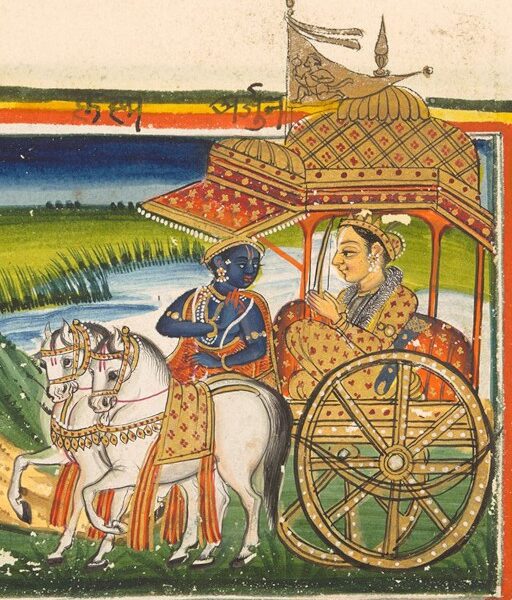
Kshatriya. So when he comes as a Kshatriya, he performs… Kshatriya duties. But then as Lord Caitanya or as Narayana Rishi, they’re Brahmins. So he performs brahminical duties. As Krishna, as a vaisya, he performs vaisya duties. Now when he’s driving Arjuna’s chariot, he does the duties of a charioteer. He’s not sitting there and going, hey, wait a minute, I’m God here, and so he should do this and that. It’s just, where do you want me to drive you?
That’s all. So it’s just, drive my chariot out in the middle. Okay, hey, cool. Drive out in the middle. Hey, you want to make a few new friends or something? Is that what we’re doing? Does that make sense? So in other words, he has nothing to do, so how do you do something? How do you interact? By doing the prescribed duties. So in other words, then that’s where pastime comes. Pastime is because you don’t have anything to do, but you have a form that it takes, right? Now when we’ll say, you understand where we’re getting here? What is a game? Do you have anything to do when it’s time to play a game?
Huh?
Yeah, unless it’s your profession, right? But you have free time, and you’re not a professional person playing game, right? So therefore, everybody decides they’re going to play cricket. Okay? So then, what do you do when you play cricket? Follow the rules, right? And the more strictly… I mean, these little kids, you know, they follow as good as they can, but that’s only their capacity. But the more they get more mature, the more they get good at the game, the more expert they are at following the rule.
Right? So how do you tell someone who’s better at the game? How better is at the rule, right? Of course, unless it’s monopoly, right? But in most other games, it’s how well you can follow the rules.
Does that make sense? So I didn’t give you the name of the game? Monopoly. Somehow or another, the people who are really good at that really know how to cheat. But the best ones I saw is someone who did the bank. And… But they were so innocent, I don’t think they meant to do this, that when they go around the board, whenever they had to pay money, they just take it from the bank and put it in. Because they were so innocent, no one noticed in the game. While all the other people in the game were like cutthroat cheaters. But I didn’t want to say anything, because, you know, they were cheating on purpose, and this person wasn’t, so I didn’t want to mention anything, because they were doing pretty good, you know? You know, they were going around and always had money and everything, and, you know, everybody else is fighting over the money and this and that, and it was funny, though. But, you know, so yeah.
You know, so it’s business, so nobody cares, you know? It’s like you won the game, that’s all that matters, right? And if no one else noticed you cheated, hey, you know, great. Yeah, but… Yeah, so… So the idea is you’re playing a game. So pastime means you voluntarily accept to follow some rules for fun. Because otherwise, how do you play? You know, if one guy gets out the cricket bat and the other guy gets out, you know, the rugby ball, you know, and somebody else gets out a tennis racket, you know, like that, you know, it might be Calvin ball, but still, you know, it’s like, I’m not sure what will happen, you know? They throw you out if you don’t follow the rules. Yeah, yeah, they throw you out, you know. So that’s the whole thing, is that… Yeah, so then you’re thrown out and you end up in the material world.
Yeah, yeah. So here you can make up your own rules, right? So therefore, if you want to be involved in the pastimes, this means following the rules. Because it’s just for fun. It’s not because you have to, you’re going to get some benefit out of it. It’s just the fun of interaction. Right? So therefore, the first step in dealing in the material world is to get you to accept, to follow the rules of the game.
Right? So because you’ll do that, you’re called pious and you’re called that, you know, like we said. You know, the kid to do his homework, okay, he’ll get a cookie or something. Like that, you know, clean his room, you know, get a candy, something like that. Does that make sense? Yes. When Krishna performed pastimes, he didn’t follow the rules. He seems he didn’t follow the rules. Where didn’t he follow the rules? Only with other people’s wives, you know. Okay, that one. And then? And?
That’s where it ends, right?
You know what I’m saying? To say he doesn’t follow the rules, you have to give more than one example.
You know what I’m saying?
That’s why only the Gaudias deal with it and everybody else doesn’t.
You know what I’m saying? So it means you have to start a different approach. Ask the question again.
You’re supposed to say, if we’re supposed to follow the rules, I don’t understand why Krishna is dancing with other people’s wives. You know what I’m saying? Don’t apply it to this situation.
Because you make it sound like, oh, he doesn’t follow anything. He follows all the rules.
For him, that’s why it’s a pastime. It’s fun. He doesn’t have to do it. He does it for fun. We have to do it because if you don’t do it, then you’ll get the bad reaction. And if we want a good reaction, we have to do it because we’re attached to the good reaction. But he has neither. He makes up the rules of the game. You know what I’m saying?
So that means in the material world, he follows all the rules. In Vaikuntha, he follows all the rules. In Dvaraki, he follows all the rules. In Mathura, he follows all the rules. And in Vrndavana, then he follows all the rules also. So this one rule is the one that you’re worried about.
Yeah?
And don’t worry. It’s not a matter of, well, you could do it because how many women would hang out with you every night?
He doesn’t even have to send the limo. They come running to him.
Think about it. So it’s not something that you could maybe do if it was okay. So it’s just something he does. It’s one of his opulences.
Does that make sense?
No, no, no. But the point is this.
We’re working around the edges. When there’s nothing left, then you only have that one point. Then you can answer the point.
Because why would we notice that point?
Because it’s interesting to us.
Why are you jealous? The other guy has a very beautiful wife.
You know what I’m saying?
Picasso had a muse that he was with, and Hemingway decided that he’s going to take her away from him. He kept telling the girl, he says, I’m going to take you away from this guy.
At one point he did. But it doesn’t really matter because both of them were married anyway, so she doesn’t stay with either one of them.
So we notice because of jealousy or envy, not because we have such a strong moral compass that everything we do is so perfect and therefore this one thing we can’t understand. Maybe I was talking about that one lady I was talking about, that Ramachandra devotee. She may be able to do that. She may have that problem.
I’m not sure. Did the Acharyas make a comment that actually Krishna married them all because he had some way… There’s so many different answers, means ways you can approach it. One is that when Krishna, when all the cowherd boys were all stolen, and he became all the cowherd boys, I think Krishna arranged that at that time all the gopis would get married. So then he is the one who actually married them. These other guys are just stand-ins.
And because the gopis won’t interact intimately with them, then it doesn’t really matter. But technically they’re married to Krishna. That would be one way of looking at it for people who just can’t handle that the religious ceremony wasn’t performed.
Then you have the other aspect, is there all this internal potency. So just for fun of the flavor of the relationship, it’s done in a parakhya environment so that it has that element of freshness. Because swakhya basically tends to get old fast.
Did I say swakhya or parakhya? Parakhya, yes, swakhya. But parakhya means you don’t know if it’ll happen or not. So you don’t know if it’ll continue or know if anything you’ll be able to meet or anything. So there’s always a… The sense of possession can never fully take hold. Because once it’s yours, then you can do with it as you like. But until it’s yours, then you have to deal according to someone else’s rules.
Does that make sense? So the intensity of parakhya will be greater than swakhya.
Then why do they say Krishna… You understand? Krishna plays the flute, the gopis always come. We don’t hear that sometimes they said, you let him sit out there on his own. Why do we care? You ever hear of that? Do we hear of it? Do we? No. You sure? You’ve heard of it? No. It’s never been heard of, right? But now, let’s say the wife is upset and there was a plan to do something. Then she doesn’t do it.
The guy is just thinking, I’ve got all these expensive things like that, we have these arrangements that… She doesn’t care. Why? Because she is annoyed and this will annoy him.
Right? Does that make sense? So why can she do this?
What gives her the right?
She thinks she has such right. No, no, no. I said what gives her the right? I’m not talking about your illusions.
Is?
Established. So that means there’s possession. So when you have possession, then you do what you like. But if you don’t have possession, then you never see that. That’s why the men… For the men, it’s like, well, she was like this before marriage, and like this after marriage. It’s like two different people. No, it’s one person. Just one is possession, one is without possession. That’s why in the Vedic system, you don’t get to know the lady before possession. Otherwise, you always be thinking it should be like that. But it’s never supposed to be like that. You just behave nice so that you get possession.
Right? You understand? There is no such thing as the other form. It’s an illusion.
That’s there, but that’s why the women will be attracted to him. You know what I’m saying? The point is, is if the man also is, you know, okay, you know, you don’t want to go, fine. And he goes and sits down in the living room and picks up a book, starts reading and all that, then you’ll see in five minutes that she’ll be out.
Right? But you can’t feign it. You actually have to be detached.
You know? It’s like, okay. Because they know if you’re attached or not. Right? Because attachment is their field. So they know it. Right? Men know how to do things. Women know attachment. Right? So therefore, then, that’s why they know. He’s completely attached. So he doesn’t have to be out dancing with them. So there is an opportunity and they come. Yes. But that’s why also he doesn’t have any problem in the swakiya also. Because he’s detached.
So that’s why first-class brahmacharya makes a first-class grhastha.
Right? And, you know, so that’s the reality. Then there’s the illusion of what men think is being a man and what should be a woman should be. That’s a whole different topic. We’re not going to get into that here. Okay. So does that make sense there? So the point is that on tattva, he is God and they’re his internal potency. So they’re the same person. So it’s just he’s expanded in this way to interact. Probably gives the example of the child playing, you know, touching himself in the mirror. You know, he looks and he sees, you know, like this. Because it’s just fun, interesting looking in the mirror and, you know, touching the mirror. Like that. And says, that’s actually what it is. Because there’s no love. So that’s on tattva. And then on the rasa element, if there’s a problem with it, then they’re married. Even Lord Brahma comes, I think when Radha and Krishna are three years old and performs their marriage. Like that. Lalita does it all the time. It’s a regular pastime, having a marriage ceremony. They chant all the mantras, do the whole thing.
You know, so if one worries about that, then there are those instances in the Shastra where it says. Right? Does that make some sense?
Okay?
But what do you mean by… So when you say break the rules… That means that’s more than one.
But who is he telling the lie to?
You know what I’m saying? Who is he telling the lie to? Hmm? No, he didn’t tell a lie there.
No, but that’s telling a lie. He didn’t tell the lie.
Yeah, but it’s just a political thing.
But if he’s doing it personally, it’ll only be to the ladies.
The Shastra says you can lie to ladies.
So he’s following the rules.
You can’t lie to men, but you can lie to ladies. But the point is, if you get caught, you’re in trouble.
A lady’d rather not hear the truth, but you better make it happen.
You know what I’m saying? So the thing is, if you’re going to get into the rules, then you have to know them. So as he said there, in the political field, that’s just called politics.
Right? Like, Krishna didn’t lie. He just, you know, went out at the wrong time, in an inauspicious time, and started doing the Shraddha, you know, going down to the water and doing all the different things that you’re supposed to do before a battle.
Right? And so that’s supposed to be done on the Purnima at a certain time. So because Krishna went and did it, then Duryodhana and everyone thought that that must be the time their astrologers are wrong. So they all went down and did it at that time. And then, the next day, when it was supposed to be done, that’s when Yudhishthira and the Pandavas, then they did. So that means also, just their beginning, their sankalpa and everything, determination of the battle, was at an inauspicious time. He didn’t lie. He just, you know, did his own thing.
He’s just a charioteer. What does it matter to him?
Duryodhana went in front of his mother. Yeah, but he wasn’t saying something wrong.
He wasn’t considering that his mother had told him to come. He wasn’t addressing that Dandari had said, come without any clothes on. He was just addressing the point is that you’re a bit grown up to go in front of your mother. Okay, if you’re little, that’s okay, but you’re big.
And he used the kshatriya thing. He says, maybe you do that in your family, in your tradition, but in our family, we wouldn’t do that. So he immediately brings out the kshatriya thing. It was a trick. It was politics, but it was a trick. It wasn’t a lie.
So you have to know how to work within the boundaries. That’s half the fun, because to do that, then what facility are you using?
It’s not the senses. They don’t work this out. Intelligence. Yes, it’s the intelligence, because false ego would make you do something wrong in ignorance. Mind may be right or wrong in that. It’s intelligence. So that’s what the fun is. Right? Or we’ll take a word and you say one thing and he’ll give it a different meaning. But that’s intelligence to do that. You play on the word. You call it word play. They don’t call word lying or word misrepresentation.
It’s called word play.
Because through intelligence, they said the one thing, you change the context, and then it doesn’t match and then it creates some fun.
It’s a standard.
You understand? So you also have to know what’s culture. So that’s the advantage of learning more about the Vedic culture. Because culture is culture.
Does that make sense? And that you may see it come up here and there. Just like beauty is beauty. And then you may see it in some flower or some tree or some person or some architecture like that. But its beauty is its own self. It just happens to manifest through this. You know what I’m saying? So when you say, you know, Chinese culture, that just means that there are some things that are manifest that are appropriate. You call it culture. But the basis of them is coming from the Vedic culture. But there’s no connection, therefore the illusion. So the point is to cultivate culture.
You know, not that it’s this or that. You may apply it into this or that. Does that make sense?
Yes?
Does the word Veda mean law as well? Veda? I mean, you would say law is there, but it specifically means knowledge. Dharma is law. Dharma is law. Because Dharma means the nature of something. That means it won’t act outside of that. Veda means knowledge. So anything that’s actual knowledge is actually Veda. But we may not, if we don’t see the connection, then it’s avidya.
Right? It means, in other words, Veda that we see the connection of the Lord is called aparavidya. Right? Transcendental knowledge is paravidya. Material knowledge seen in connection with the Lord is called aparavidya. Material knowledge not seen in connection with the Lord is called avidya. Yeah. It’s just not, it’s not knowledge. It may be facts, but that’s not knowledge. Knowledge means connection to the Lord. Fact means what you’re dealing with.
You know what I’m saying? You know, if you say this is good or this is bad, it’s how it’s perceived, not what it is. You know what I’m saying? If I have a pile of very sticky mud and it’s sitting on the living room carpet, is that good or bad?
That’s bad, right? When your mom comes along, you’re in trouble, right? But now let’s say you find that sticky mud outside, that’s good. Very good. Yeah. You know what I’m saying? So it’s not the form, but we generally take that the form and the thing are non-different.
Because technically they are, but they’re still different.
So we don’t know when to look at the purpose of it and when to look at the mechanics of it. So we get them mixed up. That would be due to ignorance.
Right? Does that make sense? So, therefore, what it is, you know, in other words, something is good because it’s progressive in human life. We’re not talking about the mechanics because those same mechanics can be used to not be progressive.
You know what I’m saying? So, but we’ll always take the mechanics of the thing. That’s why we get so worried about morality, justice, economics, sense gratification, because these are the forms. Only if you’re pious you worry about Dharma. But Dharma means the inherent nature. Right? You know, in other words, some worry about Dharma. Shastra says this, we should follow this, but that means everything the Shastra says is what they’re worried about, not just whenever it suits them. You know what I’m saying? The persons that couldn’t care less about the Vedic culture, if someone does something morally wrong and the Shastra mentions it, they will quote Shastra. But in anything else, they couldn’t care less about Shastra. So that means they’re not Dharmic.
Right? They’re Nityists. They’re just into the economy of it. Like that. So they’re just moralists. You know, ethical. But they’re not Dharmic. They’re not religious. Because you can’t change the nature of something.
Like that. Yes? I had a discussion yesterday regarding this Matsaji who was fixed on Ramacandra, super pious. Yeah. Can she be considered Krishna conscious? Or can she be considered… She’s Ram conscious, but it’s just a matter if she just doesn’t get involved in Krishna because… So in other words, the mood of Maryada is all she can handle. But she… But the… Yeah, because it’s rules. So it’s following of rules. That’s why that taste is there. Because now Krishna’s tasting the Swakya rasa, right? In Dvaraka. But not separation.
Right? It means in Vrndavana you’re tasting separation. But that’s Parakya separation. But now Swakya also has separation. So that’s taste that is wrong. Like that. You understand? So like that. It’s just these things are… The situations are arranged for that. Because Dvaraka then… Then it’s lighter because it’s Goloka. You know, it’s more fluid. But then the… Just being rigidly fixed and everything like that, that then is in Dvaraka. I mean in Ayodhya. Yeah. Does that make sense? So there’s a taste to that.
252. Okay. When your intelligence is passed out of the dense forest of delusion, you shall become indifferent to all that has been heard and all that is to be heard. Persons in Krishna consciousness transcend the limit of Shabda Brahman. Right? Because Shabda Brahman has a limit. Right? So they go beyond. The Vedic rites and rituals are imperative for neophytes. Right? They have to follow. Because otherwise they don’t have spontaneously going to please Krishna. So you have to follow the rule because you’re following the rule and then sometimes you remember to do it for Krishna and sometimes you don’t. At least you’re doing it for him. That could be offered.
Because otherwise, if just when you’re Krishna conscious you follow the rule and when you’re not Krishna conscious you don’t. The habit of not following will be greater. But if you follow the rule you’ll be purified. So then there’s greater chance in that purified state by the association devotees you’ll do devotional service. But it’s not just by being pious you’ll do devotional service. No.
Comprehending all kinds of prayer three times a day, taking a bath early in the morning, offering respects to the forefathers, etc. But when one is fully in Krishna consciousness and is engaged in his transcendental loving service one becomes indifferent to all these regulative principles because he’s already attained perfection. So he’s indifferent. So it means either he’s following them but he’s not following them because of the benefits he gets. Because we may follow him, OK, we say I’m not doing it for fruit of benefit but going to Mangal-Artha because I’ll get purified. You know, if you go to… spiritual activities performed in the Brahma-Muhurta you become purified. By going to Mangal-Artha you’re freed from millions of lifetimes of sinful reactions. So it’s not fruitive as such. But at the same time it’s not devotional.
Right? So you’re not indifferent to it. So here you’re not going to Mangal-Artha because you’re going to get some benefit. You’re going to Mangal-Artha because you want to see Krishna, right? You go earlier but he doesn’t get up earlier. He’s asleep. So the first time you can see Krishna is at Mangal-Artha. So where will you be? You want to see Krishna? You’ll be at Mangal-Artha. But if Mangal-Artha was two in the morning you’d be there. If it was at ten in the morning you’d be there.
So it’s not because it’s Brahma-Muhurta.
You know, and the benefits of it. You see?
Right? So this indifferent doesn’t mean all we can do or not do. That’s whimsy. So that’s mode of ignorance again.
If one can reach the platform of understanding by service to the Supreme Lord Krishna he has no longer to execute different types of penances and sacrifices as recommended in the revealed scriptures. So there’ll be ones that aren’t necessary because you are doing it just to become purified. You don’t have to do those ones just to become purified. Does that make sense? Like let’s say somebody is fasting every ekadasi, you know, nirjala. You don’t have to do that. Because ekadasi is just what pleases Krishna is you don’t need grains. That’s all. Nirjala is nirjala day. It’s a different vrata. But if you want to do that then it’s more purifying as you know the determination, the credit is great. But the point is just to please Krishna. You don’t care about doing that. So therefore you’re going to remember Krishna whether it’s ekadasi or not. So in ekadasi Krishna likes that you don’t eat grains so therefore you don’t because it pleases Krishna not because oh if we eat grains then we’ll go to hell or if we eat grains then we’ll be purified. If you don’t eat grains you’ll be purified. Understand? So things that aren’t important or aren’t so prominent then it’d be no necessary to follow.
Does that make sense? But if they’re part of the prescribed duty and that would be the appropriate thing then one would do that.
Does that make sense? There’s a book about ekadasi. Yeah.
But that’s just to get you to follow if you weren’t interested. In other words persons who are fruitive who wouldn’t follow ekadasi because it’s too much trouble then will follow because a materialist will follow any degree of trouble to get some benefit.
But the point is that the benefit of ekadasi is so much greater than looking at the fruitive elements.
So one will progress. One will advance. So it’s a trick. It’s a trick, yeah. But it’s not lying.
But it might misdirect people.
No.
People who aren’t following ekadasi because they’re absorbed in fruitive activities then it brings them to take up devotional service. So that’s not a misdirection. But if somebody’s already involved in the process or the potential process of pure devotional service then to do it because of the material benefits that would be a distraction.
But for the devotees just because all those things are there but that’s because everything’s already included in devotional service. So that you’re doing devotional service all the material benefits come anyway. But we’re not doing it for that. So if someone is inspired to do that like if I told you that to take the cold morning bath makes one very attractive to the opposite sex there would be a lot of people who wouldn’t want to take a bath would now take a bath in cold water.
I wouldn’t bother. Means if you want to tell I’ll go ahead.
I’m the reason that that point’s not in the book. Now I wish I had left it in. I understood ten years later nobody would care. I would have left it in. I was looking on those who are more interested in more serious devotional service would think that that’s stupid. So we took it out.
But for many people who are stupid that’s the rule that they’ll follow it.
Now the question is the colder the bath the more attractive you look? How cold does it have to be? What’s the optimum coldness for the optimum good looking?
How do you define stupid?
He does.
It means it’s pious but why would you want to do it? What would be the benefit of doing that? Why would he read Bhagavad Gita?
Because you told him he takes a cold morning bath the girls will think he looks better.
What’s the connection? That’s like saying if I give him an orange then he’ll be much better he’ll perform much better in the next Formula One race.
No, but the point is what does that got to do with Bhagavad Gita? Bhagavad Gita already has its benefits. He won’t read Bhagavad Gita because he’s taking a cold morning bath to impress the girls. There’s no connection.
That’s what we started this whole conversation with was that point. I know, but there is connection with another. I mean, to tell stupid people that if you read Bhagavad Gita… But we generally don’t see people as stupid. We don’t have that stupid as a category.
So the point is is that he’ll do that but not for Krishna consciousness. So what’s the benefit of making him more pious? Why would you want to make him more pious?
For what reason?
For what reason? Right? And you only have that one. You have to have a whole slew of them so they’re so distracted by them they don’t notice that according to their karma that it’ll only work to a certain degree. That still, even though they’re looking more attractive still the other guy looked more attractive and ended up with the girl that he wanted. Right? Because then if it’s… that’s the only reason he’s following anything to do connected with Krishna consciousness is that when the other guy gets the girl he’ll stop taking his cold bath and he’ll stop listening to you. And if that was the only reason he’s reading Gita he’ll stop that also.
You understand? So therefore leave the piety and that to Vyasadeva. You know, where you’re talking about a thousand lifetimes to make them more pious. We’re talking about one lifetime. So you just talk about the devotional element. You know what I’m saying? We’re talking about these other things that devotees are looking… they’re already accepting devotional service but they’re distracted by material benefits. And so the point is is devotional service already includes all the material benefits.
So we’re pointing out is that you’re spending all this time for this and that take a cold morning bath it’s a lot cheaper. That, you know, that cream costs $70. You know, and it goes, you know, in a month, you know. But you can take a bath every day and cold water and it’s cheap. But you save on electricity.
You know?
Right? It’s a double saving.
No?
Okay.
If one can reach… Okay. In his… But when one is fully in Krsna consciousness it says fully. And is engaged in his transcendental loving service in his… Okay. One becomes indifferent to all these regulative principles because he has already obtained perfection. So it’s not indifferent, you know, this one or that one selectively. It just means in general. There’s nothing to be gained in the material world so you’re indifferent. But if you find that, oh, I’m indifferent to this one. Like the guys, oh, I’m indifferent to my wife but that lady looks nice. That’s not renunciation.
Does that make sense? Indifference means indifference.
You know? That’s all. So then there’s no rule.
One can reach the platform of understanding by service to the Supreme… Supreme Lord Krsna. He has no longer to execute different types of penances and sacrifices as recommended in revealed scriptures. And similarly, if one has not understood that the purpose of the Vedas is to reach Krsna and simply engages in the rituals, etc. Then he is uselessly wasting time in such engagements.
So here would be the other, the other limit. Right? Means the devotee who’s understood this, who is actually indifferent, who says fully in Krsna consciousness, not partially, fully, and he’s become indifferent. Then we see that he’s no need to be engaged. Right? The other end is someone who is simply following the rituals, right? Because of their fruit of benefit, but not seeing the Krsna consciousness, is wasting his time. So this is very common how Prabhupada will explain things. No? What is… But what does this mean in application for us? Why would he mention, mention either, both of them? Or why would he mention the second?
Because he doesn’t say… And similarly, if one has… And if one, you know, how you say, engages in rituals, he is simply wasting his time. He doesn’t say that. He says, if one has not understood that the purpose of the day… Yes? Because he’ll be attached to the forest. Yes. He’ll be attached to the forest, but what does it indicate for us? That it’s about the consciousness. It’s about the consciousness, but do we need to follow the rules? Yes. You understand? So by saying, therefore, to follow the rules, not understanding his Krsna conscious purpose is a waste of time. If you’ve fully understood, you don’t have to follow them. So what… Now, where are we? We’re not the smart, the brahmana, and we’re not the liberated, devoted. So that means we follow the rules and regulations, seeing the connection to Krsna.
Why? Because we’re not indifferent.
So as we become indifferent to that much, then the rules don’t apply. But it’s not that as soon as there’s a little indifference, you kick out everything.
So that’s the two extremes. Yeah, the two extremes. So we’re in the middle, so we have to catch the balance. The balance is that when you’re fully Krsna conscious and if you don’t see the rules connected to Krsna, so the common point is the Krsna consciousness. So therefore, we situate ourselves following the rules and regulations, trying to be Krsna conscious. Then naturally, with practice, we become less, and by Krsna’s grace, we become less and less interested in the fruitive benefits of the activity.
Right? Because doing the activity for Krsna is devotional service. Doing the activity for ourselves is fruitive.
So we can’t say, well, give up fruitive activity. Giving up fruitive activities doesn’t mean the activity. It means giving up the consciousness.
Right? The Pandavas aren’t performing fruitive activity, but they’re kings and do all the different rules.
That was that? Yeah? Talking about the Vedic rites and rituals such as offering respects to forefathers, isn’t this a different category of rituals than the Pancharatrik, the Vedic? The Pancharatrik is there, but that’s just deity worship. So, in other words, what Prabhupada, you know, when the devotees were just living in the temple, you know, and just doing kirtan all day, and, you know, they get up, they do their japa, then they hear Klasigod and Harinam all day, they come back, take prasad, you know, a little bit more, you know, read Krishna book, this, that, go to bed. Right? So there’s no Pancharatra really. It’s all Bhagavata. Right? You introduce the deity worship, the temple life, getting up from, you know, the Mangalarthi, you know, all the different things, guru puja, the class, everything scheduled like that, and then you do services during the day. That’s all Pancharatra. Okay? But everybody’s fully just engaged in the deity worship and different aspects of that. Right? But when you add into it family life and economics and, you know, occupations, that’s Vedic. Bhagavata and Pancharatra doesn’t cover that. Not the ritual form. So that’s Vedic. Does that make sense? So, that application where you wouldn’t have to worry about that, it means the handful of, handful of full-time temple devotees.
You know, and I’m sure if you go around the movement, you know, 400 temples, you know, a handful and a few of them here and there, you’re not, you’re not going to get that many. So, this, this has to be more broad in its application. Right? Because if we’re talking about, you know, the whole world becoming Krishna conscious, then we’re talking about, you know what I’m saying? You know, just like, you know, any place you go to, Jaipur, they have their full -time pajaris. But how many people come to the program? Right? Practically the whole city. Right? But a few are living there that they can only do Bhagavan Pancharatra. Right? Very minimal in the Vedic. Most of the others, Vedic is more prominent. But you go to Nath, you know, what do you call it? Nath Dwar, right? A few pajaris, everybody else in the city comes. You know, Puri, you know, a few more pajaris, but, you know, then a lot more people come. But there it’s kind of like you get the whole state. You know? Does that make sense? So the idea is that it has to include Bhagavan Pancharatra and Vedic. But you have to know the hierarchy. Pancharatra is more important than Vedic. Bhagavan is more important than Pancharatra. But the point is, is what’s the difference in actuality? In actuality, Vedic allows for fruitive.
Pancharatra doesn’t.
Right? But, you know, regulates your life because there’s no spontaneity. Bhagavan, then, it’s spontaneous, so there’s no need to regulate because you’ll always be engaged.
Does that make sense? Yes?
Is Pancharatra considered as a sub-category of the Vedic? Depends how you look at it. If you look at it from, you know, the scriptures themselves, you would count it’s called Agama, that which comes from. That which is coming from the Veda. But what Pancharatra is, is all those rules and regulations in the Veda that are basically directly or directly supportive of worship of Vishnu. So anything that’s not supportive, you know, then that’s not, Pancharatra doesn’t pull those.
You know what I’m saying? You know, like taking a morning bath is not Pancharatra. It’s Vedic, but it’s supportive of deity worship.
But grhastha life is not counted in Pancharatra because you could use that otherwise.
You know what I’m saying? But here you’re taking a bath because you’re going to worship the deity, it’s not you’re taking a bath because you’re going out to dinner. Yes? You said Bhagavan is spontaneous. When those spontaneous activities are done as regulation, instead that’s considered Pancharatra? It would be Pancharatra, but you know, it’s, yeah, it falls into that category.
There is a spontaneous element, but they prefer working within the form.
Does that make sense? So they prefer the form. So it’s just like in Vaikuntha or Dvaraka, they prefer, you know, you could say that they’re naturally inspired to do their service, but they prefer working through the rules because it gives the form. Like that. Because to not know what will happen moment to moment, that takes a lot more surrender than to know what will happen, but to be engaged in all that for someone else’s benefit.
You know what I’m saying? So that’s why it’s pure unalloyed. Than it’s purely spontaneous.
So Vrajabhakti, that’s, or you could say Vrndavana has the spontaneous devotional service, but still the form of Vrajabhakti, that spontaneousness is even more, because you don’t know what will happen.
You know, Krishna could go at any moment, or, you know, because it’s, Krishna could come out, but it’s not, I mean, Krishna goes out, it’s not, Mother Yashoda comes out every day, and they have to convince her, so it may be they don’t go out.
You know, it’s not guaranteed, it’s not that, okay, at this time you’re supposed to go out. No, that the adults, they’re supposed to go out and take the cows out. That’s her point. No, the adults are supposed to take the cows out. Why does Krishna have to take them out? He can stay back, let Nanda Baba and everybody take the cows out. Right? With Balarama and then have to convince. Every day.
You know what I’m saying? So it’s not guaranteed. But in Dvaraka, you know, he’s going to come, you know, at six in the morning every day to the court and sit there, you know, and then when it’s time for lunch, he’ll go home. You know, and then in the evening he’ll be back.
You know, and the wives know he’ll be home at this time because that’s the rule, not that, oh, I’m a little late at work today. No, he will be there because that’s the rule.
You know, so it has a thing, all the planning and all that. You can prepare, you know, so it’s rules, it’s based on the rules but then you can make them very nice because it’s the rule but then you can spend time because you know someone will come at this time so you can get everybody ready so just when they walk in the door they can sit down and eat. But if you don’t know when they’ll come, you just have everything ready and when they come then you’ll, you know what I’m saying?
So that’s the difference, you know, it’s just like how you say it. The Italians, the water’s boiling but they didn’t put the pasta in. When you sit down at the table they put the pasta in the water because everything’s so spontaneous that when they’ll sit down you don’t know. They can sit and talk and this and that and stuff, you know, instead of it being at this time it’s there so no one’s worried about it, you know. If I was a Scandinavian you would be. Yeah, it would be down to the, you know, the nanosecond, you know, like that. It’s like, I think, in Germany and Japan you sit there and as the second hand goes twelve, the train goes and the door opens so when the door opens you can just close your eyes and walk. If there’s no train there it doesn’t matter. As soon as it hits twelve you can walk, there will be a train there. But in Italy, you know, it’s not like one devotee was telling me they were in the line, you know, it means in traffic you go to the toll booth, right? And then you pay your money and then they open the gate and you go through. So they’re there and they’re all, you know, devotees, they’re talking, oh, I left my, you know, the money in the boot. So, you know, an American devotee is telling me about this so he’s thinking, oh my god, everybody’s going to freak out honking their horns and all that. You know, so he gets out, he’s cool, he gets out, walks around the back and opens the boot, looks around, looks for the money. So he’s really worried, right? You know, he’s a standard American, he’s always worried what everybody else is thinking. So he looks out and everybody, all the cars, they’re all just sitting and talking, nobody cares. They’re all just having a good time. He says, oh, okay, we’re in Italy. So like that, it works.
Because, you know, because the whole thing is more on the relationship than on what’s happening. But when the form is more important than it’s exact, like you go to, what do you say, you go to Versailles, right? So there, it’s exact. Everyone comes like that. You’re going to put on your clothes but then somebody senior comes and they’re going to put it on. Like that. And just as they’re going to put it on, someone more senior then walks in. You have to wait. You sit there and freeze while they work it out who’s that and somebody’s announcing that this one came and this one, whole thing like that. And if you say, this is crazy, they’ll just tell you, it’s Versailles.
You know, that’s the way it is.
Do you understand? So they like the rules. And the others, you know, so that’s, it’s just a difference in taste. You can’t say one’s better than the other. It’s just according to taste. So therefore, that enthusiasm to do the devotional service, that spontaneity is there but it’s not manifest through spontaneous activity. It’s, the spontaneity is manifest through form. You know, the specific forms, the rules. Brudge, it has a basic form like that just because certain activities go within that but what will happen you don’t know.
Does that make sense? So it takes a greater level of love, therefore pure unalloyed. That’s the only thing you can handle because it’s 100% about Krishna. So therefore, then whatever happens if it pleases Krishna, right? So who’s going to arrange it? Yogamaya. So therefore, if it’s happening it must be Krishna likes it. So therefore, you’re not attached to any particular form to express.
You know, I mean general but what will happen within that you don’t know.
Does that make sense? You know, so that’s, that’s, you know, it’s not like, you know, you’re supposed to, you know, Krishna’s supposed to show up but then he gets kidnapped by some other gopis or, you know, something happens he can’t get out of the house or some, you know, some other thing like that and after one or two times like that forget this, you know, when, you know, when Krishna’s out there then we’ll come.
Right? That’s what girls here would do. Right? But there they don’t. No, they don’t because it’s, it’s all about Krishna.
So, I saw something Devotee lady in Govardhan.
Devotee? Devotee lady in Govardhan. Lady. Okay. So, You saw a devotee lady. Yeah. Some. Some. There were some devotee ladies. So, you noticed that there were devotee ladies in Govardhan but you didn’t notice there’s any here. Yeah, in Govardhan, I mean Govardhan. In Govardhan. Yeah, yeah, yeah. In Govardhan. Yeah, yeah. squished, wedged between the rocks.
In that area of Govardhan.
But are they chanting? Are they chanting all the time?
So, so that’s Bhagavata. So, why, why you’re worried?
But if that’s all they do, what’s the problem?
But that’s for, but then there’s us. You have to understand the Vrajabhasis are one thing. We’re another. We follow the rules until we’re liberated. They’re Vrajabhasis. What their platform is, we don’t know. It’s not our concern.
All we should do is be inspired that somebody is willing to just do Parikram, chant Japa, and hear, hear, hear Bhagavata Katha. You know, that somebody, and they’re, in this case, ladies. They’re just, they’re satisfied with that. So that should be inspiring.
You know what I’m saying? But, you know, we have our rules in how we do that. It means it would be nice to be on that platform. So that’s the thing is if they’re on that platform, they’re indifferent. So, then they don’t have to follow.
You know what I’m saying? Especially as a man, you don’t worry about it. Because if anybody’s worried about taking a bath, it’s ladies. So if they’re not worried about it, then you shouldn’t be worried about it.
You know? You know what I’m saying? Unless you’re on a bus or something.
But you don’t need to associate with them. Who said you have to associate with them? What rule says you have to associate with them? Because you’re worried about the rules. So what rule says you have to associate with them?
That’s just neophyte devotees get attracted by anything. You know? You know what I’m saying?
Yeah. Our rule is you don’t bother associating. We don’t associate closely with the Brajabhasis. That’s all. We interact with them if they’re service. But otherwise, we don’t associate closely with them. That’s the rule. That’s our rule. That’s not their rule.
Does that make sense? Neophyte devotees are attracted to anything.
Anything is different than the adult devotees.
Yeah? Make sense? Yeah.
Persons in Krishna consciousness transcend the limit of Shabda Brahman or the range of the Vedas and Upanishads. So what the Vedas and Upanishads are describing, you know, in other words, the ritualistic elements, the rules and regulations, the understanding of the Supreme as Brahman or Paramatma. You transcend that, you know, because you’re dealing on the Bhagavan platform.
Riti, according to Srila Baladeva Dibhusan, Arjuna now asks a question, When my heart becomes purified by performance of action, without attachment for the results, I will attain knowledge of Atma, but when will I have direct realization of that Atma?
So then Krishna says, When your mind is no longer disturbed by the flowery language of the Vedas, and when it remains fixed in the trance of self-realization, then you will have attained the Divine Consciousness. So, no longer disturbed, either in the positive or negative, means in the case of, Oh, I could do that and get the benefits, you know, so it’s not disturbing. Or the opposite, as we’re discussing here, is that why they’re not following. Because the point is, rules are important to us. So it’s either, I have to follow the rule because I’m getting the benefit, but why aren’t they following? You know, not necessarily out of compassion, Oh, they’re not getting the benefit. It’s like, I would rather not, and they’re not, and they seem to be happy, so do I actually have to follow? You know what I’m saying? So, in other words, we’re disturbed by the flowery language of the Vedas. Flowery language here, you know, as previously described, meant, what are the fruit of benefits?
Right? Like that. Because otherwise, we have to remember that jnana also is technically a fruit of benefit. You know, we put it in its own category, but still we’re looking at it as our own benefit. Oh, but if they do that, it’s not spiritual.
But ultimately it’s got to be, we’re not worried about material spiritual, we’re about devotional. Because when we say spiritual, we mean the situation in which devotion is performed.
Right? Does that make sense? We don’t mean being merged in Brahman. What we mean is, you’re on the transcendental platform means there’s no material distraction, so therefore, in that situation, then being Krishna conscious is very easy. Right? Because at one point it is focused, one isn’t distracted, because that’s the problem with the flowery language of the Veda, it’s distracting.
Like that. He says, then you’ll have attained the divine consciousness. So it says, then you’ll obtain. Right? Because divine means in connection with the Lord. Like that. Otherwise, you could come to the point, you’re not disturbed, meaning from fruitive side, but you’ll be disturbed by the jnana side. Right? You’re not disturbed by karma, but you’re disturbed by jnana. You want that. So when it’s neither, then it’s divine, then it’s devotional.
Devotees should not be distracted from Krishna consciousness. To say that one is in samadhi is to say that one has fully realized Krishna consciousness. Because samadhi means that yogis are meditating on Supersoul, so that meditation is completely fixed. No distraction at all. They’ll call that samadhi.
the actual here, to say that one is in samadhi means one has fully realized Krishna consciousness. That means Bhagavan and relationship with Him. So the yogis, their samadhi is not actually samadhi. It’s samadhi.
You know, just like the dog on this side of the road seeing something on that side of the road, and they don’t even notice the traffic. It’s so fixed that they just run across the road. That’s samadhi. Of course, they end up getting run over. I say, pancake samadhi.
So real samadhi is there. So the principle of that focus, yes, that principle applies, but that principle in its purest form or its proper form means it’s on Krishna. That is, one in full samadhi has realized Brahman, Paramatma and Bhagavan. Otherwise, the jnanis, the impersonals may be in samadhi, but it’s not actually the position because they’ve only realized Brahman. The yogis, then up to Paramatma, but the devotees, then Bhagavan.
The highest perfection of self-realization is to understand one is eternally the servant of Krishna and that one’s only business is to discharge one’s duties in Krishna consciousness.
A Krishna conscious person or unflinching devotee of the Lord should not be disturbed by the flower-laying for the Vedas, nor be engaged in food of activities proportioned to the heavenly planets. In Krishna consciousness, one comes directly into communion with Krishna and thus all directions of Krishna may be understood in that transcendental state. So in that state, you can understand and it goes both ways. By being there, then you understand and through understanding, you can get to that state.
One is sure to achieve results by such activities and attain conclusive knowledge. So when we say results, we mean Krishna consciousness. But it also can mean you’ll get the mechanical results that would come from that activity. One has only to carry out the orders of Krishna as representative, the spiritual master.
Oh, this has a whole… Oh, the purport’s on this side. Oh, I didn’t see that. Okay, so we’ll read that then.
After breakfast.