
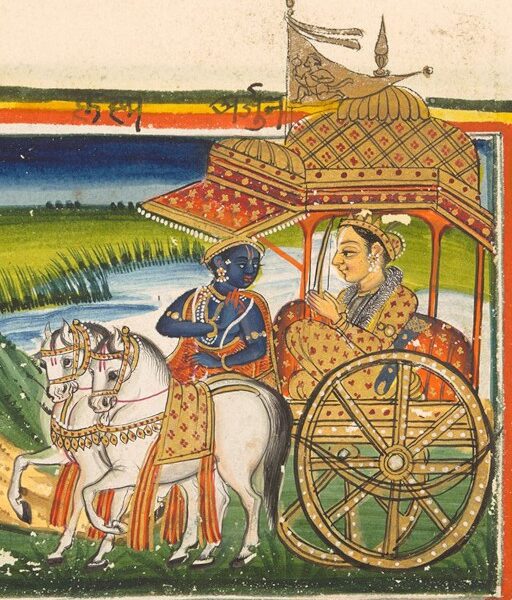
One should practice concentrating one’s mind only on Śrī Kṛṣṇa, the Absolute Personality of Godhead, but also not disregard other empowered living beings known as demigods. Then in 11.55, My dear Arjuna, he who engages in My pure devotional service, free from the contaminations of fruitive activities and mental speculations, he who works for Me, who makes Me the supreme goal of his life, and who is friendly to every living being, he certainly comes to Me. Then the second part of the Purport. The form of Kṛṣṇa is essential and supreme. In summary, the universal form of Kṛṣṇa, which is a temporary manifestation, and the form of time, which devours everything, and even the form of Viṣṇu, four-handed, have all been exhibited by Kṛṣṇa. Thus Kṛṣṇa is the origin of all these manifestations. It is not that Kṛṣṇa is a manifestation of the original Viṣṇu, or Viṣṇu. Kṛṣṇa is the origin of all forms. There are hundreds and thousands of Viṣṇus, but for a devotee, no form of Kṛṣṇa is important but the original form, two-handed Śyāmasundara.
In the Brahma-saṁhitā, it is stated that those who are attached to the Śyāmasundara form of Kṛṣṇa in love and devotion can see Him always within the heart and cannot see anything else. One should understand, therefore, that the purport of this eleventh chapter is that the form of Kṛṣṇa is essential and supreme.
So, because Brahman means, for the devotees who are dealing with, yes, it is Kṛṣṇa who has taken these forms and is the interaction, that as the Supreme Lord is Pārlānta, He is guiding everything, He is directing, He is approving, He is the potency behind. But in both of these, the form is not the essential point. Do you understand? It means the form is there, but the form is not the focus. When we are talking about God, we are not talking about a form, we are talking about a position, an office. Right? So, if we are saying omnipotent, it is that quality that worries us. It is not the form, because there are so many forms. That is the universal form. Omnipresent.
Then, you know, it means, of course, He is there, there is a form, but it is His presence, His authority, His sanction. Does it make sense? So, you know, omnipotent is Brahman, omnipresent is Pāramāṇa. It is not the form that is the essential and the supreme. Right? It is His Godness, His potency, that is the essential point and His supreme. Does that make sense? Yes. Why do the world religions have so much worry about them? Why do they worry about those? No, about God being formless, more or less. Why do they worry about Him being formless? Yeah, because they always stress it. It is stressed, basically, because it means, neophyte means that the understanding or the devotion is strongly mixed with materialism, you know, karma and jñāna. Right? When that becomes kind of to the neutral state, it means that maybe something one is working with, but it is not a prominence in the consciousness, that is the mud human. Right? When that, when the, you know, the conditioned state, that karma and jñāna go away, but there is still the subtle element of trying to rid oneself of the, you know, controller and enjoyer, that negative aspect, the subtle, and then having gotten rid of that, develop love of God. Right? In other words, one is we are neutral materially, the other is that there is still some sense of neutral spiritually.
Right? But the neophyte means that they are not neutral, they are very much, you know, appreciative of the material.
So, because of this, when it gets so extreme, it is very hard to balance actually spiritual. Right? It means there is some feelings, you know, the greatness of God and His mercy and kindness or, you know, whatever aspect might be appreciated. But, ultimately, everything, they see only the external, only the forms, and those forms are all material. So, therefore, appreciating that God has no material form, they cannot actually appreciate that there can be a spiritual form. Does that make sense? Because the focus that they have is they only see material forms. Just like here it said, the devotee of Krishna who is attached to the Samasundara floor, he only sees Samasundara. So, even you deal with the Brahman aspect, how His potency is there, but it is Samasundara, it is His potency that is there. Or Paramatma, it is Samasundara who is taking that role. So, you don’t see something else. Right? It is just like, let’s say, you have the school play. Right? And so, the teachers are watching and they are seeing how nicely the kids are playing their parts. You know? And so, then, you know, it is going on and they are seeing whatever is happening there. Right? You know, there is, you know, Ramachandra is doing this and, you know, Sita is doing that. And, you know, that is what you see. Right? But, the mother is sitting there and looking at the stage. What does she see? Her child only. You know? That is my child. Ramachandra. That is Sita. You know? Like that. You know what I am saying? So, that is the point. Is that the form is the person.
That is Bhagavan. So, there is the elements of simply just the quality or the occupation or the position. Right? That is why it was, remember, some weeks back, when Prabhupada was referring to that the neophyte tends to be, tends towards the impersonal understanding. Do you remember that? Right? So, it is not that they think that ultimately it is impersonal, as what you are mentioning here. It is that they will talk personal, but ultimately it is not. Devotees understand ultimately it is not, but the aspects of God that they deal with that are prominent to them are the impersonal. I did something wrong. God will be upset. I will get punished. Right? Like that. And so, but that is just His office. That is just His potency. You know what I am saying? So, Viswaroop is the Lord’s potency in all the ways it is manifest. Like, if God is great, what are the forms that greatness can be manifest through?
You know what I am saying? So, that is the thing, like you have a light bulb. What things can light be manifest through? Right? So, glass, and you have your plastic, and you have your cloth, and you have so many things. So, they are mediums that allow that to be appreciated. Like a brick wall is now famous for allowing light through. Right? You know what I am saying? So, like that. But, let’s say strength. Strength goes through the brick wall. Right? But not through the, you know, fine chiffon cloth. You know what I am saying? Does that make sense? You know. So, the point is this, Krishna’s potencies are there. They are all pervading, but there is what is the natural for it to go through. Right? So, no one is complaining in their mundane vision of things, or mundane perception, that glass is not a proper medium for light to go through. You know, that is archaic. I mean, if you go into old churches, you know, a thousand years old, they have these glass windows that let light through. But that is so archaic. So, nowadays that doesn’t work. It doesn’t apply. Right? And not only that, why do we have to stick to that? Because, you know, we are individual. You know, let it go through anything. You know, my Nike shoes, or, you know, something like that. If you look really hard, you know, where the laces go through, you can see a little bit of light if you get right up there. You know, but then I would have to admit that having laces is a bit retro. You know, so… But, it’s not as retro as a thousand years ago. Hmm?
Yeah. You understand? So, this is actually the level of intelligence and understanding that we’re dealing with. It sounds so absurd and so foolish. But that’s the point, is that, unless our emotions and our attachments and our needs are based on the guru, sadhu and shastra, they are that absurd. But, unfortunately, due to false ego, we will admit that. There will always be the, no but, you know. Does that make sense? It’s always there. So, the point is that you can’t make it up. That’s why there are laws. Laws means that’s how it works. You know, rocks are heavy. Feathers are not. You know, if rocks were light, birds would be made out of rocks. You know, and mountains would be made out of feathers. You know what I’m saying? But, we’ll feel that, no, because I feel like it, I wish that’s the way it was. Then, that’s what it is, you know. You know what I’m saying? It means the saintly person is out on his father’s roof.
And he’s feeling, I would like to fly like the birds, be free like the birds. And you’re not quite sure if everyone’s looking at him because he’s on the roof, or that he’s trying to fly, or that he’s naked.
But, in any case, is he going to fly? Right? Is the lack of clothes going to help? Being on the roof, does that make it better? Right? Birds can fly from the ground, you don’t need to be on the roof.
You know what I’m saying? But you get that sense that I felt by being up there. So, that’s all it is, is that it’s no more real than that, but because it gives a sense, because we can put our feelings into that situation, then we think it’s real, but it’s not.
Does that make sense? So, that’s the difficulty with the neophytes, they can’t understand the laws, because they want the laws to work according to their desire, rather than bring their desire in line with the laws. Right? Does that make sense? Or, if they do bring it in line with the laws, then unless everybody else is doing it, then they’re completely useless. So, it’s either sentiment or fanaticism.
Right? Does that make sense? So, something so strong will not be able to perceive that the Lord has form, that it’s spiritual. Spiritual is different. Does that make sense? That takes some subtlety. So, that’s the advantage, that’s why the Vaishnav system of approaching the Lord is superior, because it’s able to deal with this aspect. Right? Though the neophytes will be distracted by the material, but it’s not enough that they’ll think that the ultimate goal is not personal.
Right? But if the materialism develops more than that, then it’s hard to see. Does that make sense?
Yeah. That’s why in the Upanishads, then the very intelligent, they can appreciate that God has no material form, but then they’ll say, then there is no form at all. You understand? So, either from karma or dhyana, you being extreme, then you can’t appreciate the form. Because that’s all you see here. All that’s manifest here is Brahman and Paramatma.
Right? It’s only when the Lord descends in His pastimes, as this section is talking about. I mean, not this part. When the Lord descends, then you get knowledge about Him. Otherwise, you wouldn’t, because there’s only Brahman and Paramatma pervading the material. Does that make sense? Okay.
Yeah, probably.
I mean, the main thing that we see in Kali Yuga is the lack of appreciation of following the Vedic culture. Because that’s where it gets at. But even those who follow the Vedic culture may have problems with this.
But actually, it wouldn’t be specifically Vedic culture. It means next year we’ll get into this. There’s a big study on this, on Tathagati Vedic. So, the element is that when karma and dhyana aren’t working for you anymore. Right? So, you’re dealing with thousands and thousands of lifetimes here. Thousands in karma, then slowly moving to dhyana, thousands of that. And then, you know, tried Buddhism. That didn’t work. So, now one gets scared, because nothing works. Because that’s the full gamut. Right? Then, they’ll turn to monotheism.
But the monotheism, because they’re still working with the material concepts of karma and dhyana, their monotheistic philosophy won’t be free from it. So, you perform your religious activity, you’ll get fruitive results. But at the same time, it’s ultimately, you know, everything’s finished, you know, and God’s in person. So, you see, it’s still got both of them in it. Does that make sense? So, you could say is that it’s always been there. But it’s just in Kali Yuga all the more negative qualities become prominent, and the superior qualities become less. That’s what you could say. We say it’s Kali Yuga. We’ll take it that Kali Yuga is, no, you can’t use these old things, so my superior intelligence and perspective is actually what works. But Kali Yuga means the negative qualities are predominant over positive qualities. You know, the direct qualities means like being. It means good is quality, bad is just lack of good.
You know what I’m saying? Ignorance is lack of goodness. It’s not that ignorance is its own quality. So, does that make sense? So, this bad is only the lack of good. So, this also is another problem, then why the same thing is there’s still distance to God from all this. It’s because they can’t accommodate. The bad stands on its own, right? Someone’s into sense gratification. It’s its own category. It’s not a lack of self-sense control. It’s its own category. Someone’s immoral. It’s not that it’s a lack of morality, you know, or someone is irreligious. It’s not that it’s a lack of religion. It’s just it stands on its own. It has its own worth. And because of that, then the whole religion will base around that because that’s what’s easily perceivable for them. You know what I’m saying? It’s easy to find someone who’s bad. It’s hard to find someone who’s good. You have to be qualified. Duryodhana couldn’t find a good person, right? Well, Yudhisthira could not find a bad person, right? So, that’s the thing that takes qualification. So, in other words, these religions are for those who are religiously inclined but not actually very qualified.
Right. Good? Yes. Yes.
Yes.
No, no. Samasundara, Kesava Krishna, and Vraja Krishna, they’re all the same.
It would be any of these.
Yeah, because see, Vraja Krishna will mean the place. So, that would be Madana Mohana, right? Samasundara would be either… Yeah, generally, Samasundara is taken as Gopinath. And so, then, in that case, in Kesava, it would be the Amitabha.
It just means that the original form of Krishna is who is being seen.
That’s all it is. Yeah, but that’s not the important element. The important element is, it’s the original personal form of the Lord that’s important.
And so, everything else is important in relation to that.
Right? Not that the Vishnu-murtis and Paramatma and Brahma…
I mean, Brahman, or the… What do you call it? The universal form. That they are important on their own. So, for the devotee, all they see is Samasundara. It means… It says, cannot see anything else. It means, whatever they’re seeing, they see it connected to Vajrakrishna.
Right? So, like that. Or… Yeah.
Does that make sense?
Why is that? You didn’t get the understanding of the mother when she sees the kid. It doesn’t matter what he’s doing. She’s still the kid.
Yeah. Yeah, but it means you can’t see him when he’s dressed up to go to the temple, or he’s in his gumshoe. You can’t tell the difference. Can you tell the difference when he’s falling in mud puddles, coming from head to foot in mud, and when he’s, you know, nice and sweet and clean? Right? Can you tell the difference when he’s sick or healthy? Yeah. But he’s still the same person. That’s the point. Because we’ll see he’s different.
What we tend to see is different.
So, what’s being pointed out is not different. Because it’s Samasvara.
He’s expanded.
Maharaj, can we say that what stops us from seeing the form of Krishna would be envy? What stops us from seeing the form would be envy. Yeah, it means ultimately. It means the farther one goes deeper into the neophyte position, then the more the desire to control and enjoy is there. So therefore, yes, you could say envy. But, yes.
Yeah, you could say like that. But I wouldn’t focus on that. It’s a matter of lack of attention. Otherwise, again, we can have an opportunity, an excuse to bring out the hellfire and brimstone and everybody’s, you know. So, the difficulty comes, because that’s really easy for the neophyte. You know, you have different branches of different religions, but they’re all saying, well, that’s your God. But then even within the religion, they’ll have their different things. And they’ll completely consider that another branch of their own religion is not getting any benefit at all.
You know what I’m saying? And then within a branch within a branch, you know what I’m saying? You have Christianity, then you have your major branches. Catholicism is one of them. A branch of that is your Protestants.
Then of that, then you take, you know, one of the things. You take your Mormons. In that, they have major groups.
So each one thinks that no one else is going to make it. You know what I’m saying? We don’t have a problem that any other Vaishnavas, they’re going to establish a relationship with the Lord and go back to Godhead. We don’t have a problem. We’re not saying that that won’t happen. What we’re saying is that unless you follow the Gaudiya, you’re not going to go to the branch. Right? And within the Gaudiya, if you’re following Srila Prabhupada, then you’ll end up with him in the pastimes. If you don’t want to end up with him in the pastimes, then, hey, there’s plenty of other, you know, societies that are dedicated to serving Rupa Goswami. It’s just that you want to be standing with Prabhupada. That’s it. So we’re not saying that they can’t go back to Godhead. It’s just, is that the place in the spiritual world where you want to be?
You know what I’m saying? So, in talking of India, it could go up to the impersonal form. Yeah, yeah. As soon as you go up to them, it’s just a question of your relationship. Then it’s just relationship. Once you accept the form of the Lord, these Bhagavans, then it’s just, what is your taste?
You know what I’m saying? So that’s it. And if you say, oh, it’s all the same, it doesn’t matter, it’s like, go ahead and try to tell that to a brother of ours. They won’t buy it. You know what I’m saying? Some will say, oh, Prabhupada, now we’ve gone to this mission, you know, so it’s fine. There’s no difference. You’ll never go back. You’ll never get into that. No one will take you seriously. You can’t tell the difference between one group of gopis and another. Why would anybody want you around?
You know what I’m saying? They have a plan. Gopis are clever. And you think it’s all the same. You’ll talk to the wrong person at the wrong time. Your plan will fail. Right or wrong, you won’t be with Krishna. You think anyone’s going to trust you? So, therefore, it is simply sentiment that they sell us. It has no basis in any reality.
You know what I’m saying? So, the point is, we’re not saying the same philosophy, same practices.
But it’s where are you going to be? What group are you going to be with? So, you know, we’re very specific about that.
You know, Goloka is 51% of the spiritual world. That’s big. Right? Seeing that one quarter of it, right, one quarter of it is the material world. Right? The universe is like a mustard seed floating on the causal ocean. You know, the mustard seed, basically, is mostly covering us. Within that, then you have, you know, your, whatever it is, your 2 billion miles inside. Right? You know, and we’re sitting on 25,000. We’re really, really proud of that.
You know what I’m saying? So, we’re talking that it’s very big. So, why would it need to be so big? Because there’s so many manifestations.
So, the point is, where do you want to be in that manifestation? That’s your choice. If it’s just, hey, anywhere, then great. You’ll be just anywhere.
You know, but you’re not going to be very close.
Right?
Okay, does this make sense?
1858. If you become conscious of me, you will pass over all the obstacles of conditioned life by my grace. If, however, you do not work in such consciousness, but act through false ego, not hearing me, you will be lost. So, here’s, you see, the essential point is, as before, is that it’s trying to be God conscious by following the direction, the order. Right? Then it gets specific, you know, under the spiritual master. Then somehow or another, then by practices, and then by trying to absorb yourself in Krishna. So, the most point, important is being conscious of him as opposed to simply following orders or following the Shastra. Right? Like that. Because the point is, is following that is to be Krishna conscious. Right? You know, we’re not the International Society for, you know, following the Vedas really strictly. You know, or International Society for following the Vedas kind of how much you can in Kali Yuga because, hey, we’re all from Beverly Hills. You know, so, you know, that kind of thing. No, it’s a matter of Krishna conscious. We’re conscious of Krishna. Right? Does that make sense? So, that’s the essential point. Then, everything else will work. So, again, it’s just like before. You’re starting with Krishna and that desire to be connected to him. And then adding all the detail that will make it work nicely. And again, we’re starting with this conscious. If that’s there, everything else will work. Because naturally, if you’re conscious of him, you follow his order. You associate with the devotees. You follow their instructions. You try to practice it. It’s a natural. It just, it comes right after, one after the other.
Those who concentrate on Krishna are freed from the material perplexities.
A person in full Krishna conscious is not unduly anxious about executing the duties of his existence. Right? Unduly anxious. He is responsible. He does his duties. Like Bhaktivinoda Gaura. Right? He’s doing his duties. He’s a magistrate. He has family. He has, you know, twelve kids. So, you know. But he’s not unduly anxious.
Right? Oh, this, this and that. There’s the end of the world. Then everything falls apart. And then, like, no. It’s not. It doesn’t get into that. It’s just, this has to be done, so you do it. Right? Does that make sense? Because you have, have some, you know, tinges of material desire, so you need to be a grihastha. Therefore, you have to maintain the facility and the relationship. Right? You want to have, the relationship is there. That’s where the interaction takes to be. That’s where the practice is. But to do that, you need facility. Facility means you need to have money. So, therefore, you have a job. So, the job does not have stand on its own. Right? You know, if someone’s a career person and that’s their life, they don’t have one. That’s called, that’s social. Life is over on the ashram side. That, that’s your life. Occupation is what you do to create the facility for your life.
You know what I’m saying? Is there anything with you? Right? So, there’s no undoing. It’s just, it has to be done. Right? Just like, you want to cook in the pot. If it’s dirty from yesterday, you can’t do that. So, therefore, you need to wash the pot. It’s not you go in to get, oh, the pot’s dirty and this and that, and I don’t know what to do. Call up a few friends, call your shrink. You know, call everybody, you know, sit there. No. You just wash the pot. That’s all. Wash the pot. Cook.
So, it’s not unduly anxious. So, it means they’re doing it. Right? But it’s not, it’s balanced. How much has to be done? That’s it. If you have to put in this money, how will you do that? You don’t, you don’t put in more. Because that’s time for sadhana, time for family. Right? But this week, there’s some special things, special, you know, contracts, this, that. So, yeah, it takes more time.
Ideally, you shouldn’t take it out of your sadhana.
Right?
At least not out of chanting the japa. Can you do it while you’re chanting the japa? Depends what it is. Can you type with one hand?
But I, can I say that this anxiety comes from attachment? The anxiety comes from attachment, yes. Because anxiety is the worry of whether you’re going to get the results, or whether you can do the results, or whether the activity is going properly. So, in other words, it’s, it’s due to attachment, yes. Yes. So, this is why… It can also be fear. Fear or attachment. Like we mentioned before, it’s these, these, these, these kind of like directions on how to be materially successful. They’re dealing with attachment or fear. Right? So, they focus on one or the other, generally. You know? Some, some take into consideration.
But then, they may take into consideration, you know, what is the, what facility you have, where do you want to go, therefore, how to get there. Right? And they’ll put it together, you know. Somehow or another, if you start with, well, where do you want to get to? So, what do we have? Now, let’s make a plan. That’s completely different than, we have this, what can we do with it? Hey, we can do that. Okay, let’s make a plan. Because somehow, they’re two completely different schools. Right?
So, it’s, you know, like you can cut the vegetables first, and then wash the pots, or wash the pots and then cut the vegetables. Then after that, you’re going to cook. It’s two completely different paths.
So, based on fear? Fear. Fear would mean, I can’t do it, you know, I don’t have the ability. In other words, the lack of confidence and stuff like that. Because that’s what it is. It means you think that I should, I am the greatest. But somehow or another, I’m not able to manifest that. So, that brings out the problem. You know what I’m saying? You know what I’m saying? Here’s a good example. If you thought you could sit down, you know, lead the kirtan, and afterwards, you know, everybody with tears in their eyes is standing up and clapping, and there’s just this roar, and they pick you up, and they carry you around like that. You’d probably lead kirtan. But because you’re worried that after leading, no one will like it, or they’ll say it’s stupid. That’s why you don’t. You know, it’s not that you can’t. You know, it’s like you can’t remember the mantra, or you don’t have a voice box, or, you know, something like that. No, it’s just that you’re worried that the reaction, that what you want, you know, your perception of who we are, is not going to be obtained. Therefore, we don’t do it.
You know what I’m saying?
So, when it says, the foolish cannot understand this great freedom from all anxiety, that’s because they only work with attachments. The foolish cannot understand this great freedom from all anxiety. Yeah, I mean, with no anxiety.
Yeah, yeah. The foolish cannot understand this great freedom from all anxiety, because the point is that they’ll see life gets real with anxiety. Like we discussed a few days back, why does a parent think they’re the only one that can actually take care of their child? Because they have the attachment. No one else understands. Or, let’s say, the people who are married, you know, they’ll say the ones who are can’t understand. Or those who have, you know, are in a relationship, then the ones who aren’t can’t understand. Or those who hit puberty, then the ones who haven’t can’t understand. It just keeps on going. Whatever your position is, because you’re only doing it because of the anxiety to get the result. And so, therefore, because you’re feeling that, you can’t perceive that others are also feeling that. Now, Krishna doesn’t say those things. Why? Because he’s Paramatma. He can understand everybody.
You know what I’m saying?
You take it in anything. The guy who’s making money, oh, it’s no one else can understand. You make it, but can you spend it? Or what are you going to do with it, even if you do spend it? Did you get value for it?
You know what I’m saying?
Does that make sense? Something like that.
So, the foolish, yeah. For one who acts, in other words, to be in anxiety, because of attachment, is foolish. Because it’s ignorance. Like that. We’re not saying it’s not there. That’s the position. It’s there. That’s what conditioning means.
Right? But the idea is this is the science, how to address it, so that we can move forward.
Is that what I’m saying? For one who acts in Krishna consciousness, Lord Krishna becomes the most intimate friend. And because he’s the one who’s there, and dealing with everything, everything goes on by him, he is whatever is happening, whatever is the experience, whatever is the ability. Right? So, he did something nice. You know what I’m saying? Others will say you did it, but it’s actually, you know, it’s Krishna who did it. Right? We’re just able to assist him.
Is that what I’m saying? Yeah.
He always looks after his friend’s comfort, and he gives himself to his friend, who is so devotedly engaged, working 24 hours a day to please the Lord.
Right? Here, 1858, so we’re just at the conclusion, right, of the Gita. So here is that, you know, so here, Krishna becomes the most intimate friend. So it goes both ways. You say, okay, but him for the devotee. So, sees to his comfort, and he gives himself to his friend, he’s devotedly engaged. You can say, well, you know, but hey, I’m a devotee, but I’m not getting any comfort, you know, like this. The point is then, you know, but that’s not a friend. Friend is you don’t worry about that. You know what I’m saying?
Does that make sense? The guy’s come back from the war. It wasn’t like it was comfortable out there, you know, sitting in that little pothole while mortars are going off around you and everything like that. But that friendship is there. So, does that make sense? So it’s not that… So, the one who looks at it that way, therefore you try to take care and create the comfort of the devotee. If you’re not, in other words, you’re not looking for the comfort, then naturally others take care of it. If you’re looking for the comfort, then why they’ll take care of it? Right? If you’re with a friend and only worried about yourself, then why they should worry about you? Because then they’ll have to worry about themselves. But if you’re worried about them, they’ll worry about you.
That’s…
Right?
So, devotedly engaged 24 hours a day to please the Lord. So, someone who’s like that, then Krishna reciprocates like that, because He can only reciprocate how you surrender. You don’t surrender. How does He reciprocate?
Right? How do you reciprocate with someone who’s not even acknowledging you’re there?
You know what I’m saying?
Surrender to get near. I mean, yes, it would definitely be…
But the surrender is there, but that surrender is an attitude. Then there’s the dynamic of actually engaging in the service. Right? So, that’s the… The consciousness is the attitude, and that’s manifest through activity.
Right? So, that’s where it’s expressed. In other words, affection is there, but it’s the expression that’s revering. You know what I’m saying? The wife knows the husband has affection, but it’s those points of expressing that that are going to be remembered.
You know what I’m saying? You don’t remember just the vibe. You know what I’m saying? There’s an expression of it. What’s the form of it? That’s why this whole point is that the form is what’s important. Right? Because it’s the expression of the consciousness.
So, the consciousness is higher. Right? The affection is higher, but the form is important because it expresses that consciousness.
You know what I’m saying? So, you can’t have one without the other.
Sorry.
So, approaching, coming nearer would necessarily bring to action, right? Yeah. To bring nearer means to bring to action. So, that’s why you see in the Vedic Upanayana, to bring nearer means that then one can perform activities. Because before that, one can’t. So, it’s the performance of activities that makes sense.
You know what I’m saying? Because someone who can do nice work, do you keep them closer to you? And then someone who can’t do, do you keep them more close?
Right? You know, keep the qualified person close, keep the kluts more close, right? That’s the sense.
Especially if you’re a shlomozel. Then you want to always have a shlomel around. Otherwise, how do you prove you’re a shlomozel?
Is that what you’re saying? Yeah. Like that. So, yeah.
Okay? Yes. About the anxiety? Fear? What causes the anxiety? What causes it? The fear. Yeah. So, it’s the false identity that I’m the controller, the absorber. How can you fight that? It’s not a matter of fighting. See, the important thing in all this is, means fight is there, but the fight means you make the decision. And you try to stick to that decision. It’s not a matter of controlling the senses. It’s a matter of engaging the senses. This is the faulty element that we have. This is another aspect of the impersonals, that we feel is that the senses, the mind, is giving us trouble. You know, very rare we think the intelligence gives us trouble. Like that.
Yeah, unless we talk too much. Okay? So, the intellect means the mind, mind senses. We have this idea that spiritual means that material is the engagement of these, the spiritual means the non-engagement. Right? But the whole point being made here is that you’re remembering Krishna. Now according to your conditioning and the situations you’re in, then the mind and the senses will be engaged. Right? So that may be engaged in direct or indirect, or positive or negative.
You know what I’m saying? Does that make sense? So, the senses may be engaged, like it’s duodacy morning, so therefore, and there’s some Mahaprasad there and it’s grains, and there’s no one around, and, you know, so, you know what I’m saying? Like that. But let’s say it’s the same situation, but it’s a codice.
You know what I’m saying? So you’re engaging the mind in that you’re not doing this for Krishna. It’s a service. It’s an activity.
So we’re looking at it, no, I’m doing nothing. I’m not eating. No. You’re performing the activity of not eating.
Right? Does that make sense? So that’s what’s going on. So renunciation is the activity of not engaging the senses.
Does that make sense? So that’s the point is that it’s dynamic. It’s always moving. It doesn’t matter which way it’s moving. It’s going out or it’s coming in. It doesn’t matter.
Does that make sense? It’s movement. Yeah. So that’s what I’m trying to do.
You know, that was the whole discussion in the Vedic psychology. Right? Because this very point is that we think spiritual means no activity. No, that’s not going to happen. It’s always going to be. The only one that can do that is Krishna.
Right? The feminine nature can’t. It’s not independent. It’s dependent. Right? And the jiva is even dependent upon the internal feminine parts of it. Right? So it’s a matter of the senses will always be engaged. The mind will always be engaged. Right? But the idea is that if it’s connected to Krishna, in conscious of Krishna, it becomes perfect. That’s true.
So when you talk of controlling the mind, you’re talking of engaging the mind. We’re talking engaging. That’s why it’s always mentioned here is that it’s always about engaging. Who is so devotedly engaged working 24 hours a day to please Krishna?
Does that make sense? So that may be active when he should be active or inactive when he should be inactive. But it’s the action of being inactive. That’s why we say there’s action and inaction and inaction and action.
Like that. He’s doing nothing but there’s something happening. Right? And we may be doing something but nothing material is happening. Like that.
One should not falsely think himself independent of the laws of material nature or free to act. Right? We’re never independent. This is very important. This is the illusion that I can make my own up. And so the illusion means it’s based on ignorance. Right? But this is the fun part. Maya is very clever. Is that those who are very intellectual or at least consider themselves very intellectual. They’re the ones that much of the time are the most overwhelmed by this aspect.
Right? Or somebody who’s very, very naive or immature.
And sometimes they’re both.
So you feel you can create it yourself.
Right?
But the fun part is even when we create it, we make all the laws. Right? We create a fantasy world. Right? But there’s laws in there. Right? Does that make sense? You push this button, then you can jump over this. And you push that one, then you get this weapon. And then you can kill this. And that one, you know, flies. And this one doesn’t. And this one… You know what I’m saying? But it’s still, you only get, you know, three lives. You know? And then you got to start over again. But that’s a fantasy. You know, you get your head cut off and that’s it. You know, next body. You know, it’s not like, you know, okay, no, okay, get back up again and screw it on. You know? Does that make sense? So, but we’ll create strict rules within that. Kids go out and play. You know, like that. You know, so it starts off as cowling ball. Right? But by the end of it, then, you know, it’s called cricket. You know, it takes five days to play a game. You know what I’m saying? So, the rules become very strict.
You know what I’m saying? It’s like, you know, the idea is you’re unique. You wear anything you like, but there’s a rule on what you wear. And that was so yesterday. You know, so…
You know what I’m saying? So, we’ll say is that… We’ll say, no, no, we can do whatever we like. But there’s very strict rules of how you do whatever you like.
You know what I’m saying? You know what I’m saying? That intellectuals sitting around and all that. You can do whatever you like. You’re free and this and that. And so, therefore, your expression of art, you have to break the limits. You know, in your writing, you know, in your journalism. And, you know, anything else you do like that. But if one of them decides to, you know, get a job as, you know, collecting garbage. Then we’ll all look at him and go, you can’t do that. You know, why would you do that? Wasting your time. You can do so many other things. You know, that’s so restricting. But, I mean, the variety of garbage. I mean, just think about it. Every day it’s something different. In different neighborhoods, different, you know, social strata. What’s there is, I mean, the variety that’s there. The smells. Yeah, that’s it. But, otherwise, they still, they only go to Saks Fifth Avenue. They go to Bloomy’s. You’re like that. You know, if you’ve got something… Then they go to, you know, some of these other places. But you only go to those places. Right? You know, you can’t go down to Kmart. Or Tesco’s and buy something off the rack there. That won’t be allowed.
You know what I’m saying?
So, the thing is, is we will make our own rules. Bhaktivinoda Thakura makes that point. The conditioned soul has to function within religion. So, you either follow God-given religion or you’ll make your own. And the fun part is, as we discussed the other day, is there’s a hell specifically for those who have made their own rules and don’t follow them.
You know what I’m saying? Does that make sense? So, if you have a strict rule as you don’t wash your pants, you know, if you washed your pants, there’d be a reaction for that. There’s a hell you’d go to for washing your pants.
Does that make sense? So, the point is, is you have to follow the rules. Like that. You’re not independent of the laws of material nature. So, there’s no such thing. We can talk about it all we like. And it sounds very good. It gets the bile moving. You know, it must be people, their digestion is loose or something, right? You know, so, but it has absolutely nothing to do with reality.
Kṛṣṇa consciousness is being conscious of Kṛṣṇa, not doing whatever you want.
Right? And the fun part is, is if you’re conscious of Kṛṣṇa, that extends into everything. But doing what you want doesn’t.
You know what I’m saying? Hmm.
Because the problem comes, who defines what’s a gentleman?
Hmm? Descriptions? That’s the point, descriptions. Otherwise, how do we say what’s a gentleman? Right? Yeah, so you just take what’s the biggest, broadest, like that. It’s still who’s defined that.
But if you’re in a certain area of town, then, you know, gentleman means, you know, you got, your chain is shiny.
Do you know what I’m saying? Does that make sense? You know, that’s, that’s, that would be. You know, if it wasn’t, you know, it’s like, you know, the girls aren’t going to be, in fact, you can’t even keep this dog chain clean. Do you know what I’m saying? Cut or swap. Huh? Cut or swap. Yeah, cut or swap. So, the point is, is who defines?
So that’s the thing, is ultimately the Shastras define.
But otherwise, you just go by what’s mass. But it depends where you are, that’s mass.
Do you know what I’m saying? There’s a wall in Santa Monica. You cross the wall, then the definitions change.
Do you know what I’m saying?
One should not falsely think himself, okay, he is already under strict material laws. We’re already under them. We follow and we get good result. We don’t follow and we don’t get good result. If we’re getting a good result, means we’re in line with the law. If we’re not getting a good result, means we’re not in line with the law. The intent may be good or bad, but it’s a matter of whether you follow the law or not.
Do you know what I’m saying?
You know, the thief was clever. He followed the laws. He got away. The police wasn’t so clever. So, therefore, not following the laws, he didn’t catch him. Or if the thief is clever, the police is more clever, they catch him.
Is that what you know what I’m saying? But as soon as he acts in Krishna consciousness, he is liberated, free from the material perplexities.
He’s liberated. But it doesn’t mean he doesn’t follow the rules. But he’s not unduly anxious about following them. In other words, he follows them what needs to be followed.
Right? Does that make sense?
So, if one needs to, let’s say, dress in a contemporary way, he’s not in anxiety about that. You don’t have to talk all day about that. You don’t have to blog about it. You don’t have to convince people about it. It’s just you need to wear the way. And when you don’t, don’t. Like we had the other day, someone here, we had the evening kirtan, you know, in an older devotee, you know, in pants and shirt or a suit or something like that. Just a few days ago, here, someone said, why are you wearing like that? He says, no, no, probably just says you have to be a gentleman, dressed like a gentleman. It’s kind of like, well, who said how you dress as a gentleman?
Like that. So it’s like, this is the problem.
You know, so that’s anxiety about material perplexity.
Because you want to prove, it’s you who would say, no, I’m doing this. No, everybody here wears a dhoti. Wear a dhoti.
What’s the big deal?
They’ve always worn dhotis. Like that. Somehow or another, though.
Yeah, those with less understanding can appreciate that. They’ve always done that. And they still are there. Indra still wears a dhoti. Like that. Even though it’s called a mutha.
You understand the point is, we’re not worried about the form of it. You know what I’m saying? The discussion’s not about what someone wears. We couldn’t care less, actually. The point is, is the consciousness. Why they’re wearing what they’re wearing. So the point is, is the devotee just puts on the dhoti, because that’s what you’re supposed to do. And, you know, that’s the, you know, the traditional thing. And so there’s no anxiety.
Right? But the person who, you know, is committed to, no, you can’t do that now. We have to wear, you know, contemporary clothes. They’re in material anxiety. They’re anxious, unduly anxious, about exuding the duties of their existence. And their existence they define as modern, so therefore they’re unduly anxious about it. No. If that’s what you’re supposed to wear, you really feel like to wear it. You don’t have to talk about it.
You know what I’m saying? Let’s say you have some girls. They’re friends. They’re simple.
So, you know, they show up together, they hang out, they do some of that. Now and again they might talk about something to wear. You know, they’re going to go to this program, so what would you wear? Right? But now, let us take that, you know, that, you know, very small percentage there, you know, at the high school, you know, they’re the cheerleaders, they’re the this, they’re that. Right? So, when they get together, what are they going to talk about? Right? What they’re wearing, what someone else is wearing, and this and that. Why? Because they’re unduly in anxiety about their duty.
They’re supposed to be the fancy dressers, so that’s, they’re totally in anxiety. You know? You want to set the fashion? Just do it. Why do you have to think about it? Why do you have to be in anxiety about it? You know, you either have it or you don’t. It’s either what you wear is fashion or what you wear is not. And so, if it’s not, wear what someone’s fashion does wear, if that’s what your worry is. Is it? So, the whole thing is consciousness. Where is the consciousness?
So, if the consciousness is connected to Krishna, then it becomes perfect. If it’s not, then it’s, it’s a distraction.
Yes? So, in this sense, it means that as soon as the actual Krishna consciousness is liberated… He’s liberated. So… That doesn’t mean he doesn’t follow the laws. Okay. Because they’re God’s laws. Why wouldn’t you follow them? You know, if you knew that the person gets annoyed that you didn’t fill the water bottle again and put it back in the fridge, you know, or you left the juice out on the counter, you know, or wouldn’t you, and you had affection for them, wouldn’t you just do that because it’s important to them?
You know what I’m saying? So, the thing is, is even though the devotee is liberated, he still follows them because it’s pleasing to Krishna. If he’s acting on the liberated platform as a liberated soul, as a part of Mahamsa, he doesn’t have to follow the laws here, because he’s following the laws there.
Right? You know, it’s like saying, you know, you’re not following the laws of the reflection in the mirror because you’re following the, you know, the real forms.
You understand? So, we have this idea, you don’t follow the rules of the reflection in the mirror and you don’t follow the… you just do whatever you like. It’s again a trick to be independent. Right? So, this idea is that, no, no, you don’t, you know, it’s like that. If you’re Krishna conscious, we don’t have to follow any rules. It’s just another way of declaring one’s independence.
Because that’s what we’re trying to do. We’re trying to be independent.
Yes? You used the example of the robber who gets the proper result by following the law. I was wondering, to what extent is that result determined by the quality of the activity, the previous karma that that person performed in the previous life to get that result? Or was it the intelligence from the previous activities? It’s all that. Because unless they have performed good work before, how would they have the intelligence to do it now? But the point is, that example there we’re saying right at the moment. You know, he came out of the store, the police showed up, but he got away. But the point is, how long does he get away for? Because he’s stolen. It is bad karma. Eventually that’s going to come. And then he will be caught. Right? Or, he’s not caught, but he’ll be blamed for it.
Blamed for something he didn’t do.
Does that make sense?
In other words, you have dharma, artha, kama, moksha, right? So moksha is the biggest. Dharma is the next. Then artha and then kama is the smallest. So, if you’re working on these smaller platforms, you’re following the laws of that platform, you get the result of that platform. It doesn’t mean that it will give results of the higher platform. Right? In other words, he was clever, he got his work done. So then initially it worked, but it doesn’t work on dharma. So eventually, by not following dharma, he’ll get the reaction.
Right? But the ability that he was able to do that has come from previous dharma. Right?
The banker has so much money and has so much access to money because of his previous good karma. Now if he misuses that, then that will generate bad karma. So he’ll lose that and he won’t get the facility again. Until he performs good karma again, he’ll get it. Yes.
Yes. Yes. Yeah, yeah. It’ll be there. But the point is, what we’re working on is someone is just conscious of their particular activity right now. So by dealing with that, we’re trying to bring out that Krishna consciousness goes down to that deep. This is what’s happening right now in your life. If you connect Krishna to it, then it becomes perfect. Then you’ll start to see it in the bigger picture. And then you might make adjustments. That’s why we say change the consciousness. Like the man is there, he bumped into devotees, he heard them singing, like that. He kind of liked it. He comes in along and sings it now and again like this. And so, that’s perfect. One will say, no, no, he’ll get no benefit, he’s still a meat eater and he’s still, you know, this and that and the nonsense and you know, all these kind of things like that. So, but no, he’s getting benefit because of that asthma only what he’s conscious of, he’s applying. But now, as he does that, he likes that, then he’ll go and ask the devotees and talk more and then he’ll find out more about it and then he’ll see, hang out with them and then their lifestyle and then they ate this and, wow, what kind of food is this? And then, oh, it’s Prasad and then, you know, the whole thing. You understand? So, it’s offering it to God. Then it’s a matter of what you can offer to God. Right? Because you say, oh, this is Prasad, it’s offered to God. All you know is, okay, this was offered to God. You don’t know that something else is not offered. Right? So, with time, you learn all these things. So, it’s not that they’re not getting benefit because if that’s the case, then, technically, no one can get any benefit until you come to the platform of Prema. Right? So, then we would follow, you know, Chandra’s, you know, Edict. First develop Prema, then we’ll talk. Right? Does that make sense? So, that’s the… No, the point is, it works no matter where it is. That’s why it’s perfect. Because it’s the nature of the soul. So, all it is, is that much of the nature of the soul has been connected. The rest of it hasn’t, but because that’s natural. But we’re looking at it, no, we belong here. And then you’re developing that. So, until it’s complete, you’re not actually… You’re not a devotee until it’s complete. Yeah, that’s true if we’re talking actually Prema.
But if we’re talking Sadhana, then whatever is done, that’s perfect in itself. You know what I’m saying?
You know, the person, okay, you know, he’s, you know, covered from mud, head to foot. Okay, so he goes in the shower, starts scrubbing his head. Now, his head’s clean. So, now you’re going to say his head’s not clean because the rest of his body’s not clean?
No. The head’s clean. The rest of the body’s still dirty, but the head’s clean.
You know, so the point is, is someone’s performed service, that much is real. Now, the other areas where it’s not real, where they’re in maya, that’s maya. But that doesn’t mean that the other doesn’t have anything. Right? That’s very neophyte. As we mentioned before, it’s like… Yeah, up to recently. It’s only because of the general kind of liberal mood, you know, so like this, but…
Previously, if someone was there and say, you know, they’re doing big, big, you know, big kirtans or different things like that, and everyone listens to their kirtans. If they bloop, no one will listen to their kirtans anyway. Just take them and throw them out. It’s just like that. You know, if there’s not, it’s always finished. No, that much is still there. The kirtans are still good. What they’re doing, what they’re doing kirtans with now may not be of too much importance, but what they did in the past was.
Right? If you can’t distinguish between them, okay, then don’t listen.
Yes. Prabhupada is saying that Krishna conscious person is free from material complexities, but not necessarily free from material laws. No. He still follows the law. Means he doesn’t have to follow the laws. In other words, because he doesn’t have a need to get that result. So he doesn’t actually have to follow the law to get that result. But he’s following the law because he wants to please Krishna. And Krishna is served through applying his laws to him. The way I wanted to connect this was that in terms of the bodily problems or suffering or reactions, he’s able to cope with them because he’s actually conscious. Those are made. We all say, oh, he’s liberated, so he doesn’t have to follow anything or, you know, here.
He always looks after his friend’s comfort. Right? But the point is, how do you define comfort?
You know what I’m saying? Does it mean a five-star hotel? You know, like that. And you don’t have to pay. Everything’s free.
The point is that comfortable means, you know, you’re satisfied.
So Prabhupada defines comfort as no discomfort.
And discomfort is material perplexities.
So if there’s no material perplexities, one is always comfortable.
You know what I’m saying? So if it’s necessary to use a big facility, you use. Just like Yudhisthira had an empire. But there’s other great devotees, pure devotees, who had very little. And it remained like that. What was it? You know, you had Bhojadeva and… I can’t remember. Two devotees. Krishna went to visit. One was the king and the other was the brahmana. Brahmana was the one that he was… He and his wife were peeling the bananas and giving Krishna the peels and… Huh? No, no. No, no. Huh? Kshutadeva, yeah. But we never hear that he had lots of money.
So he didn’t need it. So therefore it remained that way. Right? Sudama Brahman, then he didn’t need it. His wife did. You know, but she needed it for him. You know? So therefore then it worked out, yeah. What I mean is, subject to the threefold miseries. In these examples, they’re not suffering and serious. It’s how you look at it. You know what I’m saying? Like we said, the polar bear, when summer comes, it gets itchy. We still think it’s freezing outside.
You know what I’m saying? Like I’m always…
Being mainly situated here, I’m always amused when I go to Northern Europe and they call it summer.
You know? You know, it’s like morning is 19 degrees. You know, it’s like that. That’s a good day, not a 16 like that. The day it got up to 23 or 28, and I’m 28, I mean they’re out in their, you know, their shorts and their T-shirts and their sunglasses and they’re laying on the beach and everything. I’m still wearing chutters. Like that. Because the wind coming off of the Baltic Ocean is cold. But somehow or another, they don’t… It doesn’t bother them. You know? You know, if there’s not an icicle hanging off your nose, it’s not cold.
Right? Does that make sense? So that’s the thing. So they’re fine. So that’s the point, is how do you define that?
So the thing is, is you will perceive it that way. But it doesn’t mean, because what is the standard of nice and not nice? That’s set by Krishna. But here we’re in an environment that nice and not nice is established by us.
Does that make sense?
So in other words, the material environment may not change, but it doesn’t bother you. So what bothers you is because of material complexities. We’re still anxiety about material things. Does that make sense? So… But the problem comes if we define what comfort should be, and if God doesn’t give that, then there’s something wrong with this religion.
Yes?
Yes. To the previous point, why do we tend to throw everything out? Why do we tend to throw everything out? Like good things before, and then the person leaves. What’s the tendency? Because we do it with everything.
Yes. So why is it?
Unduly anxious about…
About?
It’s basically attachment. Because we think it should go a certain way, and when it doesn’t, then we’re frustrated. So therefore that situation reminds us of that. So in other words, you know…
In other words, if the person’s not active in Krishna consciousness, it’s something we’re fighting with to see that we don’t do. Like that. So therefore by hearing their kirtan, we remember that they’re not Krishna conscious, so therefore…
Does that make sense? So in other words, we’re either living in the future or the past, not dealing with the present.
Does that make sense? So therefore, what you want from something, if that doesn’t happen, then we get frustrated. So let’s throw that out. So frustration, you know, how you say, we don’t get the results, it creates anger, anger’s in the position of sambandha, so that’s relationship, and so because it’s also based in ignorance, so therefore there’s always some destructive element.
You know what I’m saying? So when we’re able to deal with things not like that, means that we’re not dealing in the mode of ignorance, we’re dealing in goodness. You know, that’s why I said, if something goes wrong, a brahman doesn’t berate himself for what’s gone wrong. He sees what’s wrong, and is determined to not do it again.
If he can not do it again, great. If not, then he… then again he’ll analyze and practice. You know, it’s a matter of practice.
I mean, it’s just like, you get on the bicycle, you know, you go three feet, and then fall off. Now you don’t sit down, oh, I’m so useless, I’m so disgusting, I’m so this, I’m so that. Will that make you ride the bicycle? No. But, unfortunately, in the same vein that, you know, not engaging the senses is spiritual. It’s just that, you know, that would be Krishna consciousness. That would be dynamic by sitting there and lamenting that I’m so useless. So if one is unable to engage in an activity, Krishna consciousness activity that is according to nature and one should be able to do, and it doesn’t work, then we lament how stupid we are.
Right? No, it’s just a matter of, okay, what went wrong? Okay, I overbalanced here, I didn’t hold on to the handlebars, or I wasn’t looking where I was going, or, you know, I didn’t have my feet on the pedals. You know, something, you know, or that, you know, we’re supposed to avoid trees, you know, something is there. So you just look at that, and okay, so next time I don’t run into the tree.
You know what I’m saying? And then that’s great, you know, so then watch out for trees. And then, you know, you just have to add in, you know, dogs, you know, old ladies, you know, how do you say? Bottles. Bottles, you know. Potholes. Potholes, sewage drains, you know, all these, you just, you know, expand on your repertoire. So it’s like, you know.
Does that make sense? That’s what we’re doing because why that is mentioned, because we’ll think, oh no, but that doesn’t, you know, address the real thing because we think the real thing is the mode of ignorance. Because the mode of ignorance means I am this body, so I did it. And therefore, because I did it, therefore, no. It means we have identified with this, so the soul is responsible, but you’re responsible to correct it.
You know what I’m saying? So technically all these rules that are there of strict punishment are for those who can’t correct it themselves.
Therefore the king applies that. That’s why they don’t apply in Brahmins because Brahmins can correct it themselves because they’re the ones that direct the Kshatriyas. So either through their consciousness they’ll change it, or if it’s too deep, then they’ll go through a process of an activity that will constantly remind them of it. But it’s according to Shastra, otherwise why should it remind you of it? You know what I’m saying?
Yes. You know what I’m saying? So the difficulty is the motive.
It’s nice to be free from all anxiety. Yes. It’s not a bad thing. It’s not a bad thing, right? But at least anxiety, material anxiety. Material anxiety. That anxiety to please Krishna and do things nicely for Krishna. But Nitya-sota is worried about the arrangements.
Making the orders. It’s not that they all just sit back and smoke their hookahs and all that.
Everything’s conscious, so lunch cooks itself. Nitya-sota just gets her nails done or something like that. It’s that she has to make the order, she has to see that it’s gotten there, that all the different arrangements are there. You know, Krishna’s favorite cow is fed these special kind of herbs and grasses so that the aroma of the milk and all that, the flavored milk, carries that kind of thing like that. And then that is being borrowed. That’s why Mother Yashoda was in such anxiety when in the Dhamma-dharmila.
Because it was another cow that one of the maidservants could get, but that was Krishna’s favorite cow that they had been feeding special things to. So there comes out really nice milk for Krishna. So she was in anxiety about that. So it wasn’t just an anxiety about, you know, she’s boiling milk and she’s in control of the kitchen, so here’s boiling over, that means she’s not so much in control, and Nanda Baba might make some comment.
You know what I’m saying? That’s because that milk is special for Krishna.
You know what I’m saying? So it’s purely Krishna conscious, but it was still about a service to Krishna when Krishna directly is there.
You know what I’m saying? So naturally then, even though the one is in support of the others, the facility for the interaction, the interaction was dropped.
The direct interaction. So therefore Krishna could take the stance of getting upset. Though in actuality he’s not, because he knows Mother Yashoda’s doing that just for that, and so she’s going to be bad. But, you know, might as well have some fun while you’re at it. So from that, even though it’s based on that lack of the indirect, the pastime proves her affection.
You know what I’m saying? That she’s always just absorbed in Krishna.
So you could say that my lack of realization on how doing something for Krishna will be so, let’s say, pleasing to the soul, keeps the attachment in place, because then I feel that my identity as a controller is still the reality. Yes. That’s why dovetailing is there. Because we still feel, I am the controller, I am the enjoyer, but I’m connected with Krishna. And then slowly as you get purified, then it’s a matter of, I do these things because this is for Krishna. You know? And then eventually we want to please Krishna, and therefore I do these things that are pleasing to Him.
One should be active in Krishna consciousness. One should know very carefully that one who is not active in Krishna consciousness is losing himself in the material whirlpool, in the ocean of birth and death. No conditioned soul actually knows what is to be done and what is not to be done. It said no conditioned soul. It didn’t say most, or many, or some. It said no conditioned soul. So that’s quite definitive. So we cannot know. It’s only Shastra defines. In other words, Krishna’s direction defines it. So whether we’re getting it directly from Gita here, from the conversation, or we’re hearing it from the spiritual master.
So the verse, that’s Krishna. But this purport, that’s Prabhupada’s showing us what Krishna’s saying.
So they’re both the same. They’re non-different. So that’s Krishna’s point. So we’re only going to be able to approach through that. So only that way, what is to be done. But a person who acts in Krishna consciousness is free to act because everything is prompted by Krishna from within and confirmed by the spiritual master. Now he’s free to act because he’s going to act according to it anyway, out of affection.
Then that will be called spontaneous.
The one who is actively engaged in devotional service and concentrates his mind only on Krishna becomes very dear to Krishna.
So here also the point, only on Krishna. Because it means there’s so many aspects. But so, even though one is seeing, using these other aspects, but it still is Krishna who’s doing this. Krishna is Paramatma. Krishna is Brahma.
Therefore everything’s going on in our life. But it still is Krishna.
Otherwise you see it just as this aspect and the focus is not as much on Krishna. Krishna is on Paramatma or Krishna’s greatness. It’s connected to him, so one will advance.
But you develop love because you’re doing it for the person.
In other words, you’ll be freed from interior entanglement because of the Brahman and Paramatma aspect. But you develop love for Krishna because of the Bhagavan aspect.
But, because we’re using those two to serve Bhagavan, therefore you get that devotional benefit from all. And it’s only through devotion can we apply these other two. Otherwise these paths of Brahman and Paramatma, they’re very lengthy. You’re talking about thousands, hundreds of thousands, millions of lifetimes. So here we’re talking one lifetime, you use all these things very nicely. Does that make sense?
Just going back to the previous point, when you were saying that there’s any kind of punishment being handed out, someone’s either banned or they’re told to refrain from their activities or they’re told to just change up, and you mentioned that Brahman has, they can actually correct themselves, they need not be punished. But I think the argument would go that if they’re acting like this, then they’re clearly not Brahman. Yeah, that was what we dealt with at the beginning of the class. That means the person who said that is not a Brahman. So therefore, the Brahmans decide what happens with Brahmans. Because if you say, then you don’t know how to define a Brahman.
Because then you’re saying, unless he’s perfect, then he’s not a Brahman. But then if that’s the definition, which we’ll accept, but you’re not a devotee until you’re on prema. So therefore, what’s your position to make a comment?
And then if we get really into it, then mlecchas and yavanas, what’s their business in making comments about, since we’re not devotees? What’s there about making, about a Brahman? How would you know what a Brahman is? They’re human. Some humans don’t know what humans are. You know what I’m saying? So, it’s not a very strong statement, because giving these retorts to that, then immediately they’ll switch from the logical platform, which they tried to use and then misapplied. Now they’ll go to the emotional, you can’t say like that, or that’s being judgmental. You know, they’ll go into that kind of a whole thing, because they have lost the argument on logic.
Guaranteed it’s going to go there. And then if you bend to that, but if you come back again, then it’ll go into intensifying into anger, or trying to establish their own position, or you know, who are you, or you know, all these kind of things. So, in other words, there is no, it’s purely sentiment. The point is, how much is Brahmanical is Brahmanical. What’s not Brahmanical is not Brahmanical. What you have to fix is the part that’s not Brahmanical. So if you say, Pajaris worshipping the Deity all day and doing all that, that part’s Brahmanical, because, you know, let’s face it, how many could do that? Right? That’s the point, is that you have hundreds, or sometimes even thousands in the community, but it’s very hard to find Pajaris. Why? Because not that many people are Brahmanical by conditioning. As a devotee, yes. So that’s why they can come and do, you know, an artik here, offering there. But, because of the conditioning, they only want to do the ones that everybody will see.
You know what I’m saying? You fight over who does the artik for Janmashtami night, unless you’re a brahmachari, then you’re back, you know, taking the shot. You know, it’s like that. But, other than that, then it’s, you know what I’m saying? You know what I’m saying? It’s the big, who does that artik? No one cared, you know, who did Mongol artik yesterday.
You know. Or the 8.30 offering artik. 4 o’clock artik. 8.30 at night artik.
Noon artik, in most places.
You know what I’m saying? So, basically, all this, you know, is just, you know, Mongol artik, no one generally fights over that, you know, like that. You know, who does the guru puja, you know, like that, or, you know, who does, whatever is the one that would be prominent, everyone noticed. So we’re dealing with the conditioning.
So, in reality, the point is this, that’s Brahminical.
Now that, you know, they’re, how you say, stealing all the Mahabhishas, you know, like that, so then, that may not be ideal. So that part has to be corrected. But you can’t say they’re not a Brahmin. You know what I’m saying? The guy’s a banker, and then he switched money from there into his account. Can you say he’s not a banker?
Yeah.
That confirms he’s a banker.
You know, it’s like, what is it, one kid was, the kid’s in the class, you know, little, you know, James Ray, and they’re going around, okay, you know, so the new term, okay, what is your dad, what does your father do? Oh, he’s a liar. What do you mean he’s a liar? You know, he goes into court and lies. Oh, you mean a lawyer?
You know, so, yeah. So, you know, they do what they do. Dog bark, and, you know, so. Is he not a dog when he’s just laying there asleep, and he’s not barking?
He’s still a dog. I mean, you can always check if he’s got fleas, you know, if he smells bad, yeah. You know.
So, the element is, is there’s still a Brahman. But there’s a weakness there. We’ve defined that unless you’re totally perfect, you can’t be a Brahman. But then if that’s the case, unless you’re totally perfect, you can’t be a Kshatriya or a Vaishya. Right? And unless you’re at least submissive to the Brahman, Kshatriyas and Vaishyas, you’re not a Shudra. That excludes quite a few. Yeah, so that kind of, like, wipes out the rest.
You know what I’m saying? None of those four have authority issues.
Right? In other words, if you have authority issues, that actually puts you in the fifth category.
You know what I’m saying? So, the difficulty comes is that that kind of definition sounds great, but it’s only sentiment. It’s not dharma. Because Brahman means dharma. So, unless someone knows dharma, how can they judge? Because their decision is being made on ethics and morality, which is artha. So, you’ll notice that the person who says that, their comments and their discussions and their focus and their anxieties are always about economics.
You know, who did what with the money and who’s got the money. Justice, you know, and ethics.
Right? Because if I get money and someone else takes it, that’s bad. So, what’s going to be the justice for that? They’ll only discuss these three things.
It’s all pramana. That’s all. Because dharma means you know what the dharma is. Okay, so then it’s like, well, what is the nature of a Brahman then? Because the point is, we’re talking occupation.
So, did he do, he did the arthik wrong, so now he’s not a Brahman?
Where did he go wrong?
In varna or in ashram?
Ashram. Ashram, right.
So, what has that got to do with him being a Brahman?
You know, that as a person in his position, then you make an adjustment correctly. But, accordingly, he can do the brahmanical thing. It would be different than if he’s a Kshatriya, if he’s a Vaishya, if he’s a Shudra. Simply because of the nature of their condition.
You know what I’m saying? You know, you have a pot and it’s dirty. You clean it differently than if it’s a cloth.
Right? You can take the cloth and rub it like this, you know. The pot, what if you rubbed it like that? And cut yourself. Yeah, like that.
Does that make sense? So, it’s a matter of, the intelligence gets clouded by sentiment. And the sentiment, if you take the non -Vedic, non-Vedic means it can’t be situated on dharma. Right? And moksha comes from, you know, practicing dharma without a desire for result. So, what does that leave?
Right? Artha and kama. So, that’s all you’re dealing with. So, if you’re dealing with non-Vedic, that’s all the qualification. Therefore, someone who doesn’t accept the Vedic paradigm shouldn’t be making comments like that.
And someone who strictly follows all that, if they make such a comment, it’s not actually very Krishna conscious. You know, we wouldn’t apply it like that. But you’ll have a lot more difficulty explaining it because they actually are speaking scripture.
You know? It’s not fair that the person who doesn’t accept the broad range of the Vedic culture will use specific points of the Vedic culture, specifically, you know, it’s always with sensuality or money. You know? That, like I said, it’ll always be artha and kama. They’ll always target that. They don’t target that, you know, he’s a brahmin and, you know, there’s a five-year difference in age and he wasn’t respectful to the person. He treated him like an equal. Right? That’s not the discussion.
You know what I’m saying? That doesn’t come up.
It’ll just be some specific line that’s very external and very gross and very obvious and they’ll pull that and then they’ll say, see, oh, you know.
Does that make sense? So the point is, is otherwise, if that’s true, then if anyone makes a mistake, then they’re never anything that they were. You know, the grihastha, you know, made his wife upset. He’s not actually a grihastha. So therefore, you know, we should ban him, you know, and take all that facility away and, you know.
You know, it’s a thing like that. Does that make sense? Well, you’re saying that’s kind of a Mayavadi determination because you say to not engage the senses. Yes, it’s Mayavadi.
So the problem is, is these things aren’t understood. That’s why we’re analyzing. So we can see is that, because what we’re discussing here is very common mistakes.
That’s why we’re using these things from, you know, generally from within the society. You might have to get stuff from outside the society, but it wouldn’t mean anything to you. You know what I’m saying? So it’s within because that’s where we’re applying it. Krishna is applying it here to Arjuna within the society.
You know what I’m saying? But the point is, is we’re not trying to target, you know, the point is not the persons, it’s the mentality.
Let me try to decimal up this for a moment.
Okay.
Okay, well, at least we got to one verse. Yesterday we went through like four pages.
Well, that was, we were just reviewing it because we just did it at the very end, so I just wanted to go through it again. Okay. So, wait, no. Now, Thursday is Gaurapurnima. Yeah, and Friday is Vishru, Jagannath.
Yeah, so I think those two days no class. So Monday. But Monday we’ll go back to the regular time. Yeah, seven o’clock to nine, and then the ten, thirty-two, ten to twelve, that will be the month. Huh? Manasam. We’ll go through the whole… We’re doing the…
Yeah, well, we’ll discuss it then. We’ll get to it. It’s just a matter of… Because the only thing to work with is the Brihad, the full thing, but the problem is, is we don’t want to get into so much detail. You know what I mean? In other words, the material we’ll get is the full text.
But one will notice within it, there is stuff that’s regular size, and there’s stuff that’s small print. So everything’s in the order of what it naturally is, but the small print is what’s not important.
It’s specific details that apply to certain times that, generally speaking, either as Vaishnavas, it’s not so important, within the Vaishnava community. Do you agree? Expanding? Or as Gaudiyas, it’s not so important. But the principle of the rule still applies.
Right? Right? Yeah. Do you know Manasamhita? Yeah, I’m talking about Manasamhita. Like that. We’ll get the textbook when we get to that, and we should ask… I’m not sure. I have to find where Antagudita is, because that’s Bhakti Nucena, that’s in his realm. Oh, Bhakti Nucena? It means that the whole Bhakti Nucena development is his overseeing. Just like, you know, Shanti and Pandava-Bhantava, and Chandra, and Kirtan, these forces.
The philosophy. So he’s dealing with all those.
Does that make sense? So it’s very important, it’s the principles, otherwise we can go on eternally about so many details. Three minutes.
Om Hare Krishna Hare Krishna Krishna Krishna Hare Hare Hare Rama Hare Rama Rama Rama Hare Hare Srila Prabhupada Ki Sarva-Vaithala Bhaktivinoda Ki Narayana Thaigola Ki