
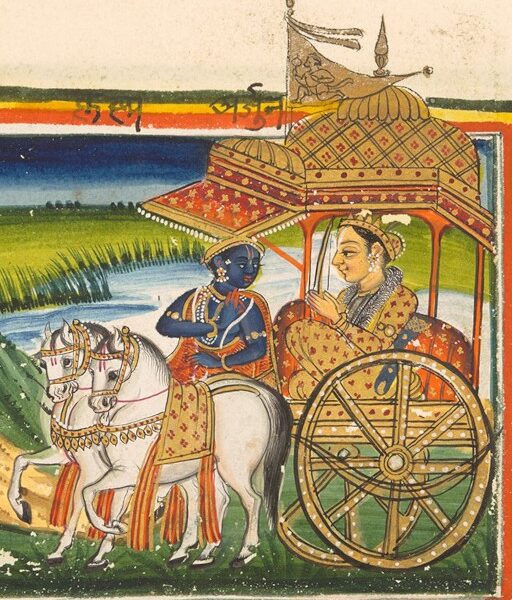
A person who is fully Kṛṣṇa conscious and is fully satisfied by his acts in Kṛṣṇa consciousness no longer has any duty to perform. Due to his being Kṛṣṇa conscious, all impiety within is instantly cleansed, an effect of many, many thousands of yajña performances.
So, we will look at, okay, he has nothing to do, right, so there’s no obligation.
So then we’re thinking, great, now I can do whatever I like. Right, so this will be an impetus to move in this direction.
Right, you know, that’s the idea, oh yeah, we chant Hare Kṛṣṇa, we don’t care for the rules. No, no, it’s just, you could just, why, means if you want to make this statement, one should not be so, it should not be so cumbersome, right, one should just be more practical and to the point. Just say, I don’t care about the rules. Leave Hare Kṛṣṇa out of it, right, because most of the time you’re not chanting and you don’t care about the rules. It’s not like I’m chanting my japa, so I don’t care about the rules, right. I’m chanting my japa and I get a, you know, the phone rings, they get an SMS, someone tells, you know, I just remembered that, you know, I got some email to do. That’s not caring for the rules that you just leave that. No, we take care of that.
Do you understand? So the point here is that when we’re saying does it, does it has no obligation because the point is, is activity gives result and result has a purpose, right. And that purpose is to please Kṛṣṇa.
So, now, in the process of sādhana, the activity both is cultivating your relationship with Kṛṣṇa, but it’s also purifying you of material entanglement.
Does that, does that make sense? One has an obligation, let’s say, you know, in dealing with his family.
Now, why is he dealing with his family? Because this is another aspect to consider. Why does he deal with his family? Why is there a family in the first place?
Because of his attachment. It means, in other words, his own conditioning requires him to have a family, right. So since you have one, then you’re obliged to take care of it. Why? Because everything is Kṛṣṇa, so it’s Kṛṣṇa’s family. You want to deal with Kṛṣṇa’s family, then you take care of it. Not that you just take what you want and leave the rest.
Does that make sense? Right? It goes together. So that means that you’re both cultivating your relationship with Kṛṣṇa by understanding that this family belongs to Kṛṣṇa. At the same time, you’re getting purified of your conditioning that you require a material family.
Does that make sense? So now, if you’re fully Kṛṣṇa conscious, you don’t have to deal with the family to become Kṛṣṇa conscious. And you are fully satisfied, so you don’t need a family.
Right? So there’s no obligation. So the person who will say, we chant, we don’t care, is the person who can sit down in the temple and chant all day or preach to people all day or do kīrtana all day. And he doesn’t need anything else. Does that make sense? Isn’t it also that a person like Haridāsa Ṭhākura, he would never say, I don’t care about the rules. No, he would never say. He would just be… See, the point is, if you’re always chanting, what rules are there to follow? Right? Because for chanting, there’s no rules. Rules come as soon as you do something else other than chanting.
That’s immediately. You deal with the deities, you deal with the Vaiṣṇavas, you deal with the dhāma. Immediately there’s rules. Minor rules, all directly connected to Kṛṣṇa rules. Then there’s our material conditioning. Right? You know, one is renounced, one is attached, one wants this facility or that or this situation, that. So you’re in a situation, there’s an obligation to deal with the situation in a proper way. Situation means you can perform an activity that will get a result. Right? You put yourself in situations you’re comfortable with. You make endeavors that you’re comfortable with. You’re trying to get results you’re comfortable with. So then you’re trying to make that connected to Kṛṣṇa. So you develop your affection for Kṛṣṇa. And connecting to Kṛṣṇa, it also removes the need and desire for those situations.
Does that make sense? So here when it says fully satisfied, means he has no conditioned needs to fulfill.
Therefore, if you have nothing to gain, you have no obligation.
But when we say we don’t care for the rules, we do care for endeavoring and getting results. We just don’t care to do it by some authority. We want to do it in our own way. So that’s not what it means that for him there is no duty. It means duty goes with… Does that make sense? Just like, let’s say, why do you eat? Right? You’re hungry. You’re not hungry, you don’t eat. So if we said a person whose hunger is fully satisfied has no need to eat, we’d go, okay, yeah. So now when we say the same thing, for he who is fully satisfied in the self only, for him there is no duty. That means that duty is there because you have desire. Right? But we don’t connect duty and desire.
Duty is something you have to do. You’d really rather not do it, and desire is what you have, and, you know, hey, that’s great, that’s the spice of life. The two go together, just like you’re hungry and eating food.
Like freedom and responsibility. Yeah, freedom, responsibility, anything. It all goes together. So we tend to separate them. So he has no obligations because he has nothing to gain from it. Right? So the Vedic injunctions where they are therefore defining absorption in the Lord, that, then you’ll never be fully satisfied.
Or satiated. You’re satisfied in Krishna consciousness, but you’re not satiated. Right? The material, you do something and, you know, you’ve had enough of it. Right? You’ve done enough in your regular life, you go on vacation. But at the end of the vacation, you’re pretty happy to get back to your normal life. Right? Because vacation’s more trouble than day-to-day life.
But in spiritual life, you can do it unlimitedly and you’re happy. But you’re fully satisfied in that you’re situated, everything that you’re interested in, you’re completely taken care of, and everything like that.
We don’t bite.
Not gentlemen.
Okay.
By such clearing of consciousness, one becomes fully confident of his eternal position in relationship with the Supreme. Right? So anything that makes, anything that distracts us from thinking, I am Krishna’s servant, is that one has material desire.
Does that make sense? So when the consciousness is fully cleansed, then one is fully confident of his relationship with the Lord. Because that’s the only thing that stands in the way of our relationship with the Lord, is that we think, I am this body, or I am the mind, or intelligence, I am something other than the soul. Right? Or I can be the soul and these things. Right? So the mixed consciousness.
But one is confident that I am not anything else other than the soul. Therefore, one becomes very confident of the relation with Krishna. And if you have relation with Krishna, there is no material obligation. Right? Because remember, conditioning is material.
Does that make sense? So, therefore, there is no obligation on that platform.
Now, taking it another step. Now, you have someone like, you know, giving example like the Pandavas. They are ksatriyas, they perform ksatriya duties. But they are fully satisfied, fully Krishna conscious. Right? So they are under no obligation to do those duties. They don’t need to do those duties to establish their relationship. Right? In other words, they don’t have to engage ksatriya activities to establish their relationship with Krishna. They already have a relationship. They don’t need to perform ksatriya duties to fulfill their material desires. Because they don’t have it. Right? So they are doing it simply as to interact with the Lord. Because you have to do something to interact, something to express. So by their nature and their relationship with the Lord, this is what they do.
So for us, then, the basic principle is we are servant of Krishna. So anything we can do that is available to serve, we do that. Right? And since a particular gross and subtle body has particular characteristics, so it will be ideal for doing certain types of service, therefore we’ll do those services that match the conditioned nature. Though we have nothing to gain from it because we’re not conditioned by it. Right? But by parabdha karma, it’s left there from before. Right? Because if all karma was gone, you’d have no body. You’d just be a little soul floating around. Right? And ten thousandth of a hair doesn’t do a whole heck of a lot. Right? Yes.
A little louder.
Yes.
Yes. Yes. The varnasrama is there to address the conditioned nature. But because it’s Krishna’s system and everything coming from the Lord is perfect and complete, therefore the system still works when you become transcendentally situated.
Right? Because one would ask, well, why? No, because it’s material. No. Varnasrama’s not material. That we have the needs, material needs to be fulfilled that varnasrama will address, that’s material. Varnasrama is simply when you have the spiritual activities in the spiritual world and you reflect that onto the, how you say, the ocean of desire, then when you look into the water, you see a culture and activities.
But the original, they’re doing that to serve Krishna. Here we’re doing, no, I want to have a child. Right? So therefore, then, according to the Veda, I have obligation as a mother, as a parent, to deal with my child in that way. And they, as a child, have their obligation towards me, because they want it to be taken care of. But in the spiritual world, it’s not that Mother Vishuddha wants a child. No, she wants to serve Krishna. And the way she’s attracted to serve Krishna is in Krishna’s childhood pastimes.
You understand? So this is, giving at the end of Gita, that you’ve surrendered to Krishna, then you deal with the detail.
Right? Within the material world, varnasrama means starting with the detail, then getting to Krishna. Full surrender means starting with Krishna, and then being practical, and whatever detail is available, that’s for use. Right? You will go into the kitchen, you want to cook for Krishna. You go into the kitchen, there’s some potatoes there. So, what do you do? You cook potatoes for Krishna.
Right? But, if you go into the kitchen, and you wanted to cook cauliflower, because you want to eat cauliflower, you go in, there’s potato. What will you do? Go out and buy cauliflower. Right? Or do nothing, yeah, of course. Or, call out for a pizza. So the thing is, you’re going to go out, you’re going to make an endeavor that’s separate from just what’s there.
Does that make sense? Or, we could look at it, because we could say, what happens if though? We could take, why is there potatoes in the kitchen? Because you like potatoes. So you go in there, you want to eat potatoes, you go into the kitchen, you cook the potatoes, you offer them to Krishna.
You understand? So the whole point is, is that, the first step is connected to Krishna, no matter what it is.
But the next step is, and you say, I want to serve Krishna. So therefore, you serve Krishna with what facility is available.
From previous discussions. Does that make sense? So Varna Ashram is simply those forms and rules in which you can express your affection for Krishna through, in a social environment.
Right? Because, you know, Krishna is always surrounded by loving devotees, that means it’s a social environment.
Does that make sense? So who does what in that whole social environment to make the thing function?
But, here, we want to use that for ourselves. Right? Does that make sense? The demon walks into Vrindavan, right? Vrindavan’s the spiritual world, everything’s Chintamani. And how does he look at it? He doesn’t look… It’s his place. In other words, I look at this, you know, and I can get enjoyment from it how I would like, rather than, here’s the perfect facility in which I can please Krishna.
Does that make sense? But, the point is, a tree is still a tree. Grounded, you walk on the ground. You get fruits and flowers from the trees. You get water from the river. That doesn’t change. Right? But what changes is the quality of the elements. Spiritual world, they’re superior. Material world, they’re inferior. Right? Spiritual world, a tree can give anything. Here, it only gives a particular fruit that it gives in season.
Does that make sense?
So, that reflected here, it’s the same form. This is where we make a mistake. Due to the impersonal concept that material is one thing, so spiritual has to be the exact opposite. No. Material is looking at God’s energy for my purpose. Spiritual means looking at God’s energy for his purpose. Right? And if you can see like that, then you’ll be given the superior energy to play with. Right? Rather than the inferior.
Does that make sense? Right? The kid, you know, plays with everything and breaks everything. Right? So, he’s a kid. He needs toys. What kind of toys do you get him?
Strong toys or cheap toys. Right? In other words, it’s in consideration that he doesn’t deal with it nicely. Now, let’s say he deals very responsibly with it. Then you’ll be inclined to get him something more, you know, nice.
Does that make sense? So, that’s the whole point. So, the principle is it’s not that it’s material, it’s spiritual. It’s Krishna. You know, therefore in the temple we’re very nice, we’re careful with everything about Krishna. But when we go home, it’s ours. I deal with it as I like. So, then you’ll be given material energy.
Right? But you have the opportunity to deal with the spiritual energy because you do deal with that nicely.
But when you see that all energy is Krishna’s, then you’re qualified to deal with the internal function.
Right? Does that make sense? So, Varanashram is simply the rules that apply to the social structure. Then you can say, No, but in the spiritual world there’s no rules. True. Right? But the point is, the point of the rule is what pleases Krishna. Krishna likes it that, you know, somebody’s married, so therefore there’s an exclusive relationship.
Right? And because of that, then the parakiya rasa has some meaning.
You know what I’m saying? You know, girls wear one thing, boys wear another. If everyone wore the same thing, then, you know. You know what I’m saying? At different times of the day you eat different things. At different seasons you eat different things. At different times of the day and seasons you wear different things. You do different activities. That’s the way Krishna likes it. But we’ll say, Oh no, so many rules and all that, you know, why can’t I eat pizza for breakfast? No, you eat that for lunch or dinner.
You know what I’m saying? That’s the way Krishna likes it.
Right? And we should not bring up the question now, Does Krishna like pizza? Okay?
No, seriously, does he like pizza? What kind of pizza? Yeah.
In that point, is that a point where we could reconcile? Because many people, dealing with financial situation, would they be more worried about the detail? And as you said, surrendering to Krishna would be the main point, and then you see how that will be. When you get the detail, you get the black detail. Yes. The thing is, you have to, means you have the element of it’s being done to please Krishna, and that it’s being performed according to its proper, proper way of doing something. Right? There’s a proper way to cook. Right? There’s a proper way to clean the floor. So, it’s just a matter of according to our conditioning, or freedom from that conditioning, where we’re going to start. Right? It means, I like things clean, so I clean the floor, but because it’s Krishna’s place, therefore, it’s, you know, offered to Krishna. Or, I’m a lazy bum, I don’t like to clean the floor, and it would be a whole lot better if my mom cleaned the floor, but the problem is, my mom’s around, it’s a drag, and then I can’t have my friends over, so I’m living in my own apartment, so my mom’s not around, but now it’s a problem cleaning the floor. But, because it’s said, I’m supposed to clean the floor, I’m doing it only because I have to. And since I’m doing it, then it’ll be offered to Krishna. Right? Or, I want to please Krishna, and so this is Krishna’s place, Krishna likes things clean, so therefore, I’ll clean the place.
Right? So you see three different levels. You know? Two of them you’re dealing, addressing your own conditioning. One is pious, one’s impious. And then the other, it’s purely transcendental. But, all three are being engaged in the Lord’s service.
You know what I’m saying? So, but the point is, how much covering is there? That’s the difference. So the Varanashram is the same, it’s the same system for all of them. It means the, you know, as we said, the potato, whether you’re cooking it for yourself, or cooking it for yourself and offering it to Krishna, or thinking about Krishna, the potato doesn’t change. Right? And it’s not that the way to cook it changes either. No, but, you know, you’re transcendental, the fire works differently, you don’t get burned, you know, you put something in the pot, because you’re so busy doing other things for Krishna, it never burns and never overcooks or undercooks. You know, it’s just perfect. I just throw it in the pot and everything happens, and I just, you know, how you say, sing a little tune while it’s going on, because everything’s so nice and everything, and, you know, everybody loves me, and there’s no fight over who’s in control of the kitchen, or, that’s my pot, you know, none of that kind of stuff goes on, because it’s all transcendental. No, it doesn’t work like that.
You know what I’m saying? The system is the same.
Now it’s just a matter of who are you working for? Yourself, or for Krishna? So that’s the misunderstanding. So, here, then, it’s being said, is there is no obligation within varnasrama, because varnasrama, you’re obligated, because you have material need. You have to do it. Even if you don’t believe in varnasrama, it doesn’t matter, you’re still obligated.
You know what I’m saying? And this idea is that, well, you know, you know, hey, you know, this and that, and, you know, you know, if you do that, then, you know, you go to hell. Well, that’s in your religion, in our religion, that doesn’t happen. No, it’s not like that. You know, there’s God’s laws, and it’s going to happen the way He says.
Does that make sense? So, therefore, there’s no obligation to perform varnasrama activities. But for the devotees in the spiritual world, varnasrama isn’t an obligation. It’s a form to express their particular taste in serving Him.
So they’re following it, but there’s no obligation.
And in Vaikuntha, they like to serve Krishna through the rules. It gives a very nice form. You know, you know what’s going to happen, everything. So they prefer to serve through the rules, but it’s not that they’re obliged to the rules. That’s their taste. Well, in Vrindavan, the spontaneous aspect doesn’t mean they don’t follow rules, but it’s not that following the rules is what makes the form. They want to do something for Krishna, so they follow those rules, that gets it done.
Does that make sense?
Okay, you see the difference there?
Yes. The contaminated consciousness is attached to certain modes of nature? Contaminated consciousness is an attachment to certain modes. It means, it means the principle is that contaminated consciousness means you’re attached to the material phenomena, which is controlled by the modes. So in effect, yes, it means you are attached to a certain manifestation of the modes.
Right? But it’s not that contaminated consciousness means, you know, it’s these modes, and if it’s not that combination of modes, you’re not materially attached. No. Modes are involved, you’re attached.
And they follow patterns. Right? You know, you have choices, but you follow patterns.
How has it changed by engaging those in Krishna’s service?
It’s changed, it becomes purified. Right? That’s what I’m saying. Due to His being Krishna conscious, all impiety within is instantly cleansed. Right? So the impiety meaning that it’s not for the Lord, because ultimately impiety means it’s not for Krishna. Right? So even when one is very pious, follows all the rules of the Vedas, but not for Krishna, it’s still impious. It’s a really nice impious. You know, the very, you know, cultured, you know, how you say, white collar prisoner in, you know, the best quality prison that there is, and he follows everything, he’s really nice, he’s a gentleman, everybody likes him. He’s still a prisoner.
You know what I’m saying? So, so the, the, the modes means your being controlled by them becomes purified. But their acting, that doesn’t change.
Does that make sense? Arjuna is killing people in the battlefield of Kurukshetra. Right? So, you know, elements of passion, ignorance, he’s following Shastra, chanting, that goodness is there. So all the modes are doing the work. But he is not controlled by them. He is controlling them. Because he wants to do this for Krishna, so therefore that mode takes care of him. Right? He wants to do that for Krishna, so therefore that mode takes care of him. You understand?
He’s unattached for himself to what’s happening, but he wants to get the result for Krishna. Therefore he’s making that endeavor that gets the result. Right? The person’s over there and he shoots the arrow this way, it doesn’t get a good result. Therefore the person’s there, he shoots the arrow there.
Does that make sense?
Yes. Maharaj, one is engaging in devotional service and the consciousness is mixed up. Right. Does the purification take place automatically? Does the purification take place automatically? As long as what one does is authorized and your goal is to please Krishna, it is automatic. How automatic? It means it’s automatic. Now what is the volume of it depends upon your endeavor to be Krishna conscious.
You know what I’m saying? But there’ll always be purification. Just like we do Harinam down the street, everybody on that street is purified whether they like it or not or know it or not.
But if they appreciated the kirtan, they would get purified greatly. Right. And purification is only part of it. We see here is he instantly cleansed, but the next point he makes is therefore one’s established confident in one’s eternal relationship. Right. Because there’s always… You do something, there’s a goal. Who’s the goal for? You don’t make an endeavor to get a result for nothing. So that result is… Because result’s in the position of prayoja, which means the position of happiness. So who’s supposed to be happy? Right. So that means it’s for somebody.
Right. Now the endeavor is how you can act in that way to actually get it. Right. So that’s why the devotee is expert. That’s why one of the qualities is he’s expert. Because he wants the result for Krishna. So he wants a good result. Therefore he’ll be expert at performing the activity. So this idea that to be expert then you have to be materially engaged. Well, that’s foolish. No. The devotees are the most expert.
Right. The higher up it goes, the more expert it is.
Does that make sense? Arjuna is more expert than even Shiva.
Right. Shiva’s more expert than Brahma. Brahma’s more expert than Indra. Indra’s more expert than someone like that. Because it’s just how much they’re developed devotionally.
Does that make sense? So that’s the point. Now you can use that expertise materially. And therefore you’ll see someone who’s… Like here, it says… To reverse this… Like that. Due to lack of Krishna consciousness all impiety is fully established.
And this is the effect of many, many thousands of material activities. By such pollution of consciousness one becomes fully confident of his material position.
Right. Therefore that materialist… He is the best materialist.
Because he’s fully committed to that if I make this adjustment in the material energy I will be happy. The common person has a dream I would be happy.
Right. But that successful materialist he knows he will be happy. It’s not a dream.
He’s fully confident because the normal person they have their dream. You can adjust that. You can make them doubt it. Right. Because their conviction is not great. They’re not situated on nishta. They’re neophyte materialists.
If they’re madhyama or uttama materialists they’re well situated. They’re confident. Right. You go to them and discuss anything they can win any argument. So it’s all the same but it’s just reverse. It’s misapplied.
Right. Is that make sense? So the skill is the same. The skill doesn’t change. So what changes is the consciousness. So the devotee because he changes the consciousness therefore you automatically get the spiritual result. Just in the same way as you perform the same activity with material consciousness you’re automatically entangled. Right.
Right. Is that make sense? You have to go through the stage of anartha vritti. Anartha vritti, yes. Yes, you have to. So someone who’s well has crossed anartha vritti. He’s totally contaminated. Yes. I have this question. I’m asking this for my own information. Since we are preaching in we’re preaching to the peoples and the people are like they’re coming, joining the temples. Now they’re joining the temples. The peoples are joining the temples. Devotees. So you’re preaching to the peoples but only devotees join. Those who get peace, they understand. Okay, those peoples that understand they become devotees, they join. Now they are chanting and reading books and now they are preaching going for the book distribution and many activities they’re raising the funds so that temples will sustain you can purchase rice, weeds instead of growing the food. So now we are more dependent on corporate world and people who are living in cities. So how we can preach so that they can be in their position. They’re doing pottery, they’re doing agriculture, they’re doing home duty according to their Varna and ashram. So the way that you’ll get them to be comfortable in that is being able to appreciate that whatever position one’s in that’s comfortable. I would say that there’s probably a very major well, yeah, I would consider a major point that most devotees who deal with Varna ashram miss.
Dwarka was not a village neither was Indraprastha neither was Mathura neither was Hastinapur or Pataliputra or Drupada’s kingdom is his city.
So Varna ashram also includes cities.
So the main point is Krishna consciousness.
What is the advantage of living in the rural environment?
You know what I’m saying? What’s the advantage?
More peace.
But peace, what’s that got to do with Krishna consciousness? Right? Mayavadis, you know, sit in a stone room somewhere in some ashram on the side of the Ganga and endeavor for peace. Right? The Buddhist sits in his stupa somewhere or stupor, whatever and he’s endeavoring for peace.
Does that make sense? So, how is that an advantage? Why would peace be an advantage?
But so then what would affect peace? Because people are in a peaceful environment but are they peaceful?
You know what I’m saying? It’s just like you go to, you know, you look at the magazines and that there’s an island somewhere you know, perfect, you know, turquoise ocean, white beach, coconut trees and everything and what are they advertising? A five-star hotel there.
You know, they’ll say, yes, it’s very peaceful and this and that and… So the people are going there, they’re peaceful. So now is the natural thing there for Krishna consciousness?
No. What are they going to do? Now they’re peaceful. What are they going to do? Yeah, they’re going to spend the time at the beach or at the spa or at the restaurant or…
You understand? So the point is, is even peace, if you don’t understand that it has to be connected to Krishna, even you have it, you’re not going to use it properly. My body is their peace, they misuse, Buddhists misuse it, materialists misuse it.
Does that make sense? So the point is, is whatever you have engaged in Krishna service, you have a nature. So if you have a nature to function in a rural environment, that’s what you should be doing.
Right? But you should be doing it for Krishna. Same thing if somebody’s living in a city environment, they should be doing that for Krishna. The point is, is the rural environment you are more in tune with the laws of God. So it’s more easy to remember the Lord. But you can also just as easily forget Him. The animals are out there and they don’t remember at all.
You know what I’m saying? But it’s just you’re more in tune. While in the city, if it’s set up, not set up according to Vedic standards, it’s very easy to forget the Lord. Right? Due to the, you know, modes of passion and ignorance are very prominent. Because you create the environment. In the nature, living in nature, then the mode of controlling that is goodness. But it doesn’t mean that you’re controlled by goodness. You can be in passion or ignorance while you’re there. You know what I’m saying? So, the idea is that if they’re there, then how to make their situation Krishna conscious, whether you’re in the city or whether you’re in the country.
Right? Does that make sense? And so, in that situation, you see, well, what would be the Krishna conscious? What would please Krishna? So if you look at that, that will automatically adjust to what you’re doing. Right? The form in the rural setting, basically you don’t necessarily have much adjustment. In the urban setting, you might have more adjustment.
But the point is, it’s the change of the consciousness that’s important. Because whether one’s in the city or whether one’s in the other, it doesn’t matter.
Does that make sense?
Yeah. Because in the Vedic thing, it’s just like this. Let us say you live on a farm.
Where is your house?
Is it within the farm? Yeah. So that means, but in your house, is there farming? Okay. Maybe, okay, that avocado seed is growing on the windowsill. And the, you know, the, how do you say? Grass. Yeah, your wheat grass is growing. You know, whatever. But the point is, your house is a house. Okay. Let us say you have a big family.
Right? And so now you have three generations there. You’re there, your children are there with their families and their grandchildren. Right? So you have quite a few houses there on your farm. So where are those houses? Are they all together or one’s here, one’s over there, one’s over? No, you put them all together. It’s surrounded by farms. Right? Does that make sense? So, all you do is expand that more and then you end up with a town or a city.
But in the Vedic concept, then where is that city situated?
In the middle of farm. So all around the city on all four sides, that’s farm.
So that’s the weakness in your modern urban environment. There is no farm.
Right? The people want to move out of the city, then go out and start a new town. Because if you take the farmland and make it into the, you know, urban environment, then there’s a problem. Or as you make the rural into the suburban, then extend the rural.
Do you understand? But all cities, depending on how big they are, that much degree of land they’re supposed to have. You know? So in other words, Manhattan Island basically should have all of Jersey and half of New York as farmland.
Then, what’s the problem?
It’s just, all it is is a more developed thing of what the man who’s living in the rural is doing anyway. He’s not living out there with his carrots. He lives in a house. There’s not one carrot growing out of his ground there. Right? In his living room, there’s no carrots.
Does that make sense? So, all it is is the city is the bigger, you know, environment for living in. So therefore, the rules still apply. It’s not that it’s two different lifestyles and all that. That’s if you’re not very good at principles and only see details, then yes, it’s very different. You know, I hear this rock and this brick, oh, they’re so different, oh, this and that. No, they’re both made of earth. The same rules apply.
Does that make sense?
Can you say that all karma is purifying ultimately? All karma is purifying. How do you define purifying? Yeah, that’s my question to you. Purifying, it means, purifying, our definition of purifying means the material concept is given up and the spiritual is accepted. That’s purifying. Because otherwise, just the path of the modes, sometimes you’ll be in ignorance, sometimes in goodness, sometimes a demigod, sometimes a bug in, you know, in, you know, a worm in stool. So, it just follows these paths. So, by being that worm in stool, you’re purified of the consciousness, not consciousness, you’re purified of the reaction of the activity you did as a human being that made you a worm in stool. Right? That’s how they’re getting purified. It’s austere to be a worm in stool. Right? It’s austere to be a dog on the street. Right? There’s no house, there’s no shelter. It’s austere. So, because of austerity, they’re elevated up to the human platform. The human’s elevated to the demigod platform because of austerity. Like that. So, you’re purified of that, but they’re not purified of the material consciousness. So, we’re worried about the purification of consciousness. Because being purified of the material thing, that’s what we worry about. Like, somebody does something wrong, then you have to be purified. That’s what prāyaścitta is. You’re purified of the reaction of the sin, but no one worries about the consciousness.
Does that make sense? That’s the point. So, prāyaścitta technically is for materialists. It’s not just transcendentalists.
Because Manu, who gives the definitive detail of prāyaścitta, then after having explained all of it, then points out that your highest elements are just going to assembly of highly advanced brahmins and kṣatriyas who are engaged in sacrifice and explaining to them your problem. And with them guiding you on how to correct that in your life and surrendering to their instructions, you taking a bath at the end of the yajna with them, you’re purified. You didn’t have to go do this and that and all kinds of stuff. Of course, being at the yajna means you’re going to be discussing spiritual subject matter. So, you’re going to get good association. So, it’s hearing and chanting and serving to brahmins and Vaiṣṇavas. That’s the real prāyaścitta.
So, Manu puts more emphasis on association of the brahmins and hearing and chanting than he does on all these other things. But, because people are materialistic, people don’t have faith in that. If we say that this devotee, he’s just done all this nonsense, whatever is the local latest, what freaks us out nonsense, you know, and then you say, okay, you know, we’ll put him with this devotee who’s advanced, he has respect for, they’ll travel and preach, he’ll be engaged in sadhana, you know, then that would be, according to Manu, the best way to purify yourself. Prabhupāda did. Yes, Prabhupāda did. But, we’ll say, no, no, but what about, he did this, and he did that. So, what does that mean? That means we’re materially contaminated condition, and therefore, we don’t understand that purification of consciousness is real purification. Because the only reason you’re doing the material nonsense is because your consciousness is polluted. Correct the consciousness, you stop doing nonsense.
You know, just like we said, if you’re not hungry, you don’t eat. So, if there’s no material desire, you don’t do material things.
Right? Now, we give materialism a value that pious materialism is good, and impious materialism is bad.
But, in reality, it says, the all-in -piety within is just an inquest. That means all things that are not connected to Kṛṣṇa. So, that includes material impiety. But, even material piety is considered impure on the transcendental platform.
So, it’s a question of how gross we have to get to get a hold of this desire. That’s it. That’s all. So, the more it is, the more careful you have to be about that. Now, if the person himself can’t relate to associating with devotees and hearing and chanting as a position to be in, then you have the material forms of your prized chitin. Because he’ll take that seriously.
Yes. That’s all.
So, and how can you define consciousness? How do you define consciousness? Consciousness is just the, how do you say, the natural awareness of the living entity. Because there’s sac-chit-ananda. So, chit means consciousness. So, they’re made a consciousness. You can tell the consciousness. The symptom of consciousness is desire, you know, or activity. Right? So, the point is, is when the desire is purified and the activity is purified, then it’s connected to Krishna. And if the desire and activity are impure, then one will do something material. So, the idea is how to correct the desire and the endeavor. Right? Because your desire will be connected to your goal. Right? Your endeavor is based on desire and on what goal you can get. So, if you correct the desire, then you’ve corrected the activities.
Right? So, therefore, the focus will be on, be there. The focus will be on that aspect. Because otherwise, being aware of things, that’s nice. That’s knowledge you understand the situation you’re in. But it’s what you’re going to do with it that’s important. So, just being conscious is not enough. That’s why being conscious, then one must be Krishna conscious. Being Krishna conscious, one must be favorably Krishna conscious. And being favorably Krishna conscious, it should be free from karma and yoga.
Right? So, that’s then what we’re trying to do. And the other things are there only because we’re not Krishna conscious. Right?
And if prayaschitta on the material platform worked, then 6th canto Bhagavatam, there’d be no need to speak it. Because the canto is proving that there’s no benefit to material prayaschitta. You have to change the consciousness. Right? And just as in karma, you do something physically, the reaction you’ll get will be physical. It won’t be something else. We’ll imagine there’s all kinds of things. If someone says something verbally, the reaction will be verbal.
Right? If it’s in the mind, the reaction will be in the mind. Right? So, if someone says something bad to you, the reaction of karma that will come to him will be verbal. Someone says something bad to him. Not, he says something bad to you, and then he goes and gets run over by a truck.
Right? No. If he came up and physically dealt with you, then he’ll get run over by a truck.
You understand? But we mix all that up. So that means, something done with improper consciousness, then the only way to cure it is in consciousness.
Because on the material, it also doesn’t cross. Body, mind, and words, the actions within that, stay within that. The reactions, and actions and reactions stay within that, their sphere. So consciousness is also. So therefore, if you focus on consciousness, because it’s the cause of the body, mind, and words, so then you’ve actually corrected it. Otherwise, if you say that, no, we’ll do something for the body, or the mind, or the words, and that will correct the consciousness, it won’t.
Consciousness is only corrected by appreciating that there’s consciousness and having the desire within that area. You desire to be Krishna conscious, you’ll advance.
But could more physical correction create an environment where… It can create an environment that still you, by consciousness, have to accept that. It could create it, but to think that I’ve done that, therefore it’s all done, according to Nityashastra, that’s the idea of a fool. I mean, there’s, you know, so many, you know, Vyasadeva’s written a book, A Hundred Types of Fools, right? So one of the types of fools is that I’ve made a plan, everything’s perfect here.
Right? You have a meeting, and like that, what’s the problem? We had to make a plan, we make a resolution, then everybody’s happy. Yeah, it’s done. Now it’s good. That’s fools.
Right? Someone who’s not a fool is that the plan is simply what you’re going to do. So it’s just a matter of discussion until you’re comfortable, what will be the best way to accomplish it. Not that by making the plan, now the problem’s solved. No. The problem’s only solved when you apply the plan and the problem is over.
Yeah, it is.
So that’s the point, is that until the consciousness is changed, but the material won’t come, it can be a catalyst for it.
But still, the consciousness itself has to be improved. And that’s only going to come by association, not by material arrangement.
His duty thus becomes self-illuminated by the grace of the Lord, and therefore he no longer has any obligations to the Vedic injunctions. Self-illuminated, so that the Lord reveals that therefore what you should be doing. Because you have no material attainment, so therefore there’s no obligation. So then what will be the way that the Lord wants you to please Him, then that will be illuminated.
Prabhupada has no duties to perform, but it’s revealed that to go preach in the West, that will be the way to please Krishna. So then he does that.
How does which come about?
When it says all piety is instantly cleansed, and one becomes fully confident of the eternal position in the relation with the Lord, when that’s there, then naturally what one should do, see is we have, due to impiety, we have a material identity. Therefore we know what we want to do. So when the heart is purified, then the identity is fully in that as servant of the Lord. Therefore then what one should do is understood.
Such a Krishna conscious person is no longer interested in material activities, and no longer takes pleasure in material arrangements, like wine, women, and similar infatuations.
So there’s no interest in the activities, and he takes no pleasure in them. But it doesn’t mean that the form doesn’t remain the same.
The form remains the same. He does his job because he really likes his job. He likes getting results from his job. But as he becomes purified, it’s not that that is what drives him there. No, there’s the benefit from the job is useful in Krishna conscious. Therefore he has his job. But that’s not where he finds his pleasure. That’s not where he finds his interest. But it doesn’t mean he’s not expert at it.
You know what I’m saying? It’s just like, let us say, you’re in the kitchen, you’re cooking, and you need a particular implement. So where do you look? How do you find this implement?
Right? You’re looking for a knife. There’s a place where you keep the knife. So now is your whole interest on, you know, walking over there and pulling it off and, you know, stuff or walking over there and opening the drawer? No. But you do it properly because you want to get something cut.
Is that what you’re saying? So, in Krishna consciousness, because why I’m bringing this up is one may have the doubt, no, but if you don’t have any, you know, material drive, you won’t do it properly. Right? You know, there’s the ideas that, oh, if the husband is not materially entangled or infatuated, he won’t take care of the family nicely. Right? Because on the material platform, he won’t.
Possibly he doesn’t. Yeah. So it’s like, so then, but the point is this, you want to make something nice for Krishna. To do that, you need to cut the vegetables. To do that, you have to get the knife. So therefore, you’re going to very expertly get the knife.
Right? So the same way is that if the activities within the family life has me engaged in Krishna service, you’ll do them nicely because it’s an offering to Krishna. But originally, one’s doing it because one is interested in the results and the pleasures that will come from being involved in that.
So there, he’ll do it even better because there’s no attachments.
Right? If the idea is to interact with the family and make them Krishna conscious, he doesn’t have any preconceived ideas when he gets home what’s going to be the interaction other than Krishna consciousness. Right? So when he comes home and the kids are happy and the wife’s not and the wife’s happy and the kids are not or both are happy or both are not, it doesn’t matter to him. But the man coming home from the office, he’s had a bad day, it’s been really tough and everything’s gone wrong for him. What does he want when he gets home? Yeah. Everything nice.
Right? Right? Everything nice. But when he gets home and he finds they’ve had a bad day and they want to share it, then it’s a problem.
But for the devotee, it doesn’t matter. It’s been a bad day at the office, that’s the material world, so when he gets home it doesn’t matter. If it’s also more of that, hey, it doesn’t matter.
He’s going to deal with whatever’s there because that’s his duties. Right? And because it’s for Krishna, he’ll do it with inspiration because that’s the other thing. Oh, but then he’ll just do it because of duties, there’ll be no feelings and all that. But is material the only feelings there is? Spiritual. Point is, if you get the effect, what does it matter?
You know what I’m saying? Just like that. It’s somebody’s birthday and the mom has cooked something really nice for the kid and you happen to be there at the birthday and you’re eating that. Are you feeling bad that this tastes so good but it tastes so good because the mom cooked it for my friend and not for me? Do you feel bad? No. So what do you care if the family members are doing their duties very nicely because it pleases Krishna and they’re not doing it to please you? What do you care? You’re getting the benefit. It’s a nice arrangement.
Does that make sense? So the thing works very, very nicely but due to impersonalism we feel it can’t because if it’s spiritual there can’t be any material success or endeavor.
It means material can’t go nicely because spiritual is the opposite of material.
Does that make sense?
So it’s not the Mayavadis in India that when we, you know, Prabhava’s pranam mantra that we have to worry about. It’s our impersonal idea of what material and spiritual life is.
That’s 3.18. A self-realized man has no purpose to fulfill in the discharge of his prescribed duties nor is he any reason not to perform such work nor has he any need to depend on any other living being. So now he’s taking that step further.
The only duty for a self-realized person is devotional service. Self-realized man is no longer obliged to perform any prescribed duties save in except activities in Krishna consciousness.
Krishna consciousness is not in activity either as will be explained in the following verses. In Krishna consciousness man does not take shelter of any person, man or demigod. Whatever he does in Krishna consciousness is sufficient in the discharge of his obligation. So he has no purpose to fulfill. That’s why he’s not engaged in material activities. So the activity he’s engaged in is spiritual though it looks the same.
Does that make sense? He has no purpose to fulfill in the discharge of his prescribed duties but he still does them nor is there any reason not to perform them. You know what I’m saying? The family person is there. The reason he has a family because he wants one. He’s materially entangled. As he becomes purified he comes to the transcendental platform. There’s no need for the family on a material platform but there’s no reason to not interact with them just because now he’s transcendental.
So it doesn’t change.
Does that make sense? So that’s why Krishna says you have a right to perform your duty but you shouldn’t be kind of attached to not doing it. Because duties are always performed. There’s no such… You don’t hear of anybody in Vrindavan just sitting under a tree and meditating. Everyone’s busy. Like that. Activity. Pastime means activity.
Nor is there any need to depend on the area of the living being. So he doesn’t take shelter of any person, man or demigod to fulfill his need. He’s independent. He serves Krishna. Facilities are there. You cooperate. But you’re cooperating to serve Krishna. They may be cooperating for their own material purpose. Right? Does that make sense? We’re going to the man on the how you say on the mayor’s council and all that getting permission for Ratha Yatra. So we’re trying to cooperate with him. But it’s not that to be Krishna conscious we require him. No. But to do this activity it needs permission. And he can give it. So he is also interested because there’s a new platform coming up for their party that they’re very broad minded and accommodate all varieties of religion and everything like that. So he’s interested to get all the permissions because their party will be seeing that yes, see you know the Hare Krishna festival and we did this for this and this and that one for that one. And see you know we help everybody. Right? So he’s doing it for purely material and platform reasons. But cooperation is there because the activity and the results of it are the same. But the consciousness is different. So there’s no dependency on Krishna consciousness. Yes. It seems to me that this verse and proverbs seem to be addressing the whole national system. I was thinking in terms of the institution of the devotees by taking association by hearing and reading Shastra we seem to think that the devotees they give all the purpose to the girls. Therefore they seem to forget their duties regardless.
At number one it’s explained that you know the devotees when they join they take some asks straight away because they give their life for the mission. And then when it’s time to renounce they have to ask for money. So we focus on how do we balance the idea of duty within the institution which is the mission of the movement. When we are pushed to renounce we think we are not going to get out of that. But that’s what everyone else wants to do.
But why do you have to why can’t you be independent? Why do you have to do what the rest of the crowd is doing? That’s right. That’s the question.
It’s just the only point is which crowd you are involved with.
The point of renunciation see there is on all these things that Krishna has talked because here what’s being quoted is third chapter. So third chapter is Karma Yoga. So Varnaashram is going to play very prominent in it. It’s going to play throughout the Gita but this will be the form of it. So but renunciation technically means renunciation of the fruit not renunciation of the activity. That’s why Krishna will say someone who gives up work is not renounced. So just because the person gave up family life doesn’t make them renounced. It’s because they give up the need for family life that makes them renounced. So now having given up the need for family life if it’s favorable they will continue within family life. But if it’s not favorable then they continue without family life. Like Prabhupada was not attached to family life. But when there was an idea that it could be favorable and you know running the business doing all these things you could do Krishna conscious things his sons would grow up they would help run the business take care of the mother that would give him more time to you know preach and do these other things then it’s favorable. But when he’s already you know in his fifties and the children don’t want help at all. They just want him to do everything and they all just sit back and do nothing. It’s not favorable. He can’t take care of all those persons then not help in any way and do the preaching. So therefore now it’s become unfavorable so he leaves it. But if they’re supportive in all that then what’s the problem? It’s not a problem. You can change your japa because you know the kid likes to drive. So when you go to the temple you can change your japa. It’s not unfavorable.
So renunciation means giving up the desire for it the need for it. It doesn’t mean giving up the activity. Well we’ll say no giving up the activity that’s renunciation though we might maintain the desire and need.
So that therefore will end up in the reversed engineering.
You know so when you’re young you’re renounced and when you’re old you’re married. Now the amount of benefit that they’ve gotten when you renounce when they’re young that will always remain. But the amount of benefit they’ll get by being married when they’re old that’s up for discussion.
How hard do you want to work? You know like that. Because married life means you’re developing the facilities.
And so how hard do you want to work to develop those?
And so that’s going to take time out of what is already what’s a little bit tired and what’s a little bit jaded. And then on top of it now you have to expand things. It’s not favorable. That’s why the Vedic system says you know do all that when you’re young. You know I say young and foolish. And when you’re older and wiser then you can kind of. But at the same time the whole ultimate point is to go back to Godhead. So even if they do reverse it as long as it works and they’re able to remove their material desire and go back to Godhead then hey it worked. It’s just it’s more of a problem.
For yourself and everyone else. Yeah but it’s like that.
Well at the same time there may be also the entertainment value for everybody else. It’s like that. You know you have that if one takes delight in watching social situations. It can be interesting watching the old guy being bossed around by his young wife and everything like that. It can be fun. To watch not to. Not to be part of or to be in any way connected.
You know what I’m saying. But if that’s what it’s going to take to remove all the desires so you can go back to Godhead hey go for it. But it’s not a recommendation. It’s not a standard.
You know just like medicine is not a standard. If you’re sick then it becomes useful. But if you’re healthy you wouldn’t use it. So the natural form of the Varnashram that’s the natural for conscious the development of human how you say upliftment. But if due to particular conditioning you have to do it back to front or like that then as long as it works.
But that’s why unless there’s education there’s every chance or there’s the possibility that it won’t work so efficiently.
Because just like the person becomes detached in his family life. He’s in his 40s.
It’s been a long time that there’s been a nice interaction with the wife. There’s no attraction as such. And all the little things before that kind of went along with it but he didn’t notice because of his attraction. Her telling him how to do things or how she wants him to dress or you make plans for something then she changes her mind. That doesn’t bother you when you’re younger because you have that desire. So it’s just part of what you have to go with. Now the desire’s gone down. These annoy you like anything. So therefore now it’s no time for vanaprastha. You don’t want to move on and everything like that. But now has he lost interest in women? Because here Prabhupada uses the plural term. Arrangements like wine, women and similar infatuations. So has he lost infatuation with women or with woman? Every chance it’s woman because without training it won’t be women.
It can’t be. So he’s just not infatuated by this woman. So he leaves. He goes out. He goes to Vrindavan. He gets his blankets into his sadhana. This and that. After a while he starts to see how the management’s going. Doesn’t like it. Tries to get involved. The modes start to come up. And then there’s this nice, really nice because his wife wasn’t so nice, really nice Russian girl. Like that. And so then all these different things like that.
I’m sorry. All these points I’m making are completely, how do you say? Hypothetical. Absolutely.
Nothing here is connected to any person, place or situation. All the names have been changed. Everything like that. And then you come by and then one day you’re walking down towards the park, around the path, towards the place where TKG’s house was. Like that. And then you see going by on a rickshaw is that Varnaprastha and that Russian girl.
And like that. And you go, Oh no, they got married six months ago. Oh, OK.
It’s because he didn’t, without knowledge, he didn’t learn detachment from desire. He just didn’t like the specific detail. In other words, has two aspects.
The one is the purusha bhava, that I want to control and enjoy it. The second is the specifics that you want to control and enjoy. So, that specifics may have been dealt with in a certain way, but he hasn’t gotten rid of the root. Right? So, he’s not liking that she speaks in this way or controls his life. So if he meets someone he thinks doesn’t do that, right, which is also an illusion, then he will again become infatuated and then be able to put up with all the things.
No, but even if you’re taking it and covering them up because you have put material endeavor on the side you will make spiritual advancements. So, when, if by, you’re not careful when those desires do come up, you’re actually dealing with something much less than what it was before. But, because one’s more purified, therefore, and, you know, more situated, less passionate ignorance, something small seems very big. You know what I’m saying? It means the brahmin man and the brahmin woman, they’re having a disagreement. You know, and he’s making a very, you know, subtle, pleasant comment. And she’s also making a pleasant, subtle comment. But in their mind this is a big fight. Everybody else is going, that was a fight?
You know what I’m saying? And the, you know, and the kshatriya man and kshatriya woman, you know, she’s, you know, just, you know, gone into the room of, how you say, lamentation. She’s ripped off her jewelry. I mean, this stuff is costing, you know, a very, she rips it off and throws it, scattered all over the floor like that. She’s ripped, you know, things like that. She’s rolling on the ground like that. And then the second guy, he has to come, you know, then he comes into the inner chambers and the wife’s not there and she has to make sure and so they kind of are quiet. Oh, and then she, they point over there. So then he has to go in and deal with that.
But the point is, is it’s still the same principle. So, as you become purified, a small thing seems very big, so it still seems very big, but it actually, it’s not so big as it was before. So, he is very purified, so there is the chance that he can take care of it. But, it’s not the ideal place to take care of it. It’s the wrong, the time is wrong. Just like, practical means time, place, and circumstance. So the time is wrong. You know, it’s late. Like that. Because, because, the modes change. Like Prabhupada says, at 35, means the, it’s very difficult for man to deal with crying babies. But before that, it doesn’t bother him.
You know, it’s just, time is there. You know, there is a time for everything. And so, if it’s done at that time, it works very nicely. If it’s done at the other, it doesn’t.
You know. So, so, you know, that’s the, it’s, that’s why Varanashram is recommended to do in that way. But if you don’t, you do it in your own way, then you’ll get the results of that. You’ll get the, the, the disturbances that come from not doing it properly. But it doesn’t mean that you can’t still get the benefits of Krishna conscious, of purification of Krishna conscious upliftment. But it’s just socially it’s not advisable.
Though for the individual spiritually it might work.
But they themselves should not have any attitude or ego about it. You know, or recommend it or saying it’s fine. It’s not fine.
I mean, when you look at it, it’s fairly complex because we’re dealing number one with the Western world, which means people come in a heavy luggage. They haven’t gone through the global system of the whole arrangement. So we have to… Luggage you mean like those kind of like those big metal containers that the cranes lift up and put on the shelves. And we have people from all ages coming to Krishna conscious. Some come at, you know, at the age of 60, 70, who are very ready for Krishna conscious. Some are extremely adept. We have to take the process and apply it. But that’s why it’s the principles that Krishna’s giving that’s important. He’s talking in principle. You see, there’s no… He hasn’t given any detail of Varanasi. But it’s a perfect explanation of Varanasi. We’ll take it that Varanasi means the detail. You know, so many times you come up, someone has a question because they feel the detail of Varanasi hasn’t been practiced. Therefore, it’s wrong. You know? The point is, it’s like an unmarried person, how do they decide whether to get married or not? Right? In the Vedic system, what’s recommended? What is the method?
No, that’s how it’s arranged. How do they decide whether it’s something to endeavor for?
Astrology, that’s also to see compatibility and like that.
Desire means, you know, as I said, if you’re… The Nityashastra says, if you don’t know whether to eat or not eat, don’t eat. If you don’t know whether to travel or don’t travel, don’t travel. And if you don’t know whether to get married or not get married, get married.
Right? If you don’t know if you’re hungry, you’re not committed to it. If you don’t know whether to travel, you’re not committed to it. Right? But if you don’t know whether to get married or not, you’re not committed to not being married. Right? Because if you’re committed to not being married, it wouldn’t come up. You know? Or if it comes up, you know. But if it comes up and it seems like something that’s there, it has some substance, one should get married. That’s the Vedic principle. Then you have, you know, parents or other well-wishers arrange it. You check the charts that there’s compatibility. Like that, there should be equality of nature. Those are the principles. Now the recommendation is one is doing that when one’s young.
But even if one’s older, it’s still the same principle. Does he have a need? Right? If he has a need for it, then that’s something. Now if he has a need for it, but by sadhana and association he can control it, better that, because of the age. But if even that doesn’t control it, better he gets married.
Does that make sense? So, like that, you just find the situation. Now, because he’s old, generally they would be in a situation of anaprastha. So then he and his wife would live together as vanaprasthas. Right? So there would be, you know, basically expansion of their facilities. The focus would be on sadhana. You know, the sense of possession wouldn’t be the driving force. You know, the sense of companionship would be the main element, prominent element. Those would be the elements that would make it vanaprastha.
So, but if, no, there’s so much desire in the social elements and this and that, and, you know, so then, then you follow the rules of vanaprastha.
The point is, is whatever is your situation, follow that. There’s an ideal, but you, you work with whatever works next from that. So, the point is, is without education, so that’s the problem with education, is the education then that actually understands what is the, what is the, the, what are the situations, what are the considerations, what will be the results.
Then, each individual can make their decision, their self-realization. I mean, they have to know, well, what body do I have? What mind? What intelligence? What is my level of consciousness? And then, putting that all together, then they situate themselves.
But, if that education is not given, then, it will be very whimsical. So, the volume of, the volume of what’s there is not a problem.
The difficulty is, that the lack of respective authority, that’s the actual, you could possibly say, the first, the main first world disease, lack of respective authority. And because of that, then there’ll be a problem with following, you know, society authorities, Shastra, Guru, you know, even Krishna. That’s where the problem will come, because the volume of it is actually not that great, compared to the process of chanting. It said, one name can remove all the sin of the universe. And that’s not an exaggeration.
So, we shouldn’t say to make ourselves feel comfortable that, okay, no, no, yes, that’s right, Shastra does say that, but that means one pure name chanted purely. Right? That’ll be much of the way devotees will adjust with that. No, it doesn’t. That’s nama-vas. Because we’re taking it that removing material sin is actually something of significance.
But you’re talking about an illusion, a dream. It has no substance. Substance is Krishna consciousness.
nama-vas will elevate you to the liberated platform. Right? That’s why chaitanya-caritamrta, that’s that whole pastime. Was it Gopal Chakla? Gopal Chakla with Haridas Thakur. Because Gopal Chakla is a qualified, educated brahman. He says, not possible. Liberation is so, you know, great, and the material phenomenon is so prominent that one, you know, chanting Hare Krishna nama-vas will not give you liberation. You have to be knowledgeable and renounced and this and that. What we’re saying is the holy name in pure name will give you love of God. But in its, but nama-vas will give you liberation. So therefore, it doesn’t matter how much baggage someone has just by chanting and get rid of it. The difficulty comes is their lack of respective authority. Because you see is that when did this phenomena come? Where there was this big change? Because before if someone, you know, came early, renounced, became a sannyasi and he fell down, like in the 70s, nobody cared. Then they just go on and do their service however they’re doing. You know? It didn’t bother anybody. Like that. When it changed was the mid-80s when the questioning of authority came up. Then all this material consideration of duality came in and now it’s all this and that. But it’s all based, the real problem is authority. Authority issue. Not, not how much baggage is there. Because Jagai and Madhai, now they got, they got baggage. You know? They were, they were, you know, even Yamaraja’s, you know, the assistants, all the scribes, they couldn’t deal with it. So it’s, it’s, because it’s, because you do have the element that except for the cow eating, then, then generally most of what they do, they can be sinful but they can only be so sinful because they don’t have enough knowledge to actually be that sinful. But Jagai and Madhai, you know, they’re trained. They were Brahmins. So they know how wrong it is. They know what’s there. They know all the options.
So therefore they can actually be more sinful.
Is that, Does being riddled with guilty feeling an obstacle to purification? Is being riddled with guilt an obstacle? Um, yes. Manu says it shouldn’t happen. Manu says a Brahmin does not berate himself with guilt over what he’s done wrong. He analyzes what he’s done wrong and figures out what would be the correct thing to do, knows what his goal is, moves forward. Because guilt is a mode of ignorance. Popular nowadays, but so is whimsicality, which is also a mode of ignorance.
Whimsicality. Means that the idea is I don’t have to follow the Vedas. I can do whatever I want. Whatever I feel like, that’s, that’s the authority. And if I can get a group of people to agree to that, then that’s even better. So Vox Populi is the best.
You know, so therefore our whimsicalness is that this particular activity is considered immoral. So therefore if someone does it, that’s very bad. And therefore whatever we decide will purify them is going to be the real prized citta. Though after ten years they complain the person’s not purified. Why? Because their purification was whimsical. It didn’t work. But somehow it is still the person’s fault. So then, then, then, then there’ll be the element of guilt. Guilt, yeah. Oh, so now, but the very important, they must feel remorse. They must feel, but remorse not by, okay, it’s wrong now, what can I do? You have to be rolling on the ground doing that, you see, you can do that. That’s mode of ignorance. That’s not actual remorse. That’s thinking, I’m a great personality and I’m, I’m the most fabulous, but I’ve done something wrong and that is so painful because everybody else will feel bad about me. So therefore, that’s why I’m feeling bad. That’s the modern definition of remorse.
But unfortunately, because of the mode of ignorance, those who profess this won’t be able to understand it.
Because the point is, is remorse means it shouldn’t be done, but more important than remorse is, therefore, I won’t do it.
That’s what Manu says. You know, when it comes down between Western whimsical social customs and Manu. Let’s go with Manu. Yeah, let’s go with Manu. So the real point is, is guilt doesn’t help anybody. Understanding that it’s wrong, that’s important, but that’s actually comes from knowledge. So therefore, the mind is controlled by intelligence. Because the modern remorse is simply emotionally feeling bad about it. That’s why the Vedic concept doesn’t satisfy those who concept of emotions is the mode of ignorance.
It’s just a feeling, it seems like this. It’s like how long, any time that they want that snap of the finger, you have to be remorseful. It doesn’t matter, time has gone by, that has to be there. If it’s not there, then… It’s all lack of… It’s just lack of… You could say that the second weakest point means one is the authority, which is the major. The second is actually being human. Right? They have human form, but they’re not human by custom.
So those activities that are human don’t mean anything to them. And so they create… And animals… See, there’s only 400,000 kinds of humans, but there’s 8 million kinds of animals. And unfortunately, most of the humans are also uncivilized, which means it doesn’t follow varnasrama. So the actual proper human being is one who follows varnasrama. So you could say, socially, that would be their biggest weakness.
You know?
And materially and spiritually, then it will be the lack of respective authority.
But if you have respective authority, then the other one will correct itself.
Because authority says this is what should be done, and so therefore you’ll act as a human being. And by practice, you’ll become one.
So the real crux, we see, is that this whole section… Let me go back.
This whole section…
Again, we’re in… Oops. Lost my students.
Adhikarana 4. Right? So we’re still in… Oh. Yeah, 28. Right? No, we’re on 29, which is not mentioned here. Okay, but this whole section is Adhikarana 4. Sri Krishna is the ideal saint, so once you approach Krishna through His transparent medium, the spiritual master, and thus Krishna will reveal Himself. Now, before that, it says…
That’s Part 2. Part 1… Oh, we don’t have the… We have a… Oh, that’s in… That’s Part 2. Oh, no.
I always get fooled. This is actually Part 1.
Okay. In Part 1, that Krishna is… is making the point…
Here. All living entities are eternal and subordinate to Godhead. Material nature is subordinate to Godhead. Godhead is omnipotent and therefore He’s the master of all potencies, namely the material, spiritual, and marginal.
The living entity is born of spiritual nature and has a tendency to enjoy. Godhead comes Himself or sends His confidential service to reclaim these forgetful souls. Forgetful living entities can know Godhead only if He explains Himself or He is explained by His confidential service. So the whole… whole process that this is going through is simply to be able to accept that Godhead is transcendental. We’re transcendental by condition. Our natural position is to interact with Godhead on the transcendental platform of love. And the only way we’ll come there is if God or His representative explain that. So the association of the devotees is the most important element in consideration of God consciousness. So if you don’t have respect for… for devotees, there is no question of spiritual life. So therefore, all the material elements come up, and because we don’t have the proclivity to accept the Vedic version, therefore, even materially, it won’t work. But if we accept authority, then spiritually it’ll work, and by practice, materially it’ll start to work. You know, because for all the talk, just as a… you know, a side detail, you know, is that when the… that commitment and endeavor in the spiritual was at its peak in the early 80s, our society has never seen more facility, more wealth, and more active members than at that time. And as soon as that break was there in authority, it immediately evaporated.
Immediately.
And it hasn’t come back since. And no matter how many of the king’s men and horses try to put Humpty Dumpty back together, it’s not going to happen.
Because the only way is through this process, because this is Prabha’s analysis of the Bhagavad Gita, and this is the point being made. Or everything else is details to that.
Yes, it does.
Yes, that’s why when it says there is such a thing as confidentiality. So this modern concept of truth where everybody has the right to know, that’s totally against Vaishnava principles. It even doesn’t work in material platform, because if you tell everybody about everything, then, you know, you’ve just created a situation that’s not going to go away as long as you’re alive. So, that’s there. Bhunkte Bhojayate. Give me a name of a temple where the prasad is actually worth offering to the deity because it’s according to something, it’s actually cooked properly and according to what Krishna says it should be. I mean, I can name a couple, but that’s about it. Out of 400?
But, when Prabhupada was here, every temple, the prasad was fabulous. Because Bhunkte Bhojayate was important.
Right? And, you can give a gift to somebody, they accept the gift, but now, if you give a gift to an officer, can they have that, this and that, in terms of… So, what’s left of Vaishnava interaction? There’s only six in three categories. Gifts, food, and discussion.
And so, basically, you know, if you remove those, and somehow or another, I don’t know, the committees just don’t… they don’t give that intimacy.
That may be why at Keturi they didn’t use them.
Well, that’s the next step.
Yeah. But, yes. But, and before the gift.
But, the point is, is here, even just the facts of confidentiality are public domain. So, there’s no question you’re going to get to the heart.
Does that make sense? Yeah. I mean, sometimes we’re so friendly with the devotees, we never come see they can open my heart to us. That’s there, but the point is, is if you open your heart, then you want to see that on Facebook, you know, after an hour. With 137 comments already.
You know. And we’re not even counting Twitter.
You know what I’m saying? So, the point is, is that confidentiality means it’s not. But now, if somebody deals with something, then it’s a cover-up. Why? Because I have the intense need for pajalpa. Therefore, if I can’t access it, you’re doing me great harm. So, therefore, this violence will not be tolerated.
Because the point is, is who cares? Well, in your spiritual life, what does it matter?
Nobody. He’s an authority. So what?
You’re also an authority. What are you doing right or wrong?
You know what I’m saying? So, the point is, is no one can have any anarthas. No one can be working with the anarthas. The point is, is an anartha’s a problem if you don’t recognize that I’m dealing with it. But once you recognize that I’m trying to deal with it, then that’s between you and the Lord and the devotees. It’s not public domain.
Does that make sense? So, that’s social. That’s not human social.
So, that’s that’s that second weakness. Is we tend towards social customs that are not our subhuman.
Right? They may be sophisticated. Right? We shouldn’t make the mistake that sophistication means it’s human.
Right? It’s it’s it’s whether one is following the Vedas that makes you human.
Because Prabhupada says so many times any times he’s mentioned human life it starts with you know, he’ll mention Krishna consciousness of Varanasi. He doesn’t mention sophistication.
Like that.
Varanasi even if it has three toppings and deep crust.
It means the point there is it offered to Krishna or not.
Because that’s the point. It’s connected to Krishna then it works. It’s not connected to Krishna.
Is that okay? Clear?
Clear? Good. Okay. So that’s clear.