That’s all, because their whole point is that we want to be independent, we want to do it ourselves because no one else is taking care of us, right? You understand? So it’s not actually a spiritual philosophy. You know what I’m saying? It’s just cloaked. Just like, let’s say, if you’re doing something that’s not that great, right? But you’re in the society of people who follow an elevated culture, right? So are you just going to say, yeah, no, I’m really attached here and it’s really nonsense, but I’m going to go for it. You’re going to say that to other members of the community? No, you’re going to find some Shastric element that’s going to back up your idea of what you’re doing. No, no, but we’re just engaging everything in Kṛṣṇa’s service and everything’s Kṛṣṇa, and so therefore we can connect everything to Kṛṣṇa in this way, like that. So does that make sense? So that’s what the Mayavadis are doing. It’s a completely gross, materialistic idea. They don’t want to, at this point, enjoy through the senses, but the point of enjoying, that my effort and my work will end in the result of me enjoying, right? That’s the generic definition of fruitive, right? But you don’t see any external work as such. It’s all on the intellectual platform. So it appears as something different, right? Does that make sense? So you have material consciousness, which is one thing. Then it has these two varieties. One that does it by a grosser method, one that does it by a subtler method, right? And the guys with the subtler always consider themselves superior than the ones with the grosser, right? And the guys with the grosser always know that they’re better off than the guys with the subtler, right? Because they got all the money and facility, right? Does that make sense? But on a religious platform, then the one looks better than the other, right? Does that make sense? So it’s all the same thing. So it’s not that there is something new or different, right? We’ll say, oh, it’s a modern thing. You know, everybody wants their rights and their freedoms and that. That’s as old as the hill, it’s that one. Like that. You know, the Mayavadis already came up with that a long time ago. Before that, the Buddhists, right? They already pulled that one.
Does that make sense? Yes.
Well, the subtle just means that we don’t think the senses can be engaged in the Lord’s service. And then the gross is that we think just because we’re engaging the senses that it’s devotional, right? In other words, the karmic mistake will be, okay, the senses can be engaged in the Lord’s service, and I’m a devotee, therefore, whenever I engage my senses, I’m engaged in the Lord’s service. Though it’s only when you’re actually consciously connected that you are. Otherwise, it’s not. And the opposite is that the senses can’t be engaged. So anybody enjoying themselves or being happy. Someone has a nice facility, has a nice house, nice car. He and his family are happy together. Like that. That must be Maya, right? Because it can’t be right. Right? Because I tried that, it didn’t work out. So therefore, they’re doing it, they must be doing something wrong. Otherwise, why are they happy? So that would be the Mayavad side. So we can’t accept that the senses can be engaged in the Lord’s service. You could cook nice prasad and eat that, and it’s not Maya.
You know what I’m saying? So that would be the Mayavad side, is that we will try to make everybody the same. Though seemingly it’s spiritual, but it’s not. So renunciation is only valuable in its connection with the Lord, just as activity is only valuable in connection with the Lord. So renunciation is an activity. So you’re either working with the thing or working not with the thing. But both are activities.
The Mayavadis think they’re inactive, but actually they’re active.
Because renunciation is still a conscious endeavor.
So that’s why Krishna says there’s inaction and action and action and inaction.
So for the devotee, there’s inaction and action because they’re performing an activity. But being connected to the Lord, there is no karmic reaction. Therefore, they’re spiritually situated.
While the Mayavadis, they appear to be inactive because they’re not physically doing a seemingly fruitive work. But they’re doing that work for their own pleasure. They’re doing that lack of work for their own pleasure. They’re not like the lazy person who’s just sitting there and doesn’t want to do anything. Like that. They can easily do something, but they’re making the concentration and effort to always be acting in a renounced way. So it is action.
Right? Does that make sense? So that means it’s getting result, material result is coming. But it’s seemingly inaction compared to karma. So they think they’re inactive, but they’re not. Yes. So the lazy person is inactive or he is active? Well, it’s just like, is this stone active? What happens up here? That was a tomato, wasn’t it? Yesterday. That’s old, that’s yesterday. That’s so yesterday. I mean, come on, you know, get with it. Got to keep up here. Okay. Yeah, it’s inactive. It’s inactive, right? So that’s the point. They’re just in ignorance, so they’re inactive. So the devotee is also inactive, but… Yeah, but at the same time as they’re inactivity, they think by the laziness they’ll be happy. So there is still a reaction for them. And because they do nothing, they don’t get anything. So their reaction is they end up with nothing. Right? So it’s not that they don’t have any facility this life from being lazy. They don’t have any facility this life from being lazy last life. It means this life’s laziness will be next life’s, you know, lack of facility.
When the Lord spoke, the Bhagavad-gita appears that such philosophers existed, and they were known as the Lokaikas and Vaibhashikas.
So the point is these mentalities are always there, just at different times they have different names of what they’re called. Right? But it’s the same thing.
Such philosophers maintain that life’s symptoms take place at certain mature condition, a material combination. Right? Not that they could create it. They just say that that’s how it does.
Okay. Then in the, let me say, the note on this, Śrīla Baladeva Dībhūṣaṇa writes in his commentary to this verse, having given his own opinion on why one should not lament for the soul, the Lord now speaks of the opinion of others in order to give other viewpoints. Right? So what Kṛṣṇa says is His view. That’s always to be taken as the prominent. Right? Then there’s so many other options that you could do that are bona fide. Right? And then in this case, He even gives what’s outside. But the point is, since the point is it’s connected to Kṛṣṇa’s work, what He wants to get done, in other words, arjuna-fide, even if this works, it’s still connected, you get benefit. Right? The point is it’s not connected, you’re not getting any benefit. Right? So always when Kṛṣṇa gives a list of things and He says, in my opinion, it’s this, take that one, that’s the primary one. Then other ones are trying to accomplish the same thing, but the forms of them aren’t so obvious.
Right? Like that. It’s not that, oh, there’s ten different options. No, there’s one option. Right? And then there’s the very obvious way that that option is performed. Right? So that’s direct. Then you have all these other ones, these other nine are doing the same thing, but through other methods that connect with our particular conditioning. Does that make sense?
The student, knowing these viewpoints and consequently destroying them along with their contamination, should remain fixed, victorious in the Lord’s viewpoint. Right? So the student knowing these viewpoints, in other words, one should know the viewpoint. Quote, when one is endowed with the body, such as the human form composed of the four elements, earth, water, fire, and air, consciousness arises simply from that, just as red color arises from betel nut, or the potency arises in liquor. It just arises. You have sugar, which is not alcoholic, and you know, you have the fruit, you have the water, none of them have alcohol, but by them sitting there together for some time, the alcohol just happens. Right? Just like the betel nut is green. Right? And you can add chewing to it, or whatever you like, it’s other color, but then, when it’s ground or chewed, it turns red. So just like that. Their point is, it’s very easy, right? Just like that. Okay, cool. Right? It’s not been done. Right? Right? Other than the combination of the husband and wife, no life is coming. But it just happens.
The body made of four elements is itself the Atma. The body is real, and it is a subject of appearance and disappearance because of its nature of constant change, and this is known by regular perception. That is what the Lokayatas maintain. Charvaka is their leader. So that was before, is what we were saying, is that the body is that… So they’re saying the body is real, so that’s the difference between them and the Mayavadis. The Mayavadis will say, also, the body means the material energy, is the cause of the life symptoms. But it’s actually an illusion that they’re there. So here the difference will be, also, is that those on the side of Dhyan will say, what you see is illusion.
Right? And on this side is that, no, it’s actually real. But in both cases, life is coming from matter.
The Buddhas, such as the Vaibhashikas, maintain that the Atma is Vijnana-svarupa, different from the body, but it is still an object of destruction at every moment. In both these philosophies, there should be no lamentation for the Atma. So here is that, they’ll say, is that the body, we could say the soul is different from the body, but our point that is generated from the material phenomena, that’s the same. Does that make sense? Right? If you have Brahman, then somehow or another some portion, some illusion covers some portion of that Brahman. Right? Just somehow or another. Brahman is unlimited, all-powerful, unchangeable, like that. But somehow or another, and there’s only one substance, Brahman. But somehow or another, there’s this illusion. Where it came from, we don’t know. You know, maybe the devil had something to do with it. Right? You know, it’s like that measle-bum guy, you know, you’ve got to watch this guy. So, somehow or another, that it covers a portion of it, and that portion now, being under illusion, now thinks they’re the body. Right? And therefore, all the life symptoms are there. Right? So therefore, the life as is known, is coming from the illusion, that illusion is the material energy. Does that make sense? Though the soul is Brahman, is separate from that, but still what we call the body, the life symptoms are coming from that itself. Does that make sense?
No? How is it possible? How is it possible? How is any of this possible? It’s all bogus. You know what I’m saying? Just a combination of matter, and then suddenly, you know, the kids are out in the backyard playing with mud, and cooking, and this and that. Suddenly, you know, it turns into something.
My mud pie! Jason! Yeah, yeah, yeah, yeah. Your imagination is getting too much here. You’ve got to stop watching all those cartoons. You know, it’s going to make you like that. Does that make sense? So it doesn’t make sense. Huh? So it doesn’t make sense. No, it doesn’t make sense. But the point is, the mind so easily catches it, because of just the element of being the controller and enjoyer, or that, you know, we are the body. These illusions, you know, because of our dependence, we’re attached to it, so our facility is coming from there, so we’re attached to it, so we identify with it. Does that make sense? So the point is, is that, here, the lociatus, they’ll say is that the dead matter itself, by particular combination, or mature combination, then the life symptoms spring forth, and that’s life, and it’s always changing and adjusting, and because it changes and adjusts, it also then disappears.
You know, so it’s like you’re going to say, well, it came into being, you know, and then it always changes, so therefore that changing explains death also. Right? Since it’s always changing, so therefore it comes into life, it maintains and changes, and then it dies. Does that make sense? The other one is saying it’s the same phenomena is there, that the life symptoms are generated from the dead matter, but the soul is separate from that. The one will say the soul is the body, the one will say the other, but the life symptoms, and that you have a body, and you do all these things, and all these attacks, that’s all illusion, and it’s not real, because there’s only Brahman. But if it’s not real, why would we even bother with illusion, even as an element of discussion if it’s not real?
You know what I’m saying? So that’s the whole problem. It’s very… And all these… Parts of it seem very logical, parts of it don’t. So they just… Whichever you’re attached to, karma or jnana, then one of these two philosophies will catch your attention. Right? It seems that either one of these two philosophies, they eliminate value as a concept. Value, yes. Well, because that’s why Prabhupada says in Mayavada, they generate sense gratification. The Buddhism means there’s no… There’s void, there’s no… So what’s the standard? So what actually does it mean? Because they’ll say, good work gives you that, but who defines good work? You know, if it’s all illusion anyway, why is it you say one part of the illusion is good and one part’s not? Wouldn’t that be illusory that you’re giving some value to illusion?
You know? So the Mayavada philosophy, the Buddhistic philosophy, gives rise to sense gratification. That’s why we see in the modern society, you know, in those cultures that are more liberal, then the kind of dabbling in Buddhism and Mayavada and all that is more prominent. Because it gives rise to sense gratification much better. Because if you follow these other ones, there’s a restriction. Even the Protestants, there’s some restriction. If you go back into Catholicism, you know, you know, the Orthodox, Judaic, there’s much more restriction. So you wouldn’t want to go that way. But you want to do something that’s, you know, odd and exotic and everything like that. So you go to the Far East and that’s more. You know, East, Far East. So then you get the Mayavada, the impersonal, all these Buddhistic and Zen and, you know, so many varieties of things. You know what I’m saying? Because it seems sophisticated. Like the Japanese, the Shinto, the Taisei, anthropomorphism, or what is it also? There’s another kind. Nature itself, you just give life to. Pantheism. Huh? Pantheism. Yeah, pantheism. And then, like that, it’s more sophisticated and all that. You know, they could use the local Red Indian one, but that would only kind of go down in those who are really into the more natural. So, you know, you could do it, you know, parts of the East Coast, a few places there, you could use it and it would probably be cool. You know, it would be a shaman or something like that. But other than that, then it might not. There would be very, very few places that would go for that one. But you could go for the farther East, it’s more sophisticated. You know.
Does that make some sense? Yeah. So it’s just, it’s natural. So that’s the point of this is that we start to see is that these things aren’t new. Nothing’s new. I mean, the soul’s not new. It’s always been there. God’s always been there. Material energy’s always been there. That means material consciousness has always been there and it follows these two paths. Now, it may have variety within karma and beyond, but the varieties being dictated by the modes are still always the same. Just to give it different names, that’s all. You know what I’m saying? People were, you know, protesting back in the Greek time, but they weren’t called Protestants. You know, during the Roman time they were protesting. They weren’t called Protestants. Right? In other words, the main class won. You know what I’m saying? But the Catholics didn’t win. The Protestants won, so therefore it became prominent. You know what I’m saying? Does that make sense? You know, the history’s written by the ones who win, not the ones who lose. Right? The ones who lose are dead. Right? It’s very hard to write things, you know, by either philosophy. Right? You know, one, the illusion is gone, you’ve merged back into, you know, the voidness or oneness, or the chemicals are dead. You know what I mean? Gone back to their innate state. So, no writing goes on. Right? You know, so no amount of Ouija boards or other things are going to actually make it happen. Right?
Does that make sense?
Yes.
So, life comes from life, which is kind of the idea of basically, life comes from everything. Yeah. I mean, that’s the point. That’s why life comes from life. It’s not that that’s for the materials, then we have another one for their maya bodies. No. Life comes from life. It means, if there’s life symptoms, it means that there actually had to have been life. So, it means life is real and it comes from life. So, therefore, if, you know, if the Brahman is the source, that means that if there’s life symptoms, it has to come from Brahman. That would mean illusion has to come from Brahman. So, because if that’s the cause of the symptoms, then that means what’s causing it has to come, because the Brahman has to be the supreme cause. But that Brahman also has a basis and that’s the person. Like that. Otherwise, why would something that’s impersonal be able to generate, you know, personal qualities? It’s because it is, it is the, it is the, how you say, it is the glory of the qualities of the person. You know what I’m saying? So, still, it all comes from life. So, it removes the mayavad, it removes the karma.
So, the mayavad philosophy is mainly dealing with the mind, with the misgivings? With the mind, with misgivings of the mind. Yes. Yes, you could say, because, see, the misgiving is, is that, what does the mind want to do? It wants to enjoy, right? Now, to enjoy, you have to be in control. You know what I’m saying? At least on the emotional platform. If you want to enjoy emotionally, you have to be in control of the emotional platform. Physically, you have to be in control of the physical platform. Intellectually, on the intellectual platform, right? So, the point, so, technically speaking, the intelligence, the false ego, because the false ego is what manifests the body, right? So, then, then, there, all three are, are all aspects of the same one thing, the mind. Like that, right? So, then, one is dissatisfied because one has tried to enjoy, be the controller and enjoyer on all three platforms, and it didn’t work, right? So, very enthusiastic, but that means one very enthusiastically endeavors, right? And from enthusiastically endeavoring, then there was no results. From being no results, there’s frustration, right? So, then, after frustration comes anger, right? Does that make sense? So, that means you end in Buddhism, right? Buddhism is anger, right? Means my, the personal is fear, right? And karma is, so you go from, from wanting to enjoy because you feel comfortable, then when you notice you can’t enjoy, what does that mean? Right? If the feminine principle can’t enjoy, what’s wrong? Is it the feminine principle? it’s the masculine principle. So, that means the masculine principle is not giving shelter. So, then, that means there’s no relationship, so there’s fear, right? So, that’s the next thing. So, then, by fear, you try, you know, you make those arrangements, try to get it yourself, right? Does that make sense? So, that’s what we’re saying, it’s your natural progression. Then, when that doesn’t work, then it’s just, you throw it all out, and then anger comes. And so, then, therefore, now, it’s just void, there is nothing.
You know what I’m saying? Does that make sense? So, that’s the natural thing. If the feminine nature is protected, then there’s that mood of enjoyment and variety and all the facilities there. If that’s not there, then they try to get it themselves. When that doesn’t work, then it just drops into, they just drop everything and don’t want to do anything. You understand? So, there’s just a natural progression. So, we see, on the platform of the soul, when it becomes materially, you know, that’s what it does. Like that. When it’s embodied, it does the same thing.
Right? Does that make sense? So, it’s not that there’s any difference. That’s why we say, there’s nothing new. Does that make sense?
So, it’s just that the frustration is there. Yeah, the mind is frustrated. Because, Ananda, you want to be happy. So, what do they emphasize? Right? You are, you are Brahman. That means you’re in control. And, there’ll be, the Ananda, Brahmananda. Right? So, they’re still talking control and joy. They’re just talking on the subtlest platform. That’s all. That’s, that’s, that’s the limits of the material. Right? And then, if you, but, until you understand, well, I’m, yes, Brahman, but, I’m a subservient Brahman, and, Krishna is the supreme controller, and, my happiness is in connection with him. Then, you cross, from the, materialistic side of the Brahman platform, to the, actual, real, Brahman platform, of which is the, you know, relationship with the Lord. So, in other words, the permanent Brahman platform. Does that, does that make sense? So, that, then, is only permanent, because it’s, it’s naturally in relationship with God. So, you’re a person, he’s a person. So, being on the transcendentally situated, is eternal.
Does that make sense? Before that, one is situated in Brahman, but, it’s a temporary situation. Because, you’re situated there, but, you don’t actually have, the real Brahman mentality. Because, real Brahman is, I am Brahman, but, I’m subservient Brahman. And, my happiness comes from somewhere else, from the supreme Brahman. Right? And, and, so, we’re different. So, that means, by serving the supreme Brahman, that’s actually how I’ll be happy. That’s the natural understanding of the liberated soul, if he’s not contaminated by the impersonal philosophy. Right? Therefore, he can progress forward. If I’m servant, I render service. If my happiness is coming from that supreme Brahman, then, by association, you get to know that supreme Brahman. And, that’s Krishna. So, that means, that the living entity goes from, being situated in the Tathasta, position of Brahman, to being situated in the internal potency, Brahman. Right? Because, now we’re situated in the external potency, Brahman.
Does that make sense? Okay. So, that, therefore, it switches.
A little louder. These philosophies are from time immemorial? Yeah. No, they’ve always been there. They’ve always been a class. But, it’s very small. in Satya Yuga, there might be a few tribals here and there, or something. You know? But, it’s not predominant. You know? But, as time goes, in each age, then it becomes a little bit more, and more comes out. So, Kali Yuga means the maximum can come out, like that. But, the whole point of all these philosophies, are how to enjoy. Either directly get in there and enjoy, you know, sit back and enjoy, or, you know, be God and enjoy. But, in any case, it’s going to be, you’re going to enjoy.
So, there’s no possibility of any real relationships in any of these two pseudo-philosophies?
Of having real relationships in these? No. It means they use the forms of it, but you see the Buddhistic culture that they use, is actually the Vedic. You know, I mean, as it goes, and then it takes on the other, you know, the Far East, and things like that. But, even that is coming from here. So, they’re all coming out of here. Because, this is the seat of the emperors, and they control the whole world. And so, when it says the seven continents, it meant the seven continents. But, the difference being is, the Vedic is Oceania is the seventh, not Antarctica. That’s a block of ice. Right? That’s not a continent, as such. You know, like that. Does that make sense? So, Oceania is kind of… But then, Oceania, what happens, it gets claimed by all the other states. And so, it doesn’t exist separately. But, they’ll call it as a group of land mass, but that’s the continent.
Does that make sense? It’s just an island continent. Because, one may say, well, that’s weird, but Europe, as we pointed out, is a peninsula continent. You know, I mean, it’s water, from, you know, down at, you know, Spain, all the way up, past England, all the way up, past the Baltics, up to St. Petersburg. It’s ocean. So, it sticks out. So, they’ll say, Spain is a peninsula, but actually, the whole place is a peninsula. And then, you have the Mediterranean, and it goes into the, you know, Black Sea, I mean, the Thaspian Sea. Like that. So, it’s water all the way through. So, it’s just a big peninsula.
You know what I’m saying?
Is that what you’re saying? So, it’s just, it means, it’s just more, more variety.
Okay?
The Buddhists, such as the Vaibhashikas, maintain that the Atma is Vijnana-sarup, different from the body, but it is still an object of destruction at every moment. In, in both these philosophies, there should be no lamentation for the Atma, because their point is, is the concept of Atma just like the body, is illusion. It’s separate from, but it’s separate in that it’s a portion of the Brahman, or a portion of the, of the, of the, you know, Nirvana. In other words, it’s a portion of something that has no qualities. So, that there is qualities, that’s an illusion. It’s generated from itself. Right? The, the, the, the Lokayatas will say, if there’s no illusion, it actually exists. It’s real. Right? So, they’ll, they’ll say, it’s all this illusion that they’re talking about, you know, that these other, the Jnanis are talking about. It doesn’t exist. The body’s real. Life comes to the body. This is it. Right? The problem is with the, this is it, is one dies. Right? Yeah? And so, therefore, it doesn’t, the show doesn’t happen. Right? Does that make sense? Yeah.
Okay. So, we continue. The modern material scientists and material philosophers also think similarly. According to them, the body is a combination of physical elements. At a certain stage, the life symptoms develop by interaction of the physical and chemical elements.
You know, so it has to come. it’s theirs, you know, what’s the standard? You have the primordial soup that’s sitting out there, and then a lightning bolt, you know, comes out of the blue, hits the ocean, and then our first, you know, protozoa starts. And then he starts splitting and splitting and splitting. And then one day, he gets tired of that and decides he wants, you know, it’s too slow, so he decides to grow, you know, some tails, feathers, you know, like this and that. And then, you know, he’s restricted there, so then he decides to go, you know, feet, and then he’ll go onto the land. You know, he has to work on the lungs a bit, you know, instead of the water like this. And then, somewhere in between, then he also got tired of just bumping into things, so he developed eyes, you know, so it’s, it’s not well explained, you know. So, so, but the point is, they don’t, where did the lightning bolt come from? You know, that’s not explained, you know, so all these different, and you see a very good here is that the human form is composed of earth, water, fire, and air in their concept. But that’s also, the modern is like that because ether, air, space, is something outside. They don’t really count as an element.
You know what I’m saying?
Okay. 227. One has to take his birth, one who has taken his birth is sure to die, and after death, one is sure to take birth again. Therefore, on the unavoidable discharge of a duty, you should not lament. Right? So he took it down into these others that have no basis on the Vedas, and then brought it back into his home. Therefore, you know, you’re not going to lament there, you know, because it’s just chemicals. It’s dead. Finished. You know, so now, therefore, one’s going to die. One’s going to take birth again. Right? So he cleverly brought it back into the Vedas like that. The mind is so, you know, because the mind is functioning without intelligence, so it’s so easy to do that. All created beings are unmanifest in their beginning, manifest in their interim state, and unmanifest again when annihilated. So what need is there for lamentation?
So, the point of note, why should, why there should be no lamentation for the loss of the body?
Accepting that there are two classes of philosophers, one believing in the existence of the soul, and the other not believing in the existence of the soul. There’s no cause for lamentation in either case. Non-believers in the existence of the soul are called atheists by followers of the Vedic wisdom. Yet, even if, for argument’s sake, we accept this atheistic theory, there is no cause for lamentation. Right? The point is that he’s lamenting for what’s not worthy of lamentation. So even their philosophy will cover it. Right? In other words, when Krishna says there’s only one path, means all the varieties of philosophies, they’re all on the same path. So they have some aspects that have validity, and then parts that don’t. Right? So depending upon how much validity is there, is how much closer it gets to Krishna. And how much it doesn’t is how much it’s away from Krishna. Does that make sense? So there’s something there. The problem is is that that’s the only one thing, and it’s only useful in this particular case. Right? Like that. If you’re worried, you know, that the person was the body, and now they’re dead, but the point is it happens.
Right? You know? Does that make sense? Dead happens. So therefore you don’t have to worry. But the real point is is the soul is something else that’s gone, and that will then take birth again.
Right?
The law of conservation of energy remains, but in course of time things are manifested and unmanifested. That is the difference. So the law of conservation, so that’s God’s law, is that all the energy it remains. Energy is not lost. Energy is eternal. Otherwise why wouldn’t it diminish? It would go into it just transfers into something else. So it remains. One thing goes into another, goes into another. Right? Does that make sense? So that remains. So all the difference is is that sometimes things are manifest, and sometimes they’re not manifest. That’s all.
Then what cause is there for lamentation? Either in the stage of manifestation or in unmanifestation. It’s dead matter anyway. So that means the life symptoms are just a matter of matter. So the matter is still there. So it’s just transforming. So it’s just one of those things that happens.
Right? Does that make sense?
Somehow or other even in the unmanifested stage things are not lost. Both at the beginning and at the end all elements remain unmanifested. So everything will start from unmanifest and go back to unmanifest. Right? We’re just looking at manifest. And that’s the other thing. It’s manifest that goes into unmanifest and then back to manifest. Right? So then you get both philosophies. And only in the middle are they manifested. And this does not make any real material difference.
Like, you know, you read in the paper. You know, it’s like I remember it was at the time of the back in the 90s I think it was. Must have been. When they had that big San Francisco earthquake. You know, it was all in, you know, Newsweek, Time, all the papers in the world. And so because generally all earthquakes or all volcanoes kind of go at the same time and happens here and there in the world wherever there’s a weakness. the big headlines are the San Francisco earthquake. Like that. 56 people died. Right? They’re really freaking out. You know, that’s a lot of people. And then you have always, you know, on the side columns you always have like the little, you know, main points from around the world. Other points of interest. One of those in one sentence, you know, in the small print, you know, there is that somewhere in China they had an earthquake that 25,000 people died. And that’s the little news. Right? You know, in San Francisco 56 people died. You know, oh no. You know, like that. So that’s the whole point. If they’re not, if it’s not, if it’s not connected to you it’s not a big deal. You know? So we may say no, no, but it’s life and that, it’s only important if it’s connected to your value. If it’s not, who cares?
You know?
Honestly, the value of San Francisco night is worth just under 50 Chinese people. Just under 50? 500. No, it would be more. 25,000. No, 25,000. 50. 50 times, what’s 50 times 50?
2,500. 2,500. So 10 times that, so 500. Yeah. I mean, they are basically American magazines. Yeah. No, I’m sure in the Chinese magazine, you know, it was the other way around. You might not even rate it. You know, it’s like that. 56? That’s nothing. A person from San Francisco probably makes 500 times what a Chinese person does. True. Yeah. The Chinese person is fantastic. From a real point of view. Probably, if they had an edition in China, then it would have mentioned the other one, right? But they probably also have 500 times as much debt as the Chinese person. That’s also debt.
There’s so many considerations. So, thanks a lot. Yes.
From the spiritual point of view, all material bodies are perishable in due course of time, but the soul is eternal. Right? The one is that the soul, the body, is just a transformation of the energy. The energy is always there. So, the energy in its particular state produced these life symptoms. And the energy is not lost. So, the life symptoms are coming from the energy. It’s not lost because it’s the energy that remains. Right? In an unmanifest state, but the energy is there. Therefore, the life symptoms are just an aspect of the material matter. You know, the energy of the material matter. So, therefore, what’s the lament about? It’s still there. You know what I’m saying? Like that. And from the spiritual point of view, is that the bodies are perishable because of the nature of the temporariness of the material energy. But the soul remains, so there’s nothing to lament about. Does that make sense? So, whether you accept the soul or don’t accept the soul, there’s nothing technically to lament about.
The unmanifest. Just like, let’s say, you had this nice garden. Right? And now, in the next season, it’s a pile of compost.
You understand? But the energy is still there because why is the compost there? Right? Because it has energy. So, that will go into the next garden.
You understand? So, it’s just manifest and unmanifest. You have water, it’s just there. But then you drink it, it becomes part of the form.
Well, that’s a different thing. That’s not the conservation of energy. That’s just what is, what does the soul do, you know, in between bodies. Does that make sense? That’s a different topic. Because right now, see, we’re dealing with, because this is early. We’re only on 228 of the Gita. So, that means this is basically just, you know, 20, less than 20 verses after Arjuna surrendered and asked Krsna to instruct him. So, he’s lamenting because all these different personalities on the battlefield will die. So, he’s just presenting all these, one, he’s presenting his opinion. Then he’s giving, even on the materialistic platforms, the opinions. So, technically, from all opinions there should be no lamentation.
Does that make sense? You know, that’s the point that’s being made here.
If the body is a dress, why lament the changing of a dress? The material body has no factual existence in relation to the eternal soul.
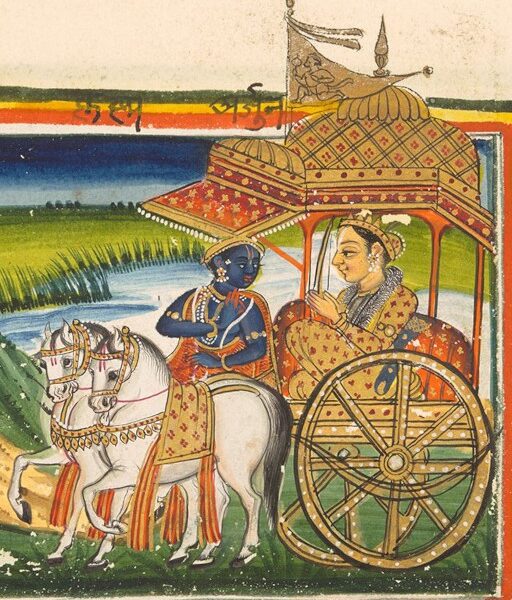
It is something like a dream. In a dream, when we think of flying in the sky or sitting on a chariot as a king, but when we wake up we can see that we are neither in the sky nor seated on the chariot.
And the Vedic wisdom encourages self-realization on the basis of the non-existence of material body. Therefore, in either case, whether one believes in the existence of the soul or one does not believe in the existence of the soul, there’s no cause for lamentation for loss of the body. That’s the point that’s being made.
So, yeah. So, it’s that we dream that we are doing this because the soul is not actually doing anything. That’s what Krishna is saying. So, it’s a dream that you think you are doing. You have a desire to do. Therefore, you’re in the environment in which the activity is performed. The modes of nature are performing it with the body. But the soul identifying with it will consider I am doing this. Right? Does that make sense? So, so, one would say, but no, but then, you know, where would this concept come from that the living entity, you know, feels he’s doing something? Right? Because everything has to have an origin. But we have to remember that yes, so that would be true. But the example would be given of you have the mirror. You know? Is the finger in the mirror scratching the nose?
By one definition, you could say yes, but in reality, no. Because it’s not a real nose. So, you have a not real finger scratching a not real nose, getting rid of a not real itch.
Does that make sense? But, the point is, is there is a real finger, there is a real nose, and there is a real itch. So, so, yes, so that’s the point. So, the living entity in the spiritual world, in their relationship with the Lord, that is a real form. And they’re performing real activities.
Right? Getting real experiences.
That’s the original. So, that’s the point. That’s Krishna’s point, is that we’re giving up the lamentation here, but we don’t then, like the Mayavadis, that there’s, you know, there’s nothing here. Or like the Karmis, oh, it doesn’t matter then, and you just enjoy life. So, the point is, is this illusion means, is that it’s illusory that the living entity will enjoy here, but that there’s an original place of enjoyment, original place of, of life and interaction that exists. So, that’s different from both of these philosophies.
Right? Means both of these philosophies will catch a part of that, but not actually enough. Right? One won’t, one remains within the material environment. Right? And being non-Vedic, it’s, it’s, it’s sinful. Right? The other one brings it to the point of spiritual, but it’s temporary. So, it also has the material quality. Right? But the, but the devotional, then that has the real quality that we’re looking for. That’s what we’re trying to get to. Does that, does that make sense? Right? So, the problem is, is this, how you say, the illusion is fixed, so then all these things, you know, are trying to, you know. What has that got to do with breakfast, you know?
And we’re so forgetful that we kind of go in circles. So, what about this? What about this? What about this? And we arrive back at the first stop we had. But what about this? Oh, yeah, yeah. Yeah, yeah. And we have great fun, like dogs have great fun chasing their tails, you know. They’re really going for it, you know. Like that. I wonder if they stop because they get bored or they get dizzy or, you know. You know, they don’t have that much determination, you know, like that.
Okay, so then, yeah. So, so, in other words, it’s a dream that we think that we are the body. Now, that the body exists, life symptoms are there, the body is doing the activities, then, yes, it’s real, like the lo- lo – what’s that? Locietists say. But, that that is the soul. That’s where they’re wrong. Right? Right? But, that the soul thinks they are that body because the soul is separate from the body, so that’s like the, like the, like the, you know, the impersonal. And that the soul is, the soul is, is separate from the body and it’s an illusion to think you are the body. That’s the same. But to think that there, that, the concept of life and, you know, interactions and relationships and engagements is illusion. That’s where the Mayavad philosophy falls short. That’s the end of its logical sequence. That’s where that illusion, it comes under the illusion. Does that make sense? So, you see, one goes a little bit, not much at all, and the other one goes a bit more, but they both end up very short.
Does that make sense?
Right. And we see also as interesting as there, oh, okay. Yeah, so, the Vedic wisdom encourages self-realization on the basis of the non-existence of the material body. It encourages that because it has a value, but its value is only as much as we give up our value of the material existence. Taking that as the prominent aspect, that’s not of value at all. That’s why the renunciation isn’t the prominent element of devotional service. Right? It may be by volume very great, but it’s the connection to Krishna that is the prominent. So, in the beginning stages, there’s more renunciation than attachment to Krishna, but at the end there’s less renunciation and more attachment. So, at one point, there’s only attachment to Krishna. Just like at one point there was no question of any renunciation. You know, like that. Does that make sense? Like that. So, it’s a tool that’s there. Right? Do we see that? We catch that? The Vedic wisdom encourages self-realization on the basis of the non-existence of the material body. Right? So, because of this, then either these will make sense for that beginning stage, but then once that’s started, then where do you go from there? Then it takes you to the higher, but the important point you have to get to the devotional.
Right?
You mentioned that the spiritual could be temporary. The spiritual is temporary. It means the situation in the spiritual is temporary.
Right? Does that make sense? In other words, we’re looking at it, Krishna is everything, and He is the Supreme Brahman. Right? So, what does that mean? Everything is Brahman. Right? Does that make sense? So, you have four manifestations of Brahman, right, that are eternally present. Means the Supreme Personality Brahman, the Internal Potency Brahman, the External Potency Brahman, and the Living Entity Brahman. Does that make sense? So, it’s all Brahman. Right? Now, under illusion, one thinks that one is separate, I mean, one is not transcendental, or one is not the servant of the Lord. That would be more clear. Now, one thinks that all this Brahman is for my enjoyment. So, you come under the material energy. Right? Now, if you understand all this Brahman is for Krishna’s satisfaction, means He is the Supreme Brahman, is the enjoyer of Brahman. You know, you know what I’m saying? Then, then, one comes under the shelter of the Internal Potency. Right? But the point is, to make that choice, there’s a point in between. That’s the Tathastha Brahman. Does that make sense? So, the soul can be temporarily situated there, but being minute, one being energy, you have to be connected to the Lord. And so, therefore, and being minute, we have to be connected to a greater energy in the connection to the Lord. Does that make sense? So, that means you can temporarily be on the Tathastha platform. So, you either have to go from Tathastha into material, or Tathastha into spirit, into the transcendental. Does that make sense? Right? So, we’ve gone from the Tathastha into material. So now, we go from Tathastha, I mean, from material, back to the Tathastha into the transcendental. You understand? So that, so, we will refer, when we’re referring to that phenomena, then we’re explaining, then you have material, spiritual, and transcendental. Right? Prabhupada uses those terms. That’s how we got to it. It’s there. It’s that there’s material, spiritual, and transcendental.
Right? Transcendental means that the spiritual is being used for Krsna. Does that make sense? Material means the spiritual is being used not for Krsna.
Right? In other words, spiritual is Brahman. Everything’s Brahman.
Right? But, you know, to make it clear, we give the various… Yes? Once we’re in the internal, we are not in the tatastha. Once in the eternal… The point is, it’s a situation. It means, you’re in the tatastha-sakti, are you tatastha? When you’re in the material energy, are you material energy, or are you tatastha? Right? When you’re in the internal potency, then, you’ll still be tatastha, as an energy. But, it’s where you’re situated that matters. You know what I’m saying? You’re the same person whether you’re outside you know, whether you’re in your house, or you’re in the prison. You know what I’m saying? You don’t change. But, the point is, is in prison, you follow those rules, and therefore, you have a particular, you know, way of dealing. And, when you’re out, then it’s another thing. Right? But, if you’re just on the street, what happens? We just put you out on the street, right in the middle of the street, right? And, by, you know, Krishna’s grace, since there’s no bad karma, there are no mad trucks.
Okay? Right? So, but what happens?
Choice, yeah. But, the point is, is how long do you stand in the middle of the street? Right. Why?
Yeah. So, the point is, is you deal with that energy around according to, you know, what’s proper, then you stay there. So, you’re not considered in the street. Right? But, if you don’t deal proper, then you’re back in the prison.
Can we escape the proper?
Can you escape the spiritual state? engage with the existential material, but connecting it to Krishna. So, does it mean that we move to the transcendental without stopping? Means, means it’s simultaneous. The point is, the, the transcendental means that there’s no material. Right? It’s transcendental to the material. But, it’s, it’s dynamic, it’s active. So, we use the term here, spiritual, in this case, because spiritual can also mean, we say the spiritual world. Right? So, here is that, we’re talking spiritual as a situation, not the spiritual world. Right? So, the spiritual world, in this case, then we’re calling transcendental. Right? Just to give it a different title.
So, the point is, is that you’re not doing anything material. That means you are spiritual. But, you’re doing it to please Krishna, so it’s transcendental. So, you could say, in that way, you’re going directly from the material to the transcendental. Right? The, the point is, is what’s being given is that is the best. But, what we’re, what is, what is being mentioned is that if the attachment is too much, or the entanglement is too much, you can use the spiritual platform to break down the attachment. Because, as soon as you apply intelligence to an emotional state, it kind of loses its fun. You know what I’m saying? That’s, that’s, does that make sense? In other words, if you’re having a good time, you don’t stop and analyze what’s good about it. This and that. Otherwise, as soon as you start really seriously analyzing, it starts looking stupid. You know? You know, all the adults are there, they got their little party hats on, you know, they’re blowing those little things, and this, and that, and doing all kinds of stupid stuff, and you know, telling stupid jokes. If you actually analyze this, it’s just stupid. Right? So, therefore, you don’t analyze it. But, what we’re saying is that, that spiritual platform is useful where the attachment is so much that we can’t see how to connect it to Krishna. So, you analyze it, and it breaks it down, and you start to see what it actually is. So, you lose that attachment. So, through knowledge and detachment, one is able to work with it. Then you can see, out of all that, then, you know, what was, what’s the useful part of the party? Right? It’s associating with others. Right? So, therefore, then, because you like to associate, you know, if you’re a real party animal, then, you know, the temple program is for you. You know, especially festivals. Right? You know, they come from all over India. There’s 5,000 people in the temple room. There’s not a space for anybody. Right? So, you can’t get more, you know, social than that. we’ll leave the animal part for right now. Right? So, does that make sense? So, then, then you can see as what you’re actually looking for is association of others. Now, you can improve, therefore, the quality of association.
Right? Because then you actually see the, the, the important element. Right? It’s not important that you have some stupid hat on, or, you know what I’m saying? The point is, is that you’re interacting with others, and everybody’s satisfied. So, how can you do that on a platform that when you wake up the next morning you can actually remember what you did? You know? So, that’s, that’s the idea.
Does that make sense? So, so it, so that’s why it says it’s encouraged. Therefore, it means the Vedic wisdom encourages self -realization on the basis of the non-existence of the material body. Right? But, it also goes further that there’s the existence of the spiritual body.
Does that, does that make sense? Okay.
So, bottom of twenty-six.
Some look on the soul as amazing. Some describe him as amazing. And some hear of him as amazing. While others, even after hearing about him, cannot understand him at all.
Yeah.
There’s a soul float in the, yeah, that means the five life airs. Then it floats there because, see, some are up, some are down, some are, you know, the sideways, frontwards, backwards, in, out. So, all of them, if they’re all in one place, then one wouldn’t go anywhere. So, it’s a good spot.
You know? Does that make sense? So, there’s only five life airs and one of the ways you’d always end up somewhere where you wish you were.
Yeah.
Yeah.
Yeah.
Like that. Point is, is when you’re free from that, you can. But that’s, that’s not the point. The point is, is that if you understand your servant of Krishna, then you can go where you like, which is to, you know, serve in the Lord’s, you know, under the, in the association of the Lord’s eternal associates.
That’s the whole point. So, it’s the same principle. So, bhakti-yoga, you’re doing the same thing. It’s just not so mechanical. We, we tend to notice mechanics because mechanics give results. Right? You can, you control things through mechanics and you get results from mechanics. Right? So, therefore, the controlling enjoy in the central features of the mechanics. So, so, abhidheya becomes the main point. But the problem is, this is the mechanical side of the abhidheya rather than the actual overall aspect of the relationship in abhidheya.
Does that make sense? Right? In other words, you’re, you’re, let’s say, cooking for somebody. Right? So, there’s you, there’s them, the point of, of connection is the cooking. Right? So now, you can be, you know, thinking about them or interacting with them and, you know, cooking and stuff like that. Or you can be just focusing just on the cooking. Right? And completely forgetting about the person. Right? Because the point is you want to get the result, the cooked thing. But the point is the cooked meal is for the other person’s happiness. So, the actual point is, is the cultivation of the relationship.
You in the relationship, them in the relationship. So, what will cultivate that in the relationship? That’s the actual principle. You understand? But, the mechanics have to be there. You know what I’m saying? The mechanics are the, the, the, I say, they are the cause, you could say, they are the cause of those, they are the activities and forms that generate or create the situation that, that experience can be gained. You know what I’m saying? So, in that way then you can say that the, the masculine principle is the, the, the senior principle because it’s the one that’s doing the activity. It’s the one that’s changing the environment. But the point of changing is because of the relationship, because of the feminine nature.
Does that make sense?
Yeah? You know, at the same time, it’s interesting because it reverses, is that the quality that you’re trying to obtain right? That’s the masculine principle and the forms and activities in principle that go with that, that’s the feminine. But when you operate it, it switches.
The experience will be the feminine and the mechanics will be the masculine. That’s why there’s a non-difference.
Yes, so that’s why, why worry about that. You just worry about that you serve Krishna you’ll go to Krishna.
You serve the yogis, you’re not quite sure where you’ll end up.
Is this verse describing impersonalities and Mayavadis? Is this verse?
No, I think it’s describing everybody. He’s saying, is this verse describing the Mayavadis? No, it’s everybody because even your gross materialists, when you talk about the soul, it’s like, you know, they can’t understand what you’re talking about. Have you ever tried telling all this stuff to your grandmother? It’s kind of like, okay, you know, very nice, very nice. Now sit down and drink your tea, you know, like that. We’ve had enough discussions. Right? Because they can’t know what you’re talking about.
Yes? Actually, Ramanujacharya explains that this verse describes the different levels of Vedic education.
Those who listen without faith, as you mentioned, and then those who listen with faith, they only listen, then they start to describe to others. And then the highest are those who actually see the source and they realize that the body is soul. It goes from Manana and then from Shravana to Manana and then… Oh, he uses those terms. So it’s like those, these… who is it? Ramanuja. Saying Ramanuja describes in this verse that it’s describing all the levels of realization. So those who don’t have any understanding, the faithless that don’t have any understanding at all of the Vedic concept. And those who have faith in the Vedic but don’t have much realization. And then those who actually realize the nature of the soul.
Why is it described here as an amazing on each level?
Because amazing has that element that of… it’s kind of like beyond the comprehension on one level. So amazing on the, you know, materialistic platform. You explain all that. Well, that’s amazing. So now, you know, about, you know, like that. And then, you know, kind of, yeah, that’s amazing. Like, you know, I can’t get a grasp on it at all. But, you know, okay, if you have the faith in it. And then there’s that amazing that, you know, this is the nature of the soul. Because the point is that the soul is amazing. God’s amazing. So that means anything connected to him is. That just, we don’t necessarily, we only appreciate certain aspects that we want. We don’t appreciate everything.
You know, say, like the devotee, then he sees God’s creation. It’s amazing. But it’s amazing because it’s God’s creation. It’s not amazing on a platform separate. You know, your scientists and that, they’re so enamored by the material energy. You know, what it does and what it can do. But what is missed is that that’s only like that because it’s a manifestation of God’s energy.
So that being missed, then it doesn’t, that way of looking is avoided. But if one understands is that Krishna’s manifestation is Krishna’s arrangement, Krishna’s design that everything is happening. Right? Then that’s, it’s quite amazing how he arranges these things. Trees eat through their feet. You know, I mean, far out stuff is there. You know, it’s pretty, it’s amazing.
So there’s no atma-tattva point here? No, we’re not.
Okay, so then here, purport. For every living entity, as an individual soul, has this personal individuality and a minute form of independence. By misuse of that independence, one becomes a conditioned soul.
Page, I don’t have a 27. I only have a 28. So that’s the next page. 28, no. 29, 30, no. Most of the time I get an extra. This time I didn’t get one at all. Oh, I see. Yeah, because somehow I know that I just went straight into lesson three.
Okay.
So then, the next one, 230. O descendant of Partha, he who dwells in the body can never be slain. Therefore you need not grieve for any living being. So now he’s brought it back to the soul, so you can’t slay the soul. Because otherwise, on the other foot, that’s pretty gross. The body’s chemicals, it came from chemicals, it became chemicals.
How does that work? They always say it in a few minutes. Chemicals thou art and chemicals thou shalt be. What is it? How does that go?
So like that. So the whole point is it goes back to there, therefore there is no lamentation. Why are they saying that? So that everybody will start crying more and like that. No, they’re trying to alleviate by putting in some philosophy. So the point is is that the soul, the soul won’t, it means, on that platform that’s pretty gross. Because the point is we are the soul, we are beyond. So it is a, how you say, an Upanishadic scripture. So the point is is to bring it back to the soul. So he used that just, even you work on the gross platform, there’s no reason to lament. But, you know, in the reality, you know, so now he’s brought it back to here.
So, how the Lord concludes his instructions on the soul. In describing the immortal soul in various ways, Lord Krishna establishes that the soul is immortal and the body is temporary. Therefore, Arjuna, as a ksatriya, should not abandon his duty out of fear that his grandfather and teacher, Bhisma and Drona, will die in the battle. On the authority of Sri Krsna, one has to believe that there is a soul different from the material body. Not that there is no such thing as soul or that living symptoms develop at a certain stage of material maturity resulting from the interaction of chemicals. Though the soul is immortal, violence is not encouraged, and at the same time, but at the time of war, it is not discouraged when there is actual need for it. That need must be justified in terms of the sanction of the Lord and not capriciously.
So here, even though it technically doesn’t matter, doesn’t mean that you act whimsically. Because the point is the soul is real and his entanglement is real and his method of upliftment is real. So therefore, if you want to be entangled more, you act however you like. If you want to be uplifted, you act according to God’s directions.
Does that make sense? So that will be. Yes? I was listening to a couple of lectures last night from Mother Gauri about Mother Gauri A. V. Dasi, the distributor about Sankirtan and she was saying that this tendency to control and enjoy is so deep that it would take 40 years of book distribution to get free from it. I said, OK, I’ll get the work cut out now. But my question is and she said she used to look forward to going on book distribution because she was like, oh nice, now I have 8 or 10 hours where I can forget about my body. So is it possible with any service to… Yeah, no, it’s possible with any service. Just the point, the book distribution, the nature of it, it’s just much a bit more obvious.
You have that aspect. You have the aspect that it’s connected with Shravanam Kirtanam. So of services, it’s a very ideal service. But it’s not that that’s the only service that will do that. Because there’s Arjuna Siddhi, just by doing deity worship, one can come to that perfectional platform.
Sadhana Siddhi, by one’s sadhana, so the book distribution basically would go into that, through the sadhana.
So it’s just a matter like if one is, like you mentioned sadhana, if one is trying to study and if one applies the focus properly, then one can also achieve the same. Yeah, focus means you apply what you’ve studied. Just studying means, of course, if it’s that focused, yes, one could get, but one could get realization from it. The point is getting realization. So realization comes from practice of what you know. Right? The Vedic culture always comes back to knowledge and activity. Right? But that knowledge has to be based on what is the actual field. Right? And then because that knowledge and activity will generate a result, who the result is for. Right? So with proper knowledge and the detachment, meaning that the result is not for us, then one will advance.
Does that make sense?
Yes.
What is the lesson of this lesson?
So let us look back to go forward.
Yes. So, in other words, this first point is the constitution of the living entity. In other words, the living entity is not the body. They’re the soul. The soul is eternal. Right? So that’s been established. Because otherwise there’s lamentation for the body that the body is the manifestation, is the life. No, the soul is separate. Right? So the point is that in the first point the soul is eternal, not temporary. And the body will always keep changing. So therefore, the point is if one understands the eternal nature of the soul, then that’s the first step of understanding who you are. Then you can understand who God is, what’s the actual relationship. Right? But it’s all being applied here in example to Arjuna’s situation. Right? Does that make sense? So it’s not just this point’s been made and then so many points later. It already has a practical application. Yes. Is that OK?
So it’s… Yes. So it’s OK. So it means that to understand that there is no no leftover.
Right? Because these two philosophies were against… No. There shouldn’t be anything. Yes. Because the point is it’s not that the body is real and the body is the soul or the body is not real and the soul is separate but also the concept of the living entity being subordinate to Godhead is unreal.
See? Because in both of them the subordination to Godhead is not there because if it’s just chemicals what’s the big deal? If you’re not the body then that means you are Brahman. But the point is there is supreme Brahman.
So the whole… The adhikarana is all living entities are eternal and subordinate to Godhead. So that’s where… And so the first step is establishing the living entity as eternal.
Right? Then we’ll come along establishing Godhead and the relationship and all that. Is that a subordinate? Right? And the overall is is the you know I say the relation means the what is it? The overall is man’s eternal relationship with Godhead. Right?
So that relationship is in this point this adhikarana is we’re subordinate.
Is that OK?
What happens to that relationship with the soul had with the other soul? What happens to the relationship that the soul had with the other soul? But according to philosophy did the soul have that relationship?
The soul thinks he has a relationship but the relationship was the matter. Means in other words you have husband and wife. OK? So what’s the husband? What’s the wife? Do we have a masculine soul and a feminine soul? No. So that means it’s the bodies that are related. So the soul relates with the body therefore then you say I have a relationship with that soul. But no. You have a relationship with that soul’s body because you think you’re the body.
Does that make sense? So the relationship just goes back to its you know its unmanifest state of the principle of in this case that masculine feminine principle based on the conjugal relationship.
So it’s just according to the modes different details of that manifestation.
Right? So the body looks in a certain way the mentality is in a certain way but otherwise the principle of masculine feminine is there of husband and wife is there. So that’s eternal. It just goes back into that. Like where does the water go? You know what I’m saying? The water goes back into the greater body of water. The air goes back into the greater body of the earth goes into the earth. The fire goes back to the fire. Right? The dust goes back to the dust.
Yes. Like that.
But they only go by what they see there. They don’t understand the greater principle.
You know the touching on it that’s why it has some value or some meaning but it’s not understood in its full state. It is eternal.
Okay. Then lesson two. Parts and parcels of Godhead. So this is 15.7. So it only has one.
I mean that was one of the bigger of the lessons I think. One of the biggest probably yeah because it had so many verses. Most of them are a few verses.
Okay. 15.7. The living entities in this conditional world are my eternal fragmental parts due to conditioned life they are struggling very hard with the six senses which include the mind.
Okay. Yes.
Say again. The lesson is what Prabhupada gave and then the 15.7 is specifically means what you see here is parts and parcels of Godhead. That’s the second point in his analysis of Gita. But then the idea is then 15.7 parts and parcels keeping that in mind you’ll read 15.7 and then see what are the relevant points. And then you’ll build one on the other. So then you’re going to build the knowledge that is there you know the constitution of all living entities is to be eternal servants of Krishna in 2.11 to 30. Right. Then there are parts and parcels of Godhead. Right. So the first is that is that the constitution the entity that they’re eternal. They’re not the body. Then they’re parts and parcels of God. Right. Then the next will be like the sun and the sun rays because you say well how? Because the point is part and parcel of God but we can also be like you know you know God’s Brahman we’re Brahman it’s all one like this. So no it’s like the sun and the sun rays. So it’s the same but it’s different. Right. One’s minute one’s great. One’s the origin one’s the one’s the expansion. Does that make sense? So it’s establishing how. And then at the same time is that they’re qualitatively one and the same but not quantitatively. Right. So then the sun and the sun rays you see is that the quality is the same but not the quantity.
Does that make sense? The sun rays they’re a ray from the sun but it has the light it has the heat it has the radiation like that. The sun is the origin it has the most of that. Does that make sense?
Then then the parts with those little diamonds that’s Atmatattva.
Okay. Then the purports those are Prabha again. But what has been chosen then that’s originally means that has been then that is done by the the author of the work here. Vritti. Huh? Yeah. And then the Vritti itself is then giving further explanation.
Does that does that make sense? So it’s a combination of of you know what Prabha gave which is that one line and then to study that then we put in the verses and that otherwise the other way to do it the original one is you studied it on your own. You know what I’m saying? So then you’d have to figure all this out. So here we’re trying to make it a little easier. Thank you. Right? Seeing that what do you call it?
Gargavinda Maharaja’s statement seems to be the general situation of the living entity in the material environment which is what is it? You got a thick layer, Baba. Yeah, you have a thick layer, Baba. It’s a thick layer of ignorance. trying to help with the shovel through the ignorance here. You know what I’m saying? Shovel. You know what I’m saying?
Does that make sense? So we see the three. So Prabhupada’s is the one in that box like that. Then we’re putting the verse and the purports right? that are specific of that. Atma Tattva’s brought out what are the points being made in that verse you know, that are in connection with this lesson. Right? And then then those parts of those purports have been pulled to bring that out. Right? Is that okay? And then we sit here and discuss and hopefully then we get an understanding.
Layer becomes a little thinner.
Okay. What is the identity of the living entity?
Right? The living entity is eternally the fragmental part and parcel of the Supreme Lord. It is not that he assumes individuality in his conditional life and in his liberated state becomes one with the Supreme Lord. He is eternally fragmented. Right? So that’s the identity. Because otherwise they’ll say okay we’re a fragment. They’ll agree with that. But then they’ll say is that’s only in the conditioned state. In the liberated state you’re not a fragment. You are God. Right? But that doesn’t quite work out. You know? So yeah. So the point is is we’re eternally a fragmental part. That’s why these terms are used. We use these terms fragmental fragmental or part and parcel. Right? Part means it’s part. Parcel means it’s you know of the same nature. does that does that make sense?
Okay. Second point. What are the primary and secondary expansions of the Lord? Right? So in other words what we’re means all these questions are at the beginning. You know? Because we thought maybe it would work nicely like that. But now the next volume we’ll put each one in front of the part of the purport. So when there’s only one of them it’s really easy. When there’s two pretty easy. When there’s five of them then we’re going to jump back and forth.
Okay. What are the primary and secondary expansions of the Lord? The Lord manifests and expands Himself in innumerable expansions of which the primary expansions are called Vishnu Tattva and the secondary expansions are called the living entities. In other words the Vishnu Tattva is the personal expansion and the living entities are these separated expansions. Right? Separated means they have their own separated consciousness. Right? Not that the Lord’s not conscious but it just means we’re not conscious of the Lord. We’re separated. So that means without the Lord’s grace we don’t know the Lord.
So it’s like you separate material energy is separated. So through the material energy you can’t see the Lord. Right? So the same way as through the Jivas you can’t see the Lord because they’re separated. So it’s only when the Lord descends and explains or His empowered you know devotee explains. So that means when the devotee is empowered with the chit potency so that means anybody. If they’re coming in Parampara they’re explaining the philosophy how it’s been gained in Parampara. That chit potency that is what is actually doing the work. It’s not that the Jiva is enlightening the other Jiva. No. It’s the Lord’s internal potency is enlightening the Jiva. Does that make sense?
So yeah.
By His personal expansion He is manifested in various forms like Lord Rama Nrsimhadeva Vishnu-Murti and all the predominating Deities in the Vaikuntha planets. The separated expansions the living entities are eternally servitors.
So now the next point is How does the soul become conditioned and liberated? Third point. Every living entity as an individual soul has his personal individuality Didn’t we just read that? Oh that’s what I was reading before and everybody wanted to talk about it. I was thinking didn’t we just read this? By misuse of that independence one becomes a conditioned soul and by proper use of independence he is always liberated. He becomes a conditioned soul or he’s always liberated. So proper use you stay in your natural state. Improper use then you become just like a citizen who follows the laws just remains as a citizen. A citizen who doesn’t follow the laws becomes a criminal.
Right? Yes. The concept of time like on a spiritual platform I think I’ve asked this question before is it is it illusory or I mean Is time illusory? Is time a faculty of the material world? Time as it is where you are controlled by time that’s a faculty of the world. In the spiritual world it’s a support. It means time is there but the time time isn’t like here where it just moves the head like that. There it moves according to it gives that support of the relationship of the rasa. So you can time travel?
No that’s for yogis. Yes. Do you know what I’m saying? In other words these are all concepts here. It’s just like you’re having OK you’re not having such a good time. How long does it last? Long time. Long time. OK. You’re having a great time. How long does it last? It’s over almost. Yeah. So in either way you’re suffering, right? So you’re controlled by time. So in the spiritual world So in the spiritual world the point is it’s only supporting the relationship. So the gopis are having a great time in the rasa dance. Right? How long does it last? Yes. Yeah. It means that whole night of Brahma rather than just a regular human night. You know still it goes very quickly. Yes. But the point is it is expanded out there to do. But at the same time as they’re dancing a night of Brahma but the cowherd boys are only sleeping a regular night to wake up you know to see Krishna in the morning.
So the point is it’s not all these things can be happening at once.
So it’s just the support for the relationship.
You know the cowherd boys will think OK we’ll get up we’ll go see Krishna which is future. But at the same time as Krishna is always present so they’re thinking of Krishna as in the present. But at the same time these the concept in the relationship is in the future. So that means there’s no time because everything is present. But there’s that flavor that there is future and past. But here the future and past manifest because there’s good compassion and ignorance. There there’s only goodness so there is no. But there’s the flavor that there is. Does that make sense?
In either case he is qualitatively eternal.
He is qualitatively eternal as the Supreme Lord is. In his liberated state he is freed from this material condition and he is under the engagement of transcendental service unto the Lord. In his conditioned life he is dominated by the material modes of nature and he forgets the transcendental loving service of the Lord. Also notice here is that one is under one or the other the internal or the external potency. As Jiva we’re small we’re always under one or the other. But in one it says he is under the engagement of transcendental service. In the other he is dominated by the material modes of nature. In other words the domination is a problem. I mean also because why domination? Why are we dominated?
Because we want to be controlled and enjoyed. We want to dominate. So the point is if we’re the purusha and the material energy is the property right then how does it work?
Right?
Yes. It means the masculine and feminine principle what the male principle does the female principle reciprocates because it follows.
You’re the controller and enjoyer so you’ll be controlled and enjoyed.
Right? You deal nicely you’ll be dealt with nicely.
Does that make sense? So this whole point is the philosophy the culture at all levels and all situations is always the same. You just use different terminologies to describe the situation because of the nature of variety. Right? The lord’s energy is unlimited in variety that means that there’ll be a this great variety of ways of describing it. But it’s still one thing.
Does that make sense? So there’s no change.
So it still works the same way. We try to control and enjoy so therefore then that will be the response. Right? And then we’ll get upset so we get frustrated. So then we take up the Mayavad philosophy as you know I couldn’t be the man and now I’ll be the man I’ll be God. It’s like okay my wife doesn’t accept my superiority so I’ll become God. Like that. And then when that doesn’t work then it’s just like okay we’ll get rid of the existence.
Right? You understand? So it works on that same principle. But the underlying principle means that the masculine and feminine reciprocation that remains the same but the underlying as we said is the feminine nature of the jiva that it acts in these stages. You understand? So you have all these things happening at once. It wasn’t all happenings like this. It would be very easy to understand and therefore we get bored.
Is that what you’re saying? You know what I’m saying? Like you have like just for example you have so many paintings of the world right? By all the great artists and also so many not great artists but we’re not going to discuss those. Okay. Of the masters what painting is the most well known and the most discussed?
Why?
Because she’s painted very beautifully. She’s painted beautifully.
Because it’s the one that follows the religion of painting. Okay. It follows the religion of painting so that’s there but in relationship to the religion of we’re making right now.
Yeah. You can’t tell if she’s smiling or she’s not.
Does that make sense?
And so therefore you can’t quite tell. You know what I’m saying? So people are still talking about hundreds of years later. You know what I’m saying? These other paintings you go okay that’s nice that must be worth a lot. Nobody talks about how much the Mona Lisa costs because they’re just talking about the painting. Does that make sense? Yeah. So that’s the point is that God being unlimited in everything therefore any manifestation of expanding from him will have that same quality. Therefore it can always be discussed and talked about. If it was so simple then you’d get bored. But therefore there’s all this thing we just keep going. Therefore I’m saying there’s the underlying that we’re feminine but we’ve taken on the masculine principle but what are we dealing with as the masculine principle? Still feminine right because there’s only God and the feminine and the creation which is feminine. So you have these layers of the female jiva is taken on the mood of the male and is dealing with the energy which is female. So because they take that male form that mood then the energy responds in the feminine way for that mood.
Does that make sense? But at the same time our feminine nature of doing that in the first place is because of the underlying feminine nature of needing to be you know how you say connected to something. The dependency. So you have all these things happening at once. You know what I’m saying? So it becomes more complicated.
Yes so that means if you had a Facebook page for the material world then in status it would say it’s complicated.
Yes.
Could you explain your transition? You tried to enjoy it. We tried to enjoy it. And then we were frustrated and we said I couldn’t do it as a man. I tried to be God.
How do you go from the Karmi to the Maiva?
Because the point is Karmi is you have full family and you have full family and you have full family and you have full you you have full family.
Where He is a recognized person, somebody doesn’t recognize his status, he deals with them as an ordinary man so what is one of the techniques that will be used to try to maintain your your equilibrium of identity what are you going to say to the other person who doesn’t respect you nothing any idea no but I’m this and I’m that and this one this and then this I’m that you know you’re going to try to establish yourself on a bigger platform so you can’t get bigger than God and the point is is you want to be the controller so if God is the controller of everything by becoming God then I become the controller of everything then everything will go the way I like you know I’m saying that’s at that level of the perusia level right but the underlying what we said the feminine is that you’re not protected therefore you’ll take take that process into your own hands as long as it’s going along nicely it seems great but as soon as that has a problem then immediately then you just go into a state of nothingness yeah does that make sense so that’s underlying it so that gives rise to what is it Raga Haya and Kroga right that’s coming to discuss the feminine nature I’m sorry because for Krishna whatever he thinks it happens so he doesn’t have that problem all right that makes sense okay in his conditioned life he’s dominated by the material modes of nature and he forgets the transcendent loving service to the Lord so he forgets that means that’s his natural position is to remember that right so the point is is he forgets so that’s the covering it’s not that he changes or he transforms the living entity is eternal right it’s the material energy that transforms as a result he has to struggle very hard to maintain his existence in the material world right because he has to maintain himself if you know if the Lord’s taking care there’s not a problem you want to take care it’s a problem does that make sense okay does so we’re not going to get you more okay so then tomorrow we’ll consider with continue with the other the last two points