
So, by like Monday or something we can get? Yes.
Different one? Yeah, this is what we have been through. But I might want to take notes.
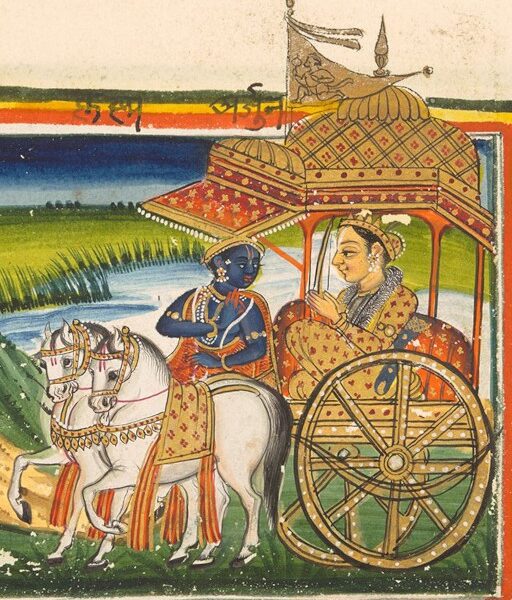
Okay, so Lesson 27. God consciousness or transcendental loving service of Godhead is never imposed artificially upon any living entity, but it is inherent in Him. It can be revived only by practice. So, the idea that Krishna consciousness is something that you’re adding, because for your materialist, they’ll consider it in addition because mundane is standard. For the impersonalist, they’ll consider it’s also added because the individuality of the living entity, they’ll consider to be illusion, so that it isn’t actually there. So, you’re adding that. So, it’s being pointed out that it’s not in addition. It’s the natural position of the soul. But, it can only be revived by practice. So, it’s not just a whimsical, you just feel like it, and this and that. According to the direction given in the previous verses, that only Godhead can free you from the material entanglement, and that happens through instructions, so that will be either given directly by the Lord Himself or through the representative. So, if we’re Arjuna, then it may be direct. If you’re not Arjuna, good chance it’s going to be through the representation. So, don’t hold your breath while you’re in the realm.
No, but God said He’d do it.
Okay, so this is verse 12, 6-7. But those who worship Me, giving up all their activities unto Me, and being devoted to Me without deviation, engaged in devotional service, and always meditating upon Me, having fixed their minds upon Me, O son of Pritha, for them I am the swift deliverer from the ocean of birth and death.
A devotee revises God-consciousness by performing devotional service.
Okay, here’s another one of those, those who worship Me, giving all their activities to Me, being devoted, engaged in devotional service, meditating upon Krishna.
So, it’s again that kind of theme. As stated before, the Supreme Lord can be appreciated only by devotional service, because karma, jnana, and yoga are secondary, so they can never directly bring the Lord. Therefore, one should be fully devoted, because fully devoted means fully realized. Partially devoted, partially realized. Not devoted, not realized. Very simple formula.
One should fix his mind fully on Krishna in order to achieve Him. One should work only for Krishna. It does not matter what kind of work one engages, but that work should be done only for Krishna. So, according to the philosophy, it doesn’t matter where your situation in Varanashram is, because you can go through Varanashram and not be a devotee. So, the Varanashram devotional service is not dependent upon Varanashram. So, that means at whatever point one comes in contact with the devotees, at that point you engage that in the Lord’s service. Does that make sense?
In one’s occupation. As far as ashram goes, then the principle of ashram is the same, to follow the sadhana and engage whatever is the facility required in the Lord’s service.
So, then that doesn’t really change. You might have the situation whether one is a grhastha or not, but other than that, it’s not going to be that much of a major change, because it’s not so important, one might consider. The brahminical, okay, that’s the better platform, but it’s not brahminical by occupation, it’s brahminical by ashram. That’s important. Because if one’s brahminical by ashram, that defines what is your goal of your occupation. The occupation generates the money. The occupation doesn’t define where that money goes. Does that make sense? You’re a brahmin, you make your money as a brahmin, but now you have the money, now what happens with it? So, that’s defined by ashram. So, if the brahmin is a karmakandi, then it goes for that kind of work. If he’s a jnani, it goes for that kind of work. If he’s a devotee, it goes for that route. Does that make sense? So, it’s the ashram that’s important that’s brahminical, not the varna.
Because the point is, if the varna is engaged in the brahminical ashram, then you get that kind of benefit. You get the brahminical benefit.
Does that make sense?
It does not matter in what kind of work one engages, but that work should be done only for Krishna. That is the standard of devotional service. Because if one’s sadhana, one will be thinking of Krishna. You’re doing the work, but the work goes by that nature. You have the skill. Just like one can say, Oh, we’re not this body, Prabhu, so anyone can do anything. So, you’re going to be comfortable with the devotee who does not know how to drive, to drive all the devotees out for Harinam. But it doesn’t matter. We’re not our body. Yes, you provide raghya, engaging everything. Service.
No? Yeah, but it doesn’t work. The point is, varna is according to what actual material ability you have.
Ashram, that’s the spiritual. That means that anybody can be involved. Because there is technically in the Vedic system only one consideration of ashram, and that is brahminical. There is no ksatriya ashram, vaisya ashram. There’s only brahminical ashram.
Now, how expert you are following it, then that’s according to your, how you say, your commitment, your dedication, qualities, all that kind of thing. So that’s what you can change by devotional service. In other words, devotional service, developing all qualities, means the ashram side will develop. Does that make sense? It doesn’t necessarily mean that the varna side will change, in the way of the… But, because the ashram is better, of course, the quality of your attitude in the work, but it doesn’t necessarily mean your skill will change.
Does that make sense? Like you have some devotees, they can cook, you know, all varieties of things, but others can, they can cook a few preparations really nicely. But it’s not that now they’re a devotee, now suddenly, now they’ll be all that. No, it doesn’t mean that. It means it may change from being self -centered cooking to cooking for Krishna. But it doesn’t mean the skill will be any better, right? How the person drove a car before they drive is the same way they drive after. It’s their handwriting. It’s all the same, it doesn’t change.
Does that make sense?
If they didn’t know how to dress before, they won’t know how to dress after. They knew how to dress before, they’ll be able to dress nicely as a devotee. Does that make sense? That’s why it’s so nice we wear the same outfit. Yeah, yeah. And it all looks like bedsheets, so no one can really tell the difference if it’s worn nicely or not, right? Does that make sense?
So it has to be very clear what is developing.
Now, the varna becomes perfect because it’s connected to the Lord. That does happen. But it’s not that the technical skill changes.
Does that make sense? So that’s why on that level there’s no need to make all these adjustments. For not this body means it doesn’t matter what is the standard in varna, everyone can perfect themselves by surrendering to Krishna, right? So that will be reflected in their performance of the duties in the ashram.
Does that make sense? And how you use the result of your occupation.
Okay.
It does not matter what kind of work one engages, but that work should be done only for Krishna. That is the standard of devotional service. The devotee does not desire any achievement other than pleasing the Supreme Personality of Godhead. So anything you want from the varna and ashram is only to please Krishna. You want money, it’s just to please Krishna. You need position, it’s only for Krishna. You need facility, it’s only for Krishna.
His life’s mission is to please Krishna and he can sacrifice everything for Krishna’s satisfaction. Just as Arjuna did in the battle of Kurukshetra. The process is very simple. One can devote himself in his occupation and engage at the same time in chanting Hare Krishna, Hare Krishna, Krishna Krishna, Hare Hare, Hare Rama, Hare Rama, Rama Rama, Hare Hare. Such transcendental chanting attracts the devotee to the Personality of Godhead. The Supreme Lord herein promises that without delay He will deliver a pure devotee thus engaged from the ocean of material existence.
So the pure devotee may have an occupation, whatever it is, but he’s doing it that the result is just for Krishna.
So footnote one. Srila Prabhupada writes in his purport to Srimad -Bhagavatam 10.2.28 Learned devotees accept even conditions of distress as representing the presence of the Supreme Lord. When a devotee is in distress, he sees the Lord has appeared as distress just to relieve or purify the devotee. Now these are from Bhagavatam, this is something where… See, we had created last year a study of the Gita that is taken from the quotations of the Gita from the Srimad-Bhagavatam.
So in other words, it’s Gita philosophy but on the higher level, the Bhagavatam level. So we were considering it to be a separate endeavor that one could, after finishing the standard study, one could study that on one’s own and then do the essays for it and then get some honors from it. But we were discussing that we’d rather, this is important information, work it into the already existing. So it’ll be worked in like this, in footnotes or in the main text, however best fits. But we see that it’s already taking a higher level here. Gita is trying to convince you that that surrender is important. That’s the only method that’ll work, you’ll get the best benefit in that. Here it’s taking it that that’s already accepted. So we get into finer points here. The learned devotees, this is 10.228, so we’re not, because most of the time we were discussing, we’re using like 2nd and 3rd Canto.
So here then is 10th Canto. Learned devotees accept even conditions of distress as representing the presence of the Supreme Lord. They understand the Lord is, because there’s some reason. When a devotee is in distress, he sees that the Lord has appeared as distressed. Just to relieve or purify the devotee from the contamination of the material world. Krishna so kindly comes as distressed to relieve me of the difficulties that are there due to my impurities.
So by going through this distress, I’m purified. So it’s directly Krishna. Why this is not generally given in earlier stages, because, well, so why would Krishna do that? No, that means if God’s good, then I should only get good results. But that’s our idea, that’s karma.
So that’s why the residents of the spiritual world don’t worry about these things. I think Canto is, we’re talking about Vasudeva and Devaki in the dungeon.
And so they’re not seeing it as a problem. Somehow another Krishna’s arranged this. They had a good life before that, and Krishna, they’ll have a good after that. Just this particular time needs a little bit of work.
While one is within this material world, one is in various conditions. And therefore a devotee sees a condition of distress but as another feature of the Lord. tat te nukampam su-samik-sama-anah Srimad -Bhagavatam 10.14.8 Devotee therefore regards distress as a great favor of the Lord because he understands that he is being cleansed of contamination. tesam aham samudra-artha mrtyu-samsara-sagarata Bhagavad -gita 2.7.12.7 So that’s the connection here. The appearance of distress is a negative process intended to give the devotee relief from this material world which is called mrtyu-samsara or the constant repetition of birth and death. Because this is here. For them, I am the swift deliverer from the ocean of birth and death. So that means this, that may mean that he has to create situations that aren’t seemingly materially favorable because we’re purified and from that we’ll be delivered. To save a surrendered soul from repeated birth and death, the Lord purifies him of contamination by offering him a little distress.
Uh-uh.
This cannot be understood by a non-devotee. But a devotee can see this because he is vipascit or learned. So that would mean if the devotee is not so vipascit, he’ll have trouble with this.
A non-devotee therefore is perturbed in distress. But a devotee welcomes distress as another feature of the Lord. sarvam kalvidam brahma Devotee can actually see that there is only the Supreme Personality of Godhead and no second entity. Means everything is Brahman. So that means everything is Krishna. But it doesn’t mean that there’s not forms and qualities. It just means it’s all Brahman, it’s all Krishna. So here this is very… sarvam kalvidam brahma This is like one of the Mahavakyas of the Mayavadis. Everything is Brahman. It shall be upon a shot. But here we use them to establish our philosophy. Like what yesterday Prabhupada was saying. Everyone becomes one with the Lord. Not by physical, but by mentality. One, it’s our philosophy. They misuse it. But also there’s a fun in using what they would consider important philosophy and how they’d use it against… to defeat their philosophy. Devotee can actually see that there’s only the Supreme Personality of Godhead and no second entity.
But that means it’s all Him. So, this is parts and parcels. Ekam eva viditvam.
No. Eka dvitiyam. There’s only the Lord who presents Himself in different energies. So we’re a different energy. But still, it’s all connected to the Lord. That’s why we can’t… we can say, well then we’re the Lords of… No, but we’re not the whole Lord. We’re a part of the Lord. So being part of one entity, we have to cooperate with the one entity to be satisfied. Therefore the example of the hands are leaves.
Like that. So when it’s saying that, it’s meaning that.
I wish also that we have also to cooperate with living entity who are more advanced than us. Yes, yes. Always. That’s always. Means the point is this. Means the connection to the Lord. How do we connect? We’re marginal energy. So we’re an energy of the Lord. But what’s that connection to the Lord? You know what I’m saying? So your samvit, sandhini, hladini are connected. But that’s in tattva. But in rasa, where the taste is, it’s the hladini that’s the primary connection. Because that’s the Adi-rasa. And then expanding from that are all these other rasas. Does that make sense? So we have to connect ourself therefore to the internal potency. Because the internal potency is directly connected with the Lord. External potency is not connected with the Lord. It’s only indirectly through higher potency. So even they’re connected to the Lord through His internal potency. Does that make sense? Maya is connected to the Lord through the internal potency. So we’re connected to the Lord through the internal potency. Right? Does that make sense?
I was just thinking that when I put in our group, we are trying to elevate our consciousness. And if we don’t connect with each other, it means there is some lacking.
It means the basis is Krishna consciousness. So that’s the natural point of connection.
The personalities, then they may have some uniqueness you may appreciate or may not appreciate. But the standard is the Krishna consciousness. Therefore, all devotees can always find common ground. So that’s the one thing. Devotees can always be friends with other devotees. But for the materialist, he can only be friends with certain materialists. You can’t be friends with other materialists.
And devotees can even be friends with materialists.
Because there’s the common point of understanding their connection with the Lord. You would have to be the one that’s making it work. Right? Because otherwise they won’t know how to function on this. Because it will be about themselves.
That’s the reason that they’re friends with somebody. There’s something that they gain from it. So they like being with them. But for the devotee, it’s the connection to Krishna. And so they’re associating with them, connecting them to Krishna. And that’s the basis. So there’s not really a problem.
When one surrenders fully, his God consciousness is revived instantly. One who is engaged in Lord Krishna’s devotional service lives in a direct relationship with the Supreme Lord.
So there is no doubt that his position is transcendental from the very beginning.
It means we may not appreciate it, but we’re in a direct relationship with the Lord. We may not fully appreciate it. Just like the small child may not fully appreciate his direct relationship with the father. He’s there. But until he matures, then he can understand it.
Devotee does not live on the material plane. He lives in Krishna. Because Krishna is everything. So the material plane is the illusion that covers that portion of Krishna, so you can’t see Krishna.
So the devotee lives in Krishna. For the materialist, they live in the illusion.
The holy name of the Lord and the Lord are nondifferent. Therefore, when a devotee chants Hare Krishna, Krishna and His internal potency are dancing on the tongue of the devotee.
When he offers Krishna food, Krishna directly accepts his edibles. Then the devotee becomes Krishnized by eating the remnants. One who does not engage in such service cannot understand how this is so. Although this is the process recommended in the Bhagavad-gita and the Vedas, even though it’s recommended in the Vedic literatures, unless you’re doing it, you can’t understand it.
It’s a general principle.
By associating with devotees, you can give explanations and examples by which they can understand. They’re engaged in the devotional process by associating with devotees and hearing from them. That’s the reason it’s working. It’s not because of knowledge.
It’s because it’s connected to the Lord.
Does that make sense? So if the person on their own starts to study the Gita, it won’t work. But if they study the Gita with the great devotees, then it will work. So that’s why it’s important. You have the Gita with these purports.
You’re studying with Prabhupada. Yes, so you’re studying with Prabhupada. Otherwise, if you just have the translations, then there’s not much. That’s why Prabhupada said that his purports were more important than the verses. Yes, because then you understand what’s there. Because we see, like before, the qualities are mentioned, then Prabhupada will take those qualities and apply it into the practical application. So sometimes we may not even see the connection. But if you analyze it, then you can see, oh, this is where it’s connected. Does that make sense? So what we’re doing now is basically going through that analyzation, so we see the connection.
And even in the Bengali, the Gita Gana, he just basically did translations. But he did it in such a way that the essential points of the purport are written in. So instead of 700 verses, he says 1 ,200, an additional 500 verses.
So that’s the, you know, so that verses and purports are woven together.
12.9. My dear Arjuna, a winner of wealth, if you cannot fix your mind upon Me without deviation, then follow the regulative principles of bhakti-yoga. In this way develop a desire to attain Me.
So it means, in other words, if you fix your mind upon Kṛṣṇa, that’s devotion, right? If you can’t do that, then you follow the regulative principles of devotion. Does that make sense? So it’s going through that. In this way develop a desire to attain Me, because the first one has that desire, has applied it and has come to that level of realization. But here it’s that by following the regulative principles, then your desire to attain Kṛṣṇa, means to surrender. Those who are not fully God conscious should follow the rules and regulations of bhakti-yoga.
So I, sometimes I get this idea, the author is pointing out that we need to follow the rules and regulations here.
So in other words, the gopis, you’re not meaning it for them, you’re kind of meaning it for us. In this verse two different processes of bhakti -yoga are indicated. The first applies to one who has actually developed an attachment for Kṛṣṇa. That’s the first. The Supreme Personality of Godhead by transcendental love. So that’s the first qualification. So it’s very easy. Do we fit into the first one? Well, if you have attachment for Kṛṣṇa, the Supreme Personality of Godhead by transcendental love, then yes. And the other is for one who has not developed an attachment for the Supreme Person by transcendental love. For the second class, there are different prescribed rules and regulations. One can follow to be ultimately elevated to the stage of attachment to Kṛṣṇa. So by following them, one will get to that platform.
Bhakti-yoga is the purification of the senses. At the present moment in material existence, the senses are always impure, being engaged in sense gratification. So you’re purifying the senses so that they’re always engaged in the Lord’s service. When it’s not being engaged in the Lord’s service, that’s sense gratification. So the senses are being purified so that one is not inclined towards sense gratification, but only engaging the senses in the Lord’s service.
But by the practice of bhakti-yoga, these senses can become purified. And in the purified state, they come directly in contact with the Supreme Lord. Then they’re directly interacting with the Lord. Because otherwise, like we said before, you have the sense, the natural sense, that’s covered by the modes of nature. Then Kṛṣṇa interacts with that mode of nature.
Through His agencies, His policies, and then there’s Him. So in other words, the covered senses and the sense objects become the proxy for interaction.
But when it’s purified senses, then that purified sense, as it’s transcendentally situated, can interact directly with the Supreme Lord. You don’t need the medium of the material energy.
So here what we’re saying is directly in contact with the Lord means on the transcendental platform. This should not be mixed up with other places where it’s defining our relationship with the Lord. In Rāsa, that it’s there through, we have a connection with the spiritual master through the previous ācāryas. In this way, then, it gets to Kṛṣṇa. That’s another one. So in that way, then, our relationship is not direct. But the engagement of the senses with Kṛṣṇa is direct.
We have to know how the directly is being used here. So this means that all the coverings are removed, so therefore, this transcendental soul with transcendental senses can engage in the service of the Supreme Person, who has transcendental senses.
In the material existence, I may be engaged in some service to some master, but I don’t really lovingly serve my master. I simply serve to get some money, and the master also is not in love. He takes service from me and pays me, so there’s no question of love. But for spiritual life, one must be elevated to the pure stage of love. That stage of love can be achieved by practice of devotional service performed with the present senses. So we’re doing something because we’re going to get a benefit, and others are reciprocating with us also for their benefit.
So there’s no question of actual love. But here, then, love means that there’s no one’s not trying to get something for oneself. It’s only trying to please the other person.
So that’s done by practice.
This love of God is now in a dormant state in everyone’s heart. And there, love of God is manifested in different ways, but it is contaminated by material association.
Now the heart has to be purified of the material association, and that dormant natural love for Krishna has to be revived. That is the whole process.
Now the heart has to be purified of the material association, and that dormant love for Krishna has to be revived. That’s the process.
Does that make sense? So that was the point before. It’s not artificial, it’s natural. Because the soul, their dormant state is that love for God. It’s covered by maya. So the process is, remove that covering so the natural love can come forth. Krishna consciousness is that simple.
To practice the regulative principles of bhakti-yoga, one should, under the guidance of an expert spiritual master, follow certain principles. One should rise early in the morning, take bath, enter the temple and offer prayers and chant Hare Krishna, then collect flowers to offer to the Deity, cook foodstuffs to offer to the Deity, take prasadam and so on. There are various rules and regulations which one should follow. And one should constantly hear Bhagavad-gita and Srimad-Bhagavatam from pure devotees.
This practice can help anyone rise to the level of love of God. And then he is assured of his progress into the spiritual kingdom of God. This practice of bhakti-yoga, under the rules and regulations, with the direction of a spiritual master, will surely bring one to the stage of love of God. So if it’s followed as Krishna gives, it’s not, maybe it’ll work, maybe it’ll not, because that would make it whimsical. Like Krishna says, one will come to me, Prabhupada is saying here, will surely bring one to the stage. And it uses the terms like automatic and that. Because the point is, automatic is, why would we have a problem with the word automatic? Because we’re not doing it. Yeah, so therefore, we’re doing it. I did the work, I should get the result. But automatic means, you do the work, Krishna’s pleased, you get the result.
That’s the meaning of automatic. Because this is what Krishna recommends, how you will please him.
No, no, no.
Here he’s talking about surrendering and the moment just coming to the transcendental platform.
Yes.
No, it’s not a matter of Raghunuga.
Because Raghunuga is also following sadhana. I mean, it depends what you mean. In other words, if you can surrender immediately and coming to the platform of Bhava, then you just, just like that. In other words, you hear about this process, hear about Krishna’s qualities, immediately become attracted and attached to Krishna and surrender, you come immediately to the platform of Bhava. Right? And then from there, in the association of the Lord’s eternal associates, then you come to the platform of Prema. Right? So that’s the recommendation. But if you can’t do that, then you follow the regular principles of devotional service.
You know what I’m saying? Because if you’re defining Raghunuga, meaning, completely free from all anarthas, meaning Brahmabhuta stage, you know, in other words, Bhava, then yes, you could say, then that’s Raghunuga and this is Vaidhi. But Vaidhi, the Vaidhi also has the Raghunuga aspect to it. You know what I’m saying? But real Raghunuga means Bhava.
Yes. Is that what is also known as Raghatmika?
Raghatmika means the platform of Prema. Right? But technically, even with Raghatmika, the Ragh is one’s heart, but basically you have two aspects of that Raghatmika. One is the Raghatmika, meaning the natural love that the primary devotees have for Krishna. Right? The love Ravana has for Krishna, that attachment to Krishna is there. So the others on the platform of Prema, they’re also Raghatmika, but that Raghatmika is in the form of the Raghunuga, means their attachment. It means that is their drive, but that attachment they have is following the attachment of the primary devotee.
You know what I’m saying? So therefore, the term Raghunuga can go all the way through for us. You know what I’m saying? But at the same time, Raghatmika defines a particular platform, that it’s not a practice anymore. So if you’re looking at Raghunuga as practice, and Raghatmika as falla bhakti, and Raghunuga as upaya bhakti, then you could use it in that way. But technically, even our Raghatmika is not the same Raghatmika as the primary devotees. We’re following in their footsteps. So technically, even within Raghatmika, we’re Raghunugas. But it’s not sadhana. It’s just the eternal relationship.
I think Rupa Goswami in Bhakti Rasamrita Sindhu defines Raghunuga as following in the footsteps of the Raghatmika. Yeah. But the point is, some will say, well, the Raghatmika is anybody on the platform of praying. So yes, we are following. But the point is, is that following goes all the way back to that point that directly has the relationship with Krishna. Do you understand? Radharani has a direct relationship with Krishna. Balarama has a direct relationship. Madhushoda has a direct relationship.
Does that make sense? So, therefore, one is following in those lines. So they’re the devotee, and we’re the devotee of the devotee.
Does that make sense? So it’s important to note that when they’re defining one thing, sometimes in that situation like here, the word direct is used. You have a direct interaction with Krishna. But it’s not saying the relationship is direct. The interaction is direct.
Because it says the senses are directly engaged in the Lord’s service. Because the interaction is, but not the relationship. Like we said, the grandchild can directly interact with the grandfather, but the relationship is not direct.
Otherwise, why would he be the grandchild?
Does that make sense?
Same thing for the, for example, for the, suppose you’re a disciple of Srila Prabhupada. The interaction can be direct, but the relationship is not direct. You’re reading here and hearing directly from Srila Prabhupada, but your relationship with Srila Prabhupada is not direct. That’s why it’s very important. The founder, Acharya, is the siksha guru for anyone that’s following within his movement. And your relationship on siksha means you’re hearing directly from them, but your relationship with him is not direct. It’s through the devotees.
Does that make sense? So that’s the principle point.
The point is this. Some will jump up and down and say they want the relationship to be direct. And they’ll consider that’s a higher principle. But it’s not, because it’s the instruction that you want to hear. When it says the Lord comes himself or sends a devotee to do what?
To give instructions.
And it’s the instructions that elevate you. So when we say association of devotees, we mean to hear the instructions.
Does that make sense? So that’s the interest. So then those who have to have a direct diksha relationship with Prabhupada, like that, and then that what they’ll consider as something substantial. They’ve missed the whole point of why you want a spiritual master.
They completely missed the point.
Because it’s the instruction. So it doesn’t matter. The instruction is directly available.
But where you are in diksha, that doesn’t matter. Prabhupada is saying these books are for 10 ,000 years. So does that mean the movement is only going to work nicely for the first 11 years? Because then those persons directly took initiation from Prabhupada, and then after that, for the next 9,989 years, there’s going to actually be a problem, and they weren’t quite fortunate enough. I kind of doubt it.
So, in other words, it’s coming in the line, so you can directly approach on the diksha. But the potency of being able to do that is coming down through the parampara. Does that make sense? So it’s by the grace of your spiritual master that you’re able to directly interact with Prabhupada on the level of his instructions.
And exactly because the potency is so great, it can go on for 10,000 years without a solution? The point is, it’s the internal potency, so there’s no end to it. You know what I’m saying? It’s just like you have electricity, it can go down a lot of wire.
So if you’re dealing with the internal potency, which is non-different than the Lord, and the Lord is everything, so that means just as when he says he pervades everything, how is he pervading? Through that potency.
That’s the thing.
Does that make sense?
One who is not able even to practice a regular…
This practice can help anyone rise to the level of love of God, and then he is sure of his progress into the spiritual kingdom of God. This practice of bhakti-yoga under the rules and regulations, with the direction of a spiritual master, will surely bring one to the stage of love of God. So it will bring you up to prema. So even the second stage will bring you up to prema. The first one is just you automatically situate yourself there in bhava, so you automatically go to prema. But here it can go from that all the way through.
As it can be said that those devotees who are doing direct krijari seva, or the deity, it tends to make them very personal, because they are reminded about Krishna. So how can those who are not directly engaged in Hans or Anas, as it were, deity seva… Whose hands are on your bead when you chant?
You hire someone else to hold the beads for you? You know, that’s a chanting. Hey, hey, don’t roll so much, you’re going to make a hole in the bead bag.
I mean, who’s in Mangalartik? You or you sent a representative?
That would be interesting.
Prabhu, what service are you doing here? Oh, I’m Prabhu’s proxy for all his devotional activities. Proxy? What does that mean? No, I do all the service, but he gets all the benefits. I actually heard that there were some Hindus in India who actually hired people to chant around.
Or the other way around, I heard that they were professional chanters, so they just kept laxmi for chanting on the people’s hands. Yeah, I don’t know, maybe, maybe it is. And what is it about to hire pujaris? I mean, in India you find all the temple, all the temples have somebody doing pujaris. I mean, it’s not so ideal. But at least, you know, they have deities and at least something’s going on, so if they have that faith and all that, then it’s fair. Who’s paying the benefits? Well, if they’re paying the pujari, giving dakshin, then they’ll get the benefit. Problem is, is that the person doing the puja, how qualified is he?
So he may be more or less qualified.
And nowadays there’s always a chance it will be less.
But on the upside, he makes a kilamatini afterwards. Yes, of course, like that.
So, back to the original question. The original question. Was about, does devotees here do indirect deity seva? I thought we answered that.
So what is your definition of direct?
Like with the archer, the god. So what does that mean, with? How do you define with?
Is there a particular proximity or something? But you’re not touching the deity.
Okay, that’s touching. That’s touching.
But if the artik you count is also in that category, why not watching the artik, why can’t it be in that category?
Before Krishna goes out to the field, right? Then Mother Dashoda will offer an artik, right? Because it removes all obstacles and stuff like that. So does that mean only she gets to do service and everybody else has to sit around and wait? When she finishes her service, then we can go out with Krishna to the cowherd barn. You know, out into the fields and play. They can’t do any service until they go outside the gate.
Or by watching her do it, you get benefit.
Or is it that everybody themselves has their lamp, so therefore that’s a great benefit.
So the fact that they’re doing the service, then by that, by you being a supporter of that, then you get to make a personal advancement in personalism towards Krishna? You should. I mean, there’s a person standing there, so… that wouldn’t have any influence.
Just because you’re standing close to the Deity doesn’t mean you know you’re conscious.
You know what I’m saying?
You know, Kamsa was directly touching Krishna, but he didn’t seem to, you know, appreciate the…
So it’s the connection to the Parampara and applying the instructions that that’s what I suppose.
You’re seeing the Deity, is that not direct?
Because you say bathing the Deity, then you’re contacting with the Parampara. With the senses.
But you can also see. Or hear.
No? So all of that’s direct.
Yes? Go ahead. You just said that Maitreya sort of did the Ati to protect Krishna. I thought Ati was worshipping Krishna. It means you have the element of worshipping, but you also have the aspect of Niranjanam, which means to remove anything inauspicious. So I mean, you do have ones that are done just specifically for removing inauspiciousness, but it’s the same process. Thank you.
It’s just a matter of the mentality. You know, it’s just like you have a tray of sweets, and you took one off and put it on the plate. So how many sweets are offered?
One? Some will consider all. So in other words, it’s how you were looking at it. You know, you have this tray of sweets, and that’s the daily sweets, you take off the sweet, put it on the plate, and it goes for the whole day. So only what’s on the plate is there. But if it’s going to be prasad for the devotees, a distribution, you’ve taken one off, but the whole plate gets offered. You understand? So it’s the same way as whether it’s worship or it’s removing obstacles. It depends upon your understanding of it.
But Ati there means lamp. I don’t mean the other items. I mean just the lamp.
Maybe a little bit off topic, but How big is the lamp? The bigger the lamp, the more it is. Yeah, well, I mean… So if a lamp is so big that it itself is an obstacle, does that remove more obstacles?
Let’s deal with that afterwards. I was just thinking, what determines what we offer to the deities? Because Nrsingadev doesn’t get offered water, and it’s different items for different… He doesn’t get fruit filled water.
What is fruit water? Offered. Offered water. The Buddha doesn’t offer water. Doesn’t offer.
Offered. Yeah, it means it’s basically, it’s just technically like it’s a dupe Ati.
Dupe Ati. Dupe Ati. It means it’s a short Ati.
Okay.
Right, so you’re just offering that aspect of it. So it’s just something simple management? No, it’s the standard, yeah. What I’m saying is the standard method. The standard method. It’s just like when the elephant, Radhamana would go out on the elephant, you don’t offer the whole thing. It’s just the lamps. That’s all that’s technically supposed to be offered when they’re out is lamps. See, and devotees will bring other stuff. So that’s why you see they offer it all in just one plate at one time. And then depending upon which one it is, they try to make a whole scene out of the flowers, and the water, and stuff like that. But that’s their thing. It’s not part of the actual prescribed, you know, worship while these are out on the elephant. Just lamps. It’s just only supposed to be lamps.
One who is not able even to practice the regulative principles of bhakti-yoga. Okay, oh, okay. One who cannot practice the regulations of bhakti -yoga, then just try to work for me, because by working for me you will come to the perfect stage. One who cannot practice the regulative principles of bhakti-yoga should work for Kṛṣṇa. One who is not able even to practice the regulative principles of bhakti-yoga under the guidance of a spiritual master can still be drawn to this perfectional stage by working for the Supreme Lord. How to do this work has already been explained in the 55th verse of the 11th chapter. That is footnote 2. My dear Arjuna, he who engages in my pure devotional service, free from the contaminations of fruitive activities and mental speculation, he who works for me, who makes me the supreme goal of his life, and who is friendly to every living being, he certainly comes to me. 11.55, so this is one of the main verses. At the end of all this we have a, right, we’re doing this here, a short study. There’s 11 verses in the Bhagavatam. You know, the Gita that have been defined by ācāryas, they even have names. You know, I can’t remember them all. The Chatra Shloki, you’ve heard that. There’s also the Tree Shloki. There’s three verses. The Charan Shloki, like this. Gita Rahasya, like that. This is Gita Rahasya.
So, so, we’ll go through that, that study. So, to put that together. So, so then, he’s free from all contamination. So, means, in other words, the person is working for Krishna, just trying to please Krishna, right? He’s free from fruitive activities, free from mental speculation, right, like that. Krishna is the goal of his life. He’s friendly to every living being, so he certainly comes to me. So, he is unable to follow all the rules and regulations nicely, but he’s able to engage nicely in devotional service. Right?
I don’t know if we’ve caught the subtlety here. This could be more, even this verse is more talking about us.
I don’t mind. Yeah, but still, when it comes to the professional stage. But, in other words, that whole point is only for Krishna, and he’s friendly with all living entities. Right? So, that kind of combination is, Krishna said before, that devotee is very dear to him. One should be sympathetic to the propagation of Krishna consciousness. There are many devotees who are engaged in the propagation of Krishna consciousness, and they require help. So, even if one cannot directly practice the regulated principles of bhakti-yoga, you can try to help such work. Every endeavor requires land, capital, organization, and labor.
Some capital to use, some labor and some organization to expand. So, the same is required in the service of Krishna. The only difference is that in materialism one works for sense gratification. The same work, however, can be performed for the satisfaction of Krishna, and that is spiritual activity. One has sufficient money, he can help in building an office or a temple for propagating Krishna consciousness, or he can help with publications. But, in other words, the concept that Prabhupada had with these other allies is not fundraising.
It’s engaging persons like this to work for him. Because the work is to be done, people need to help. So, this is the way the businessman can help. Because he won’t be able to do it himself. He can give money. Others come and give time.
In other words, whatever you can do, then you come and do that. Somebody is a charged accountant, they’ll come in, do your accounts once a year and do whatever they can do. Everybody can do what they can do for Krishna.
There are various fields of activities and one should be interested in such activities. If one cannot sacrifice the results of his activities, the same person can still sacrifice some percentage to propagation of Krishna consciousness.
Best is all. You just come and do something for the Deity. If not, you give part. You know, he should come in and say, I’d like you to donate for this. He says, OK, take everything I got. That’s what he should say. But if he doesn’t, then he should at least say, give some part, some percentage.
This voluntary service to the cause of Krishna consciousness will help one to rise to a higher state of love of God whereupon one becomes perfect.
So, here he’s taking the process of trying to develop that love for God as a show of that natural affection. But it hasn’t come to perfection.
So, rise to a higher state of love of God whereupon one becomes perfect. So, this love of God means the process of you’re doing things out of affection for Krishna. How much affection you have, that’s another thing, but still it’s based on affection.
Lesson 28. The general process is to first approach this bona fide spiritual master.
So, whatever it is, wherever you are situated, in either completely or immediately surrendering, following the regular principles or assisting those who are, then the general process is to first approach the bona fide spiritual master. So, you’re working under the direction of a bona fide spiritual master. Does that make sense?
Lesson 28. 4.34. Just try to learn the truth by approaching a spiritual master. Inquire from him submissively and render service unto him. The self-realized souls can impart knowledge to you because they have seen the truth.
Those interested in spiritual life should approach a bona fide spiritual master. The path of spiritual realization is undoubtedly difficult. The Lord thereupon advises us to approach a bona fide spiritual master in the line of disciplic succession from the Lord Himself. No one can be a bona fide spiritual master without following this principle of disciplic succession. The Lord is the original spiritual master and a person in the disciplic succession can convey the message of the Lord as it is to his disciple.
No one can be spiritually realized by manufacturing his own process as is the fashion of the foolish pretenders. The Bhagavatam 7.3.19 says, dharmam tu saksat bhagavat pranitam. The path of religion is directly enunciated by the Lord. Therefore, mental speculation or dry arguments cannot help lead one to the right path, nor by independent study of books of knowledge can one progress in spiritual life. One has to approach a bona fide spiritual master to receive this knowledge.
So here, when we say seeing the truth means, it doesn’t mean that you have, you know, how you say, directly seen Krishna in his eternal pastimes. It means you’ve seen the truth. But the tattva is there, so through the direction of the spiritual master and seeing it means you can see it in application.
Let’s say one says that the material world is a place of misery. So you can actually perceive that yes, it’s a place of misery. That’s seeing. Shastra chakshus is seeing.
Then, you know, it just continues from there. But unless one is seeing through these eyes of knowledge, then it’s not going to come to any other level. But that’s where it starts. So that’s why the madhyama is called the preacher because he’s seeing through that. He’s basing his activities on shastra, not on what he desires. The neophyte may do it based on their own personal needs. The madhyama would be performing the activities that are supposed to be done. Does that make sense? So that’s the minimum stage. It’s also the stage of the nitya-siddha. You understand? So we have the tendency that when we see these things it means, oh, it has to be nitya-siddha.
No, it means that’s your best. Then someone on the uttama, not the madhyama, but they’re all pure. They’re all pure devotees. They’re all seeing the truth.
Shastra chakshus? Yeah, shastra chakshus. But then the others, how do you say, through that static attachment to the Lord, you know, rati or prema. So you have your shastra chakshus, your rati chakshus, and your prema chakshus.
Right? That’s 18 years from now?
If it was just 18, if we could run the course that after 18 years you got into the practice of prema, then it might become very popular.
Yeah. You have to photograph the certificates, you know, tears of love. Just a promise. Maintain, like, unconscious.
And it means you would be standing there next to Johnny Depp taking that picture.
You know, the tears. Oh, yeah.
No.
Yeah.
Your certificate of love of God.
Like some of the eternal associates that give out the degrees.
Okay.
One should approach the spiritual master in a proper mood. So approaching is there. You have to approach. That’s the only way it works. But then there’s the proper mood. In other words, we’ll give the definition of just how it means it has to be performed. And then you’ll get into details. Just like someone has to eat. And then there’s what he eats. You know, what times he eats, how much he eats. You know, according to season. So many details are there, but the principle is eating must go on.
Yeah. I was just thinking before when he’s talking about, you know, elevating oneself through the different levels, if that meant that, you know, eating on the floor is the beginning level, then, you know, the chokie, and then at the table.
Or is it maybe on the floor, eating on the first floor, then second floor, third floor, finally on the roof, you know, like that.
Hot air balloon. Yeah, hot air balloon. Yeah. Yeah, that would be.
Yeah. That could work.
Of course, whether you could take enough halva with you on the hot air balloon, it wouldn’t be too heavy.
Such a spiritual master should be accepted in full surrender, and one should serve the spiritual master like a menial servant, without false prestige.
Satisfaction of the self-realized spiritual master is the secret of advancement in spiritual life, because he’s satisfied that you are applying yourself. And so that, that satisfaction is what then pleases Krishna.
Because the process is you’re supposed to please the spiritual master. If you’ve done that, then it works, because Krishna is in the heart. He sees if he’s pleased or not.
You know what I’m saying? If one’s worried, well, he’s not seeing Krishna. How will Krishna know? Krishna’s sitting right there. You know?
Inquiries and submission constitute the proper combination for spiritual understanding.
Unless there is submission and service, inquiries from the learned spiritual master will not be effective. Yeah. Inquiries and submission, right? He said, means this proper combination for spiritual understanding. Then, so unless you inquire because that means you want to know. And then the process of inquiring is submissively. That means one has thought about it, one’s gone through the steps, one is trying to find out more how to apply that. Right? It’s not inquisitiveness in the way of just it’s interesting. It’s a matter of wanting to know. Right? And in the modern, it’s very much inquiring critically, being critical. That’s there because they don’t, they don’t, they can’t actually think. In other words, the criticalness will be, see, someone makes a point, we can so easily think of a contradiction, but where, how often do you ever see that the person asking the critical question is actually applied what they said and followed it down the path and then found some problem in it. You know? That’s not there. All they do is they, you say one thing and they come up with an exception and then say, here, it doesn’t work. But that’s, that’s an exception.
You know what I’m saying? Just like let’s say, I say, if you want to turn your car to the right, you turn the wheel to the right. Right? And if you want to turn to the left, you turn to the left. Right? Pretty standard. Right? But then someone says, no, but if the car is in a spin, you turn into the spin, so you’re turning opposite of the way you want to go. Therefore, your comment doesn’t apply.
Yes, it doesn’t apply in that situation, but we’re talking about basic general stuff right now, just getting down the road, getting to the, you know, getting to Tesco, stuff like that. We’re not talking about, you know, you’re out there, you know, doing, you know, how do you say, 120 kilometers in a hairpin turn. You know, we’re not talking that, you know. You know, so that’s the problem, is that they don’t even understand what you’re saying, nor do they want to understand. They just want to argue. Why? Because you’re authority, and they don’t like authority. That’s the basic principle.
I’ve heard the expression speaking from the heart, speaking from the heart. So, like, you talked about speaking with the spiritual master, or maybe, you know, is it really meaning just they’re speaking from their mind, or are they accessing their feelings more when speaking from that? Speaking from the heart generally means it’s sincere. You know, that’s the point, is that there’s some understanding, there’s realization, you know, that so, it generally means that there’s experience of it. So, that’s why this next point is saying, unless there’s submission and service, inquiring from the spiritual master will not be effective. Right? So, submission and service, now you’ve applied that. It means the inquiry you’re going to inquire, it means, because you’re interested, you inquire, but you inquire submissively. Now, having heard submissively, one then applies that into service. Right? So, all three are there. I’m just saying it’s how nicely Prabhupada just takes it, you know, from the one to the next. He’s saying, this is the essence. You know, so, unless one has done, you know, applied it in service, then you won’t get the result. Right? So, he’s just naturally taking the… It will not be effective. Right? It’s the proper… So, inquires and submission are the proper combination for spiritual understanding. But, submission and service, inquires will, you know, the inquiries will not be effective. So, you only get the effect of your understanding when you apply it in service.
Does that make sense? So, having applied it in service, that realization, that being shared with others, that’s speaking from the heart.
Right? Does that make sense? But, it’s generally a Western term. It’s speaking from the heart, or from the heart, like, which in the Western concept is very elevated. On the philosophical platform, what it means, technically, is that you’re speaking from the platform of Brahman understanding, where you accept Krishna as the Supreme and you have appreciation for Him. That’s from the heart, technically, according to Bhaktivinoda. That’s from the heart. You know, so it’s kind of interesting. We use it… But, of course, we mean it with all the… But, you can have the feelings, but the point is, it’s from the heart. Okay, great. But, is it being applied?
Because only in the servitorship, friendship, parental and conjugal, is it being applied.
Right? In other words, the heart is doing something, because just from the heart, great, but is something being done? Right? Does that make sense? So, it’s good. It’s good. But, it means that there is understanding, there’s realization, they’re willing to share that, so we would call that from the heart. So, it’s good.
One must be able to pass the test of the spiritual master, and when he sees the genuine desire of the disciple, he automatically blesses the disciple with genuine spiritual understanding.
We have to remember, he’s also remembering, he’s representing the Supreme Lord. Does that make sense? So, his blessings means you have the blessings of the Lord. Right? The Lord, He wants this process to be followed. Does that make sense? Like, you have a recipe. Right? The chef has put together a recipe, you follow the recipe, it works. Right? But, it works because the chef made it. So, this process of the spiritual master works because Krishna’s made it that way. Does that make sense? So, the spiritual master has to be qualified enough to be able to allow you to appreciate and understand the instructions of Krishna.
Does that make sense?
In this verse, both blind following and absurd inquiries are condemned. Right? Because there must be inquiry and submission, otherwise someone might be submissive and just do service, but there must be the inquiry.
Otherwise, it’s just blind following. And if it’s not submissive, then it’s absurd inquiries.
Absurd. Absurd means, you know, basically kind of like ridiculous, don’t have any real…
Yeah, yeah, like that. You know, it’s…
We’re just giving the example. That’s absurd because that’s not what we’re talking about. We’re talking about someone new starting to drive and how they, you know, how the car works. You know, you don’t discuss some other, you know, very specific…
You know, or start saying, yeah, but I heard that on the moon the gravity is less, and so then, you know, do you have to turn as much as on there? You know, can you just kind of, you know, like… You know, something like that. So, that would be absurd.
You are mentioning also to pass the test of the spiritual master.
One must be able to pass the test of the spiritual master, and when he sees the genuine desire of the disciple, he automatically blesses the disciple with genuine spiritual understanding. So, what is the meaning that the spiritual master is going to test? No, the test is just your application.
It’s not that you’re going to one day walk in and then he’ll hand you a pencil and paper and say, OK, now, like that. It means to apply the knowledge that he’s given. Yes. You’re applying the knowledge that he has given, and the sincerity that you apply it, therefore he’s pleased and he gives blessings. So, the result is a realization.
Yes, the result… Well, here he says, yes, genuine spiritual understanding.
Do you have to get the blessings when you do it? No. No. No. If one gets, not if one doesn’t. In other words, the well-wishing that the spiritual master is pleased with the endeavor.
Not only should one hear submissively from the spiritual master, but one must also get a clear understanding from him. In submission and service and inquiries. So, it’s not that you just hear submissively, but one should try to get a clear understanding. So, you’re hearing, but if you’re not trying to understand what he’s saying, it also is not going to be so effective. Then it will be…
It’ll be sentimental.
Like that. So, it’s trying to understand. It’s not saying that… How much you understand because you’re blessed with a spiritual understanding by trying to understand it and trying to apply it. That sincerity, then you’re blessed with that spiritual understanding. So, there must be the endeavor. Right? Does that make sense? One must also get a clear understanding from him in submission and service and inquiries.
What is it, sir? It’s active. Yeah, it’s active. A bona fide spiritual master is by nature very kind towards the disciple. Therefore, when the student is submissive and is always ready to render service, the reciprocation of knowledge and inquiries becomes perfect.
Because when you render service, then the heart becomes purified. So, you’re more interested. You’re more interested and you inquire or you get more knowledge. Then you apply that knowledge and service that gives. So, that’s the cultivation. That’s why the Vedas are saying śravaṇa, manana, nididhyasana. You’re hearing. You apply it. You get realization.
Right? So, they go together. There’s no such thing as only inquiring and not having respect. So, modern education is like that. Knowledge is being given, but there’s no respect and there’s no application. Right? And there’s only contemplation in as much as it takes to pass the test.
But it’s not that they’re trying to apply it. So, therefore, there’s no real need of serious submissive inquiry. Because that submissive inquiry means you’re going to have to apply it. So, you really actually want to have a clear understanding of how it works. Like that. But if you don’t have to apply it, you just have to know enough that you, whatever is the particular facts or mood that they want, then you’re done. That’s the whole point. What facts do they want you to memorize? And what mood do they want you to present it through? You catch that? You know, you got yourself, you know, probably a five-point average. Why a four-point, really?
Much of modern education, you can hardly apply it at all anyway. It’s so arbitrary. That’s there. But that’s what I said. Yes, of course. So, because this is all it is, therefore, it’s moved away from being actually real.
So, that’s why absurd inquires, because absurd, I think, another is it’s not real. Absurd means it’s nothing to do with reality, out of touch with reality.
Viti. By pleasing the spiritual master, one will receive the Lord’s blessings in the form of realized knowledge about the constitutional position of the living entities and their connection with the Lord. So, then that sambandha-jnan, as Samanda Abhidheya prays, it will become clear.
It becomes clear. 4.35 Having obtained real knowledge from a self-realized soul, you will never fall again into such illusion, for by this knowledge you will see that all living beings are but part of the Supreme, or, in other words, that they are mine. Right? So, part of the Supreme, that’s the tougher part. You know, and then he brings out here, you know, in other words, that they are mine. You know, because I’m a person, they’re mine. In other words, also you understand the proper position of knowledge.
The result of receiving knowledge from a bona fide spiritual master is the realization that everything is connected to the Lord, connected to Krsna. The result of receiving knowledge from a self -realized soul, or one who knows things as they are, is learning that all living beings are parts and parcels of the Supreme Personality of Godhead, Lord Sri Krsna.
So, by understanding that, that’s something very special. Because Krsna says, one who sees all living entities, you know, as part and parcel of Him, who is friendly towards all living entities, that person is very dear to Him. Because that’s how Krsna sees them. He sees all living entities are part of Him. Right? That’s why He says, in other words, they are mine. Right? So, someone who sees like that, Krsna is very happy. The sense of an existence separate from Krsna is called maya. Ma, not ya, this. Not this, maya.
Some think that we have nothing to do with Krsna, that Krsna is only a great historical personality, and that the Absolute is the impersonal Brahman. Factually, as it is stated in the Bhagavad -gita, this impersonal Brahman is the personal effulgence of Krsna. Right? So, they think it has nothing to do with Krsna, but it’s actually the effulgence of the person. It’s not that that’s there, then you get the person. No, it’s the person that has the effulgence.
Krsna is the Supreme Personality of Godhead. Krsna as the Supreme Personality of Godhead is the cause of everything. So, everything is based on Krsna. So, the Brahman is coming from Him, the material manifestation is coming from Him, everything is coming from Him. Does that make sense? Yes. Okay. We’ll end with this.
Om Hare Krsna Hare Krsna Krsna Krsna Hare Hare Hare Rama Hare Rama Rama Rama Hare Hare Jaya!