
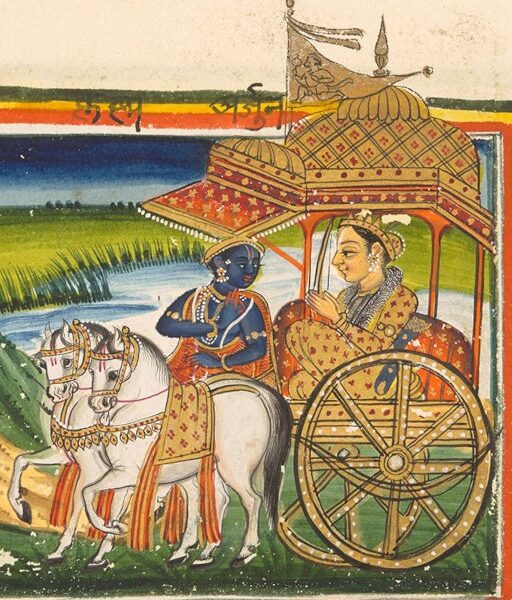
So Adhikarani 1 was, Every living entity, being Godhead’s parts and parcel, is it everyone’s duty to cooperate with Him by performing transcendental love and service. And then 2, good work, salvation by knowledge, or perfection by mystic powers, are all subordinate to the transcendental loving service of the Lord. It’s everyone’s duty to cooperate, but in that cooperation, then these considerations of good work, salvation by knowledge and perfection by mystic power, are all subordinate to the transcendental loving service of the Lord. Because otherwise we may get the idea that, you know, all these nice things are good, right? That’s the general tendency, because nice things give nice results, right? The living entity wants nice results. So therefore, the natural mistake will be, therefore, good work is devotional service, right? Knowledge is devotional service. Mystic power is devotional service, right? But it’s subordinate devotional service. It can be used in the Lord’s service, right, as part of the process of devotion, but it is not, never equal to devotion. That’s always important to note. Because otherwise we’ll think, oh, he’s, you know, he’s nice, so he’s a good devotee. Or he’s not nice, he’s not a good devotee. It may have something to do with it, right? It may have, he’s developed good qualities because of devotional service, but you have to, you know, see, you know, more. But it couldn’t be he’s just conditionally good, nice. So we’ll take it he’s a good devotee, right? But it’s like, no, he’s a nice person, he’s a pious person. Therefore, following the culture and practices of Krishna Consciousness will be easy for him, right, rather than difficult. So it’s an advantage, yes. But it’s not that that being nice, that’s the devotional service.
Okay.
Here are 647. And of all yogis, the one with great faith who always abides in me, thinks of me within himself and renders transcendental loving service to me. He is the most intimately united with me in yoga and is the highest of all.
That is my opinion, right? So here again we get Krishna’s opinion. So otherwise, let’s speak according to what’s the scriptures. Because what he feels, that’s how the scriptures are written. How the scriptures are written, that’s how Krishna acts. One of the 64 qualities is he always acts according to scriptures, right? Of course, he wrote the scriptures, but, you know, he acts according to that. You know, that’s the point is that you establish something, you have to follow it. So even if someone establishes something bogus, you have to follow it. Because that’s the rule, what you establish is what you follow. So therefore, better to follow what God does. So here, then, because the scripture will give so many directions for different mentalities in different situations, then there may be so many varieties. But here, when he says, that is my opinion, means that is the highest of all the forms that are made available. Yes. So it’s to emphasize that this point is important? Yes. Yeah, when he says, this is my opinion, means the other things he’ll be talking about, these are correct, after many, many births. So actually, knowledge surrenders into me, knowing me is the cause of all causes in all days. Such a great soul is very rare. You know, that’s a fact. You know, these things are here. But here is that one with great faith always abides in me, thinks of me, and renders some loving service to me. Because one could say, you know, one, you know, following Varnashram, or, you know, the proper knowledge and all that, or renunciation, you know, or doing good works, all these different things. But one may consider that those are ways to focus. Right? Does that make sense? Because somebody is starting with good work, right? And he likes to do good work, or at least he knows he should do good work. Right? And so he’s doing good work. And then he’s connecting that good work to Krishna. Right? Or knowledge, he knows the material world, we’re not supposed to be attached to it. So therefore, taking renunciation as the focal point, he works with renunciation, and therefore connects that to Krishna. Does that make sense? Or he takes knowledge, right? It’s by knowledge that we’ll get out of the material world, so we take knowledge and connect that to Krishna. Right? But here Krishna says, so these are all processes, and they’re all bona fide. That’s why I say Krishna will give a whole list of bona fide options. Then we see that he may then say, you know, like this. So having faith in Krishna, always abiding in Krishna, thinking of Krishna within himself, and rendering service, that’s actually the highest.
Right? So it’s not how much knowledge you have, how much renunciation you have, how much good work you’re doing. It’s whether it’s all connected to him. So therefore, they’re starting with him. And because of him, that’s why they’re doing good work. You know what I’m saying? Does that make sense?
Yes. The devotee is the highest yogi. The ideal yogi concentrates his attention on Krishna, who is called Samasundara, who is as beautifully decorated as a cloud, whose lotus-like face is as effulgent as the sun, whose dress is brilliant with jewels, and whose body is flower-garlanded.
Illuminating all sides is his glorious luster, which is called the brahmajyoti. He incarnates in different forms, such as Rama, Nrsimha, Varaha and Krsna, the Supreme Personality of Godhead. And he descends like a human being, as the son of mother Yasoda. And he is known as Krsna, Govinda and Vasudeva. He is the perfect child, husband, friend and master. And he is full with all opulences and transcendental qualities. One remains fully conscious of these features of the Lord. He is called the highest yogi. Because the yogi, he is learning to pull himself out of the material focus and bring it into focus on the Supersoul.
But here is that he can focus without faith and without rendering transcendental service. So he can be always thinking of Him. Otherwise, how would he be a yogi? But it’s because he has faith in Krsna and renders service to Krsna. That’s what then makes it the highest yoga.
Because otherwise, these others, mechanically it works. But it’s not that these systems can’t be used. The karma, the jnana, the jnana yoga can’t be used. It’s just that they’re only used in connection with Krsna. They’re subordinate to devotional service. They’re not the service.
They’re the medium or the expression of service.
Hrti. Lesson eight, establish that all spiritual processes have meaning only when they are followed in connection with the Lord. Lesson nine shows the miserable result of practicing them independently. So here we see Krsna will explain what’s proper first and then what’s improper. Because you want to know what the standard is. Just like if you’re giving rules, you establish first the common rule, the general rule that always works. Then, having understood that principle, then you can get into exceptions.
Otherwise, if you start with all the exceptions, you’ll get confused because the exception is specific. Well, the general always works. So always thinking of Krsna, that works in the material world and in the spiritual world. But then the exceptions of not thinking of the Lord, that’s only for the material world. So that’s actually the smaller.
Lesson nine, knowledge for salvation without attainment of transcendental loving service of Godhead leads simply to accepting unnecessary suffering. So now we’re talking about the jnani. So accepting the path of jnan without seeing it in connection to devotional service, it says, leads simply to accepting unnecessary suffering. Because that renunciation will generate suffering. So it’s unnecessary, right? So much suffering is there. It’s not necessary for the living entity. The living entity is not, by nature, suffering, right?
For those whose minds are attached to the unmanifested, impersonal feature of the Supreme, advancement is very troublesome. To make progress in that discipline is always difficult for those who are embodied.
So he’s pointing out just the path itself is troublesome. As we remember, what he’s saying about the path of devotional service, it’s joyfully performed, right? Because it’s in relation to someone, right? It gives happiness and all. The renunciation, renunciation doesn’t give happiness. The only thing is, is the renunciation, by practicing it, then one can detach oneself from the material world. So the material world itself, involving in it, is miserable, right? So by detaching from it, you save yourself from that misery. But to get rid of that misery, then you have to accept this misery.
Like that. So all it is, is again, back to what we were saying before, is the mind, whatever it accepts as happiness, then we will define that as happiness, right? So for the karmi, renunciation, he will not call that happiness. He’ll call engaging the senses happiness, right? Because that doesn’t do anything for you. Then the jnani will consider not engaging the senses as happiness, right? And engaging the senses as unhappiness. But in either case, because you’re dealing with material, both are unpleasant, right? But because the one is in the mode of goodness, then its unpleasantness is less disturbing.
But it’s still unnecessary. Or mode of passion, ignorance, and that’s always greater misery, right? But you have to remember, as a person in ignorance, doesn’t notice the misery so much, right?
Does that make sense? You know, a dog. How often do you see a dog take a bath?
I mean, what do you feel like if you haven’t taken a bath for some time? A dog, right? So now, that’s been a day or two or something like that, but could you imagine a whole lifetime of that? But they don’t notice, they just take it as normal. That’s the mode of ignorance. Mode of passion, so much trouble, endeavor with so many obstacles, right? But because they’re so focused on what they’re going to get from it and that will make them happy, they don’t notice the amount of trouble. You know what I’m saying? They’ll be more sensitive to the person in ignorance. You know what I’m saying? He stays at a better hotel, it’s cleaner, it’s nicer, greater facility, like that. But it’s still the trouble he takes to get it. That’s another thing. The person in the mode of ignorance may not take so much trouble because he doesn’t have the drive, but his situation is very miserable, right? The person in the mode of passion will situate himself very nicely, but the endeavor he takes is very troublesome, right? So here then, in the mode of goodness also, then the trouble is less, but they’re more sensitive because of being situated in goodness. So it’s just as much of a botheration.
Does that make sense?
You know, it’s like we’re sitting there and there’s one fly that’s persistent, and we’re going nuts. I mean, this is driving me crazy, right? Yeah, but then you have, you know, up north you have a caribou, and he’s covered with hundreds of them, right? And they’re driving him nuts. You know, so it’s the same thing. If there was one fly, the caribou couldn’t care less, right? He’s got hundreds of them. Now this is going to drive him nuts. You know, if we had hundreds of them, we’d probably die, right? Something like that. But, you know, does that make sense? You understand what I’m saying? So the point is, is the experience of misery is the same, even though the volume is different.
Does that make sense?
The difference between jnana yoga and bhakti yoga. The group of transcendentalists who follow the path of the inconceivable, unmanifested, impersonal feature of the Supreme Lord are called jnana yogis. And persons who are in full Krishna consciousness, engaged in devotional service to the Lord, are called bhakti yogis. Now, here the difference between the jnana yoga and bhakti yoga is definitely expressed.
The process of jnana yoga, although ultimately bringing one to the same goal, is very troublesome. Whereas the path of bhakti yoga, the process of being in direct service to the Supreme Personality of Godhead, is easier and is natural for the embodied soul. Because for the soul, rendering service to the Lord, that’s what’s natural. Not rendering service to the Lord, that’s unnatural. And then, not rendering service to the Lord and not engaging the senses in anything, that’s really not, that’s really troublesome.
Right? Does that make sense? In other words, you could also look at it that the trouble that they’re talking about, it’s not necessarily that the trouble itself is very great. You know what I’m saying? You know, it’s like, to not, to not overeat, okay? It’s not a great endeavor.
You know what I’m saying? You know, as opposed to, you know, stuffing yourself, you know, like that, where you can’t even move, right? That’s more endeavor, right? But, what’s being pointed out is that for the soul to not be engaged in activity, that’s a great problem.
Does that make sense? That’s the very troublesome aspect, yes. In the last two paragraphs, you mentioned the embodied and for the embodied soul. The embodied means that the body needs action? The embodied, I would, there, I mean, I would think there’s one aspect, it’s because we’re dealing with the jnanis, right? And so, they’re going to be focused on the soul and not on the form, right? Because they consider forms to be a disturbance, a distraction. So, then, by saying the embodied soul, then you’re pointing out the same point they can relate to, but you’re also leaving the element that having a body is normal. So, you have the normal body, but this is, you have been embodied, because it’s not the natural body of the soul.
The spiritual body is the normal body, because that and the soul are non-different. Here, then, the soul has been put in a body, but to not engage the body, that’s unnatural. That’s why he uses the word, it’s easier and natural. Easier because the mind, you know, because of the relationships, and the pleasantness of doing something for somebody, right? Everyone likes doing good work. There’s a pleasantness, you know it’s good, it’s beneficial, it’s pleasing something. And it’s natural because the soul, by nature, is a person and is…
Yeah, has a body, is active. So, it’s very natural. So, the other, it’s not natural. You can also look at it, embodied soul, is that even though they’re in the conditioned state, still the devotional service is still easier and nicer, because you can take it that… No, when you’re in your spiritual form, OK, then it’s natural and it’s easy, but when you’re in the material form, then it’s not going to be natural or easy, like that. So, the living entity being engaged within the material phenomena, that’s unnatural, right? So, therefore, you have to follow the path of giving all that up. But, as was being discussed yesterday, the idea of what does giving it up mean, right? Giving it up doesn’t necessarily mean not physically dealing with it, not engaging the senses in the activity. It means giving up the result of the activity, right? Because we have to remember thinking, feeling, and willing. Thinking means we’re contemplating it, there’s a desire, there’s some enthusiasm. But feeling means the result that will be gained from endeavor, we have an attachment to and a need for, right? Then there’s willing, we will perform the activity. So, it is all about the goal, right? So, if we see that the goal is connected to the Lord, then there’s no problem. But if the goal is not connected to the Lord, then it’s a problem. So, not understanding this point, then people will say, no, the activity shouldn’t be performed. If the activity is not performed, yes, you do not technically entangle yourself, but you haven’t actually, and you may raise yourself to liberation, but you haven’t done anything that’s actually for the soul, right? So, that’s troublesome, right? It’s not for the soul. The soul is endeavoring and getting a result. But the natural position is that result is for Krishna. The unnatural position is the result’s for itself.
So, this whole point of who’s the result for, you want to do something, fine, but who’s the result for? The guy who wants to smoke a cigarette, what’s the result of smoking the cigarette for? Who’s going to get the benefit? No one. Of course, yeah. That’s even more troublesome, right?
The path of the changed smoker is very troublesome.
But short. Yes, but short. So, the engagement of the senses is natural, but not for yourself.
Means if we think about it, yeah, we’ll get into detail, but…
Yeah, that doesn’t come up.
Okay. Does that make sense?
The process of Jnana Yoga is troublesome. So, for a devotee, there’s no difficulty in approaching the Supreme immediately and directly, because he’s a Supreme person. But here, the inconceivable, unmanifested, impersonal feature of the Supreme, that’s hard to approach, right? You know, what’s the relationship?
Right? Because there’s no manifestation, how is there interaction? There isn’t. The interaction is through the manifestation. So, we understand it’s Krishna. It’s His Brahman. That’s what’s pervading everything. So, we see Krishna’s qualities in everything. But we’re seeing the person. That’s what makes it so easy. But to try to have a relationship with something that you can’t have a relationship with, that’s very difficult.
You know what I’m saying?
But for those who are following the impersonal way to spiritual realization, the path is difficult. They have to understand the unmanifested representation of the Supreme through such Vedic literatures as the Upanishads. They have to learn the language, understand the non-perceptual feelings, and realize all these processes. This is not very easy for a common man. So, literatures such as the Upanishads. So, that means the Puranas and other literatures are more easily approachable because of the story form that they’re in. There’s people talking, relating it to practical situations that they’re in, that they come across in their life. So, it’s much more accessible. The Upanishads, then, you’re dealing with the very essential philosophical points. And not only that, it’s not direct. It’s not like Bhagavatam. It’s indirect.
He walks, he does not walk. He’s near, but he’s very far. Now, that’s a lot of trouble to figure that out. It’s so much easier. He doesn’t have senses like us. Therefore, his legs are transcendental. So, he doesn’t walk in the material, but he walks in the spirit, on the spiritual platform.
Very much easier. Not as poetic, but, you know, like that. To learn the language, because then in here you have the words themselves. Each syllable has meaning. So, you have to know what is there so you get exact meanings. Otherwise, you’ll get something different. You’ll end up with something else. Like that. How do you say? Understanding non-perceptual feelings. It’s easy to understand the perceptual feelings, but the non-perceptual feelings. But at the same time, they can’t be connected to the senses. So, the experience of it. To be able to experience the Brahman platform. That’s difficult. Many people can’t even experience what’s obviously right in front of them. You have to play some nice music. And for the uncultured man, it doesn’t mean anything. It’s right there. So, let alone, it’s unperceptible.
So, he has to realize all that together. So, what the Shastra says, the language, what it’s saying about that, the non-perceptual feelings, all that at once.
Then that’s difficult. Each one of them is difficult, let alone putting them all together.
So, therefore, it’s not easy for a common man. A person in Kṛṣṇa consciousness engaged in devotional service simply by the guidance of the bona fide spiritual master, simply by offering regulative obeisances unto the Deity, simply by hearing the glories of the Lord, and simply by eating the remnants of foodstuffs offered to the bucket.
It’s actually the foodstuffs that I was thinking of. Your bucket.
So, all the food offered into the bucket. So, now you can take the bucket and say, it’s time for the bucket offering. You have to offer food into the bucket.
I don’t know if you see them now, but they used to have, it was a standard, like a sadhu or a paraphernalia. They had their own unique kind of paraphernalia. There was this brass cup. It was about this long. I think it held a liter of water. Long. It had a handle on it. It went up, and I think it was for hanging on things.
You couldn’t really sit it down nicely because it had a very small bottom. And there was this one devotee that he had one of those. It was in the early 70s. He was in Mayapur. So, in the Kajar Ras, Date Ras, the date sap season, Date Ras season, then he would get out his bucket like that. And then, oh, that was it. Because you could tie a rope on to use it as a bucket. You could take it back if you get water. But at the same time, it was also the size you could use it for drinking. So, it was very multipurpose. You could carry it around in a big bucket. So, he would start down at Hulagad with the guys that have the Kajar Ras. So, they come with their two pots. So, in his cup, he could do pretty good. So, he’d finish all that guy’s Ras. Then, he’d move up until he got up to the yog bit. Finish off all the Kajar Ras between Hulagad and Hulagad.
So, that was offering to the bucket.
You can take inspiration.
So, you can check it out. Next time you’re in Varanasi or Haridwar, you can check out one of those sadhu buckets.
And simply by eating the remnants of foodstuffs offered to the Lord, does that mean from the buckets, right? Realizes the Supreme Personality of Godhead very easily. Because you’re engaging the senses. It’s natural. People want to eat. People want to be active. People want to see nice things, hear nice things, talk nicely. So, that can be done. But to not talk, not see, not smell, not taste, that’s a problem.
It’s like when you’re in trouble, then they stick you in the corner or stick you somewhere with nothing to do. So, this is that they voluntarily do that.
It’s like lifetime detention.
There is no doubt that the impersonalists are unnecessarily taking a troublesome path with the risk of not realizing the absolute truth at the ultimate end because they don’t know the ultimate truth.
But the personalist, without any risk, troublesome or difficulty, trouble or difficulty, approaches the Supreme Personality of Godhead directly. A similar passage appears in Srimad-Bhagavatam. It is stated there that if one ultimately has to surrender unto the Supreme, unto the Supreme Personality of Godhead, thus surrendering, this surrendering process is called bhakti, but instead takes the trouble to understand what is Brahman and what is not Brahman, and spends his whole life in that way, the result is simply troublesome.
Therefore, it is advised here that one should not take up this troublesome path of self -realization because there is uncertainty in the ultimate result because you don’t know if you’ll get to the Supreme Person. You may get up to the Brahman platform. It’s trouble, so getting there will be difficult, and then whether from there you’ll move on to understanding the Personality of Godhead. It’s quite doubtful. So it’s so much trouble and the results are not guaranteed. Well, devotional service is direct. You’re approaching the Supreme Lord directly. It’s natural for the living entity, and it’s guaranteed. You will, you know, reach the Supreme Lord. Yes? I was wondering, it seems like many of the scriptures that have been quantified, they aren’t quite confusing at all. Are they here because we have Jesus? Do we, like, have such a false ego about the knowledge? I mean, is it to really, like, facilitate their false ego, that they want to, like, feel that they know this knowledge that other people don’t know? Because it seems like it is taking the simple and making it complicated.
It’s giving the simple in sutra form. So sutra only uses as many syllables as is necessary to explain the point.
Right? Difficulty is that you have to have a certain amount of knowledge to be able to appreciate the sutra. Right?
Does that make sense? You know, it’s just like if I say, the apple doesn’t fall very far from the tree. That’s a sutra. You know? And then somebody says, well, it depends how big the tree is. You know, I mean, it’s like, you know, I mean, if it’s on the top of the tree and it falls from there, I mean, that’s 30 feet. That’s a long way to fall. But the point you’re making is that, you know, here’s the tree and there’s the apple. So they’re still connected. They’re still in association with each other.
Meaning that the tree, that the apples are there and the trees are not far away.
That’s what we mean. That’s what we mean. We have the apple, I mean, the tree, which is the father, and the apple being the son. It’s not very far away. You know, I mean, they’re connected. That’s the point. Well, that’s what it’s meant. It’s meant in relation to that. It’s not meaning physical. But the point is that, you know, the tree and the apples, you know, it’s… So you’re using that analogy of the proximity.
Yes, it’s poetic, but it’s intellectual poetic. Right? It’s not emotional poetic, like you’ll find in the Puranas.
Does that make sense? You know, it’s just like, there it’s like, hey, say.
Yeah, it means intellectually it works. You know, he walks, he does not walk. He’s near, but he’s very far away. You know, so, you know, you wouldn’t use that in the romantic sense. You know, the boy wouldn’t tell the girl, you’re very beautiful, but you’re not beautiful at all. You know, he wouldn’t say it like that. She’s kind of like, what do you mean? You know, you as a person are very beautiful, but it’s not that, how you say, the lacking of, you know, someone else will think it’s on, you know, some other external forms. It’s not that kind of beautiful. This is as a person, you’re beautiful. Like this and that. And so, you know, it’s not going to work very well. Right? Now, good question. So that means, you mean, physically I’m not very beautiful. No, no, no, you’ve also, but we say, but then why didn’t you say that in the first place? You know, it’s not very well. So like even the sutras, like for Vaishnavas and for devotees, they read them and they immediately understand. Yeah, they understand. No, no, no. No, no, no. Because that’s just, the Upanishads in essence give the complete philosophy in a very succinct way. So, but the point is, then it needs so many other prerequisites to understand it. That’s why the Bhagavatam is just so straightforward.
Right? It’s also poetic, but it uses the classical poetic sense rather than the Vedic poetic sense. So it’s just so much easier. Like that. It’s more natural. But they are written so that those who are attracted by jnana and karma can, yeah, especially jnana, can then take this and get distracted by knowledge. Because that’s how they want to keep themselves busy. So then, yeah, it’s just like the other aspects, the Purva aspects, the Samhita and the Brahmanas. Then that, the karmis get distracted by that. All the different rituals they can perform, what benefits they can get from those rituals. So they can either use that for Krishna consciousness or to get distracted, just like the Uttara part, then the Aranyakas and the Upanishads can be used either to understand Krishna, serve Krishna, or to get distracted by knowledge. Does that make sense? Yeah. Yes. My question is just a small detail. Even though there is that chance of the Supreme Lord can be realized from the Brahmajyoti platform, one still has to come down to the material world and engage in devotional service in order to get Krishna consciousness. Yes, yes. Like that. So unless you figure that out while you’re still here, because the only ones that can from the Brahmajyoti move forward are only those who have had experience of the Lord before entering the Brahmajyoti, as a person. Because forward from the Brahmajyoti is to the Vaikuntha planets, to the personal. So your impersonalists, not your Mayavadis, your personalists, then they don’t know about the person. They don’t know about the personality of God yet. They only know about the Brahmajyoti of God. Right? So they will get to the, if they merge into the Brahman, then there’s only the Brahman. And then from there, the natural position of the living entity to engage the senses and mind and intelligence. There is no opportunity because there is no other understanding of that than the material, so they would have to come back here. The demon, he’s been killed personally by the Lord. So now he can either remember other activities here or remember the Lord. And then from the Lord, then he can move forward. But as we see, how many demons are personally killed by the Lord? Right? So in the last, you know, this half of the, you know, the life of Brahma, you know, Hiranyakasipu, you know, Hiranyaksha, Ravana, you know, how you say, Shushupal, Dantavakra, you know, there’s a few. So, it would not, you would not be able to take that as a path. Yes, I’ll become the biggest demon and Krishna will kill me and then from that, you know, why go to so much trouble since you’re going to have to make really a serious endeavor to be such a big demon. I mean, it’s a lot of work, right? A lot of austerity. Hiranyakasipu, you know, stood on his toes, you know, in talasana. Talasana means you stand on your toes and put your hands up in the air like that because that’s like tall leaves. You know, when you’re going out on the left, there’s a tree there. It’s got leaves that come out that are like round with the pokey things. So, like that. He stood like that for thousands of years or, you know, however long it was. The white ants ate his body so there’s nothing. It’s just bones and he’s still meditating. That’s trouble, right? You would have to admit that that’s a lot of problem. Right? Then after that, he got the benediction that he could be such a big demon but he started out to have, what piety he would have to have to be able to do that.
You know what I’m saying? So, it doesn’t look like it would be a path worth attempting.
You know? Like that.
Is that okay?
Therefore, it is advised here that one should not take up this troublesome path of self -realization because there is uncertainty in the ultimate result. Right? So, just even, just there, just look at it. You’re not certain. Why would you engage in something that’s not certain? If you had an option between devotional service that is certain and the impersonal path which is uncertain, which would you take? You know, especially you’re talking about eternal here. You know, why waste your time?
Okay. One should not take up the process of jnana yoga. A living entity is eternally an individual soul. And if he wants to merge into the spiritual whole, he may accomplish the realization of the eternal and knowledgeable aspects of his original nature. Right? Eternal and knowledgeable. So, sat and cit. Right? So, through using cit, he comes to situating himself only in sat. Right? Only in eternality.
Right?
But no ananda. They talk about ananda, but the ananda is by not engaging. In other words, there’s no material problem, that would be ananda. Right? You know, just like everyone’s driving their nuts at work, you know, this and that, kids, so many different things, you know, it’s the end of the month, it’s the end of the year, you know, so all the different things that one has to do. So, one just would like to go into a quiet place, there’s nobody, nothing, nothing going on, you have nothing to do, no obligation. And then, those few moments, that’s ah, this is nice. Right? So, it’s not actually ananda in itself. So, the brahmananda, they call it brahmananda. But if it’s ananda, that’s different from sat.
Right? Because now you’re defining, there’s eternality and there’s bliss.
Right? And the process they used was knowledge. So therefore, they’re defining three different aspects. But they’ll say it’s all one and there’s no difference.
Right? So they’re only going to end up with sat.
Yes? When they’re using knowledge, but not getting knowledge, is that because it’s mundane knowledge? It’s not mundane. Means, I mean you would say it’s mundane because they’re applying it for themselves, selfishly. So that makes the mundaneness. Otherwise, there’s no such thing as mundane knowledge. All knowledge is Veda. But because you’re using that knowledge of the Veda, not in connection with the Lord, therefore it’s called mundane knowledge. Right?
And then you cultivate this mundane knowledge. So you find various more and further and further little aspects of this. Because this mundane knowledge doesn’t need to be cultivated. You only need to cultivate what’s going to be useful in God consciousness.
Right? So, one’s occupation may have so many details of practical knowledge, but they’re only what’s useful in your lifestyle as a devotee. Otherwise, universities are full of theses that are 300 pages, generally speaking, of something quite useless. No one’s going to use it in their life.
They’re not.
The particular, how you say, sociological community of the, how you say, Western, Central, African, tsetse fly.
You know, I’m sure if you look, there’s a thesis there.
But what’s it going to do for you? How often do you get a tsetse fly in London?
Right? But if you do, watch out. If it bites you, you’ve got a problem. Yeah.
Does that work? Yeah. Okay. A living entity is eternally an individual soul. So, like in London, you’d have to watch the gap. You’d have to watch the tsetse.
Now, if he wants to merge into the spiritual whole, he may accomplish. Okay. He may accomplish the realization of the eternal and knowledgeable aspects of his original nature, but the blissful portion is not realized. Right? That can only be realized in Krishna consciousness. Right? So, sat and cit. By the grace of some devotee, such a transcendentalist, highly learned in the process of jnana yoga, may come to the point of bhakti yoga or devotional service. Because then you’re adding ananda. Because it’s not complete. The karmis and the yogis, they’re not dealing with these others. Or the karmi deals with ananda, but not generally sat and cit. Or he may use knowledge, proper knowledge for proper sacrifices and activities to get the… But he’s not working on the sat platform, the eternal platform, the soul. Right? Does that make sense? So, that’s the difficulty. So, it’s like button pushing. Push one down and the other one pops up. Yeah, the other one pops up. Yeah, so, it’s a problem if there’s no balance here. So, only the devotee you have sat and ananda being engaged properly.
At that time, long practice and impersonalism also becomes a source of trouble because he cannot give up the idea. Right? Just as someone has trouble giving up the idea of sense gratification or of sinful activities or… The same thing is someone will have trouble with giving up pious activities or the impersonal concept.
Right? It’s like that… What was it? Somebody from the Lower East Side came to visit Prabhupada. They came from the… May have come from… May have come from the village voice.
So, they came into where Prabhupada was staying, into the loft. And as he comes in and there’s all these different persons sitting all around the room like looking at… looking at the wall and doing different things. And so, then they found him but they didn’t see you know, Prabhupada. But they saw in the corner there was kind of like some blankets put up. So, they figured, well, maybe that’s kind of like a staying place. Right? So, he looks behind that and Prabhupada is there. He asks, you know, Oh, what are they doing? You know, because he’s in just… Oh, what is this process and all that. He says, I don’t know what they’re doing. You know, they’re doing whatever they want to do. You know, he sits in Chandra Krishna with him. He doesn’t sit there and stare at a wall. You know, so that they’re doing on their own. Like that. So, here’s that… Because he cannot give up the idea. You know, that’s the…
Therefore, an embodied soul is always in difficulty with the unmanifested. Unmanifest. Both at the time of practice and at the time of realization. Right? Because it doesn’t deal with Ananda. That’s why we see it’s when we’re dealing with it. When Krishna is talking about Brahman, you know, in the universe of form, how is it being related?
Right?
Look, he has said, how is it being related? Just as Brahman?
With qualities. And not only that, it’s connected to? Krishna. The person. I am the taste of water. So the taste in water, just that taste, that’s the Brahman platform. Just that inherent taste, the experience. That’s what I mean about about the… What was it?
The non-perceptual feelings. Right? In other words, there’s the taste I’m getting in water that the tongue, you know, is touching the water. And what sensation is being given there in that experience. Right? But we’re talking about the taste itself. That’s the non-perceptual feeling.
Do you understand? This is not perceived by the senses.
Right? Does that make sense?
Yeah, but it’s…
But it’s… It’s not the taste experience, it’s the taste itself.
That’s Krishna.
You know what I’m saying? You know, that… That… Because that’s what you’re actually looking for. There’s an experience in it. You know what I’m saying? The person’s on the rollercoaster ride, it goes up and down and makes them sick, it does this and that, people are screaming. These are all the experience of it. The real point of going on it is to get scared. You go on the rollercoaster ride and you’re not scared, you don’t go again. Because it means it wasn’t… It didn’t accomplish.
You know what I’m saying? You jump off the bridge on that rubber band, you know, and then, you know, unless it was exciting and, you know, the adrenaline… Unless it was there, then you wouldn’t do it again. Right? So there’s an essential point that’s there. That’s what Krishna’s talking about. That’s the Brahman. Because that’s what’s pervading everything. The other things are simply, you know, matter contacting matter. But the potency that makes matter appear to be real and appear to be alive, right? What gives value to matter, that’s Brahman.
Does that make sense? So then he’s defining that, but it’s always in relationship to him. He’s that. So therefore the devotee can use it very comfortably, very naturally.
Right? Does that make sense? But then, only in relation to the service. Because jnana is always subservient to devotional service.
But still it’s the person. So Krishna’s so kind that he gives water to, you know, satisfy a thirst. Right? So then you just go from that first step is there and then to the person. So you find the person through the symptom, through the imminent.
Right? Means you don’t see Krishna in the water, but from the taste then you can appreciate. So through the imminent then you understood. Then you connect to the person. Does that make sense? In other words, if you don’t connect directly to the person, then this, through the Brahman, you can get there. Right? Does that make sense? Same way as with the paramatma. So he’s defining paramatma. How is he defining him?
Also the point is relationship with him. But the paramatma is him. But the point is, is paramatma being seen simply as the controller, the all-pervading, like that. It’s not really much different than the Brahman. That’s why I said localized. The personal feature is there, but localized to that specific situation.
Right? And he’s dealing, he’s in control of Brahman.
Right? Because you’re controlling the material energy, means you’re controlling Brahman.
Does that make sense? But then, it’s the person who is doing that. So therefore, again, it brings it back to Krishna.
Does that make sense?
But then, what you don’t like the taste about it, means it’s not having that particular quality. You know what I’m saying? But it’s still, means when you drink water, you don’t think, wow, how wet this is. This is so wet. I was so dry, and now this water is making me so wet. You know what I’m saying? Like that. I think all the drunks seem to have that.
You understand? No, but the point is this. But what do you notice about the water?
The taste. The taste. That’s the point is, so the taste is Krishna. But the point is, is there’s, you know, not nice taste, and there’s not so nice. But still, that potency of taste is Krishna.
Every living soul is partially independent, and one should know for certain that this unmanifested realization is against the nature of a spiritual blissful self. Because sat simply means that you’re situated on the spiritual platform. You are spirit. You’re situated in spirit. But that that’s all there is, that’s unnatural. Right? Does that make sense? You know, it’s just like, let’s say we have a car, and there’s no wheels on it. Right? It’s unnatural. You know, car means four wheels. Right? Does that make sense? You know, if it has four wheels, right, but no motor or anything, and you just use your feet, we still can think of it as a car.
Does that make sense? So the wheels are, you know, important. So there’s no wheels. So it’s not natural. So sat without cit and ananda is unnatural.
It’s against the nature of the blissful self. That’s why he used the spirit of his spiritual blissful self. So that means the eternally blissful.
Right? So it’s just eternal. One should not take up this process. Does that make sense? That doesn’t mean we don’t use this knowledge Krishna gives us about the universal form for devotional services. There’s something that we’re attached to, that we’re having difficulty connecting it to Krishna in the direct way. So then one uses through the indirect.
But for us, it’s direct and indirect, not personal and impersonal. Does that make sense? Because the impersonal is a feature of the person. Right? The person’s first.
For every individual living into the process of Krishna consciousness, which entails full engagement in devotional service, is the best way. So that means for everybody. The other one, if you’re super intelligent, super determined, have certain piety, then you can take it up. But you have to be so qualified and then it’s so troublesome. While if that same intelligent person applied that in devotional service, it would be so easy for them. Not only that, the common person who doesn’t have those qualifications, they can do devotional service, though they can’t do jnana yoga. Yes? It seems like the nature of devotional service being distinct from serving the senses and like that, the analytical study is valuable for devotional service. So you can understand, am I engaged in devotional service? Yes. Until it’s spontaneous. Yes, yes. But in itself, just analytical study isn’t going to be satisfying. No, no. Because it’s only dealing with knowledge there. And your purpose is only sought. So there’s no ananda. I mean, because one has intelligence and one defines that if I deal intellectually in a nice way, you know, a logical way, that will make me happy. But they don’t actually understand that that happiness they’re gaining is because of the nature of the soul. They’re completely missing that. So that means there’s, that’s why we say less intelligent. Though they’re so intelligent materially, but they’re less intelligent. Right?
Yes.
If one wants to ignore this devotional service, there is the danger of turning to atheism. Right? Because the impersonal could become atheistic.
Right? Like that. So there, so he doesn’t know the person. Right? But he could turn into, you know, like the Mayavadis. They’re atheists.
Okay?
Thus, the process of centering, centering attention on the unmanifested, the inconceivable, which is beyond the approach of these senses, as already expressed in this verse, should never be encouraged at any time, especially in this age. So it says centering attention on the unmembered. No, this is a side thing, that everything’s for Krishna, but this one thing I’m attached to, so what is it I’m attached to in it? So I’ll think it’s the thing itself, then you go into it. No, it’s actually this aspect of it. That’s the unmanifested that makes it work. So therefore, that’s Krishna. And so right now, you’ve already started to break that attachment by using the knowledge. Like it’s saying here, you have the Vidhi, and then with knowledge you make that solid until it becomes spontaneous.
It is not advised by Lord Krishna. So here’s another where Krishna himself doesn’t advise us. Okay. So here we have a footnote.
Yes. One may be curious to know how the impersonalists explain this verse. Below is a summary of Sri Padashankaracharya’s commentary on 12.5, as presented by Srila Baladeva Vidyabhu. So we’re hearing Shankara. Because otherwise, yeah, here, here, let’s read the verse again. So that we understand how do they deal with these things, right? For those whose minds are attached to the unmanifested, impersonal feature of the Supreme, advancement is very troublesome. To make progress in that discipline is always difficult for those who are embodied. Right? So that’s not going to, you know, bode well to the budding, you know, impersonalists here. You know, so Shankara has to make a comment to keep them inspired.
Others explain this section as follows, right? In other words, the others. There are always some things you have to worry about, right?
People like that.
Brahman has two forms, with qualities, saguna, and without qualities, nirguna. Worship of the Lord with qualities is easily performed with attention because it supplies a form as an object of concentration. Worship of the Lord without qualities is difficult to perform and is done without proper attention because of lack of, lack of object of concentration.
The Brahman, okay, so, so, right there, they’re just looking at, you’re dealing with Brahman because if we say everything is Brahman, you have to accept then there’s saguna and nirguna, right? So difficult to hear is that they’ll say nirguna is the higher, saguna is the, the lower, you know, and we’ll put it the other way. But still, even that, that focus just on saguna, nirguna, that’s not the focal point, the focal point has to be on the person. So here, the Brahman without qualities is called aksharam, right? Because there’s nothing to concentrate on so you’re used to engaging the senses, there’s nothing there to engage. So it’s difficult. For defining Brahman without qualities, seven descriptive terms are given, right? Though it can’t be described. It is beyond the scope of the Vedas or words. Anirdeshyam.
Because of it, because it is devoid of class and other qualifications, avyaktam, it is pervasive, sarvatragam, and not comprehended by the mind, acintyam.
Sruti say, yato vacau nivartante aprapya manasa-saha.
Words along with the mind return without attaining it.
Caitriya Upanisad 241.
The word is called false, kutam. The world is called false, kutam.
Right? In other words, not comprehended by the mind because the mind and the words try to obtain but they can’t actually define it so they have to return back without having obtained. Right? The world is false, kutam, since it appears real when it is actually illusory. The atma is situated within this world, this false world, kutastam. That atma is situated as substratum for false attributes. The atma is without change, acalam. It is eternal, dhruvam. Dhruvam also means fixed. For those persons striving to know the atma without qualities, there are great difficulties, first in digesting the meaning of the Upanisads, after service to the guru, then in contemplating the atma and finally in meditating on atma.
The first type of person utilizing Brahman with qualities, without undergoing these difficulties, attains realization of atma, which wipes out ignorance and its effects. This arises from the mercy of the Lord with qualities who has been described by guru. He then attains liberation in the form of oneness with the nirguna atma, devoid of quality, which gives rise to the form of the Lord. The final result is the same, but one path is filled with difficulty and therefore inferior.
The idea is foolish because the Vedanta Sutras reject the idea of Brahman having two forms with the words gati samanyat. Only one conception of Brahman is taught, Vedanta Sutra 1.1.10.
This one Brahman is to be known by the Vedas. yaya tad aksharam The indestructible, the akshara, is attained by that knowledge, Mukunda Upanishad 1.1 .5. Thus it is not anyrdesyam, indescribable by the Vedas, as interpreted by the impersonals.
Krishna is known as anyrdesyam. I think that’s the 64th quality. No, that’s it. It’s one of the qualities.
So he’s saying here this idea is the Mayavadis will describe this two kinds of forms of Brahman. Nirguna and Saguna.
And so they’ll be saying you’re trying to attain the Saguna which has these seven qualities. Right? So the lower with qualities is lower. But he’s pointing out here is that the Shastra doesn’t support this. There’s no such thing as being two kinds of Brahman. No, there’s Brahman.
Right? Something like that. So you don’t have two forms of unmanifest.
So they’re just saying this to try to get around the philosophy.
Statements such as words cannot describe it would apply to all aspects of Brahman and thus there is no reason to assume the existence of two Brahmans. One of which has form and can be approached by the senses. Because if you’re saying it can’t be described, which was the first one, anyrdesyam, it can’t be described, then why would you describe two? One which you can approach and therefore describe and the mind can catch.
So if it’s anrdesyam means it is.
Brahman without qualities cannot be observed anywhere because it is impossible to prove the existence of a nirguna object. Since the word nirguna without quality has no power to denote anything. The word can’t describe anything so therefore how will you be able to appreciate it? You know what I’m saying? No qualities. What has no qualities? There’s nothing that has no qualities so therefore what does it define? It doesn’t define anything. So it doesn’t have any potency.
This is far out. This is the level at which the acaryas will take apart an argument.
It’s just like what we were discussing yesterday. Then the comment was meant that the discussion and analyzing it was threadbare. That means down to the threads. Well the acaryas take the threads apart.
There’s three strands that they take those apart. It leaves you with the Mahabharata with nothing. It doesn’t even have a syllable left.
That’s essentially what he wants, isn’t it? Yeah, but he didn’t want you to do that with his philosophy and process. He wanted you to do that with the material phenomena like that.
The Brahman without qualities cannot be observed anywhere. It means it doesn’t exist because it is impossible to prove the existence of a nirguna object. You can’t prove it. How do you prove the thing has no qualities? Because to be able to discuss it or observe it or something, you have to have a quality you’re working with. Even they’re saying it’s nirguna Brahman but then they’re going to say there’s seven descriptive terms. But they’re using their mind and intelligence to grasp it with. So they’re already saying that it’s, what was it, acintyam. But they’re using these terms so that their mind, so it is cintya, able to be contemplated.
Because the mind contemplates. So they’re able to do that. But acintyam means you can’t contemplate. So how do you understand an object that’s uncontemplatable, that has no qualities? So it doesn’t exist.
How can they say it’s pervasive and that’s not a quality? All of them are qualities. So they’re describing only certain aspects. They’re appreciating certain aspects of the saguna Brahman because they don’t accept qualities like greatness or heroism or happiness or these which are also qualities of Brahman. They therefore come to the idea that okay, if I only accept these seven, then it’s nirguna. But if it’s actually nirguna you don’t accept any of them. And then along with that that means you can’t even describe it as nirguna because nirguna, there is no such thing as nirguna.
So the idea of actually of Mayavada philosophy and that doesn’t exist. It is just like any other mundane I will be happy in the material world is a total illusion, an absolute illusion. So the idea that there is nirguna Brahman, that is also an absolutely false illusory concept.
It is consequently a useless since the word nirguna without quality has no power to denote anything. Right? Because you say table it denotes something so it has a value. But nirguna doesn’t denote anything so it has no use. Because Brahman also has those seven you know, terms that are used. So that means if it’s nirguna you couldn’t even use those. So that means it doesn’t have any value.
It is consequently a useless term. And we must accept that all scriptures are meant to describe Brahman. The word kuta cannot mean false word because kutastha is defined in the dictionary as that object which remains always in one state. Thus it refers to atma. So it’s always in one state. How could it be illusioned? How could it be covered by illusion?
Right? How could Brahman be covered by and then change? How could Brahman separate into it? You know? But if it’s kutastha means it will never change.
Right?
The world is also not false but real according to the srutis. Yes? So the atma is kutastha so the quality is ananda. The quality… The quality is sac-cid-ananda.
And that is unchanging. Yeah. No. The soul never sac-cid-ananda. But how he wants to situate himself that can either be in the spiritual or the material. But knowledge he wants to use is either connected to the Lord and is therefore transcendental or not connected to the material. Right? And whether that ananda is a connection to the Lord so it’s actually transcendental or it’s simply removal of pain… you know, removal of obstacles. Does that make sense? Oh! That gives a very nice point because we mentioned that. This is another angle on the mode of passion. Because the mode of passion is the great endeavor to get an object. Right? So now the mode of passion generally indicates they want big happiness out of something. You know, they’re not going to work for something small. So that means if the material definition or it means not say if being that the material definition of happiness is removal of pain. Right? Right? You’re hungry. So the more hungry you are it means the greater the pain the greater the enjoyment of eating. Does that make sense? You know, the more you’re tired then the greater the happiness of sleeping. Does that make sense? You know. So, so that would indicate that that greatness of the pleasure that comes from the mode of passion means that there by definition has to be greater obstacles to remove to obtain it. Because it’s removing the obstacle gives the pleasure. So removing a small obstacle gives small pleasure. Removing a big obstacle means big pleasure. So mode of passion means you’re automatically experiencing and accepting I’m going to go through a lot of trouble to be happy in the mode of passion. That’s inherent. Yeah, it’s inherent.
Right? Well, the mode of ignorance I won’t actually know if I’m happy or not. You know, like that. That’s kind of, you know.
Interesting. Okay. Then, according to the Srutis, ka-vir-mani -si-pa-ri Oh, this is you should punish that. ka-vir-mani-si-pa-ri-bhu-svayam bhur-ya-ta-ta-tya-tor-tan Vyaradhat ca sva-ti-vyasa-ma-vyah He creates Vyaradhat since time immemorial all real objects ya -ta-ta-ya-tan-ar-tan because He knows all ka-vir is intelligent ma-ni -si ma-ni-si controls all pa-ri -bhu and is independent svayam-bhu By His own energy He performs all acts. Isopanishad Mantra 8 Right? So, it’s real.
It’s just, we think it’s not connected to the Lord. Therefore, that’s the illusion.
We’re walking around in a real world but in our mind what we’re how we’re interpreting and seeing and interacting is total illusion.
That’s the…
Since the Srutis testify that the form of the Supreme Brahman full of knowledge and bliss is Krishna who drinks the milk of the breast of Yashoda the concoction of an aksharam devoid of qualities situated within the body of Krishna must be considered a result of blind faith. It has no basis in proper reasoning or scriptural proof. Therefore, it is rejected. So, in other words, saying that there’s two Brahmans here because then they’re going to apply this that the Brahman of Krishna the Saguna Brahman of Krishna on the battlefield you know, is speaking all this knowledge but actually it’s the Nirguna Brahman within Krishna that is the Supreme that he’s talking about. Right? He’s talking about himself so then that means the two are non-different.
You know? So here he’s saying it so since we’ve already established that Nirguna doesn’t exist. Right? And the Srutis, what they say about he is the person doing these things. So, then it can only be considered that this idea of an aksharam devoid of qualities the Nirguna Brahman then that means it must be based on blind faith. So the Mayavadis have blind faith in Nirguna Brahman because there’s no evidence to support of it. Right? And you couldn’t experience it because to experience it means there has to be some qualities. You can’t experience nothing.
Because when you say no, I experienced into the nothingness. No, you experienced peace.
Right? There’s no material endeavor so therefore there’s no passion and ignorance. So therefore things were peaceful. You experienced you know, the quality of peace of Brahman.
Right? Does that make sense? Peace or relief or one of those they’re all qualities of Brahman. And so you attributed that that itself is the Nirguna. But it can’t be otherwise how did you experience it?
You know what I’m saying? So we’re saying that it’s you know, not comprehended by the mind but you went oh, it’s peaceful, it’s nice. So that means it’s comprehended by the mind. So that goes against their own definition. So it has to be blind faith.
Right? Because every word that they define the Brahman by doesn’t actually have any meaning.
Right? Because you can’t use a quality to describe something that has no qualities.
You know what I’m saying?
There is a connection between the fact you have a blind faith and you cannot experience it.
I didn’t quite understand.
It says that the Mahayana they have blind faith in Nirguna Brahman. Yes. Is it possible to experience?
Sat, you can. But sat is a quality. Eternality is a quality. Because they’re saying that it’s no quality.
You know what I’m saying?
You know what I’m saying? It means in the revolution they said equity. They didn’t say nirquity. Right? You know?
Or aquity. They said equity. So there’s qualities there. Does that make sense? So even if we’re saying it’s that anything that can be experienced there must be something you’re experiencing with and then you’re using the mind. So you’re using all these elements that they say are illusion and then feeling that they have therefore touched the Nirguna Brahman but they haven’t. They’re touching Brahman but it’s Satguna Brahman. Otherwise how is it being able to be experienced? How is it able to be described?
So in other words the Nirguna Brahman doesn’t exist just like you’re going to be happy in the material world doesn’t exist. So you’re going to be happy as Brahman doesn’t exist.
You know what I’m saying? It’s two sides of the same coin. Right? Karma and jnana two sides of the same thing. By engaging my senses in the sense of I’ll be happy by not engaging my senses in the sense of I’ll be happy. That’s all. It’s the same thing. It all comes back down again to the platform of the embodied.
Is that what you’re saying? But this means that when we experience something in life so they automatically some faith in it. Yes, yes. So someone who has no faith a blind faith he cannot he cannot experience it. No, no. Blind faith you experience but you don’t necessarily know what it is. It means blind faith I would this is that you have faith that it exists though there’s actually no real proof of it. Yes. You know what I’m saying? It’s not it’s not actually real so therefore it’s blind faith. It means you’re basing it on Shastra. Then you can say it’s solid. Like we’re saying Krishna is God we’re not doing it on blind faith. The scriptures are telling us the Acharyas are telling us.
We can experience it. So their experience of Brahman is actually Saguna, Brahman. Because that’s all Brahman is only Saguna. There is there is only one Brahman. There’s not two Brahmans. But their idea is that the Nirguna is the real and the Saguna is what’s not real. But it’s the Saguna that’s real the Nirguna doesn’t exist. It’s only an idea. You know, it sounds great. Simply because they’re so frustrated in the material world it would have nothing to do with it. You know what I’m saying? You know you like the person then things connect to the person you involve yourself with. You don’t like the person you know, then you don’t want to have anything to do with. So that’s the whole idea is that their mind, their senses have given their body has given the relationships have given them problem. Right? Emotions. So they want a platform that doesn’t have any of these left.
So then you’re going to say no cause so it’s Nirguna. It sounds perfect.
You know what I’m saying? You have so many people they come up with the perfect ideal but it’s not real.
You know what I’m saying? The whole point all these ideals are not real because they’re not connected to the Lord. It’s like you have you know a world peace and harmony but the point is it’s not a reality because you have the divine and the demoniac natures. So that means the divine may be able to work together but the demoniac won’t. They’ll cooperate with other demoniac to get the maximum out of the divine. You know but once there’s no more divine left you know there’s only the demoniac then they’ll fight amongst themselves.
So it sounds great.
Right? But it never is great. But everyone everyone is equal there’s no difference and everyone will get what they need according to their ability. Sounds great. But the point is who’s to decide what is his actual ability and therefore how much he should get. So that means you’ve already established an authority. But the whole system is to run without any authority.
This is coming we just all because of the good nature we all work together. But the point is who decides? So it’s like the individual will decide. Yes he’s an intellectual he may be able to do that but your common person won’t be able to do that. Right? So you can only run that with intellectuals. Right? And who’s the first ones they kill? The intellectuals. But they’re the only ones that actually could practice it. Technically.
Right? But even then the point is that’s going on that you’re satisfied with just whatever you get according to your simple endeavor. You know just the bare necessity. But how many people are satisfied like that? Even intellectuals.
Right? Therefore it can’t function. It means it sounds great but it’s like you know how you say say you know sky flowers or pie in the sky or mentioned mentioned?
Castle. Yeah. Castle in the sky, yeah. Like that mentioned, yeah. It’s all these things that they’re not there. They don’t exist. It can’t happen. So it seems from what you’re saying it occurred to me that communism was something created by intellectuals for the common man not something created of the common man to practice that. And then they thought okay they have to kill everyone who isn’t isn’t common. Yeah. But the point is who’s killing them? A common person? Of the hierarchy enjoying from the common man. Yeah. But the point is it’s the common is the hierarchy that’s getting rid of the intellectuals because they’re higher than the administrators.
Right? So they’re a threat. But the point is unless you know what the common man is how do you make a philosophy for the common man? But the point is we don’t define what’s the common man like God does. So unless you know God how can you know man?
You know what I’m saying? Therefore the system that’s God conscious that can be you know work in all situations.
But that’s the whole point is that all these different systems are indicative that there’s that variety of personalities.
Right? Means you have you have the communism looking at it from the intellectual point of view which would put it as a higher element. But its application how it’s defined is for the lowest.
But you know you know what I’m saying capitalism is there. You know then you have your democracy. You have your monarchy your oligarchy. Then you have then you have people like this. You know what I mean? Anarchy. All these different systems are there but they apply to certain situations with certain people. And so it works nicely in a certain situation just like you have a ship. And it works because everybody does their specific job when they’re supposed to. Then it works. But if everything goes completely haywire then anarchy is the solution. Then it’s every man for himself. But until that point so it only has it’s useful in that point.
Right? But other than that point it has no use. So therefore all of these systems have their use in a specific point. That the common man should be taken care of. That’s the point. But that there shouldn’t be people taking care of them that’s stupid.
You know what I’m saying? You know that you have capitalism and you have democracy that’s fine. But who sets the standards? The common person can’t set the standard. The common person can work for his own prosperity without being blocked because of someone else’s material motive. You know they’re also economic motive. Then that’s good. But to say therefore money is the standard by which we define everything in human life and in the universe that’s foolish. Right? That you have authority and that they make the decision then that’s fine. It’s very efficient management but it’s only efficient as long as they’re working for the benefit of the people because it’s a social system. It’s not a system meant for one man. Right? You know the country’s not meant one man’s going to get benefit and no one else does. It’s meant the whole country benefits.
Right? You understand? So each one has its strength and weakness so it has a place to be put.
Does that make sense?
Is that okay? Yes. I have a really good question. It’s about the knowledge. The knowledge. A little louder. Yes. When you speak about I think the goddess Saraswati Yes. So in the in our research she was a visualization guru. Uh huh. So she was a rationalist and she shared this consciousness.
So how can this what I have to speak at this time today is about the is the is the devotional class is very clear so why Why couldn’t Keshe of Kashmir understand that? Because it’s covered. Maya covers their illusion. That’s why means their knowledge is stolen by illusion. It doesn’t mean knowledge means actually understanding the personality of Godhead. That’s what’s taken. It’s not that they don’t know the facts and figures of their grammar or their particular you know, art or science. It just means that they don’t actually can’t see it’s connection to the Lord. The knowledge comes from the Lord.
Is that something?
Because conditioning means you have faith that I will can be happy separate from the Lord. So you’re already working on the principle of illusion. Right? So that illusion can take two major categories. That I will enjoy the senses separate from the Lord and be happy or I will not enjoy the senses separate from the Lord and be happy.
Is that what you’re saying?
No, he doesn’t.
Because they’ve had problem with the senses and personalities and all that. So they want to have nothing to do with that. So they’ll go there all of their work all their philosophy all their discussion all their sadhana all their practices all their contemplation is all on saguna brahman. But their idea is that but beyond that is nirguna brahman.
Right? So they’ve simply taken the principle of envy to the extreme.
Envy so much that the person doesn’t have any you know any qualities. You don’t like the person you know you wanna you know remove his head or something but at least you leave the body. And you know the head can be there but it just shouldn’t be connected to the body. But here you’re taking it where they shouldn’t have a head a body senses an existence nothing.
So that’s that’s very extreme envy.
You know because they’re so frustrated on trying to be the controlling enjoyer that didn’t work therefore they’ve gone to the extreme opposite.
And that muscle mentality of over there is better than over here is better than trying to find something that doesn’t actually work. Yeah. Because the point is they’re trying to be an enjoyer because they talk about Brahmananda.
So they still wanna be happy and they wanna be the controllers that I can’t do it by my actions with the senses and all that but I can I can be the supreme controller by being Brahman by being God. Because if I merge with that we’re all it’s all one so I become the supreme and then I will be supremely happy. So still it’s I’m the controlling enjoyer that’s why they can’t get into the spiritual world.
Because even if they situated themselves there they still wouldn’t be in the spiritual world. If an impersonalist went into Vaikuntha he would still be in the material world.
Because the concept that there’s something separate in God is a material concept. He’s situated spiritually because whether he’s in Brahman, the material world or in Vaikuntha he’s only seeing the eternal aspect of all three.
But the actual nature of it he’s seeing it separate from the Lord so therefore it’s material. Because that’s just material. It’s not seeing a connection with the Lord. So any knowledge not connection with the Lord. Any engagement or any result like that. Does that make sense? So that’s why a Mayavadi or an impersonalist can walk into Braj in Bommalila but in Goloka there’s tridents all around that if they get close they’ll just, you know cut them to shreds. They’re not going to get close just because they’re a disturbance. They already have a place that you want to disturb you walk in there. You’re going to leave us alone up here.
There’s one may ask no but why would you need that? Because it says no but if they went in then they would be in the spiritual world. No they wouldn’t be in the spiritual world.
The spiritual world is not a situation. The spiritual world is a mentality.
Are Mayavadis counted as demons? Are Mayavadis counted as demons? Well in the Upanishads it mentions that the killer of the soul they’ll live in the darkest regions of hell. It didn’t even say the light ones. They’re not going to be in the white collar hell. They’re going to be in the high security.
That’s why when we discuss with about when we’re talking about Brahman and all that we generally refer to them as Brahmavadis.
Because it’s only possible that Mayavadis technically speaking aren’t going to get anything except going to hell.
Right? Because it’s voidism. There’s nothing there.
The piety of following the Veda following their sadhana and that that they’ll have. But the point is is preaching bogus philosophies and influencing others. Spreading it around. Yeah. Then they’re going to suffer for that. But then once they finish suffering they come back to human life. They’ll have that piety that won’t be lost but unfortunately that piety has only been applied to Mayavad philosophy. So again then they will become a Mayavad. So it’s useless. But the Brahmavadi you have the option of being situated on the Brahman platform being able to understand that the transcendental platform is different from that. Like we see the example of the fourth of Mars. They can appreciate the difference. Therefore then they went from that mundane concept of I’m the controller the enjoyer but situated on the spiritual platform to I am the servant and Krishna is the enjoyer. So the false ego is removed. So then you can actually be situated in the spiritual world. That’s eternal. The other one you can be situated but temporarily. Like the demon comes into Vrindavan but how long does he stay? Right? Not very long. Madhava Shraddha has been there a while and she’s going to be there a while but she’s always been there. The demon comes in and gets killed. He has to leave. So it’s like that.
I think Kamsa even came but then Purnimaasi because she was that was around the place where Vyasadeva wrote the tenth canto because the Mathura road comes there, right? So he came into Vrindavan at that point because all these demons are being killed they want to know what’s going on there. So he came himself you know and as soon as he came there’s a little pond there not far away. There’s a little hill there. Over the hill there’s a pond. So Purnimaasi was there with some other gopis and they’re washing clothes or whatever they’re doing. He came by and was, you know to ask where are the fishermen and this and that. So Purnimaasi just reached over grabbed him turned him into a gopi you know young gopi maidservant and said okay now wash pots you know wash clothes to just engage him all day do this do that all this menial service you know but he’s still you know mentality’s still Kamsa right? That’s a problem right? Big big Kamsa strongest 10,000 elephants now you’re a little gopi and you’re having to wash because there’s you know there’s older ladies telling you what to do and you can’t do anything about it. So then after a while then he said please please he said okay as long as you never come back here. So then Purnimaasi turned him back into Kamsa and then he left and never came back. That’s why you never hear of him coming to Vrindavan. How’s that? You know he just sent more demons. That doesn’t go deal with the old lady.
Yeah.
Okay. So in other words just as the karmic has blind faith that he’ll be happy by engaging the senses the Mayavadi has blind faith that by not engaging the senses near Guna Brahman he will be happy. The only happiness he’s getting on the path is dealing with Saguna Brahman. What little he’s gaining from the path. So it doesn’t exist.
And it really just doesn’t exist.
Right. This is the Acharyas. They are able to bring out It’s just a simple point how the working with the Saguna and near Guna simultaneously but taking the near Guna as supreme.
Twelve, six through seven. But those who worship me giving up giving up all their activities unto me and being devoted to me without deviation engaged in devotional service and always meditating upon me having fixed their minds upon me O son of Pritha for them I am the swift deliverer from the ocean of birth and death.
So he’ll give the standard then he’ll give the alternatives and then he’ll go back in the conclusion. So again we see it’s the same Panchanganyaya. You’re establishing your point you’re giving all the various reasons and then examples of other things like that and then synthesizing and bringing it back to the conclusion. Bringing it back to the conclusion.
The intelligent man should take up the process of devotional service. The responsibility is taken by the Supreme Lord Himself. He clearly states here that He Himself becomes the deliverer. A child is completely cared for by his parents and thus his position is secure. Similarly a devotee does not need to endeavor to transfer himself by yoga practice to other planets. Rather the Supreme Lord by His great mercy comes at once riding on his bird carrier Garuda and at once delivers the devotee from material existence.
So the yogi has to actually meditate close all the gates move the life airs soul to the top of the head and then when he’s very focused then leave the body and then so it’s a big endeavor like that. We just mentioned the actual activity how do you say the technical point but we left off the you know ten to sixty thousand years of preparation for that moment. So the devotee he depends on Krishna and Krishna comes with Garuda and just picks the devotee up. So it’s quite easy.
Although a man who has fallen in the ocean may struggle very hard and may be very expert in swimming he cannot save himself. But if someone comes and picks him up from the water then he is easily rescued. Similarly the Lord picks up the devotee from this material existence. One simply has to practice the easy process of Krishna consciousness and fully engage himself in devotional service. An intelligent man should always prefer the process of devotional service to all other paths.
So someone is intelligent you can see these that’s why they are being presented. We could say no, no, that’s all nonsense just do devotional service. No, it’s discussed very nicely. Yeah, you can do like this but the point is you don’t have any you know by karma you engage all these things you suffer in the mode of passion. And here is that you know there’s nothing for your nature to connect to because you’re dealing with something that has no qualities. So both of these are a great problem. And then the yogi he has to go through this whole astanga system to get to the point of being able to elevate himself. But the devotee gets the benefit of all of these things. He has the facility he’s liberated and he’s elevated to the transcendental realm without separate endeavor. He simply gives up all activities to Krishna. Everything he does is for Krishna. Whatever he thinks of is for Krishna. Right? All of his engagements are for Krishna.
Vritti. In verses 12, 5 through 7 the Lord encouraged everyone to take up the process of devotional service. Verses 12, 8 it means 12, 8 through 12 describe this process.
12, 8 Just fix your mind upon Me the Supreme Personality of Godhead and engage all your intelligence in Me. Thus you will live in Me always without a doubt. Because all your intelligence means the senses which will include the body. Because here we’ve set mind and intelligence. So we mentioned mind and words. But technically either of these include the body. The mind controls the body. The intelligence controls the senses. Does that make sense? Right? The senses are situated in the body. So just by mentioning these two Right? You’ve already dealt with them. Because live can also mean the situation. Does that make sense? So that’s why you see sometimes the list is not seemingly full. Like the five main items of devotional service Prabhupada only mentioned four. Right? Because association of devotees means hearing Bhagavatam.
Right? Worshipping the deity means worshipping pulses. So you only need to mention four.
By taking up the process of devotional service the devotee establishes a direct relationship with the Supreme.
One who is engaged in Lord Krishna’s devotional service lives in a direct relationship with the Supreme Lord. So there is no doubt that his position is transcendental from the very beginning. A devotee does not live on the material plane. He lives in Krishna.
So, direct. Because you’re directly in contact with. So here direct relationship means that that interaction is direct. It doesn’t mean that the spiritual master is bypassed.
You know, just like you’ll say the grandfather has a direct relationship with the grandson because they’re interacting. So the interaction is direct. But technically the relationship is through the father.
So this is just only bringing this out because you have these different words that may have various applications depending upon how they’re being applied.
2.12.9 My dear Arjuna, O winner of wealth, if you cannot fix your mind upon me without deviation then follow the regulative principles of bhakti-yoga. In this way, develop a desire to attain me.
Okay, so here now he’s giving, giving, you know, this is the best. Just fix your mind upon me. Just. Just fix your mind upon me. And engage all your intelligence in me. Thus will you live in me always without a doubt. In this verse, two different processes of bhakti -yoga are indicated. The first applies to one who has actually developed an attachment to Kṛṣṇa, the Supreme Personality of Godhead, by transcendental love. The other is for one who has not developed an attachment for the Supreme Person by transcendental love. For the second class, there are different prescribed rules and regulations one can follow to be ultimately elevated to the stage of attachment to Kṛṣṇa. So if you’re already, you heard about Kṛṣṇa, you’re already attached, then you simply have to apply this verse twelve-eight and just engage always in the Lord’s service. But if not, if you’re not on the platform of asakti, just by hearing about Kṛṣṇa, then, then it’s recommended that therefore you take up the prescribed rules and regulations. So therefore, what’s defined in the pancarātra systems.
The practice of bhakti-yoga brings one to the stage of love of God.
This love of God is now in a dormant state in everyone’s heart.
And there, love of God is manifested in different ways.
But it is contaminated by material association. So the love of God is manifested in different ways because actually all you’re loving about the material world is God. But because of being contaminated by material association, being covered, then we’re only perceiving the covering.
Right? In other words, we are, you know, real, but we’re covered by material energy. And the Lord has entered into everything. He’s real. But, you know, He enters into it, so what we see is the covering. So in other words, our covering interacts with how Kṛṣṇa’s covered Himself.
Does that make sense? So that’s what’s interacting. But there’s no… We are not interacting with the Lord. Technically, we’re not even interacting with the object, the covering. The covering’s interacting with… Our covering’s interacting with how Kṛṣṇa covers Himself.
Does that make sense? This is what’s actually going on here.
You know, so that’s why one recognizes this and then one engages oneself in the Lord’s service. So that means the coverings are only in a medium for that service. But then if that’s understood, you’re not covered anymore. And you see Kṛṣṇa. So He’s not covering Himself.
Right? But the medium still remains.
Right? Does that make sense?
Now the heart has to be purified of the material association and that dormant natural love for Kṛṣṇa has to be revived.
That is the whole process. So here it’s just given in a nutshell. Our love for God manifests in different ways but it’s contaminating my material association. So the heart has to be purified of the material association. Then that natural dormant love for Kṛṣṇa is to be revived. That’s the process. Right? So we see is that the problem is in prayojana.
Right? That’s here, the active principle. Because the Māyāvādīs start with the asamandha. Right? To understand the ramaṇa. But without seeing the prayojana aspect of the love, it makes it very difficult. But if you start with that, the other becomes more easy. You know what I’m saying? If you really like something, then you want to find out about it. It’s background and all that. You know, you meet somebody you’ve never met before and you say hi, hello, but they’re not very interesting to you. Then when the pleasantries finish, you go off, they go off and you don’t think anything more about it. But if pleasantries are nice, you get in like that. You want to know who the person is. What’s their background? How is he? You know, all these different things. Is that what you’re saying? That’s why the middle six chapters is prayojana. Yes, middle is prayojana. Like that. So this is then giving. But it’s the, you know, it’s the, yeah.
Yeah.
And that giving up the result for Krishna. Because then your process, you’re dealing with prayojana. Right? So in our process, the main emphasis is in the prayojana. Not in the sambandha.
Right? But we know more on sambandha-jnana, basically, we can say of any other practitioner in the Vedic culture. Right? The fineness, you see. Like how the acaryas, it takes that one point. How fine they make it.
You know? They could go finer, but you don’t have the brains for it. You know, it’s like. But which Arya was giving in his commentary on the Vishnu Sahasranama.
He would give, say, the name. You know, if it’s a thousand names, so the first name. Then we give a translation. I think he went through all the whole thing. Then he went back in the beginning and then went through it again, giving a second meaning.
Then he went back again, gave a third meaning. Then a fourth meaning. Fifth meaning. Up to fortieth meaning. Like that. And after that, the disciples just said, that’s it, we can’t handle it anymore. His plan was to do a hundred and eight. And that would be, you know, a nice token. You know, it’s a hundred and eight. Like that.
So there’s a limit how much we can handle. So the Acharyas take it up to that point and stop.
But the good point is that God’s unlimited, but we’re not. So we don’t need to have unlimited knowledge of the unlimited. We simply have to have knowledge of the unlimited.
Therefore, there’s an advantage. Otherwise you can only, you know, how much can you stuff into one thousandth of a hair. Like that. You don’t have to worry about it.
To practice, that is the whole process. To practice the regulated principles of Bhakti Yoga, one should, under the guidance of an expert spiritual master, follow certain principles. Expert means they know, have the knowledge, they know how to apply it. Because expert exactly refers to the Abhidheya aspect.
Right? You know, we’re saying Nitya Suta, Prema Bhakti, we’re generally talking about the Prayojan aspect. You know. If they say, you know, you know, what is full knowledge? Like that, you’re talking about the Sambandha. So we say expert, that means inactivity. Right? Inactivity, chit means knowledge and activity. So it’s not that just they’re sentimentally good or they just have knowledge. That’s the difficulty because many times the tendency is that in the process, in the religious process, they’ll be, it’ll divide into two. The theologian, you know, and the priestly, you know, or the ritualistic person. So, one focuses on philosophy but not so much on the ritual. The other on the ritual, not so much on the philosophy. You know, so it’s fine that they’ll be, that people will have their taste, but it can’t be devoid of the other.
So the two go together. So someone who knows the philosophy and knows how to apply it, right, practically, get results, that’s what one’s looking for. Right? So that’s why it’s said when choosing the spiritual master, then it’s by their instructions you’re able to apply them and get the result. That’s how you say this is it. Right? Because otherwise somebody who can say nice things and they’re very nice and practical, you know, someone has something here, someone there, so that person is consistently at works, then that is the expert spiritual master.
Right? Should work under the guidance of an expert spiritual master, follow certain principles. One should rise early in the morning, take bath, enter the temple, and offer prayers, enchant Hare Kṛṣṇa, then collect flowers to offer to the Deity, cook foodstuffs to offer to the Deity, take prasādam, and so on. There are various rules and regulations which one should follow. And one should constantly hear Bhagavad-gītā and Śrīmad-Bhāgavatam from pure devotees. This practice can help anyone rise to the level of love of God. And then he is sure of his progress into the spiritual kingdom of God.
This practice of bhakti-yoga under the rules and regulations with the direction of the spiritual master will surely bring one to the stage of love of God. Right? So this process here we saw is all these different things. Now this is all pancarātra. Rising early, taking bath, entering the temple, offering prayers, chanting Hare Kṛṣṇa, collecting flowers, cooking foodstuffs, taking prasādam. It’s all part of the pancarātra process. So in other words, the first is the Bhagavata. Just surrender, do everything to Kṛṣṇa. Then, if that doesn’t work, then you follow the pancarātra system. Because it’s ekayana, it’s focused exclusively on the Lord. Right?
Twelve, ten. If you cannot practice the regulations of bhakti -yoga, then just try to work for me. Because by working for me, you’ll come to the perfect stage. Right? So now it’s like, the other is that you’re following all the rules and regulations of the devotional practice. But if that doesn’t work, then do work for him. Right? Because the other one, it’s your lifestyle, everything is all connected. This one, you know, you do some activity for Kṛṣṇa. Right? The rest of the time, you may not be able to follow the rules, but you’re doing some work for Kṛṣṇa. Right? That’s right. The guy walks into the temple, not a devotee, but you engage him in doing some activity. Right? Because he doesn’t know the philosophy, he doesn’t understand this connection, but he’s already engaged in devotional service. Now, now you can explain that to him. If he can understand, great. If not, keep him busy in service.
So that’s the problem with status. You know, if you have situations where they can’t understand the philosophy or aren’t interested in the philosophy, then fine, kīrtana and prasāda. You know, they’re engaged. You know, it’s direct activities, topmost activities. Then from that, they’ll get purified. Then they’ll slowly be able to appreciate. You know, so they’re having the association with the devotees. They’re hearing the holy name. They’re taking prasāda. Right? So with time, then all the rules and regulations of the pancharatric system will have some value.
One who is, one who is not even able, even to practice the regulative principles of bhakti-yoga under the guidance of a spiritual master can still be drawn to this perfectional stage by working for the Supreme Lord. How to do this work has already been explained in the 55th verse of the 11th chapter. One should be sympathetic to the propagation of Kṛṣṇa consciousness.
There are many devotees who are engaged in the propagation of Kṛṣṇa consciousness and they require help. So, even if one cannot directly practice the regulative principles of bhakti-yoga, he can try to help such work.
So devotees are doing so many projects and preaching and so if one can’t, you know, be absorbed like they are, then one can at least help how they’re helping. They’re already doing something. You like what they’re doing, help with it.
11, 12, 11. If, however, you are unable to work in this consciousness of me, then try to act giving up all results of your work and try to be self-situated.
Those unable to work directly for the Lord may engage in pious work. It may be that one is unable even to sympathize with the activities of Kṛṣṇa consciousness because of social, familiar or religious considerations or because of some other impediments.
If one attaches himself directly to the activities of Kṛṣṇa consciousness, there may be many objections from family members or so many other difficulties. For one who has such a problem, it is advised that he sacrifice the accumulated result of his activities to some good cause.
Such procedures are described in the Vedic rules. There are many descriptions of sacrifices and special functions of puṇya or special work in which the result of one previous action may be applied. Thus one may gradually become elevated to the state of knowledge because by performing karma, jñāna comes. So by coming to that platform of jñāna, then you can understand that what’s the use of social systems and family considerations and other things, religious considerations, if it doesn’t culminate in worshiping the Supreme Personality of Godhead. Then he’ll be able to take up the next process up. Then he’ll be able to support the work or engage himself or be able to surrender. But the point is that if he keeps himself pious, at least it’s progressive and people are getting some benefit facilities being created, because generally speaking it’s the pious who surrender, rather than he sees that there’s no use in anything so he gives up his piety also. At least there’s regulation. If you’re pious, you have to be regulated. You have to be effective. You can’t give in charity if you have nothing to give. How do you have somebody to give? You work, you got results.
Does that make sense? So it’s only the working person is giving in charity.
12.12. If you cannot take to this process, to this practice, then engage yourself in the cultivation of knowledge. Better than knowledge, however, is meditation. And better than meditation is renunciation of fruits of action. For by such renunciation, one can attain peace of mind. So now he brought it down. If you can’t do any of the above, even being a pious guy, then you can be an impersonalist.
But better than impersonalism is meditation. So of the two kinds, the yogi is better than the jnani.
But better than meditation is renunciation. So again, it takes it back to the last thing. At least then you try to give up the results of your work.
But for by renunciation you can attain peace of mind. So these other two don’t really even give you peace of mind. So Krishna is making sure that we don’t think that this last one is the real option by taking it back?
Yeah. I would think that’s a good… Yeah. Because then immediately it’s like, you know, it seems, oh, okay. But then immediately, but better than that is this, better this. Because you did it all in one. Because the other thing you see is giving a pair, I mean, a verse or a few verses. But here it’s even within one verse. Yeah. It says like that, but then it’s… Yeah.
Okay.
Om Hare Krishna Hare Krishna Krishna Krishna Hare Hare Hare Rama Hare Rama Rama Rama Hare Hare