No, we’re not trying to change the nature. We’re trying to engage the nature, purify the nature. You can’t change the nature.
You know what I’m saying?
You know, it’s just like we say that one, you know, the sadhu, he’s like a, he moves around like a restless child. So does that mean that now all the sadhus turn back into little kids, you know, start to sacrifice, there’s this old guy there, you know, and by the time, you know, he finished, and when they hand him the dhanda, and everybody’s wondering, why is the dhanda so small? Like that. And then as they give, and, you know, little geeky pieces of cloth, and by the time he ends, then, you know, he starts getting farther and farther down, until, you know, he’s this big, and stuff like that. You know. Does that make sense? So it’s not, you’re not changing the nature. You’re purifying the nature. You know what I’m saying?
And one’s not going anywhere.
No, you can’t change the nature. Can you make a dog into a cat? Or a cat into a bird?
Like a human being, he can get the body of a dog in the next life. Yeah, but that’s next life. Then he acts like a dog. But this lifetime, you act like whatever is your nature. So how does this change? Why it changes? Because the mentality changes.
It’s based on desiring. It’s based on, it means, yes, based on desire. So whatever state the mind’s in, that’s what you get. The gross is a manifestation of the subtle. That’s why then, if the subtle doesn’t take it up, you start with the gross. And because the gross and subtle are connected, then you start to affect the subtle. Right? Because the consciousness is connected to the subtle, therefore then you can try to access the consciousness. So the nature is changing. No, the nature is staying the same.
Like, you’re in this body now, okay, and then you’re trying to do devotional service. That is the Gaudiya Vaishnava. Does that mean, you know, one day we walk into your room and then there’s a cowherd boy sitting there, or, you know, an older gopi, or a younger gopi, or maybe a cow, or, you know, you’ve been, you were reading about Lord Brahman, that, you know, saying, I’d just be a blade of grass, and walk in, there’s a blade of grass sitting there, and you’re turning the page. You know what I’m saying? What do you mean? You understand? Think about it. You’re just saying the word. You have to think. What does that mean? Nature won’t change. You’re changing the consciousness.
Right? I have a kitchen, and that kitchen’s been used for not cooking for Krsna. So now, if I’m going to cook for Krsna, I have to change the kitchen? No. Nothing has to change. Right? It’s just a matter of adding Krsna. So the nature doesn’t have to change. You just have to add Krsna. Does that make sense?
You understand? Because you’re taking nature to be something that’s changed. Nature means that which is inherent, that you can’t change.
You know what I’m saying? Sugar is sweet. That’s the way it is. But it hasn’t been used. They’re putting the sugar into the tea, out of the chai stand outside. Right? Does that make sense? Now, to use it in Krsna’s service, then you have to change the nature, or it’s not sweet anymore. Right? And then you can use it for Krsna.
You understand? It’s simply consciousness.
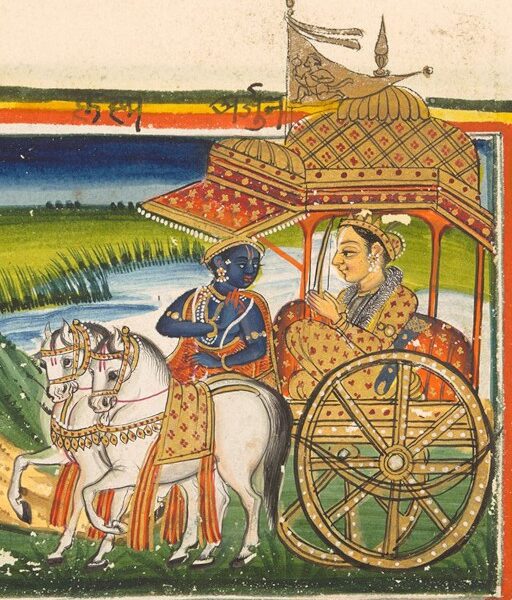
So Arjuna’s nature, by nature, he’s a ksatriya. Yes. So now he’s engaging his ksatriya spirit in Krsna consciousness. Right. So then he will go back to Godhead. So there he will not be acting as a ksatriya. But that’s back to Godhead. We’re talking about here. This is the process of upliftment. We’re not talking about what he’s going to do in the spiritual world.
You’re mixing up consciousness with your mind. See, this is the thing. You’re thinking that what I feel, that’s the consciousness.
Now the consciousness is whether those feelings are towards Krsna or not.
Nature means the mind. Yeah. But you can also say, by nature, you’re also meaning servant of God. So therefore, by nature, you’re going to have to do service to God. And his conditioned nature is that of a ksatriya. So you take the conditioned nature of ksatriya and use that to serve Krsna as the soul. Is that okay? Did I get through? Yeah.
Okay, so he’ll act all the same. Right? Because here he’s saying, by your nature, you’ll have to be engaged in warfare. So he’s talking about the conditions like that. Okay. If one refuses to act under the direction of the Supreme Lord, then he is compelled to act by the modes in which he is situated. Everything is under the spell of a particular combination of the modes of nature and is acting in that way. But anyone who voluntarily engages himself under the direction of the Supreme Lord becomes glorious. So it’s like you either engage the modes or you’ll be controlled by them.
So engaging means you use it for Krsna. Right? If not, you will do the same activity but not for Krsna. Because illusion means you’re doing activities that are what are activities of a human being, but you’re not doing them for Krsna.
Does that make sense? Like that. So all you’re doing is changing that instead of being controlled by the modes, now you engage yourself in the Lord’s service. So the nature is controlled by the modes but you’re not controlled by the modes. Does that make sense? You know what I’m saying? You’re doing something that you’ve become expert at. You’re sitting there typing away. Are you thinking each time this finger, this finger, this finger? No. So who’s doing that? You’re not doing it. So the modes of nature are doing it. You know what I’m saying? Like that. You know, you’re sitting there and you think no one’s around and someone touches you on the shoulder and you go, what? Like this, like that. Who did that? Did you do that? You know, you’re sitting there thinking in all directions and everything when anyone comes from like that and this guy’s walking there and he put his left foot forward and if he did this, I can do that. Is that what you were thinking? No. It’s the modes of nature.
Right? So now it’s a matter of do you use that in Krsna’s service or you’re just going along with whatever the modes come up with?
That’s the idea. Are you controlled by them or are you engaging them? So it’s either you engage them or they’ll engage you. It’s one or the other, right? You either hit him in the head or he’ll hit you in the head. You know, it’s simple. That’s the way it is.
So our subconscious, is that just the modes? Sorry? Is our subconscious, is that the modes? Can be. That’s what you’re thinking about. If you’re thinking about Krsna all the time, then no. That’s just consciousness. But if you’re thinking about all varieties of things, then yes, that’s the modes.
Yes?
The thing that you explained, that they think about, you know, here’s somebody there, what’s their problem? It’s not the modes that are not working properly for them. No, no. But they’re under the mode because their security or the defense is the strong thing. So they’re under that control. But we’re using this as an example is that things are happening that you’re not even thinking about but they work, so who’s doing that? But even there, for that person to do that, you know, is they had to spend so much time practicing and they’re not conscious of it when it happens. Because then you’re talking about, you know, you learn everything, you forget everything.
You know what I’m saying? Learn it all, forget it all. I think that’s the saying. You know what I’m saying? So they’re just experiencing it. They’re on the platform of, what do you call it?
A paroksha. They’re functioning. And then they’ll be called a master in that. But the point is, is that it’s still, if it’s connected to the Lord, then you become uplifted by it. Because the modes are going to take care of it anyway. Now it’s a matter of whether you’re controlled by them so that your values and everything are there, or whether that is just, you’re engaging those elements in the Lord’s service.
You know what I’m saying? So we just use it as an example on the level there where we don’t know what’s going on. You know what I’m saying? In other words, speaking to the sense that I am the doer. Does that make sense? To get the idea across.
Okay, but one who voluntarily engages himself, right? Still, the modes of nature will carry out the work, but you’re volunteering to be involved in it for Krishna. Because we have to remember, the external energy is a devotee of Krishna. So she’s not going to complain that you’re voluntarily using that for Krishna.
I think his spring would go farther. I think he’s got a better spring.
I hear you laughing. Modes of nature? Modes of nature? It wasn’t me. You killed a cow? Yeah, yeah, right.
Yeah, that’s the point. Just an instrument. Hey, who took my rasgulla?
It’s just an instrument.
The modes took it.
Okay, so when you voluntarily do and engage, then one becomes glorious, right? So it’s not a problem. Maya doesn’t have a problem that you connected to the Lord.
Meow.
So that one becomes glorious because it’s connected to the Lord. Right? That’s the whole point. So it’s not the situation, the condition, is it connected to the Lord? Coming in parampara, bona fide, not whimsically connected like before. It’s actually a bona fide, proper, authorized connection.
And of connections, we’re talking about here, because this is the 18th chapter, of connecting it to the person.
Right? Before that, we’ve connected it to the Brahman and Paramaham. That’s also the stages, but it should be the ones getting to the person. Right?
Like that. That’s the record today. If not, then you know that that’s the direction, so you’re moving that way.
Okay.
1861. The Supreme Lord is situated in everyone’s heart, O Arjuna, and is directing the wanderings of all living entities. We’re seated as on a machine made of the material energy. Right? This is the fun point right here. God’s saying, saying, you know, God’s situated in everyone’s heart. So, he’s, as Bhagavan is talking now about Paramatma, you know, but as if, you know, someone else. Like that.
You know, or talking about himself in the third person, which would be the case. Arjuna was not the supreme knower, and his decision to fight or not fight was confined to his limited discretion.
Lord Krishna instructed that the individual is not not all in all. The Supreme Personality of Godhead, or he himself, Krishna, as the localized Supersoul, sits in the heart directing the living entities.
After changing bodies, the living entity forgets his past deeds. But the Supersoul, as the knower of the past, present and future, remains the witness of all his activities.
Therefore, all the activities of living entities are directed by by the Supersoul. Right? So, in any case, whatever you do now, Supersoul is there and he’ll arrange it, you know, and then you’ll be acting according to that. So, since he has to sanction, he knows that he has to sanction it, and that’s how you’ll be engaged, why not do that connected to the Lord? It’s going to go on anyway. You know what I’m saying? It’s just like one astrologer was this is something I’ve heard from one astrologer. I’ve never heard one other astrologer ever mention it. But he says, when it says in your chart you’re going to lose money, he says, don’t think how can I not lose money? You’re going to lose the money. The question is whether you’re going to lose it or whether you’re going to give it away for something and get benefit from there.
You know, so when you see is he going to lose money, then take what you got, do something with it, you know.
In other words, it’s going to happen anyway. So now it’s just a matter of do you get credit for connecting it to Krishna and therefore it’s glorious or, you know, it’s just another thing that the modes of nature did.
Does that make sense? Yes. You can check and see how much you’re going to lose.
It’s very amazing that there is Paramatma in the heart of the living entities. Would you rather it be someone else?
Alfred E. Neumann maybe?
So is Paramatma Krishna conscious?
He is Krishna. I mean, are you conscious of yourself?
Sometimes. But I’m saying you can be conscious of yourself, right? Yes, it’s possible. Right. So where does that come from?
Means if you have that quality, that means Krishna has that quality. So that means Krishna can be conscious of himself. So Krishna knows who he is. I remember one devotee came into Prabhupada’s room and offered, Oh, Prabhupada, you’re the greatest, you’re the this, you’re the pure devotee and all that. Prabhupada just looked at him and just said, I know who I am. Now, what’s the point? You’re going to say all these nice things and then what? It’s kind of, what’s the point? So it brings it down to are you going to take the instructions and do something with it or are you just going to sit around and present to me? So is he always, is he conscious of what Krupala Krishna is doing in the spiritual world? It means of all the activities that God does, what are the nicest activities? Krupala Krishna. Right. So that means all all Vishnu-Tattva expansions of Krishna are all devotees of Krishna. That’s why he’s the supreme personality of God. They’re equal in power, they’re the same person. But that manifestation of those qualities, that’s the supreme manifestation. So all Vishnu deities are devotees of Krishna. But they didn’t get Krishna.
They don’t have to because they’re Krishna.
You know, it’s just like the man’s at the office, he doesn’t think about home.
Yeah, but I’m just saying. It happens when you have marriage. True. Things are going really well.
Right? You know, so therefore what happens at home is so much more interesting than what happens in the office. But he does the work in the office because it has to be done. Right? So God has to create, maintain, and destroy. You know, that’s what he does. But it’s not like that’s for him as a big deal. You know, it’s not like the little kids when they figure out that they dropped something, it breaks. You know, oh hey, get this out. Wow. Wow. Wow. I mean, I’ve watched that. You know, somebody brought some tiles from Calcutta for the roof. You know where Jagat Prakash has his roof? So those are all waterproof tiles. But because there was a deadline when they needed them, they didn’t dry them that long. So they were all there. They’re ready. You could put them down. But they weren’t fully hard. So if you dropped one, they would just shatter into a million pieces. So I watched this. Somebody brought, wow, check this out. These are, you know, they get into a whole trip about it. Instead of just seeing one breaks and says, hey, what’s wrong with these? They break, you know, five, ten of them, you know, to confirm in their mind that there’s something wrong with them. So that’s a lot of ignorance. So Krishna doesn’t need to do that. You know, he knows if he breathes in, it’s over.
Hey. Hey, did you see that? Yeah.
Yeah.
She’s going.
Do it again. Do it again.
He doesn’t have to do that. You know what I’m saying? So it’s not, he doesn’t get enamored by it. We get enamored by it because we’re not the controllers. So if we ever are the controller, we’re so overwhelmed.
You know what I’m saying?
Like with Boba Fett. Yeah, yeah. Yeah. The destroyer.
All these universities at my will, at my freedom. Yeah, like that. All for my country. Yes, like that. So while we’re there raging and thinking we’re so great and all that, someone comes up from behind us and shoots us. So, you know, like that.
It’s really amazing that you can, Christian can do these, all these things at once.
Yes. So for him, that’s normal. That’s why being God for him is no big deal. That’s just, he is God. You know, it’s just like I say, you’re a human being. Wow. No, it’s just normal. You know, you have two arms. You have a head. There are toes on your feet. Oh, really? Wow. You know what I’m saying? It’s not something that bothers you. Does that make sense?
What is it? You understand? So for him being God, that’s not a, that’s why he says a spark of his splendor. That means one spark of all his unlimited potencies is being engaged to maintain the material phenomena. So that means one quarter of the creation is controlled by a spark. And there’s unlimited universes. So it’s even, you know, an unlimited part of a spark that runs this universe. Right? And this universe is so big and all that, so even more unlimited part of an unlimited part of a spark is just running around here. You know, and then there’s your life. Right? And then there’s, you know, this moment in my life. You know, so it doesn’t, it doesn’t take much. Right? So for God, what’s interesting is the love between him and the devotees. So that’s what he thinks about. So naturally, Paramatma will be thinking of that. Being God is just something to do.
Does that make sense?
It’s like the, you’d say it’s like the, the perfectionist, the martial artist is sitting there drinking their tea and somebody’s attacking them and they’re fighting them off and all that. He’s just drinking their tea. You know? That’s it. Does that make sense? If he spills a little of his tea, then he gets angry. Yeah. Quite. Quite. Twenty of them. Yeah, yeah. You know what I’m saying? It’s just, they don’t get, it’s just, it’s not a big deal. It’s so, you know, just, it’s just the way he is. You know, we worry, no, I have to do my duty. No. He knows who he is and he does what he’s supposed to do. But he doesn’t have to do it. He only does what he’s supposed to do because that’s what he wants to do. So that’s the thing Krishna says. I have nothing to do.
You know, so it’s just whatever he likes to do. But what he likes to do is what, you know, what is the basis of, of interaction, basis of relationship. He’s perfect, so therefore anything he does is perfect. You know? So that idea of, you know, doing whatever I like to do, that’ll make me happy, that comes from Krishna. But the point is, he’s perfect, so whatever he does is perfect. And whatever we do may not be exactly perfect. You know what I’m saying? Like, jumping off a 14-story building and forgetting that in America they don’t have a 13-story. So actually you jumped off a 13-story building. So you have one story too much rope.
That’s the difference.
Is that okay? Here? Here.
Yes?
Paramatma is in Vaikuntha?
Yeah. Because that’s the, that’s the Vaikuntha move, that the Vaikuntha, Vishnu in Vaikuntha is a devotee of Krishna. They’re all devotees of Krishna. And Dwaitacharya, he is, you know, he’s devoted to, you know, Lord Caitanya, who is the Supreme, but also to Balarama, to Nityananda. Because Nityananda is the first expansion, right? And then Mahanarayan, and then, then you have, have Mahavishnu.
Right? So, so that, that connection is there.
Does that make sense? It means, well, one is, you know, some other evidence, even in the, in the, like in the Sri Sampradaya, in their major temples, which is, you know, one would, one would have to admit that they’re into Vaikuntha worship, right? When, when, when you get a doubt. So, in the, in the room where the Deities sleep, then there’s pictures of Vrindavan, and, you know, it’s set up like that. Because now he’s away from everybody, you know, so he doesn’t have to put on the whole profile. So now he can think about what he likes to think about. Right?
And if you go there, when, when they go to take Darshan, they, they chant Govinda, Govinda, Govinda, Govinda. Right? I ask, I said, why, why, why do you say Govinda? It’s a Vishnu temple, he’s Vaikuntha. He says, no, but he likes to remember his pastimes, you know, with the cows and all that. So, so to, to help in that, we say Govinda, and then he’ll be pleased. Right? You know what I’m saying? And this is straight from the mouths of Sri Vaishnavas.
Therefore all the activities of living are directed by the Supersoul. It is directed anyway, so why not work with him? Instead of just doing your own thing, since he’s got to organize it anyway, why not work with him? 62. O sky and abharata, surrender unto him utterly. By his grace you will attain transcendental peace and the supreme and eternal abode. Because you can say supreme abode, but it says supreme and eternal. Because in the Upanishads it says, talking about the supreme abode, right? It doesn’t say supreme eternal abode.
Because for Vaishnavas they know the supreme abode is Goloka, so therefore it is eternal. On the Vaikuntha planets, that is eternal. But for the Brahmavadi, the supreme abode is the Brahman. For the Karmakandi, the supreme abode is the heavenly planets.
For the Yogi, it is Brahmaloka.
But here it says supreme and eternal.
Because supreme is, everybody’s got the supreme, but this is supreme and eternal because all the other ones are not eternal. Only Vaikuntha is eternal.
A living entity should therefore surrender unto the Supreme Personality of Godhead, who is situated in everyone’s heart, and that will relieve him from all kinds of miseries of this material existence. By such surrender, not only will one be released from all miseries in this life, but at the end he will reach the Supreme God. So being miserable is more the attachment to the thing, not the experience. It’s not that it’s cold out, it’s a miserable day. But one doesn’t have to be miserable about the miserable day. You know what I’m saying?
Does that make sense? So if one is surrendered to the Lord, then one is absorbed in the Lord. So then there’s no problem.
63. Thus I have explained to you knowledge still more confidential. Deliberate on this fully and then do what you wish to do. So this is here. God’s right there. And he still says, I’ve told you everything. Now you do what you want to do. Because that’s the point. It’s between the Lord and the living entity. But the relationship has to be voluntary. Otherwise what’s the meaning? It’s not pleasing to the Lord if it’s not voluntary.
Does that make sense? The Prophet said in one lecture, he said that whenever Krishna, he gives something, he doesn’t take it back. So you give the living entity’s free will. So it’s not as Krishna. Yeah, yeah. He doesn’t take it back. Now you use it properly or you don’t use it properly, but it’s yours.
In other words, he’s given a gift and so that’s the way it works. Now if you want his mercy, that’s another thing. Then you use it properly. So you won’t take that back, but you won’t get any more.
Arjuna is being directly ordered by the Personality of Godhead to fight. Surrender to the Supreme Personality of Godhead is in the best interest of the living entities. It is not for the interest of the Supreme. Before surrendering, one is free to deliberate on this subject as far as the intelligence goes. That is the best way to accept the instruction of the Supreme Personality of Godhead. In other words, you deliberate it on by intelligence as far as intelligence goes, but at some point then it’s just one has to surrender because it’s personal, it’s a relationship. So it’s not difficult that in the beginning that there is so many aspects of deliberation and all that, so we shouldn’t think that that deliberation is artificial. No, that’s okay.
So for this case of the living entity being in the material platform and the spiritual platform, that’s not to the Lord’s benefit. That’s to the living entity’s benefit because the Lord is already spiritually situated. He is spiritual.
He is the source of spiritual.
So it’s not a matter of that he gets benefited by the living entity getting liberated, but the living entity gets benefited because we’re talking tattva here.
God’s godness is not improved by the living entity being liberated or not. He’s still God anyway.
But when the living entity connects himself to the Lord, then his situation is improved. Now you have the relationship between the Lord and the devotee. That’s another thing, but that’s not what’s being discussed.
Does that make sense? So therefore using the intelligence is the best way to accept the instruction. You use the intelligence, apply it, and then be convinced and surrender.
1864. Because you are my very dear friend, I am speaking to you of my supreme instruction, the most confidential knowledge of all. Hear this from me, for it is for your benefit. So he’s given before all the knowledge and gotten to more confidential that he’s talking about there’s the Lord. You’re doing the work for the Supreme, but then the Supreme is the person. Then the devotion. He is to be found everywhere, and then that devotion.
Then you’re bringing it more and more close. So here he’s talking about how the Supersoul is in your heart. You see here, you work with him, like this kind of thing. So that’s even more confidential. So now, having said all that, now he’s going to say the most confidential.
Because the chapter is confidential knowledge. So now he’s going to give the most confidential.
So 65. Always think of me, become my devotee, worship me, and offer your homage unto me. Thus you will come to me without fail. I promise you this because you are my very dear friend. So again, this fourth, always think of me, become my devotee, worship me, and offer your homage unto me.
So if one does that, then without fail, one will come to Krishna. And he’s promising this.
It’s like a natural progression.
Think of me, then you become his devotee. If you’re his devotee, then you will start worshipping him.
But you can also do these all at once. As a devotee, thinking of Krishna, you’re worshipping and offering.
So stages are there in one way, but at the same time they can all be happening at once. It’s just like you’re learning something, so you learn what’s the simplest thing that you can grasp. Then you learn the next thing, then the next thing, then the next thing. Then when you have learned all of them, you do them all at once, wherever necessary.
So that’s why it’s the 18th chapter. It’s a summary of whatever has been in the whole rest of the book. But now you’ve gone into detailed study. In the second chapter, it’s a summary of everything in the book, but just to familiarize yourself with what’s there. Then third chapter to 17th, that’s detail.
Does that make sense? And now having known that detail, now the summary can be much more in-depth. So the 18th chapter, the summary is much more deep than the second chapter. Not that the subject matter is any different, just the presentation.
The second chapter doesn’t take as much to explain it. You just say there’s the soul and this and that. Then we’ll get into detail, but here is that unless you understand what thinking of him means, or being a devotee, or worshipping, or offering, then it won’t make sense. We’re putting that all together, then you get a better understanding.
The most confidential part of knowledge is that one should become a pure devotee of Krishna and always think of him and act for him. One should not become an official mediator. Life should be so molded that one will always have the chance to think of Krishna.
One should not become an official meditator, because you just think, but you’re not serving, because an official meditator only meditates. He doesn’t do anything.
Life should be so molded that one will always have the chance to think of Krishna. One should always act in such a way that all his daily activities are in connection with Krishna.
He should arrange his life in such a way that throughout the 24 hours, he cannot but think of Krishna.
And the Lord’s promise is that anyone who is in such pure consciousness will certainly return to the Lord of Krishna, where he will be engaged in the association of Krishna face to face. This most confidential part of knowledge is spoken by Arjuna because he is a dear friend, dear friend of Krishna. Everyone who follows the path of Arjuna can become a dear friend of Krishna and obtain the same perfection as Arjuna.
So the point is just becoming a pure devotee and always thinking and acting for Krishna. In other words, the body, the mind, the words are always connected to Krishna. If that’s done on the platform of pure devotion, that’s the most confidential knowledge.
1866.
Abandon all varieties of religion and just surrender unto me. I shall deliver you from all sinful reactions. Do not fear. The Lord has described various kinds of knowledge and processes of religion. Knowledge of the Supreme Brahman, knowledge of the Supersoul, knowledge of the different types of orders and statuses of social life, knowledge of the renounced order of life, knowledge of non-detachment, sense and mind control, meditation, etc. He has described in so many ways different types of religion, because religion means what’s the inherent nature of something. So knowledge of Brahman, the inherent nature of Brahman, what’s the Supreme Brahman, knowledge of the Supersoul, that doesn’t change, knowledge of the soul, knowledge of different kinds of orders and statuses, those don’t change. They have their nature. Renounced order, it has its nature. Knowledge of non-detachment, non-attachment, non-detachment. The knowledge of non-detachment.
Yes, we follow non-detachment yoga.
So those are religions, so there’s a different aspect, but that one is absorbed in that and that’s the focal point, that’s what needs to be given up. It has to be that Kṛṣṇa is the focal point, and all these are just different elements that you use in one’s service.
Now, in summarizing Bhagavad-gītā, Lord Kṛṣṇa says that Arjuna should give up all the processes that have been explained to him. He should simply surrender to Kṛṣṇa. That surrender will save him from all kinds of sinful reactions, for the Lord personally promises to protect him. Because you’re worried now here in protection. If I give up dharma, then dharma is protecting one. So if I give up dharma, then how will I be protected? Kṛṣṇa is saying, He’ll personally protect you. Because the point is, is you’re following dharma to get a perfection.
So you give up following dharma to obtain perfection, and just surrender to Him as a person.
Does that make sense?
He’s in charge of, you could say, seeing that according to if people have followed or not. It’s like people following dharma here, that’s Manu’s business.
He’s the judge, so he knows dharma the best. Because you may know it nicely or not, but you can still practice. But you can’t give judgment unless you know it well.
No, you’re missing the whole point. This is all to be applied in what everything that’s been studied before. So again, it comes down to one’s following varnāśrama because it’s good, it’s nice, it’s all those kinds of things.
But no, one is simply following varnāśrama because it pleases God. That means you’ve surrendered to God, therefore you follow His instruction. He’s given varnāśrama.
The problem is that they apply this without applying the teachings that came before it.
Lesson thirty-seven. In all scriptures, therefore, the only aim is how to attain Śrī Kṛṣṇa, the Supreme Personality of Godhead. So this is the conclusion of this point, that anyone can attain to Godhead by following their occupational duty.
Four-eleven. As all surrender unto Me, I reward them accordingly. Everyone follows My path in all respects, O son of Pītā.
Everyone is searching for Kṛṣṇa in the different aspects of His manifestations.
Kṛṣṇa, the Supreme Personality of Godhead, is partially realized in His impersonal brahmajyoti effulgence, as well as the all-pervading Supersoul dwelling within everything, including the particles of atoms. But Kṛṣṇa is fully realized only by His pure devotees. So everyone is searching for Kṛṣṇa.
A living entity is going to do something because it gives them the satisfaction. So what they’re looking for is Kṛṣṇa, because that thing that they’re dealing with is not going to give the satisfaction. That’s the problem. They try to become satisfied from it, but they don’t. So they keep searching. And according to the modes, then you have a tendency to search in that particular direction.
So one can partially understand Kṛṣṇa through the brahmajyoti and the Paramātmā, but ultimately one has to surrender to know Him as a person. These other processes are how to elevate yourself out of the material world, but the point is that you get into the spiritual world because you have an attraction to Kṛṣṇa.
They’re both going in the same direction, that’s why they’re compatible. That’s why Prabhupāda is saying that one is leaning on the impersonal, but it’s not a problem because it’s going in the same direction.
You catch a ride with somebody going somewhere, and so they’re going there for another purpose, but you’re going there to serve Kṛṣṇa.
You’re going in the same direction, it’s not a problem. So the element of your trying to free yourself from material attachment, it’s not a problem. It’s not opposed to devotional service because to be attached to Kṛṣṇa means you have to not be attached to māyā. So getting rid of your attachments to māyā are in the line of devotional service, but you have to make sure you understand that devotional service still is separate from that. Even though it’s useful, it’s still separate.
The pots and the spoon and the fire are very useful in cooking, but they themselves aren’t the cooking.
So only His pure devotees, they fully realize Kṛṣṇa. Nobody else does. They get part here, part there, but it never actually works out.
Because God’s beyond intelligence, beyond the material feelings and senses and all that, so He can’t be found.
If He’s God, that means He has to be beyond all this because He’s the source of it. So how would using something that’s of the source of this, how would you find out? You know what I’m saying? That would be like taking a part off the car and then from studying that you can understand who made the car.
Is that what you’re saying?
Like that. It’s not going to work. Yeah, now even if you have a little part of the car that says Ferrari on it, by taking that and putting it under an ion microscope and putting different chemicals on it and trying to figure it out like that, or dropping it and seeing how quickly it drops, going up on a building that leans a little bit and then dropping it, it’s not going to, it’s still not going to work out who the person is.
Keeps you busy though. Keeps you very busy. I mean all the living entities that are here, there’s unlimited of them and they’re all very busy. And that’s just what we’re in contact with. There’s more we don’t even know about. I think I came across some article sometime back that they were doing some research and there’s these sea worms. They always look at the ants who are the most living entities on the planet. You know, there’s the volume of living entities and if you put them all together they weigh the most, or the ants. But then they figured out, no, there’s way more sea worms. They’re underneath the dirt. They’re not like floating in the water because they’re underneath the dirt. And because it’s so big, the water area I think is bigger than the land surface. And so there’s, you know, the amount of sea worms is like…
So that changes everything? Yeah, it changes everything. That’s it, yeah. The whole concept and all that. They have probably seen the creepy podium river yet. Yeah, that doesn’t even have the dirt, right? It’s just straight worms on a lake. Pure.
So have they been by with submarines across the whole seabed? Who knows, but that’s just, you know, what they’ve come up with. That would keep them busy. Yeah, that would keep them busy. And then all the people in the submarine, in their next life, they could all be sea worms. There it is. Yeah. We wouldn’t have to listen to them so much. True, true. And one of his partners, Fitzkamp and Shillapropa said, about the Himalayas and all this, or the hills and the mountains, and he said the scientists, they say that they’re so, they hate how many mountains are there. And Shillapropa said, and I’m not sure they can calculate it because it’s too much work. Who can do this? The sea worms, they’re the same. Yeah, yeah. How can they calculate it? They’ll just do a little sum like that and say, well, there’s this many. Yeah, that’s not statistic. Yeah, yeah. I’m not going to. If they fly from India to Kazakhstan, you actually fly over the Himalayas. And it just keeps going and going. You’re flying for hours and hours and hours. It’s just solid snow. And he was flying and he saw the Himalayas. That’s what he said. Yeah, yeah. Because they just make it sound like there’s a couple of mountains and there’s Everest. No. It’s, you know, it’s… I think there are over 200 peaks that are more than 8 kilometers like Everest. Something like that. I read somewhere, I don’t know how that got there, but anyway.
Yeah, so let’s say you have K1, K2, K800. Yeah, yeah, exactly.
Yeah.
As all surrender unto me, I will reward them accordingly. Everyone follows my path in all respects, O son of Pita. In other words, there’s only one path.
Everyone is searching for Krsna in different aspects of his manifestations. Krsna, the Supreme Personality of Godhead, is partially realized in His impersonal brahmajyoti effulgence. And as the all-pervading Supersoul dwelling within everything, including the particle of atoms. Krsna is fully realized only by His pure devoting. So the atom is the smallest fragment, you know, means indivisible fragment of material energy. And Krsna, as Paramatma, is inside that. Because otherwise it has to act. Means these atoms have to come together, right? And form, you know, different… Structures. Structures, yes. So how do they have the potency to do that? Right? Just because Paramatma is there. Chance. Yeah, could. Could be chance. Also, it could by chance not be chance. You know, according to the thing of chance, it could also be… What do they call it? Divine… Intelligent design. Yeah, intelligent design.
It could also be that, by chance.
Krsna rewards all the devotees equally, according to their different intensities of love, for Him. So that means as they surrender… It’s the same. You know, so it’s equal. So someone has more in this way, he reciprocates more in that way. Someone has more in another way, then he reciprocates more there. So it’s whatever is their place, their point of surrender, that’s where he reciprocates. Very nice. As for those who are impersonalists and who want to commit spiritual suicide by annihilating the individual existence of the living entity, Krsna helps also by absorbing them into His effulgence. Right? So they only actually get the feeling of annihilation because otherwise, later, then the same spiritual spark comes out and, you know, it’s that blade of grass on the sidewalk that those in the know step on.
Hey, Mayavadi.
Okay.
For those who are fruitive workers, the Lord awards the desired results of their prescribed duties as the yajnesvara.
In other words, they perform the yajna, the sacrifice, and then they get the results. So Krsna is also giving that. So the devotees, as they surrender, to the impersonalists, you know, they surrender to Him, but, you know, they don’t understand anything more than Brahman. They surrender to Him as Brahman. They get Brahman. The karmis, then they perform their work. He is the yajnesvara, the Lord of yajna. So He gives the results. And those who are yogis seeking mystic powers are awarded such powers. In other words, everyone is dependent for success upon His mercy alone. And all kinds of spiritual processes are but different degrees of success on the same path. They’re not a different path. We think, well, there’s a path of karma, kapha. No, it’s the same path.
Right? There’s just the physical, the intellectual, a lot of these different levels of it. Yeah. Yeah, because one will take you up a certain level, another one, another, like this. So the point is, if you’re engaged in Krsna’s service, then you’re engaging whatever’s there. So these different elements, it doesn’t matter what you’re taking from. You know what I’m saying? You started at the counter, and now you’re at the kitchen.
You go back to the counter. It’s not that, oh, no, he’s regressing. Now it’s going to take an extra 30 seconds to finish cooking because he left the cooking. And then, oh, no, he’s going to the refrigerator. Oh, my God. Three minutes later, it turns back, and when it comes back, it’s where he left it. It’s kind of like, what?
So in this case, an unwatched pot never boils. Yeah. Right?
Does that make sense?
Unless, therefore, one comes to the highest perfection of Krsna consciousness, all attempts remain imperfect because they’re the same path. So anything less than pure Krsna consciousness won’t get you to the end of the path. It’ll get you somewhere in between.
As is stated in Srimad-Bhagavatam, 2.3 .10, whether one is without desire, the condition of the devotees, or is desirous of all fruitive results or is after liberation, one should, with all efforts, try to worship the Supreme Personality of Godhead for complete perfection, culminating in Krsna consciousness. So whatever the stage you are at, still worship the Supreme Lord and move forward on that, understanding that worshiping the Supreme Personality of Godhead is the ultimate position. Yes? Maharaj, whenever we hear this and it’s a relief that, you know, whatever condition you’re in and you can engage and, you know, we’re on the path to Krsna consciousness and the living entity is eternal so that means permanent, you know. Yeah, you’re not going to go away. No.
But what, where does the, because your Bhagavad -gita always says patience and these are the patience and confidence so, like, one is used to, you know, in the age of microwaves and so on like that one is used to things happening, you know, like, so where does the patience… You have to wait two minutes.
You know what I’m saying? I’m sure that they’re working on microwaves that’ll do the same thing in 30 seconds. Nukes.
Do not leave the door open when you nuke your preparation.
You have to wait two minutes. You have to wait five seconds for that page to load. All that’s, that’s, you know, patience.
You could be on Facebook for those five seconds, but you’re not.
I think some people are. You have two screens.
So you have to be patient. Anything you want, you have to be patient. Otherwise it’s like the kid in the back seat. Are we there yet? No, no, no. Are we there yet? It’s only been ten seconds. Are we there yet? Five.
You know what I’m saying?
Om Hare Kṛṣṇa Hare Kṛṣṇa Kṛṣṇa Kṛṣṇa Hare Hare Hare Rāma Hare Rāma Rāma Rāma Hare Hare Śrīla Prabhupāda, samavetā bhakti-vinditī prajñatāi govindam Hare Kṛṣṇa