
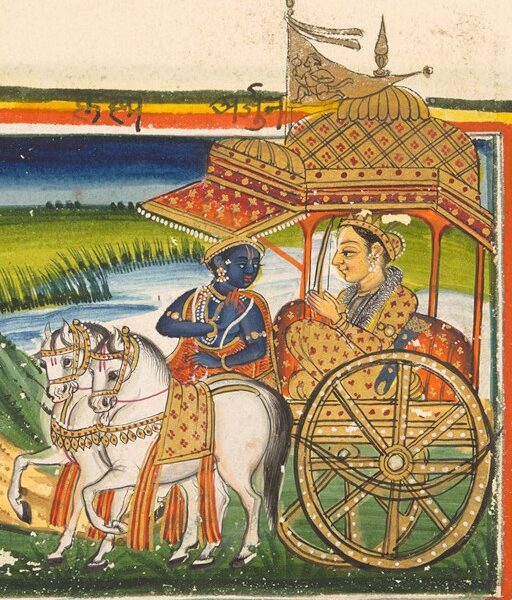
927, whatever you do, whatever you eat, whatever you offer or give away and whatever austerities you perform, do that, O son of Kunti, as an offering to me. Because Krsna is everything. So any duty could be connected to the Lord. But the difficulty is, if one is in full consciousness, then everything is connected. So I think Prabhupada makes a statement that for the pure devotee, even passing urine is service.
Because they see everything connected to the Lord. But until we do that, then, Krsna gives places to focus. So in the Catur-sloka He is saying, you focus on your values, because that’s where you put your interests. You don’t put your interests somewhere else. You do so many things, but all what you’re doing is connected to those major values. Connect the value, you connect everything else.
And results. If there are results for Krsna, then you don’t have to worry that the activity or your understanding of the whole thing is necessarily completely right. You know what I’m saying? You may understand, I’m serving Krsna, but when you’re performing the activity, you’re fully absorbing the activity, not thinking of Krsna at all. But if the result is given to Krsna, because that’s the end of the whole thing, then everything before that is connected. You know what I’m saying? So Krsna gives these key points, that you start with these. And by starting with these, then everything will work very nicely. And naturally, because these are the major places, obvious places, then are easily accessible, even if they’re not obvious. Maybe one’s own values aren’t obvious, but you could sit down with yourself and work them out. You wouldn’t need someone else. You could do that. So self-realization, you can do this on your own. So then here is another group, right? You’re going to do something, right? And what you’re doing is according to your values. You’re going to eat something, right? Also has the element of values. You’re going to offer a giveaway according to your values, right? Whatever austerities you perform for your values. So those things there, doing, eating, giving away and austerities, those four things, if you focus on those, within your values, then it starts to…
Thus, it is the duty of everyone to mould his life in such a way that he will not forget Krishna in any circumstance. So mould doesn’t mean change. Mould means bring it in line with. Because you’re moulding something, it’s already there. It’s just making it right. It’s not that moulding means taking the clay, throwing it away. No, moulding means working with that clay you have. Right? You mould the clay you have, not the clay someone else has. Right? Otherwise, that’s backseat clay moulding. No one likes the backseat clay moulders.
Everyone has to work for maintenance of his body and soul together. And Krishna recommends herein that one do work for him. So whatever you do here is meaning whatever it is that you’re doing to keep the body and soul together. Right? So your occupation or any other activities that would be considered that… Yeah, this is your prescribed duties. Right? Everyone has to eat something to live. Therefore, you should accept the remnants of foodstuffs offered to Krishna. Right? So you have to eat. So whatever you eat, connect that to Krishna. Right? You don’t have to change it. Okay, now I’m spiritual. Now I don’t eat. You know, like that or… Does that make sense? Or I eat only, you know, standing upside down or something, you know. You know, things like that. No. And then, any civilized man has to perform some religious ritualistic ceremonies. Therefore, Krishna recommends, do it for me. And this is called arcana. Right? So whatever you offer, give it away. Right? So you’re going to give something away. So you have results. You won’t give it to the deity, to the Lord. You’re going to offer something. Offer it to the deities. Right? So this way, then, it all becomes nicely connected. Right? So some ritual is going to be there. Some activity that they’re going to do is going to be there. You know, like that. You know, you have to have the picture standing with all the, you know, kids and everything, of the six-foot-long checks, so everyone can actually tell what you gave and what your name is. Right? You know, so it’s a ritual. Right? So they all have to do these rituals. So the point is, do all that in connection to the Lord. You’re standing in front of the deities with a monster check. Like that.
Like that. You know? Monster check must be there. Right? You know, that stuff.
Krishna says, give it to me, and this means that all surplus money accumulated should be utilized in furthering the Krishna consciousness movement. So, in some way, you’re furthering the movement. Right? So whatever is there in daily running of things, that’s there. But whatever is surplus, right? It means your daily running is there, something is there for the emergency. Whatever surplus, what you would call profit. Right? Because maintenance is not profit. Emergency fund is not profit. But whatever it is would be there to use that to somehow or another further Krishna consciousness. Right? Further your own, further the mission. You know? Like that. Further benefit others. But in some way, it’s benefiting.
Right? Nowadays, people are very much inclined to the meditational process, which is not practical in this age. But if anyone practices meditation on Krishna 24 hours a day, by chanting the Hare Krishna mantra around his beads, he is surely the greatest meditator and greatest yogi, as substantiated by the sixth chapter of Gita. So then, in other words, whatever you’re going to do, if it’s connected to meditating on the Lord, especially chanting, that’s the highest austerity. Because technically, austerity means performance of your duties. And of all duties of a brahmana, chanting japa is considered the highest.
That’s the greatest austerity, is to chant japa. Right? You know? Or to study scripture. These are considered the greatest austerities. Right? You know, we’ll think, you know, standing on your toes and this and that. But that’s not actually that austere. It’s difficult, but it’s not so austere. Right? The most austere is to chant and study. Right? This is the real. Because then you’re getting the maximum benefit. Right? One may say, no, no, but the other one is more difficult. That would be more austere. Let us say I take one rupee and invest it in something. Right? Then I get back, you know, two rupees. Right? Like that. Or I invest, you know, a hundred thousand rupees. Right? And I get back, you know, a million rupees. So which of those two will I call an investment?
Right? You know what I’m saying? What gives the most benefit. But as far as work, it was the same thing. I could have invested this much or I could have invested this much. So it’s not that the work is any more. But the return is great. Therefore, it’s better. You know what I’m saying? So it’s not difficult physically or mentally to chant japa or to read. But the benefit is so much greater that we call that. That’s real austerity. And the other things, you know, nice. You know, some physical things. You know, you learn to do some isometrics. You become nice and strong. You know, like that. Yes? But investing money is not austerity. So how come in this case we’re dealing with the return of the investment?
Does that make sense? Because it’s a return that you’re dealing with. And all these things, there’s activities. What you do, the result’s given to Krishna. What you’re going to eat, you give to Krishna. What you’re going to offer and give away, you give to Krishna. So whatever austerity is, the result is for Krishna. You know what I’m saying? So that’s direct. It means you offer it to Krishna, it’s direct devotional service. You do things for the deity, it’s direct. You know what I’m saying? So therefore you’re chanting and reading and cultivation of Krishna. That’s direct. Yes, but often we think of austerity as something that’s not beneficial to ourselves. That’s the way we look at it. Just like renunciation means not dealing with the thing, rather than renunciation means giving up the results of dealing with the thing. It’s the same problem. You know what I’m saying? Because it’s about us and not about someone else. What we’re saying here is one gets the best benefit by these austerities. Just like welfare, you do some benefit, you feed the person. That’s nice, but he’ll get hungry again. But you give him prasad, and then he’s eternally benefited.
You know what I’m saying? So in other words, the highest welfare is in connection with the Lord. The highest austerity is in connection with the Lord. The highest concept of eating is with the Lord. Working is connected to the Lord. So that’s what we’re trying to do is connect all these things. Very, very nice. And by doing that, that takes up most of your day. You’re doing your work, then you eat before you go, you eat in the day, when you have a break from work, you eat in the evening. Then you’re going to think about giving things away, you’ll work that out on the weekends. Whatever austerities you do, you’re going to be in between. So basically, other than sleeping, it’s pretty much caught everything.
Does that make sense? Yes. It appears that for some of us, hearing and chanting is more of austerity than for other devotees. For them it’s natural to chant, and for some it’s like real struggle. Then it matches both the spiritual definition and our concept that austerity should be tough. There should be problems. Then you get both benefits. You have that conviction, yes, I’m doing something very austere because it’s hard to do this.
Plus you get all the benefits. But if you continue it with time, it’ll get less and less difficult. Then one might worry, but if it gets less difficult, I won’t have the satisfaction of feeling that it’s austere. But as we become more purified, so it actually becomes less difficult, then our definition of austerity also changes.
So we shouldn’t worry that it would become easier to chant? Yes, we shouldn’t be in anxiety that it’ll get easier to chant and therefore we’re not austere enough. Okay, is this…
If you do some exercise, then the results are very quick?
Results? Yes, it’s like you do some exercises, results are very quick. It means either that day or the next morning your muscles were hurt. Yes, so it is very quick. Shreyas or prayas?
Prayas is the first, just thinking of it as like pray. Pray is immediate, you get it. Shreyas means after some time. So then the results are very immediate almost, but then if one chants japa and there’s not much pace, then we can understand that later the results are very nice. You’re getting results now, you just don’t perceive it, because you have to also be qualified to be able to take part.
When you say that our focus should be in our values, would it be fair to say that these values are kind of like the form of the way that we interact with the Lord? And then the idea is to actually really understand and pick up the right mood, but also actually focus on Krishna’s values, and then eventually…
Yes, what we’re saying here in values means what you value in the thing, not the thing itself.
You know what I’m saying? Like say here is that, okay, whatever you offer or give away, now they have a value. Yes, I’m a pious man, I’m a religious man, so I give in charity.
But his value is his religiousness. It’s not the charity, the charity is the expression of it. Or his value is that we live a very proper lifestyle, so we mow our lawn and keep everything clipped and the flowers are there, and it’s all happening nice, so when people go by, it looks good. It’s a value, so it’s not that the lawn is important or that… It’s the way, medium of expression of that. So the value is why you do the thing in the first place. So we’re going to say whatever you do, it’ll have a value. You have a value, your economics, therefore you’re doing business or you’re getting a job. It means some people, they value money, but it’s more just getting by. So they get a job and they don’t necessarily worry about moving up in it. Other people know they have to have the facility, so they’re going to work very hard and move up and get more money. So your value is going to affect these. All I was saying there is that this is a list and that other is a list. But the point is that these two lists don’t conflict.
That was the idea. It was coming from two different points. Because the generic, you’re looking at what’s the subtle point.
But what’s being made here is that that value has forms. So those forms then connect those to Kṛṣṇa. So naturally those forms, like you’re saying, is that those forms in the beginning are going to be the forms that you prefer. Because the value is always proper.
But the element is then the form that you’re using is what you prefer. But as time goes, if there’s a form that Kṛṣṇa prefers, then naturally, as you become purified, then that will be the next step. Does that make sense?
Okay, 7.19. After many, many births and deaths, He who is actually in knowledge surrenders unto Me, knowing Me to be the cause of all causes and all that is. Such a great soul is very rare.
The living entity, while executing devotional service or transcendental rituals, after many, many births, may actually become situated in transcendental pure knowledge that the Supreme Personality of Godhead is the ultimate goal of spiritual realization.
In the beginning of spiritual realization, while one is trying to give up one’s attachment to materialism, there is some leaning towards impersonalism. But when one is further advanced, he can understand that there are activities in the spiritual life and that these activities constitute devotional service. Realizing this, he becomes attached to the Supreme Personality of Godhead and surrenders to Him.
At such a time, one can understand that Lord Śrī Kṛṣṇa’s mercy is everything, that He is the cause of all causes, and that this material manifestation is not independent from Him.
So here is, in the beginning, so Prabhupāda’s making the point is that executing devotional service, then when one comes to the situation, that Kṛṣṇa is the ultimate goal. So that’s the overall point. Now, in here is then, in the beginning, when one is trying to give up attachments, one is leaning towards impersonalism. But, I mean from two elements. One is that leaning towards the impersonalism of material life. So it’s materialistic impersonalism. The other is that we may be leaning towards using elements of Brahman and Paramātmā understanding to free ourselves from the material attachments.
So, one is whether we’re conscious or not. If we’re not conscious, then you lean towards impersonalism because, as we explained, you deal with the element. You don’t deal with Kṛṣṇa, who is actually the one controlling the element and who that element is meant for. You have food, so it’s just you and the food, not you, the food and Kṛṣṇa. So therefore, I can offer this food to Kṛṣṇa. So if I’m only dealing with, I’m dealing with Brahman, but I’m not understanding its connection to Kṛṣṇa. So it’s impersonal. Then the devotee takes up Kṛṣṇa consciousness. He understands he has an attachment there. So now he’s dealing on that same platform. Now it’s connecting to Kṛṣṇa, but it’s more the element. No, but Kṛṣṇa is the taste, Kṛṣṇa is this and that. So all the different things we’re attached to. Then we see it in relation to Kṛṣṇa, but as His qualities. So it’s Brahman and Paramātmā.
You understand? That’s the fun part, is that for us, it’s just dealing on the platform of qualities. That’s the impersonal aspect, right? Well, the impersonalists, they can’t handle qualities, so they get rid of the qualities. Then that’s dealing with, you know, and they consider that higher. For us, then dealing on that level, that’s before you become Kṛṣṇa conscious. So the level that they think is so great, we’ll call that before you’re Kṛṣṇa conscious. Everybody’s an impersonalist, right? You know, like that. But now you’re dealing with saguna Brahman, right? Not nirguna. So that saguna, then you’re leaning towards that. But when he’s further advanced, he can understand that there are activities in the spiritual life, and these constitute devotional service. So simply the activities of spiritual life, that’s all it takes. So one focuses on that, rather than, because the attachments are less, so they’re not a distraction. So the focus is on all the nice, positive things in devotional service, because the other things are already connected. But they’re not the major. In other words, never forgetting Kṛṣṇa isn’t as prominent as always remembering. So in the beginning, the prominence is never forget. But as one goes, then it starts to become always remember.
Realizing this, he becomes attached to the Supreme Personality of God, and then surrenders to Him. So then it’s all about Kṛṣṇa, not all about me getting rid of my attachments. You know, getting rid of my distractions.
But one doesn’t jump there, because it has to be real. We’re talking real here. We’re not talking, OK, this is the highest, so therefore I’ll do it. If you can do that, great, but you should know that is the goal. The endeavoring for that, but how much that’s not working, then you use the other side, right? Of taking the attachments and connecting to the Lord. You know, through that mechanical process. You know, last time we were discussing, it seems artificial. It’s only artificial for the illusion consciousness. No, it’s the natural position for the living entity. It’s just called viding, it’s not spontaneous.
At such a time, he can understand that Lord Śrī Kṛṣṇa’s mercy is everything. He is the cause of all causes, and that this material manifestation is not independent from Him. So therefore, whatever you’re dealing, it’s all connected to Him as a person. Right? Through His energies and all that, but it’s the person that’s important. Right? Just as we’ve been practicing, is I have the knowledge, I do the work, but the result’s for Kṛṣṇa. So I have the activities, I know the philosophy, but ultimately it’s Kṛṣṇa as a person.
Right? Does that make sense? So it’s Him as a person, my relationship with Him as a person, that’s important. That’s the actual devotional element. I’m engaging my knowledge and skills, but it’s not the knowledge and skills that are devotional. It’s doing that to please Kṛṣṇa. Does that make sense?
He realizes the material world to be a perverted reflection of spiritual variegatedness, and He realizes that in everything there is a relationship with the Supreme Personality of Godhead. Right? So this whole material… That’s what we were discussing, the whole thing. That’s why it says, it specifically says here, confidential servants of Godhead explain that any man can attain the transcendental loving service of Godhead by his own occupation. Those who are not confidential servants don’t explain it that way. You know, for them it’s, you know, you have to enjoy life, and then when it’s spiritual life, then, you know, austerity, you give everything up, and this, and… So for them it’s at a particular point in time. It’s not now.
You understand? So they’re living in the… they’re dealing with a mode of passion, a mode of ignorance. They’re not dealing with the present. The present is you can surrender now whatever you’re dealing with, because they see this is a reflection of the spiritual world. Right? So therefore whatever I’m doing here is a reflection of there. The problem is, is I think I’m the controller and enjoyer. That’s the problem. But no, it’s still, it’s Krishna, it’s his potencies, it’s everything that makes it work. So he’s the one that so kindly is arranging all this and all the facility and all that. Not that I worked hard, I got all this because of my attachments, but I got to connect my attachments to Krishna. No, it’s by Krishna’s grace that whatever is there, even what would be considered material, that’s all by Krishna’s grace.
Right? Because if we see, Yudhisthira Maharaj, when he’s understood that Krishna’s left the planet, then he makes the statement that he was our well -wisher. Whatever we have, our position in society, our kingdom, our wealth, our wife, our family, like that, whatever happiness may be there, that’s all by Krishna’s grace. You understand? So in other words, you’re dealing with the same phenomena, but now on the Bhagavan platform. Instead of, yes, Krishna is what my attachment is. It’s like that. The essence of that, my value in it, is actually Krishna. And I’m mistaking this form to be what is giving me that happiness. But it’s not. It’s Krishna’s giving me that happiness. So I’m seeing it from the philosophical, but the focus is on the form. But here the focus is not on the form, the focus is on the person. You deal with the form. So that’s why only the confidential service can explain it. Because if one’s not the confidential servant, then you have attachment, the karmic, he’ll work with it. You don’t have attachment, you won’t work with it. So the idea is I work with it, but don’t have attachment, that only the confidential servants will say. No one else is going to say that.
Yes?
Yes, yes, yes, yes. That’s why we, means we’re doing all these things at once. We know what the ultimate goal is and we’re cultivating that aspect, but we’re practical in dealing with where we’re at right at present. Right? The sahaja means he just deals with where he would like to be in the future. Right? Because that’s the highest, so he only deals with that. Right? And the other is that it’s, what do you call it? You know, it’s just, you have your attachments and everything like that, so attachments are bad, so they’re given up. But that’s impersonal. The Lord’s not involved in it. I give this up because it’s bad, it’s wrong. Why is it wrong?
You know what I’m saying? Does that make sense? Whenever we were dealing with things, oh, he’s so attached, so what’s wrong with that? No, well, attachment’s not good. Why not? You become entangled in the material world. We haven’t mentioned Krishna yet. You know what I’m saying? And we’ve already given three levels, that’s more than most will go to.
You know what I’m saying? So the point is, is here it’s that Krishna’s arranging it, Krishna’s arranging that. He may be doing it through Paramatma, through Brahman, but they’re non-different than him, so that means he’s doing it. Yes? So, smart brahmanas, they would tend to think that they’re already at the final destination just by dealing with the form? No, what he’s saying here means, yeah, but on the platform of karma. But what the example is given there is the sahajiyas. Yeah, yeah. The sahajiyas, because they’ll be like, they’ll be… In other words, if you have a razor’s edge and one side’s karma and jnana, so that means one side’s sahajiyas and one side’s impersonalists, in my eyes. Yeah, of course, yeah. You know what I’m saying? It means you have the generic thing of impersonalism, right? But aspects of that are useful. But if you use them properly, then you’re in the middle, right? Just like understanding the Supreme Person, you know, and his name, form, qualities and pastimes, that has value. So what’s used properly is in the middle, right? What’s not used properly, then, is knowing the name, form, qualities, but not connecting it with the actual path of the acaryas. That’s the sahajiya. And also the elements of the impersonal, where we’re dealing with Brahman in this way, break our attachments to the material world. Not used properly in that, but used with the material mix of our own process, that’s called mayavad. Because mayavads are bogus, you know what I’m saying? And sahajiyas are bogus. So activity and detachment aren’t bogus if they’re connected to the Lord. If they’re not connected to the Lord, then you end up with these two.
Yes? If you have attachments, and Krishna is going to take those attachments away, but you feel those attachments may be Krishna conscious attachments, that help you in Krishna consciousness, but they’ve been taken away, how should you see that? It means it’s just like a stage. It’s like you have a process, you’re trying to make something with a potato, right? So you go to the market, right? So then you have money and you have bags and all that. Now, buying the potato and getting back and taking the potatoes out of the bag, now you don’t have the money and the interaction with the bag, right? And then you wash the potatoes, not using water and things like that. But then that’s also removed, right? Then we have the peeler, and then we peel them, and then that’s also gone. And now we have the knife, and then we cut it up, and now the knife and all that’s gone. And now we have the pot of water, and then that’s gone. And then all we’re left with is a plate with potatoes on them that we’re putting in front of Krishna. You understand? So it’s just natural. We’re not saying nothing’s useful, but it has its point. Now, up to us, because we’re attached, it’ll always remain like that. You know what I’m saying? Like that. It’s just like the kids, they’re small, they’re cute, they’re nice, but then they grow up. You know, like that. Not as cute with a mustache, you know, like that.
Like that. So it happens.
So it’s just the way it works.
So it’s just, yeah, it’ll happen.
But chanting Hare Krishna, that’s never taken away. You know what I’m saying? Remembering Krishna. So in other words, the purpose is never removed, but the thing itself might be.
You know what I’m saying? Because you can get that same purpose with other forms. Like that, you know? Just we particularly like those forms.
Thus he thinks of everything in relation to Vasudeva or Sri Krishna. Such a universal vision of Vasudeva precipitates one’s full surrender to the Supreme Lord Sri Krishna as the highest goal. Such surrendered great souls are very rare. So now he sees everything in connection to Krishna, so he just surrenders.
Right? It’s in connection with the Lord. He’s going to the Lord, he’s doing things in connection with the Lord, but he’s still not fully certain. But here now he sees everything is there. Krishna’s providing everything. He just surrenders.
Right? Does that make sense? So he’s not holding on. Right? Draupadi, she’s holding on. She thinks, I will take care of this. Right? And then at some point, then it’s just, you know, what to do. It’s not going to work. Like that.
Does that make sense? Yeah?
Yes.
Yes, yes.
Management is part of archana.
Management is part of archana? Which part?
No, that they don’t know. They don’t say because they don’t know. Because abhigamana is getting yourself up out of bed and getting yourself ready to go to the temple. So you could call that management. You didn’t manage that. Then upadana means you manage the paraphernalia.
Right? Then yoga, you manage to get your consciousness up to the spiritual platform through a ritualistic process to make sure that, you know, the mind doesn’t slip away somewhere. Right? Then ija is you offer the sixteen items to the Lord. Swadhyaya means it’s studied. So it means it’s in connection with the deity. So then that has your aspects. That means your, how do you say, guests. Well, you know, serving guests, serving Vaisnavas. So it has to mean connection with the Lord. Chanting the japa, studying the scripture, worshipping the dhamma, worshipping Tulsi. And I think you do have the element that you do have your particular service to the deity during the day. So if you see it connected to the deity, then it is. Right?
But they have to be able to connect it because that part of it means you’re connecting your conditioning, you know, your occupation to the Lord. You see it that way, then it does that. Means you’re managing the temple. Yes, it is, but just regular management. Management in itself is not devotional service. Right?
Yeah, no, the point is, is that you can connect it to the Lord, then it does become part of the process. But they should have enough knowledge to understand where it fits in. Because along with that also is japa, serving Vaisnavas and all that. So since all those seven comprise Swadhyaya, you can’t manage and offend devotees and then consider, no, but management is higher. No, they’re all seven different aspects of Swadhyaya. You know what I’m saying? You can’t neglect guests. You can’t not worship Tulsi or not understand that this is the dham, that it has some connection to Krishna. So one has to respect what one’s dealing with. Everything’s not just a tool for one’s management. Then it becomes part of the process. But you have to understand that process. It’s not that one of the 16 items takes advantage, and so therefore it kicks out the other one.
You know what I’m saying? It doesn’t work like that. Just because he has a bath doesn’t mean he doesn’t get food, because the bath is more important. If you’re not clean, how can you eat? So therefore the whole thing’s about the bath. You know what I’m saying? There’s a balance there. So we will work within this balance according to our own conditioning. So naturally in the beginning it will be more overbalanced on that impersonal side. But as time goes, we see more and more it’s connected to Krishna. Then it works more nicely. Then we’ll see our management is more effective. Like let’s say you take someone like Jayananda. You don’t think of him as a manager. He was the temple president.
He was the temple president of, at the time, one of the larger temples. And at the same time of the largest festival that anybody would be doing. So he organized that whole thing. But I remember, I think it was 73, because you have all the hundreds and hundreds of devotees coming from all over and it’s still the same temple, so you don’t have any more facility. So there’s one shower for, I don’t know, 150 or 100 brahmacharis to take bath. He was standing there at the shower as each brahmachari went and told him, you know, only take this much time. But it wasn’t the management that, OK, you only got this much time, you know, like that. No, he said it so nicely that you just felt obliged. You know, if you said you got 30 seconds, you’d try to take 20 seconds.
But he did say 30 seconds.
Does that make sense? So that’s the thing. So you just think of him as a nice person.
So that means he’s, that is perfectly balanced within the deity worship. Now it becomes part of the whole Arjuna process. Otherwise, you’d have to look at more of it as occupation. You’d see it more in connection with the Varanasi. You know, does that make sense? Though that is what it says, you do your occupation in connection with the deity. It means that. But there’s a difference in whether it has the flavor of the one or the flavor of the other. Right? Does that make sense? So the flavor is the main thing. But it’s correct. It is part of it. But the point is, is not as they’re defining it. That it stands separately on its own. No, it has to be part, because Kapila Muni says, if you don’t see all living entities connected to the deity, your deity worship isn’t actually that good. You know, it’s there, but it’s not, it’s very neophyte. Right? But the Madhyam platform is you see all living entities, so you’re nice to everybody because they’re all connected to the deity.
Does that make sense?
Could be, but that means you can, you would take that as an underlying. It would be a secondary. The primary is that they think just by discussing about the highest platform, they’re on the highest platform.
That would be the more primary element that makes them sahajiyas. Because most of the time, you know, a rightly situated sahajiya, you know, is basically only involved in activities of sadhana.
You know what I’m saying? All they do is chant and read and do all these discipline kinds of things like that. You know, it means you have so many affected, you have drihastas and everything else, that a real proper sahajiya would be a renunciate.
You know what I’m saying? So they’re, you know, they’re situated in that, but the problem is, is they think because they know about the internal pastimes of the Lord, automatically they’re on that platform. That’s what makes it, that’s why we call it sahaj, easy. You know, it’s just easy, just you said it, therefore you’re there. So that’s easy.
You know what I’m saying? So like that, it’s not taken very seriously.
Does that make sense?
Okay, so such surrendered souls, great souls are very rare. Right? So this is what we’re trying to get to. So if we know that’s what it is, then we’ll continue and go through the process and get there. If we don’t understand that, it’s like where I’m at now is great and fine and nobody should say anything, then you’re looking at that after many, many births and deaths part of the equation. And if you understand that this is the goal and everything, and you really, you know, are willing to work towards that, you know, whatever that takes in the situation you’re at, then you’re looking at such a great soul as very rare.
You understand? So it’s as simply as a matter of how seriously you take it. So every soul has the same potential, so it’s just a matter of whether you use it or not. That’s all.
647. And of all yogis, the one with great faith who always abides in me, thinks of me within himself and renders transcendental loving service to me. He is the most intimately united with me in yoga and is the highest of all. That is my opinion. So now here we have Krishna’s opinion. That means that is final. There’s so many other things. Notice here so nicely how all these verses just go along together.
You know, probably your… This is the meaning of the thematic, is that you think and then wherever it is and then like that.
The culmination of all kinds of yoga practice lies in bhakti-yoga. So we’ve got like that. So we’ve… Prabhupada here mentioned executing devotional service. So all yoga practices then means in devotional service. All other yogas are but means to come to the point of bhakti in bhakti-yoga.
So in bhakti… So he says here all of these are but means to come to that point of bhakti in bhakti-yoga. So that means that they’re used in bhakti -yoga. So that’s what buddhi-yoga is. Karma, jnana and jnana are used, are means to come to the point of bhakti within bhakti-yoga. It’s not that, OK, you do all those and then there’s bhakti. It means there is that… But the point is karma, jnana and jnana can’t give you bhakti. So it can’t mean that I perform karma -yoga and jnana… That’s what then brought me to the point. No. It means that those elements, right, in their natural form, means activities are for Krsna, knowledge is for Krsna, meditation is for Krsna, then those are used within the devotional process. But they’re means. So it’s not the karma that’s bhakti. It’s engaging for Krsna that’s bhakti. So when all you’re absorbed in is how to be always engaged, connected to Krsna, that’s the perfection.
So you don’t call that the karma or jnana or jnana. No. It’s just devotional service. Does that make sense?
Yoga actually means bhakti-yoga. All other yogas are progressions towards the destination of bhakti-yoga. Right? Does that make sense? So we can say those who have done all these other things, because you’ve done it all, then you find that there’s nothing there, then one starts to doubt the process. So at that point one is able to question. And then one may, by the good fortune of the Lord, come in contact with the devotees and then understands this devotional service is the real yoga. There’s that aspect. But from here, these fine points that we’re making, then that’s within the devotional process. So we may be more absorbed in karma -yoga or jnana-yoga, like that in connection with our service, but then we start to see it’s the devotion that’s the main thing, not our engagement, because we’re engaged in the karma. Why is karma-yoga there? We call it karma-yoga because we have karma that we want to deal with. Right? These activities we’re attached to. So then we engage in karma-yoga.
Does that make sense? We have knowledge that we… So we call it jnana-yoga.
But one, it’s just you’re serving Krishna, and now you need to do an activity, now you need to use knowledge, now you need to, you know, absorb yourself. That’s just called devotional service.
Does that make sense? It’s using the technique of this, but that’s the point. From the previous one, everything is a reflection of the spiritual world. So if someone does activities, that’s from the spiritual world. If someone has knowledge, that’s from the spiritual world. If they absorb themselves in meditation, that’s from the spiritual world. Difference is, there it’s all connected to Krishna, here it’s not.
Right? So there isn’t something else, because one’s body, mind, and words. So that’s all you got, right? Here’s your consciousness. So body, mind, and words are engaged. Consciousness is spiritual, the body, mind, and words are spiritual. Consciousness is material, body, mind, and words is material.
So it’s not what the body, mind, and words are doing, it’s whether they’re connected to Krishna or not.
Does that make sense?
So when it’s connected to Krishna, it’s just called bhakti-yoga. When it’s not connected to Krishna, then we’ll call it karma, jnana, and dhyana. When we’ve taken those positions that we’re attached to and conditioned to, connected to the Lord, then we call it karma-yoga, dhyana-yoga, dhyana-yoga. But when it comes to the stage of pure devotional service, we don’t call it karma -yoga anymore. We call it devotional service.
Does that make sense? But also in the generic sense, something that’s in pursuit of pure devotional service is also counted as devotional service. You know what I’m saying? Just like a cook washing pots and preparing the vegetables, it’s called cooking. But if you’re not a cook and you’re washing pots and preparing vegetables, then you don’t call it cooking. You’re a pot washer or you’re a kitchen help.
Does that make sense?
What is it called? You say plunger or something?
Plunger.
Yeah.
I was already, yeah.
Yeah. So bhakti manifests by our desire and Krishna’s mercy? Our desire and Krishna’s mercy. Yes. But I mean, it will manifest because of Krishna’s mercy. That mercy is there, but unless we desire it, how will it be given?
You know what I’m saying? And buddhi-yoga just makes for a nice situation. No, buddhi-yoga means that you are dynamically engaging body, mind and words in the Lord’s service. In other words, you’ve used your intelligence to understand that this is what is proper. But the focus is on, you’re doing it because the intelligence says so. But as you get more purified and more advanced, the one gets a taste of devotional service, then it’s because you want to do it, not because the intelligence says. Does that make sense? So in other words, when the mind has been caught and the one’s naturally doing it, then you would say, then it’s devotional service. So bhakti is attachment to Krishna. Yes, it’s attachment to Krishna. That’s why you see he brings it up in that last purport, bringing it up through the whole process, that he’s engaged in the activity, but he’s leaning, while one is trying to give up one’s attachment to materialism, there’s some leaning towards impersonalism. But when one is further advanced, he can understand there are activities in spiritual life, and these activities constitute devotional service. So we have a parallel definition going here. You could take it on the big picture, the slow path, meaning the impersonalist would be going, and then eventually he’ll come to understand that there’s the personal aspect. So then he’ll take up the devotional process. But that’s very slow. You could be spending thousands or millions of lifetimes to do that. But then you have the parallel, we’re talking about the quick path, which means in this lifetime, how to deal with that. And so in the beginning, we’re dealing with the things because we’re impersonal with them, and so we also don’t try to disconnect the personal from it, because I’m attached, I’m a person, I’m attached, so I try to remove my attachment. So I’m kind of dealing on the impersonal level. But it’s connected to Krishna, the results are for Krishna, and so therefore it works out. Does that make sense? As one becomes more advanced, then one becomes situated, then one gets a taste, and then you just do because it’s connected to the Lord.
So that element is here, is that you always have those different things dealing. You know what I’m saying? So you have what’s there in the spiritual world, you have what’s in the material world, then you have the process to get between the two. Right? You know what I’m saying? Does that make sense? So it can be understood on all those three, and then we see that within those you have definitions. You have karmis, jnanis, you have the human who follows the Varanasi, you have the sub -human who’s not, so the pious and the impious, you have the advanced sadhaka or the new sadhaka, or you have the person following the Vedic path and therefore slowly, slowly gets up to that level.
Comes to that path of surrendering.
But within this surrender, then he’s fully surrendered.
And then you have the element within the spiritual world. Within that, then you have Vaikuntha, you have Dvarka, you have Mathura, you have Vrndavana.
So all these can be understood on all those. But there’s a main principle that’s being given here.
All kinds of yoga practices lie in bhakti -yoga. In other words, it’s only yoga practice. Whether people know it’s yoga practice or not, that’s another thing. Because in yoga practice, it’s what works with it and what doesn’t work with it. You make a lifestyle out of what is not recommended by yoga practice, then that will be not so good. But still, there is only yoga.
You know what I’m saying? Yes.
Dhyana-yoga and Raja-yoga.
Dhyana-yoga, see, here specifically, Dhyana-yoga, we’re taking that, what was it?
Yoga-ruddha, right? Which was the top one? Yoga-ruddha or yoga-ruksha? Huh? Yoga-ruddha. We specifically mean yoga-ruddha.
Drawing another blank. Okay, so in the sthanga-yoga, the first six levels, that’s yoga-ruddha, which means, like, that’s your sadhana and everything. You’re trying to get to that platform. So the prominent element there is karma, right? And so because very few ever get to that platform, yoga-ruddha, then, generally speaking, yoga gets classified within karma. So if you say karma and jnana, it also includes yoga, right? Because most then do it also, even if they get to that stage of these higher stages, yoga-ruddha, then there’s still mystic powers as their platform, or emerging into the Lord. So all these are mundane concepts. So they’re doing it for a result, a fruitive result. But the emphasis is there. Then, on that side, we probably put them in with karma, jnanas, right? But yoga-ruddha means where jnana is samadhi.
But we don’t mean, you know, ten minutes in the morning, you know, or things like that. We’re talking about they’re fixed there. They’re permanently there. You know, the guy that you see there with the curling back nails, and looks fat, his hair is draped across the ground, the creepers are growing over him. We’re talking about that guy, right? He’s not doing that. He’s not on yoga-ruddha, right?
So therefore, if you’re impressed by certain yogis, you know, in more contemporary times that haven’t actually got there, they get flashes of it and all that. So you can imagine how great is a yogi who actually gets there, right? So, and they have to go through so much difficulty for that. So when we talk about karma, we mean the element of activity that will generate a result. We don’t mean that it’s fruitive and you’re doing it for yourself. That part’s the part. So the activity that gets the result, that’s the good part. That doing it for yourself, that’s the part that’s dropped. That’s the material conception, right? Then knowledge, knowledge of the living entity of God, the material phenomena, and how you don’t belong here, that part is great. The part where you merge into Vermont, or this whole place is an illusion, meaning it doesn’t even exist at all, not in this illusion or perspective of it, then that part’s dropped. So when you have proper knowledge with proper activity, then that’s your proper karma yoga. Then you add into it absorption in the Supreme, not all the pretzel stuff, right? Like that. Then that becomes bhuta yoga. Because whatever is done in the first six is already included. You already have yama, niyama, asana, pranayama, how do you say, pratyahara, and parama. Those are already there within the devotional process.
So the common point that we will discuss will be the dhyana and samadhi. So the same levels of smriti, anusmriti, up to samadhi, then those are the same. Does that make sense? So, however, raja yoga is classified.
Because in other words, there’s eight levels of yoga. You count all eight, that’s what we generally mean by yoga. So when we say yoga, we mean the whole astanga yoga system. If they only take part of it, then they’re called by that name. So generally yama, niyama should be accepted by all of them. But if they just do the asanas, then you call them ahatha yoga. You know, like that. And if they do focus on pranayama, I think then it’s a raja yoga. You get these different… So they all got their little names of where they focus.
Does that make sense? Yes, so for us it’s one path, it’s just where they…
All other yogas are progressions towards the destination of bhakti-yoga. In other words, the body, mind and words being engaged, that’s a progression that one is fully absorbed in Krsna in devotion.
Right? Does that make sense?
It is by great fortune that one comes to Krsna consciousness on the path of bhakti -yoga, to become well situated according to the Vedic direction.
The ideal yogi concentrates his attention on Krsna, who is called Samasundara, who is beautifully decorated as a cloud, whose lotus-like face is as effulgent as the sun, whose dress is brilliant with jewels and whose body is flower -garlanded. Illuminating all sides is his gorgeous luster, which is called the brahmajyoti. So for us it’s just a nice luster. It makes everybody very nice.
He incarnates in different forms as Rama, Nrsimha, Varaha and Krsna, the Supreme Personality of Godhead, and He descends like a human being as the son of mother Yasoda, and He is known as Krsna, Govinda and Vasudeva. He is the perfect child, husband, friend and master, and He is full with all opulences and transcendental qualities. If one remains fully conscious of these features of the Lord, he is called the highest yogi. So he remains fully conscious of these, then he is the highest yogi. But if one is trying to be fully conscious of these, then he is situated on the path of the highest yoga. But he is that highest yogi.
Does that make sense? But it doesn’t mean that the path isn’t the highest. So we see here is that all those elements, is that he is seeing everything in connection with that person. So his activities are for that person. His knowledge is being used to please that person. His meditation is on that person.
So that is the highest of all. Because he says he is intimately united with me. The other is he is united with Brahman or Paramatma. So they are yogis, but they are not the highest yogi. The highest yogi is connected with Bhagavan.
Oh, it’s been stapled backwards.
That’s why I keep getting confused. I’ve been trying to figure out why there is a page missing.
Okay. It’s not there. It’s just been stapled backwards, so it comes the other way. Okay, so here Uddhaharana. We’re getting into now examples. From the author of the text here. It’s put in the Vriti.
Srila Prabhupada writes in his purport to 3 .7, For self-realization one can live a controlled life, as prescribed in the sastras, and continue carrying out his business without attachment, and in that state make progress. A sincere person who follows this method is far better situated than the false pretender who adopts show-bottle spiritualism to cheat the innocent public. In other words, better someone who is a grhastha, doing all his duties, and trying to sincerely connect it all to Krsna than the person who gives it all up just to make a show.
A sincere sweeper in the street is far better than the charlatan meditator who meditates only for the sake of making a living.
He’s meditating only to make a living. The other one is making a living so that he can meditate.
That’s the difference. Srila Prabhupada writes in the purport to 18 .48, This example of fire and smoke is very appropriate in this connection. When in winter time one takes a stone from the fire, sometimes smoke disturbs his eyes and other parts of his body, but still one must make use of the fire, despite disturbing conditions.
That’s where we are now. Similarly, one should not give up the natural occupation because there are some disturbing elements. Rather, one should be determined to serve the Supreme Lord by his occupational duty in Krsna consciousness.
That is the perfectional point. This is all in the Adhikarana paper.
That is the perfectional point. When a particular type of occupation is performed for the satisfaction of the Supreme Lord, all the defects in that particular occupation are purified. When the results of work are purified, when connected with devotional service, one becomes perfect in seeing the Self within, and that is Self -realization. Whatever the duties are, that is connected to the Lord. That is your Self-realization you’re trying to get to. It’s supporting this point that the acaryas are making, that anyone can come to the perfectional platform by engaging their natural activities in the Lord’s service.
Yes, it means that one may have material attachments, and one understands and one is convinced about Krsna consciousness. This is a confusing point. You can have both at once, but the point is, as one advances more, then the Krsna conscious viewpoint is more prominent than the attached one. But it’s not that someone is not fully absorbed or committed to their materialism.
We may not have that. We kind of do materialistic activities and we’re attached, but we don’t have that same commitment.
But someone can have that commitment, because they’re committed also to the other activities. Generally, one will see the position where someone is very Krsna conscious, or there’s an example where they’re not so much. Does that make sense? But the point is, the point you’re making comes in, it’s not that these two are there. It’s not that when they’re here, they’re dressed really nicely, and they’re always in devotional outfit and everything, and they take part in all the program. But if they go to Calcutta, they dress up completely as karmis, go stay in a hotel, eat at all the restaurants, stay up all night watching movies, and this and that, and they’re not too worried about too much detail. You know what I’m saying? Like that. So, that happens. The difficulty is that that happens is not the real problem, because as long as they’re focused on the other, the Krsna consciousness, then slowly, slowly, the other one will go down. If it’s not, there’s some problem there. They’re not focusing properly, they’re making an offense like this. The difficulty comes when they’ll present themselves as only being the one, and the other one actually doesn’t exist.
That’s where the problem comes in. Because then when you talk to them about something like that, then they get all, you know, how can you insult me like this, and this and that, and this is not proper, and you can’t make criticized devotees. That’s where that part is coming in. Because there’s where the pretending is. So it’s not so much that they’re pretending to be a good devotee, they’re pretending that they’re not also not a good devotee. You know what I’m saying? That’s more of a weakness. Because it’s very rare you have someone pretend to be a good devotee. It means there’s one here and there, you know, and it’s generally a very broad continental zoning. You’ll find one who obviously takes on that mood and somehow or another tricks the newer devotees. But it’s very rare. You have one here and there. But the element of not admitting one’s position of attachment, but it doesn’t mean that that drops one from the other practices. It just means one has to connect those and see that a connection to the Lord. But it’s kind of like when I’m doing that, I don’t worry about these things. And then when I’m doing the other, I’m fully absorbed in Krishna. So I’m fully absorbed. If it’s acknowledged, then you can start connecting. Because if you don’t acknowledge it, if you don’t acknowledge that you’re sick, then you won’t take medicine.
You know what I’m saying? So they’re sick and doing their work nicely.
But the problem is that unless you acknowledge it, then it won’t go. If it’s something just with time and all that, then slowly, slowly it’ll go. But if you want to hurry up the process, you acknowledge it and take the medicine.
It doesn’t mean the work stops. That’s generally what it’ll do. Because you have this, therefore you shouldn’t be… No.
Does he do that work nicely? Is it valuable? He arranged the whole thing for the festival and all that. Was it good arrangements? So that’s good. So now if his own personal lifestyle is not so great, but that’s not the example. The example is how he engaged in that service. Everyone was happy, it came out very nice. So now what can he do to make this other thing match? Not that, oh, because it’s like that, he shouldn’t arrange the festival.
Does that make sense?
Let him arrange more festivals so he doesn’t have time. Yeah, he has to arrange more festivals. He has no time. That was such a great Janmashtami festival. We figured every weekend we’d have a festival. And then he says, but then what about Janmashtami? That’ll be even bigger. Get a stadium. Yeah, get a stadium like that. For this year. Next year we’ll hire the city.
Okay, does that make sense? So the principle applies.
Like that. But here this one is taking the principle of applying it into the occupation. That you’ve given up your natural occupation that you haven’t had attachment for. And you are applying that into your occupation as I’m a great devotee. So you’re maintaining yourself by being a great devotee. Rather than you’re a devotee and maintaining yourself. And then when you naturally come to that position where you’re not performing an occupation other than the devotional activities, the direct devotional activities, then you’re being maintained, but that’s not your interest.
Like that. So that point remains. But taking the point of show bottle, because we tend to say that show bottle is that he’s such a nice devotee on one side, but on this other side he’s not. So the tendency is to say show bottle. And it’s only called show bottle not because the service isn’t great. It’s show bottle because you want to acknowledge the other side. If he acknowledges the other side, then it can work. You know what I’m saying?
But acknowledge doesn’t mean that the service doesn’t continue. It just means that now you add that understanding and process that will engage that part.
To see things as they are, yes. But that doesn’t mean we’re pessimistic. Oh, because it’s like that, then it’s all finished. No, that’s still materialistic. Oh, he’s got these bad qualities, so he’s not a devotee. That’s all materialistic. As we saw before, if the main focus is that Kṛṣṇa consciousness is the real thing, but he’s overwhelmed by all these secondary things, but he’s still as sādhu because he’s rightly situated.
So the person’s a sādhu. But the point is, if he wants to advance more dynamically, he has to acknowledge what he’s doing is not so great.
You know what I’m saying? And it’s not that it can’t be done. It’s just the forum has to be the discussion of their personal development. And so these things are weaknesses. They’ll get in the way of their nice devotional activities. Then you’ll see they don’t have any problem discussing it. Because they know better than anybody. But if it’s a matter of prestige or their position, the social stuff, then it’ll be a problem. So again, here it comes back to the social position. So again, you can take that and connect it with here being social position. So in other words, they’re getting some social element from their devotional service. And wanting you to not notice what social elements are not.
Now we’re on 36.
Less than 36. Less than 36. So this would be upanaya.
Further explanation.
The result of work is to satisfy material needs. The result of knowledge is to attain salvation.
And the result of mysticism is to see the all-pervading Godhead in his localized aspect. All these can be attained indirectly by transcendental loving service, right? That’s what we call these other elements indirect. Because the direct activities of devotion, that we would define as the devotional service. The others you can see indirectly because you’ve connected them to the direct. Does that make sense?
So, 1856. Though engaged in all kinds of activities, my pure devotee, under my protection, reaches the eternal and imperishable abode by my grace.
To be free from material contamination, a pure devotee acts under the direction of the Supreme Lord or his representative, the spiritual master. You can’t get rid of material activities, meaning activities within the material environment. But it doesn’t mean that one has to be illusioned and be in material consciousness. But you can’t get rid of activity.
There is no time limitation for a pure devotee. He is always, 24 hours a day, 100 % engaged in activities under the direction of the Supreme Lord. To a devotee who is thus engaged in Kṛṣṇa consciousness, the Lord is very, very kind.
In spite of all difficulties, he’s eventually placed in the transcendental abode, or kṛṣṇa-loka. He says, there’s going to be difficulties. The material world means difficulties. It’s not that I’m a devotee so there’ll be no difficulties. No, the material world stays the material world. You know what I’m saying? You don’t know the dog, right? So it still has fleas and it slobbers and it barks. Now you know the dog, so it still has fleas, slobbers and barks. The difference is that it doesn’t bite your leg off. That’s the difference, but it’s still going to remain the same.
So the material energy is still going to give problems. But the point is, whether it’s a nice situation or not a nice situation, we’re Kṛṣṇa conscious.
Does that make sense? Yes.
Why do you sleep? You just like sleeping?
You understand? Because if you don’t sleep, then your brain doesn’t work. You know, when you come to the liberated platform, you don’t need to sleep. But until then, then intelligence functions because of sleep.
No sleep, no intelligence.
So therefore it’s required. But that you’re doing that is because it’s Kṛṣṇa conscious. So therefore you plan your sleeping properly. So the sleep doesn’t get, you know… In other words, if it comes between chanting, reading, those kind of things and sleep, then the chanting and reading, those direct activities take prominence. But if it comes between taking rest on time or some hobby, then the sleep is prominent.
Does that make sense?
Can you sleep your way back to Godhead? As long as all you do is dream about Kṛṣṇa, yes.
Like that. But normally, see, if you don’t eat, you don’t sleep very good. So you’d want to combine that with eating your way back to Godhead. So then the appropriate question would be, can you eat and sleep your way back to Godhead? Now we only need mating and defending. I don’t know if you could do that. But you could eat your way back to Godhead. Just always take Kṛṣṇa vishād. So always be meditating on Kṛṣṇa vishād. But you have to understand it’s Kṛṣṇa, not just what it is itself.
But what’s nice about it is Kṛṣṇa, and everything like that is Kṛṣṇa, and everything about it is Kṛṣṇa. Then, yeah, you probably could.
And then so you have the proper intelligence to work out the menus and all that, then you’d have to take some rest.
So in other words, probably a five-star Michelin chef could do that. Everybody else might not. So, you know, like Korma could do that. Jamuna. You know, these persons, they could use that process.
Everybody else only thinks about, you know, doesn’t do that.
In spite of all… To a devotee who is thus engaged in Kṛṣṇa consciousness, the Lord is very, very kind. In spite of all difficulties, he is eventually placed in the transcendental abode, or Kṛṣṇa-loka. He is guaranteed entrance there. There is no doubt about it. In that supreme abode, there is no change. Everything is eternal, imperishable, and full of knowledge.
Okay, so he is very, very kind because one comes to that platform. Because otherwise, in the beginning, the difficulties are coming because you need to go through them because we have attachments that these difficulties remove. Right? And as we advance more, then these are still the same activities that everybody else has attachment for and therefore must be removed. You don’t have to have them removed. They are already removed. But now you can set example. Because someone who is attached to it won’t set as good an example as someone who is not. So in any case, there is always going to be difficulties. It’s just the way the material world is. You know what I’m saying? It’s the way it’s designed.
Right? Does that make sense?
No.
Kṛṣṇa-loka.
Kṛṣṇa-loka is important. We should be familiar with the environment of Kṛṣṇa-loka. Shall we familiarize ourselves with the environment of Kṛṣṇa-loka? Having the cow, serving the cow, and the natural environment. So that when you get there, then you won’t look like such an idiot.
From that angle, no. But you should familiarize yourself with Kṛṣṇa-loka by reading Kṛṣṇa book.
That’s how you familiarize yourself. You know what I’m saying? And the other books that establish what’s the mood that is there in Kṛṣṇa-loka. That way you… But it’s not that you have to become expert at cows here, therefore you become expert there. No. That is, whatever your conditioning is, that you engage. So if you have a nature to take care of cows, then you should do that. If you have facility. If you don’t, then you do business.
Eight-fifty-seven. Eighteen-fifty-seven. In all activities, just depend upon Me and work always under My protection. In such devotional service, be fully conscious of Me. The Sanskrit word mat-para is very important in this verse. It indicates that one has no goal in life save and except acting in Kṛṣṇa consciousness, just to satisfy Kṛṣṇa.
And while working in that way, one should think of Kṛṣṇa only. Quote, I’ve been appointed to discharge this particular duty by Kṛṣṇa. End quote. In other words, you have that nature, and so that opportunity has come to engage that nature. So then, that means, because Kṛṣṇa’s given the duties, given the natures, given the duties of that natures, and now an opportunity to use in Kṛṣṇa’s service. So Kṛṣṇa’s given the duties. So now I’m doing this for Kṛṣṇa.
So here is that one understands the goal of Kṛṣṇa consciousness and one is absorbed in Kṛṣṇa. So one is the sambandha, and the other is the actual application.
Does that make sense? Because you know Kṛṣṇa is the goal, but then, you then absorb yourself in Kṛṣṇa. So in other words, sambandha, abhidheya, prayojana are one aspect, but it has three different parts.
So it’s not that if you’re doing the one, you know Kṛṣṇa is the goal, but you’re not thinking of Kṛṣṇa. That is complete. No, it’s the first step is there, but it becomes complete when you absorb yourself in Kṛṣṇa. Yes. As far as the beginning devotee, they need practical service, because they can engage the body like that. So then, it’s because they’re so weak… So when they’re more advanced, then they get into impractical service.
There are two like ignorant and one is… Two meaning is one, two, or there are two ignorant. Two meaning, the twos are in O’s, or the twos are in one and two.
So that means before was one, and this is, and they are two, ignorant. So they have a greater quantity of ignorance. Who? The beginning devotees. Does the beginning devotee have a greater volume of, or quantity of ignorance? Like thick layer. Let’s say, so it means you’re comparing that as in they don’t have solace, they have ignorance. Right? You’re worrying about the quantum of volume. Oh, yeah. I see. Yes? So in the beginning, it’s a quantum of ignorance, and as they advance, then it’s a quantum of solace. Is that what you mean?
You didn’t answer the question.
I obeyed it. I obeyed it. I tried to obey, I see.
So I don’t forget my questions. Oh, okay. Yeah, I guess that’s a point. That’s a good point. Good point. So then they can’t use the higher level to be absorbed in thought of Krishna? Yeah. The process doesn’t change.
All it is is as one gets purified, and one is more and more appreciative of Krishna as a person. It’s not that the beginning devotee doesn’t accept that Krishna is a person. Right? But it’s not that in all things they’re thinking of Krishna as a person, because as a person means then what his opinion is, what his feelings are, and how he’s interacting, he’s giving all the facility.
Generally speaking, it’s just if we’re talking of sadhaka, it means that they’ve just applied the process continuously, or at least in some way there’s a continuity of that service, and so one becomes purified. So one’s knowledge and detachment are greater from the material, and by association with the devotees one catches that mood.
I hear Prabhupada’s again and again saying these things. Right?
So we read and then within the context of that one chapter, then Prabhupada is giving the points, and then it progresses through, till then in the 18th chapter then you’re getting this, but we see also is then you could take all these other elements and then take what’s the main point and then connect them there also.
Does that make sense? So it just naturally comes with time.
They understand that one has no goal in life, save and accept.
That one has no goal in life, save and accept.
Save and accept, it’s a phrase. Save and accept means only or exclusively, like that. I don’t know how, at which point in the Middle or Old English, the save got used in that way, but it just means that when you say save and accept, means there’s nothing else. Or you could say save meaning you keep only that one.
So how it got in, because there’s all kinds of, especially British English, they’re really good at putting things together you have no idea. You know, like how it, you know, like that. Because it’s standard words, but used in this more sophisticated context. While the American, you take, you know, a not necessarily standard word and use it in kind of a weird way. So this really is a difference.
Well, acting in such a way, one naturally has to think of Krishna. This is perfect Krishna consciousness, right? If I’m doing this to please Krishna, because Krishna has given this duty, therefore, then it’s natural to act thinking of Krishna.
This is perfect Krishna consciousness. One should, however, know that after doing something whimsically, he should not offer the result to the Supreme Lord.
You just make it up and offer it to the Supreme Lord. So it’s the result of the activity campaign. But we can see through the Brahman, you can understand that. So in other words, you say, well, but you can connect everything. Yes, the connection is this, that was whimsical, but what I’m looking for in that is Krishna. But I think it’s this thing that I’m involved in, that that’s what’s giving me. It’s not that I can offer something that I’ve done that has no meaning to Krishna.
Does that make sense? Something that’s proper, I can offer that. The other one, you can see Krishna in it, but you can’t offer it.
Does that make sense?
You fight with your junior because you do not feel qualified. You fight with your junior because you’re not quite qualified to fight yet with equals and superiors. It’s just a matter of practice.
Krishna has given you some duty. You need to fight with Krishna because you don’t accept that duty.
There it’s a matter of, it means ultimately just that we’re here, we’ve turned our face away from Krishna. But that we’re fighting with him personally, that’s another thing, unless you are making it clear like that. Does that make sense?
Yeah, so unless you’re standing there and saying, OK, God, bring it on, like that, then there’s a good chance that you’re just, due to conditioning, not necessarily acting in the best possible way. Does that make sense? You know, sometimes I look up and something happens in someone’s life, but then they blame Krishna. Why did this happen? Yeah, so that’s there. But at least there’s some direction of, at least you see that one’s dependent upon Krishna, that Krishna can do those things. Not that Krishna can’t do that. So that’s better than the asuras who think that Krishna can’t do anything. But it’s still, the point is, he’s only responding to what you’ve done. You’ve done this, so therefore that’s done.
He’s guaranteed entrance there. There is no doubt about it. In that supreme abode, there is no change. Everything is eternal, imperishable and full of knowledge. So it’s guaranteed, you follow the process like that, keeping Krishna as the goal. And then, oh no, we’re on the next one. Because it’s the same line of points.
One should act according to the order of Krishna. This is a very important point.
So in other words, how Krishna directs, that’s how you should act, not whimsically. Because whimsical, then how is that offerable? Because Krishna, you’re supposed to offer it to him, but Krishna says how you’re supposed to do things to offer to him. Because it’s either you’re going to do it out of love, you know the person, or he tells you, it’s like you want something for your birthday, so the people who have affection, they figure it out and they give you what you want. Or whatever they work out, it is in line with your nature, you’ll like it, even if you haven’t thought about that. But if someone else, they don’t know you, then it’s better you tell them what you want. Does that make sense? Otherwise you end up with a whole closet full of stuff that you don’t know what to do with.
Does that make sense?
That sort of duty means whimsically offering something… One should not whimsically…
One should, however, know that after doing something whimsically, he should not offer the result to the Supreme Lord. That sort of duty is not in the devotional service of Krishna consciousness. It’s not in the duty. It means what you’re supposed to do is what is offered, not what you just whimsically… It’s not your duty and you just came up with it.
What if you do your duty whimsically? It means the offering won’t be as good as if you do your duty consistently.
But it is your duty. But here it means it’s whimsical, means it’s not your duty. So that’s why Krishna before says, better to do your own duty, though not nice, because at least there’s something to offer. Then do it very nicely, but it’s whimsical, so therefore it’s not offerable.
Can you define your duties?
Are you asking if an individual would be able to define their own duties or are you asking me to define your duties?
Okay, we’ll stick with the first one, since the option is there. In other words, one sees what is one’s situation and then what are the duties prescribed, like that. And then one knows that’s what one does, because it’s there. Depending on what varna one’s in, what ashram it’s in, then it’s defined.
And just one sticks to that, and then Prabhupada explains things in the Purports.
Does that work? What if Krishna gives you too many duties? He gives you too many duties.
But generally speaking, duties go along with what is your interest or desire.
In other words, one can’t complain that one has houses all over the city and you have to maintain them all and all that. Krishna’s given me too many duties, but we wanted them, so we had them, we bought them. And so if we’re taking it that we’re a landlord, then that’s the duty that goes along with, so maintaining all that is the duty, so it’s not too much. You want it to be that level of landlord, so then you do that. If you want less profit, then you keep less. You want that much profit, then you have to do that work.
If you’re willing to live with less profit, but if you want the same amount, then you have to do it. It goes like that with anything. You want to eat a feast, you have to work. You say, oh, Krishna’s given me too many duties, I have to cook ten preparations. You want to eat ten preparations.
So you have to discern what it is you want to do, and then when the natural difficulties that come up in doing anything then arise because there’s so many things you want to do, it all happens at once. Instead of, okay, I can work it out, I’ve got ten things to do, but the problems should happen one at a time. But when they start happening in multiple, there’s always going to be a day that all ten go wrong. You can’t complain, oh, Krishna’s given me too many duties. Does that make sense? Is that okay? Yes? I want to ask you about consistency in your teachings. So you’re basically saying that if you’re striving for consistency, and the consistency is not ever, it usually basically means that it’s not your duty. No, no. It means, because it may be this is your duty, but you’re not, like the man starts up a business and it fails, right? And then he starts another business, it fails. Like that. So after four or five, then it works. So if it’s his nature, it means he has a value in economics, so therefore then that’s the place to apply it. What we’re talking about is, one day he goes to the office, and does all the work, and contacts everybody, and one day he doesn’t, and then he comes the next day, and then everything’s a mess. So then he works with it, and then the next day it doesn’t go, and so then it’s a mess, and then he doesn’t go the next day because he doesn’t want to have to deal with the mess, but by the third day, it’s going to be too big of a mess, so he’s more afraid of the bigger mess than the smaller mess, so he goes, that’s inconsistent.
So the right way of going about it is actually to seek, I guess, the laws of that tree, in order for you to perform, to treat the law. Yeah, seek the laws, but understand that the laws have come from God. Because when we talk about just following these laws, and that’s how you get the best result, that’s only for the purpose of understanding that God’s involved, rather than just how to become materially successful.
Kali Yuga, it’s very difficult to know which varna we belong. Okay. But now, is it easy, is it not so difficult to figure out the varna? I mean, the ashram. Right? So, technically, it should be about as easy to work out the varna. But, it appears much of the time what gets mixed first is the varna. Because you also have ashram, shankara, but varna -shankara is where the major problem comes. But it’s just a matter, is it in knowledge, is it in influence, is it in economics or in expression, is where your primary value is in endeavor.
Right? What do you consider profit? More knowledge or more money? Or more influence or more expression?
Where’s your profit? So, wherever your profit is, that’s your area.
Does that make sense? And then, if it’s a matter of, well, there’s two of them, then you just have to figure out, then look at it from, okay, I take business, but I want influence. But do I want influence because I get more money? Or influence is more important? If it is, then I give influence and see that I arrange money. You know what I’m saying? So, in other words, you combine it, but you have to just figure out which is primary and which is secondary. You know what I’m saying? So, it might be, you know, you do business in, let’s say, construction, and you specialize in building government offices.
Right? So, there’s a connection with the governmental things, but you’re doing it with a business.
You know what I’m saying? You know, so it’s a matter of finding, finding what is, what’s the connection. Or let’s say, or a more direct one, you run a business, but you run a security business.
You know? But you’re doing security for business. But someone else, security is important for them, and since that’s there, people need it, they can make some money off of it. But the importance is security. Right? Does that make sense? So, since security is the point of security, therefore pick the guy that is a Kshatriya doing business rather than the Vaishya who’s doing, using security as his medium of economics.
Does that make sense?
Prescribed duty within ISKCON society.
Means you have, means your sadhana is established. Right? But then varna, that depends how you situate yourself.
About a surgeon.
Depends where it is because, see your surgery, it’s based on the science of medicine. Right, sir? The running machine, that’s based on mechanics.
You know what I’m saying? So, it’s the point of, it’s the expression of the knowledge. Or the other is you need knowledge to express.
You understand? It’s the same thing, it just reverses. You know? Like we’re saying, the Vaishya takes tax, to, you know, and that’s his profit. While the Kshatriya takes tax to protect the people. Right? So the Vaishya, the landlord may protect his, you know, who is in his area, but only because he gets tax. While the Kshatriya will protect, but he needs tax to do that. So you just have to see which is the prominent of the mentality.
You know what I’m saying? It’s the person makes musical instruments. You know, his art is making musical instruments, and he sells those, and that way maintains himself. Or, he wants to do business, and he sees an opportunity in musical instruments, and so he makes a business making musical instruments.
You understand? There’s a difference.
One should act according to the order of Krishna. This is a very important point. That order of Krishna comes through disciplic succession from the bona fide spiritual master. Therefore, the spiritual master’s order should be taken as the prime duty of life. Because you always have to know what’s the main and what’s secondary. So the prime duty is the order. The secondary will be addressing one’s condition needs. If one gets a bona fide spiritual master, and acts according to his direction, then one’s perfection of life in Krishna consciousness is guaranteed. So this is where Prabhupada said, it’s automatic. You do this, it’s automatic.
Right? So it doesn’t mean, automatic means it comes without endeavor. Many times, people like to try to find fault in this presentation of Prabhupada, when he says that it’s automatic.
Because they’re saying, automatic means it works on its own. You don’t have to do anything. But what they’re not catching is, yeah, means, you go out, you make money, you go, you know, you look through all the different brochures, and you pick out the washing machine that you, does what you want it to do. You have it installed in your house. Right? You go out and buy the soap. You put the soap and this clothes in the machine. It’s connected to the water mains that you also are paying for. Then when you push the button, the washing of the clothes is automatic.
You understand? You don’t have to worry that, I’ve started this problem, it won’t get the results. So the point is, you follow the direction of the spiritual master, it’s automatic, you will perfect your life in Krishna consciousness. It’s not that I’ll do nothing and perfect my life. Because someone said, no, no, you have to work to get it to do. No, you’re following the order. That’s the work.
If you become conscious of me, you will pass over all the obstacles of conditioned life by my grace. If, however, you do not work in such a consciousness, but act through false ego, not hearing me, you will be lost. Right? So here, if you do what he says in consciousness of Krishna, then everything, all obstacles will be passed over. It doesn’t mean there’s not an obstacle, but you’ll get over it.
So, then, by Krishna’s grace. But, if you’re not listening to this, you act out of false ego, no, I have a better idea, then you’ll be lost. It’s not that you’re trying to act in that way, but the ego comes up, and you’ll become distracted. You won’t be lost. You’ll be slowed down, but you won’t be lost. But if you think, Krishna said this, and no, I have another way to do this, then you’ll be lost.
So, in other words, through false ego, not hearing me. Now you’re acting, and then your false ego is there. That’ll definitely slow things down.
A person in full Krishna consciousness is not unduly anxious about executing the duties of his existence. Unduly anxious. He does what he can, and whatever comes, and that’s as good as it gets. The foolish cannot understand this great freedom from all anxiety. Because they think, no, you have to be anxious about it. No, you desire, you make the endeavor, but there’s no need to be anxiety. Because you can’t, means the anxiety is you think you can do something about it, and I’m not able to do it. I’m not in control. No, I’m not in control. So, Krishna will take care of it. I’m doing my part, doing my duties, and the result is Krishna’s anyway. Whether I give the result to Krishna or not, the result still depends upon God. Right? It’s just the way it works. Paramatma sanctions, you get it. He doesn’t sanction, you don’t get it.
For one who acts in Krishna consciousness, Lord Krishna becomes the most intimate friend. He always looks after his friend’s comfort, and he gives himself to his friend, who is so devotedly engaged, working 24 hours a day to please the Lord. Therefore, no one should be carried away by the false ego or the bodily concept of life. So it’s not because due to my body, my mind, my intelligence, I’ll get things done. No. That, I’ll do my duties, using those to the best of my ability, according to the direction of Krishna, to please Krishna. But it’s not that because of that, that’s how I’m going to become Krishna conscious.
Right? Does that make sense? Yeah? Okay. That’s a good point. Om Hare Krishna, Hare Krishna, Krishna Krishna, Hare Hare, Hare Rama, Hare Rama, Rama Rama, Hare Hare, Jaya Shilpa Muktadiki, Sama Veda Bhakti Vrindiki, Jaya Nidai Govardhan.