
Conclusion. To this doubt, Srila Prabhupada replies as follows.
Adhikarana, 6. This is possible because Godhead is both immanent and transcendental, impersonal and impersonal.
So the thesis, Godhead is both personal and impersonal. Reason. Ordinary men without any knowledge of the Supreme Godhead, Sri Krsna, worship many others who are but materially empowered beings in order to achieve quick success in their aspirations.
The presence of Godhead is perceived impersonally in the material world, but He is manifested in person in the spiritual world. Uddharana. Uddhaharana. Example. In the material world, He is present impersonally as described in Bhagavad-gita. In the spiritual world, He is personally present first as Paramatma, then as Bhagavan in the transcendental world. In the spiritual world, the Absolute Personality of Godhead extends Himself as many personalities.
Hrti. In Bhagavad-gita 10.20.22, the Lord Himself gives an example how He is present impersonally everywhere in the material world. I am the beginning, the middle and the end of all beings. Of the Adityas, I am Visnu. Of lights, I am the radiant sun. Of the Maruts, I am Marici. And among the stars, I am the moon. Of the Vedas, I am the Sama Veda. Of the demigods, I am Indra, the king of heaven. Of the senses, I am the mind. And in living beings, I am the living force, consciousness.
In his purport to 8.22, Srila Prabhupada gives example to explain how the Lord extends Himself as many personalities in the spiritual world.
In that abode, there is only one Supreme Personality of Godhead, whose name is Krsna. He is the supreme, merciful Deity. And although situated there as one, He has expanded Himself into millions and millions of plenary expansions. The Vedas compare the Lord to a tree standing still, yet bearing many varieties of fruits, flowers and changing leaves. The plenary expansions of the Lord who preside over the Vaikuntha planets are four-armed, and they are known by a variety of names. Purusottama, Trivikrama, Kesava, Madhava, Aniruddha, Prisike, Sankarsana, Pradyumna, Sridhara, Vasudeva, Damodara, Janardana, Narayana, Vamana and Padmanabha, etc. So, this point is that impersonal doesn’t mean that there’s not a person. Right? The impersonal, that is how the Mayavadis, how they’ll project it. The impersonal means there is no person anywhere. For us, it’s that impersonal simply means that you’re not dealing with the person. Right? But you’re dealing with what is connected to the person. Does that make sense? Like, would you say, let’s say you’re in somebody’s, you have a good friend, and they’re away for some time, so you’re staying in their house to take care of the house. Okay? So now, how will you take care of the house? The way you like it, or the way you would expect them to like it? The latter. Yeah, the latter. Right? So, why? Because it’s their house. So you can see them present in the house. But at the same time, are they personally present? No. That’s what’s meant by impersonal. It means the direct manifestation is not there. But it doesn’t mean that the person’s energies and potencies aren’t there. Does that make sense? Well, the Mayavadis, they’ll try to say impersonal means there’s no qualities.
Right? But, the problem is, is their definition immediately falls apart, because if you ask them to define Brahman, you know, it’s the unlimited, the supreme consciousness, but supreme, all these things are defining Brahman. So that means there’s qualities.
Unlimited is a quality. Supreme is a quality. Changeless is a quality.
Does that make sense? You know, full of bliss, all these are qualities. So, why would there be a quality in nothingness?
So that’s because there’s a person who the qualities are coming from. Right? But, you don’t see the person.
You know what I’m saying? Just like, let’s say, you’re sitting there and you’re in the airport. Right? So then, you and your friend are sitting there. Right? And they have their stuff there, their seat there. Then they go to the bathroom. You’re sitting there. Now, someone sees the empty seat, so they come along and want to sit in it. So, what do you say? It’s occupied. Right? Yeah. Is there anyone there? No. You say it’s his seat. Where is he? No, because the potency. You understand? That presence is there, but it’s not personally manifest. That’s the meaning when we say impersonal. There’s no such thing as there is a void or there’s something actually impersonal. There isn’t. It doesn’t exist. Right? It’s a material concept that people make up because they’re so fed up with the material world. They just want nothing. You know, just like, let’s say, you’re in a situation and everything’s happening. Everybody’s talking and this and that. And it’s just completely crazy. So, in your mind, you just think, I want a situation where there’s nobody. No talking. No nothing. Right? But, in reality, you know, once you get to that place, for a few minutes, okay, great. Nobody talking. But then after five minutes, right, you know, you’re on the phone and you’re looking up something on Facebook or, you know, something. Right? So, the point is that it’s a concept that comes up because of material harassment. It’s not because the soul wants to be happy. Right? And so, this is causing distress. You get rid of the distress. Then, supposedly, that’s happy. Because we don’t know what is actual happiness. Does that make sense? The tetostaposition means is that happiness is one side and material distress is the other. But we’re in the middle. Right? So, that middle, it’s a peaceful situation. Right? But it’s not a happy situation. You know what I’m saying? I mean, it has its inherent happiness. Peace is happiness. But it’s not dynamic. It’s static happiness. Right? So, dynamic happiness is only found in prema. Right? In service to Krishna. So, when the living entity comes to the material world, then the idea of happiness is getting rid of the pain in the material world, bringing us back to that neutral state. Does that make sense? Sastra Prabhupada says there is no happiness in the material world. All it is, is you remove the pain. We’ll call that happiness. I’m hungry. Right? So, as I’m removing the pain, I’m happy. I’m happy when I’m eating. What happens when I’m full? Right? But the point is, does the food not taste good anymore? Right? It does. It does. But has the food lost its taste when we get full? No. What’s the problem? There’s no more hunger. So, therefore, the difference between the hunger and the state of hungerless is the same. Right? Does that make sense? So, happiness is only found in the difference. The farther the difference, the greater the happiness. You know what I’m saying? Right? So, if something’s exactly the same, how will there be happiness? Right? You know what I’m saying? If it’s hot out, you know, and you’re hot, there’s no happiness. If it’s hot out and the room’s cool, so as long as you’re being able to experience the difference, you call it happiness. But as soon as you’ve cooled down to the room temperature, now it’s the same. There’s no more happiness. Right? Then immediately, now we think of, you know, what’s on the TV or what’s in the fridge. Right? Does that make sense? Right? So, it’s in the difference.
Right? So, but that difference is simply getting us to that neutral state. Then we find something else, that there’s a difference. Because, so we’re always looking for problems to solve and then call that happiness. So, it’s not actually positive. It’s not positive, you know, pleasure where you’re pleasing God and He’s pleasing the devotees.
Right? That’s dynamic. Okay? So, therefore, this, the Lord is manifest in the world, in everything, but in the impersonal state. It means it’s His potency, but you don’t see Him. The hardness of the rock is Kṛṣṇa, but you don’t see Kṛṣṇa Himself. Right? You can remember that the hardness of the rock is Kṛṣṇa and then remember Kṛṣṇa as a person. Right? So, that’s called uddhipā. Right? What reminds you of Kṛṣṇa? What is the impetus for? Right? You know, like the, you know, famous example, the gopīs see the tamal trees, they’re black, so then Kṛṣṇa’s black, so they remember Him as a person. But that blackness, that’s there of Kṛṣṇa’s quality in the tamal tree, but it’s in the impersonal. You know what I’m saying? But there, it’s simultaneous. Here, you have to go through the mechanical process.
Right?
Does that make sense? Because we’re not spontaneously remembering the Lord. You know, we see a rock, then we think, well, actually, the rock is, you know, it’s rockness is that, you know, rocks are, because they’re hard. Right? If it’s a soft rock, you wouldn’t call it a rock. Right?
So, this hardness is what is special. So, that hardness is what’s Kṛṣṇa. And then, then Kṛṣṇa is a person. Right? So, we go through that stage. Does that make sense? So, that’s how He’s present in everything. So, that means He’s the beginning, the middle and the end of all beings. Right? Because the beginning is something special, the end is something special. The middle, when things are dynamic, it’s special.
Aditya’s, He’s Viṣṇu. Because of all of them, He’s the one that’s powerful. He’s special. Right? Right? That means Vāmanadeva. Of lights, He’s the radiant sun. You have so many lights, but the sun outdoes everybody. Right? It doesn’t mean that all the light anywhere is not Kṛṣṇa. But it’s just, from there you can catch. If you catch that, then you can see that even your little light bulb, that the reason the light bulb works is because that potency is Kṛṣṇa. So, that’s a minor aspect of the sun. The sun is the reflection of the Brahman. Right? The Brahman is the effulgence of Kṛṣṇa’s qualities.
Does that make sense? Like that. So, therefore, in the material world, then the Lord pervades it as the Brahman. You know, it means the saguna Brahman and Paramātmā. So, it’s only by, in this previous point, the association of the devotees and the Lord, then only you can find out about Him as Bhagavān.
Like that. Even from a materialist who knows the scriptures, you can understand Brahman and Paramātmā. But that there is, that they are based on Bhagavān, that you can only get from the Lord or His devotees. That will never be understood.
Yes? If somebody understands Paramātmā, he understands there is a difference between the Supreme Soul and himself, as an individual soul. Yes. That, but the point is, is, but it’s still, it’s just, He’s just God. It’s a position. It’s not a relationship. You know what I’m saying? It’s a position. It’s just like, let’s say, okay, here is, here is parent and here is child. Right? Here is the birth certificate. You know, it’s confirmed this is their name and this is confirmed this is their name. We have witnesses. And so, they are parent and child. Okay? So, but is there any interaction at that point? No, we’re only confirming the position. So, the relationship, so that doesn’t, that doesn’t define affection. It doesn’t define the nature of the relationship, how you express that relationship. None of that is defined by that. So, by defining that God is Paramatma and we are the, you know, He’s the Supreme Atma, we’re the, you know, the minute Atma, and we are coming from Him, we still haven’t defined devotion. You know what I’m saying? But Him is God. Yes. That has been there. But also, Brahman, that’s God. He’s Supreme Brahman, unlimited. We are minute Brahman. You know what I’m saying? It’s just getting a little bit more, you know, the personal aspect is there, but it’s not, it’s not the person himself. Right? Because Paramatma is, in other words, Krishna says to manage the world is the spark of the splendor. Right? So, splendor means something big. You know, we’re not talking about a match and then there’s a spark, you know. We’re talking about, you know, a nice fire and then a spark. So, the comparison is very small.
So, that’s, how you say, so that’s all it takes to manage this world. And we’re talking about all the amazing things of this world. Right? The small little things of day to day, that doesn’t take even, you know, hardly anything to run. So, therefore, Paramatma is only manifesting a spark of that potency of the Lord. Right? So, He’s just localized. He’s there. He’s in the heart. Okay. You know what I’m saying? You know what I’m saying? He’s in the heart. And so then, what happens? Okay. He’s in the heart. Right? But let’s say I have a really good friend. They’re standing next to you. It has, it evokes feelings and, you know, interaction and everything. Right? And they’re standing next to you. Here, it’s like they’re in your heart. And still, you know, nothing. Great. Yeah, yeah. No, He’s God. He’s in the heart. I’m also there.
Does that make sense? So, it’s localized.
It means there’s a location. Brahman is everywhere. But then when you focus, then it’s localized. Here, then you focus on. So, you’ve added that element, but the point is, is this still just the Godness?
Right? That’s the weakness in it. That’s why many will consider that they are actually worshipers of the personal God. On one level, the potential is there. But, you see, as they go deeper into it, then it becomes more and more impersonal. Because all it is, is He’s the greatest. He’s the most powerful. He’s the controller. He’s the Lord. He’s the sanctioner. He’s the punisher. He’s the, you know, He’s the merciful one. Like that. But, what about Him as a person? What’s the basis? How do you interact? Why is that going on? That they never get to. And when you say, what does He look like? What’s His form? They say, He doesn’t have one. Right? You know, that’s the problem.
Yes. Mara, here in the lesson 42, it says, in the spiritual world, He’s person, person first is Paramatma. Does it refer to Karmakarśaya Vishnu and Karmaholśa as a spiritual world? See, you have, notice here, He says, spiritual world and transcendental world. Right? Because it’s not used so often. Because just like liberation, you know, you can’t have two. means, in reality, you’re only liberated if you’re in a relationship with the Lord, right? So Madhvacchari defines it that way, and the Lord Caitanya has accepted that definition. So that, but you can say, if you get to the Brahman platform, you’re liberated, because you’re technically out of the material control. So you are liberated, but because it’s temporary, you wouldn’t consider such, just like if I brought, you know, this big, you know, suitcase full of money, you know, and said, you know, here’s, you know, this is, you know, a hundred million euros, you know, it’s yours, you know, like that, you’re rich, you’re a millionaire and all that, and you go, wow, great, and all that, and then, okay, well, that’s it, you know, then you take it away, you know what I’m saying? Then when you say, you know, yes, I’m a millionaire, no, no one will consider it very seriously, you know, does that make sense? So, you know, you could say, well, at least you could leave it for 15 minutes, right? Everyone gets there 15 minutes, you know, that was only, you know, 30 seconds. The point is this, you wouldn’t call it actually being rich, you know what I’m saying? You know, so then, in the same way as that, when we say the spiritual world, we mean where the Lord is engaged in pastimes with his devotees, does that make sense? Right? But you do have the spiritual platform that is technically the location between material and devotional, right? So that can be called spiritual, right? So here he says spiritual and transcendental. They both technically mean the same thing, but they give some difference, right? So spiritual world, then he presents, means, in other words, Paramatma, because you’ve seen the person, you’ve understood the person within transcendence, within the spiritual platform. But it’s only, only in this transcendental realm is Bhagavan where he manifests all the qualities and interacts with the devotees, right? Because Paramatma is just sitting there and he sanctions, that’s what he does, right? Sanctions, doesn’t sanction, that’s all. That’s the interaction. Does that, does that make sense? So you could say yes, because the point is, is, you know, where is, when we define the material world, what is being said, you have the spiritual realm, then what happens, what’s next?
Right? There’s a cloud over a portion, right? In other words, of the Brahman, of the Brahmajyoti, you know, of the Brahman, then Karanadaksa Yajna situates himself there. So where is that place? It’s the spiritual, it’s spiritual world, but it’s not the transcendental Vaikuntha planets, right? Does that make sense? So he expands his Garbhodaksa, expands his Kirodaksa, right? So the Purusa Avatars are situated in the spiritual world, but not in the transcendental world. You know what I’m saying? They have their transcendental activities with their associates, but that’s not what we are seeing, right? Arjuna, because he’s on that platform, he goes to see Karanadaksa Yajna, then he’s there at his palace, he comes out to greet them, he goes in, they serve him, so there’s a whole scene going on. But the, the principle is as, as God coming as the Purusa Avatar, he’s just laying down in the Kausalosha. You know, there’s nothing there.
Does that make sense? So as Bhagavan, everything is there, but as Karanadaksa Yajna, that’s the spiritual platform, so it’s just, it’s just, you know, spirit, not material. Does that make sense? Yes. We speak a lot about being guided by the Lord in the heart. Now, what’s the difference between Paramatma guiding a person, and you also hear that the pure devotee has the realization that Radha and Krsna is in his heart. Is that just his level of devotion, that the Lord manifests in his personal and more intimate form? Yes, yes. It’s just, in other words, technically there’s no difference between Visnu and Krsna. It’s just an expansion, but he’s just manifesting that much of his personality, because that’s the platform at which those living entities interact with him. In Vaikuntha, they see him as the Lord, you know, of the creation of the great, you know, and therefore as God, he’s the most opulent and most powerful and most like that. So therefore, that’s all he has to manifest. You know, his sweetness, like let’s say the, you have a person, and let’s say he’s, you know, a high court judge. So how much of his personality does he manifest in the courtroom? Only enough to do that work, because that’s all anybody wants to relate. He’s the judge. They don’t want to hear what he did on the weekend, you know, with his family, and they just want to know, you know, what’s the judgment, what’s the rule, and you know, like that. So Vaikuntha’s like that, but it’s still the same person. Then when he goes home, then the family, they couldn’t care less what he does at work, right? And so they want to interact with him on his personal… Does that make sense? So could that explain that a lot of people prefer to relate to Paramatma because it’s like yaya tamo prapadyante, meaning, I give this and I get that, whereas if you’re dealing with Krsna or with Radha and Krsna, it’s a whole different ballgame because you don’t know what you’re getting, meaning… You won’t know what you get, and not only that, it’s more of what you’re giving rather than what you’re getting. Yeah. Yeah, Paramatma simply sanctions and not your desires, so then it’s all about what you’re going to get. You know, whether it’s good or bad, that’s another thing, you know, that’s a… Yeah. Because the thing… So therefore, you’ve seen that in one song, is that one of the acaryas, then it says, govinda vishram. He’s talking about the spiritual message. Govinda’s sitting in the heart because he has that relationship. Therefore, Paramatma is… I mean, Krsna is Bhagavan manifest rather than Paramatma because it’s not just dealing with material energy and sanctioning and all that. Then it’s actually a relationship. So it’s the same as the deities in the temple. Prabhupada mentions that the deities are Radha and Krsna, but the manifestation or interaction with them generally tends to be that of Lakshmi and Narayana, because we’re doing… We’re worshiping… We’re doing the artika this time because you’re supposed to. We’re doing it this way because you’re supposed to. You know, we’re doing all these different things because that’s what the sastra says. So therefore, Krsna, it’s not… It’s based on rules, so He responds in that way, right? The residents in Vrndavana, they offer artika because they want to, right? They’re doing it because all these things please Krsna. You know, we’re sitting there going, you know, the artika is done, you’re doing the water, doing the things, you know, one, two, three, one, two, three, four, one, two, three, four, five, you know, like that. But that’s not what Mother Dasota is doing. She’s just thinking, here’s the sun. She’s come back from the cowherd fields. You know, so there may be, you know, so many bad influences may have been there, so she’s offering the artika to remove all those, you know, any bad influences and that. It’s called niranjana, like that. And so, like that, or in the morning when Radha and Krsna get up, you know, then the gopis, then they all have mangala artika, because mangala artika, as we know it, is actually performed by the gopis, like that, you know, before Radha and Krsna go back to their homes. And then they’re woken up and then they get up and, you know, perhaps have their bath and get dressed and all. So what we know is the morning puja, that’s after they’ve gone home. And what’s before that is what’s happening out of them, you know, in the air.
Does that make sense? So it’s simply the mood. And so for Krsna it’s not a problem, because it’s all Him anyway. You know, so therefore even Prahlada Maharaj is, you know, he’s made the point God is everywhere and everything and all-powerful. So Hiranyakashipu wanted to kind of like, you know, goof on that, you know, and in that way chastise his son. So is God in this pillar? You know, because I can’t, you can’t see Him, so in his mind it’s a rhetorical question. You know, He’s not there, you know, but, you know, and he said, yes. And this is okay, you know, smart aleck, you know, so I’m going to, if this is God, we’re not. But what he doesn’t understand is that Brahman is just, that’s his potency of strength holding up the roof, that he can manifest there personally, you know, as strength, you know. So then when he hits the pillar then the person comes out. And so that’s a bit of a shock, right? You know, like that has never happened before, you know, something is. So for Krishna it’s not a problem because it’s all Him, you know, you know what I’m saying? Just like you’re sitting there with somebody and, you know, you’re relating, you’re talking and all that. But let’s say we’re in a formal situation, you know, you’re sitting there with your friend and the other person is talking and all that, so you want to say you hit him with your elbow. But the elbow does all the talking, you know what I’m saying? And so then it’s not that you have to turn to them and speak. So the same way, Krishna can manifest that because it’s all Him. It’s not a problem. So therefore the Paramatma is, means that’s the minimum he’s going to manifest is, is Paramatma. But as we develop that love, then that will start to.
Yeah, because the point is this, it’s just like this. Mother Dashoda is serving Krishna breakfast, right? And so the gopis are there. So can they see Mother Dashoda interacting with Krishna? Can they appreciate the relationship that’s going on, right? But is it their relationship?
No. So like that, you can see the world, but it’s not your relationship, you know what I’m saying? But there’s elements of the world that remind you of that relationship.
Does that make, you know, that’s what poetics is, right? Poetics is where you take something of the world where you’re only seeing the, how you say, the impersonal aspect, but then appreciating that quality and connecting it to the person, right? It reminds you of something so that, you know, that, that would be the, you know, what they’ll call the romantic, you know, as he sees that personal or the qualities or, you know, he’s appreciating. So it’s a mix between that Brahman and Paramatma kind of element, you know what I’m saying? But they try to bring it into the personal element, right? Does that make sense? And where are they bringing it into the personal? It’s not just arbitrary, but it’s where their own values are. You know what I’m saying? Like that. You know, the young man, everything is seen in connection with his, you know, his, his, his, you know, young love and, you know, the, the, you know, someone else is seeing it, then, you know, some other, like something, something noble and great and wonderful or, does that make sense? So in the same way is that they’ll see it, what is the value, then they’ll see those in relationship to their relationship with Krishna. But otherwise it’s like you have that, Nilan Rita’s talking about problems in Calcutta, when during World War II the Japanese got as far as Calcutta, they were bombing Calcutta. So, you know, it gets, see is that those, that potency of the bombs, that’s Krishna, right? It’s not just, it is not some piece of metal and some other powders make that explosion. It’s all is, Krishna’s potency does. But he’s saying, so it’s Krishna, but it’s not a very nice form of Krishna.
You know, it’s not nice meaning that it’s a lovable form of Krishna.
Is that, does that make sense? You know, you know, maybe Dr. Strangelove would, would really get off on it, but the others, they don’t find it lovable.
Does that make sense? But still it’s Krishna.
So you can see everything in connection with Krishna. But the point is, is what reminds you of your relationship, that’s another thing, right? So that’s why generally speaking, you’d only see that when they’re dealing directly and chanting, glorifying Krishna and that. But you do see occasionally, like there’s an example, it means, it happened to Lord Caitanya and also Bhaktivedanta Saraswati Thakur mentioned that when he saw, they were traveling and then they saw, you know, a very, extremely beautiful youth and that. And so just the color and everything, Lord Caitanya had seen a prince and he was black colored, wearing yellow cloth and ornaments and his beauty reminded him of Krishna. And so he went into ecstasy. But I mean, he’s not Krishna, he’s just some kid, right? So then that may invoke that direct, but otherwise then, you know, there’s that appreciation and seeing, you know, the mother’s there and she’s taking care of the child and then, you know, mother’s shoulder has that kind of movement and that will remind you of those pastimes. So it’ll go out from there. So you can appreciate.
But it’s Krishna’s potency. Everything is. It’s just a matter of how much you want to, where your values are. So seeing at all times doesn’t mean that every moment you’re seeing like that. It means that you’re, it means that you see something and that may remind you of Krishna and then you go on thinking of Krishna. But it’s not that what you’re seeing with the senses, you’re seeing that particularly now because you’re thinking of Krishna. So you see Krishna everywhere. Right? And then when, when that phase, then something else will.
Does that make sense? Yeah.
Yes.
Yeah. If you want to see Krishna, you have to see Krishna. Because what’s the potency that what’s actually not nice?
Yeah. So what’s, what’s the point is, is, is the, you know, the disgustingness is, is the problem, right? It’s not spitting or coughing is the problem. It’s the disgusting element, you know, because they could also, you know, you know, take out the handkerchief. So you wouldn’t get that same effect, you know, you wouldn’t be sitting there and throwing up and stuff like that.
That would shock the queen, you know, greatly if her courtiers, you know, you know, reacted like that when she coughed or something, you know, so.
But yeah, the disgustingness, so the point is, is that, but, but that is a lack of, you know, how do you say, what would be the opposite of disgusting?
Yeah, refined or, you know, that is what would be the opposite quality. Krishna’s that. It’s the lack of that that makes disgusting, you know what I’m saying? Like dark is, how do you say how dark is it? Like if I ask you, oh, how dark is it now? Absence of light. I’m asking about how much not light is there. So if there’s, if it’s a little bit, the light’s gone down a little bit, it’s a little dark. If the light’s gone down more, it’s more dark. The light’s absolutely there, it’s pitch black. You understand? So bad qualities are the lack of the good ones. So the superior quality is what’s directly Krishna. That’s where you would connect to Bhagavan, right? But the point is the potency of the lack of it is still Krishna, because the one is dependent upon the other. Does that make sense? The darkness is the lack of light. So how much light’s not there is how much darkness, darkness potency can manifest. Yes. So is there also a need for me to have a need for the good quality before it’s a bad quality?
If I’m sleeping, I don’t care if it’s dark, so it’s not a bad quality. I mean, well, that’s whatever you’re conscious of. Means if you’re not conscious of something, it doesn’t bother you. And if you’re not, if you don’t value it also doesn’t bother you. You know what I’m saying? That’s why Krishna is saying that the first point in the Chapter Shloka is he’s everything, so that we don’t leave something out. Because otherwise then atheism is something’s not connected to the Lord. But then he says, what’s your values? That’s where it is. You know what I’m saying? So you’ll notice that because of a certain refinement. But let’s say there’s a couple of guys, you know, working down at the dock, you know, and they got on their, you know, their T-shirts and their tattoos and all that, and one of them coughs and spits. Does it bother anybody else there? Good chance no. Why? Because it’s not a value, so they don’t even notice it. You know? So does that make sense? So it’s where your values are. So the point is, is the positive, the superior quality, that’s Krishna as a person. But the other are theirs because the potency is just the lack of the other one. But still it’s a potency. Just like Lakshmi is a potency, but Alakshmi is also a potency. To be poor, it’s a potency then that makes you poor. Right? It’s a potency that makes you rich, it’s a potency that makes you poor.
Yeah, then you look at the positive. Or, you know, if you want to take it there, or you can look it into, you know, go into the health and Krishna’s health, and therefore there’s balance, so therefore there’s something out of balance. So that you can, it means whatever is your value, you take it through there. So if the disgusting element is that, you know, the doctor would look at it and you wouldn’t be disgusted if you look at it in health like that. You know, if someone is self-political, okay, he’s sick, now’s the time when I can move and try to take over, he won’t have the proper energy. So you mean, you understand? So let’s see if it had a little bit of value to it. So does that make sense? So like that, then it’s going to be, because the point is, is Krishna being unlimited and all-pervading, all these qualities are everywhere. So it’s not that there’s a singular quality in something. You know what I’m saying?
But what’s the negative element of the person?
So the point is, it’s a lack of culture. So where does lack of culture come from? Lack of training, lack of association. So therefore, by proper training and by proper association, then you can correct that.
So then don’t worry about it. You know what I’m saying? Because if you spend your time being disturbed by the condition of everybody else on the planet, then there’s a lot to be disturbed by. There’s about six billion humans, and then you have all the animals.
So you’re in for a lot of disturbance.
The point is, is that material world’s disgusting. Why? Because there’s no Krishna. If you’re following God’s instructions, you’re not disgusting. So the point is, they’re not following, that’s why it’s disgusting. So the point is, is Krishna consciousness is the only solution. Therefore, since you can’t help them, then you be Krishna conscious. So then in this way, then that disgusting person has helped you become Krishna conscious, so you don’t feel bad towards them. Doesn’t make them any less disgusting, but it just means you don’t feel bad.
Is that okay?
Yes.
Yes, it depends.
That can?
You can change your value. Yeah, means value is, you can change, means by hearing, right? Then you understand that something, a value you may have is useful or not, or something else is useful that you don’t have, you know, like that. So you contemplate that, you know, convince yourself that it is, you know, be convinced by it, by contemplation, then practically apply it. Then when you go to apply it, you know, if you get that full result, then you’re, that convincing is not just understanding, then it’s realization. Then it becomes a value, right? So in other words, values come from applying the intelligence.
You know, that’s why Prabhupada, you know, the Acharyas complain about the armchair speculators, because there’s no change in value. They have an understanding, but there’s no change in value. That’s why the academy doesn’t want conclusion, because conclusion means you have to therefore endeavor, and that will change your value. They don’t want that. They just want to be able to enjoy the speculation.
Does that make sense? So therefore, anyone through application of intelligence into practical endeavor can change their values.
You know what I’m saying? Because the value we’ve gotten is simply by that anyway. We’ve seen something, we’ve made an endeavor for it, and then through karma we get that result. So all it is, is there it happened by the modes, now it’s happening by being conscious of this Kṛṣṇa conscious, how you say, benefit.
You know, it’s like one has a nature, okay? Someone’s a manager, okay? So they’ve always been a manager, and they manage everything, and it’s important to them to always be in a position to have some, you know, say in the organization in their environment, right? Then, but that’s going on because of the modes, right? If they’re really intelligent, they’ll analyze and understand, okay, the area I’m good at is management, so stick to that, don’t try other things, just that. But it’s, even then, it becomes conscious, but that’s very rare that people are conscious, right? They would be more outstanding. Your general person is not conscious of it, he just does it because of the modes. But now they join Kṛṣṇa consciousness, now they understand, now there’s a social system that defines that, so I’m a manager, therefore I will situate myself within the varnāśrama system like this. So now it’s conscious, but the difference is, is before it was being done for oneself, now the same position is, through that occupation, I can please the Lord, right? I can manage the temple for Kṛṣṇa, make nice arrangements for the festivals, nice arrangements for the devotees, guests, for the preaching, right? So this way then, through my occupation, Kṛṣṇa is pleased. But it’s because you’re conscious of it, that’s the point, right? So, does that make sense? So the intelligence is being applied, so in this way then the value changes from management for, I get my own self and my own security, I find the control of it and I’m good at it, so I can, therefore I maintain my security, right? Like that. Now it’s like I don’t worry about my security, I worry about doing things nicely for Kṛṣṇa, right? So you’ve changed the value. But it doesn’t mean that the medium of management changes. So that means the basic values that one has doesn’t have to change, right? If someone wants to be a householder, that doesn’t have to change, whether he’s a Gṛhamedhī or a householder, right? It’s not that a Gṛhamedhī has one kind of furniture, you know, it’s all like spiky and black and the Gṛhastha, it’s all nice round corners and nice bright colors and that, you know, they have to, you know, like that. So sometimes someone, so someone who’s very stable, then it’s very nice, he can with confidence go out and buy his new furniture and, you know, get rid of his old furniture if the Salvation Army will take it or if a garage sale, like that. But if he’s not so sure, then he has to have a big garage because it’s like, you know, now he’s seen the Kṛṣṇa consciousness, he has to move all the Gṛhamedhī furniture into the garage and bring out all the Gṛhastha furniture and everything like that, right? And then he interacts, and then, you know, something went wrong and he’s upset with the devotees at the temple, it’s like, you know. So then his wife comes home, she went out to pop out to get some, and she comes back down, all the Gṛhamedhī furniture is out. Says, you know, I think there’s something wrong there, you know, it’s like that. You know, so it’s not, it doesn’t change. It’s the same. We have this idea that because the activity in the form gives the result, so therefore if the result is not for me, it’s for someone else, I have to change the form. No, it’s the same thing. You want to give money to Kṛṣṇa. If you want money for yourself, you have to work for it. If you want to give money to Kṛṣṇa, it’s the same work. You know, you want to cook for yourself, you know, the process of cooking, it’s the same. Does that make sense? But your value in it changes, right? And there may be so many extraneous values that aren’t useful, you know what I’m saying? They’re not useful, therefore, does that make sense? You know, so it’s a pain. It’s fully related with consciousness, completely related with the change of consciousness. Yes, the change of consciousness.
Like that. Because the change of consciousness means change of value. Because anamoy means what? What’s your value? Family. Yeah, yourself, the senses, like that. Prāṇamoy, what’s your value? Family. Yeah, family means the, you know, how you say, basically your bodily consciousness, but others’ bodily consciousness and their sense, you know, interact, their experience. That’s a value, right? Then manamoy, then it’s the religious process is your value, that you’re performing your duties, everyone’s performing, everything works nicely. Vijnanamoy, what’s it?
Brahman, liberation, right? So therefore, you know, the guy says to this guy on vacation, okay, you cook and I eat, right? Then the next level, I cook, the family eats. The next level is, this is my duty to cook. The next level, through this cooking, by performing it in the duty without desire for the result, I can free myself from the material creation, right? Then the next level is, I cook to please Kṛṣṇa. You understand?
So to the whole thing, that’s what’s so beautiful about the Vedic system, is that it doesn’t matter where you’re situated, you fit into it. So this idea is that, no, the Vedic doesn’t work in the present time. No, the Vedic’s the only one that will work now and work after six months, right? The modern may work today, but after six months it doesn’t work.
You know what I’m saying? It’s just like, I forget what it was, but some years ago, it’s like, every time something happens and somebody from the West is always going, awesome, yeah, awesome, and I sit there, my God. You know, like that. And right now, no one says it, you know? Does that make sense? You know?
Does that make sense? Like that. So the thing is, is it worked then, but it doesn’t work now. But using a term that actually, according to grammar, defines the thing, that I can use now, and I could use ten years ago.
You know what I’m saying? Because the point is, is language is communication. That’s defined by God. So if I properly use communication, it works, always. Then I’ll have the local little thing that goes on now.
So the modern always is changing, but the eternal always applies. So the point is, is that you present the eternal in the present situation, but you’re presenting the eternal.
Right? All it is, is your, you know, you may use some examples or some words from the modern situation. Does that make sense? But it’s not that the basis is modern and then I Krishnaize it. No, that’s, that doesn’t work.
Does that make sense? So this means that the Western presentation, the value is correct?
No, it’s not my point. It’s just like, or take another example. One of the main things, articles in the American Constitution is the right to bear arms. Right? It means any man can carry a weapon. Right? Why? Because when they were under the British, they weren’t allowed to, but the British could carry weapons.
Right? So therefore it’s one of the things. No, we can carry weapons. Okay? But now a few hundred years later, that’s a bit of a problem. Everybody’s got a gun. So therefore now it’s like they’re trying to restrict and this and that and so many things like that. But technically it’s a difficulty because it’s an article of the Constitution. You understand? So it had a value then, you know, or it had a value, you know, when, when you’re sitting out there and you’re, you know, a little farmhouse out in the middle of the Midwest like that. And then suddenly 200, you know, Indians come riding in on their horses and their bows and arrows, then it’s good to have a weapon. Right? Does that make sense? So the point is, is it has a value in a specific time, place and circumstance, but otherwise it doesn’t. That’s the Vedic, is that it’s based on the principle. The principle always applies, but someone who’s expert in the Vedic understands that it’s the principle that always applies, not the detail. Someone who sticks to the detail, that’s what we call a smart guy.
But if something, if someone doesn’t understand the detail, throws out the detail, but not understands the principle, right? They could see the detail doesn’t apply, but they don’t understand the principle. That we call whimsical.
Right? So, so of the two, then, you know, better conservative and traditional than whimsical.
Right? Whimsical doesn’t get anything.
You understand? At least the other, you know, there’ll be security and stableness. It’ll be boring as anything, but it’ll be stable. The other one, oh, it’s always happening, but it’s most of the time, most of the happening is wrong.
Does that make sense?
Does that work?
Okay, then on the other side, like basically, he’s expanded himself into millions of, according to, as we were discussing before, his relationship with the devotees, how they relate to him. Right? But Kṛṣṇa is the original, because that’s the full manifestation of all the qualities. Right? Does that, does that make sense?
Okay. Upanāya.
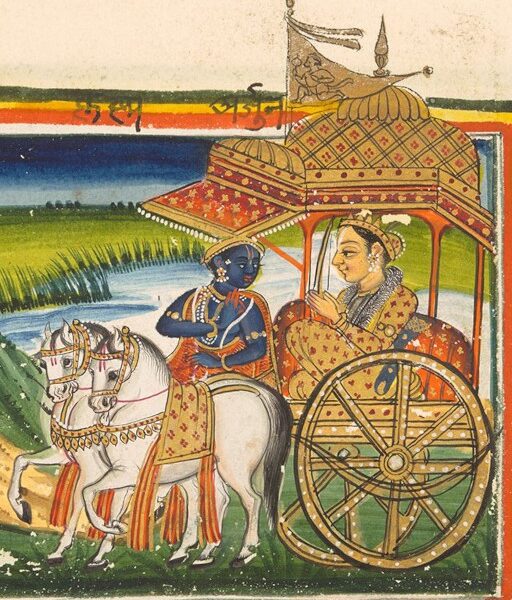
Lesson forty-four. Only those who are self-realized souls can see the absolute Personality of Godhead when He descends Himself by His internal potency. Right? Because others will just think He’s another God. Right? The point is, if they, if they think, if they think, you know, Prabhupāda and Bhaktisiddhānta and others are just ordinary people, why would they think Kṛṣṇa’s ordinary? I mean, of course, He’s blue, so that’s a little out of the ordinary, but other than that, you know, I mean, you know, who’s blue? You know, I mean, okay, the guys, you know, they were, you know, the Scotsmen, they’re woe, you know, when it was the battle, okay, you know, they kind of thought, hey, you know, battle’s over, you know, and Halloween’s been over for a few months now, you know, so, you know, but other than that, then they’re not going to appreciate Him. Right? Because when Kṛṣṇa walked into the assembly in, in, in, in Mathura, basically He got fifteen different responses, like that. Does that make sense? And only, only very few were on the platform of actual devotional love.
Does that, does that make sense? But most of them weren’t, you know, like that.
Okay. So, therefore, as the previous point was making, so only by the association of the self -realized souls can we actually understand who God is. Right? Yes. Mother Yasoda, she also sees Kṛṣṇa as just a person. Yeah, just a person. Why, why? I’m, I’m just… Meaning? Well, I mean, it says here that those who are self-realized can see… Absolutely. Others, others see Him as just another person. Just, they just see Him as ordinary, just another face in the crowd. Like that, you know. Okay, another blue face in the crowd.
You know, standing just like this. Walking down the street, the, the older couple, and like they see Him like that, says, Oh, my God. That’s, you know, it’s a, it’s like a combination between the goths and the punks, right? You know, instead of, you know, like that, you know. And what are we going to see next, you know? I don’t know, maybe purple or whatever.
Lesson forty-five. The ārca-murti is the transcendental and identical representation of the absolute personality of Godhead for the benefit of those conditioned souls who want to approach Godhead. So, therefore, through the self means only when Godhead comes can you understand. And the self-realized, self-realized souls, they always will see the Lord. So, then, the natural point is, is, therefore, through the devotees, you can see the Lord. So, our understanding of the ārca-murti is also through the devotees. Otherwise, we wouldn’t. Like, you know, the first time one sees the deity, what does one see? Like, I can, you know, like that. It means you, you’re not a devotee, you first come to the temple, you first see. Totally bright lights. Yeah, bright lights. Someone else is like, wow, nice flower arrangements. Or, you know, others just don’t see anything. It’s just kind of like there’s an altar and there’s a wall. Yeah, they can’t see.
Like that. So, that’s the siddhānta conclusion. Lesson forty-six. Matter is not, therefore, the ultimate cause of the universe. The ultimate creator is the powerful, while the material world is the power only. So, just because we don’t see the person, doesn’t mean it’s the material energy that’s doing the creation. Right? Because that was the doubt in the very beginning. Right? We start off with the charvaks thinking that life comes from matter. But, technically speaking, every philosophy that’s not Vaiṣṇava, life comes from matter. That’s even though impersonalist, life comes from matter. Because that you’re a separate living entity is coming from illusion. And illusion is matter. Right? So, even the Māyāvādīs say life comes from matter. Right? Your gross materialists, they don’t even think about it as much as the charvakas. Right? And they think about it. Right? So, they’d say, okay, when you take this and this and combine it together, you get something else. Right? So, that wasn’t in the original. So, therefore, you could combine together and get life. So, they’ve thought about it. But, you know, the normal materialist hasn’t thought about it. It’s just life comes from matter. Does that make sense? Like that. The śāptas, it comes from her. The śaivites, you know, like that. So, it’s, you cover the whole thing. You know? Does that make sense? And then, you know, even in the Mano Theis, then, you know, God takes some mud. Right? And then that creates, you know, life. And then when he wants to, he’s getting bored, so then he, you know, removes a rib. You know? Like that. I guess he was lucky, you know? He lost a rib. Right? So, then, you remove the rib and then you get at the Eve. Right? Does that make sense? But, so, the point is, is that even in their concept, it’s still, God’s behind it, but we’re seeing the medium as the dead matter.
Right? We’re not seeing it that the soul is expanding from God and, therefore, is embodied. No, the soul is the body. You understand? And so, every philosophy and religion that there is in the world that’s not Vaishnava, life comes from man. So, that’s why you can just cut it down to that one. You can say, oh, no, but what about the, no, there is only that one. You know? And then the other one we’re talking about, then, when that doesn’t work for you and you develop that pessimistic mood that the material world can’t make you happy, then you become God.
Right? So, then you become Brahman, or you merge into the, how do you say, the void, but then you become God.
You understand? So, these are the two philosophies of the material world. There isn’t anything else. Everything else is just details of this. You know? Either purely in one or purely in the other, or a combination.
Does that make sense? That’s the, getting worried here.
Yeah.
It’s both.
You know what I’m saying? It means, let’s say, you know, the mother is interacting with the child. So, is it, what makes the parental relationship? Does she interact with the child, or the child interact with the parent? It’s both. Both.
Okay.
Okay, so we’re going to, I say, page 20.
So, relevant questions and answers from the Bhaktivedanta Purports. Right? So, now this will be the backup for what was from the, the, the Panchanganyaya.
So, here. Part one. Riti. Doubt. The beginning of Bhagavad Gita applies to two prominent doubts. Is there an external, eternal spirit soul different from the material body? And if such a soul exists, is it fully identical to Godhead?
Objection. The first doubt is connected to the atheistic philosophy of Carvaka. The followers of Carvaka maintain that consciousness is just another product of matter. The second doubt refers to the Mayavada doctrine of Kevala-dvaita, exclusive monism. The Mayavadis claim that the soul and the Supersoul are identical in all respects. So, Adhikara number one. Lessons one to five. All living entities are eternal and subordinate to Godhead. So, lesson one. The constitution of all living entities. What is knowledge? Who is actually a learned man? So, these are, what these, when asterisks, no, not asterisks, I don’t know what you call those, but those little diamond doohickeys or whatever, then those are, in other words, points that the purports are bringing out to note and all that. So, those, that is what was brought out. That’s Adhikara. Right? From studying the purports. So, two eleven. The Supreme Personality of Godhead said, while speaking learned words, you are mourning for what is not worthy of grief. Those who are wise lament neither for the living nor the dead. So, then after that, what you see is the particular point from the purports that is relevant to the constitution of the living entities. Knowledge means to know cit, achit, and ishvara. The matter, the spirit, and the controller of both. One who knows this is considered a learned man.
Never was there, so, okay, so that is knowledge. So, in other words, cit, achit, and ishvara, that’s knowledge. And one who knows that is learned. If you don’t know that, then one’s not considered learned. Right? One may be very academically developed. We’re not saying that someone who doesn’t know this is not intelligent. Right? That’s generally what we’ll take it. Oh, he’s stupid. That’s not what we’re saying. What we’re saying is that they don’t actually have real knowledge that’s going to do something, you know, practical for them. Other than, you know, the temporary maintaining of the body or social prestige.
Never was there a time when I did not exist, nor you, nor all the kings. Nor in the future shall any of us cease to be. So, then, points to note here, what do the Upanishads say about the Lord’s relationship with the living entity? And how does the Lord confirm the individuality of the living entities? The Upanishads have explained that the Supreme Personality of Godhead is the maintainer of innumerable living entities. The Lord clearly says that He Himself, Arjuna, and all the kings who are assembled on the battlefield are eternally individual beings. And that the Lord is eternally the maintainer of the individual living entities. Both in their condition and in their liberated situation. Since their individuality existed in the past, exists in the present and will continue in the future without interruption, there’s no cause for lamentation for anyone. The Mayavada theory that individuality exists only in the conditioned state and that after liberation the individual soul merges into the impersonal Brahman and loses its individual existence is not supported herein by Lord Krsna. The Supreme Authority. Krsna clearly says herein that the individuality of the Lord and the others is an eternal fact. Thus, the plurality of the individual soul and the Lord is an eternal fact. And it is confirmed by the Vedas as above mentioned. So both for, you know, coming from, because in all this there’s going to be the doubt of karma and the doubt of beyond.
Because Carvaka heads the karma in this case and the, you know, Mayavadis of beyond. Means they are, of course, one school within many schools, but they’re, for the understanding and practical application, their philosophy in their area is pretty all-encompassing. You know, it’s deeply thought out, you could say. So, therefore, is that if someone’s the body, the loss of the body means that then you lose the living entity. Right? So the first point Krsna is making is that the living entity is not lost because the living entity isn’t the body. Right? So that is established. So there’s no need to lament because you haven’t lost that soul. The soul you’re worried about, that’s not lost. What’s lost is that particular manifestation of interaction that you were appreciating. Right? But that’s between one body and the other. Right? But the actual living entity, they’re not lost. Right? So there’s no cause for lamentation. The other is that the existence of the soul was always there. So, therefore, it’s not that they’re only there after illusion. Before illusion they weren’t there and after they become free from illusion they won’t exist. So this point of eternal then answers both questions. Because they’re both two sides of one thing. Right? Attachment and repulsion are two sides of the same thing. Right? Both of them, they’re misapplied, you know, prema. Right? The love for Krsna.
Does that make sense? So here is also the relationship is that of maintainer. That means he’s taking care. We don’t think we have to take care and we have to do everything. But then the point is, is no, it’s Krsna’s taking care. We can say, no, but I got to go out and work and have a job. Why is there a system of work? Right? Where does that come from? Right? Every civilization or every even, you know, how you say, what do we call it?
Tribal or not civilized.
You know, every civilized civilization, every uncivilized civilization. Right? So they all have a concept of working that maintains the self.
So how does that work? And all of them work on the point that what you had before you start the effort, when you finish the effort, you have more.
Yes?
Yes, you’re increasing, yes. The artha, increasing the value. But the point is, is that, yes, that, that’s coming from God. Why is that so? So God’s given the way that you can maintain yourself by the proper performance of your duty. Right? Because every, every, every civilization will have what it will consider appropriate duties. And if you follow those, then you’re maintained.
You know what I’m saying? Like that. So the better the civilization has worked it out, the more easily it works for everybody. Right? The less, less is thought out, you know, it doesn’t necessarily work for everybody. But it seems like it’s the other way around, because the more duties you have, the less freedom you have. The less freedom you have, then you have the facility. Right? Because what, what it was, if someone’s saying, oh, hey, just, you know, do full-time service. And I’ll say, no, but I have to take care of myself. What are they talking about? They’re talking about the facility. Right? That’s what you’re saying, that before, as Bhaktivinoda Thakur is saying, is that the body, you know, needs a place to stay, you know, facility within that place, food and drink. Right? Like that. The settled body requires the occupation, because that keeps you busy in thinking and interacting. Otherwise, what does the settled body do? Right? So, the, the, by, by the settled body, how do you say, performing its duty, therefore you have the facility for the gross body. Does that make sense? Because it’s the settled body that performs the work, not the gross body. The hand didn’t say, okay, now do this. It’s the mind and intelligence that say, now do this. The body just does it. You know? It’s just like, who’s cooking? The person or the, the pot and spoon? Right? So you can say, without the pot and spoon, you can’t cook, but it’s not the pot and spoon that’s doing the cooking. So, without the body, you can’t perform your occupational duties, but it’s not the body that’s doing them. It’s the settled body.
Does that make sense? You know, it’s, it’s fun how these things then get into shunk, if things just, what you take just, obviously is one way to become completely turned around. You know? Because we’ll say, no, the body has, has the occupation, and the settled body is, you know, we’ll give it some other definition. No, it’s the settled body has the occupation. The gross body, you know, just interacts with whatever’s there. Right? But it requires facility. Right? The mind doesn’t specifically require, you know, physical facility. Right? But it has, it requires the interaction with the physical facility. Because then you have, I’m the controller and I’m the enjoyer. Right? Or if one’s a devotee, then that is through that, that you express your affection for Krishna. Does that make sense?
Okay. So the Lord’s the maintainer overall. So then that also gets into the problem of surrender. Right? So, so the soul’s eternal, so we don’t have to lament on the material platform. The soul is different from the Supreme Lord, so on the spiritual platform we won’t make the, so the relationship remains. And He is the maintainer. So that means we have a relationship with the Lord. So that’s 2.13. As the embodied soul continually passes in this body from boyhood to youth to old age, the soul similarly passes into another body at death. The sober person is not bewildered by such a change.
Okay. So now here’s a, there’s no cause for lamentation on account of death. The Mayavada theory of oneness of the superior soul shouldn’t be entertained. And what is the nature of the fragmental soul? What happens to them after liberation? The individual soul is sure to attain another body in the next birth. Either, either material or spiritual. And thus there’s no cause for lamentation on account of death. Any man who has perfect knowledge of the constitution of the individual soul, the super soul, and the nature, both material and spiritual, is called dhira, or the most sober man. Such a man is never deluded by the change of bodies. Right, so previously that was defined as knowledge. And someone who had that was knowledgeable. So that knowledgeable person, that’s dhira. So that would mean he’s dhira because he can act on the knowledge. Because the Vedic concept is knowledge is never just had, you have to apply it. You’re considered that you have knowledge, or are knowledgeable when you’re applying the knowledge. If you’re not applying the knowledge, then you’re not actually considered educated. Right, so it’s a different concept, yes. Dhira means sober, so a dhira would mean somebody who’s, you know, uncoordinated, intoxicated, cannot function. That just, yeah, means intoxicated, but it can also just means that they’re distracted, or disturbed, or means there’s so many things to think about because they don’t know the essence. Like that. So it means what’s being done here in relationship to Arjuna is that he has become a dhira because he’s worried about the death of his relatives. Right, but he’s pointing out is that the person who’s dhira doesn’t become like that. Because he knows that the soul’s eternal, so they’re not dying.
Right, is that what he says? So therefore then one can be sober, but that knowledge is able to be applied. That’s why there’s practice. So one may be dhira naturally, but that means he’s practiced previously. But it’s through taking that knowledge and practicing it, then one comes to that platform of being, having realization. As we were discussing before, that’s values. Values are your realization. You know, it’s just like the person is smoking, right? Generally speaking, 99.9% of the people who are smoking, you can ask them, is smoking good for you or not? And they’ll say, no. Why are you doing it? I like it. Right? So in other words, they understand, they have knowledge, but they don’t have realization. Therefore, the value that I’ll get enjoyment from this is greater than the value of help. Right? But if something happens to them, you know, they get a scare, or someone close to them, or, you know, some way or another, they understand that this is bad for you, then they have realization. So what happens? They stop smoking. Because their values change. So it’s application that makes for value. Right? It means it’s through application only that you get realization. So that means that dhīra is applied knowledge. He knows this, he means citta-citta-iśvara, but he’s applying it. Therefore, he’s dhīra. Right? Otherwise, you can have somebody, they’re upset about something, and then you say, oh, but, you know, this and that. He says, I know all that, you know, but, you know, that the emotion is there. Does that make sense? So that means it’s knowledge, but not realization.
Right? Yes? One day it’s realization, the next day it isn’t.
That’s… How do you say?
That’s more, you could say, working on the micro or the macro principle of the jīva is spiritual.
And all it is is the consciousness becomes covered, that they never cease to be spiritual. But due to their attraction or involvement or association with material energy, therefore, how do you say, that spiritual position becomes covered. Right? Because they haven’t come to that platform of love of Kṛṣṇa. So once that’s there, then we’ll see that this overall one will stop, and these minute ones will stop. So as one develops, then in Kṛṣṇa consciousness, one will see that the…
How do you say?
We’re using it in the inverse, but the magnitude of it will become less and less. Meaning, something that bothered before won’t bother now. But something bigger will still bother. You know what I’m saying? So it’s just slowly as the advancement goes. But that’s just the… That’s one aspect. So that would directly apply. The other is that nature means variety. Without variety, things get boring. So on the transcendental platform, that variety is created for Kṛṣṇa’s pleasure. In the material world, the variety happens just because it’s supposed to happen, but it generally drives everybody nuts.
That’s why one is supposed to get attached to the transcendental position, so one doesn’t get distracted that something of this manifestation is going to make one happy. Right? So that’s the idea. So that’s why practice is there, is that what one thinks will make one happy is the very medium you use for Kṛṣṇa. And by using it for Kṛṣṇa, then one gets knowledge and detachment in that area. So then one starts to see these things, because in the beginning it’s not seen. It’ll be, there’s something wrong here. But after a while you see, no, this is the nature. This is the way it is. It’s not going to change. So it’s not something to disturb or distract. It’s just, you know, it’s this way or that way.
But the consistent thing is, it will be this way or that way. It won’t be always this way or always that way. Does that make sense?
So it’s just, it’s just, it’s the same nature we’re talking about here, but in its unpurified state.
Does that make sense? So the philosophy can be applied in all these different levels, because it’s the same. You know what I’m saying? Feminine nature is the same, whether it’s the svarūpa-śakti, whether it’s being manifested in the internal potency, external potency, you know, or the jīvas, either in the internal potency or the external potency. The principle of feminine nature is the same.
Like that. So therefore, if one is understood, one can see how to connect them to all the other situations. So one isn’t distracted.
Like that. Does that make sense? So that’s what will happen. So it’s not that that should stop. No, that’s what’s going to happen. What has to stop is lack of Kṛṣṇa consciousness.
Right? Like that. So that’s the actual problem, that it flips and all that. That’s, I’m sorry, par for the course. That’s the way it is. To be expected. Yes, to be expected. You know, and to be expected, not meaning from the, it shouldn’t happen, but it does happen, but to be expected because that’s what’s going to happen. In other words, it’s just accepted that that’s the way nature works. So that’s why we see, even for ourselves, as we go in the process, then Viṣṇava is describing that in the process of anārtha -nivṛtti, then the first stage is just enthusiasm, but the second stage is that it’s one day one is very enthusiastic, one day one’s not. That’s just the next thing because that enthusiasm, it’s not so new. So therefore, there is, but then there’s also the, you know, just the realities of one’s existence. Then it comes, then it will progress to, you know, that’s not the thing of being enthusiastic, but you’re not sure whether to be enthusiastic for something in this way that’s more, you know, seriously Kṛṣṇa conscious or that which is dovetailed in Kṛṣṇa’s service, you know, oscillating there. So this oscillation is what makes anārtha-nivṛtti.
And so, yeah, so the next stage is war with māyā, so then, you know, sometimes you win a battle, sometimes you won’t, you know, so it goes back and forth. Then you’re situated, you’ve won the battle, you’ve won the war, but now it’s like you can’t necessarily apply it, so you oscillate between being expert in application and not. So the Kṛṣṇa consciousness doesn’t change and then it will get to where one’s expert in it, one’s always able to apply it, but then the results coming from it, because of the facilities, you may sometimes see those results in connection with Kṛṣṇa, not the services in connection with Kṛṣṇa, and the results, oh, for Kṛṣṇa, but then the environment, because it changes because of the service, you may or may not see that in connection with Kṛṣṇa. So when all those are gotten rid of, then you say you’ve gotten rid of the material phenomena, but then it doesn’t mean that the spiritual phenomena, a variety, will be there. But that’s not a problem.
Does that make sense? So therefore, it’s still, what we’re looking at is the feminine nature. The weakness is still the feminine nature of negative. Because in the spiritual manifestation, it’s in the positive. You know what I’m saying? Like here, it’s a problem. The mother is unable to see, because of her being enamored by the child, is unable to see that he’s involved in things that aren’t very nice. That to her, the child’s always wonderful and perfect and all that. It’s a problem here, because here, then bad association, you get distracted from Krishna consciousness and that. But in the spiritual world, even though Krishna is, you know, 16 years old, you know, full-bloomed youth and all that, he’s being taken care of by the other respectable married women of Vrindavan, who happen to be 12 years old, like that, and they’re bathing him and dressing him and all that when he comes back from the cowherd fields in the afternoon. Then some of the gopis say, well, isn’t there something here? And to her, no, he’s just my little, my little kannai, you know, there’s nothing wrong and all that. So she doesn’t see that he’s a youth, they’re a youth, hey, you know, like that. She just said, no, he’s my little boy, my little baby, so nothing can go wrong. So it’s a perfection there, because if she did see like that, then the amount that the gopis could be involved in the grudge pastimes would be extremely reduced. So therefore, it’s an advantage that seemingly feminine weakness. But in the material world, then it’s a problem. Because one, it’s for Krishna’s service, and here it’s not for Krishna’s.
Does that make sense? So if it can be brought where it’s connected to Krishna, then all the rough sides of it go away. Because if there wasn’t the variety, then working out household life would have been done within, you know, a few weeks or months. And then one would get bored, okay, now what next to engage one’s desire to control and enjoy. But because it is so complicated, therefore it keeps one busy, basically, for the majority of one’s lifetime. And by the time one does work it out, one is worn out enough, one is ready to give up the endeavor. Like that, so, like that. So that’s why, you know, it’s actually part of the process to keep the guessing.
Is that okay?
Not okay. Yeah, it’s just the way it is.
But the point is, that it’s that way is because we are the way we are, which is conditioned, right? We want to be controlled and enjoy. It’s kind of like, oh, so you think you’re the controller and enjoyer, do you? Okay, you know. Like that, yeah, you know, so here’s your match, you know.
So that’s, that’s, does that basically make sense to everybody?
Huh?
Oh, you didn’t get the, what we were talking about.
Only a devotee can be called a Dīrā person. Only a devotee can be called a Dīrā person. Yeah, Dīrā can only be, means you do have, you do see from previous ages that there are persons who can be Dīrā in that, but they’re on the Brahman platform, the Paramatma platform. So they are able to manifest these good qualities, but we know that those will be temporary. So they’re acting as Dīrā, we relate to them as Dīrā, but actually the Dīrā we’re talking about, we mean permanent. You know, just like when we say liberation, we mean permanent, like that. So, so, so, you know, you have these great sages and that, they’re Dīrās, but they’re not necessarily devotees. So that’s why they’ll be Dīrā, but occasionally then they’re not as Dīrā as they should be. You know, like Durvasa, he’s Dīrā. But occasionally he’s a little less than, you know what I’m saying, because it’s only the devotee is always, that’s why you see, is that you have this great personality, Durvasa, and you have Ambarīṣa. You know, he’s a great sage, Ambarīṣa’s a king. But Ambarīṣa’s able to maintain his Dīrā-ness throughout.
Like that. Does that make sense? You know, so the one, all it was is that his so-called prestige was slighted. But the point is, is the sage can’t really complain because he did it on purpose. Right? You know, means, it’s, you can’t really get upset about something that you know you’re doing to just make the other person do the thing wrong and then get upset about it. Oh, how can you, you know, like that, you know. It’s just like, you know, when you, you know, how you say, your big brother’s sitting there and he’s putting his finger right there and you’re moving and all that and then, you know, like that and then, you know, then you’re like, oh, you touched me first. You know, like that. So he doesn’t really have a right to get, you know, indignant.
You know what I’m saying? So he doesn’t, but Ambarīṣa, he’s been, you know, cursed. He’s been, you know, dealt with, you know, badly. He’s been all this and still he’s here. So that’s because he’s a devotee. So that’s why the story’s in the Bhagavatam. It shows the greatness and speciality of the devotee even over such a great person like Durvasa. Yes. So Durvasa wanted to kill Ambarīṣa because of what he saw was an offense. Yes. So we call him a sage and that doesn’t seem like the activity of a sage and we see so much cursing going on among so-called sages. So how do we, how do we, it seems like a contradiction. It’s a contradiction because one takes it, what, what, what color would you call this? Tan. Okay. And why, so tan means, what’s, why tan? Because it’s something brown and white. Okay. So, but the predominance is White. White, yeah. So therefore it would be called tan instead of brown or, you know, like that. So the point is, you go by the prominence, you know, the basic, the basic formula would be, from what I’ve heard, is 60%. You know what I’m saying? You know, in business, okay, 51%, but here it’s 60% because it’s obvious. Because 51%, it looks equal. But 60%, you can tell it’s more. So 60%, then you would call it by that. You know. So that, that, that aspect is this, that in their natural state without any other, how do you say it? Provocation. Yeah, provocation or things that would, would create interaction. They will act in that way. So if everything’s normal, he’ll act as the same. But depending upon the situation, he may act outside of that. That’s because the 40%. So the 60% is how you judge. This idea, you know, the Hollywood idea of 100% or zero is, it’s, it may be great for entertainment, but it’s not a reality in relationships.
So that’s a weakness, is that if there’s any fault, then there’s no good. But that’s, that’s kind of how Duryodhana saw it. You know. While Yudhisthira looks, there’s, there’s, means you’ll call a person good because it’s not total bad. Like that. But Duryodhana couldn’t see any good because there was some bad. Right? So you can see the perspective how they apply it is different. Like Duryodhana was supposed to play a good man, he was supposed to play the bad man. So his bad was, it’s not because there’s some bad, he wasn’t, wasn’t, there was some good, therefore you couldn’t call him bad. Right? But Duryodhana, if there was any bad, you couldn’t call him good. Does that make sense? So that’s the, the, that’s just how the material modes work. So the process of elevation is then changing where the good is seen, but it’s not, it’s not a sentimental.
You know what’s good and how much of it, so you work with it that much on that platform. But it’s not that you can’t see what’s wrong, it’s just that what’s right is what you focus on and that’s what you interact based on. You know, like the person may be a real tear when it comes to management, but, but in all other things, he’s great, he’s a fabulous person, so therefore you know don’t give him any managerial responsibility.
But you see that all those other areas where he’s there, and then he’s great association. Does that make sense? Or the guy’s a great manager, but he’s, you know, terrible in other things, so therefore he gets all those things, but you know, he doesn’t give the class or lead the kirtan or, you know, this stuff like that because it won’t come out right. You know, so therefore you, you, you make the, you make the judgment. So it’s, it’s based on intelligence rather than sentiment, but it’s not that the personal aspect is not appreciated.
Like that. Does that make sense? So that kind of thing then makes for a balance. That makes for, you know, I would say, that’s the razor’s edge. You know, that’s the middle.
Like that, I would say. The Buddhists call it the middle path, but it doesn’t define how wide it is. We define how wide the middle path is. You know, that’s the width of a razor blade. Like that. So sometimes you think it’s just, no, oh, this is, you know, that’s, that’s a new thing about the middle of the balance. No, that’s, that’s all we talk about, but we just use different terminology.
Is, is that it? Yes.
Does the 60% rule also apply to Varnas? Basically, but it just means that you would, you would then, the more complete it is, the better situated. The, the less, then you would mean that there would be other elements mixed. So you’d have to see what it is. So let’s say the person is, you know, there’s a mix of Vaishya and Kshatriya, but let’s say the Vaishya is the prominent, you know, the Kshatriya is the, the, the Kshatriya is the minimum. So therefore, let’s say he is a businessman, but he deals in, you know, manufacturing tanks. Right? You know, because he can relate to that field and what they do and how, so he knows how to make a good tank because he can relate to it. But his whole purpose of it is to make money. Or let’s say you have someone where the Kshatriya is the predominant, but the business is still stronger. So he’s the guy from the military that makes the business deal and buys the tanks. You know what I’m saying? So, so you, you use those mixes. You know, you have to find, that’s why it’s very, you want to be very clear what it is so you know that they’re all engaged. Now, a person like Dronacharya or Kripacharya, are they purely Brahmins and they just act in the capacity of teaching Kshatriyas, or are they predominantly Brahmin and a part of their personality is Kshatriya? That’s why they can function in that area. Oh, I would take the first. Is that they’re Brahminical, but they happen by the particular, means, in other words, Brahmin means goodness is the Brahmin. Now, what’s not, there’s a percentage that says it’s not. So, what is that percentage? That makes it, what area within the Brahminical occupation would be their field, right? So, the top would be they study Shastra, they teach Shastra, right? That would be the best. Next down from that would be, you know, they are engaged in Yagyas and Pujas and all that kind of thing like that. So it’s still within that pure state. Then, when you drop below that, then they would get into their other areas. then they might be expert in economics or in warfare or in arts or all these different things. So, it just depends upon what is the particular combination of modes that would make them expert in that area. So, he would have, you know, that other modes that would be like the Kshatriya that he would be a Brahmin. So that’s why he’s always dealt with one as such. Only when he comes on the battlefield to fight, then he can be dealt with as a Kshatriya. Right? But, same time as Arjuna due to his religiousness, he’s looking at it that, but he’s still the teacher. Right? But Krishna’s point is, no, we have a battle here and we have to clear the field. Right? You know, so therefore, we can’t look in that way. Now, in their times, there was very little of mixed caste. Yes. And in our times, that’s predominantly what we’re dealing with. So, so, so, so, so, so, so, so, so, so, so, so, so, so, so, so, so, so, so, so, so, so, so, so, so, so, so, so, so, so, so, so, so, so, so, in maintaining himself, at least at the time of where I heard about all this, whether it’s changed, then he has a job outside, just like, you know, just a regular job. So the point is, is that when he’s on the job, then he has to follow the rules that apply to a shooter, right? So he has to be there working for, you know, the boss for the best he can do. He has to be, you know, respectful to the boss. He has to be respectful to anyone connected to the boss, you know, family members, or who the boss considers important. He has to understand what is the purpose of the company, and try to be obtaining that. Then he’s a good shooter. And if he does that, he will prosper, because the company will prosper, and the boss will understand that, and he’ll move up. So he has to apply, he can’t apply that, no, I’m a Brahmin, like that. No, he has to apply, I’m doing shooter work, I have to, what are the rules of a shooter, I have to apply that. Now, he’ll be able to do that very nicely because of his Brahminical character, but he still has to follow those rules. He can’t say, well, here, I’m the Brahmin, so I’ll advise you what to do here, no, like that. But when he does his puja, there should be no shooter aspect. It should be purely Brahminical. Does that make sense? So whatever is the application, the prominence, that’s what you have to apply, because like you said, you’re dealing with a mix. So if the mix is such that you can combine it all together into one thing, and one occupation, that’s great, but then when you’re dealing with each aspect of the occupation, you have to look at it according to what is the nature of the occupation. You know, like this, say, like we said before, the kshatriya and the vaisya. So let’s say the person’s doing administration. So in management, then the kshatriya thing has to be there. It’s a matter of protection. So that has to be the problem. He can’t look at it, he manages everybody to get more money. And then when he’s dealing with the money, then he has to see that it belongs to here, but he has to have the cleverness to know what money is to deal with it. But he can’t consider it as his because it’s an administrative post. But at the same time, let’s say you have a business, you’re managing the business and you have your administration within the business. But therefore, the money there and managing the people is to make profit. So you’re going to see it from that perspective. So you also have to see is that the proper perspective for the situation, the nature of it is seen. You wouldn’t use it otherwise, you know, or let’s say somebody’s sick, you take care of them. So you would do that on that is the incremental duty. So you would look at it from there. It’s not for profit or for political or anything like that. So you wouldn’t want to mix it, that you take care because then I’ll get something back later and all that because then they don’t pollute it and they don’t have a problem in relationships. Does that make sense? So that is mixed doesn’t mean one can’t work with it. It just makes it more complicated. You know, you have to be more thoughtful, more contemplative to be able to make it work. So it can be done. Problem is the nature that makes the mixing also makes it harder to be contemplative and to work it out. But it’s just a matter of what are your values, you know, and what are the prominence or if there’s any one of them more prominent, you know. So then you, yeah. In devotee relationships is that element of personal interaction. So you tend to have to choose whether you want to keep the friendship or you want to keep the business or the management or the other official positions because to mix them many times because of our condition nature seems to be rasa bas. So we have to take our choices or take our chances. So, but then at the same time, it’s not really satisfying because one feels that it’s quite a superficial kind of an interaction. Yes, it’s superficial. And it doesn’t really go anywhere. Yes. So in that is that what one has to accept is that if you’re dealing on a platform where there’s a relationship, means in anything of course there is, but what I get the idea is that the relationship is more developed. It’s not just an acquaintance. So one can’t, like you said, take the stand, what will be best for the economics, the managerial or you know, the skill or something like that and take the risk that it’s going to break or one has to accept that when you’re dealing with debt matter, then you are of course or something generic, then the direct, how you say, skill is being applied. But when you add the personal element, then you have to acknowledge that that is going to slow things down. But if we’re taking it that maintaining the relationship and maintaining some satisfaction and depth of interaction is important, therefore, it is practical that it gets, that it’s slowed down. It’s not impractical that, oh, you know, I could have gotten this done in three days, but it took two weeks because I had to consider all the people. Because of that, it slowed some other things down. So now I’m going to have to work harder to get all that together. But if relationship is seen as valuable, then that is practical, right? Because relationships always higher than occupation because relationships are part of ashram, but occupation is varna. So varna is only to create facilities for ashram. So if I’m getting the varna duties done, it ruins the opportunities within ashram. It wasn’t actually applied at its best. You didn’t actually get its purpose because it’s supposed to provide the facilities, and facilities are more than just physical. Like that, it means you have the house, you have the furniture, but then you have to be able to interact with the people in the house. If you can’t interact, then it doesn’t have any meaning. So the president, he could get things done, but it’ll upset the devotees. But then it’s, so he can’t say that, well, I was just being practical unless it was an emergency, right? If it was a real emergency, then he could say, okay, but then he would explain. He would explain, if it was an emergency, we would normally consider this, but now we can’t. We don’t have that, what do you call it? Lecture. Well, in management and in business, you have to put pressure on people. And if you know them too well and they know you too well, you can’t really do that because you would sacrifice your personal relationships. So you have to make those choices. So it seems that the less kind of a personal relationship you have, the more successful you can function in business and in management. I know some people who never see their suppliers or their printers because they don’t want that element of personal relationship to enter into the transaction, because then they can’t really put the screws on. No, it’s very intelligent. But the point is, that means that from that business or management, all they’re trying to get is facility. So as long as that was there, then you’d use your intelligence to maintain it at that. But if you work in the realm of devotional community, then you have to go the other way around. Then you have to… Relationships are always higher. Because what has to be remembered is management, business, skills, are only to support the devotional culture. Like that, the temple president’s there to see that the place is managed so that all the devotional interactions and practices can go on, not that the management is the main thing and then you fit in all these things around. You know, that would be, what do you call it, the management maintenance, right? A lot of time we feel still the relationship is there, the appreciation of love is there, but the goods don’t get delivered. Then the point is, is then it’s just a matter of they’re not qualified for that job. And then it just has to be explained. Now, if it’s a matter of by explaining it, the loss in relation would be greater and you could just get someone else to do it anyway, then you don’t have to worry about it. If it’s a matter of, no, it has to be, it has to officially be gone through, then you have to find out what’s going to be the best way to do it. And it may be slow, you know, it may take years, but, you know, you get it done. You know, so it’s just a matter of you just have to balance all the things. That’s the whole point is this ability to balance and know in the situation what is the primary and what’s the secondary. That’s generally where we get it wrong. What’s the primary and what’s the secondary?
So, like you said there, in that business example, having a personal relationship with the supplier is not primary. It’s secondary. So, therefore, if that secondary will get in the way, then it’s dealt with in a different way. Therefore, you get to know them by sending your man who knows them, you know. And so, therefore, if you decide not to work with that supplier, it doesn’t bother you who’s making the decision. And it won’t bother the other guy anyway, because he’s just doing what he’s told and now he goes and sees somebody else. So, he certainly won’t affect him. So, does that make sense? So, you’re seeing what’s primary and what’s secondary. So, the general tendency is that we don’t see what’s primary and what’s secondary.
Okay.
The Mayavad theory of oneness, that the spirit soul cannot be entertained on the ground, that the spirit soul cannot be cut into pieces as a fragmental portion. Such cutting into different individual souls would make the Supreme cleavable or changeable against the principle of the Supreme Souls being unchangeable. As confirmed in the Gita, the fragmental portions of the Supreme exist eternally, sanatana, under the call of Psara. That is, they have a tendency to fall down into material nature. These fragmental portions are eternally so. And even after liberation, the individual soul remains the same, fragmental. But once liberated, he lives an eternal life in bliss and knowledge with the Personality of Godhead. Right? Because he’s gone from the neutral position where he can look at both ways to he only looks at it one way. Right? And since it’s on the eternal platform, then there’ll never be a problem of this aspect of being chara, being a difficult one. So, if you can’t, if the soul can’t be broken, how would the Supreme be able to be broken? Right? How could this soul have a quality that the Supreme can’t have, that the Supreme has? Because we say, this, Virman is unchangeable, but it’s been broken into these little parts. Then that means there’s something deficient there, or it is changeable. But the soul is not able to be, by Gita definition. So therefore, the soul would be superior. Therefore, I can, we can call each other Narayan, like the Mayavadis do. You understand? So, these are where the weaknesses come. So we see is that even though they’re very careful about avoiding the material, you know, on the platform of karma, like that, they’re positioning themselves as equal to, or even better than God, that they don’t worry about it. You know? Because this Supreme is what you, the Virman, and this and that, but their situation is better than the Virman. Because Virman is a portion being under illusion. But this can’t be broken. But that one could be brought under illusion. It’s not that you’re under illusion, and then you take it and fragment that, and then there’s two or three of you under illusion, like that. You know what I’m saying? So, so Schizophrenia is the same person. Right? You know what I’m saying? Does that make sense? You know, and you don’t have, and that would also defeat the, the Judaic conception that there’s actually 600,000 Jewish souls, and so that there’s more now, means that one of those, they’ve been fragmented into parts, and therefore there’s expansion, because there aren’t any more Jewish souls than that. So this will get rid of all these kinds of aspects.
That’s the way. Om Hare Krsna, Hare Krsna, Krsna Krsna, Hare Hare, Hare Rama, Hare Rama, Rama Rama, Hare Hare, Hare Krsna, Hare Krsna, Krsna Krsna, Hare Hare,