
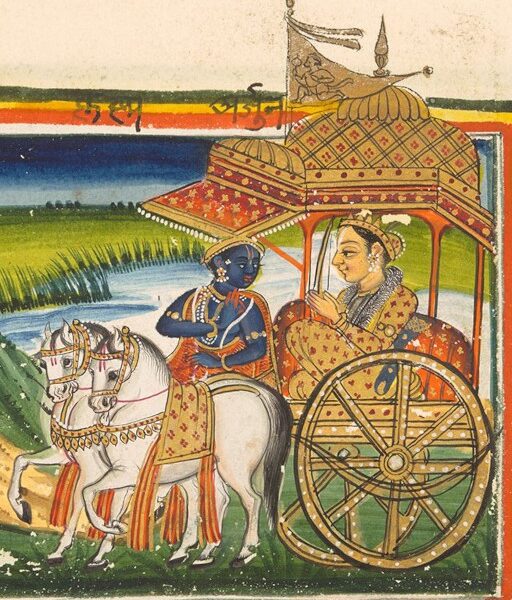
Eighteen forty-six. By worship of the Lord, who is the source of all beings and who is all -pervading, a man can attain perfection through performing his own work.
Everyone should think that he is engaged in a particular type of occupation by Hrsikesa, the master of the senses, and by the results of the work in which one is engaged, the Supreme Personality of Godhead, Sri Krsna, should be worshiped. If one thinks always in this way, in full Krsna consciousness, then, by the grace of the Lord, he becomes fully aware of everything. That is the perfection of life. The Lord says in Bhagavad-gita 12.7, tesam aham samudbhartah.
The Supreme Lord Himself takes charge of delivering such a devotee. That is the highest perfection of life. In whatever occupation one may be engaged, if he serves the Supreme Lord, he will achieve the highest perfection.
Okay, so here we’re establishing is that the Lord has come to deliver the living entities, right? He sends… He comes Himself, He sends His assistants, they give knowledge about Krsna, right? That’s the actual thing that works, that’s what saves one.
And anybody can take part, right, whatever the situation. And the process is to take one’s occupation and engage it in the Lord’s service. That means that you understand you have this work by the Lord’s grace, right, because you have that nature and everything. So He’s given the work for that nature, right? We have particular desires and needs. Because of those desires and needs, we have developed particular senses, we’re in a particular situation.
And so that situation and occupation, I mean, that situation and that nature then has an occupation that goes with it. So that’s God-given, right? It’s not made up, it’s just natural. You like to deal with money and, you know, you like money, you like mathematics, you like, you know, sitting at a desk and chair, then you’ll be an accountant, you understand? It just, it goes naturally like that. You wouldn’t be… You like all those and therefore you’re going to be a sports newscaster, you know, like that. Does that make sense? It’s not going to work. I mean, maybe you could sit there and sit down at the thing and, yeah, you know, here comes the nine and it’s nice, come around the corner and he’s merging with the six and we have a 15. Yeah, wasn’t that great, folks? Okay, maybe you get that, but I don’t know that many people would tune in to listen to, you know, a very exciting explanation of today’s accounts, you know, like that.
Yeah, it might be very short. I’m sure you’d probably get a few nerds that would find it amusing, but other than that.
Okay. So then, so the idea is that it’s, we have the ideas why I could do this or not, or, you know, you could interpret it that way or not. As we were just discussing upstairs in the Manu class, is that the creation is described first. First, there’s creation. And that creation means the primary creation, right? What’s done before Brahma’s creation. So that means all the principles of creation. You know, what is human life? What does it do? What’s right and wrong? You know, what are all the different activities? All the situations you can function in like that. You know, it means you have the land, the sky, the air, the mountains, the valleys, you know, all these, whatever there is, situations where people live, that’s already been created. Right? Then, then the principle of what’s right and wrong is created. That’s where Varanasi comes in, right? The law. So God’s already defined the law and what’s right and wrong and who does what. And those natures, he says, are just as created like previous universe. Right? Now, the Veda being Apurusheya means it’s never spoke, it’s never written. Right? It’s never, it’s always been there. So that means then, and it’s defining this. So he’s creating it like it was before and according to the Veda.
Right? So that means there’s no change. And this is the law.
So that’s there before the creation. That means God’s law and what’s right and wrong and what everyone should do is done before Brahma even creates the living entities.
Right? So that means the idea of, well, I make up my own idea, it doesn’t work. It doesn’t follow.
So here we can understand is that the particular kind of occupation is given by Hrishikesa.
Like that. You have a particular set of senses. You have particular interests. Therefore, the occupation is already established.
Right? What you will do. I mean, what varna you’d be in, what ashram you’d be in. You know, what would be the natural progression. That’s all. Yes. If it’s natural and the harmony is there, then why people are not happy with what they are doing?
Well, if you’re taking a generic thing, are you taking meaning devotees? Because there’s two discussions. Devotees. It means there’s the discussion of why is it the common man in his, you know, place of occupation is not satisfied. Another thing is, you know, if devotees are satisfied or not with the concept of performing their duties according to varna ashram. I would take it as two different things. Because the one is that, are they actually situated according to how they’re supposed to be? Because generally speaking, from what I understand from statistics, that most people, according to whatever degree they have from school, that’s not the work they’re doing. Right? Unless it’s specific. You know, they went to medical school, then generally they’re a doctor or engineering, they went to that. Or they did some trade thing, they learned car mechanics, so they’re doing that. But for most everybody else, you know, that we would call the general educated public. Right? Because generally when we talk about that, it doesn’t necessarily include, you know, doctors, engineers, and like this. You know, it’s specialized. We talk about the person who just went to school and, you know, exposed himself to, you know, knowledge. And then having come out of that, you know, having, you know, at least supposedly enriched himself, you know, now he’s trying to find some place to fit in. So there won’t be a satisfaction there because the knowledge that they’ve learned was only to, you know, create the person. Then after doing that, then the medieval concept was then you specialize in an occupation. So the Bachelor of Arts was not considered an occupation. It was just considered what was necessary to, you know, make yourself a cultured human being. You know, you knew language properly. You knew, you know, how logic, you know, so how to think and present. You knew rhetoric, so you knew how to present it like that. And you knew the various ways mathematics is applied in your life. You know, in the astronomy, in, how do you say, astronomy, I mean, math, astronomy, music, and I think in astrology like this. You knew how that, then it’s kind of like, you know, you’re complete like that.
Then you went on to study something that you would do as an occupation, which would be the doctrine, law, or theology. So then the difficulty is as if nowadays the Bachelor of Arts is considered, you know, kind of like a terminal degree for most people. You know, so they end their education there, right? And instead of that, because before the medieval concept was terminal degree was, you know, the masters or doctor, you know, in these practical fields. So therefore most people are, just by popular practice, then they consider that that’s educated. When it’s educated as a person, but not educated in an occupation. So naturally then they can never be satisfied because they never learned an occupation. Is that, yeah. So then, even though the whole discussion in going to school was to get an occupation, but they never get to the actual studies of an occupation. You know, so it’s actually quite amusing. And then the fun part is, is the medieval is considered old, archaic, and not very developed. But they were smart enough to know is that you enriched yourself as a person, and then you had an occupation. So there’s a concept of varna and ashram. You know, the ashram was your lifestyle. So that was, you know, put emphasis on first when you’re situated in your lifestyle, then you learn an occupation.
You know, how the modern person talks about occupation, but actually all they’re doing is studying things that were supposedly supposed to enrich them. But because they don’t look at it from that perspective, they don’t get enriched.
You deal with lifestyle elements, but look at it from occupational. But it’s not actually practically occupational. Then it’s a very interesting mix. And somehow or another, that complicated, that very sophisticated impracticalness is considered superior than the very simple, straightforward medieval concept. You know, like that. So, like that.
Then devotees is basically, it’s just a matter of understanding. So they have faith in Krishna, they have faith in the process, the holy name. Faith, generally speaking, is faith in the spiritual master. But due to not having an understanding of culture, or being even technically even exposed to it. You know, I mean, one that would call, you know, human or improved.
You know, I’m sorry, you’re on the street, so yeah, you know, rap songs, you know how to jive, you know how to get down and dance. And when the guy comes, you know how to do all the different things and all that. You know, stuff like that. Say hello. You know, like that. So, and probably also is that, you know, if you’re close enough, you could probably blow the guy’s head off. You know, so, you know, you’re pretty good. You know enough math that, you know, you gave him a little packet, a quite little packet, and he gave you this many dollars. Right, you know, so, you know, you have all the basics, you know, so. But unfortunately, most people aren’t actually exposed to what previously would even be called by the Western standard culture. You know, like that. Does that make sense? So, they don’t have that. And so, the idea of varnasrama just seems just overwhelmingly restrictive.
Right? Because here’s now suddenly everything in your life there’s a rule about, you know. But the rule is simply there to make sure it stays within that genre. Right? So, human is a genre. Right? You know, then you have varieties of animals. So, they’re used to, because the animal doesn’t have to be, you know, specifically trained. One or two things, you know. Okay, how to catch it, how to kill it, like that. Or, you know, how to sniff it out. You know, which ones are poisonous and which ones are not. But other than that, there’s very minimal training. Very minimal. And that even you only see a few animals actually train. You know, most of them they just kind of grow up. I don’t think there’s a lot of training that goes into being a dog or something like that. But I think in being a tiger, then there’s a little bit of training on catching and stuff like that. So, then the weakness is that we’ve grown up as animals. And so, the taking up human life actually seems very daunting. You know, something very great and foreboding that all these rules we have to follow and everything like that. But it’s just to ensure that you stay within that particular species. You know, just like if you want to do cooking. And you say, well, I want to do, okay, you know, continental cooking. And so, then I get out my roasted sesame oil. And then I’ll say, no, no, no, that’s oriental. You have to use this oil for that. You can use olive oil or some other oil like that. Does that make sense? You know, or, you know, I go to make, you know, English mashed potatoes. And I’m getting out my chilies. And I go, no, no, that’s Indian or Mexican. You know what I’m saying? So, there’s certain things that it keeps it within that line. And so, one can say, oh, this is so restrictive. It’s only, all the restriction is just it stays within the line. Everything has a restriction. It’s just if we’re comfortable with it, we don’t notice the restriction.
You know what I’m saying? Like that. Because the kid has to go through being restricted anyway. Because they’re untrained or unsophisticated animals. And so, then they have to learn to become sophisticated animals. Right? So, you know, they’re taught, you know, to wash their hands after going to the toilet. But that’s, of course, a more recent thing. I think they started introducing that into the schools in the 60s. Like that. Before that, nobody talked about it. You learned it at home. And then they found out most people didn’t learn it at home. So, then they started introducing it at the school. Like that. So, you know, all these different things. You know, it’s like, you know, don’t put your elbows on the table. And all these different things that were before taught. I don’t even know if that even matters these days. But, you know, so, all these different elements. But we just take it as normal. And that’s how we live. So, we don’t think otherwise. But we were trained in it. And there are restrictions. And because of that, then you can sit down at a table with someone else. And expect that you’re going to get through the meal without, you know, getting sick. Because the guy does chew with his mouth closed. And, you know, stuff like that. And doesn’t reach across the table and grab something. Or take something off your plate because he likes it. Like that. So, I sat down. I was at a meal. It was really interesting. We invited to somebody’s house. You know, it’s a low table. You know, nice arrangements. Really nice arrangements. Nice prasadam. But they had, the kid was very, had a small kid. And he was quite, I’d say, I think he would be congenial or maybe. But very forward and very interactive. But very pleasant. Really nice. Like that. Like you get into things. So, he’d be eating. We see something on your plate. He’d like. He’d just go, wow. And just reach over. Like that, you know. So, you know, he didn’t, didn’t. And he didn’t. It wasn’t badly meant. It was, you know, very innocent. So, he did, okay. Now, he’s standing on one side. You’re looking at him. Then they had a pet mongoose. And while you’re looking this way. It would take advantage to come up and take something off your plate from this side. Then it was that. Then the kid would take something. It was kind of wild. You know, pleasantly wild.
So, you know, the idea is that, you know, there’s a standard culture that one expects. And people of that culture, they sit together. And if they are a little uncultured, they don’t want to sit with someone who is. You know, it’s just kind of like, you know, all the sticks and all these different things. You know, they want to be able to talk with their mouth open and bits falling out and everything. And nobody gets upset like that. You know, it’s. So, the idea is that this is human culture. And the only reason that it doesn’t seem practical is because we don’t see through human perspective.
Because practical is, you can look at, well, is this practical for what gets something done immediately or something gets done long term. Right. Like this. So, the thing is, is God’s work things out that it works now and it works later.
Right. But because you’re working on a higher platform, sometimes things take a little longer. Right. So, you know, to boil, like we said, you know, to boil Maggie noodles takes two minutes, at least according to their advertisement. You know, generally it takes something different than that. Whatever it is. You know, you’re not going to say, Maggie, two and three quarter minutes. You say, well, you know, it’s not. So that that’s there. But then if you want to cook a full meal, it’ll take a touch longer. Right. So it’s just a matter of what you want. So you can say, oh, it’s so restrictive having to cook a full meal and everything like that. You know, well, we can just, you know, boil the water, throw it in. And then while I’m putting down the plate, it’s ready and dump it out on the plate. You know, why all this fancy, you know, all this restrictive elements. I just want to eat, you know, just doing practical stuff. You know, I want to do service. You know, so you could say all that. But the point is, is the result is different. So that’s that’s the idea is it’s basically due to a lack of understanding like that. And that’s because of the condition.
So you have the opposite. Most of the time, the Hindus, they they follow things, but they’re following only the rule. They don’t know what it’s for. But they have that. They have enough piety that they can relate to, you know, doing duties and and and being guided by higher authority. But they don’t know its purpose. Right. So they don’t know the philosophy. So then there’s a weakness there. So then all varieties of of Shastra.
I say recommendations they follow. And it’s kind of, you know, a kitchen because it’s not consistent because there’s no philosophy. So then you get these two weaknesses. One is philosophy and no religion. What is religion? No philosophy. You know, so therefore, Hindus are sentimental and fanatic. And the devotees are speculative.
So the Veda concept is you have both philosophy and religion. Because religion is only the practical application of philosophy. So that’s the fun part, is that one doesn’t follow the practical application because one is being practical. Right. But the practical means using using a modern approach. So now look at it over the last, you know, so much time as devotees are exposed and they could know more about it. So, OK, 70s, you could say, you know, there wasn’t so much knowledge, though they could have because the books were there and probably didn’t request them to read them. But by 80s, there was, you know, more discussion about these things and all that and trying to establish and everything. So you could say from there. So basically you could say that it’s that it’s, you know, 30 years of exposure to it. But devotees are always being practical and they’re getting that immediate result. They got the money. They built the temple. They installed the deities. They had the festival. But at the same time, there is no community.
Few individuals who understand the principle make their own friends. But it’s not organized by the authority.
It’s just they know how to be friends with people and they have a few friends and they hang out. But it’s not organized on a bigger scale. Why? Because we’re so we’re always saying the practical is this. But we do that, but we don’t understand that six months down the line, it’s not going to work. Or a few years down the line, it’s not going to work.
We’re being practical now and we’re just getting into sadhana, you know, and sadhana is higher and all this and that. So the guy’s not interacting with the family properly, you know. But, you know, he’s getting the practical stuff done and he’s doing all that. And it’s going great until three years later when his wife says, you know, hands him the divorce papers. And says, sorry, here, you know, like that. So then you could say, you know, all that. And so then, you know, so the point is the Vedic is how to work it out. That doesn’t happen. You know, the wife doesn’t leave. The husband doesn’t leave. The kids don’t leave. You know, the parents pay attention. You know, all these different things. It’s all meant that it works long term rather than short term. So that means sometimes you have to go out of your way. Yes, it would be so much easier to just do your work up to the last second, then get in the car and drive. And then, you know, do this and that and then come home. But no, you need to call in between and say this or that. And you could say, no, but that’s taking an extra 30 seconds or one minute. I would be home one minute earlier. But the difference is, you know, whether you’re coming home to something pleasant or you’re coming home to Kapusala. Like that.
So that’s the difference. So one could say, no, but it’s so much more practical like this. But no, that’s not enough. It’s more practical to take more time and make the phone call.
But this is the point that we are so practical that it doesn’t work.
Right. It’s totally prayas. There’s no shreyas. It works at this moment, but it doesn’t work at the next moment. Because it’s not considering the nature of something. We’re only considering, you know, the practical of getting home. We’re not considering why we’re going home. We’re going home to interact with the family. So that means practical means including the family in the equation.
Does that make sense? And since we don’t, then it doesn’t work. And then we say, but it was being practical. Yeah, practical on one level, but not practical on the sphere that you’re dealing with. So when it comes to money, getting it done, collecting it, most of the time, not necessarily spending it, but collecting it, you know, some administrative things like that, managing some time, then generally we’re, you know, we do quite good at. But when it comes to people, managing people, interacting with people, having relationships with people, maintaining relationships with people, then you could basically say the Western culture, as it stands today, is an absolute total failure.
Right? If you go back in time, then there was something more. It means it was quite, there was a strong polarity. You know what I’m saying? The way administration might deal or different things like the common would deal with these, especially with authority was a problem. But there was generally more family and friends, and these things were more of a value. You know, like, what is it, you know, there’s an Italian saying, if you found a friend, you found a treasure, like that. You know, so you don’t hear that stuff. You know, no, some, no, you know, how you say, how you say, a person from the non-Latin Western First World culture would probably think that.
Individuals might if there’s some remnants left in their, but it’s not a general principle.
You know what I’m saying? You know, it’s like, you know, the Westerners, you know, he’s your friend, he’s not my friend. And if I like him, maybe, you know, but like for the Latins is that he’s your friend, because you’re my friend, he’s automatically my friend.
You know what I’m saying? It’s just a different thing. So if you go back, these were more standard things.
So, but the modern doesn’t have any concept of that. And because of that, then varnashram doesn’t make sense, because it’s based totally on relationships.
But what they don’t catch is their relationships with things. It means if you can understand relationships with people, relationship with things is super easy. But they focus on relationship with things and have no idea how to convert that into working with people. It’s very easy to convert people into things, but not things into people like that. So they’ll feel themselves very advanced, but guaranteed, the people who understand, those individuals or those groups of individuals, communities even, I’ll go as far as to say, that understand more relationships with people are much better at the things. That’s why slowly, slowly, that first world, you know, market is being taken over by people from communities that understand people, you know, and then they apply that into things.
Like I thought it was hilarious, I heard, you know, some years back that in Los Angeles, you know, which has always been, you know, you know, I could say a white man’s stronghold like that, is that in some areas of Los Angeles there, then you can start a club that you’re actually just a white American, so you can have a white American club. You know, before it was everybody was white, you might have a Mexican club or, you know, an Italian club or a Chinese club, you know, like that to get together and, you know, you know, somehow or another work on the platform of your culture, you know, talk your language or study your history or eat your food. Now you can do that with the white boys because there’s so few of them that you can officially start a club. They’re a minority in the school, right, you know. It’s funny, you know, it’s quite humorous in that way, you know.
So the difficulty comes is that the Dynacism to do something is very great and that’s very good. That’s one element that one has to appreciate the First World for, is their commitment to making things in the world better. The problem is, is they don’t have an idea what’s better or actually how to do it. But they’re very committed to it, you know, so one has to appreciate that. So taking that and applying it would be very good, but the problem is, is because of the idea that we are who we are because we’re free, then that means that there’s no opportunity for establishing culture.
Because the very idea of it is kind of like against their being because they’ll lose their identity if they accept it. What is not understood is that freedom is always there in the advanced stages of understanding the rules. That’s spontaneity. Someone who knows the rules and is able to be free within that framework, then that’s inspired, that’s leadership, that’s spontaneous.
So it’s just a matter of devotees appreciate what it is, then instead of spending all the time arguing whether we should follow it or not, it’s a matter of them, they could spend the same amount of energy and learn how it works. You know what I’m saying? For the amount of discussion on it and that all we’ve come to the conclusion is we’re not sure what the conclusion is. Thirty years of discussion on this is what we’re supposed to do and how to apply it, how much of it is applied, what’s the mood of applying it, how will we apply it in all these various situations we’re in. Devotees of thirty years should be quite expert at it.
You know, they’re good at philosophy, so why wouldn’t they be good at this? Because you want to say, well, where’s the opportunity? Factually speaking, every purport discusses it, unless it’s like, you know, just straight Vedanta, like the Kumaras are talking, but at one point they’ll make it practical.
And so there is no point where varnashrama generally is not being discussed.
So there’s plenty of opportunity.
And then what you hear in the class, then you try to practice it.
Is that okay?
Okay. So the point being is that whatever one’s nature is, that’s not the consideration. On the material platform, of course it’s a consideration because you’re doing a particular material activity that requires a particular skill and mentality. Right? Does that make sense? You know, you’re not going to ask the, you know, how you say, the field harmonic first chair violinist to, you know, fix your car, like that. You know, unless that’s what he does for a hobby, right?
But, so, the point is that they have their nature, but that nature has been already defined by God, and the occupation that goes with that nature has already been defined. So it’s not a matter, it’s not rocket science here. It’s just a matter of, you know, A goes with A, B with B, C with C, like that. It’s very, very simple. Then what’s being pointed out, because it’s given by God, that means it can be engaged in the Lord’s service. If it wasn’t given by God, then how would you engage it in the Lord’s service? Does that make sense? So how he’s defined it, you can use it for the Lord. So it works very nicely. And the point that’s very important is that it doesn’t matter what the occupation is. Every man, whatever his occupation is, can perfect his life, you know, become God conscious, go back to Godhead. Right? That’ll make the difference between our view in dealing with Varanasi and a materialist. The materialist will have a different, no, no, according to, you know, what your birth is means according to your conditioning. Then, you know, that higher and lower means that you can be involved in something or not, that the higher could be involved in that, the lower couldn’t. No, the higher naturally takes up piety easier, the lower not as easily. But as far as spiritual, that’s the soul. So it doesn’t have any actually bearing on it at all. Like that, it’s simply desire and faith. Right? Does that make sense? But because of that, because it’s so broad, then we had the thing before is that somebody may be following, but they might not be. You know, they’re fixed in Krishna consciousness, but there’s still an impiety. Right? They can’t see the importance of being so fanatic about cleanliness. That’s impious. Right? You know, they don’t see why I have to, you know, wash my feet every time I go in the bathroom. You know, what’s the big deal? You know, there’s a nice rug on the floor. Right? You know, when I use the toilet, I didn’t pee on my foot. So, I mean, why do I have to wash it? You know, like that. Does that make sense? You know, I mean, the wife might have a different opinion. But, you know, does that make sense? You know, like that.
So, that’s an impiety. So it’s uncultured. Right? But when we hear impiety, for us, from our background, we won’t take that as an impiety. We’ll take it, impiety means, you know, meat eating, illicit sex, intoxication and gambling. Right? So that’s why we’re giving examples there. You know, and then it becomes more of a thing, because then the whole morality thing comes in. But in actuality, that may be there. But more common than not, it will be is that the impiety is that he doesn’t deal with his family properly. He doesn’t deal at work properly. He doesn’t respect his boss. Right? Or he’s a boss, he doesn’t respect the people there. Or he doesn’t respect his money. He spends it, you know, whimsically. These are all sinful.
You know what I’m saying? Though, maybe acknowledged and accepted as part of life in the modern cultures. But it’s not as far as God’s laws go. Right? You deal whimsically with money, then you’ll lose the money. In the future, you won’t have money. You deal respectfully with the money, then you’ll always have money. Right? Does that make sense? So these kind of elements, you know, there’s so much pride in what they’re doing. That’s sinful. Right? Does that make sense? Because it’s just a matter of how close you bring the point. Is that the person’s in a sinful position, so you’re encouraging him. So you’re focusing on the piety that he’s performing. You know, he’s engaged in devotional activities. So you’re not focusing on the impiety that’s his natural livestock.
So, therefore, then we let it go. But if we tighten it, no, all that’s all nonsense.
Right? And then, does that make sense? So, that makes it, you know, makes it very clear. So, therefore, the devotees are still all saintly. You know, but for some, this won’t mean much to us, but for some Hindus, they can’t relate to what we do at all. These things like an artique, yes, and those things like that. But, you know, how we dress, the lifestyle, they’ll just say, what is this? They can’t relate to it. So, in their mind, we’re impious.
And, according to the law, it’s true. But, they’ll think, therefore, you can’t be saintly.
No, but the devotees are saintly. Because their commitment is to chanting the holy name. So, in the same ways, we drop that into what those who are sinful by nature would consider sinful. So, just as the Hindus can’t handle not following Varanasi, those who don’t follow Varanasi can’t handle stuff that they would, you know what I’m saying? So, the ones, then they’re all bent out of shape about religiosity, so they’re religionists. And, then the ones who are sinful by nature, they can’t be religionists because they don’t follow religion. So, then they’re moralists. But, it’s the same principle.
So, just as we get bent out of shape that, no, but how can, you know, he’s in a fallen state, how can he be a devotee? The Hindus think the same thing about us. Does that make sense? It’s the same principle. We’ll say, no, no, that’s nonsense, you chant Hare Krishna, so he’s chanting Hare Krishna too. No, but he’s immoral. No, no. You know, and they’re saying, no, but he’s irreligious. Right? And religion’s higher than morality, so who’s right there?
Right? And even that, the moral standing, is it actually wrong morally? It may be, it may not be. Because where’s the definition of morality coming from? It’s not coming from God. We’re not basing it on scripture. We’re not even basing it on a religion. You know, we’re not going to say, well, the Old Testament says this, or the Koran, or the, you know, the Old Testament says this. We’re not saying that.
We’re just saying is, you know, in modern culture, everybody knows you don’t do this. So, who’s this everybody? You, your mommy who told you, and one or two friends you bumped into that you happened to mention. That’s it. That’s the everybody. It’s not bigger than that.
You know? No, it’s like that, go look on the internet. Yeah, like that. And then, and you look on the internet, like that. And there’s, you know, 12 comments. See, everybody. Okay, I’ve expanded it from four now to, you know, added another 16. You know, now I’m really convinced that not only is it everybody meaning, you know, everybody. I know in my community and, you know, I’m American, so it means the whole of America. But now it’s international.
Like that.
Does that make sense? So, this is the difficulty, is that we are unable to appreciate that what Kṛṣṇa says, if the point is, is that it’s the devotional service, and the devotional service means the attitude of desiring to please Kṛṣṇa, and the others are secondary. That means that everything else is secondary. Not that everything else is secondary except morality. That becomes primary. Or everything else is secondary except religion. That becomes, you know, and then there’s the, then there’s the Māyāvādīs. You know, they’ll consider we’re doing all kinds of stuff that’s not renunciation, so we’ll never come to the platform of liberation. Right? And those guys in the Sanskrit advocation, they really know these guys wouldn’t have a clue how to enjoy themselves. You know what I’m saying? So, anybody who’s committed to dharma, artha, karma, mokṣa would have a problem with the devotees.
Right? Because they’ll consider they’re not up to the standard in that area. Right? Because devotional service is prominent.
So all those things are secondary anyway. So we should be very careful to not make something that’s secondary primary. You know, otherwise then we’ll make the same mistake that those others who follow the Vedic culture will make in considering us. Right? Because we only consider it’s a problem, it’s morally improper, if it’s against first world concept of morality. If it’s second world or third world morality, we’re not interested.
You know what I’m saying?
The first cousins are getting too intimate, so the Italian guy tells them, hey, this stops or something serious is going to happen. But the first one, oh, why are you so like that? No, but they have the…
You know what I’m saying? So it’s a problem. Is that the definition is basically just first world. And if it’s something else, it’ll work in that community, but you can’t make it international if there’s no one to buy it. Do we understand? So there’s a very serious bias here. And that bias comes from the conditioning.
So it’s natural, it’ll be there. Conditioning means you’re conditioned to that, so only by practice, knowledge and practice, it will go away. You know, you can adjust it or purify it, engage it. Does that make sense? But unless we’re aware of it, how do we know how to work with it? So that’s the idea of this, is that you become aware of that. Right? Does that make sense? So the concept of religion, morality, you know, sense gratification, liberation, these are all bona fide elements, but they’re only bona fide because God’s given them. And God’s given everybody duties within this.
Right? What’s the natural?
Right? You know, it means everybody’s following their nature. Right? From following their nature, they’re getting the profit of their particular nature. Right? And then they enjoy the results of that nature. But the proper performance of that duty is in relationship with the Lord. It’s nice karmic, so you’re getting liberated. At the same time, because you’re doing it to please the Lord, you’re getting devotion. So all five are being accomplished through proper devotional service.
But of this, you know, the direct activities, like chanting and that, are more important. So if one very nicely chants, but doesn’t engage anything else, he will still advance. But at some point, he has to address these things. Either by taking them and engaging them, or because he can’t engage them or refuses to engage them, when Krishna takes them away, then by that advancement from chanting, that he’s able to understand, okay, there’s nothing in the material world, and so he moves on. But if he’s attached to that, then you have to be able to engage him. So it’s one or the other. Either engage it or lose it. Like that. But there’s no such thing as not losing it and engaging at whims of it. Not at least as time goes on. In the beginning, yes. But as time goes, no.
1847 It’s better to engage in one’s own occupation even though one may perform it imperfectly, than to accept another’s occupation and perform it perfectly. Duties prescribed according to one’s nature are never affected by sinful reactions.
One’s occupational duty is prescribed in Bhagavad-gita, as already discussed in previous verses. It doesn’t say some people’s occupational duty is prescribed in Bhagavad-gita. It says one’s occupational. That means everybody’s. Like that. As already discussed in previous verses, the duties of a brahmana, ksatriya, vaisya and sudra are prescribed according to their particular modes of nature. One should not imitate another’s duty. A man who is by nature attracted to one kind of work done by sudras should not artificially claim to be a brahmana, although he may have been born into a brahman family. In this way, one should work according to his own nature. No work is abominable if performed in the service of the Lord. So it’s not abominable if it’s performed for the Lord. If it’s not performed for the Lord, then there is a material hierarchy of what’s better or not. You know what I’m saying? So the brahminical work will be better than the sudra work. But if it’s done for the Lord, it doesn’t matter. From both of them, you will go back to Godhead. So here we have an interesting element that whatever the family you’re born in, they may have a nature, but if your nature is different, don’t artificially do what’s the nature of that family. So you’re born in a brahman family, but you’re attracted by the work of the sudra, so don’t artificially do the brahminical work, do the sudra work. But you have to also, of course, define the difference between what’s occupation and what’s hobby. Right? Hobby, one could be in any area. Yes?
But that you’ve described just ashram, that the Shudra could also do. It means the one is, you know, let’s say, doing yajnas, you know, for the devotees, and the other one is fixing shoes.
But as far as knowing the philosophy, discussing, that’s the same.
It’s the difference between varna and ashram.
You know what I’m saying? It means the brahminical, varna is ashram activities, but that’s its occupation. The sudra means its occupation is different from that. They all have the same ashram duties. But the varna duties, that’s where it’s different. For a brahmin it’s not, but for Satyavaisa sudra it is.
Does that make sense? So, when Prabhupada established brahmacharya-grihastha-vanaprastha-sannyasa, brahminical occupational duties, he has established varna-ashram. Some devotees will say, oh, he didn’t establish varna-ashram. No, he did. All he did is didn’t add into it the detail of Satyavaisa’s sudra as an occupation.
But it’s still the same ashram. So that means five out of eight are there. That’s more than half. You generally consider that some solid work.
Right? Especially if sudra is just do your work without complaining.
Right? That’s it.
You know what I’m saying? So it’s not like that’s a big deal. Prabhupada has already mentioned that. So it’s not a matter of that. Because you don’t learn from the saintly person how to fix shoes or how to drive a car or how to make donuts or stuff like that. You learn from someone who knows that. The Vaishya is also mentioned. Kshatriya, that’s more of a thing. But the kshatriya training is like the brahminical.
You know what I’m saying?
So according to one’s conditioning, for one to act according to one’s duties is the same challenge for everybody? It’s the same challenge. Like the sudra, to do his work without complaining is the same as the… Yeah. Because the brahmin is… I mean, he has to go do all these different things and it’s just whatever you provide. You know, I’ve gone to… There’s one in Bombay, the main road, there’s marine drive. It’s right on the ocean. So everything on there, they’re all big buildings. Everybody there is rich to the point of…
The olfactory element is quite strong.
So then… We’re at one of those houses and they have an apartment. The apartment is like the whole floor of the apartment building. And they have two floors. They have an internal stair. Right? So they’re rich. You go and you do a program for them, do a yajna and all that, and they give you 2,000 rupees.
You know? Does that make sense? You get 2,000 rupees for that from a devotee who doesn’t have any money.
You know? Because it’s like, oh, they add the little brahmins and that. They have to do all these different things. But making money, that’s the real thing. So that takes tolerance.
Right? And the guy doing the shoes, then the guy treats you like dirt. So you have to be tolerant.
You know what I’m saying? So everybody has that thing that has to be tolerant. The Kshatriya is there. He’s in his court. One of the citizens comes and blames him for things not going properly. Right? But it’s not going properly for him. So ultimately it is the responsibility of the king. He can’t get upset with him. You know, he has to hear it out. And then if the person’s right, then work on it correctly. If he’s wrong, you know, it’s just his perception that he’s making trouble, then he should be punished for that. So that takes tolerance. You know, the Vaishya has to sit there and, you know, be so nice to everybody, though they hate them as long as they make their profit. You know what I’m saying? Everybody has to be tolerant. So like that, you take any quality, everybody has to have it.
You know what I’m saying? Difference being is the brahman, you need the quality, then you can do the service. But the other one is by doing the service, then you develop the quality.
You know what I’m saying?
Yes. Taking sannyas is specifically for brahmanas? It means it’s natural for brahmanas. Others, if they’re qualified, may do it. It means, in other words, if you come to the brahminical platform, either by, it means, you know, on the ashram platform, then one can take sannyas. So because the brahmana is always, means all he ever does is the brahminical platform, so therefore it’s very natural for them. So if you have someone on the other varnas, if they’re on that brahminical platform, by ashram, due to their either extremely pious nature, but mostly likely from their devotional activities, then that would be natural for them. But it means that, you know, studying and speaking is the prominent element.
You know what I’m saying? It’s a lack of need, having certain facilities, so you can call this your house, and you can do what you like, you know, to some extent, those kinds of things. So then if one can do that, then it doesn’t matter. But otherwise, technically, you’ll generally see those who are brahminical, by conditioning, it’ll be more natural, easier. Like that. But it’s not that anyone else can’t do it. You know what I’m saying? So if you’re dealing with materialists, you know, just pious persons, but not, non-devotees, then generally, brahmins take sannyas, and nobody else does. You know, sathyas, they’ve gone across. You know, vaisyas would be retired, but they would just be sitting over in the corner. Right? So they’ve got their Bhagavad Gita open, they’re chanting, but when the son is making the deal, he’s got his eye on it. You know, just how well he’s doing. If he did well, then he’s happy, and he goes back to reading. If not, he calls them over, and says, like that. You know what I’m saying? You see it all, I don’t know if you see it now, but you go into all these shops, and the son’s sitting there, and all, you know, dressed up. The father’s over in the corner, he’s got his little Gita, he’s got his japa beads, and little old pictures there, but he can see everything. He’s not in the corner where he can’t see the deal, right? You know?
Like that. And sudras, they’re always grihastas. You know, even when they’re unmarried, they’re grihastas. They’re just unmarried grihastas. So the concept of bachelor is actually a sudra thing. It’s not for brahmacaryas or vaisyas. Because they’re students, they’re brahmacaryas, then they get married, but sudras are never not in that environment. You know, the considerations are always grihasta considerations.
So then that makes it more difficult. Therefore we find that the lack of appreciation of the brahmacarya ashram.
Yes?
No, but for us brahman initiation is your pancharatrik. So pancharatrik, if you have the qualifications, then anybody can take it. And by that process, the body is changed. You know? So then technically, then one is no longer a sudra. But one wouldn’t have come to the point of taking that if he didn’t, by the ashram element, qualify. You know what I’m saying? So he had that faith, he had that commitment, he had that regularity. But that’s coming from the spiritual platform, not from his conditioning. So it’s not the sudra who took second initiation. It’s the brahminical consciousness of the soul who accepted. Does that make sense? So that’s why we have to be able to deal with these few things that happen at once. They seem contradictory, but they’re not, because they’re happening on different levels. But because God’s arranged it, they can all happen simultaneously. If we arrange it, it won’t happen simultaneously. Right? That’s also another point that’s being made about why there has to be one God and not many gods. Because if there were many gods, the universe wouldn’t run so smoothly and so consistently. It’d always be, you know, today the weather’s like this, and then somebody else gets in charge, and then it changes. You know, the sun comes up over there. It just goes around.
It’s corkscrew. It starts out much bigger and bigger until it goes… You know, they’ll change it. So that’s the thing. You know, it all happens in one way that’s consistent. You can establish laws. That means there’s one person who, you know, has created it.
Go ahead. Was Varnasrama always like this? I thought it was more like a long -term thing where you follow and you evolve. Next life, you evolve. That’s the slow path. No, it’s just… Because of the devotional service, by devotion, one develops all good qualities.
So all the qualities that are required are developed through the process of chanting Hare Krsna. Therefore, in one lifetime, one can expand the whole thing. But if not, then the shudra does his job. He does it really well. He’s committed. Then he moves up. He becomes the vaisya. From that, the shudra, to that, the brahmana. Then from there, moves up from just being, you know, not necessarily so educated, to more educated, the ritualistic, then to understanding the principles, up to the philosophy, then understanding transcendence, then understanding the Lord. So it takes a long time. You’re talking thousands of lifetimes. I mean, to get to that point, then it may be even longer. But to go through the cycle, otherwise, one would get bored. But here, this is the quick path. That’s why one has to understand everything at once. If that wasn’t the case, then you just pick the nature, focus on that, and then discuss that and not worry about anything else.
Is that the sense?
Is it true, Maharaj, that a devotee is supposed to understand the principles of dharma, karma, and to deal properly when he is mature? It means it’s ideal that he should, but as it’s said, that even if he doesn’t, still, because of his faith in the Holy Name, and serving Krishna, then the process still works.
You know what I’m saying? So he may say very strongly, devotees don’t understand this, and this and that, and that’s good, but it’s still, the process will still work. But if you commit offenses to the Name, then you have a problem. Because one is not being elevated by practice of other supporting aspects of the Vedic culture. You know, it means cleanliness is not there, and other things are not there. So that’s not helping with the situation, establish one in goodness and all that. And then from there, very easy to go to goodness. One is not, so it’s simply by one’s commitment to the Holy Name that one is advancing.
And so, therefore, if one sticks to that and all, then slowly, slowly, he’ll move to the position of basically bypassing the whole system and just move to the Paramahamsa stage. But that means he also has to give up whatever his attachments are. It’s like, it means if you’re giving up the Vedic rule, then it also, in connection with that, would be giving up what is your idea of that aspect. You know what I’m saying? So you’re not following the Vedic, let’s say, diet, but you also have to give up attachment to your own diet. Or the Vedic lifestyle, you have to give up attachment to your own lifestyle. So the point is, is the Vedic lifestyle, it works easier, it creates less social disharmony. And it very naturally is able to be directly, I mean not directly, but obviously engaged in the Lord’s service. While the Western lifestyles are not as easy to see how to connect it.
So…
Thank you.
Yeah. So, the point is, is you’re going through the Vedic lifestyle because it’s very efficient for engaging in the Lord’s service and for giving up one’s attachment. Because the point of dealing with it is Naishkarmya. So, if one is not utilizing it, then one’s working with one’s own conditioning. But still the principle of Naishkarmya and giving up the attachment to it has to be done.
So, either that’ll be done naturally or by force. You either do it willingly or, you know, Maya has her methods. Like that. I think you’re supposed to say that in the German accent. You’ve got to follow methods. Yes. Like that. You know, then it works very well. Right? So, the point is, is one can not be obliged to follow them because one has gone beyond them. But that means one’s gone beyond one’s conditioning also. It’s not that we’ve gone beyond Varnashram and we stick with the Mleccha culture. No. We’ve gone beyond Varnashram but we’ve also gone beyond the Mleccha culture. Right? Does that make sense? And then the fun part is the liberated soul doesn’t mind following the Vedic system. Like that. So then, you know, at that point he can introduce it into his life. But there won’t be much to introduce. You know? Does that make sense? Only if he’s setting an example for others then that part will be introduced. But on his own, he may not worry about it. You know, because he’s always just chanting. So, there’s no… Does that make sense? So, the process can work. That’s why we see devotees who don’t necessarily follow it nicely perfecting their life. Because the process is so powerful. But these are all tools to help. Just like, let us say, you know, we’ve always grown up, you know, cooking our lunch in a, you know, Campbell’s soup can. Right? And so, then when somebody comes along and starts talking about, you know, these very nice, you know, how you say, ceramic pots and other things like that and all these things. It’s kind of like, you know, why bother? We just throw it in our can. It works. You know, why do we have to go with all these other things? You know, the can, you know, you keep it nice, you don’t have the ceramic, you can’t drop it. I can drop my can. It still works. And if there’s a problem, I just bang it out like that. But the ceramic thing, you drop it, you know, it’s finished. So, why do I have to get involved in all this? My can works great. So, it’s just that, yeah, but what you can cook with that can is not necessarily on the same level as what you can cook with the other things. But, but, the point is, is you can cook just as devotionally, you know, whatever it is that you cook in your can, as you can with the other fancy pots. So, therefore, he can still, in his occupation, you know, go back to God. That’s the point. But the thing is, is what’s being offered, there’s a superior system of lifestyle.
Right? But, the Malacca lifestyle has its advantage because it’s so rough and so unfulfilling that it’s guaranteed that the Malacca will burn out. It’s guaranteed. But the problem is, is when they burn out, if they’ll surrender to Krishna or not. That’s no guarantee because there’s plenty of Malaccas and they’re not. So, it’s not an ideal situation.
You know what I’m saying? But, it does work. Narada Muni explains it in the Seventh Canto. He explains the four varnas and all that, explains the women’s duties, then he talks about the Malacca duties. You know, like that. So, therefore, we know when it says they’re low birth, you know, it’s saying women, vaisya, shudras, you know, then there’s also lower than that. You know, that it’s just not mentioned, like that. Does that make sense? So, from our perspective, you know, women, or shudras, is high. Like that. It’s human. Yeah, it’s human. So, then he explains the Malacca. The Malacca works on the principle that you put so much ghee on the fire, the fire goes out. Right? And so then, they become so frustrated that then they’re willing to take up, if they’re fortunate, to take up Krishna consciousness. So, the devotees will follow their lifestyle, become so frustrated that they have to, some way, give up their false ego and all that. You know what I’m saying?
Does that make sense?
So, it works. But the thing is, is you could do so much more. So, for the individual, they’ll advance nicely. Right? Does that make sense? You know, any community that you have, how many there used to be, you know, gurus, GBCs, sannyasis, temple presidents, other officers like that. Tons of them. What are they doing now? Not necessarily a whole lot. So, if they were still doing a whole lot, how much more you could do? But as an individual, they can still advance and go back to Godhead. But, because it’s a mission, it would be so much nicer if one could follow all these things and cooperate together. Does that make sense? So, that’s why the system is so perfect. That’s why God’s system is better. That, you know, they’ll say, you know, it’s a foolproof system. Right? And we’re the fools. So, despite us, it still works. So, that’s why the emphasis is there. So, avoid the ten offenses of the Holy Name. It’ll work. But if you commit the ten offenses, then you have a problem. If you don’t commit the ten offenses, then however you’re situated, it will work. But it doesn’t say it will be smooth.
You know what I’m saying? Because if you want to follow the Western lifestyle, it will be rough going through it. The experiences will be intense and will be, you know, not nice. Because if you’re dealing with an impious lifestyle, the result of impiety is bad reactions.
You know what I’m saying? So, it will be rough. You know, socially, economically, in all these Dharma -Artha comments, it will be rough. So, Dharma-Artha-Kama will not go necessarily nicely. Or one will go nicely, the other will fall apart, then that will fall apart. You know, it’ll be a rollercoaster ride. But devotional service is so powerful, despite that, you can still go back to Godhead.
You know what I’m saying? But the point is, is you have to engage that in the Lord’s service. But if you’re not fully engaging your nature in the Lord’s service, even then, it’s not going to work. You’ll have to take another birth. The process will eventually work, but if you want to avoid taking birth again, then you have to engage your occupation nicely in Krishna’s service. You have to be expert at that. Yes?
Of course. But that’s an ashram. It doesn’t mean that your work changes.
Shudra’s the varna.
But what we’re saying is, one comes to the brahminical platform on the platform of ashram, not varna.
Does that make sense?
What doesn’t make sense?
Where’s your sadhana in varna ashram?
Sadhana’s in making your shoes. You chant your japa. You get up in the morning. You take your bath. You go to the temple. You chant Gayatri. You study the books. Where is that? Varna or ashram?
No, it’s part of ashram.
Because the brahmacharya training means you’re trained in cleanliness, respective authority, study of shastra, performance of duties, like that, control of the senses. And so that’s the foundation for being a good vrihastha by the process of sannyasa. You understand? So the devotee who is a shudra by occupation, he will advance in the ashram element to the platform of being a rightly situated brahmana.
But it doesn’t mean that his occupation will change.
Why would it change? Because now he’s great at chanting his japa. He’s always absorbed in the Lord. Then he wouldn’t still be fixing shoes?
Why wouldn’t he? You think now he’ll be a big businessman or he’ll be a ksatriya? Why would he be a papa-papa brahmana doing fire sacrifices and things? Yeah, like… No, but what is doing fire sacrifices going to have to do with your being absorbed in Krishna consciousness?
Fire sacrifice is a qualification that you have by the particular modes that that’s what you do as work. So I’m thinking… You know what I’m saying? Because you can be a yogic brahmana and not be Krishna conscious.
You know what I’m saying? So it’s a skill. But sadhana doesn’t work good if you’re not Krishna conscious.
So you… You know what I’m saying? So you take on qualities in the mode of goodness but yet still you’re very much happy in your conditioning of, say, making shoes. Not your conditioning. It means that’s your ability. It means your body can do that. But then if you’re going to study and do sadhana and get better and better, then… What’s it got to do with your ability to figure out newer and newer ways to make shoes work? You know what I’m saying? Or how to make a shoe? I’m thinking you would move your focus. That is at one point. But when you have to make money for your family, are you going to move your focus?
You know, why? Because it’s just another occupation. What’s the meaning? So I’m thinking also shudra has to do with the mentality also. Shudra is somebody who just likes to sweep the floor and get clean and go home. He doesn’t want to… Yeah, and that’s what we’re talking about. How many devotees actually are willing to just depend upon the Lord and do a sacrifice whenever it comes along, if it comes along, and accept only how much money the person gives and then live off of that? Right, and that’s wrong. Knock me out. That’s wrong. Yeah. Yeah, so you could count those people like maybe on one hand, you know, and you might have lost a few fingers.
You understand? Who as an occupation? It’s just like who in the movement, even they take book distribution, they do that simply as an occupation. They distribute books, whatever they get, they give their money to BBT, they keep their one quarter, and that’s it. How many are there? Also a handful. You know what I’m saying? It means you can list the names. It’s not like there’s so many. It’s like once you’ve heard them, you can remember them. You know what I’m saying? So the point is, who’s doing it? Who’s a full-time pajari, and that’s what they do, and whatever the temple gives them, that’s all that they use to maintain their family. How many are there?
How many, you know, they cook all, you know, for the temple, and that’s all they do is they do that kind of thing and whatever the temple gives them, that’s all. It’s very few.
And the point is, is now are all those devotees who are not doing that, are they advancing?
Are they advancing? All the devotees who are coming to the temple, they’re not the full-time pajari, they’re not the full-time book distributor. They’re like that. You know, they’re not the full-time preacher, they’re not the full-time priest. You know, like that. So, are they advancing in devotional service?
Yeah, so I’m saying, I’m talking about not in theory here, I’m talking practical. You have a community. Are they advancing?
Okay. So, the point is, but they’re advancing, are they changing their occupation?
No, because you don’t need to. Occupation is how you make money. Ashram is your spiritual platform. Varna is social. Ashram is spiritual. I guess I’m equating what mode you’re on. What we’re equating is, sudras are low-class, disgusting, you know, they somehow get on the bottom of your feet and you always got to be like, scrape them off, like that. You know, that’s the standard Western concept. And so, therefore, you couldn’t be a sudra and be a devotee.
But Krishna’s making, the point is, no, you have a conditioned nature and no matter what it is, it’s not the soul. So, it’s all mundane. I’m thinking your conditioned nature is defined by the mode that you are operating in. No, but, what mode is chanting japa?
Transcendental. Right. Okay. What mode is studying bhagavatam? Mode of goodness. Transcendental. Okay. What mode is worshipping the deity?
Transcendental.
So, what does that got to do with the material modes that govern the occupation?
But then we’re told we have to come to the mode of goodness. We have to come to the only… Yeah, but that’s the mode of goodness, that’s in your ashram, that’s in your, it’s in your mentality. You’ll take your mentality with you to the occupation, but it’s not what makes the occupation work, right? Just like this. You can be a fabulous actor and be one of the most disgusting people on the planet and they’ll pay you millions.
Right? Or, you could be a really nice person and they still pay you millions, but as long as you can act. You know what I’m saying? So, it’s, can you do the work is what’s there, not what mode you’re in. They don’t care.
Yes. Is the mode of goodness shudra one who turns up on time and regularly does his duty? Yeah, you’d say like that. It means he would be able to do things. In other words, a shudra would be a good shudra because Krishna said that’s how a shudra should act. Right? So, he’s doing it because it’s devotional service. But because he has the, you know, the motor skills and what he can think about and what his intelligence works in is doing that shudra activity. The point is, it’s a machine. Just like, okay, let us say we have a car. Okay? And it’s a particular brand. You know? And so, we’re not using it for Krishna. Right? You know, we’ve got, we have our Mustang, we’ve souped it up, we’ve gotten a few accessories and made it look really good, like that. Now we become a devotee. And so now we use the same car to drive the devotees around and go out on sankirtan. So, now it changes into a different car, right? Does it? Before you looked at it and you went, wow, it’s a, you know, it’s a, you know, custom Mustang. And now we look at it and go, wow, it’s turned into a Bentley.
A Bentley, a Rolls. Does that work better for you? It didn’t. Okay. Do you understand? But the consciousness has changed so the work doesn’t change.
Do you understand? So, devotees are advancing and still you don’t have any more full-time pujaris.
Why? Because they don’t have the conditioned nature to do that. But everybody can do some puja, but they do it as part of their sadhana, not as an occupation.
You know, or somebody can give a class as part of sadhana, but not as an occupation. You know what I’m saying? Anybody can give a bhagavatam class who’s a devotee and is practicing. But to make it their duty to, let’s say, give classes and seminars as an occupation, that only a handful of devotees are doing. Do you understand? Does that make sense? So, like that, it’s a matter of what you can do. So it’s just like the guy can’t do business before being a devotee. Now being a devotee, can he do business? No, he still can’t do business. And the guy could do business before, now he’s a devotee, can he do business? Yes. So it’s just the conditioning. What kind of, what kind of, the mind is a material element. What kind of mind is it? What kind of intelligence? What kind of senses? So the combination of those three defines nature. And that defines what occupation goes with that nature.
You know what I’m saying? You know, it’s like you take this, we were discussing, we were joking, that Krishnamurti, right? Now, he makes shoes. So technically, he is a, you know, he’s a cobbler. Right? But when you bring up that, the name, it circles that, no, it’s the top shoe on the planet. You know, and anybody who’s rich and famous and, they have those shoes. So if you talk to them about, you know, yeah, he’s a, you know, he’s a nice shoe. It’s beyond shoemaking. You know, it’s couture, right? You know, like that. But if he’s just a very, very high -end, sophisticated cobbler, you know, like, you know, Louis Vuitton. He’s just a very sophisticated bag maker.
So there’s shudras.
Do you understand? But, very high-end shudras. They’re on, you know, the level of, you know, the shudras that the king would keep around. Do you understand? You know, and then there’s the guy sitting on the corner and all that, that, you know, you might go and fix your shoe with him or might not. You know, you prefer the guy on the other side of the street because this guy’s a little too weird. You know what I’m saying? So, so, the point is, is it’s, it’s so, but it’s still a shudra.
You know what I’m saying? Because they have the guy, but who runs the company? Not him. He only sees what’s the design. But when it comes to the accounts of, he’s got a manager because he’s a shudra.
Does that make sense? I was, I was working in this understanding as far as the modes. The modes are there. They affect, it’s just like, let’s say you take a knife and you cut a potato. What mode is it worked at? Because everything here works by modes. The material energy, the external energy works by modes. Now, whether you’re controlled by the modes or whether you’re not controlled by the modes, that’s another thing, but it still works by the modes. You take the knife, you push it on the potato. What modes are working?
Okay, but at the same time is you’re doing that as a regular, that is your duty. So then there’s goodness. So that you’re doing it, that’s goodness. You know, and then both of those other modes are working at once. Right? Now if I take the potato and I take a hammer, right, and I smash the potato, then what mode is that? Ignorance. You’re not exactly, unless of course, you know, you’re one of these modern art guys, then maybe, yeah, making mashed potatoes. Then after smashing, then you put it in a pot and boil it, right? Yeah, yeah. So it’s just pre-smash. Well, that you probably want to call smashed potatoes.
You know, then there’s different theories and whether you use a, you know, regular, regular hammer, you know, or whether you use, you know, a five-pound hammer, you know, because, you know, do it many times or just in one shot.
Yes, sledgehammer, that would even be better.
Does that make sense? So, what happens is, is that fair enough is that we put the things together. So, Krishna consciousness is good and being situated in goodness is good and the brahminical understanding is good. So, that’s what we want to do. So, that means everything else is then, you know, substandard, right? So, that’s good for fixing oneself in Krishna consciousness. But, as we go, we have to be able to start to discern what’s happening here, that there’s, there’s more happening, is that the brahminical platform we’re talking about is a mentality, not an occupation.
You know what I’m saying? As far as occupation goes. But, being a devotee, that’s the supreme occupation. So, therefore, it’s above the whole varnasrama system. Right? But, that doesn’t mean that the forms of the varnasrama aren’t being used. That means you can work on the level of consciousness and be on the supreme platform of, of Brahman. The same time as within the varnasrama, you’re working within whatever is your natural varnasrama. But, you’re doing with that consciousness rather than lower consciousness.
Does that make sense? You know, the person’s cooking, he’s cooking for Krishna. And, and, and another person’s cooking exactly the same preparation, has the same skill. But he’s not cooking for Krishna. So it’s not that the, the recipe changes, you know, like that. You know, it’s like when you’re, when you’re not a devotee, you know, the pasta, you have to boil it for seven minutes, but when you’re a devotee then it only takes two minutes, right? Because we’re practical. So like that.
Like that. Or, you know, the pasta was made by a guy who’s not, who’s really inimical to, you know, the devotional process. So, you know, they don’t want to boil so it actually takes twelve and a half minutes, you know. They, they finally succumb later to boiling like that. You know, but make sure it’s on really high boil like that, you know, otherwise, otherwise it might take sixteen minutes. You know what I’m saying? It doesn’t change. The modes of nature, how they function don’t change. What changes is whether we’re under their control or not.
Doesn’t that make sense?
Yeah, but you’re still in the temple. So what does that mean? How many devotees are in the temple?
No, no, but I’m saying one is in the temple. And, but why, what are you doing in the temple? So can you do something you can’t do? Like they want you to be the, the, you know, driver and take everybody around and do all the things. This person can’t drive so does the driver?
If you don’t have the skill for it, you can’t do it. Means you can’t be the temple accountant if you don’t understand how accounts work. You know what I’m saying? So what you’re seeing is just you move up through things you can do.
No, no, it’s just a matter of the purification. So it’s so impure now that you can’t relate to anything so therefore you wash pots. And by washing pots you purify the heart. Then what is actually the nature you start to see? You know what I’m saying? So if, because the mo, means you’re dealing with mode of goodness means brahminical goodness, passion is ksatriya, you know, passion, ignorance is vaisya, ignorance is sudra. Now because of being in material life one is acting on the platform of ignorance. Right? So one comes into the temple so one is ignorant so he washes pots. But as he washes pots he becomes purified. Right? Then if his nature is to be, is that of a sudra then he’ll remain in that position though now he’ll be able to take more responsibility and do different things. You know, but he’ll be the, you know, do all the things, you know, the temple has the guy that he does all the things around the temple. You know, he fixes this and he does that and runs and gets this and yeah. So because he stayed there but now he’s doing it responsibly before it was like, you know, someone had to tell you to wash the pots. Now he’s, you understand, he’s in a purified state so he’s able to act in that position for Krishna. But sometimes you see if they were from a higher, but because of the modes then they’re lower and slower so they come up and then they get involved in this and that and they’re good on, you know, book distribution because they’re making the money. Then as they become purified then they come up, you know, into the administrative thing and then sometimes they go to the brahminical. So you’ll see is that they were always, that was their nature. It was just so covered. So you deal with something and what it is now. You don’t deal with what it’s supposed to be. You deal with what it is.
You understand? Does that make sense? So some will go through like that and some will just go up to a point and stop. Does that make sense? That’s the point. But the point is is what we’re trying to elevate ourselves through being in the mode of goodness means we do things with knowledge because we’re supposed to.
Right? The mode of passion is we do things with knowledge because we want to. The result’s for us. The mode of ignorance is without knowledge we do whatever we want.
You know what I’m saying? Does that make sense? Yeah. So that’s… You had something there.
I was just thinking that coming from the Western conditioning is a little bit difficult for us to understand but there’s there’s a rational culture and community that’s moduled and future generations will grow up in and we’ll become more natural and understand what we need to do and how we need to do it. Because we’re all coming from this whole different culture and we do not really know how to see it. Yeah.
But maybe in the future it’ll be easier because as you go the generations will be following it so… because you’ll always have first generation who will be joining you know just straight from like that. So because the system there will be much easier to fit in. So the point is when you’re just doing first generation it’s the pioneer stage. So the pioneer stage then so many things that would be normally expected you know if you had an established social entity you know aren’t there. Does that make sense? You know it’s like you know you have you know the country is being established then people go there and they do whatever has to be done and no one worries about it. You know like America one guy goes and you know plants apple trees all over America. It’s like you know it’s like the guy was out now with apple seeds and walking around and planting and you know it’s a good chance he wouldn’t make it out of the state he’d be locked up. But this guy got across the whole country. You know what I’m saying? So it’s just people that do that. You know they just wear skins sitting out there and they trap animals and things like that and other guys just go out in the middle of nowhere and put up a fence and say this is mine. You know stuff like that. It wouldn’t work in normal society but as it goes then there’s rules they implement laws and then you know say so the pioneering stage is understood that it may not work mechanically perfectly but as long as the mood’s right and they know where they’re going then it’ll be successful.
So it just makes it easier for the next generation to look at. But if they don’t understand where it’s going you know then it won’t work there. So that person understands spiritually but not necessarily socially. Right? So therefore spiritually it’s successful which is the real point anyway. But socially it may not be.
Does that make sense? So as as it’s appreciated then they’ll be able to apply the social rules and have that complement the spiritual.
So we’re trying to explain it in such a way that it is appreciated that it’s important because it’s God’s laws but even if it’s not being being you know properly followed it still works. But if you’re against it that will be a problem. You know what I’m saying? Just like if one’s sinful but that’s not one’s determination the process still works but if you’re determined to be sinful you think that’s all right then it’s a problem.
So in the same way as if one’s uncultured and one’s committed to that that won’t be good.
Does that make sense? So that’s why we don’t oppose it we may not understand it you know like that you know you can’t teach it you know you can’t bend an old bamboo so you know we’ll do the best we can and just like that. But it should be understood that it’s it’s appropriate but the main thing is the proper mentality to understand it because it’s more sophisticated you have to have actually more skill and a better mentality. You know what I’m saying?
Does that make sense?
But there is no table so you don’t have to worry about the elbows it’s the same thing.
But it’s a matter of practice means OK let’s take it like this way do you make a mess when you eat your burger?
Huh? Depends on who you are but you know what I’m saying? What about eating your toast? Do you eat that with a fork and knife? What about your pizza? What about your cookies?
You understand there’s so much that you eat with your fingers technically in aristocratic society asparagus can be eaten with your fingers also but most people don’t necessarily know that. You know what I’m saying? So the whole point is is you know or like what’s the artichokes do you eat with your fingers? You know what I’m saying? So the point is is that is one’s grown up in it but the principle is not that it’s totally lacking there’s absolutely nothing you eat with your fingers but something like let’s say I’ve seen when I went to China they eat everything with their chopsticks I saw one old lady eating a pear with her chopsticks she balances the pear on the chopsticks she holds them parallel and then she bites like that and she’s able to turn it and do everything like that so they may have a little more problem working with their fingers but to be that dexterous with that because with light fingers she might not have so much problem you know what I’m saying? But the West there’s so much you know your standard what you call American food you eat with your fingers you know it’s the stuff that came from Europe that you use your fork and all these different things with does that make sense?
What I’m saying is that there’s a principle no but you’re you’re getting confused in the detail there’s principles that work here catch the principle right? means whether the table means the place where the food is placed and it’s generally within a certain proximity of the mouth you know that allows access by the hands so you’re still using you know a place to put the food there’s still the mouth and the hand and the process of getting it from the plate to the mouth you know what I’m saying? so these principles are in place now whether you use a fork or a spoon or whether you use your fingers that’s another thing does that make sense? but you have to also remember is that you know you gave the example of Prabhupada he is eating Indian food which is designed to be eaten with your fingers you know what I’m saying? so if you’re eating food that’s designed that way if you’re eating food that’s not it’s harder does that make sense?
yeah? so it’s just a matter of the conditioning is there but the principles of behaving at the table you know eating properly interacting with that still remains that’s a principle what we’re getting confused it’s a detail that it’s at a table instead of on the floor or we’re using a hand or a fork that’s a detail the principle is the culture and the consciousness when we’re eating so you’re taking prasad you’re with devotees so that that that sets a mood of what’s there you know the problem is not that you’re sitting at a table eating with a fork the problem is what’s being discussed you know and if you kind of take that that disgust you know generally that is the the nature of the conversation you know the heavy management or you know they’re sitting there eating and going yeah you know yesterday I got diarrhea I don’t know you know I’m not joking that’s that’s it’s it’s scary to eat in in devotees who don’t know the standards you know what they’re going to talk about what’s going to be you have no idea you know does that make sense so that’s more important you know does that make sense how much you eat you know these other things these are more important but when we’re when we deal with the we’ll throw it out and then we leave it back into our because what is the western standard for conversation at the table anything as long as it matches the nature of the people at the table but the Vedic standard is not that it has to be something that’s going to be pleasant otherwise how are you going to digest the meal because the idea of eating is to assimilate it you know it’s not just one of those rituals that you your mommy forces you to go through and all the stuff like that does that make sense the idea is assimilation right so so therefore how will it assimilate if one’s in anxiety or so many emotions are there right so it has to be pleasant pleasant clean environment therefore then yeah you know if something’s not clean you get sick right cleanliness anxiety and overeating these cause disease so the western table is not necessarily clean right the conversation can create anxiety right and you know overeating is not something that’s defined does that make sense so therefore the western table is designed the common table is designed for disease you know does that make sense but if you’re dealing on a more aristocratic level then they’re going to have you know you never overeat because that’s gluttony right you know you the place is really clean though they don’t understand purity right and the conversation has to be very you know pleasant and they’re very good at it you know what I’m saying so it is there in the western culture it’s just we’re not on that level of culture to know that does that make sense so so the point is is the principles remain if you want to catch the principles of what the Vedic culture has given then the principle can be applied to any detail then by applying that and becoming purified by doing that because that’s you know Krishna’s direction so we’re doing that because this is the occupation engage in a particular type of occupation given by Krishikesh right so then we should should then we’ll be purified then it will be naturally you know come there that the opportunity is there to bring it more in line with a traditional Vedic kind of form it’ll be easier because one has understood the principle and one is purified you know what I’m saying but if we just change the external then if pious someone will get credit for that but if one unless one understands the principle one may just go back because one doesn’t really see the difference other than the external does that make sense so eating is a culture then there’s a particular environment it’s in so you can be cultured whether you’re sitting at the table or sitting on the floor or you know sitting in your car you know it’s not that you’re sitting at the table so you’re all nice and that but then when you’re in the car then you’re a real you know grub does that make sense the principle is still the same yes yes yes because the Vedic means all culture everything is principle based but it’s just the math understanding is that the form the form of the Vedic the form recommended in tradition is that form which you know matches the lifestyle choice that God would use right because Krishna says in the Gita he says some say this some say this and then he says but my opinion is so that’s his preference so Shastra means there’s his preference and then there’s variations on that that are okay and then there’s what’s outside of okay right does that make sense so the most important is is understanding the principle and connecting with the Lord because the principle is Krishna cleanliness is Krishna or gentleness is Krishna you know even efficiency is Krishna so that’s why even somebody’s attracted to the thing of just being practical and efficient because the efficiency is Krishna but they’re not seeing it’s Krishna so they’re thinking I’m being efficient you know I’m doing that for Krishna so that they connect it to Krishna then it becomes connected but they do even better if they understood efficiency is Krishna and if it’s Krishna Krishna’s all efficiencies that means all aspects of efficiency would be open to them rather than just the immediate so they will only be able to work within their conditioned nature or they could work beyond it they could expand it you know their conditioned ability you know somebody could manage something very small somebody could manage something very big so the difference is that is purification so if one’s purified then one go from a small manager into a big manager there wouldn’t be that he’d become a manager you know if he wasn’t does that make sense?
you know it’s just like you see what was it yeah like Mukunda Maharaj and Guru Das Tamo Krishna Maharaj Yamuna they were very good at dealing with people like that but they’re used to dealing with just you know who’s around them and some other artists and you know Mukunda Maharaj he’s just a local artist he’s a local artist and like this like that but then because of devotional service and purification they’re able to deal with at the time in their minds specifically the biggest artist on the planet they’re able to interact with people in a very comfortable platform so that’s come about because of devotional service not because they’re qualified to work they’re artists so they could work on they would work in that field but not on that level you know what I’m saying if they hadn’t been a devotee they probably never would have personally met them so being a devotee then they could work on that platform but it’s not that you know does that make sense right so you may purify an improper quality but that doesn’t change the nature you know what I’m saying the person was you know nasty so you could purify and he’s nice but it doesn’t change his occupation it doesn’t change does that make sense okay so in here is that the principle if it’s caught then the detail being supportive of the principle then gets engaged and then it gets purified and then it’s just whether the situation warrants it you know what I’m saying so just like you’re eating at the house you eat however you want if you’re eating in the restaurant you eat according to what is natural in that restaurant you know they give you you know plates and forks and spoons you have to use them you know nobody cares you know what I’m saying does that make sense so that will be the thing but that’s in the public or in those situations but in your own personal lifestyle then you make your choices does that make sense so it’s fluid but you have to know the principle alright and understand what’s being accomplished then you decide if the detail actually is accomplishing that does that make sense you know so like Shastra mentions that if the elbows are kept within the knees you know the elbows or the hands are kept within the knees that’s considered pious for them to be outside of that that’s not pious in sitting to eat you understand so it’s the same principle you see if you put your elbows on the table it means they’re outside of the area of the knees so it should be they’re down here somewhere your hands are here your hands are here somewhere like that does that make sense that’s the Vedic system as a kid we had to put fruits under our arms so we would go like this ok yeah yeah yeah yeah and if they drop then you then that’s it you can eat as long as you don’t drop them I don’t remember you like the fruit that’s sad I mostly heard they use books but you know that’s also not necessarily good knowledge is that does that make some sense so then then one becomes by understanding the principle the other’s supportive it will be purified right so here that principle is there that’s culture so you’re following because that’s what your mother demanded right but Shastra says the same thing but we’ll think oh it’s two different things no it’s one thing just where you don’t understand the principle that’s why elbows don’t go on the table because where they’re they’re close to the body and so then you just work like this you know because you keep your hand here you can get to your mouth you can get to the plate you know if you can’t your plate’s too far away you know what I’m saying so it’s the same thing but just you’re sitting up so the elbows come here if you’re sitting down they go here it’s the same principle you know what I’m saying there’s no difference it’s just you know what I’m saying make sure you’re eating from your own plate yeah eating from your own plate watch the mongooses like that if you’re at a table they can’t get at you that’s one thing there’s the higher table unless they climb up on the chair and jump on the table then you got a problem okay you had something where was it over there you had something how do you define what’s the focal point is it knowledge you know authority economics or art you understand that’s what defines it now what are the particular details of each those are details the point is what do you think about when you’re sitting and thinking what is going through your head is it to deal with knowledge about something that’s being taught you know or is it about establishing the proper form in society you know what I’m saying is it about gaining money is it about better ways to express the art what is being thought about you know what I’m saying now any of those can be connected to Krishna you know so you could be thinking about how to make a nice altar for the Lord so you’re engaging that nature so that’s why it would be artificial to do something else you may be good at it but you won’t be good at the technique you won’t be good actually at the occupation itself because occupation includes the mentality not just the technique so that’s why it says better to do yours imperfectly because you’re fully engaged than someone else’s perfectly because you’re not actually fully engaged so the point being made is it’s not by birth it’s by nature so that’s how you place because some will say no you’re born a Brahmin you’re a Brahmin or say no you’re a Brahmin if you have Brahmin brahminical nature why do you mention law and medicine as a particular Brahminical nature as which? law and medicine because they are so why for example that type of law which is Brahminical not others it’s just meaning you’re taking the Brahminical nature and using it badly you know what I’m saying just like he’s a Brahmin so he’s worshipping the Lord or he’s a Brahmin he’s worshipping Shiva or he’s a Brahmin he’s worshipping you know he’s worshipping Kalabhairava you know like that so it just starts going down but it’s still the nature is Brahminical but now as he takes up the devotional process he’ll become purified so that Brahminical nature will remain but now he’ll be worshipping Krishna you know what I’m saying that’s not going to change instead your body doesn’t change when you join devotional service it’s not the day you walk into the temple and shave up your face changes and all those things you always wanted to you know have about your nose, your ears like that all changed and everything like that you want to be a bit taller so then it happens you know get rid of a little weight around here put a little muscle here you know I mean it doesn’t happen like that it stays exactly the same so the gross body stays the same the gross body is a manifestation of the subtle body means it stays the same so what’s changed? the consciousness so you can purify the subtle and gross body but it doesn’t change so therefore it’s qualification for other people doesn’t change either but it doesn’t mean that you were necessarily doing your natural occupation before becoming a devotee but it just means whatever it is that’s what you’ll be you know will be best situated in so better to do that like I knew one devotee he was like one of the best I’ve ever seen dairy farmers you know he just looks at a cow and can tell you it’s going to be a bull or a cow you know he knows everything about them he learned from one of the top dairy farmers on the planet but because of the mentality that you know only Brahmins are good and Kshatriyas are okay and Vaishyas are kind of like scum and definitely you don’t have to even discuss the Shudras how scummy they are you know then he didn’t want to be a Vaishya because you know someone else is going to control him so he had to be the managers he was a terrible manager right you know what I’m saying but because he was also good because of that nature he was good with his hands you know like that he liked the outdoor he was also as a hobby good in gardening you know so a hobby he was into that but when he wasn’t able to be situated nicely in Krishna consciousness then he went he went out and now he does gardening as an occupation because it’s a hobby he likes that but he won’t go into dairy farming which is actually bad for his nature because he’s already got an idea that it’s not good because of the western idea that the top is good and everything first is first and second is last you know what I’m saying so the major problem in dealing with Varanasi is because of this no one wants to be the Shudra absolutely no one and if you bring it up that they’re doing occupational one immediately there’s fireworks and no it doesn’t matter we’re all equal you know we’re all equal but you’re doing a shudra job you know does that make sense so that’s the difficulty yes yes so the art is for someone else you know what I’m saying if he’s independently wealthy but he has an inclination towards art it means it’s a hobby see in other words it’s not what you like to do it’s what you do as an occupation but it means of all the things you like to do you can divide it into two categories one is what you do for a living and the other is what you do for fun you know for interest so so arts are natural for anybody who’s refined right like Krishna knows the 64 arts you know it’s just that they’re on that level cultural level so they’re so refined but it’s not his occupation you know what I’m saying so it can be that the person is a better musician as a hobby than someone who it’s their occupation but it still doesn’t make it his occupation not that yeah he’s a musician no he’s you know he’s a musician from the art point of view that you know he has that culture you know what I’m saying so is that does that make sense you know it’s not an uncommon thing you hear celebrities and they have an area of art that they’re very good at you know someone they’re expert in you know cooking or someone else who’s interested and does this or that but that’s a hobby does that make sense you know and then if you make the hobby your occupation then you become redefined by the occupation does that make sense so the Kshatriya because they’re practical and they’re good at skills and stuff like that it’s not uncommon that when they aren’t doing Kshatriya duties that they that they do skilled trades you know what I’m saying but if that continues and they’re not doing the other it’s not just emergency that they actually identify with now they’re a shooter but they’re not they’re a shooter from a fallen from Kshatriya right does that make sense so then they’ll be you know in other words don’t you know don’t mess with shooters who are from fallen Kshatriya stop they’re really tough to deal with right does that make sense this right so in other words the ideas are trying to discriminate what’s the devotional what’s the material right so something is material and specifically the material is called material because it’s not connected to the Lord when it’s connected to the Lord then we say it’s devotional but it’s not that the form changes remember it’s a reflection right so the reflection doesn’t change right does that make sense whether you think you’re the the image in the mirror or you think you’re yourself you and the image in the mirror don’t change right so what’s changing is consciousness we’re changing the consciousness from you know I’m a shooter to I’m a devotee you know and as an occupation I do shooter work right so the identity is with the devotee so therefore the cultivation and everything is on the devotional platform being on the devotional platform then then one advances through there but it doesn’t mean the occupation changes one’s attitude during one’s occupation may change but the occupation won’t change so instead of being a nasty shoe cobbler you may be a nice shoe cobbler you know but probably you’d be better for business you know unless you’re too nice than the guy across the street that he you know he’d stop doing it for free yeah okay om hare krsna hare krsna krsna krsna hare hare hare rama hare rama rama rama hare hare