
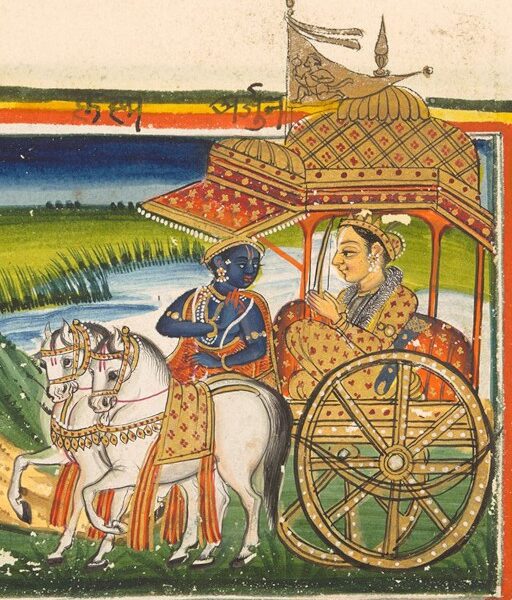
In the material world, one who is unaffected by whatever good or evil he may obtain, neither praising it nor despising it, is firmly fixed in perfect knowledge. There is always some upheaval in the material world, which may be good or evil. One who is not agitated by such material upheavals, who is unaffected by good and evil, is to be understood to be fixed in Kṛṣṇa consciousness. As long as one is in the material world, there is always the possibility of good and evil, because the world is full of duality. But one who is fixed in Kṛṣṇa consciousness is not affected by good and evil, because he is simply concerned with Kṛṣṇa, who is all-good, absolute. Such consciousness in Kṛṣṇa situates one in perfect transcendental position, called technically samādhi.
But when one is absorbed in Kṛṣṇa, then one’s not distracted by duality, because duality is always what’s going to cause a problem.
It means because we may like one side or the other. Generally in duality, one of the sides we like, and the other we don’t like. Someone likes it to be orderly, someone likes it when it’s not so orderly.
So I remember going into one person’s room, somehow or another. We were in the house, and one of the kids, we went into the bedroom. I’m not sure, I think we were working out something on painting or colors. I don’t know what it was, but it was something. So we went into the room. So the room, the one person had the single bed, the closet, the dresser, standard kind of thing. But all of the clothes, they were spread completely all over the floor. There was only enough space between things to just step. The whole floor, the whole bed, everything was just covered like that. So we thought, this is crazy. So we picked it all up, put it away. And then later when the kid came home, he was complaining he can’t find anything.
So this complete, what we’d call a complete chaos. To them it was, oh they knew, the pants are over there somewhere, and the shirt’s over here, and one shoe’s there and one shoe’s over here. So they know where it is.
So the non-orderliness they like, while someone else likes it to be nice and orderly. So that’s duality. So the point is, one’s not affected by that, because one knows it’s all Krishna.
So you’re only dealing with Krishna. So then at all times, all places, all circumstances, one’s absorbed in Krishna. So that’s samadhi. Yes? We know that Krishna likes it orderly. Yes, Krishna likes it orderly. So it’s still duality?
But why do you want it to be orderly? Because it’s Krishna. Then it’s not duality. So therefore, if it’s not orderly, you make it orderly. And if it’s orderly, then you use it like that. So you’re not happy or distressed or praising it or like that. In other words, the material arrangement is not what we are pleased about. It’s the connection to Krishna. It doesn’t mean that everything doesn’t work out nicely, but that’s why the spiritual world’s so good. It’s so well organized, because everyone’s doing it to please Krishna. They’re not doing it because they, as a conditioning, like things to be orderly. You know what I’m saying? So there are persons who, they appreciate one of the particular qualities. And because of that, then they… It’s probably better, because the wind is blowing, to put them all the way back onto the red.
It just gives that a little bit farther back. Maybe gets a touch higher before it gets to…
A little bit.
But that one right there has become Shanti’s friend, that one. They put it behind that column over there. Not next to them, but…
No, no, the other side, over there. Yeah.
Yeah.
And the Shanti’s going to feel bad now, his friend has gone away.
Okay. So that’s technically Samadhi, because you’re actually absorbed in the Lord without any problems, you know, being affected by anything here. Like that. 258. One who is able to withdraw his senses from sensed objects as the tortoise draws its limbs within the shell is firmly fixed in perfect consciousness.
The senses should be used only for Kṛṣṇa’s service. The senses are compared to venomous serpents. They want to act very loosely and without restriction.
Because that venomous serpent, it bites according to its whim. It’s not that it should bite or not. Because it should be only if it’s defending itself or it’s killing something to eat. But it’ll bite you just because it feels like it. So it’s there. They act very loosely and without restriction. The yogi or the devotee must be very strong to control the serpents, like a snake charmer. He never allows them to act independently. There are many injunctions in the revealed scriptures. Some of them are do’s. Unless one is able to follow the do’s and do not’s, restricting oneself from sense enjoyment, it is not possible to be firmly fixed in Kṛṣṇa consciousness. The best example set herein is the tortoise. The tortoise can at any moment wind up its senses and exhibit them again at any time for particular purposes. Similarly, the senses of the Kṛṣṇa conscious person are used only for some particular purpose in the service of the Lord and are withdrawn otherwise. Because otherwise, one’s in an environment, so the sense in that environment is an opportunity to engage the senses. So if we only see the opportunities, what we can do something for Kṛṣṇa, then the senses are properly engaged. So when there’s not, then they’re withdrawn.
So basically, the do is engage them in Kṛṣṇa service. The do not is to not engage in Kṛṣṇa service.
Does that make sense? But until we’re doing that because it’s Kṛṣṇa, then it’s a rule. If you engage the sense like this, it’s not good. If you don’t engage the sense like this, it’s… Does that make sense? You take prasādam, that’s good. But if you eat just anything, that’s not good. So you’re restricting on one side, engaging on the other. Does that make sense? Because it’s a rule, we’ll do it. Because we know the rule is elevating. But ultimately, it’s just, we’re only interested in things connected to Kṛṣṇa. So since you have to eat, then what’s connected to Kṛṣṇa is what we eat. Right? Does that make sense? Yes. We’re talking about when someone says just surrender. Just surrender. And applying this principle, if he was just seeing the pleasure of Kṛṣṇa, he could actually see what would be the best application for that person. In other words, like we gave the example, someone’s, let’s say, a cook, but they’re not so good out in public. Not that developing some ability to function in public wouldn’t be good for them, because as time goes and in their preaching, that would be very advantageous. They’d be able to, even using the cooking, be able to teach cooking and that. So you have an audience, a group, be able to work with people. Or in any case, just discussing Kṛṣṇa consciousness and all that. So it will be an advantage. So it’s not wrong that they develop, but at the same time, it’s the amount of what the person could do in an inspired way for Kṛṣṇa, and how much they might do not in that way. By doing something else, they may do more for Kṛṣṇa by following their nature than to avoid that nature. Does that make sense? So that’s what has to be seen. But if it’s a matter of the person, okay, in the kitchen he’s a cook, but then he’s also not thinking of Kṛṣṇa, but by being out on Sankirtan for a while, he’s definitely going to pray to Kṛṣṇa. So when he actually surrenders, then he’ll be fit to cook. You know what I’m saying? You know what I’m saying? So the person who is giving direction should be able to appreciate that and be able to see what would be the approach. Because it may be that engaging with somebody is not their nature temporarily, but to just put them on that and think, oh, they’re doing it now so then they can keep doing it. But then that’s okay. You have to know when it’s like they’re reluctant or it’s something that they’re having great difficulty doing.
Reluctance is one thing. People are reluctant about anything new or different. But if it’s a matter of they’re really having trouble absorbing themselves or getting very distracted, then you have to adjust. So it’s not a matter if they didn’t make it, so they’re not sincere. No, it means they weren’t properly engaged. So technically then the other person wasn’t. Now if they are comfortable in cooking, they’re engaged in that, and then they decide to leave the temple and go open their own restaurant, then you could say that’s not sincere. If they had full facility, they were comfortable in everything. You know what I’m saying? Does that make sense? So you have to be able to judge all those. That’s why being able to analyze it is important because there’s so many considerations.
We want to make something very clear and easy, which is nice. You make it as clear and easy as possible, but not at the expense of anything that’s important, especially if it’s not an emergency. If it’s an emergency, of course, you have to do what’s immediately necessary. It doesn’t matter what happens. But if you have time, then you would take that time. So it might take a little bit more time. You want to do something in a week. It might take a month. But the point is you get it done in a week, and then after a month there’s a problem again. The other one will take a month to accomplish, but having done it in that month, then it may last for a very long time. So actually pragmatic, you know, you’re being practical, means it’s just how big you’re seeing.
Right? Does that make sense? Kids are being practical, right? Isn’t it? They’re using what’s available. You’re out in the backyard, there’s a stick, there’s some other few things. That’s what they use. They pick it up, and, you know, on the terrain that’s there, and what they feel like doing, they get it done. But an adult will see, well, that’s, you know, they’re not really getting, accomplishing anything. Right? You know, they’re not seeing all the vast armies and all what’s happening there, you know, like that. Or, you know, Barbie got married for the 20th time. You know, some of these, you know, important stuff. You know, so, but they’ll consider because there’s longer-term plans. You know, the kid wants to do something now. The parent wants to do something, but it’ll take them a year to do it. So they consider themselves more mature, more developed. So it should be the same way as the administration understands that if something would be better by doing it longer, but it’s not due to an attachment, it’s due to a proper understanding, then they would apply themselves in that way, rather than do something temporary, and then having to keep going through somebody bigger than us. Does that make sense? Yes. I just thought it was interesting. Krishna uses the tortoise example? Krishna uses the tortoise, yes. It’s just like we have six senses. The turtle has four rims, a head, and a little tail. Yeah, yeah, yeah, yeah. That’s why he says it’s the, the best example set herein is the tortoise, right? That’s why the Shastra picks these, because they’re actually very good, because there’s things that, because Krishna defines it, he knows the nature of them and what’s going on. You know, so like that.
This is part three. We’ve got sambandha-abhidheya-prayogam. There’s a fourth. We used the second chapter, isn’t it? It means that there’s, there is elements in everything that is there. It’s just a matter of how you approach it, because these same verses are used in the previous chapters also, looking at it from that angle. But in other words, in any one situation, someone, let’s say someone’s doing something, but to do it, they had to have knowledge. So that means they had to analyze the field. So that would be Shankara Sharma, right? Then in analyzing, they see, okay, what results they could get. That’s prayogam. Then they become inspired. So then they make their plan, which is still sambandha, but then they are then applying it as abhidheya. But they’re applying what has been there as sambandha, the knowledge of sambandha and the knowledge of prayogam. Then when you get to prayogam, you have the results, but it’s based on, again, what was the field, what results and the activity. You know what I’m saying? So everything’s always connected, it’s just what’s prominent. You know what I’m saying? Like you say, you have dinner, so it’s a complete meal, right? But at different points in the meal, something’s prominent. Does that make sense? You know, like that. So that’s the… Like let’s say you’re still sitting at a table, you’ve finished eating, and now you’re just talking. But you’ll still consider it part of the meal. But you’re not eating anything, you’re just talking. Does that make sense? No? I mean if somebody just, you know, how you say, you invited someone over for dinner, you know, you hear a knock on the door, you open the door, they just walk in, walk straight in, sit down, eat everything, stand up, wash their hands and walk out, you consider that was strange. But technically, they ate the meal. You invited them for a meal, they came over, ate and left. Right?
Isn’t it? So therefore, the discussions beforehand, discussions after are considered part of the meal, but they’re not technically eating. You understand? So the meal includes all the different aspects. So therefore, the sambandham abhidheya prayojana is how to analyze the three aspects of one thing.
So it’s not that there are three separate things, there are three aspects of one thing. Does that make sense? So therefore, you may find that these different verses get used, you know, all over the place. Because here, it’s pointing out is that the person who’s obtained that, he has these qualities.
Right? While the other is that you have to have these qualities to situate yourself in Kushna consciousness. Or you have to have these qualities to perform the activity of Kushna consciousness. And one who has attained the goal has these qualities. Does that make sense? Because if we say it from one side, we don’t catch it. But if we say it from a few different sides, then… Does that make sense?
The embodied soul may be restricted from sense enjoyment. 2.59 Though this taste for sense objects remains, but ceasing such engages by experience in a higher taste, he is fixed in Kushna consciousness. He is fixed in consciousness. So by following the don’ts, right, or the do’s, you’re restricted in… the senses are restricted. So there may be something that you would like to enjoy, but you’re not because of the restrictions. Right? So that will always be a… the taste is there. But when one gets a higher taste in the engagement of the senses, the taste for the lower goes away. Right? So that’s the idea. Is that the do’s and don’ts are just to get one properly situated. Right? That’s why it’s saying here is that one is properly situated, but one may have a taste, but we still consider them situated in devotional service. Right? So therefore the neophyte is practicing devotional service. Right? Or if someone has a distraction, they’re still situated properly.
That’s why the form is there, because there will be restrictions.
Right?
It’s like you want the kid to go to bed. So the first thing is to get them into the bedroom. Right? And then into the bed. So that they’re in the bedroom, in the bed, they’re rightly situated, they’re just not sleeping yet. They’re still crawling around and this and talking and all that. But you’ll say at least it’s progressive. You wouldn’t consider, no, it’s the same as being in the living room. Right? Oh no, but if you do this, then you’re as good as not even being a devotee. It means devotees, they say stuff like this. They like to create, you know, an environment or something like that. Right? So by continuing that, by engaging in the Krishna conscious activity, means the do’s and don’ts make it so that you’ll engage in the Krishna conscious activity. So getting a taste for the Krishna conscious activity, then you’re fixed. You understand? So you have the two aspects. Rules and regulations make it so that you’re situated so that you can engage in devotional service. Right? Though there’s still material taste. But by practice one gets a taste for the Krishna conscious aspect. Then you’re actually fixed. You could also take it that since the second chapter is a summary of the whole Gita, this is the end of the second chapter. So then it is giving the conclusion aspects of the whole book.
Unless one is transcendentally situated, it is not possible to cease from sense enjoyment. The process of restriction from sense enjoyment by rules and regulations is something like restricting a diseased person from certain types of edibles. The patient, however, neither likes such restrictions nor loses his taste for edibles. Similarly, sense restriction by some spiritual process like Ashtanga Yoga in the matter of Yama, Niyama, Asana, Pranayama, Pratyahara, Dharana, Dhyana, etc. is recommended for less intelligent persons who have no better knowledge. But one… Yes, so we can see that this must be near priogeny because before we were saying how nice these things are. Now we’re saying for less intelligent.
So now we know what it takes for a yogi to be able to do this and the focus and the, you know, everything. So if that’s less intelligent, then what does the Vedic mean by intelligence, right? Rather than, oh, they’re less intelligent means they’re stupid. No, these are very smart people, but they’re less intelligent compared to someone who actually understands the Vedic purpose.
But one who has tasted the beauty of the Supreme Lord Krishna in the course of his advancement in Krishna consciousness no longer has a taste for dead material things. Therefore, restrictions are there for the less intelligent neophytes in the spiritual advancement of life, but such restrictions are only good until one actually has a taste for Krishna consciousness. When one is actually Krishna conscious, he automatically loses his taste for pale things. We understand the two go together. Like we were saying before is that that on the Brahman platform is that you have the quality and you have the forms and actions that attain it. Right? So the ones attain the other, right? And they’re expressed to that. So the rules and regulations that make it so that you are engaging in the thing that you can get an actual taste from. Right? They’re restricting one from something that you have a taste in that’s not actually a real taste. It’s temporary taste. It moves around. You have it today, tomorrow you don’t. But one, you get a taste for Krishna consciousness. So that’s what he said. Says What was it?
In the course of advancement of Krishna consciousness, no longer has a taste for dead material things. Because we think it’s the material thing that’s alive and that’s giving us the taste. But actually it’s dead matter. So it’s not giving any taste. But it’s being a vehicle for Krishna and his qualities. So what we’re tasting is Krishna. But we don’t attribute it to Krishna. Because if we did, we’d turn our attention to So I am Krishna. Right? You know, his pastimes and what he’s doing. But we focus on the point at which we’re getting that taste through, which is through the medium of the dead matter. You know what I’m saying? It’s just like, let’s say the person brings some drink in a jug. Right? And then pours out the drink into your glass. You drink the drink. And then you comment how great these stainless steel glass and jug are. They have such a nice flavor. Like that. You know? Does that make sense? And you know, according to tradition then a particular drink goes in a particular kind of container. You drink it in a particular glass. You know, it’s just like in the West. All your different kinds of alcohol, they have a different glass that you use. You know, if it’s a soft drink it’s a completely different glass. You know what I’m saying? So, therefore the containers, they bring it in, the containers you take it from. And you’re saying, wow I’ve always liked this particular shape of glass. It has the best flavor. You know, I prefer that. Others like the other one, but you know, I really like this.
You understand? That’s what’s going on in the material world. We think it’s that container that is actually giving the flavor. But it’s not. It’s that it affords the opportunity through which you can put that particular drink. You know what I’m saying? Because if you brought a plate then you wouldn’t be able to appreciate the drink. You know, unless you like, you know, wet clothes. You know what I’m saying? You understand? That’s the whole point. So it works that way.
Does that make sense? You know, and so somebody’s into that. Somebody else is into you know, something more solid. So therefore then, you know, instead of it being in a pitcher, you know, or some other kind of thing, it’s on a plate or in a shallow bowl or something like that. You use these, you know, something to serve it with, like that, and then you eat it with something else. Others are into these pitchers and glasses and that. But I much prefer, you know, the plates and forks and spoons. Like that. I think the taste is better, you know, something more solid. Of course, the other is nice, it’s fresh or this really has some substance to it.
You know what I’m saying? If we had a whole group of people that were sitting around talking like that, you’d think these guys are crazy. Right? No? And they would be thinking, you know, how is it that you see something beyond what they see.
You know? Like that. So that’s why the liberated souls come to this world and we’re so amazed how they can control their senses and that. It’s not a it’s like, it’s not even something they consider.
Does that make sense? Yes. Is this description of running Buddha till one actually has a taste for Christian consciousness? Is that meaning that people that don’t want to follow the rules of the United Nations, maybe they’re not so wanting to be Christian consciousness? Could be. Can be. It means they don’t want to be or they’d want to be but they don’t, it’s so much trouble doing it. Just like, you know, you’d like to have a million dollars but the amount of work that you’d have to put into it and all that, you may not be so inspired. Right? So, there may be that aspect. You know, so that just means they don’t really understand. Sometimes I come across that advice that they just can’t be bothered with the rules of it, just like it’s overwhelming. Yeah, so then that’s because the, you know, that means, they say they’re overwhelmed by the rules and regulations. Technically, it means they’re overwhelmed by material desire. And so, by following the rules and regulations, it restricts the material desire so therefore they feel that there’s no engagement. There’s no, you know, what do you do? You can’t do this, you can’t do that, you can’t do, you know, so you had to, how you say, you know, this person’s like, you know, I mean, this kind of mentality is, you know, Acharya then would be, I think it was, I think it was Ramakrishna then, because there were so many rules like that. When they passed urine, because you don’t pass urine on a walkway, right, because people are going to walk in it. Not on a plowed field, because if it’s plowed, it means someone’s going to do something there, or one that’s growing things. It’s just a fallow field, it doesn’t matter, like that. You know, not towards the sun, right, because one, people can see it, two, the sun has to look at it, you know, not towards cows, out of respect to them, not towards a group of people, right, does that make sense? You know, you’re not standing up, you should be squatting down. So, so many rules like that. So now, then he was, he had to pass urine, so many things, so then standing up, hopping on one leg, and spinning in a circle, he was passing urine. Because there’s so many rules, so therefore, you know, I like this, so he’s considered a great, you know, intellectual and saintly person because of this realization.
I’m not sure, they don’t continue the story to say who had to clean up the mess. But, in any case, this is one of the stories of his greatness, you know, like that.
So, in other words, it’s because it’s a bit of a mode of ignorance, so it’s always what we think it is, it’s the opposite, generally. We think these are overwhelming and I’m nicely situated, no, you’re overwhelmed so much that being in a, in that actual state for a spiritual state, you don’t feel you have anything to do. It’s empty for you, right? Because you’re not seeing its connection to Krishna. So, until you see the connection to Krishna, you follow as much as you can because unless there’s inspiration, you’re not going to do anything anyway, so that person will go on in their identity and like that, but Maya has a good way of, you know, she knows how to deal with you, so what’ll happen is at some point, then you’ll get frustrated. Then you might reconsider all those rules and regulations, you know, because they’ll be helpful in attaining Krishna, right? So, if today they’re too distracted, that’s why it says don’t disturb the minds of the ignorant. If they’re too, it’s too much for them, just leave it. It doesn’t matter because what they are doing, they’re absorbed nicely there. You know what I’m saying? They can’t follow all these little things, the cleanliness or this or that or like that, then don’t bother them if they’re engaged in something dynamic, you know, something progressive, because then these other things distract them and then they can’t focus because it’s just too much for them because, you know, they’ve never thought about these things, so therefore it’s a problem. You know what I’m saying? Like, you know, you see some persons’ purity, they understand very well, but not necessarily their cleanliness. Another’s cleanliness very well, not necessarily purity. Some, you know, neither about, you know, so you get all four. So, whatever, if they’re engaged, don’t worry about it. If you can say something and it’ll, okay, and they can add it nice, but if you say something, it doesn’t work, leave it. Encourage what is actually going on, what is actually Krishna conscious, because by getting a taste there, then all the other things have a meaning. Or by becoming purified by the process, then these other things will have a use. You know what I’m saying? The idea is to catch it somewhere. So we’ll always tend to push where is, where we are comfortable. Right? Because if we’re doing what, of course, whatever we’re doing, that’s the perfection. You know, whatever someone else is doing something different from that, then that’s a problem. But if they’re doing what you’re doing, it just confirms yourself.
You know, so when you say, oh, everybody’s doing it, it means there are a few other people other than myself who are doing what I think. So therefore, what I’m doing has been confirmed.
Right? So it’s not actually that everybody’s doing is important. No, that there’s other people doing what I’m doing, that’s what’s important. Because there is a huge amount of everybody who’s doing something that I don’t do, but I don’t consider that everybody. Those are the weirdos. You know, you may have a whole country full of them, but they’re weird, you know. Does that make sense?
Sixty-three, footnote sixty-three. Śrīla Prabhupāda writes in his purport to Śrīmad -Bhāgavatam 3.31.38. Instead of being attracted by material beauty, if one is accustomed to be attracted by the beauty of Rādhārāṇī and Kṛṣṇa, then the statement of Bhāgavad-gītā, param drstva nivartate, 2.59, holds true.
When one is attracted by the transcendent beauty of Rādhā and Kṛṣṇa, he is no longer attracted by material feminine beauty. That is the special significance of Rādhā-Kṛṣṇa worship. That is testified to by Yūmunācārya. He says, quote, since I have become attracted by the beauty of Rādhā and Kṛṣṇa, when there is attraction for a woman, or a memory of sex life with a woman, I at once spit on it, and my face turns in disgust, end quote. When we are attracted by Madana Mohana and the beauty of Kṛṣṇa and His consorts, then the shackles of conditioned life, namely the beauty of a material woman, cannot attract us.
So here is the, you know, taking that to the practical application. When you are attracted by something, Kṛṣṇa, then these other things don’t attract. One is more attractive than the other. But it’s also that, you know, a, a, a, I say, portion of a portion of a portion very removed is what you’re actually attracted to. So if that’s so, if one is so attracted by that, why wouldn’t one be attracted by more? Right? It’s just like saying, oh, you know, you have this little gold ring, and that’s so attractive, right? But let’s say I have a room that’s just full of gold, shiny gold. Right? One would naturally be attracted more. If you understood that this is gold.
Does that make sense? You know? But if you think that, let’s say that’s, let’s say gold bars, and this is a gold ring. So you say, well, no, I can’t be attracted to that, because it’s not round rings with holes in it, right? Like that, it’s, it’s chunks. But if you actually understand I’m attracted to the gold, because if I give you the same shape in the ring, but I make it out of iron, you’re not going to be impressed.
Right?
Yeah? Okay. So, that’s the point is if you actually understand it’s gold, you’ll be attracted by more gold. Right? So if you actually understand that that’s Krishna, then you’ll be attracted by that complete form.
Does that make sense? Because it’s not. Let’s hear you.
… … It’s just, you know, it happens.
… … No, it’s just that they allowed something else to come up, that’s all. It means weeds. When weeds are there, the creeper is still there. Right? So it’s not that the creeper is any less. So that advancement that they’ve made is still there. So technically they are more advanced than us. But, the point is they may not be applying it or taking advantage of that. The weeds have grown up so much that that looks, because the weeds look similar to the plant.
That’s the thing, it looks the same, that’s why we have to be able to analyze, so we can tell what’s the creeper and what’s the weed, because they look the same. So you have to be quite expert. Like if we look at a field of rice, you know, the water is all there, all the rice is there. We see people going through and they’re pulling out sometimes about half of what’s there. But it looks the same, because rice is grass and the weed is grass. But it’s a different kind of grass. So they can tell, there’s a slight difference in the shine or a little of the shape or the edge or, you know, the texture. So they can tell the difference. And so then they pull those all out. But for us, they look the same. So that’s why with training we can tell what is a weed in devotional service and what’s not.
Because otherwise we’ll take one to be the other.
260.
The senses are so strong and impetuous, O Arjuna, that they forcibly carry away the mind even of a man of discrimination who’s endeavoring to control them. This is the second time this happened yesterday. So whatever was the next sentence is what your question is.
So that yesterday also is exactly the same thing. That or is just, that’s the natural form of it, so that’s the natural question.
Oh.
Yeah, what about that? We’re coming up to that. No. No.
Let’s see what he does when he doesn’t have the purport and slogan.
Okay, they forcibly carry away the mind even of a man of discrimination who is endeavoring to control them. So a man of discrimination. So it means he’s right and wrong, what’s the do’s, don’t those, he’s fixed, you know, he’s practicing that like that. It doesn’t necessarily mean that that attachment to Krishna is so great. Because when that’s there, then these things become very easy.
Without engaging the mind in Krishna, one cannot cease material engagement. Because even someone gives up karma and practices jnana, technically, I mean it means we technically would say that it is not material, right? We’d say it’s spiritual. But factually in comparison to devotional service, it’s still material. Right, so that’s the point, you can’t give up, you may give up a lower aspect of the material for a higher aspect of the material, but you’re not going to give up material until you’ve tasted or engaged in transcendental.
Does that make sense? That’s it. There are many learned sages, philosophers and transcendentalists who try to conquer the senses, but in spite of their endeavors, even the greatest of them sometimes fall victim to material sense enjoyment due to the agitated mind.
Even Viswamitra, a great sage and perfect yogi, was misled by Menaka into sense enjoyment, or sex enjoyment. Although the yogi was endeavoring for sense control, with severe types of penance and yoga practice. And, of course, there are so many similar instances in the history of the world. Therefore it is very difficult to control the mind and senses without being fully Krishna conscious. Without engaging the mind in Krishna, one cannot see such material engagements.
here again, it’s just bringing out if one has that taste, then this will be very easy. But if one doesn’t have, then there’s always going to be difficulty. So that’s why we are determined, we understand why we follow the do’s and don’ts and try to situate ourselves there. But we should not think that just because that’s been done, now we’re Krishna conscious. No, Krishna conscious means being conscious of Krishna. And to do that we need to follow the rules and regulations. So if we only are following the rules and regulations, think that’s the Krishna consciousness. No, that’s assistance to Krishna consciousness. So it’s important. But it itself is not the Krishna consciousness.
Taste comes on its own? Taste comes on its own. We can practice taste. Practice taste.
Yeah, no, taste comes on its own. So we can only practice. But you can practice, like let’s say, you want to develop a refined taste. So what should you eat? Refined things. So if you want to develop a taste for Krishna consciousness, therefore you have to be constantly in touch with Krishna consciousness so that that taste will develop. Let us say, you give someone who doesn’t have a refined taste, you give them something simple and something refined. To them it’s not much difference. Right? But with time, and as you point things out, then they’ll start to catch it. You know what I’m saying? So that’s the idea of Krishna consciousness. You practice the process of tasting, but getting that taste comes with time. As we are purified, then the higher taste comes. Because you have a lower taste, it means it’s not purified.
And for an advanced person, even a small thing can cause his, I mean, let’s say, for an advanced person, small an art of, small meat causes a big havoc, and for a person who’s not so advanced, like not so refined, some things go, he can go with without falling down because he’s in such condition. Yeah, because he’s already in the falling. It’s like, if you’re already laying on the floor, then you’re not going to have, you know, if you roll over, you’re not going to probably bruise yourself much. You know what I’m saying? But if you’re standing up, and then your face comes in contact with the floor, there may be some damage.
That’s one thing. The other thing is, there’s so much distraction, there is no focus, so you don’t actually get very far with it. You’re like, the materialists, they’re dedicated to sense gratification, but they don’t actually get very much of it. You know, you don’t have to, you’re not restricted by having to cook and go to the market and do all these different things. So they end up with fast food. Now how refined is that? How good is that? So even though they’re committed to sense gratification, the actual, what they’re obtaining is very meager, very, as Prabhupada said, pale.
You know what I’m saying? One is that, he said, dead. Because it is dead. Right? What you’re dealing with is dead matter, but there is some of Krishna’s potency comes through it, but it’s very pale. You know, the potency is pale, and the medium is dead. You know, Radha and Krishna, that substance, and it’s unlimited, so it’s…
So, the focus is more, that’s why sometimes it can be more of a distraction.
You know what I’m saying? What was his name? Subari Muni. Right? There’s some fishes. And so then he becomes distracted, because his focus is so great. So one thing, when it goes on the fish, then it’s so much. You know what I’m saying? So that’s why it’s seemingly such a small thing can disturb. But it’s only, it’s not, they’re just not being… That it’s because of their focus is greater. It’s also we’re not so disturbed, because we have a hundred things that distract us. You know, so you can’t fully get into one, because the others are around. So you’re trying to get everything at once. You know what I’m saying? It’s just like, let’s say…
You know, it’s a… Yeah, there’s a point the man wants to make, but he hasn’t found the right moment. You know, because you know, the wife is focused on something, or grumpy, or this or that. Then some opportunity comes along, she’s very happy. Like that, right? It’s just going good like that. So he thinks, this is the moment when I can now mention it. So by mentioning it, now puts her in a bad mood. So he mentioned it, but it didn’t actually work. So it’s, you know, it gets the opposite result. So now it’s, you know, so that’s the things, we want to do everything at once. You know, that’s the problem. So when, you know, one thing’s happening, you deal with that, and the next thing’s happening. Does that make sense? Yeah, so… There also, then, in these great sages is that there’s very few anarthas there. Right? So if one focuses on one of them, there’s no other distraction, so it can get more intense. Does that make sense? So we have to understand is that this platform that advanced devotees fall from is not the platform we’re falling from. People like to make it sound like it. But it’s very, very different. You know. Like we said, you know, Bharat Maharaj is seeing the soul of the deer, but he understands the soul identifies with the body of the deer, so it thinks it’s a deer. He doesn’t think it’s a deer. He knows it’s a soul, because it thinks it is, and it needs a mother, right? If it was full-grown, you don’t worry about it. But it needs a mother, so it’s an anxiety, right? And an advanced soul doesn’t want to see other living entities in anxiety. Therefore, he takes care of the deer as the deer would think it should be taken care of. Right? And so when he gets lost, and he’s also thinking of the deer, now it’s a storm, it’s still small, it’ll be scared, it’ll be this, so he’s going out to find it just so he won’t be upset. But because he’s thinking of the deer at the time of death, he becomes one. So his platform of falling is not otherwise. Why isn’t just any old person’s fall down as in the Bhagavatam? But you only hear, the only Bharata Maharaja’s is really mentioned, you know, as a whole discussion.
Vishwamitra’s brought up here and there, but not as the main discussion.
When I say Mahabharata, then Vishwamitra features. I don’t say that. Yes?
Remember that it’s the Krishna part of it that’s important. Not just the compassion part. Compassion is because they’re connected to Krishna.
Yes? I was just thinking that it’s so important to be engaged in devotional service. So is it up to our endeavour to find that engagement that we get fully engaged, or is it that we have to get help from others to make sure we’re getting more engaged? I would say both. Because unless you’re aware, if you’re aware, it’s so much easier.
Right? And then, to confirm that, then you consult with others.
So it’s both. All of them.
All right. The lower case came from identity, right? Yeah, because we identify with that.
Yeah, identity and just practice. We’re just used to it.
You have to re-do a practice to it. But that’s how Krishna consciousness is so much more powerful. In one lifetime you can become Krishna conscious, change the taste. Well, what we’re dealing with is the taste of being in the material for some time in memorial.
But it still takes some practice.
Just like, let’s say, we have shifted the door. Right? We came to the house, it’s an old house, and the house was one of those houses where, you know, things were just built on to built on to, you know, like that. So, factually it would be much better if the door was what moved. So you shift the door. But, by habit, you’ll still go to that place where the door used to be, even though it’s in an improved place. But, by keep going to the other place, then you forget about where it used to be.
Right? Does that make sense?
Many say that in order to develop this higher taste, we have to be more absorbed in Krishna-Vrila, reading Krishna-Bhagavad-Gita, thinking about those pastimes. I mean, that is there, but the point is, what does mother just show to do? She gets up in the morning, what does she do? Start thinking about how to cook for Krishna. Yeah, how to cook for Krishna, get him up, so he can go to the goshala, prepares his bath, and when he comes back, then bathes him, like that. So, practically what they do, you could say, is Vicharatra, would be what they do. Right? But it’s not because of the rules, that’s because of the natural, you know, how you say, rasa.
You know what I’m saying? So, if that was the only thing, then that would be the main focus. But the point is, is you talking, that’s one thing, but getting others, that’s even more. So, therefore, you know, distribution, preaching, the Sunday programs, all these different things, is so that others are doing it. You know, so that’s also important. So, just sitting around doing it yourself is nice, but it should be as if it’s such a good taste, you would want others also tasting it.
You know what I’m saying? It’s just like, let’s say, I’m sitting in a train station, right, and I’m eating something, and it’s really good, right? But, you know, there’s nobody I know around, so I just eat it myself. Okay? Now, let’s say, I’m sitting somewhere else, and there’s some friends, and I pick up something to eat, and it’s really good, what am I going to do? Yeah, tell my friends, hey, come over here, check this out, you know, it’s really good. Right? If you’re a nice person, you do that. If you’re enjoying it, you might keep it for yourself. But I said friends. If you have enough.
You know? Then, then, if you’re, if you are tasting it, and there’s an opportunity to share it, but you don’t, then we wouldn’t call that selfless, we’d call it selfish. Therefore, just sitting alone and practicing bhajan. Then, by the acharyas, it’s considered as selfish.
Right? They’re talking about sadhakas, they’re not talking about perfected souls who, even just by their, it’s like I said, just by Gorkha Shraddha’s Babaji Maharaj sitting on his own and chanting, it purifies the whole universe. So it makes the opportunity for others to become Krishna conscious easier. Right? So that other preachers can preach, and their environment’s better because of him. But we’re talking about those who come to the perfection, sadhakas, then it’s considered selfish.
Like that. Because unless they follow the rules of sharing, how are they shared? Right? That’s one thing. So that’s why the Bhagavata aspect of hearing and chanting is the predominant. But, that’s okay. Now let’s say if that’s the predominant, that’s the only thing you have to do, we won’t do other parts. That’s okay as long as all you’re doing is Bhagavata.
You know what I’m saying? And then if you’re doing, dealing with Pancharatrik, you’re worshiping the deity and doing that, between those two, that’s very strong. That’s a very good position also. But, let’s say one’s a family person, one has one’s job and this and that, and one only talks about, you know, only the service of only hearing, chanting, you know, Bhagavatam, especially Krishna’s pastimes, that’s the only thing that’s important. All these other things aren’t important. That’s unrealistic. Because if that’s true, then why are they engaged in other family activities?
You know what I’m saying? So if you’re being practical in family life, what about other people who are being practical and connecting that to Krishna and therefore it becomes devotional service. Now to criticize their using of your same attachments in Krishna’s service when you’re not, and then because you’ll sit down and read, you know, Krishna book, and they’re doing some other service that’s engaging in the senses, then they consider yourself superior.
You know what I’m saying? That wouldn’t be fair.
Does that make sense?
Okay.
Okay, so engagement in Krishna consciousness, you can see, otherwise, just by, in other words, we will take it that if we follow a spiritual program, then we will become Krishna conscious. No, by being Krishna conscious, you’ll be Krishna conscious. The spiritual program is necessary because it takes you away from being not Krishna conscious. You know what I’m saying? So the spiritual regiment is of value because it allows for you to be Krishna conscious. That is focusing on Krishna consciousness that makes you Krishna conscious.
Does that make sense? Okay.
261. The one who restrains his senses, keeping them under full control, and fixes his consciousness upon Me, is known as a man of steady intelligence.
The senses can be controlled only by devotional service. That the highest conception of yoga perfection is Krishna consciousness is clearly explained in this verse. And unless one is Krishna conscious, it’s not at all possible to control the senses. As cited above, the great sage Durvasa Muni picked a quarrel with Maharaja Ambarisha, and Durvasa Muni unnecessarily became angry out of pride and therefore could not check his senses.
On the other hand, the king, although not as powerful a yogi as the sage, but a devotee of the Lord, silently tolerated all the sage’s injustices and thereby emerged victorious. The king was able to control his senses because of the following qualifications as mentioned in the Srimad Bhagavatam, 9.4.18.20. Quote, King Ambarisha fixed his mind on the lotus feet of Lord Krishna, engaged his words in describing the abode of the Lord, his hands in cleansing the temple of the Lord, his ears in hearing the pastimes of the Lord, his eyes in seeing the form of the Lord, his body in touching the body of the devotee, his nostrils in smelling the flavor of the flowers offered to the lotus feet of the Lord, his tongue in tasting the tulsi leaves offered to him, his legs in traveling to the holy place where the temple is situated, his head in offering obeisances unto the Lord, and his desires in fulfilling the desires of the Lord. And all these qualifications made him fit to become a mat-para devotee of the Lord. End quote. The word mat-para is most significant in this connection. How one can become mat-para is described in the life of Ambarisha Maharaja. Srila Baladeva Vidyabhusa, a great scholar and acarya in the line of the mat-para, remarks, The senses can be completely controlled only by the strength of devotional service to Krsna.
This is confirmed in Srimad-Bhagavatam 11.29 .2-3. O lotus-eyed lord of the universe, swan -like men happily take shelter of your lotus feet, the source of all transcendental ecstasy. But those who take pride in their accomplishments in yoga and karma, fail to take shelter of you and are defeated by your illusory energy. So Durvasa, he was proud of his qualification in yoga, because where did Durvasa Muni go after the past with Ambarisha Maharaja? What planet did he go back to, to tell all his friends?
Yeah, he went back to Brahmaloka. Yeah, he went to Brahmaloka where all the yogis are to tell him how great a yogi Ambarisha is. So in other words, he understood that the bhakti yoga yogi is greater than this astanga yoga.
Though he was, you know, most accomplished, he’s a, he, Vishwamitra’s a Brahm, no, this was Durvasa. Durvasa’s actually an incarnation, right? So, but, the devotee is even greater, right? Because he was representing devotional service, while Durvasa Muni was representing the mode of ignorance.
And Ambarisha Maharaja, he’s engaged in the Pancharatric process, isn’t he? Yes, he’s engaged in the Pancharatric. So all, that’s, the Pancharatra is simply a way to regulate that you’ll always be engaged in Bhagavata activities.
That’s what the Pancharatra, because Pancharatra doesn’t deal with what you do in your family life. Right? It deals with what you do in connection with the Lord. So that means all the activities of the deity worship, then you need to be chanting, right? Associating with devotees, hearing Bhagavatam, and living in the Dham, or the deity is in the Dham, right? Means it is the sacred place. So, all the instructions are about those five. But the focus is from the perspective of the deity worship. Right? The Bhagavat will be from the perspective of the hearing and chanting and then you include the others. Right? So, all it is is a formalization of those five main Bhagavat activities.
Right? So then we expand it, you get sixty -four.
Right? So there’s the sixty-four acts of devotional service. But of those, those five are the main. But if you look at it, the first twenty are so that you’re established properly, so you deal properly with devotees, Vaishnavas, you know, and the place and paraphernalia of the Lord. Right? You have the proper attitude, proper spirit. But the next, the next, basically was the thirty-nine are all connected with deity worship, all with Pancaratra.
Right? They’re how to, you know, ensure that you will be taking part in the Pancaratra process nicely. So sadhana means, basically for us, Pancaratra. Because the Bhagavat, there is no sadhana. Bhagavat is spontaneous.
Does that make sense? Or the sadhana is there, but it’s called bhava-bhakti.
Like that. So before that, then we are conditioned, so we’re following Pancaratra. Right? But when you get to bhava-bhakti, then there’s no need to follow Pancaratra. Like that. But you may also. Like Ambrish Mars, he didn’t. It worked out for him. Right. There is discussion going on about this sadhana -bhakti and the spontaneous…
Spontaneous devotional service. And one of the ideas is that serving Lord Caitanya, that will come automatically. Spontaneous. Yes.
Yeah, but that’s like saying there’s cars and then there is a Mercedes.
So there’s a different method of taking care of cars and taking care of Mercedes.
Right? You understand? Sadhana is the category. Within sadhana-bhakti you have Vaidi sadhana and Raghunatha sadhana. But they’re both sadhana. They like to try to make it as its own entity. But that’s misleading.
Spontaneous devotional service means that you are naturally inspired to follow the rules and regulations but not because the rules and regulations are what’s important because through those rules you can serve Krishna. So you’re inspired to serve Krishna. But you still use the rules and regulations. That’s why it’s called sadhana-bhakti.
So you have Raghunatha sadhana-bhakti and you have Vaidi sadhana-bhakti. But you don’t have sadhana-bhakti and then Raghunatha-bhakti as two separate things. That’s a misnomer. Total misnomer. You know what I’m saying? So in other words and how we can be so strong on that point. One is Rupa Goswami defines it that way. But as far as practice goes what is the example? Basically the one singular example given by Rupa Goswami and Prabhupada quotes and everybody quotes as the practice of the Raghunatha sadhaka.
What is this attitude?
Yes. The example of a paramour. The wife has a paramour. So what does she do?
In other words someone who’s on the platform of Raghunatha sadhana follows Vaidi sadhana better than a Vaidi sadhaka. Because then you’ll never guess.
You understand? So all these ones that are trying to show you that they’re Raghunatha sadhakas and expect you like that and give up this Vaidi sadhaka. That’s not Rupa Goswami. Who they’re following who knows. But it’s not Rupa Goswami. It’s not Bhaktivinoda, Bhaktisiddhanta Sarasvati Dr. Srila Prabhupada. It’s not of our chart. They’ve made up their own path.
Because the point is the Raghunatha sadhaka you would have to actually technically be on that platform to actually understand that platform. Because where you look at it because they’ll look at it, oh now here’s the point. You have to read the Krishna book. You have to read these things. You have to be reading about Krishna’s pastimes. Right? Isn’t it? That’s how it’s presented. You have to. And when I use the word have to, what am I defining? I’m defining rules. So that is Vaidi sadhaka. All they’ve done is made another form of Vaidi sadhana bhakti and then they call that spontaneous devotional service. No, it’s just more Vaidi. It’s just emphasizing hearing Bhagavatam and chanting Hare Krishna. And associating devotees and not so much on the Pancharatra. That’s all. So the deity worship is left out of their idea of their you know Raghunuga sadhana bhakti. When actually it’s just Vaidi sadhana bhakti that just drops Pancharatra. So there’s no regulation. That’s all. It’s not Raghunuga at all. That there’s an idea that they want to be serious about it and move forward. That’s good for those who are serious. But for most of them they’re just off the path.
It just looks good. Because I’m doing that therefore I’m superior to you who’s just engaged in rules and regulations. The point is who gave those rules and regulations? Those rules and regulations are the sixth chapter of the Nectar of Devotion. Who wrote Nectar of Devotion? Yes. So then you know Sanatana Goswami wrote Hari Bhakti Vilas. He’s considered the guru of Rupa Goswami. The Goswamis don’t have a problem with rules and regulations.
The point is the difference, the actual difference between Raghunuga and Vaidi is Raghunuga you follow the rule because you like to. You either have a taste or you understand it’s pleasing to Krishna. Vaidi you follow because you’re supposed to. That’s all. It’s that simple. Rupa Goswami explains it like that. Prabhupada explains it like that. But these Raghunugis, these so-called, they don’t accept that. They say no, it has to mean you’re just reading about Krishna’s pastimes, especially the gopis. The Prabhupada gives so many purports about that.
That’s all.
They’re misrepresenting the line because they’re trying to take sadhana bhakti and make it that it’s a category and then there’s Raghunuga and then there’s the sadhana. But then if that’s there, then all that sadhana fits into what category? If it’s logical, what does it fit into? No, it’s within sadhana bhakti which means from sraddha up to asapti.
You’re either following by rules or after nishtha you might be following by spontaneity. But before nishtha, there’s no question of spontaneous because he’s just as spontaneous about hopping into bed with his wife as he is about sitting down and reading Krishnadeva. So where’s the spontaneity?
You know what I’m saying?
It’s very much just as much part of his life because most of the time these real hardcore Raghunuga sadhakas are grihasthas.
You know? Brahmacharis, when they get fanatic, they generally get hardcore dry spiritual rules and regulations.
Occasionally you’ll find someone who has that softness.
So they’re just converting their grihastha feeling wanting to do whatever they like into applying that in devotional service so they think that’s more advanced. It’s not.
When in the process does lilasmarana become prominent? When does lilasmarana become prominent? When you remember lila. When you have a taste for it. And then you make it like that. In other words, if you’re reading Krishna book because you like reading Krishna book, that’s spontaneous devotional service. If you’re reading Krishna book because you have to, because that’s spontaneous devotional service. That’s not spontaneous. You read Krishna book because without hearing about Krishna’s pastimes how do we know what the goal is? Because we see it’s by being attached to Krishna as a person. So if we read Krishna book, we know who he is as a person. So when we do follow our rules and regulations, we know who we’re doing it for. That’s why we should be reading Krishna book. But to say, no, no, the rules aren’t important. Just reading Krishna book, that’s important. But that’s a rule. No, spontaneous means the reason you’re reading Krishna book whenever you can is because you like to.
And how you can test is, okay, the person’s saying that all now. Come back after a few months. Are they still doing that?
If they are, good chance there’s a taste. If not, then it was something they got into.
It’s just something to do.
So that would also apply for that. Choose one member of the spiritual world. You have to choose one member. But the point is, first choose the spiritual world.
First choose the Vaishnava community that Krishna is. Who are you going to choose? What do you mean? Just like that? No. Our choice is already made. It’s Rupa Goswami. So then what’s the problem? We’re Rupa Nugas. So the choice has been made. But the point is, you have to yourself make that choice.
You know what I’m saying?
Like the young man is there, he’s part of God and country, but then when he grows up and then he feels, yes, I got to do something for God and country. He always was part of God and country, but now he’s going to do something for God and country. So that commitment. So we’re already Rupa Nugas, but now it’s just a matter of you individually making that commitment that, yes, I’m going to follow what Rupa Goswami said. That’s following the footsteps.
That’s all. Because the point is, how are you going to apply that thought? How are you going to apply it?
What’s the sadhana for that? What’s the problem? Let’s say I’ve decided to pick kundalata.
Seize Krishna’s cousin and because being a cousin and a family member and being a girl, that means she can walk into Krishna’s pastimes anytime, anywhere because she’s a relative. Girls generally get into everywhere, but even if it’s not a place for the girl, like let’s say the gopis are there and they cook for Krishna and they’re serving prasad. She can walk right out there and serve prasad. She won’t be shocked. She’s a cousin. What’s the problem? Like that. She can go hang out with Mother Dushodha. She can go hang out with anybody in the family. So she can be right there, except when the boys are out in the field, but even then she couldn’t walk up and say, I want to talk to Krishna. And no one’s going to say, boo, because she’s a cousin. So, okay, yeah, your cousin wants to talk to you. Stupid. Like that. It’s like that. So you can go do it. Right? At the same time, being a girl, she can walk into the pastime, see the aspects with the Radharani and the gopis. No problem because she’s a girl. So I mean, hey, that’s pretty broad. You know, like that. Now, okay, so now what do I do?
You understand? Yes, so what do you do? So that’s the point. It’s all nice talk. But what’s the meaning?
That’s the problem. It’s just talk. It sounds great, but okay, now do something with it.
Yes, very nice. You know what I’m saying? So that’s the point. So what are you going to do?
So that’s the thing is that, no, the process is, you follow the footsteps of the residents of Vrindavan. What is the point? Their full surrender.
Everybody in Braj is fully surrendered. That’s what you want to look at. So that you can do. Then when you’ve attained full surrender, then there’ll be a flavor to that full surrender that will be in line with, you know, a certain group and then maybe a particular individual. You know what I’m saying? But first you have to, you know, it’s like, you know, it’s like, yeah, does that make sense? You know, you have to have the spirit. That’s why Prabhupada starts in the beginning, having the spirit of Bhagavad Gita. So if you don’t have the spirit of the Braja Bhaktas, then how are you going to follow in the footsteps of a particular person? In any case, our footsteps, that’s why it’s Raghanuga, following the footsteps of Rupa Goswami. I mean Rupanuga. And he’s the one that defines Raghanuga. So therefore, they’re non-different.
You know what I’m saying? So therefore we have to accept his definition.
I’ve heard this similar idea that since Raghanuga means to follow Raghatmika Bhakta, some have the idea that since Lord Caitanya is the Raghatmika Bhakta, so by following Vaisnava sadhana under following him, it’s as good or equivalent as performing Raghanuga. It means it is the situation of Raghanuga. But Raghanuga is Raghanuga. You know what I’m saying? Do we see what’s happening here? There is the actual thing and one is talking a little bit to the right of it and one is talking a little bit to the left of it. Neither are actually talking about what it is. Because the point is if you simply follow Rupa Goswami’s instructions of serving Lord Caitanya and you commit yourself to that, then that taste will come. It’s automatic. Point is, it’s just like this. Do the parents or the government or well -wishers have to go to great endeavor to see that the child comes to puberty? No. It happens automatically.
Now when we say automatically, we’ll say, oh no, but that’s just there. But is their health there? Now what if their health is bad? I mean really bad. They don’t eat properly, their health is bad, they’re completely irregular. Will they come into puberty? On time? No. There’ll be some delay. There’ll be something going wrong. So you take care of their health, their mentality, their security, everything properly and automatically it happens. So if you follow the process given by Rupa Goswami and given to us by Srila Prabhupada and the acaryas, then it will automatically happen. So he says no, but it won’t happen unless you know. But the point is we do know. Every devotee knows they want to go into Vrindavan pastimes. So they do know, but how much do they know? Just like the little kid knows, the girl knows when she grows up she wants to get married, but it doesn’t really mean much. When she’s three, Barbie and Ken are getting married. That’s all they do. They don’t do anything else. So that means that’s there, but they don’t know the details. So the point is the concept is all that’s necessary.
The point is if they’re sitting around arguing over it means they don’t know. Like a bunch of eight year olds arguing over what it means to be a teenager.
They don’t know.
Does that make sense? Yeah. So the point is it is automatic, but the point is it’s there that you can be aware of it. But the point, who will be aware of it? The person who is. That’s all. Raghunuga is simply that there’s an interest in it. That’s why it’s there. Like why does devotional service come? Because there’s an interest. That’s the only reason. So that makes it that there’s an interest in it. It develops. So by saying that there’s an interest and so by reading these things that may develop an interest, but it’s still vaidhi until the interest develops. So they’ll try to say this is the sadhana for developing it, but that’s still called vaidhi. And vaidhi also already includes hearing and chanting about the Lord.
Just somebody may over-emphasize this or over -emphasize that. You want to catch a balance, what works for you because what’s going to work for you is what’s going to work.
Yes. Does the type of service change?
You mean type of service or quality of service? Type. Why should it change? Why would it change? What would be an example?
Yes, so that’s the point is that the type won’t change. The quality will change.
You know what I’m saying? The boy is chasing the girls around the playground and pushing them into the wall and throwing wads of paper at them, right? Now when he grows up and he understands that somehow the other girls don’t really appreciate that, but still his attention towards girls stays the same. You understand? Just the quality of it changes. Right? Instead of throwing a piece of paper, now they bring him a flower or something.
You know what I’m saying? Or at least the paper has something written on it and it’s folded up rather than wadded up and just tossed around. You understand? So the quality changes.
Because the point is that you’re just going to engage your conditioning. So it doesn’t matter what it is. Conditioning being engaged in the Lord’s service is perfect.
Does that make sense? Yeah.
If you don’t some parts of Vaidhi you like more than others and you do it out of desire to do it. So then that… It’s Vaidhi, but then maybe that aspect has some touch of what do you call it? Rag to it. It’s not like you’re sitting there and you’re Mr. Vaidhi and then suddenly bang! And now you’re Mr. Raghunuga. No, it’s a gradual process. It may be quicker in some, slower in some, it doesn’t matter. Because Visvanath points out that one might even follow Vaidhi sadhana up to Bhava. But at Bhava, then he’ll switch to Raghunuga. Because the rules aren’t important anymore. Right? The knowledge and rules are important up to Bhava. Because the point of them is to get you to the liberated platform. Just like wood produces fire. Right? But the fire is burning on the wood. But when the wood is finished, there’s no fire. So knowledge is there because there’s activities that deal with the world that requires the knowledge to deal with it. But once the attachment to the material world is finished, the knowledge necessary for it is also unnecessary.
Right? So therefore, even if one doesn’t come to the Raghunuga platform within the Madhyama position, it doesn’t matter because one will come to it in the position of Bhava. You know, as an uttama. So if from Nishtha it starts, nice. But if it doesn’t, you know, if it starts at Bhava, it also works. You know, so anywhere in between.
It doesn’t really matter.
Okay.
Vritti. The next two verses describe what happens when the sadhaka fails to control his mind and senses. Yes. 262-263. While contemplating the objects of the senses, a person develops attachment for them. Because from desire comes need. Right? So that desire means this contemplation. So the spirit means you’re contemplating in that mood of being involved. Right? And from such attachment, lust develops. The attachment, then you want. Right? Because attachment is there. Then when that develops, then the lust, so therefore there’s action. And from lust, anger arises. Because you performed the activity, didn’t get it, so you get angry. Because basically, you never get what you want. Right?
From anger, complete delusion arises. Right? Because anger is now back in the position of sambandha, so it’s dealing with your identity. So now because of anger, you think this and that, so you don’t look at the philosophy, you don’t look at the knowledge. So then you act not with the knowledge. So delusion. And from delusion, bewilderment of memory. Then you don’t remember certain things. You know, if somebody does something and makes you angry, you completely forget that maybe they were your best friend, or they did something for you, or you were in that same situation and they did this for you, and now when it reverses, then you’re not considering that. So that’s bewilderment of memory. There’s a pollution of emotion in the mind. Because memory is part of the intelligence. So the mind has to access it. So if the mind has already accepted something, it may avoid the process of going through the intelligence.
Right? Because intelligence means, what are your choices? You’ve made choices in the past, what do you get? So we say an intelligent decision means, what does it mean? It means you looked at the past, I did that, it didn’t work, but I did this, it worked, so therefore I’ll pick the one that worked. Even though the one that didn’t work is always the most attractive.
You know what I’m saying? It didn’t work. You know, the guy’s sitting there, and there’s the girl he’s known, you know, he’s grown up in school with, and you know, she’s not, you know, one of the cheerleaders, but she’s nice, pleasant, you have a good conversation, but he always wants the other, that fancy girl. And so he’s tried again and again, it never works out, but then he goes and sits with this girl and tells her how he’s upset, and this and that. And he gives, you know, nice support and everything like that. So if he was smart, he’d figure out, this is the one I should be with, not that one. Right? But that’s the bewilderment of memory. He forgets that that never works, and this always does.
Does that make sense?
How do you understand the planning of Krishna? Yeah, like in the case of Parichit Maharaj… Planning of Krishna.
I mean Krishna’s plan. Like in the case of Parichit Maharaj, his memory could be bewildered, and he puts snake in the nook of… Well, that’s for the past time. It’s time for him to come back home, so therefore, you know, he gets a week, so if he’s going to do it, he might as well go out with a bang. Like that. So he does that, but what happens, the Srimad Bhagavatam is discussed, and everybody from all over the universe comes to hear it. So it’s a big event. You know, he could have just been in his room and just remembered Krishna and disappeared.
Does that make sense? But, you know, it does something big.
So the sages want to know, okay, Bhagavatam is such a perfect literature, how did it come to be spoken? So then the whole first canto is explaining all these different things.
You know, to understand Parikrit Maharaj means you have to understand what he did. I mean, it means you want to know what he did, but who he is, he’s part of the Pandavas, where the Pandavas come in, and what’s their whole thing? And so they’re related to Krishna, so naturally, if he’s absorbed in Krishna… Because otherwise, why is Krishna coming? Who is Uttara, and why is Krishna coming, and all this and that? So if you know who’s who, then you can appreciate. And then this happens, so then the Bhagavatam is spoken. So it’s a whole big program.
When the memory is bewildered, intelligence is lost, so then you don’t discriminate at all. And when intelligence is lost, one falls down again into the material pool. Then, again, you do whatever it is that stupid thing you did that you wish you didn’t do. You know, so that’s by contemplating the object’s senses. So that means now, here, right here in the beginning, because we know we see the path. You contemplate the object, and the senses mean the field, sankarsana. Right? Then that means then you develop an interest in them, and an attachment for them, because you see what it can do. Right? You contemplate the object, means the object itself, what it can do, therefore, how you would be happy with that, therefore you become inspired by that, then you develop attachment.
Yeah, I mean, yeah. Yeah, like that. Like that. But when we say prayoja means it’s touched on prayoja, it means it’s not the actual receiving of the prayoja. And so then attachment develops, you know, and so then the lust is there, so then there’s the drive to do. And then from lust means you endeavor, but there’s always an impediment, so then you become angry, because anything from prayoja always comes back to sambandha. Right? And then from that, then your identity, all these things become bewildered. They become compromised.
And so when you’re not thinking the process properly, then you fall back down into the material pool. So then you have to use intelligence. So this means that while contemplating the object of senses, if you contemplate the object of senses in connection with Krishna, how the senses can be engaged in Krishna’s service, that’s what’s meant by the senses are retracted. So then it doesn’t go to the next, because you don’t develop attachment for them for yourself. So therefore there’s no lust, but you may develop an idea, oh hey, yeah, we can do this for Krishna. So therefore the result, the prayoja has been touched on, so now you can endeavor for it, but it’s for Krishna. So the contemplation’s not the problem, it’s the contemplation where it’s not for Krishna.
Right? So the contemplation of the senses is because it’s not for Krishna, but if it’s for Krishna, then contemplating the object of the senses, they’re not objects of the senses, they’re something for Krishna. So in this case, failure won’t bring anger, then you have discrimination. Yeah, failure won’t bring anger, it’s just a matter of, okay, what went wrong, and so therefore you’ll analyze, and then you’ll continue, and then you’ll be successful.
Okay.
Hare Krishna, Hare Krishna, Krishna, Krishna, Krishna, Hare, Hare, Hare, Rama, Hare, Rama, Rama, Rama, Hare, Hare.