
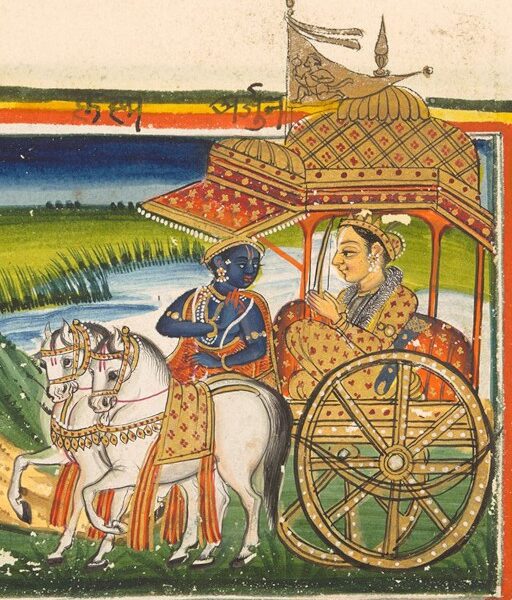
One can become free from the control of material nature as soon as he surrenders his soul to the Supreme Personality of Godhead. That is the preliminary formula. Being marginal potency, as soon as the living entity is freed from the control of material nature, he is put under the guidance of the spiritual nature. The guidance of the spiritual nature is called daivi prakriti, divine nature. So when one is promoted in that way, by surrendering to the Supreme Personality of Godhead, one attains to the stage of great soul, mahatma.
So material nature is controlling when we are trying to use the facilities within the material world for our own purpose. As long as we are trying to do that, then we are under the control of material nature. So what it says, we surrender to Krsna, means he surrenders his body, mind and words. So his activities, everything is connected to Krsna. Then he is not under the control of material nature. Does that make sense? So then anything, whatever is in between. One is surrendered, but still there are aspects where one may be still functioning within the control of the material nature. But the prominence is the other. So devotion to the spiritual, the divine nature, being more powerful than the undivine nature, then one will progress, as long as one is following according to authority. One is being whimsical, of course that will be a problem. Then the weeds will grow and the progress will stop. But it’s not that the creeper goes away, it’s just that the weeds are so big, essentially growing. Does that make sense? So you keep the weeds pulled, they won’t grow.
So that’s the idea, is to become under the control of the internal currency. Because now we’re under the control of the external. So the point is, is what we have to get used to, we will be controlled.
But it’s our choice on that control. Do we want to be controlled nicely or not nicely? Just like the child will be controlled by the parent. It’s just a matter whether the parent will be pleasant or not, depending upon whether you surrender or don’t.
Because we have this illusion that, no, I’ll function on my own, without.
Yes, it’s the internal focus. How do you say it?
We’re always dealing with the svarupa-sakti, but it’s what aspect we’re dealing with. So if we’re dealing in connection to Krishna, then that’s internal potency. So that would be something lacking. But if we aren’t surrendered to Krishna, we’re still dealing with the same svarupa-sakti, but she’ll manifest as the external potency. So mahamaya and yogamaya.
Lesson 34. In the course of practicing such spiritual training, if a devotee commits any mistake, Sri Krishna saves him from falling down.
Okay, because that’s important. So now we’ve come to this whole point, this is the topmost, but if in the performance of that someone has a problem.
So footnote 52. This would mean that the accidental fall-down discussed in verse 30-31 is not counted as a real fall-down for a devotee.
9.30-31.
Even if one commits the most abominable action, if he is engaged in devotional service, he is to be considered saintly because he is properly situated in his determination. His determination is to serve Krishna. That’s what he wants to do. But it doesn’t mean that one’s not going to commit a mistake.
So the mistake is not judged by what we consider bad and what we consider okay.
You know what I’m saying? It’s by how Krishna judges it. You know, it’s just like, okay, if the kids are taking marijuana, that’s not so bad. But if they take hard drugs, then that’s bad.
Right? It’s not that that’s defined there. Or, you know, she’s hanging out with the boys and even if he moves in with one, that’s fine as long as she doesn’t become pregnant.
You know? Like that. I was reading something, one big celebrity, you know, she was living with her boyfriend. Like that. And then somebody said something about children. Said, children, forget it. Says, we’re Catholics.
When you get married, you know, you’re a virgin. You know? Like that. But it’s okay to live with them and anything else you want to get involved in. Just, you know, no sex. That’s all. You know what I’m saying? So, that’s because, okay. You understand? So, it’s not that we decide what’s abominable and what’s not. Because otherwise then, one person will say this is abominable and another person will say, oh, you know, it happens.
So, yeah. So, the point here is that abominable means, technically abominable means anything that’s not Krishna conscious. So, even doing the most pious activity, it’s not for Krishna, technically is abominable. Right?
Technically, by the sages. If you take the definition of Upanishads, anything within karma, pious or impious, is bad. Within karma, then they’ll say what’s impious is bad.
Do you know what I’m saying? Does that make sense? And by pious we mean according to Shastra.
Yes? What would be the real Buddha? What would be the real fall down? Is basically, I think that’ll come up here. I think. But the real fall down would be to give up the devotional process. I think once some devotee was mentioning the Prabhupada, oh, so many devotees have gone away. Prabhupada said, no, no, very few have gone away. There’s no way. It’s like, you know, he had to initiate 5,000, 5,000 to 6,000. You know, but there were, oh, you know, there wasn’t that many. Thousands were not there, right? So they said, no, but so many were like that. Prabhupada said, no, only a few are eating meat.
You know, in other words, their consideration is they’re still thinking of Krishna. They’re still thinking of spiritual master. They’re still thinking the process, though due to weakness they’re not able to follow.
Does that make sense? So, therefore, then, yeah.
I did remember earlier this year we were discussing how even if a devotee is planning to do something that is not within the devotional sphere, it still is not necessarily considered a fall down. Means, yeah. No, it’s a fall down, but it doesn’t mean that he’s not still considered saint. No. Right? Here, also, it says, from falling down means falling down into the animal species. That’s also where you leave your life. That’s there. So it’s just there’s different aspects, because we’ll always take it to extremes. All one way or all the other.
It’s either heaven or hell. There’s nothing in between. Like that.
Okay. So the thing here is mentioned is if he’s engaged in devotional service, right? So we’re differentiating here between where one’s essentially trying to do devotional service, but due to some weaknesses or distraction. We shouldn’t say, well, that’s not sincere.
Right? Because saying that is not sincere is not sincere.
Right? Because then we’re not seeing the platform of the soul that’s covered. We’re seeing that the soul and the sin are non-different. So that’s the mode of passion here. So that’s already a fallen condition.
Right? So it’s not even seen with knowledge. So the point is that the activity is not good. It’s not that he’s still saintly. It doesn’t mean that the abominable action is not abominable. Otherwise, why does he use that word?
Right? The point is, is that abominable action is not what stops devotional service or drops from the platform of devotional service. It’s giving up the process of following the instructions of the bona fide spiritual master. That will be. Does that make sense? Yeah. All right. Sorry. Yeah. Does it mean that fall down is already giving up instructions?
You could say. So that’s what we’re saying is the mixed platform technically is fallen. Just the living entities in the material world and he’s not on the platform of Baba, you could consider it fallen.
You know what I’m saying? Because it’s below one’s natural position. Right? But at the same time, because one is situated in devotional service.
Because he is properly situated in his determination. He’s determined to be engaged in devotional service. So that would mean that he is rightly situated in that he’s performing devotional activities. But the mixed consciousness, the pluto-consciousness, that’s what’s the fallen condition. You know what I’m saying? So what that is. Now, we may consider some fallen condition. Fine, it’s nice. You know what I’m saying? But some fallen condition will basically be seen as not nice.
Does that make sense? So that’s the difficulty is that we’ll take… This will be hard to understand because we’re giving devotional service and sin equal weight.
You know what I’m saying? So that’s the point.
It’s not of equal weight. But the point is, he’s fixed in his… properly situated in his determination. Right? But his determination is performance of sinful activities.
Then he’s not rightly situated. That becomes very dangerous. Does that make sense? So there’s a difference being made here. Someone who is trying their best to do devotional service but is having some weakness. It’s said they’re still saintly, but it doesn’t mean that that abominable action is not going to be an impediment for their devotional service. We’re not saying that that is not unfavorable, unfortunate. We’re saying that that action itself doesn’t remove one from devotional service as the neophyte would have us believe.
Does that make sense? Because we’ll take that and then it will be… That will be more universal. That, okay, they’ve done something wrong, so they’re not a devotee. But then within… who practices devotional service as I practice it, they’re a devotee. Who doesn’t practice it as I practice it is not a devotee.
Right? It just goes on. So if you’re of this religion, then you’re religious. If you’re not of this religion, you’re a sinner. And then within this religion, if you practice this particular aspect of it…
Isn’t it? So that’s the thing. So you have that. Your Catholics will think your Protestants aren’t actually Christians.
The Orthodox Jews, anybody who’s conservative reformed, aren’t actually Jews. You know what I’m saying? So you always have these things. Those who are Theravad will consider that the Mahayan, they’re not… It means you’re always going to have that. It means that in South of Water Goli and Ten Goli, they don’t consider each other properly situated. They won’t marry into each other’s families. Like that. No, they’re all Sri Vaishnavas.
So you always have… The divisions will just keep going and going and going. And the ultimate will be, I’m the only devotee.
So that’s why it’s one of the things in Bhav Sadhana that the subtle you have to beware of is that I’m not looking at… I’m advanced and I’m the guru of devotees.
Because it comes out the element is, impersonalism means I think I’m God or I think I’m the devotee. We’re never the devotee. We’re always the devotee of the devotee. So to think I’m the devotee, that’s also impersonalism.
That’s why Rupa Goswami makes the point in Nectar of Devotion. Radharani is the only devotee. Everybody else is her servant.
Like that. You get the sense?
Yes. There’s the offense of maintaining material attachments. Yes, it means it’s offensive. It’ll get in the way, but still we don’t say they’re not a devotee. What do we say at the end? Every devotee should guard against these ten offenses. It doesn’t say every, you know, dirty, sticky, smelly, carmy should guard against these offenses. Because at the committing end, if he’s not a devotee, he’s only dirty, sticky, smelly, carmy. Right? No, that’s not going to work. I’m just, you know, just being nice. I lift up the rascal nonsense.
But there’s a difference between maintaining material attachments and just having them. It means if maintaining is your, it means you’re going to have the element where you’re cultivating it. Cultivating, yeah, exactly.
And that cultivation is always going to be a problem, but there’s a matter of it’s cultivation and you think it’s okay, and you’re trying through this. Or it’s cultivation where you know it’s not okay, but you’re trying to see how to either connect it to Krishna or how to get rid of it. So I’m going to say there’s levels within that, you know, aspects within it. In other words, you have an attachment and it’s fine. Or you don’t even notice it. Right? Another is that you notice it, but, you know, it’s okay. It doesn’t matter. We’re not fanatic. So still it’s a weak position. Or we notice it, I’d like to get rid of it, but I don’t know how. Right? Or you have some idea, you’re making the attempt, and sometimes you’re successful, sometimes you’re not. Right? And then by further practice, then the successful becomes more prominent than the not successful.
Do you understand? So as long as it’s progressive, because that’s why he uses the term determination, he’s properly situated in his determination.
Does that make sense?
Then always remember here the word his is used because the soul thinks he’s the controller of your joy, which is masculine, so therefore we use the term his.
Does that make sense? Because the soul is technically feminine. But we need to speak the Gita to those souls who think they’re masculine, so therefore we use his.
So he quickly becomes righteous and attains lasting peace. So quickly means it may take some time, but it’s quickly when you’re dealing on how long we’ve been in the material world. Right? Does that make sense?
But the slower it is, the more problem it is, the more dangerous it is. So the point is this verse is not to say it’s okay, this verse is so we don’t criticize, because otherwise as before it says we don’t disturb devotees or not disturb them by them. So we’re disturbed by them, either they disturb us or they disturb our values. When we criticize, it’s actually a symptom that both, that we are disturbed, and therefore we disturb. Because if you criticize based on the detail, it means there’s a value there. So it may be that the negative turned to positive, but it still hasn’t turned fully to the emotional.
It’s not the form that’s the problem, it’s the attitude.
Does that make sense? The only qualification of a devotee is to be unflinchingly and exclusively engaged in devotional service, like they take, okay, let’s say, take sex. So then, then in here you’re going to, means the whole point is this, if Krishna is that attractive, Krishna is that driver, he’s Cupid, okay? So that means the form, right, of interaction, the activities of interaction, that’s actually defined by the Lord and His potency, in the original and formal cause. In the material cause and the efficient cause, I mean, excuse me, and the operational cause, then we think we’re the controller and enjoyer, right? So then we’re seeing an opportunity for sense gratification, right? But if you see as no, this situation is, if it’s Krishna, then the point is this, then how would it be service to Krishna? Right? So to be service to Krishna, is that point is that sex produces children. Sometimes a little known fact, but, you know, that’s, you know, a prominent element, right? Or at least a common fear, right?
So then the thing is this, then the point is this, if it produces children, then okay, if you’re producing children for Krishna, so what, so you want to, the result’s not for us, it’s for Krishna, right? So if the result’s not for us, then we can afford to, how do you say, get a good result. If the result’s for us, then we’re going to settle for whatever’s good enough for us. Right? But if the result’s for Krishna, then that means then you want to get a proper child for Krishna. Right? So then proper child only happens, begins with married life. Right? Then the next step is Garbhoda. Right? And then next step is, you know, proper consciousness.
You understand? So if you look at it from the actual philosophical point, it will bring you to the point of what we say is the rule. Right? You know, sex with one’s, you know, spouse, according to the regulated principles.
Does that make sense? It’ll bring you to that. So we’ll say, oh, it’s just rules. No, it’s philosophy. The rule is just the form that it takes. If you follow the whole path, then you get, that form will be the manifestation of it. That’s why the sages use these forms. These are the recommended forms used by those who are intelligent enough to follow the whole path and come to the conclusion.
Does that make sense? And if you’re intelligent enough that you don’t have a problem with authority, then you’re going to save a lot of time. Yes. Of course. Of course. But, yes. Yes. But even you bring it to that, the point is, is it still, we’ve gone through that because of, it’s for Krishna. Right? Now, if we’re not a devotee, would we be following that process? No. So then, you would be following the process that would be inherent in your conditioning. Right? So if you’re born into a pious, religious family, then, in your family, people get married before they have children. Right? But if you’re not, then, hey, what does it matter? You know what I’m saying? So there’s no question that the good qualities come in Kali Yuga, basically. If you’re not born with them, you’re not going to get them.
You know what I’m saying? So it’s only through devotional service that they will come. And even if you’re born with them, what’s the use if it’s not connected to Krishna? So you have this baby in wedlock. Okay, great. Now what?
You know what I’m saying? So the point is, is if he doesn’t become a devotee, what’s the meaning? So that’s why the conclusion of everything is devotional service is the only real point.
Right? Yes.
Yes, that’s the same thing. So that’s the point. Is it still material? It may be pious. That’s what we’re saying. But it’s still material. So we’ll look at it that impiety is abominable and piety is not. But abominable technically means it’s not Krishna conscious. Because Prabhupada mentioned illicit or illicit is still the same thing. It’s still the distraction.
You know what I’m saying? Does that make sense?
Okay. He quickly becomes righteous and attains lasting peace. O son of Kunti, declare it boldly that my devotee never perishes. Right? So once in a while somebody takes up. Because someone might say, well, they’re not actually a devotee. That’s an easy way out. Then that’s just saying that but the point is until someone’s on prema, no one’s a devotee. So if you can say you’re on prema, then speak like that. Great. It’s funny. Those who are on that platform don’t speak like that. You know what I’m saying? So you can say like that, oh, you know, he was a pajari, then he’s done this, oh, he was never a pajari or he was a preacher, oh, he was never a preacher or he’s a manager, oh, he’s not a manager. That’s the problem is we use that too easily. No, he is a manager, he is a preacher, he is a pajari. He is a devotee. It’s just that there’s a weakness. So the determination is there, then he quickly becomes righteous. If determination is not there, he can become overwhelmed by it. Right? And so that’s then when it turns into what we call premeditation because then it’s okay. You know what I’m saying? That you thought about doing it just before you did it, that doesn’t count as premeditation because the point is that no action can be performed without intelligence.
You know what I’m saying? So therefore, that definition breaks down because they’ll say, oh, no, but it’s premeditated. You know, you got to get them some way so you have to bring out, well, they’re either not a devotee, no, no, they are devotee, no, but it was premeditated, no, it’s just, you have to somehow satisfy our need for gossip. Right? So that’s the point is, it’s not that one hears gossip, it’s that one takes part in it.
You know what I mean? In other words, it is a value. Right? Because Raghunath Das is saying that he’d rather live in Vrindavan, you know, than in some really wonderful nice place with the Brajbhasis even though they fill his ears with gossip. You know? Because for Raghunath Das sitting at Radha Kund, chanting japa, what is any of the other Brajbhasis going to, you know, add? You know? You know what I’m saying? You know, their goat, you know, fell into the Kund, or, you know, their daughter’s getting married, or, you know, their mother-in-law showed up, or, you know, what are they going to talk about? Right? They’re all grihasthas. You know? You know what I’m saying? So he said he’d rather have that because they’re all, you know, Krishna’s people than be in some really nice place, you know, where everybody’s, you know, more sophisticated and everything like that.
Could I connect this element of enjoying peace internally through the practice? So, I’m practicing so much in peace now, with an external view of everybody as a saintly person, as a saint formerly, but not so advanced. Yes. The point is, as everybody is saintly, it’s just how well they’re situated in that saintliness. You see, it means how practically saintly one is, but then there’s also, are you situated on the path of becoming saintly?
You know what I’m saying? The person on the bus to Calcutta is not in Calcutta.
Right? But as long as they stay on the bus, they’ll get to Calcutta. But if they get off the bus, then they won’t get to Calcutta. So that’s the point, is that we’ll be sitting there on the bus, but we’re in the front seats, and we’re criticizing how the guys in the back seats are, you know, you know, far away from Calcutta. Right? You know, that’s the…
So, what we’re trying to do is avoid these things. It means it’s important to be able to define what’s an anarta and avoid it. You know, we’re not making light of that, but what we’re also trying to define is that we’re not making Vaishnava aparadha in the process of defining it.
But the word determination is connected with free will? Yeah, you could say. It means that they’ve decided that they want to take part in the devotional process. They want to go back to Godhead. So they’re trying. So then they may do better, they may not.
You know what I’m saying? It’s only because we don’t apply so many rules that most everybody’s well situated.
You know what I’m saying? Does that make sense? You know, you watch the devotee, you know, walk into the bathroom, and, you know, he washes his hands, and then he walks out, but he’s not washing his hands because the Vaishnavas wash their hands. He’s washing his hands because in third grade they indoctrinate him so heavy that you’ve got to wash your hands after going to the toilet, but they never told him to wash his feet. You know? Or generally his mouth, right? You rinse your mouth after you brush your teeth, but even that some people don’t. You know what I’m saying? So he washes his hands, but it’s not because of devotional service. But he didn’t wash his feet, so technically he’s dirty, and now he’s walking around and making the whole temple contaminated.
So technically that’s an abominable action because Brahmins are clean. Right? So that’s, you know, Brahmins, Kshatriyas, Vaishyas are very clean. Shudras generally are, but they might not be. So generally the ones that are not clean, that have no idea, that is the outcast. So here he’s following the standards of cleanliness of an outcast. So is that abominable or not? You know what I’m saying? So this is the thing. Our definition of abominable is according to our perspective.
We’ll go abominable is okay. He cheated in the business, took money, or cheated on his taxes, or is having an affair, or he’s taking intoxication.
It’s not just social drinking, but it’s beyond that. So these things, we’ll consider that abominable.
But that’s within sins, the bad sins. We’re not counting what Shastra says is sin.
It says to criticize a Brahmin. Yeah, criticize a Brahmin as good as killing him. But criticize, hey, that’s cool.
You know what I’m saying? Does that make sense? But killing Brahmins is not bad because it’s killing a Brahmin. Killing’s bad because it’s not the thing that you do, because we’re 1960s hippies, and we’re love and peace, and we don’t kill people.
So it’s nothing to do with actually the Vedic standard. So technically it’s in line, it’d be used, but it’s technically itself not rightly situated. So the determination is he’s determined to serve Krishna.
So he goes in the bathroom, comes out, washes his hands, you know, like that, and then comes out and does service. So he’s determined. So therefore, he quickly becomes righteous and attains lasting peace. The spiritual still works. Right? But it’s not that there won’t be other aspects because of that. Then it’s unclean, so the mode of ignorance, so there’ll be elements in the mode of ignorance that’ll bother him. It’ll be a distraction, but his determination to serve Krishna, he’s advancing.
You understand? So that’s why he’s considered saintly. Because we may not notice it. You know what I’m saying? But let us say someone who comes from an actual pious family, they’ll notice that first thing off.
You know what I’m saying?
You know what I’m saying? If you’re used to the tradition in India, you go into the temple, your facility to wash your feet, go in the temple. We don’t have facility. The taps have all been closed. Why? Because it’s not practical to run them. You know, they break or someone leaves them open, so then you get rid of them.
You know what I’m saying? But someone from some kind of religious background who’s used them, they go wear the taps. It means everybody’s in the temple with dirty feet.
You know what I’m saying? But because cleanliness, we wear our shoes in church, so therefore, it’s, hey, it’s cool. We took our shoes off.
You know what I’m saying? So that’s the whole point, is that the definition is Krishna’s definition. So the point is what’s not supportive of Krishna consciousness, that’s a bummer.
But because he’s determined to serve Krishna, these things that he may not notice or he may be distracted by, then if he’s still determined, then it’s a matter of… In other words, he sees it as a fall down. In other words, when he sees it’s not a fall down, that’s when it’s a problem. If he sees it as a fall down, there’s no need for others to see it as one.
Does that make sense? But if they see it as, no, it’s okay, what’s the big deal? Then that’s a problem.
Because that’s cultivating. We’re also dealing here with glass half full, half empty. Yeah, glass half full, half empty. And also glass houses. Yes.
The only qualification of a devotee is to be unflinchingly and exclusively engaged in devotional service. Right? So this unflinchingly and exclusively means also, means you have your ultimate stage. Right? As we see, as Prabhupada’s always mentioning. And mature fruit. And all these different things. But according to what they feel is unflinchingly and exclusively.
Right? According to their consciousness. It’s not according to their standard. It’s according to their conscious life. Narada Muni is explaining that when he was the son of the maidservant, so he’s six years old, that he didn’t play like the other kids and he was just focused on Krishna consciousness. Prabhupada says, you know, kids play. But in his mind, he wasn’t playing like the other kids. So it was just, it was just normal that he’s skipping along and sees something and grabs it or, you know, stops to look at the birds or, you know, stuff like that. He’s not, that’s just, he’s not conscious of that. He’s just doing that. So in his mind, he’s unflinchingly and exclusively engaged in devotional service. So he’s advancing.
Does that make sense?
Right? So he’s not doing the activities that are, you know, pointed as not to be done. These are just, you know, on the side. You know, it’s just like, like going in Poland, right? Going along in Harinam, right? There’s, you know, I don’t know, 50, 60, you know, a few hundred devotees. So we’re going down the street and everybody’s just going to Harinam. Then we’ll go by, let’s say, a department store. It’s got these big glass windows and there’s something in the back and it reflects because it’s the afternoon so the sun and all that. So as you go along and all that and everyone’s just like this and as soon as it goes by the glass windows and the ladies are all, you know, and that, you know, then, you know, and then continuing on. So, but they don’t notice it.
Do you understand? So in their mind they’re just focused on Harinam. It’s just something that’s inherent nature that just goes on.
Does that make sense?
The words Sadhur Eva, he is saintly, are very emphatic. They are a warning to the non-devotees that because of an accidental fall down a devotee should not be derided. He should still be considered saintly even if he has accidentally fallen down. And the word Mantavya is still more emphatic. If one does not follow this rule and derides a devotee for his accidental fall down then one has disobeyed the order of the Supreme Lord. The only qualification of a devotee is to be unflinchingly and exclusively engaged in devotional service. Okay, 53. Footnote 53. The real criterion for success in life is the performance of sincere devotional service. This is confirmed in Srimad Bhagavatam 7.7 .51-52. My dear friends, O sons of the demons, you cannot please the Supreme Personality of Godhead by becoming perfect brahmanas, demigods or great saints, or by becoming perfectly good in etiquette or vast learning. None of these qualifications can awaken the pleasure of the Lord.
Nor by charity, austerity, sacrifice, cleanliness or vows can one satisfy the Lord. The Lord is pleased only if one has unflinching, unalloyed devotion to Him. Without sincere devotional service everything is simply a show. Good. Interesting to note here, this Kaladmara as to his friends, right, the demons. O son of the demons, right? Now, he’s not… What is the examples he’s given?
By becoming perfect brahmanas, demigods or great saints.
So demon means it’s not connected to Krishna.
Right? In other words, they’re great brahmanas but only for themselves. The benefits they know they’ll get. The demigods are doing because that’s the order of the Lord.
Yeah, yeah. That’s the point. So generally we think… Otherwise it should say here, you know. Can I please, you know, personally have Godhead by killing brahmanas, ripping off people’s heads or eating them alive. You know, like that, you know. That’s what we would think. Yeah, that’s what we think. No, but it’s not. Or good in etiquette, vast learning. Right? Charity, austerity, sacrifice, cleanliness, vows. I mean, Harani Kashyapu stood on his toes like that. You know, it’s like that. They do all these different things. They’ve given charity. They do all these different activities. But they don’t do them to please the Lord. They do them simply for themselves. So that’s actually demonic.
Right? So we’re redefining. See, we’re looking from the material perspective of what’s bad and we look at what’s better. You know, in other words, everybody’s a thief. And so a good thief is one who, you know, cooperates with others and shares. And a bad thief is one who, you know, doesn’t cooperate. You understand? So that’s the point. But the real point is this. Someone who’s not a thief is proper. And thieves are bad. So what we’re doing is within bad, we’re saying this part of bad is okay and this part of bad is not.
Right?
Does that make sense? And if he’s at the farthest reaches of bad, you know, then he’s saintly.
You know? You know, just before becoming good. He’s not good yet, but just before, then he’s a saint. Does that make sense? So that’s…
Naisthima. Hmm?
Purport. Prahlad Maharaj concludes that one can become perfect by serving the Supreme Lord sincerely by all means. Material elevation to life as a brahmana, demigod, rishi, and so on are not causes for developing love of God. Godhead. But if one sincerely engages in the service of the Lord, his Krsna consciousness is complete. This is confirmed in Bhagavad-gita 9.13. Even if one commits the most abominable actions, if he’s engaged in devotional service, he’s to be considered saintly because he’s properly situated. To develop unalloyed love for Krsna is the perfection of life. Other processes may be helpful, but if one does not develop his love for Krsna, then these other processes are simply a waste of time. So in other words, the emphasis is not on pointing out he’s okay, he’s doing bad things, so that’s okay. It’s pointing out that only because of devotional service is anything okay. So because he’s connected to devotional service, therefore he’s rightly situated. But being conditioned, then things aren’t necessarily going to be ideal. But even if you do everything very nicely by these other processes, if it’s not connected to Krsna, it is simply a waste of time. So in other words, it’s pointing out the glory of devotional service. Because this is… You see what’s happened here. This is where this verse is quoted in the Bhagavatam. Right? So you see it in connection with the point being made in the Bhagavatam. In the Bhagavatam it says you can only please the Supreme Lord by devotional service. Therefore, devotional service is so pleasing to the Lord that even you’re making some mistake, but you’re connected to devotional service, that’s still better situated than if you’re nice and good and wonderful like that. Devotees sometimes will make mistakes. Oh, but the karmis are so nice. Devotees aren’t. No. Nice, but it’s simply a waste of time.
Lesson 35. Salvation, knowledge, renunciation. All such attempts are mundane rather than spiritual. For one who practices pure devotional activity, all other qualities are automatically achieved. So these are already within. Because salvation means you’re doing it not for yourself. You’re doing it to please Krishna. You automatically get liberated for not doing it for yourself. That you’re doing it for Krishna, you get the devotional. Right? So the devotional includes, means how do you do it for Krishna if you’re doing it for yourself? So salvation is already included. Right? Knowledge is already included because if you know Krishna, you know everything. Right? You’ve learned knowledge of Krishna from Krishna and the devotees. Right? You’re practicing it. Renunciation means whatever you have, you are connecting it to the Lord. Right? Because of renunciation, therefore you get salvation. Right? And because of that, then knowledge comes.
So the devotional practice, then automatically knowledge and renunciation come.
1866 Abandon all varieties of religion and just surrender to me. I shall deliver you from all sinful reactions. Do not fear. Right? So sinful reactions, that’s in prayojana. Do not fear, that’s in sambandha. Right? Because fear is relationship.
Right? The sinful reactions would be in your results.
Right? So if you’ve situated yourself as a devotee, the sambandha is right, so there’s no fear. Right? So the result…
Okay. The Lord has described various kinds of knowledge and processes of religion. Knowledge of the Supreme Brahman, knowledge of the Supersoul, knowledge of the different types of orders and statuses of social life, knowledge of the renounced order of life, knowledge of non-attachment, sense and mind control, meditation, etc. He’s described in so many ways different types of religion. Now in summarizing Bhagavad Gita, the Lord says that Arjuna should give up all the processes that have been explained to him. He should simply surrender to Krishna. That surrender will save him from all kinds of sinful reactions. For the Lord personally promises to protect him.
Okay. So all these different aspects of religion… So the point is this sanatana dharma means what’s eternal religion. It means the nature of the soul to serve God. That’s sanatana dharma. So that’s what has to be done. Then all these other processes of dharma have validity. If not, they’re nice. Right? They make for a pleasant environment, pleasant, you know, interaction, pleasant facilities. The problem is, is because we’re trying to be the controller and enjoyer, we will take advantage of those facilities and try to enjoy ourselves. So when we’re doing that, there’s no nice karma, so there’s no further piety, so therefore that piety runs out and then it becomes not so nice.
Hrithik. The Abhidheya part of the Bhagavad Gita analysis established that all living entities are parts and parcels of Krishna. As such, everyone’s duty is to cooperate him by devotional service. All other processes of spiritual advancement have a value only if they lead to devotional service. One performs devotional service in the association of the devotees, following the instructions of the spiritual master.
As a result of such faithful following, one attains love of God, the ultimate necessity and perfection of life. Perfection of what? Perfection of life. I guess to give emphasis.
Yeah, that’s the problem with you.
It didn’t justify both sides.
All right. Just a question on the previous paragraph. The surrender will save him from all kinds of sinful reactions. Does this mean that they may still come and one will be protected? In other words, sinful reactions come. What’s the problem with the sinful reaction? We get disturbed and we forget Krishna, right? It means the sinful reaction comes and so that means the situation is not nice. A reaction to a sinful activity is a not nice situation. But even in that situation we can still remember Krishna. So we’re safe from that. It may mean, Krishna, the situation doesn’t happen. But it also can mean that it may happen but we won’t become disturbed or Krishna may reduce it. In other words, what’s going to be beneficial for Krishna consciousness? If by making it go away then we’re going to be completely elated in happiness and forget Krishna, then something will be there. And however much has to be there for us to remember Krishna.
Does that make sense?
Maharaj, so now, this would have a nice point of last move, right? If Abhijeta, if he’s fusible himself, release him into Kriyayoga. Yes.
Because the second part is Abhijeta. Now this third part will deal with Kriyayoga. It’s a man’s ultimate necessity and perfection of life.
We just got here, got through 97, 98, 99. Yeah, we’re really moving.
The Adhikara is in the context of Dasamodhatta, Adhikara 1. By the mercy of the devotees one can take up the process of devotional service. By this service he attains transcendental position and becomes very dear to Krishna. The Dasamodhatta is stated, 10, pure love of God is the living entity’s ultimate goal.
So that’s what we’re trying to do, is this establishment of this Adhikara.
So it appears there’s only one Adhikara in this section. I guess being framed like this, no need of other Adhikaras.
Oh, it’s got a lot. Okay. The Adhikara is in the lessons, Adhikara 1. By the mercy of the devotees one can give up the, one can take up the process of devotional service. By the mercy of the Adhikara. That’s like Prabhupada told, what is it, Nityaya? He gave the blessing he wouldn’t need to mortify spiritual masses for a million lifetimes. By this service he attains transcendental position and becomes very dear to Krishna. Because that’s the goal. You’re trying to develop your love for Krishna and because Krishna’s dear to you, then he reciprocates. As you surrender, he reciprocates.
Lesson 1. Somehow or other, if a fortunate man gets the opportunity of associating with the saintly devotee, he gets the chance of hearing and chanting the holy name of Godhead. By this process the devotee is liberated from all mundane influence. And only in this state of purity can one be situated in the spiritual nature. Lesson 2. The symptoms of such spiritually situated devotee, of a spiritually situated devotee, are significantly manifested by the following signs. Lesson 3. There is no need of unnecessarily observing austere penances for spiritual advancement. The spiritually situated devotee is transcendental to material existence in all circumstances of life. So it means the austere penances is to separate yourself from material existence. But if your existence is connected to the Lord, then it’s already obtained.
Right? But if we feel something must be really hard and difficult, then we get some benefit from it. You know? Then, you know, we may feel some dissatisfaction.
So here we see is that you can only one can only know the Lord through His instructions. That’s then coming from the devotees. We take it up. We practice it. So therefore, by the mercy of the devotees, now here’s giving a conclusion, mercy of the devotees, one can take up the devotional process. Right? Because it’s the Lord’s instructions, but it’s only by the grace of the devotees one can take it up. That’s why it’s important. Right? The devotees. That’s why it always comes back to not bothering the devotees. By this service, he attains transcendental position and becomes very dear to Krishna. So he attains transcendence, he’s not within the material world, and then he becomes dear to Krishna because of devotion. Right? Because otherwise, just to become transcendental is also not good enough.
Okay. The Adhikara is a lesson supported by the Bhaktivedanta Purports.
Lesson one. Somehow or other, if a fortunate man gets the opportunity of associating with the saintly devotee, he gets the chance of hearing and chanting the holy name of Godhead. By this process, the devotee is liberated from all mundane influence, and only in this state of purity can one be situated in the spiritual nature. So here we see is that we’re dealing with the same aspects, but the focus is on Ayogina.
Right? It means somehow by getting the devotee and association with the devotees and taking up the process, then one gets this result. While the other ones is that by this, then one will be moving forward, one advances, one develops these qualities, one will be free from… You know what I’m saying? So it’s showing that…
Does that make sense? It’s more on the Abhidheya. You can’t really separate someone from Abhidheya, from Ayogina. But at the same time, you can discuss them separately. But they include each other because they’re connected.
239. So it’s 239 to 53.
So that’s why it goes for a while. Thus far I have described this knowledge to you through analytical study. Now listen as I explain it in terms of working without fruitive results. Or Sanaprita, when you act in such knowledge, you can free yourself from the bondage of works. Right? So in other words, you’re going to analyze what is there on the spiritual platform. But having analyzed, then you have to practice it.
So that’s where, then, working without fruitive results. Because knowledge has to be applied. And application should be with knowledge.
One who works only for the satisfaction of the Lord is always entranced in the bliss. One should therefore understand that buddhi-yoga means to work in Krishna consciousness.
In the full bliss and knowledge of devotional service.
Oh, okay. Buddhi-yoga means to work in Krishna consciousness. Right? Abhidheya. In the full bliss, prayojana and knowledge sambanda of devotional service. Or, yeah. One who works for the satisfaction of the Lord only, however difficult such work may be, is working under the principles of buddhi-yoga and finds himself always in transcendental bliss. By such transcendental engagement, one achieves all transcendental understanding automatically.
By the grace of the Lord. And thus his liberation is complete in itself without his making extraneous endeavors to acquire knowledge.
So because you have, you have facts and figures. So facts and figures is then something one would have to endeavor to gain. Right? The skills of working with those facts and figures. Right? But, here we’re talking about when you understand Krishna by the devotional practice, the principle is already understood. Then the facts and figures and the skills are meeting. So according to one’s conditioning, one will develop those skills.
So, but the point is, is that it’s understanding the principle of it that makes it work.
So that’s what we’re talking about when we say, Right.
Liberation is complete without his making extraneous endeavors to acquire knowledge. So he’s not having to use knowledge to liberate himself. He is performing the activity to please Krishna. He says that’s selfless work. That’s what’s liberating him. But by doing that he’s getting knowledge of Krishna by Krishna’s grace. He understands the principle. So then he can explain the process of liberation. Right? Even though he may not know so many fancy aspects, you know, of scholastic knowledge.
There is much difference between work in Krishna consciousness and work for fruitive results. Especially in the matter of sense gratification or achieving results in terms of family or material happiness. Much difference. The difference.
the activity itself is technically the same.
But it’s who the result is for that makes the difference.
Does that make sense? Let’s say, let us say some people from the government go in and start cutting down a forest. Right? Some people will be disturbed by that.
Right? Okay. Now let’s say there’s a forest fire. So the same government people go in and cut down the trees to stop the fire. Now the people who complain about the first instance of cutting down the trees, are they going to complain about the second? No. So, but the activity is the same.
But we would call it completely different.
You understand? One we would say was protecting the environment, one we would say is not.
Does that make sense? So, the point is it’s not the activity that’s being done. It’s the purpose of that activity or the identity with which it’s done. That makes, when we say there is much difference between work and Krishna conscious and work for fruitive results. Right? Especially in the matter of sense gratification because it’s a matter of the senses because you use the senses are they used for yourself or are they used for Krishna?
And for achieving results in terms of family and material happiness. So the point is it’s a matter of the family becoming Krishna conscious. Right? The facilities one has is to be Krishna conscious.
Buddha yoga is therefore the transcendental quality of the work that we perform. Some here say it’s the transcendental quality of it, not the work itself.
It’s the transcendental quality. If that’s there then the work becomes transcendental.
So the Buddha yoga is that, that’s the connection. Work is work. Now it’s connected to Krishna. It’s Buddha yoga not connected to Krishna. Then it’s material fruitive work.
240. In this endeavor there’s no loss or diminution and a little advancement on this path can protect one from the most dangerous type of fear. Footnote 54. The Lord will later say partha naiveha namutra or sanaprita A transcendentalist engaged in auspicious activities does not meet with destruction either in this world or in the spiritual world. One who does good my friend is never overcome by evil.
So it’s also he’s not overcome by evil means he doesn’t doesn’t, what do you call it? There’s no there’s no loss of the position of progress. Right?
This devotional service goes on. If you’re doing a business and you get up to you know developed at 60% and then then something happens and it drops down to 10% you’re considered a loss. But in devotional service you’ve gotten to 60 % even if the facility that you’re using drops back to something of a previous the devotional service is a loss but it’s still at 60%. Your facility’s changed.
The work in Krishna consciousness has a permanent result. Activity in Krishna consciousness or acting for the benefit of Krishna without expectation of sense gratification is the highest transcendental quality of work. So you’re benefiting Krishna it’s devotional service you’re benefiting yourself it’s sense gratification. Right? Same senses are engaged it’s the same work.
Okay. Activity in Krishna consciousness is the highest transcendental quality of work. Even a small beginning of such activity finds no impediment. Nor can that small beginning be lost at any stage. Any work begun on the material plane has to be completed. Otherwise the whole attempt becomes a failure. Right? You can’t cook the subject three quarters or nine tenths and then it’s done. You know? No. It’s nine tenths done. But any work begun in Krishna consciousness has a permanent effect even though not finished. The performer of such work is therefore not at a loss even if his work in Krishna consciousness is incomplete. One percent done in Krishna consciousness bears permanent results so that the next beginning is from the point of two percent. Whereas a material activity without a hundred percent success there is no profit. Footnote fifty-five. Srila Prabhupada writes in his purport in Srimad -Bhagavatam 8.23.2 When Vamanadeva appeared When Vamanadeva appeared before Bali Maharaj Bali Maharaj immediately wanted to offer him respectful obeisances but he was unable to do so because of the presence of Shukracharya and other demoniac associates. Right? Because the rule is you’re not supposed to worship the Lord in front of non-devotees. Right? So he technically according to the rule shouldn’t offer obeisances.
The Lord is so merciful however that although Bali Maharaj did not actually offer obeisances but only endeavored to do so within his mind the Supreme Person out of Godhead blessed him with more mercy than even the demigods could ever expect. Right? So it’s that sincere mood. Right? The transcendental quality of the work. That’s important. So even though it was just obeisances within the mind he got more benefit than, you know, doing very nice elaborate arrangements of obeisances.
As confirmed in Bhagavad Gita 2.40 Even a little advancement on this path can protect one from the most dangerous type of fear. The Supreme Person out of Godhead is known as Bhavagrahi.
Bhavagrahi Janardana. Because he takes only the essence of the devotee’s attitude.
If the devotee sincerely surrenders the Lord has the Supersoul in everyone’s heart and immediately understands this. Thus even though externally a devotee may not render full service if he is internally sincere and serious the Lord welcomes his service nonetheless. Thus the Lord is known as Bhavagrahi Janardana because he takes the essence of one’s devotional mentality.
2.41 Those who are on this path are resolute in purpose and their aim is one. A beloved child of the crude the intelligence of those who are irresolute is many branched.
The highest perfection of Krsna consciousness is renunciation of the material conception of life.
Faith means unflinching trust in something sublime.
When one is engaged in the duties of Krsna consciousness he need not act in relationship with the material to the material world with obligations to family traditions humanity or nationality. As we mentioned so this doesn’t mean that those duties aren’t performed. They’re not performed because of being worldly obligations.
It means it’s worldly obligations of family traditions humanity nationality. Does that make sense? But devotees doing it because this is what should be done. You don’t cut down the trees not necessarily because they’re Krsna’s trees. Not because it’s a great thing for humanity and saving the planet and what about the next generation and all this kind of stuff. So the devotee automatically all the issues that are there is already obtaining them by doing whatever he’s doing for Krsna. Remember we take it through this analytical process you end up with good work. Right? That’s why I said pious work is engaged in devotional service because if you follow the process only the pious one is actually what’s nice for offering to Krsna.
Okay? So that means is they’re following because that’s what should be done. Right? A tradition is just something practical because it works. Right? So then he’s following tradition because you don’t disturb the minds of the ignorant or by this way then they can engage them in devotional service or you understand? So it looks like he’s following traditions. Right? Or dealing with humanity because he cares about the environment. But the point is they care about the environment because they value a healthy life.
So because of that they want the environment to be there because they won’t be healthy unless there’s air, light, water and all these kinds of things. Right? So the point is is the devotee the environment belongs to Krsna. So since it’s Krsna’s that’s why you deal with it nicely.
Right? And by dealing with that nicely as a side thing then you’re healthy and so then you can do service nicely for Krsna.
Does that make sense? Okay. Yeah, nationality if there’s not social order it means that the state’s not protected then how will how will one peacefully engage in devotional service?
Does that make sense? So therefore then one is found because that’s that’s will be how the environment will be proper for maintained to serve Krsna. So in other words if one has any of these situations in which one could serve Krsna one serves but it’s the service to Krsna. It’s not that it’s a material obligation.
Does that make sense? They look the same as we were describing before. It’s the transcendent quality of the work that makes it devotional yoga. It’s not the work itself.
So when it’s just done for the family it’s called family tradition. When it’s done according to to, you know how Krsna would like us to interact with with individuals who are in the capacity of family members right? Then it becomes devotional service.
Right? Otherwise it’s family tradition.
Yes. Maharaj says our work is to change our value to what Krsna desires.
Yes. Change our value to what Krsna desires. But it doesn’t mean that the category within which we’re valuing has to change.
Consciousness has to change. In other words the work itself doesn’t have to change. It’s the quality of the work that has to change. And when Srila Prabhupada is using the word transcendental quality a few times here it means it’s connected to Krsna as a person.
You mean I was saying in relationship to where would be an example? Actually I think it was a few times in the last last paragraph. Transcendental quality transcendental engagement this word is used not in this paragraph. Oh, OK. Oh, I mean quality could mean if it’s referring to Krsna then it’s the quality. So we ultimately looking at it it connects with the person but we also might be applying it down on just a platform of quality so it doesn’t have a specific personal application.
You know what I’m saying? Like cleanliness. We’re just keeping things clean. Krsna as a person likes things clean but He’s the supreme pure so He is cleanliness. So when we’re keeping things clean remembering Krsna as a person He likes it that way and then but He’s cleanliness so that He’s cleanliness that is Brahman. But He likes it clean that’s because He’s a person. And if it’s that you’re clean you know because that’s the proper thing you know you’ll get a good result you’re not clean because you get a bad result that’s Paramatma.
You understand that?
But it also it can mean the devotee because it’s the transcendent quality because it’s being used for Krsna so it becomes transcendent.
It’s just like the word becomes buddhi-yoga if it’s used for Krsna. If it’s not used for Krsna then it becomes sense gratification. You know sense gratification or you know achieving the results in terms of family material happiness like that.
When one is awake in Krsna consciousness he need no longer endeavor for good results in his activities because he’s awake in Krsna consciousness so he’s doing the work for Krsna so he’s trying to make the best for Krsna. So he’s going to be looking at I’m doing this activity am I getting the results? The results are coming? Great. If not I make adjustments till they do. So that means he doesn’t have to separately endeavor for good results right? Because he’s endeavoring for Krsna so that automatically means the result for Krsna so he’s trying to get the best result. But he’s not trying to make the result happen he’s trying to perform the activity that gives the best result for Krsna.
So it can mean he doesn’t have he can’t give up the idea that I’m the controller and enjoy it so I’m making it happen and it’s just he’s now assisting in the process.
When one is situated in Krsna consciousness all activities are on the absolute plane for they are no longer subject to dualities like good and bad right? Because good and bad means that it has a material quality of good and bad. In other words I do the activity let’s say the person cooks and so therefore there’s a material quality of good and bad it’s either good cooking or not good cooking right? Now he does that for Krsna even if he’s not a good cook so what he cooks may not be you know great you know but it’s still on the absolute platform because it’s connected to Krsna but because it’s for Krsna then naturally then he’ll make the endeavor to try to make it nicer and nicer you know or if that’s all he does he does it like that it works otherwise it means how you say yeah yeah that makes sense right? Maybe he’s not a good cook why would he be engaged in cooking if it’s not his nature or whatever? Well maybe well no it could be his nature I know somebody who cooked orange cakes for 20 years and they never changed since the day he started cooking them like that so you could say but if he cooked a green papaya salad he never had a green papaya salad as good as that you know what I’m saying it’s just that this particular thing you know it’s like a does that make sense?
does that make you know what I’m saying? so it means technically it’s not cake but you know it’s you know whatever it is but this is the point Krsna was happy with it otherwise why would he be eating it for 20 years? you know he could arrange someone else you know what I’m saying? you know or the stuff in the tray it’s not pizza but you know he’s not sure it’s maybe whatever he arranges that’s just cake Krishna has hundreds of thousands of Lakshmis working for him so he doesn’t care what’s on the tray we are eating them but then it’s not prasad? it’s prasad so then if it’s prasad means he ate it so in other words this is an example that we’re saying here when one is situated in Krsna consciousness all activities are on absolute plane for they are no longer subjected to dualities like good and bad but it’s not that the particular result is that so you can see that and then try to but you’re not it’s not that you’re trying to get the result you’re trying to please Krishna you understand? so therefore you improve the quality of what you’re doing to please Krishna so sometimes it’s like that you have to have funny things like that like some temples they have something that’s done and it’s not done right but because one devotee did it like that now it’s the tradition it has to be done like that when they try to change it it doesn’t work like that so it’s just Krishna likes it like that so it’s just the way he sport of nature yes so in other words this good and bad is not the external platform good and bad has it been done for Krishna and because the results are for Krishna and we’re working with the material energy we try to get the best we can for him does that make sense right because that’s not the platform of good and bad the highest perfection of Krishna consciousness is renunciation of the material conception of life this state is automatically achieved by progressive Krishna consciousness right means the material conception of life is that there is something in some situation that we can get benefit for ourselves separate from Krishna but the point is when we see all situations and all endeavors all results that they’re only an opportunity to please Krishna then that’s the highest perfection because everything is connected it’s the highest renunciation because there is no endeavor to do something for yourself therefore we see in Braj it’s not that everybody there is great sannyasis and this and that they’re all householders and not only that they’re all Brahmins they’re vices right so they have comfortable nice facilities and everything like that so they’re but the point is is that everything they do is simply to please Krishna does that make sense?
yes when it says progressive Krishna consciousness is that ever increasing sadhana or isn’t it at all progressive means that means your consciousness of Krishna is progressive but isn’t that automatic or means it means but what do you mean by increasing sadhana no I’m just progressive I would say that Krishna consciousness is progressive in itself yes yes it’s progressive in itself but the progress is becoming more and more Krishna conscious you may or may not become more and more expert materially but much of the time we see that it does therefore the verses that you know the illiterate person becomes a great scholar or you know all these different things are mentioned because that can happen because it’s just a matter of piety and impiety that’s controlled by the super soul so the point is is that devotional service is the greatest piety so it may work out that if the devotion is there that it may work out very nice ok perfect knowledge no no ok these two pages went a little slower than the previous previous some of the pages went real fast five five pages went really fast but still seven pages how long is this 17 so yeah oh Hare Krishna Hare Krishna Krishna Krishna Hare Hare Hare Rama Hare Rama Rama Rama Hare Hare Shila Prabhupada Ki Jai Sarva Rekha Vakulindu Ki Jai Janatai Govardhanam Jai