
So here it doesn’t matter how great he is, how intelligent they are, how powerful they are, how wealthy, you know, how expressive or how famous, it’s still disobedience. Because we’re not considering the Lord on any of these levels. You know, if one’s absorbed, you know, in a particular level and not so much the others, okay. You know, if one’s absorbed in the Supreme Person and is not so worried about Brahman and Paramātmā, that’s also quite good, that’s better, right? But to not be aware of these or be not be interested, right, then that’s a problem because then it’s my world. It’s my world, you know.
I do it my way, right, you know. So it’s not, it says here, there’s no hope of perfection of life for him. It just doesn’t work. It’s all talk, you know, there’s great enthusiasm, you got to do something. But that’s not how it’s done, right. You have a duty, you work within your duty, right. That’s where you have to do something because all these other areas, they’re not our duties, so we don’t do something.
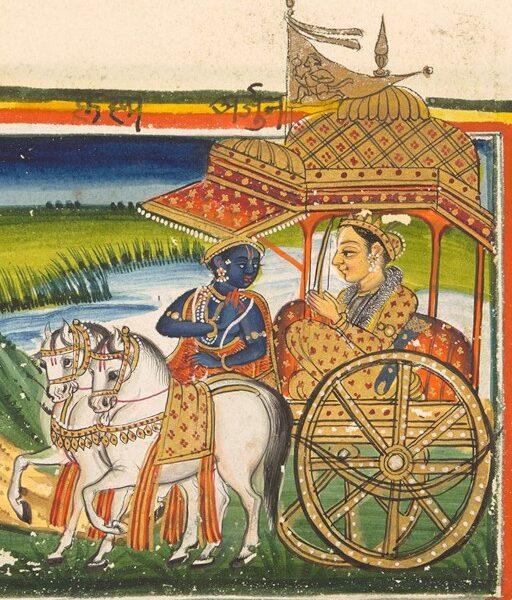
And why is this? So now Kṛṣṇa is saying in the next 3.33, even a man of knowledge acts according to his own nature. For everyone follows the nature he’s acquired from the three modes, what can repression accomplish? So you have here is that one will follow the nature that he has, it’s not going to be different from that. It may be individual within it, but it’s not going to be different from it, right.
So that’s the one thing, it’s not going to be different. And so since it’s there, then acting according to that nature, then that’s natural. Not acting according to that, that would be improper, right.
Does that make sense? So if we say, okay, then I can do whatever we want, yes, that’s acting according to a particular nature, right. In the human form, then that’s called yavana, right, maleces. They just do whatever they want. They don’t want to be restricted by God’s laws. Of course, everybody, any group makes its own rules, right. You have a gang, you know, down around the corner, you know, like that. And they got their little, you know, whatever it is, you know, their corner, you know, like the dogs pee on the hydrants, they spray paint, you know, on their corner. So the point is, is that they have rules, very strict rules, how you get into their group, you know, how you dress, how you talk, the hierarchy, who’s the boss, you have to follow authority. There’s no question of not acting within respect, like that. And you don’t act like that, you’re in trouble, you will be punished. Where do these rules come from? They create them themselves, yes.
No, yeah, that’s what Krishna’s saying, has acquired from the three modes, right. But here, that’s not a bad thing, because we’ll say the modes of nature is bad, no, the modes aren’t bad. Being under the control of the modes, that’s bad.
Does that make sense? We have to be able to distinguish here. So the modes of nature have created from past lives, from past activities.
So therefore, in this life, then we have a particular nature, right. Like you have the Pandavas. Are their natures different?
Right, you know, Yudhishtira’s famous for dharma, right, you know, extreme, you know, consistency in dharma, right, to the point of his own ruination, right, bhima, right, his prowess, his boldness, his, you know, how you say, directness in the way of fighting, you know, he doesn’t like politics, right, he’s just, you know, straight to the point, right. Arjuna being, you know, how you say, then Nakula Sahadeva, you know, for their beauty, for their, also their great power and all, they’re the great fighters, you don’t hear of them much, and they’re very powerful. One point in the Rajasuya sacrifice when, I think, Shishupala complained about Krishna being on the, you know, being the, elected as the president of the assembly. So then, basically, he just stood there and put his, raised his left foot, right in front of all the kings of the world, and basically pointed out is that if somebody doesn’t accept this point, you know, and he gave reasons, he wasn’t just, it wasn’t just sentiment. He says, you know, this foot is here, you know, I’m ready to put it on anybody’s head.
You know, it’s just that Arjuna was so special and outstanding that we always hear of him as in the fighting and all that, but it’s not that Nakula Sahadeva weren’t good, right, we have to remember they were also Indras, so they’re not bad when it comes to these things, it’s just Arjuna’s, you know, that little bit special. So they were very good at sword fighting and things like that.
So each one of them, though they’re all pure devotees, their nature is unique. So that’s what’s so nice about the Vedic philosophy. You can categorize it because it acts according to certain mechanics, but at the same time it’s very unique to each individual. You don’t get that. Like yesterday’s discussion, it was about uniqueness, but there’s absolutely no standards, right? You can’t go, this is the science, no, but it’s my world, no, there’s a science. Your world or not, it doesn’t matter, you know what I’m saying? For the little kid, he’s there and he’s in his room and, you know, there’s, you know, who knows what’s out there, the whole corps of the army and this and that is going on, they’re fighting there and all this, then his mother comes in and it’s time for breakfast.
But in his world, no, this is the battle of Kuruksetra that’s going on and all this and that, and says, by the way, clean up your room, you know, like that, you know? But in his, you understand? So there’s our perception, then there’s the reality. So when our perception is in line with reality, then that unique individuality that we have then becomes very nice, very special, it adds to the variety of Vaishnava association. But when it’s not, it’s only a disturbance.
That’s it. Rupa Goswami said, śruti-smṛti-pūrāṇādi-pañcarātra-vidhiṁ vinā, means not according to the roots of any of these, it’s not according to śruti, you know, the Vedas, smṛti, what’s given in the tradition, the Puranas, the pañcarātra, if it’s not according to these, it’s a disturbance in the society of Vaishnavas. Maybe not in your world, but in the Vaishnava world, it’s a disturbance.
So individuality is appreciated, but it’s still, there’s tattva. Kṛṣṇa is an individual, His personality is very special, but there’s tattva, viṣṇu-tattva, you know how viṣṇu will function, right? You know jīva-tattva, you have the internal potency, the external potency. You can say, this is the tattva, this is the science, it will work in this way.
At the same time, there’s individuality within that, but the individuality does not go against the order of the supreme executive head, right? So here, the modes of nature created because that’s how Māyā works. This is her kingdom, that’s the mechanics, that’s how she functions, right? Just like the government works by its officers. Now those officers may be nice to you because you’re a good citizen, but they may not be as nice to you because you’re a bad citizen, you’re a criminal. So they’ll deal with you in two different ways. But it’s still according to, that’s the mechanics of the executive head.
Yes? You just quoted Rūpa Goswāmī’s text from Bhakti -rasāmṛta-sindhu? Yes.
So does this make some sense? So that’s why it’s important to see like this. Now the last stage of applying the Vedic literatures is your own satisfaction, right? Means it starts with the śruti and smṛti, the ācāryas have done that for us. Then their direction, what have the great personalities done, you know, like that. How they apply these teachings of śruti and smṛti. So taking the śāstra evidence itself, how the ancients applied that, you know, in the story in the Bhāgavatam or in, you know, the other literatures, the Upaniṣads, how Nāciketas and all these others performed their activities, or the Pandavas in the Mahabharata. That’s, those great personalities in smṛti dealing with śruti, they’re applying śruti in their life. That’s the Mahabharata, that’s the Upaniṣad, that’s the Puranas. Then our ācāryas and other great personalities, that’s the third stage, then their comments and their example of how they apply that, those two in their practice.
Now because there’s a wide range, then our own satisfaction, what works for us in our situation. So it’s tailored to the individual, but it has to start with the Supreme, then come down to the individual, not start with the individual and then accommodate the whole creation. One ten thousand at the tip of the hair is going to accommodate anything else? It can’t even accommodate another one ten thousand at the tip of the hair. Kṛṣṇa can accommodate everything.
So we start with Him. He is the Vedas. Then next are the great personalities, then our specific ācāryas. Kalādamāyās is an ācārya for all the Vaiṣṇava sampradāyas. Then we have our specific ācāryas.
So you’re going, no, the Supreme Lord, the ancients, our ācāryas, our Self.
So our Self is there. It’s important in the Vedic, but it’s last. It’s in consideration of the environment, right? So when we say we’re being practical, practical means time, place and circumstance.
So practical means taking those other three and applying it to what’s going on right now. That’s time, place and circumstance. But no, when I feel like my world, what about the time, place and circumstance?
So it’s not real, sadly to say. But by ignorance, we really think it’s real. Yeah, because here’s a disobedient person, however great he may be, is ignorant of his own self. He doesn’t say he’s in the mode of passion or, you know, situating goodness, but, you know, misdirected. No, he just says ignorant. So ignorant, right? That’s the situation. We have to be able to distinguish between the situation and the actual activity itself. The activity may be nice, great, but it’s being performed in ignorance. What to do? Right? You know, the squirrel is out there and flitting around and looking for this and that and finding his acorns and, you know, burying them and all that. It’s cute. They make movies out of it. But the point is, is what mode is his consciousness working under? Ignorance. So cute, so fluffy, but the mode of ignorance. So we have to be able to distinguish, otherwise we catch these buzzwords like that and then from that, you know, make our whole life, our whole existence and all that. Nice. It keeps one busy. But the point is, if it’s not busy under the direction of the Lord, then it’s a problem. Right? Because otherwise, Arjuna was going to be busy. Right? He was going to go out in the forest and beg and he’d be busy. He’s an active man. He’s not a lazy person. Right? And seemingly, he was doing nice activity. He was going to give up fighting, become non-violent, live out in the forest, you know, beg. Nice stuff. Great stuff. But the basis of doing that was ignorance. Ignorance of his own self. Therefore, ignorance of Brahman, Paramatma, and the Personality of Godhead. How things actually work, the nature of a shepherd, the nature of the battlefield, you know, these kind of things, he was ignorant of. You know, the Lord’s in control of that, Paramatma, and then the Supreme Personality of Godhead, what He actually wants.
So he’s ignorant of all four of those aspects.
But it was good. It was nice. You know, it was His world, how He sees it.
So we can say in general that all karmis are basically ignorance, at least from this point of view? From this point of view, all karmis are ignorance, yes. Like that. It means it doesn’t mean they’re not functioning under, you know, more ideal circumstances. Just like a cow. What mode of nature controls their, you know, life?
No that’s their consciousness. You understand? Goodness. Because, you know, they eat, suck, it means the happier the cow is, the more milk and everything they give. They’re happy when it’s super regulated. If every day down to the minute you do the same thing every day, and things of course that they like. But they like having a bath every day. You know, they like, you know, fresh open fields. They like fresh grass. You know, everything in goodness. So their situation they like to be in is goodness. But the soul itself is in ignorance. Because it thinks it’s a cow, you know. You know what I’m saying? A holy cow. It’s been a cow, you know. Does that make sense?
So we’re having to deal with all these different levels, layers and stuff. So that’s the problem that comes up, is that the three modes of nature are a problem if you’re under their control. But to work with the modes of nature, you don’t have an alternative. Just like sense gratification is bad. So then we think to engage the senses is bad. No, engage the senses is fine. But to engage the senses not connected to the Lord, that’s sense gratification, right? So then we will take it that, yes, the Mayavadis will say, therefore, no sense engagement and no dealing with the modes. So we’ll do nothing.
Right? So even though it appears they’re doing no work, they’re involved, because they’re ignorant of the actual own self and Paramatma, Brahmanas and Bhagavan.
Yes? Since the soul is inherently active, it must be kind of a struggle to remain passive. Yes, it’s a struggle to remain passive, because you see all these big, big Mayavadis, what are they doing? You know, big welfare work, you know, out there doing something that should be done, you know, helping the lower class, or doing something, some welfare thing, and this and that. That’s what they do. They can’t remain in the Brahman class. Otherwise, would you ever hear about them? No, you’d never hear about them, because they’d be absorbed in Brahman. Right? Like that. But no, they’re there, and they’re doing all good works, and doing all these different things, and all that. So you’ll see is, when they sit and discuss, they’ll discuss philosophy. So when they’re not discussing philosophy or doing their sadhana, they’re doing welfare work. They’re just doing pious activities.
Right? So, but if it’s all Brahman, then why that? Why do you have to, you know, so that’s a whole other discussion.
So then that’s one thing. It’s the three modes that means you’re going to act according to your models. It says, even a man of knowledge. So that means one who knows the Shastra, who has realization, he still acts according to those, those, those, his own nature. Right? That’s why Krishna gives a nature, and that’s why Krishna gives a system for understanding how to apply it. That’s what Varna Ashram’s for. How to understand your nature, how to know how to apply it in Krishna’s service. Right? That’s what it’s for. Say what one likes. But that’s the opening statement in Manu Samhita. The opening statement is, the sages are, they’re coming to Lord Brahma, because you know how to apply Varna Ashram, connected to the Supreme Lord, so that we can understand our relationship with the Supreme Lord. It’s right in the invocation. Now, you’re going to tell me that these, these great sages, who are approaching Lord Brahma directly, right, that means they’re in Brahmaloka, with Brahma, right? And they don’t know what Varna Ashram is? They know what Varna Ashram is, right? They know their duties. Otherwise, why are they coming and, and approaching Lord Brahma? Right? He’s, he, they’re Brahmins, he’s the greatest Brahmin, so therefore, but they don’t know how to apply Varna Ashram, in connection with the Supreme Lord, to know the Lord. Right? In other words, they know Varna Ashram, but they don’t know Daiva Varna Ashram. So what is Manu explaining? Daiva Varna Ashram. So now, if you take it and don’t connect it to the Lord, then of course, it’s not Daiva Varna Ashram, but whose fault is that? It’s not Lord Brahma or Bhrigu who’s speaking it.
It’s not the sages there who are listening to it. It’s our interpretation.
You know what I’m saying? Then you say, no, no, but it, you know, it wouldn’t be applied, Bhagavad Gita, it’s directly the words of the Lord, the Mayavadis take it and try to establish Mayavad philosophy with it.
You know what I’m saying? So if you use it in connection to the Lord, it’s Daiva. You don’t use it in connection to the Lord, it’s not. Right? Gita in connection to the Lord is uplifting. Not in connection to the Lord, it’s not. It’s that simple. So here, it’s simply the nature is there, understand it, use it. Krishna, that’s what pastimes means. Why does Krishna, why does Krishna offer Marumangal Ladus?
What’s the consideration?
He likes them, but he’s a Brahman. And what is Krishna? A Vaishya. Therefore, the Vaishyas worship the Brahmins, right? So they have a lot of fun from that, taking that as a, as a structure, then they can have all kinds of nice interactions. Marumangal, how old is he? Right? Is he like this really old, old kid that likes to hang out with the young guys? Right? No, he’s like the same age like Krishna.
Okay? So then in these pastimes that we’re reading about in Bhagavatam, right, they’re quite young, right? Latest early teens, okay? Now the assembly of the, you know, the devotees of Vraja, the parents, how old are they? They’re going to be older than that, they’re the parents. But when they want some advice on how to deal on certain things, then they, on occasion, they ask Marumangal, right? So they may be in their twenties, their thirties, their forties, their fifties, but they’re asking Marumangal, who in, you know, general terms would be a kid. Why? Because he’s a Brahmin.
Does this make some sense? So this whole idea, we don’t care for Varanashram, it’s like, great, you don’t care, but Krishna seems to care. He runs his pastimes according to it, right?
Does that make sense? When the Pandavas meet, when Krishna comes and meets the Pandavas, and Krishna comes to you, who does he go to first? Okay, and what does he do? Offers his obeisances. Then next he goes to Bhima, and does what? Offers obeisances. Then he goes to Arjuna and hugs him. Then he goes to, or not, then he goes to, then next, Nakadeva, Sahadeva come and offer obeisances. Who describes that?
That’s just, they did that today, but tomorrow they have some other pastime. That’s Varanashram.
Krishna is Supreme Personality of Godhead, but he is a king.
But in Dvaraka, who is the supreme executive head in the way of the kshatriya line?
Ugrasena, right? Balarama expands from Krishna. That means who’s first? Krishna, right? So many pastimes we see, even Balarama can’t understand what Krishna’s doing, so who’s more powerful? Krishna. Why? He’s the origin. But who is Balarama in the relationship? And so therefore Krishna does what? Respects his brother, follows what he says, right? And that one pastime in Krishna book, Balarama’s, you know, telling Krishna, says, make sure you go back on time today and do this and that, it’s your birthday and you got to, you know, feed the Brahmins and give in charity.
So is this not Varanashram?
So the point is, is Krishna likes it this way. It gives a form. So the point for Daya Varanashram, it doesn’t matter where you’re situated in that, you act from that point.
You know what I’m saying? It’s like musical chairs, right? This cycle of samsara is going on and everyone’s running around and then you went, you know, when it stops, you know, then, you know, when you take birth, bang, there you got, you got your seat. It just lasts you for a lifetime, right? You know, and then you get up, you know, it’s like when the game’s really slow, you know, it’s like you’ve been here for, you know, five seconds, it’s like this is, you know, take it forever, right? You understand? That’s what’s going on.
So the whole idea is that from whatever position you’re in, that’s designated by the modes of nature, you use that nature for Krishna.
It’s very simple.
So if in this lifetime you have the nature from previous lifetimes that you are comfortable in a home environment, then you become a grihastha. From previous activities you’re not comfortable in a home environment, you don’t, you remain a brahmachara.
Is that understandable? You’re comfortable, you know, the situation, whatever it is, you think of it in connection to money, then you make money. It’s a vysa nature. Any situation, you think how to organize it, how to manage it, how to control the people so everybody can do whatever they need to do. And then environment protects, that’s a kshatriya. Whatever you, whatever the environment, you look at it from the point of view of what is the shastra, you know, what does shastra say about this situation, what you should do, right? And contemplation of that, that’s brahminical.
This is Lisa. And if in the environment then you look at it from a particular angle, a particular art or some other aspect of just your own personal feelings and all that, then that is an artist.
So it doesn’t matter. Point is, is whatever it is, take that, engage that in Krsna’s service, that’s his point. He will follow it according to the law. What can repression accomplish? On the other side of it, means if you try to act differently from this, it won’t work.
Right? Just like we said, gave example of one devotee I knew, he was trained, he was probably, could be possibly, you know, it may be quite bold to say, but from what I know, one person who knew the most about cows, possibly in our movement. If not, up there in the top, you know, two or three, because he had studied for like 20 years and had worked with someone who in the karmic world was considered the authority on cows.
Right? But considering within the devotional environment, he felt that, well, vaisya is kind of lower, you know, sathyas have more power. So he tried to be an administrator. So whatever he would deal with would fail, and he got so frustrated.
You understand? So the point is, is no, that’s your nature, accept that, do that, don’t worry about anything else. Because it’s not about prestige, it’s about engagement in the Lord’s service, yes? Just don’t take it the direction we went yesterday. I’m sorry, I didn’t know what I was saying. I was just, maybe I shouldn’t say it. No, no, go ahead, go ahead. I was just wondering, you were just talking about this devotee, that his nature was vaisya. I think he wasn’t supported in that nature. No, the opportunity, that may be there, but the opportunity was there, but he preferred to do that. Then I think he went for the brahminical after that, when he found he couldn’t do it himself, that kind of thing. And then after that he just kind of gave up and went out and kind of did, you know, shudra work outside.
You know what I’m saying? The element of not supported, but there is opportunity.
Because in most things we’re not supported. We have to remember, we’re coming from a background that this concept of having a structured social system that’s established by God instead of by our own mind is pretty common, you know what I’m saying? It’s not, it’s, how many devotees are coming from a stock where varanashram is their culture? You know what I’m saying? I think it’s very, very few. So in general anyway, it says, what I’m talking here, the aspect of that they themselves were committed to not following their own nature because they thought that was lower. And then on the principle, we’re devotees, we’re transcendental, we don’t do, but Krishna’s addressing that here. We would not be able to comfortably say we’re in a better position than Arjuna, thank you. So Krishna’s addressing Arjuna. So the idea is no, this example works for all of us. So it may be, but that’s other, that’s another social thing. Here we’re dealing with the philosophy of accepting that first of all, we have a nature and that’s going to be what it is, right? Now, that nature should be therefore engaged according to Krishna’s direction. That means in a purified state, right? So even the background is Mlecchana Yavana, engage that according to purified state, right? Because technically speaking, Mlecchana Yavana means Shudra and best, you know, on a good day, you know, so, but then at the same time within that, you’ll have the division of four, no matter what the society, you always have those four, but then you have what’s the prominent social feature, you know, like let’s say South India, Bengal and Kashmir, the prominent feature and the overall social system is Brahminical, right? That’s what’s considered kind of like the foremost element within it, though you have all four orders working within that. So the social customs, everything are generally more like that. But let’s say you take the Rajasthani, then the Kshatriya will be the prominent. So it doesn’t matter what the Varna, when they get married, everyone’s on the horse and got the sword and, you know, it does the whole thing. So that’s the prominent, you know, other cultures and Vaishya is the prominent. Does that make sense? So Mlecchana Yavana is then depending upon what it is, then, you know, it’s, it’s, you know, an undercurrent of the, at least your first word, the bourgeois, so it’s a Vaishya culture that’s quinsiple, you know what I’m saying? So it’s, it’s just, does that make sense? You understand? So you start from there and then from that, then you see, okay, how, how would, you know, ideally this nature being connected to Krishna.
I just feel that that devotee, I feel that that devotee, you said he was the third topping in knowing about cows, that was his nature. So what stops people doing their service in their nature? Because of prestige in this case.
You understand? Because it’s like in the eighties being a Vaishya wasn’t considered very good. Nowadays it’s like, you know, you’re the spokesman for the GBC, you know what I’m saying?
By understanding the philosophy, it means we have to understand that acting according to nature is fine and it doesn’t mean there’s any less. Like, let us say, take Vidura, because we’re, because we always like to make these little boxes, right? You know, anytime we make, you know, these presentations, there’s these little boxes. So, and we want everything to just very cleanly fit in that box. And if it doesn’t, then if it really is too prone, you make another box, right? But not that these boxes are all doing one thing, just different aspects. So Vidura is a Shudra, but because he’s so knowledgeable in Dharma, he is the prime minister. Right? So he’s the prime minister. He has the duties of the prime minister. But when he’s dealing with the Kshatriyas and Brahmins in that assembly, he’ll always take the humble position because he’s a Shudra. So socially, he’ll deal with that. Occupationally, he does. So the point is, is the Vedic system, why it’s superior, why it’s human, because you can deal with a few things at once.
You know what I’m saying? That kind of, that kind of broadness, that is appreciated, right? The guy’s at work, he’s the boss, he controls everything. You know, great, it works good there. But when he goes home, if he’s the boss, he controls everything, it’s not going to work. You know, or they have a party, they have all kinds of friends over, but he’s the boss because he’s, you know, at work. You come across that all the time. You know, devotees will say, well, you know, this is what I do, so, you know, sorry if I do like that. It’s nice. Yeah, we understand it, but it means you’re not a very developed personality because you can only function in one way.
You know, that’s your whole identity is, you know, I’m the, I’m the man, so therefore, whatever the situation, you can’t be anything else. Krishna enjoys being controlled.
You know what I’m saying? So, so that’s the thing. Who dresses Krishna in the morning? Mother Dushodha, right?
Yes. Is it always clear what the nature is? Is it always clear? Depends if you want it to be clear.
You know what I’m saying? It can be mixed, but what’s, there’s always a prominence.
Nothing’s exactly equal, exactly, exactly equal.
You know, you know, it’s like if you take honey and ghee, mix it exactly equal proportions, it will kill you.
It’s actually a seriously heavy poison. So is anybody dead? No, because it’s never exact.
So the point is, is, but, but how does he act? Just to give another example. We saw back in the 80s, we went, we were in Kanchipuram, we happened to go through the Karmakoti temple. So one point in the show, you know, we were there, Pralad was there when he was a kid, so he was like 11 or 12, you know? And we were walking through and we walked by the air, the building that the young Shankaracharya was, because you have the older Shankaracharya, depending on how old he is, he has a junior. Sometimes he’s so old that the junior has a junior, right? So that was the case here. So it was, he was a little kid also. He was like that, you know, 10, 12 years old. So he saw Pralad, so he came out on the veranda, you know, he was interested to see another sadhu, because like how many sadhus do you see that are 10, 12 years old, right? And so he was interested, you know, as a kid. But he’s the Shankaracharya, right? And then out came about 20 Brahmins, you know, it’s like, what’s the kid looking at, you know, you know? And they’re all in their 50s, 60s, right? They’re all his teachers. So in other words, within their sampradaya, who’s the best in their line? Whoever’s the best in Nyaya, the best in Purana, the best in Dharma, the best in grammar, the best in Veda, they’re teaching him, because he’s the acharya. He’s got 20 of them, right? And so they’re older than him, you know, by, you know, sometimes 45 times older, right? They’re his teacher, but he’s the acharya. So that means they perform their duties as a teacher, what they’re saying is correct. But at the same time, as he’s the acharya, therefore, they’re respectful towards him.
Problem is, you could probably say, it’s generally, it’s a material disease, because people want to be independent, you could probably specifically say it’s a first world disease, and more specifically, probably American disease, that they have this idea is that when you do something, you have a hat on, and therefore, you don’t consider anything else, you can be your best friend, but you got the hat on. So therefore, you can say anything you want, and you don’t consider anything else. Rip him to shreds, completely dismantle everything, and when you’re done with it, change your hat, put on your friend hat now. That’s an American social illusion. It doesn’t work. If it did work, we’d have great communities.
Does that make sense? So the point is, is the ability to handle that these two things happen at once. You have the brahman, is the brahman superior to the kshatriya? Okay, who’s in control of the country?
Kshatriya. Yes, this is what the western mind can’t accommodate, that you have the brahman, he’s in charge of the kshatriya, but the kshatriya, he does the work, not because, not as the shooter for the kshatriya, he’s independently taking the instruction of the brahman, applying it in his situation, and getting his work done. So the brahman’s independent, the kshatriya’s independent, but the kshatriya’s junior to the brahman. The western model is, whoever’s on the top, he’s the one who, you know, is top in everything. You can’t handle that you can be top, and they can be top. So this idea is, respect is a one -way street. And then we complain about it, and, oh, you have all this and that, respect everybody and love everybody, but the model that they follow is one way. The brain is not trained to, you know, cultivate these human elements of being able to deal with many functions at once, you know what I’m saying? That’s why the western model is like, at best, you can get by with a nuclear family, but the standard western family is a, you know, how you say, atomic, you know, particle family. It’s not even a nuclear family, right? Because there’s no father, mother, and all the siblings and everyone living together. No, it’s the mother’s off with, you know, the kids on, you know, the weekdays, and the father’s got them on Sundays and Saturdays.
So it’s not even a nuclear family, right? But most other cultures of the world, you’ve got names for a huge range, right? You know, it’s like, you know, Wesley, you have uncles, or you have aunts, or you have cousins. It’s one name. But in these other cultures, it’s like, if it’s your mother’s, you know, sister, it’s one name. Father’s sister, another. Older mother’s sister, you know, the second sister has a different name. You know, so there may be 50 names of everybody.
That requires human character and culture to be able to accommodate.
That’s what we’re lacking. So Krishna’s saying, is he’s already created this. We’re talking about the three modes of being something lower. For the Mleccha and Yavana culture, they’re pretty elevated. The mode of goodness is pretty elevated. Even the mode of passion, we respect and worship those in the mode of passion.
Right? Because they follow some rules. They have a structure in their life.
You know, even you have a celebrity, you know, which one will be respected more? The one who is, you know, regular and does nice things and, you know, you can work with. Or the guy who’s so independent, he’s always got, he’s got a coke habit. He’s always in rehab. He’s always fighting. He’s always that. Which one?
So therefore, the concept of regulation, the concept of these things, working for higher ideals, you know, upliftment, improvement, we respect.
So the thing is, is Krishna’s carrying it to its ultimate position.
So the only solution for those who are born with inherent, mixed natures in a person is the training? It’s training. Yeah. But even someone who’s born with a clear nature, it’s training. Because I see the kids, even when they’re small, they still want to be the first or last. Nothing in between. That’s how they’re trained. Because, you know, there’s first place and then there’s last place. There’s nothing in between. You know, but in the Vedic, means, Nakula and Sahadeva aren’t sitting around, you know, discussing with their counselor, you know, their psychologist, how it just freaks them out how, you know, Yudhisthira, Bhima and Arjuna are always first. You know, what about them? Just because their mother happened to be the number two mom, you know, or wife, then why is it that they have to live this eternal life of, you know, being, you know, you know, number four? And not only that, it’s not like they’re, you know, it’s not, you know, there’s Yudhisthira, there’s, you know, Bhima, there’s Arjuna, then there’s Nakula and Sahadeva. You know, so not only that, but we’re not even an individual, you know, like that. We always have to be Nakula and Sahadeva. We’re always the twins.
Right? You know, so, right? So do we ever hear of that? You know, the, you know, little footnotes in that about, you know, what, what, what, you know, what went on in their shrink session, you know?
Maybe Vyasadeva left it out. Possible.
Yes.
Well, like in our movement, many people, even though they are not very qualified, they are initiating to Brahmana. So, well, they become Brahmana, or I believe that change their nature. No, it’s not a matter of changing nature. It’s a matter of, of that they’re functioning on the Brahman platform by the nature of the soul. So in the, in the Bhagavat and in the Pancharatric system, they’re Brahmins. But it’s not necessarily in the Vedic that they are. You understand? Don’t be counted as dvija, but it’s not necessarily that that’s what they do. You know what I’m saying? So we have to consider it as… It means, do we have, we understand, when we say Brahman, are we talking about your lifestyle or your occupation?
Well, as far as initiation lifestyle, but as far as work, they’re not necessarily.
You know what I’m saying? So the Brahmanical lifestyle is the lifestyle of the varna-ashram system. There is varna that’s far different, but ashram, there’s one lifestyle. You situate yourself either in a family or not. But the, the, you getting up in the morning, taking bath, you know, doing your sadhana, these different things, chanting Hare Krishna, you know, leading kirtan, discussing Bhagavatam, worshiping the deity, this is, this is ashram. So they’re Brahmins by ashram, not necessarily by varna.
Because otherwise, varna, you just have to, the point is, we’re saying, well, is this, it’s so hard. Everybody here, when you go out of here and go back to whatever your situation, what do you do that maintains yourself?
You know? Are you an educator, a doctor, a lawyer, you know, some kind of advisor on some level? You know? Are you an administrator working in administration?
You know? Are you doing business? Or are you working for someone in those three? It’s that easy. But it’s so easy that, generally speaking, we all end up as shudras. And no one likes that at all. Therefore, that’s why varna ashram is not understood today.
You know, it’s just like, have you ever said something that’s so different from what the other person you’re talking to expects or wants? And what’s their response? They go, huh? What? What did you say? They heard exactly what you said. They just can’t digest it.
That’s the position of varna ashram. It’s so simple. You say, oh, but it’s so complicated. It’s not complicated at all. Now, how do I particularly apply that? How that would be that? That has a great sense. They probably said Krishna consciousness is very easy. Then there’s a great, you know, fundamentals of application.
So the varna ashram, it’s very simple, right? It means, is ashram simple, right? Is a guy with a woman or not, right? He wants to be. What ashram do you call them?
Grihastha, right? He doesn’t want to be, and therefore he lives a life of sadhana. What do we call? Brahmacharya. Okay. He’s a grihastha, but he and his wife are not so focused on, you know, just the natural development and increasing and the elements of grihastha ashram, the kind of, you know, getting into retirement and focusing more on this sadhana, getting into preaching projects and, you know, supporting each other in this way. What do you call them? Right? Okay. They’ve renounced all that. They’ve moved on. They just want to dedicate themselves to just simply studying and teaching. What do you call? Sannyasa. Okay. Was that rocket science? It was so easy. Everybody knows it. Varna is just as simple.
But, oh no, but you know, what about, you know? No. In other words, you walk out the door of your house, you go to some place and you work at a job under a boss, then you’re a shudra by occupation.
The soul is not a shudra. You know, at the temple, that, you know, temple program, you’re not a shudra because the temple program’s not based according to varna ashram.
You know what I’m saying? It’s who leads a nice kirtan, leads a kirtan, who gives a nice class, gives a class. Who knows a deity worship and a stable and that, they do that. It’s just a matter of where you go. Do you understand? So it’s not according to your occupation. That’s how you make your money. Ashram is how you live. Devotees can’t tell the difference between the two. Therefore, again, we come back to the western lack of ability to accommodate a few things at once.
Does that make sense? It’s that simple. And so, therefore, if you work at a job, then what are your duties, right? You’re supposed to do your work nicely, be respectful to your boss, be respectful to everybody else connected to the company and the boss, and to figure out what that particular company’s trying to do and what its, you know, work, you know, ethic is, and try to emulate that so you do your job nicely, so your boss is happy, so he gives you money.
That’s what a shudra does. Now, if every shudra on the planet followed that, you know, there would be so much opulence. But most don’t. So that’s why, you know, it’s a big fight to make anything work.
You know what I’m saying? If you’re a vaisya, then do what you have to do to make money and then give, you know, half of it away. Because you have way more than what you need.
Right? Because they make all the money, just as the shudras are all the work. All work is done by shudras. All money is produced by vaisyas.
All administration is done by kṣatriyas.
Right? And the śāstra is taught by brāhmaṇas.
So what about the brahma, I mean, I mean, brahma-dharma movement doing some business among devotee societies? No, but the point is, is that’s what he does as an occupation. It’s not what he does as an office.
You understand? He’s on the brahminical platform as far as ashram goes. He understands Brahman. His life is committed to Brahman. But his nature is that of a vaisya. Vaisyas get second initiation.
In the Vedic sense, they get initiation. When Prabhupāda’s talking about it’s not necessary that everyone gets second initiation, he’s talking if the conditioning of śūdra is so strong that it affects your lifestyle so much, you can’t be regular enough, then don’t get second initiation.
Generally, if anyone has a brahma-kṣatriya vaisya nature, then they would technically do that. It’s occupation.
So we have all these things. As soon as the words come in, we will take that and adjust it into our own, you know, little temple of issues. And then because it’s in our temple of issues, we as the head pajāri have the full right to now take everything you say, twist it all around to make our little worship, you know, of issues work properly.
You know what I’m saying? But the point is, it’s two separate things. If we can’t see that, then don’t discuss it.
It’s that simple. Right? Should an eight-year-old discuss sex? Why not? Not necessary. Well, why isn’t it necessary? What’s the real weakness?
He’s not ready. Why isn’t he ready?
He’s not mature.
So that’s the point, is that if it doesn’t make sense in these… Because these are āparābhijña, right? Transcendental, it doesn’t make sense. Keep at it until it makes sense. But in the mundane topics, if it doesn’t make sense, don’t bother with it. But because of our ego, we’ll think, No, I’m a mature adult. I can understand it. No, you can’t.
And like we were saying the other day, you know, you have these guys, you know, I remember reading an article, one guy had his nose insured for millions of dollars.
Because he could smell anything and figure out how to put everything together. And he was like the top, you know, guy for the top nose for the top, you know, perfume companies. But the common person, you know, can’t tell the difference between one thing and another. So does that mean now… No, no, I can do it. No, you can’t.
There are, that I know of, either 40 or 60. I don’t remember which, but it’s in there. Licenses for Formula One racing. That’s all there is. It’s not that anybody can just walk in with a car. No, you have to have a license to drive a Formula One car. So that means you have to be that good of a driver to have that license. There’s tons, Formula Two, Formula Three. There’s thousands, tens of thousands, hundreds of thousands of race car people. But only 40 of them get licenses to drive Formula One because they’re the best in the world. So it’s not a matter of just anybody can do it. So the point is, is in the Varna Ashram system, anybody in ashram can be a Brahmin. But when it comes to Varna, not everyone can do it. Otherwise, why isn’t puja so prominent? Because you go to South, all Brahmins do pujas. Even the Kshatriyas and Vaishyas all do pujas.
Technical pujas. Sit down for two hours and knock you out pujas.
But we’re not. Why not?
Because it’s not the nature.
Cleanliness, just like, you know, whoever heard of that?
You know what I’m saying? So these are symptomatic that Varna wise, it’s not Brahminical.
You know, we think management. We don’t think protection.
So if you don’t think protection, when you think management, that’s not Kshatriya. That’s Vaishya and Shudra. Because what’s management? To get profit. That’s Vaishya.
It’s very, very clear, very simple. But the point is, is it doesn’t matter. It doesn’t matter if you’re a Brahmin, Kshatriya, Vaishya or Shudra. Point is, is whatever position you’re in, use that for Krishna. That’s what Krishna’s saying. So what can repression accomplish? Means you try to say that, oh, it doesn’t matter. What is it accomplished? It doesn’t accomplish anything.
Therefore, socially, we’re undeveloped.
You know, we try to make it social, you know, put a picture up of, you know, burning some body and then try to get us to be a little bit aware of old people. Why aren’t we aware of old people? Is that an Indian problem? Is that a Vedic problem? Is that an Asian problem?
You know, most Asians, they think, you know, they’re gonna, you know, do their education, get their job, you know, get a house and their mother can live, your parents can live there and then that, get married, have a family. That’s how they think.
You know what I’m saying? Westerners, you know, don’t. You know, you get their education, you know, you get a job, you’re out of the house, you know, so long, you know. So you have to make them aware that people get old and die, you know.
Yeah.
So the thing is, is we have to be, it’s, it’s a very simple, it’d be so this repression of, oh, we don’t care about it. Oh, we’re above this. It doesn’t work. So if we speak about Kautilya, the quality of Brahma means Varna Brahman or Ashram Brahman quality? Means what, it depends upon what you’re talking about. Means what is the context? If it’s talking about spiritual life, spiritual understanding, and it’s talking about Ashram, that means everybody. If it’s talking about a particular duty within the social system, it’s talking about those with that nature.
You know what I’m saying? It’s just like a Brahman, he’s going to teach. It’s his nature. Is he going to make a lot of money? No. But if a Vaishya opens a school, is he going to make money? He’s going to make tons of money.
You understand? That’s why Krishna says, don’t do someone else’s duty. Know your duty. Stick to it.
You know what I’m saying? But that, this is not, means if you want to get into detail of this, come back after 4.29. We’re going to spend nine weeks discussing just this.
Brahmins do? No, Brahmins no. Brahmins don’t do.
But they don’t do.
No, they generally means, Dronacharya, if he’s just sitting in the tent at the battlefield, how do you count him? What is his varna? If he’s on the chariot there with his bow and arrow and he’s looking at you, what do you count him as? Kshatriya. So if he’s in the tent, you don’t kill him. He’s on the battlefield. Hey, it’s open season.
You understand?
The point is, is Manu goes to great difficulty, means that the Brahmin, if he doesn’t have an opportunity to do the brahminical, he may take up kshatriya or vaisya duties. It’s there. When Manu mentions Brahmins who are not qualified to accept the Shraddha offering, right, because, you know, like Dwaitacharya gave the Shraddha Patra to Haridas Thakur. So it’s only the most qualified Brahmins. And it’s not just a Brahmin. Let’s say an Ayurvedic Brahmin, you can’t give it to them. You know, someone who deals with law, you can’t give it to them. Has to be someone who’s situated in Brahminical, in the sadhana, studying and teaching. That’s the only one you can give to. Then he has three pages of Brahmins you can’t give the offering to.
A Brahmin who’s, you know, doing carpentry work, a Brahmin who’s doing a business, a Brahmin who’s doing this, a Brahmin who’s doing that. Because then that’s their consciousness is that. The Ayurvedic doctor, right, what does he think about all day? Curing. Curing, but what is he curing? Body. Body. So what is he thinking about in the body? Huh? The three doshas that, you know, you’re applying it to what? The situation of a disease. So he’s thinking about some rash or some, you know, pus or some blood. So that’s why you don’t give it to him. Because if you give it to him, the offering turns into pus. Right?
So only the Brahmin who is only absorbing, you know, in shastra and teaching shastra, you give it to him, then the petries get a very pure offering.
So it’s only pointing out because of where the consciousness is. That’s all.
So that’s why it’s not recommended that they do that. They may do that, but then you know that it’s, there’s a mixed element. But if the opportunity is there to do Brahminical and they don’t take it, then it’s the king’s right to then have them reassign themselves.
Right? So in other words, if there’s now an opportunity to do Brahminical activities, steadily as an occupation, but they prefer to remain as a business person, they have to re-identify themselves as a Vaishya now. They can’t claim to be Brahmins.
Their personal lifestyle in the home won’t change. Because as we said, ashram doesn’t change. It’s one thing, but their occupation and their social standing changes.
Because otherwise, it doesn’t work.
Yes?
Yes.
Means in other words, there’ll be more. That’s what it is. Is there’s one standard, but there’s how much you follow it. Just like, let us say, you know, we’re talking about business. Okay, there’s one standard. But somebody’s a billionaire and somebody just makes enough to live.
You know what I’m saying? But it doesn’t change what is the standard. So the lifestyle, there’s one lifestyle. Then according to the standard, someone may be closer to it or not. So generally speaking, Brahmins will be following it very nicely. Shastras will be following it very nicely. Vices, generally speaking, will be following it nicely. Shudras, if it’s their own inclination, they’ll be following it. Otherwise, if they’re not. But as you drop down, the tendency is they’re not as strict about it. So the less strict, the less they’re well situated within even their own Varna.
Right? Does that make sense?
So these are subtleties of the social order. So these technically aren’t general discussions.
You know what I’m saying? They’re very specific discussions. But the point we’re making here is that look at repression accomplished, that whatever the nature is, if you follow that and connect it to Krishna, you’ll be happy, everyone else will be happy, and Krishna will be happy. Right? So because you’re doing what Krishna says, he being happy, everyone will be satisfied. But if we have our own idea how it should be, you know, our own world, our own perception, then it’s not going to work. Because whether repression is there because of social or philosophical or that, it doesn’t matter. It still doesn’t work. Right? Because everybody acts according to his nature. You know, people say no, but they do.
Yes.
Some of the natures seem to be difficult to accommodate.
Right.
So probably being the center of attention is not a problem. It’s just what situation to be the center of attention.
You know what I’m saying? Like if you let’s say you’re in the big station like that, you know, there’s thousands of people walking to the different places, getting tickets, sitting, waiting, going to get on the trains and all that kind of thing. But one person goes and stands up on one of the seats and tries to create, make attention and make themselves the center of everything. Would everybody think that this is great?
Right? They wonder, who’s this guy?
You know, unless he was really entertaining or something. But, you know, otherwise they would just think it’s strange. So that’s the wrong situation.
You know what I’m saying? But if he goes to Hyde Park and he has himself an apple crate or an orange box or something like that, then he goes there, puts it down, stands on it and starts pontificating. Is that everybody stands around and listens? Because that’s the situation. Anybody can go to Hyde Park and say anything they like, you know, unless it’s against the crown. But otherwise, any philosophy and any ideas about social or this or that, that’s the place. And it’s right across the street from the, you know, from the palace, you know. So it’s not that it’s, you know, out of the way. It’s right there.
Do you understand? So this is a situation for everything.
But how to attract attention?
You can do it through femininity. You can do it through sensuality. You can do it through sexuality. You can do it for being real intelligent.
You know what I’m saying? You know, the cheerleader likes the, you know, the football quarterback, right? Pretty standard, right? Now, he’s also, you know, the, what do you call it? Valedictorian?
Valedictorian, right? You know, he’s one of these, you know, top guys in his class, you know, four -point average, everything like that. You know, he’s always in the library. What’s this girl going to do?
Go to the library, you know. You know, he likes this particular thing. She’s going to go there and study up on, you know, what are the different things that are going to make it that she would be able to hold a conversation with him that he’d find interesting. So she’s going to try to use intelligence. So if intelligence is there, femininity is there, fine. But when you get into sensuality and sexuality, then that’s, that gets weird.
You know what I’m saying? Girl, femininity is always attractive. So if you use it, it’s always attractive. But the point is femininity attracts someone who is a better character.
Sensuality will attract most everybody. Sexuality will attract basically everybody.
Except generally those that have some character, right? You know, the ones you want to attract aren’t going to be attractive.
Does that make sense? So it’s a matter of what you use. And the point is, is it a situation that you put out the energy? Because to be attractive means there has to be a movement of energy, right? If there’s no movement, there’s no result, right? So what if the situation is such you don’t want to be noticed? So do you put out energy? No, right? Or you want to be noticed, but you don’t want to put out energy. So which way does the energy go? It goes in. So you draw everything in, understand?
So it’s a matter of control, right? Fire is fire. But if it’s controlled, you know, you can cook, you can do so many things. You can make like, if it’s uncontrolled, burns your house down.
So that’s the whole thing. The training is how to control the fire that is appropriate for the situation it’s in. It’s fire, but what’s the proper application?
Does that make sense?
Okay. So one can be free from the modes only through devotional service. So as we said here, it’s acting according to his own nature. So it’s a matter of whether you’re controlled by the modes or you’re, you know, engaging the modes in the Lord’s service. Two different things. Right? Unless one is situated on the transcendental platform of Krishna consciousness, he cannot get free from the influence of the modes of material nature. Right? As is confirmed by the Lord in the seventh chapter. Right? Unless one is situated on the transcendental platform, it’s not going to work. So that means you’re situated, that means you get, you cannot get free from the influence of the modes of nature. But now, that’s, then when you say, see, we don’t have to, no, it’s a matter of, means it’s, you’re going to act according to your own nature anyway. Is it that you are using it in Krishna’s service or just being controlled by it?
Therefore, even for the most highly educated person on the mundane plane, right, it’s highly educated. So here, that does include, you know, all this modern academia kind of new agey kind of, you know, real nice guys kind of angles. Like that, includes all of them. Or the real practical guys that, you know, make things happen, includes them. Because it says most highly educated. So highly here indicates character, but on the mundane plane. It is impossible to get out of the entanglement of maya simply by theoretical knowledge. You can’t do it just because you know the Gita, doesn’t mean you get out of the modes. Only if you apply those teachings of the Gita in devotional service.
Or by separating the soul from the body. You know, by, through knowledge that they do all these things. So you may be engaged in karma or jnana. Either path will not free you from the entanglement of the modes. So the mayavadis are still under the modes. Because they’re not doing devotional service.
There are so many, there are many so -called spiritualists who outwardly pose as advanced in the science, but internally or privately are completely under particular modes of nature, which they are unable to surpass.
Academically, one may be very learned, but because of his long association material nature, he is in bondage. Because there’s this idea, just because I’m intelligent, just because I have a degree, just because I can, you know, I can say yes for my, you know, particular angle on thing, I have 500, you know, I have a bibliography of 500 authors. Therefore, is what I’m saying, no, you’re still under the modes.
Krishna consciousness helps one to get out of the material entanglement, even though one may be engaged in his prescribed duties in terms of material existence. So by Krishna consciousness will help one take whatever is the conditioning and turn it around to connect it to Krishna. Then you become liberated, you become freed from entanglement.
Right? But it’s only Krishna consciousness. Even though one may be engaged in prescribed duties, one could say, okay, that’s all right, and that’s the temple sadhana, but no, but what about if he’s out, he’s doing his business? No, it works there. That’s what Krishna is talking about. You take whatever you’re doing, connect it to Krishna. And then that process will help one get out of the entanglement of material nature. Now, why does it say help? Because it depends upon your commitment to applying it. It’s not just, okay, I chant, that’s it, I sit back. No, it means you apply yourself. Like in the kirtan, these leading kirtaniers are saying it’s not just you’re chanting, it’s that you’re absorbing yourself in the chanting, trying to understand this name is non-different from Krishna, that this is, the deity has come in the form of the name. Krishna has come as the name and as the deity. So absorb yourself, then you get the most benefit. But otherwise you get benefit even if you’re not paying attention, you’re sitting there doing your email, like that. You’ll get purified, but not as much as if you’re focusing. So that’s why it says help. You still have to do work. It’ll help, but you still have to make the endeavor.
Therefore, without being fully in Krishna consciousness, one should not give up his occupational duties. So fully here means, fully means fully, because otherwise he’s talking about being Krishna conscious in one’s occupation. So when one is fully, that means there isn’t a moment where you’re not. Then if you don’t follow the occupational duties of your conditioned nature, it doesn’t matter because you’re not conditioned anymore. You’re on the liberated platform. So therefore the person, so in reality, the person on the platform of bhava does not have to perform the occupational duties of his previous conditioned nature.
Right?
But, so therefore, that’s the, it means, again going back to, how do we know, if you’re on the stage of bhava, you don’t have to worry about occupational duties. If you’re not on the stage platform of bhava, you do.
Right? So in the Gita, then, Arjuna is being taken as a madhyama.
Right? And he starts off as a neophyte, and then he, and with that knowledge, comes to the madhyama platform. So he’s performing his duty.
Right?
So 334. There are principles to regulate attachment and aversion pertaining to the senses and their objects. One should not come under the control of such attachment and aversion, because they are stumbling blocks on the path of self-realization.
So the principle is regulate attachment and aversion.
You know what I’m saying? It’s the same thing. Just, you’re attached to being attached. You know, working, you’re attached to working in an environment of attachment, or you’re attached to working in an environment of detachment.
Does that make sense? You know? The grihastha wants to be involved in all the, what goes on in the household life. The renunciate doesn’t.
Does that make sense? You know, so therefore, it’s that, the grihastha man, he talks to all the women.
Right? And then the, you know, the hardcore brahmachari won’t even talk to any of them, even if he should.
Right? So now, the point is, is there’s principles to regulate that. That’s why the man doesn’t, the grihastha man doesn’t talk to all the women. The brahmachari doesn’t not talk to all the women. There’s rules that regulate it so that it still socially functions.
Right? Otherwise, we’ll take it to the point where we can’t, it won’t work as a cohesive unit.
Right? Because the point is, is Krishna consciousness. But, since it’s a social, humans are a social animal, they can function together.
Right? And cooperatively work for Krishna consciousness. Right? It means, you want grihastha life, you have to have facilities. Right? You don’t make the facilities yourself. If you’re living out in the forest, you know, cut down your own trees and make your own furniture, your own house, you know, and do all those kind of things like that. Okay, that’s another thing. But, generally speaking, you require everybody else. Because you do one aspect, someone else does another.
You know what I’m saying? So that’s why in the Vedic system, in Krishna’s eyes, all are necessary. Like if the sanitation engineers go on strike, what happens? Right? The streets are piled with garbage, an incredible amount of garbage.
Right? So the point is this. Therefore, everybody has to do their duty. So every aspect should be respected.
Sanitation engineer. Yeah, that’s what they call them in America. You wouldn’t want to call them a garbage man. That would be too demeaning, the sanitation engineer.
Okay. One should follow the rules and regulations with detachment. So therefore, the principles are there to regulate attachment and aversion. You should follow those with detachment. Not that, I will only go into this and engage in this if it comes up with, you know, this very renounced environment that I, you know. No, what if it doesn’t? The point is, it’s your duty, you do it for Krishna. I don’t want that result, but it’s not for you anyway.
You know what I’m saying? Like that.
No, but then it’s just a matter of defining your regulation. If you define your regulation, I’ll take, I’ll regularly take part in the temple program. Then whatever the temple program is, you’re there.
You know, so some days it’s eating at nine o’clock and some days it’s fasting until midnight. You know, so whatever the program is, you’ll do that. Then that would be regular. Does that make sense? It’s just a matter of, there’s a problem in a particular application, you broaden it so that it accommodates the whole situation.
Does that make sense? I just thought, being a mother is very different. Why is it all the time? But the point is, it’s part of being a mother. Right? You know what I’m saying? If one doesn’t want that, then one doesn’t become, right? But as Krishna said, it’s not possible. Therefore, you just have to accept that that comes with it. You know what I’m saying? So there’s, therefore all the regulation is there. So one has children, therefore one takes care of them. You know, and today you had your plans for doing this and that. You’re all fired up and then they are sick or they’re, you know, something went wrong or they’re emotionally disturbed. You have to take care of it. You know, that’s just the way it goes. But when you’re done taking care of it, then you go back to whatever. In other words, you work out all these things around the other. You know, but you’re doing that for Krishna. So even you’re doing that, it’s still service to Krishna. So then you can say it’s within the duties. It’s regular because whenever there’s any, you know, physical, emotional, intellectual, you know, spiritual problem with the child, you’ll take care of that. So as it comes up, you do. So it just may work on a bigger cycle than the 24 hours or it may work on a smaller cycle than 24 hours, you know. So, so that’s, it’s just a matter of seeing what are the duties. That’s why it’s, you know what I’m saying? Can you pray to Krishna to help you, like even to get your 16 rounds done? Yeah, whatever it’s like, who else are you going to pray to?
Ekam, Shah Rukh, Shah Rukh, if you were Indian, you’d know.
Okay? Okay.
As long as the material body is there, the necessities of the material body are allowed but under rules and regulations. So they’re allowed, so there’s rules and regulations. So if you follow those rules and regulations, then, then, but for Krishna, then you’re being pure, you’re being uplifted. So you’re getting the same benefit, right, like that of doing something else. It’s not the same benefit as chanting or, you know, direct service, but it’s the same, it doesn’t matter which indirect element you’re connecting to Krishna, you’ll get the same benefit, right? Does that make sense? So the mundane aspects of the Brahman, Satya, Vaishya, Shudra that you connect to Krishna, you get the same benefit. But chanting Hare Krishna, you get more benefit than that, than engaging those others.
Does that make sense? So, so the point is, is that they’re allowed because we have the nature and we are comfortable in that environment, but it’s under regulation, right? And yet we should not rely upon the control of such allowances, right? So it’s not that simply the rules that control those attachments, we shouldn’t be just focused on that. It should be focused on the devotional element because unless we are very, very materially qualified by good character, then those rules won’t be enough, right? Other ages, you know, it would still have a very, you know, they could do a lot with their character, you know, do things because they were good, like that. But ultimately, you know, but we see Yudhisthira, you know, is an example of someone who will always do that, that is because of his good character, because then when it came to telling a lie on the battlefield, there was a problem because he was attached to the results of that good character, right? That people would think, oh, I lied. So then his position, right? Draupadi ended up as all five sons’ wife because Kunti had said and she didn’t want that anything she said wasn’t true, right? Otherwise, then as a ksatriya, how does anybody trust you?
Because if you’re dealing with protection, that means people have to feel safe. That means what you say you do.
So therefore, there was an attachment to that. So we shouldn’t rely simply on that. So that’s why these examples are there. Even though it’s so perfect, still ultimately devotional service is even more perfect.
Arjuna was going to fight. That’s great. But now at the end of Gita, he’s going to fight for Krishna. That’s the standard, right? But for somebody who is developing devotional service, can we say that he increases the quality of his own character? Increases. Yes, yeah, he would increase. In other words, you’re developing the skills of that nature and the qualities that go along with it.
Yeah, he’s going to follow that. That’s going to happen anyway. But now the cultivation, the focus that Krishna’s saying is put more focus on cultivating that in connection to Krishna. Because the skills, the skills is just a matter of knowledge and practice. Then you get good at skills. You know, some people can do amazing material elements.
Let’s just practice.
You know, like let’s say, yeah, you have an American kid, right? So he grows up and in certain cities he plays baseball. In other places he plays football. In other places he plays croquet. In other places he just runs around like an idiot and, you know, stuff like that. You go down to Brazil, this kid’s up there on the street. They only play soccer.
So therefore, when they get up to a certain age where they could play, you know, a little more, those Brazilians are better because they’ve been practicing a long time, right? Being into sports, they’re the same. Being committed to sports, they’re the same. But the practice in the one field is greater. So it’s just a matter of applying yourself in one way, then you get the results.
But the point is, is just because you have that character, that ability, doesn’t mean people like you. You know what I’m saying? You know, it’s like you take, there’s different, I think it’s like a, what do you call it, you have your Pele or something like that. And people, you know, he’s still idolized. But then there was a guy just before. Yeah, like that. Is he’s a great player, but nobody likes him as a person.
You know, but yeah, you know, Muhammad Ali, you know, at the end, you know about God’s grace, you know, like this and that. Then nobody really likes Tyson. You know, bite your ear off. Because he’s just going to win, that’s all. The other guy is going to be, it’s a sport, you know, so the best man wins. This one is, if I’m not going to win, I bite your ear off.
You know what I’m saying? Nobody likes that, you know, or the two guys come out and there’s some, you know, fight over the girl, right? Like this. And so when the one guy understands the other one is better, the girl likes him better, he steps back. He’s a gentleman, right? But then you have the character when he sees that he’s not going to get the girl, he tries to kill the girl. You know, if I don’t get her, nobody gets her. Does anybody like that guy? No. So that’s the point is the skill is not enough. You have to have character also. So that’s what relying simply on these rules isn’t going to do, because in this age, it’s not going to happen. The other age is not recommended. You may have the character to uplift, but it’s only by devotional service you’ll develop it. So we’re trying to develop all these nice social and economic skills.
You know, within our society, we have some, but where’s the character development? And even that character development is only going to happen because of devotional service. So if it’s not seen mechanically at each step in connection with devotional service, how is the person going to use it to understand Krishna? So all you’re doing is just giving them a skill. Nice. The local community college does that. So we’re going to say they’re now a devotional institution? No. So the point is, is the difference is Gita is teaching the technicalities of work in the material world. In Mahabharata, it’s the essence of all the material knowledge of the Vedas. But Gita is giving that knowledge in connection with spiritual life, how to do the two together. That’s why it’s valuable.
So we have the whole Mahabharata, then you have Gita.
Because it’s teaching how those 700 verses teach you how to use that other, you know, what is it, the 99,900 and 9 ,300 verses in the Lord’s service.
That’s what’s special about it. So unless those mechanics are done, right, one who has to follow those rules and regulations unattached to them because practice of sense gratification under regulation may also lead one to go astray. Because one may say, oh, but we’re not engaged in sense gratification. No, you’re engaging the senses to do anything. If it’s not connected to Krishna, it’s sense gratification.
That’s all. You know, I like doing my job. That’s sense gratification.
You know, but what we’ll define sense gratification is simply the gross, you know, engaging the senses, you know, sitting down and picking with both hands, stuffing stuff into our mouth, you know, you know, money taking it, putting it over our head and chucking it. You know what I’m saying? You know, like that. You know what I’m saying? Isn’t it? Ravana was probably one of the most refined people in the universe, you know, but we always, you know, showing this, you know, it’s really gross, rough character.
You know, like that. So that’s the things we miss is simply this allowance is there.
But it’s not just that, but you may go astray unless you connect it. As much as there is always the chance of an accident, even on the Royal Roads, right? So you have to connect it to the Lord. So although they may, oh, this keeps going. Okay, does that make sense?
So it’s very important is that the skill is important. That’s, you have to have knowledge and practice. That needs character. Otherwise, no one will like you. You’ll be good at your job, but no one will like you. Then, but more important than that is the devotional element. Because otherwise, what’s the use of being good at it? People like you, but you don’t go back to God yet. So therefore, the emphasis should be on the devotional. That will, that’s your work with the character and you’re working on it, because that will come from your ashram practices. And then you practice the skills and all that required for your varna.
And then it all works very, very nicely.
Okay.
Hare Krishna, Hare Krishna, Krishna Krishna, Hare Hare, Hare Rama, Hare Rama, Rama Rama, Hare Hare.