
Eighty. Minus one. Eighty-one.
It’s verses three, twenty to twenty-six.
So, the note here says, so as not to disrupt the minds of ignorant men, right? But then after it says, attached to the fruit of results of prescribed duties. Pass it on. No, but the point is, is they’re attached to the fruit of prescribed duties, means they’re following the Vedic culture, doing their duties properly.
That’s classified as ignorant, right? So here you have very qualified persons following the Vedic culture. They’re classified as ignorant, right? Why? Because ignorance means not knowing one’s connection to the Lord, being attached to the material, right? So if that’s ignorant, then what is those who don’t follow the Vedic culture? You know what I’m saying? So the idea here is, ignorance is not defined by how academic you are or how, you know, this kind of intelligence. Ignorance is defined in how much you understand one’s connection with the Lord. Does that make sense? It’s always very important to understand what is the actual definition, because it makes life a lot easier. Otherwise, we interpret these things according to our position.
Right? Does that make sense? Then it will be very difficult.
Devotees should teach others how the results of all work can be dedicated to the service of Kṛṣṇa. Vedāiś ca sarve rāhaṁ eva vedyā. That is the end of all Vedic rituals. All rituals, all performances of sacrifice and everything that is put into the Vedas, including all direction for material activities, are meant for understanding Kṛṣṇa, who is the ultimate goal of life.
So whatever is there, all ritual, all activity, and Prabhupāda throws it here, even that including direction for material activities. Right? They’re understood to be material activities, but it’s all meant to know the Lord. That means there’s nothing in the Veda that’s not designed to elevate you to the platform of Kṛṣṇa consciousness. That’s the advantage of the Veda culture. Right? Everything’s meant for understanding Brahman, but it starts at whatever position we’re in. It’s not that, well, unless you come to this platform, it doesn’t work. No. It works whatever platform you’re at. Does that make sense? In other words, the elements of what’s ignorance, what’s morality, what’s duties, all these are defined according to a higher principle of that which elevates you to God consciousness.
So if that’s appreciated, then you can see it’ll apply in all aspects of our life. Because otherwise we’ll claim to be very liberal, but that wouldn’t be actually the proper term. Modern, yes. Liberal, no. Because liberals, if you’ll notice, they have, they give, how do you say? They don’t have any accommodation for conservatives.
Right? So technically, you can’t call them liberal.
You understand? Liberal means you’re able to accommodate.
All it is is just their accommodation has shifted a little bit to the left. And conservative means where your accommodation has shifted a little bit to the right. Does that make sense? So the actual liberal, or the term probably is broad-minded, is what’s in the middle, because it can accommodate both. That doesn’t mean it’s wishy-washy. It means we know that the point of everything is to connect to Kṛṣṇa. So it doesn’t matter what it is, we can connect it to Kṛṣṇa.
Yes. So those who call themselves liberal are actually just defying authority? Those who are liberal, yeah, basically they’re defying authority, but they’re doing it in a very pleasant way. Unless you get really left, then it becomes unpleasant. Right? It’s just like if you go really right, it becomes unpleasant. So really right and really left, they’re actually the same category, right? If you have a circle, you go far enough, it means, right? So there’s no difference between them.
So, you know, it’s like you have the, you know, the very left, you know, political persons, you know, they go into communism, or they go into very, you know, radical, they’re out there. You know, they’re greenies, but they’re burning down things that aren’t green, you know, stuff like that. You go to the right, you know, you have those who are, you know, they’re very reactionary, religionists like that, and they’re doing the same thing. So this is the point is that it only sounds good.
You know what I’m saying? That’s the whole thing. You just change the terms, and then you feel, yes, good about it. No, we’re not like them, we’re different. You know what I’m saying? But it’s actually the same thing.
Like that.
So, so here is the Vedas, they’re able to accommodate everything. That’s the difficulty. That’s why modern man can’t accommodate the Vedic culture. They’re afraid of it. Why? Because it’s so much broader, and requires so much more intelligence, and so much more culture and purity than just being a tribal Malaysian.
That’s all. So it’s automatically going to be a problem.
Automatic.
Why? Not because it doesn’t work, because you can’t understand it. People are afraid of something they can’t understand.
Right? If you understand it, you’re not afraid of it. Right? If you understand it, you control. So this is something they can’t control. Don’t present it in so many nice ways, and no, this and that, it’s not accommodating. No, it’s so much more accommodating. I’ve heard, you know, you know, persons who, you know, claim to be very liberal, and can accommodate, you know, how you say, you know, all the, you know, women’s liberation, and, you know, okay, looking at Prabhupada’s books, and being able to consider adjusting, you know, the various words, because they’re not accepted by the modern liberal, and they’re not, the academics don’t like this aspect, and they’re, so they would be considered one of the most vocal, liberal members of our society. But, here it says, including all direction from material activities are meant for understanding Krishna. I’ve heard them very strongly speak that they cannot understand how Kama Shastra is actually a real Shastra. It’s been put in later, because actually, anything to do with sense gratification could not in any way be a Shastra, and could, and this is called a liberal?
That’s extremely conservative.
That you can’t accommodate that people are going to have sex anyway.
So then you can define what is proper sex, and what is not proper sex. What’s going to be useful for elevating yourself, and what’s just going to be entangling. And they can’t accommodate it, and that’s called a liberal? No, all it is, is to the left of the actual proper path.
Does that make sense? So we have to be very clear that here when Prabhupada is saying these things, we’ll say, oh Prabhupada is so conservative, or this, or does that, no, this is liberal.
So the Vedas, when they say liberal, that means they’re able to accommodate engaging somebody, whatever position they’re in. But that doesn’t mean you authorize that position is a good position.
In other words, Kama Shastra is dealing with somebody that’s functioning on the platform of anamoy.
But the point is, is they’re on anamoy, how to connect them. Artha Shastra is dealing with someone on pranamoy, how to connect them. Dharma Shastra is dealing with someone on manamoy, how to connect them. The Upanishads are dealing with someone on the platform of vijnanamoy.
The Bhagavatam is dealing with those on anandamoy.
Does that make sense? So we have to actually understand what are the real, actual definitions of what is liberal, what is broad-minded. So Prabhupada could accommodate everybody.
Devotees are sitting there freaking out, this guy wants money for petrol, he wants to light himself on fire and all this and that. Prabhupada’s looking at it, you know when I knew he was crazy? He says, when he asked for five dollars for a gallon of gasoline, when gasoline only cost 25 cents, then I knew he was crazy. Not that he wanted to light himself on fire, devotee, oh he wanted to light himself, that means he’s crazy, no. He’s upset, so he’s going to think about crazy, you know, stuff like that. That’s natural, but as soon as he calms down, but he wants five dollars when it only cost 25 cents, that’s crazy. That means he’s not using his intelligence. The other one, he’s just overwhelmed emotionally. You understand? So Prabhupada just sees it so much different, because he can accommodate.
So the point is, we have to understand, is that devotees accommodate, but their accommodation takes training to be able to appreciate.
Does that make sense? You know, it’s just like very refined food. Little kids, they couldn’t care less. If it’s super sour or super this or super that, then it’s great. But refined tastes are not necessarily known for. You don’t hear of some four-year-old gourmand, sitting down there. Does that make sense?
The point is, it takes training to be able to appreciate, actually, what is broad-minded. So here, this point is ignorant men attached to food. Learned person should not induce them to stop work.
So then we’ll say, no, they can stay doing what they’re doing, their consciousness will say. No, it didn’t say that. It said, you adjust the consciousness, don’t adjust the work.
Does that make sense?
How much do we tolerate the person we’re preaching to him?
But he’s a meat-eater. So what’s one of the first things we try to do? Make him vegetarian. No, the first thing we should try to do is get him to appreciate that he’s the soul, and he’s servant of God, and chant Hare Krishna.
Worry about the meat-eating later.
You understand? So it’s only, we’ll say, no, but how could he chant Hare Krishna and get better? He’s a meat-eater. It doesn’t matter.
Because the soul is transcendental.
You understand? So if the soul is engaged in transcendental activities, the consciousness will affect the subtle body, that will affect the gross body.
But we’re thinking, no, it’s what the subtle and gross body does, that’s the substance. And the consciousness, that’s nice.
You understand? So since that’s backwards, what mode does that indicate? Ignorance. So it’s our own conditioning of ignorance, therefore we will view Krishna consciousness through that.
So the idea is that to appreciate how broad is the Vedas, and how broad is Prabhupada’s presentation, that’s why he can accommodate such a wide range.
You generally find others, it means like, let’s say you go to a yoga studio, right? You know, Karmi run yoga studio. Who’s there? Is it a really eclectic group?
Right? It’s one particular group of people.
Does that make sense? You have some other new age kind of thing, and they have another group. Means you can say, wow, they’re so wild, but they’re all the same kind of wild.
You know what I’m saying? Does that make sense? Like you have the goth, they all have black fingernails. They all have black lipstick, and black hair, and a black tattoo with no colors in it. They all have it. So what’s the broad range? Not much.
You know, maybe the question is whether your toenails are black or not. That’s very intimate. Hmm? That’s very intimate. Yeah. I’m sure the girls do, but what do the boys do?
Does that make sense? Yeah.
But because the conditioned souls do not know anything beyond sense gratification, they study the Vedas to that end. Right? So we look at it from that. So for sense gratification is the thing, or we have extended sense gratification. We get into ethics, morality, justice.
So because of that, we study the Vedas to that end. If it agrees, nice. If it doesn’t agree, we’ll quote somebody else.
Right. Huh? So if Srila Prabhupada was so accommodating, he had left, and our society remains with those who are not as accommodating, so what’s the future? What’s the future? The future is it’s Lord Caitanya’s movement, so whoever accepts it as it is will remain a dynamic part, and those who don’t, won’t. See, because we’re not the ones in control.
It means if you’re spiritual, the internal potency is in control. You’re not spiritual, the modes of nature are controlled.
You know what I’m saying? So therefore, even the things that we do that aren’t correct are standard set, not correct stuff.
You know what I’m saying?
Like that. So that’s why you can categorize. That’s why you can say, oh, here’s a liberal, here’s a conservative, here’s an intellectual, here’s a common worker, a blue-collar worker, white -collar worker. Why? Because they have the same patterns, same modes. See, because the modes are the same, we categorize. Because if you think about it, how do you categorize Prabhupāda?
Right? You know, would we say he’s a musician, but he was expert at music? Would we say he’s a chef, but he was expert at cooking? Would we say he’s a Sanskritist, but he was expert at Sanskrit? Do you understand? You know, would we say he’s a fashionista? No, but he was very expert at wearing clothes. Right? You know, we wouldn’t call him, you know, a social animal or other things like that, but he was very… So he was expert at all these various branches of material activities.
But if any material person was that, we would categorize them by that element. But Prabhupāda, we don’t. We just say, devotee.
You understand? So that’s the difference. So the point is, if we connect…
And it doesn’t matter what our position is or whatever combination of the modes is our conditioning. If it’s connected to Kṛṣṇa, it’s perfect.
Then we’ll be part. But if we don’t connect it, that part that’s not connected, we’re not careful, that will overwhelm us and take us to the side. Like that. We always have to remember this. Māyā has two poses, covering and throwing. Covering means you don’t actually understood you’ve been thrown.
You know what I’m saying? You think, I’m still in that good position, but you’re not.
Right? And so because of that, you can’t understand what situation you’re in is not working. That’s the covering pose. So as soon as you’re covered, then she throws and puts you in a miserable situation. That’s her job. Right? So it doesn’t matter what your situation, her job is to make you miserable. Because we’re not supposed to be here. Because if it was nice, you don’t think of going from here. Right? The demigods are there and they’re having a problem. The demons have figured out, you know, following the Vedic culture. Right? They’re following the culture, they’re following yagas and tapasya and study of the philosophy and all that. And from that, they’re developing materially. And they’re creating a problem. They’re becoming very powerful. So they go to Lord Vishnu. She appears before him and say, Okay, before I solve this problem, anybody would like to come back to Godhead now. Right? So all the demigods are there. Right? And so anybody would like to come back to me now, you can come. You know, and then after we’ll solve this material situation.
And everybody kind of, Well, that’s not actually why we came. We came here because the situation’s not so good. We want you to make it nice. So no one volunteered. They were given, you know, right there. You know, carte blanche. It’s just, you know, who wants to come right now, you can come back to Godhead. No, they just wanted Vishnu to fix the material situation so they could go on in their position. Right? Brahma Samhita. That verse. Right? It’s saying about the demigods. They get their positions, their powers, their chariots, their weaponries, their all that by the grace of the Supreme Lord. Why does it mention those things? Because that’s what they’re into.
You know? But they’re devotees. No one is a office-holding demigod if they’re not a devotee. Every last one of them’s a devotee. But they’re neophyte devotees.
Right? So they say, Oh, the demigods. They’re all devotees. The demons, they’re not devotees.
Right? So they’re giving a chance. They didn’t want to take it.
Is that what you’re saying?
Yes. But through fruitive activities and sense gratification regulated by Vedic rituals, one is gradually elevated to Krishna consciousness.
Right. So the fruitive activity one’s performing, the sense gratification that the senses be engaged in, if that is regulated by the Vedic, it’ll elevate you.
So we won’t say that this is good, but we’ll say it’s useful. You understand? There’s a difference. It’s useful, but we’re not saying that it’s great.
We’re just saying, for this situation you’re in, this will work. Right? Just like someone has a cold. You take cold medicine. Now we’re not saying that having a cold is great and therefore just take cold medicine and you can continue having a cold. No, we’re not saying that. We’re saying colds aren’t good, but since you have one, take this medicine.
Right? So therefore, one is attached to material energy, fruitive activity, sense gratification, in a particular way. It’s not good, but here’s the medicine. So the Vedas give that regulatory activity that will elevate one to Kṛṣṇa consciousness. Right? Does that make sense? Now, this is the slow path.
Because the focus is on the fruitive activities, the ritual, the regulation. Right? Chanting Hare Kṛṣṇa, right, worshiping the Deity, associated devotees, living in the Dham, worshiping Tulasī, hearing Bhagavatam. This is the fast path.
Right? Does that make sense? So, that’s what’s recommended. The quick path, not the slow path. But, think about it. In someone’s life, how many are only engaged in those five primary activities? All day. Okay? Let’s start. Haridāsa Ṭhākura. Okay? Okay? So, in a few names, you know, Viśva -Cakravartī Ṭhākura, you know, Bhaktivinoda Ṭhākura, Śrīla Prabhupāda Bhaktisiddhānta Sarasvatī Ṭhākura, you know, Baladeva Vidyabhūṣan, Marutam Dasa Ṭhākura, Śrī Nivāsa, Śyāmānanda.
Yeah. Okay. So, what does that mean for us? That means we will use both. The emphasis is on the direct path. But, for much of the day, we’re engaged in these indirect activities that are regulated by the Vedas. Does that make sense? Right? Chanting Hare Kṛṣṇa doesn’t have any rules for household life. The Vedic literatures deal with household. Pāñcarātra doesn’t deal with household life. Bhāgavata and Pāñcarātra doesn’t deal with it. There are no regulations given. Right? Chanting is for everybody. Pāñcarātra is for everybody. Right? In other words, if there’s a soul there, then Bhāgavata’s for you. Right? Does that make sense? If the soul is conditioned, and he comes up to the standard of appreciating the regulation given by the Pāñcarātra system, and he takes initiation, then that system’s for you.
Right? All other living entities fall into the Vedic category. All other considerations fall into the Vedas. They accommodate everything else. So we’re saying, the Vedas are narrow. No, they’re the broadest in dealing with material situations. Because what are we saying when we’re talking conservative, liberal? We’re talking material. We’re not talking spiritual. On the spiritual platform, there is no liberal and conservative.
Right? There’s one viewpoint. Everybody’s serving to Kṛṣṇa.
Does that make sense? So, the most accommodating for material… Bhāgavata doesn’t even address it. Nothing. Pāñcarātra addresses it just so that the conditioned nature will be able to engage in Deity worship. But only that much. All those things that are outside of direct Deity worship and chanting, that’s dealt with by the Vedas.
Right? So all aspects of eating, sleeping, mating and defending, that’s dealt with by the Vedas.
Does that make sense? Your health, you know, social interaction, economics, language, you know, communication. This is all Vedas.
Right? Yeah.
So, therefore, that’s why it’s being given. But, from the viewpoint that whatever it is, it’s only for elevation in Kṛṣṇa consciousness. We don’t want to be situated in the slow path. We’re situated in the fast path. But because we have distractions that aren’t part of the fast path, therefore, we use that from the slow path that is beneficial.
You know, the most direct of the indirect.
Does that make sense? Like that.
Therefore, a realized soul in Kṛṣṇa consciousness should not disturb others in their activities or understanding. Right? Except during the classes. But he should act by showing how the results of all work can be dedicated to the service of Kṛṣṇa. Right? So, then, it’s a matter of we understand this principle, then we try to apply it in our life. That’s when then one accommodates all this. Right? Yes.
Yes.
We use all three. In our initiations, we have initiation in all three. The lauries generally don’t catch that. They just take it, there’s initiation. No. The Harināma initiation, that’s the Bhāgavata. Right? Then, second initiation, the first line of the Gayatri, that’s Vedic. The other six, that’s Pancaratra. So, we actually initiate in all three.
So, that’s why then we use all three. And Prabhupāda gives, from the Vedic, what is useful. Right? And, his point is this, beyond that, then it’s just, you know, a distraction in the Vedic. And then, we have to avoid, because Prabhupāda’s pointing out and distinguishing within Vedic, that we don’t then take that and apply that upon what Prabhupāda says. So, just if it’s Vedic, oh, then it can’t work. Right? But, if Vedic doesn’t work, modern doesn’t either. So, what do you have left?
Right? Funny, if modern was so great, why after five years it doesn’t work? You’d have to do something else.
You know? But, if it’s foolish, it takes him ten years to figure it out. Right? Unless it’s fashion, then it’s six months. Right? But, if it’s anything else, it takes ten years. And, if it’s in education, bless their souls, it takes them twenty years to figure it out. So, does that mean that fashion is more intelligent than… Might be. Might be. The pinnacle of modern society. Yes. Well, who gets paid more? The teacher or the guy walking down the runway? More respect. Yeah. The other one gets a thousand bucks for an hour or two. And, the other one, they get a thousand bucks in a week or two, they’re doing okay. Right? Okay.
But, he should act by showing how the results of all work can be dedicated in service to the Lord. So, that’s why it’s said that if you’re in a situation where it’s within your duties to perform, you know, your normal activities, but you don’t have the need for the results of those, but it’s not unfavorable in your Krishna consciousness to continue practicing that, you should continue practicing that.
You know? Like we said, someone’s within the grhastha ashram, things are all favorable for Krishna consciousness, but they have no material results to gain from it. They should continue as grhasthas. Because then, other grhasthas can see how all these things are to be used in Krishna consciousness, not just for your own material benefit.
Does that make sense? So, that’s the point. That’s why, but he should act by showing how the results…
So, he’s either accommodating it or himself practicing it.
But in this environment, since we’re dealing with the intellect and analyzation, therefore we’re going to and trying to put it out. But when you apply this, this is the science, when you go to apply it, then you have to take the art of where they’re situated and then how to connect that situation to Krishna. So, it’ll accommodate anything. But one has to be able to accommodate.
The learning Krishna conscious person may act in such a way that the ignorant person working for sense gratification may learn how to act and how to behave. Right? The person is cooking all nice kinds of food for himself. But the devotee is cooking, he’s a good cook, he’s cooking all kinds of nice food for Krishna. So, the person likes to eat nice food. That’s not the problem. The problem is that it’s not important that Krishna’s eating it first.
So, therefore, you don’t have to say, no, eating nice food’s maya. No. Not eating prasad, that’s maya. Understand? Devotees get distracted. Oh, no, but if you eat the prasad and it tastes nice, that’s maya. You’re trying to enjoy it. No. The point is, it’s not that the leaves on the tree aren’t happy when you water the root.
It’s that they’re happy because the root’s been watered. So that when you go to the temple, Krishna looks nice, the incense smells nice, the kirtan sounds good, the prasad is nice. That’s not the problem.
The problem is, is if it’s not connected to Krishna. Right? People like to make nice arrangements, aesthetics. Right? You go into a five-star hotel lobby. It looks nice. But it’s not connected to Krishna.
People who are good cooks, it tastes nice, but it’s not connected to Krishna.
Understand? People make music, it’s not connected to Krishna. People like to dance, it’s not connected to Krishna. People like to socialize, it’s not connected to Krishna. So the Vedas deal with all that, how to connect it to Krishna.
And then we’ll say, no, we have a more direct way of being Krishna conscious. We’ll just do what we did as Mlecchas and Yadanas and just tell people we’re being Krishna conscious.
Right? It’s so much easier just to talk, right?
Does that make sense? So the point, no, the Vedas give the direction, because if it’s not, how do you know it’s for Krishna?
Right? Because unless you’ve thought about it, how is it? Right? Direct activities, whether you, that’s why they’re called direct, whether you’re conscious of it or not, it’s directly connected to Krishna. Right? You’re chanting your japa, you’re not thinking about Krishna, but you’re associating directly with Krishna.
Right? You’re standing in front of Deities, you’re directly in front of Krishna. You’re hearing Bhagavatam, it’s directly Krishna. You’re living in the dome, it’s directly Krishna. Indirect, if you’re conscious of it, it becomes connected. But if you’re not conscious, it’s not.
Does that make sense? When you’re thinking, my house is connected, it’s Krishna’s house, it is Krishna’s house, and you’re getting the benefit of living in Krishna’s house. But when you forget it, you’re living in your house, you’re not getting any benefit.
It’s that simple. So that’s why we just say, oh, we’re devotees, we chant, that’s fine. Now it’s a matter of the quality of chanting. But if we say, oh, we’re devotees, we don’t care for all these rules and all that, we’re just being practical, that’s not Krishna conscious.
It’s just not. You may not like it, we’ll say, oh, that’s so harsh, that’s so, it’s just the way it is.
And then we say, this is a rock. You understand? This is a rock. Anyone got a problem with that?
The point is, it’s a fact, it is a rock.
Right? Now we should say, this is a rock.
You understand? Then, okay, that’s nice. But that’s just culture.
We can get upset with the fact. The culture of presentation. Yes, we should be cultured and gentle.
But the facts don’t change.
The fact is, it’s indirect if you’re not conscious of Krishna. It’s not connected. It’s just the way it is. That’s why it’s called indirect. Because you’re taking your conditioning that’s being controlled by the modes of nature, and then through your consciousness of Krishna, you’re connecting it to Krishna. Because otherwise, you’re in that situation not because you’re conscious of Krishna.
We’re in that situation because we weren’t conscious. So if we become conscious, then it’s connected.
Does that make sense? That’s why indirect is not recommended as the first choice. First choice, just surrender. Second choice, follow the rules and regulations. Third choice, follow the rules and regulations according to what you’re interested in, but for Krishna. Fourth choice, follow the rules and regulations of what you like for yourself, give the result to Krishna. Fifth choice, follow the rules and regulations, be a nice guy.
Sixth choice, follow the rules and regulations and be a renunciant.
Somehow or another, there’s no choice, be a maleksa and yavana and say it’s all for Krishna. It wasn’t given as an option.
I don’t know, maybe Krishna’s not that smart, left out something, you know, like that. He only has half an hour, right? He has to speak to his own people on the battlefield, so he left out a few points.
Does that make sense? No, in other words, following the regulation given by the Vedic authority, that’s for everyone.
Right? That’s why there’s terms for those who don’t follow it.
Right? Does that make sense? So far, but now the point is, is that you follow it connected to Krishna. So, just following it, that’s not good enough. Because sometimes devotees say, no, you follow that, that’s good, just like whatever is our modern concept of morality and ethics, justice, then we’ll say, that’s good. But it has no basis in the Veda. Others will say, no, they’ll make the basis in the Veda, but they’re talking the same thing.
Right? It’s just mundane morality, whether it’s pious or impious.
The point for us is, if it’s not Krishna conscious, we’re not interested.
That’s the point of the difference. We’re only doing these things because it’s connected to Krishna. Krishna eats vegetarian food. That’s why we’re interested in it. Does that make sense? So probably say, we’re Krishnatarians, we’re not vegetarians. Right? Pigeons are vegetarians.
Right?
Does that make sense? But if we go up and say, no, I’m a Krishnatarian, you know, then the person, you know, won’t know what you’re talking about. You say vegetarian, then they have an idea.
Viti. Here a doubt may arise. How to distinguish the person in knowledge from the ignorant person if the man in knowledge also performs action.
Verses 27, 28 explain the difference. Because otherwise they say, this person who’s in ignorance is doing this activity. This person who’s in knowledge is doing the exact same activity. So how does the comment, how do you tell the difference? Right? Because that would say, oh, you’re just like us. Or, we’re just like you. You know, like that.
3.27.28 Spirit soul bewildered by the influence of false ego thinks himself the doer of activities there in actuality carried out by the three modes of material nature. One who is in knowledge of the absolute truth, almighty arm, does not engage himself in the senses that sense gratification. Knowing well the difference between work and devotion and work for fruitive results.
The difference between Krishna consciousness and material consciousness.
So here the point is to be able to tell us that the activity is the same.
Right? And the activity is being carried out by the modes. The difference is who’s doing it for sense gratification, who’s doing it for devotion. Right? Because as we said before, the modes of nature do the work. It’s the mechanics. Remember, we’ll say, no, no, no. I’m doing it, not the modes. Remember, we’re one ten thousandth of the tip of a hair. That’s a lot smaller than this rock. So how can one ten thousandth of the tip of the hair pick up this? You know, it’s not by meditation or, you know, some other thing, you know, sitting there and get the cheese, you know, like that. No. It’s that the modes of nature have picked up this rock.
Right? Now the question is, is that done for sense gratification? Right? Are we involved in that? Or are we involved in it because it’s devotion? Right? So, the modes of nature are the mechanics. They will carry out the activity. Now, you’re doing it for sense gratification. That means you’re under the control of Mahamaya.
You’re involved in that activity to be carried out by the modes of nature. But, for Krishna, you’re working under Yogamaya.
Because we’re not the doer.
The Lord Svarupa Shakti is doing the activity.
Is that make sense? We’re assisting.
Now, we can assist favorable to Krishna. Then that’s called Yogamaya. We can be involved in this, assist in this activity, but not favorable to Krishna. That’s called Mahamaya.
Right? Is that make sense? The police officer can be nice to you. He comes to you and protects you and everything. At the same time as you’re not behaving, he’ll come, put handcuffs on you, and toss you in the back of his car. He’ll be nice enough to put his hand on your head so you don’t hit your head as you’re going in. At least if the cameras are around. Right? Is that make sense? So the point is that it’s the same person.
But if you’re acting in a way that’s favorable to the state, they’re nice. They’re acting in a way that’s not favorable to the state. Then, in your mind, they’re not nice.
But they’re acting in such a way that’s nice for those who are favorable to the state.
Is that make sense? So, Krishna is the authority. Just in this case, the state is the authority.
And there’s the state’s potency that’s working. So God’s potency is working. Now, depending upon you, if you’re a good citizen or a criminal, then you’re dealt with differently by the potency of the state. The mechanics are the same.
Right? You’re there, something, you’re lost, there’s some problem, you get into the police car and they take you to some other place. But you’re not a criminal, so they don’t put you in handcuffs and this and that.
You understand? But the driving of the car is the same. It’s the same mechanics.
Does that make sense? So this form, being in the material phenomena, working with the material energy, it’s the modes and natures that manages it. If you’re in the spiritual or the spiritual form, then the samvid-sandhini-vladhini are the mechanics of how it works.
Does that make sense? Mechanics don’t change. It’s just the mechanics are of what is the substance it’s made out of.
Does that make sense?
Yes? Does practice and contemplation that we are the non-doer help speed up realization? Does it help speed up? It means any contemplation, if it’s according to the Shastra, will speed it up. The idea is that, see, we’re trying to get that the Veda has said this, the authority has said this, right? So, Krishna is saying this and Prabhupada is there for giving us direction, example, from in his purports. So we take that, contemplate it, but how to apply it into the situation we are in, right? The idea is to get shabda, or authority, to pratyaksha, means perceived by the senses, because we’re working with the senses. So when we say practical, that means it has to be able to function on the level of the senses. That’s practical. In other words, oh, that’s theoretical, meaning it’s just intellectual.
Right? No. Practical means you’ve taken that esoteric and brought it to the point that you can perceive it and use it on the sensual platform. Because the mechanics happen at the sensual level.
Does that make sense? Agni is there in application. You’re also the mind, intelligence, there also they have the mechanics. Does that make sense? So the difficulty is when… So that’s called working according to authority. Right? If you start with the senses, get information, then contemplate that, and then make your philosophy, we call that mental speculation.
Right? If you start with the authority, contemplate it, engage the senses, we call that, you know, if it’s done for Krishna, devotional service. If it’s done just because it’s the authority of the scripture, we call it pious.
Right? If we start with the senses and then contemplate, well, what’s the best way to get, you know, something out of this? Right? We call that sense gratification. It’s not devotion. And if it’s not coming from authority, it’s called impiety.
So piety has to start with authority. Then it’s a matter of, is that authority used for Krishna or just for ourselves?
Does that make sense? So, we’re dealing with the same field. The difficulty is that it’s comfortable for us if the fields are different, right? Because if we’re giving a presentation, the little things are in different boxes. So the field is completely separate. You know, there’s a little arrow that points this way or that way. And if you notice, the arrow generally doesn’t touch anything. That way then it makes it very, very clean and separate and it works very nicely. But the problem is when we go to apply it, we also try to keep it separate and it doesn’t work because it’s one thing.
You know what I’m saying? The situation, the person is living in his apartment.
Then he walks out on the street and then he’s a materialist. He walks out on the street, he meets the devotees. They explain things to them. He finds this, you know, very intriguing or even, you know, something he would like to do. He goes back to the same apartment. It’s not that the apartment changed. Now it’s like he’s a devotee. He walks in the door and now it’s a different apartment, right? It’s not in the same neighborhood. It’s not in the same building.
You know what I’m saying? You know, it was in, you know, how you say, you know, East LA and now it’s, you know, on Wilshire, you know, right next to the Beverly Hilton, right? You know, it’s not that now he’s a devotee, it just changed.
It’s the same apartment.
You know what I’m saying? That pizza box from three days ago, it’s still sitting there.
The difference is, now he’s a devotee, he’ll think, I should throw this away.
Right? The other one is, I’ll wait till my mom comes and she’ll throw it away. Or he may, may also look at it from, okay, before I wouldn’t throw it away and I’d wait for my mom to throw it away and in the meantime, the time saved, I could watch television. Right? So now he might think, yes, so now I’ll still leave it for my mom, but I can now chant Hare Krishna.
You know, at least, you know, some place to start. You could say it’s not ideal, but you know, some place to start.
You know what I’m saying? Then after a while he understands to chant, because I’m conditioned, I’m affected by the environment, so if the environment is sattvic, I’ll chant better. Then he’ll see, okay, then I’ll throw the box away.
Does that make sense? When the stage comes over, he stops crying. Yeah, then that’s the next stage, when he decides that, you know, I’ll cook for Krishna, rather than, or at least I’ll get my mom to come over.
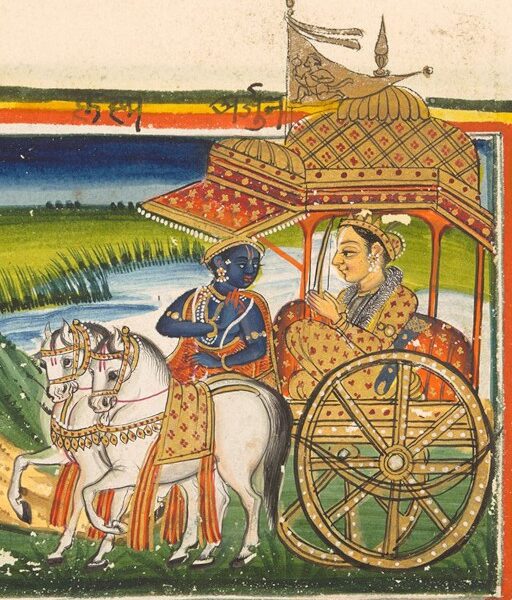
Or she’ll cook at home and put in little things and stick it in the refrigerator, right? But it’s already been offered. You can have a little offer in the refrigerator. That’s another thing, that’s stretching it, why your mom won’t do it, so what’s the… Okay? So you understand this, that the field is the same. This is very important here. It’s the same thing. That’s why this third chapter has come up. Why? Because Arjuna was confused. Right? He’s saying, I’m on the battlefield, I’m a grhastha, I’m a ksatriya, and I’m confused, I’m disturbed. Now Krishna started talking about all this very nice spiritual, you know, we’re not the body, we’re the soul, right? Transcendence, all that, great, I’ll give up all that concept, go to the forest. Then Krishna said, no, you’ll just fight.
And then he’s confused, so he asks the question, this is contradictory. You tell me that, you know, I’m a fool for all these considerations of, you know, ksatriya dharma. At the same time, so therefore, I say, go to the forest. And you say, no, you’re going to fight.
Do you understand? So that contradiction is, I mean, the question on that seeming contradiction gives rise to the instructions of the third chapter.
So therefore, Krishna’s dealing with, no, the field looks the same, it’s the change in consciousness that makes it spiritual. The activity doesn’t change. Right? The one is, he’s fighting because he doesn’t like Duryodhana and they want their kingdom back. The other is that, no, Krishna wants this fight because you’re supposed to establish dharma and dharma means you can be more Krishna conscious. Duryodhana is getting in the way of that. So they, as ksatriyas, it’s their business to take care of it.
But the field doesn’t change.
So if that’s understood, then we don’t have a problem that the modes of nature are doing everything.
So therefore, it’s the same field but the difference is I’m seeing it in connection to Krishna. So even though the modes of nature are mechanically taking care, the effect we’re getting is not Mahamaya, it’s Yogamaya. Because Mahamaya and Yogamaya are the same person, two different offices.
Does that make sense?
Right? It’s just like a child. There’s, you know, happy mommy and there’s grumpy mommy. Same person, but two different offices.
Does that make sense? So that’s basically what we’re dealing with. Mahamaya means grumpy mommy.
Like that. Why? Because we’re not doing what we should.
The difference between Krishna consciousness and material consciousness. Two persons, one in Krishna conscious and the other in material consciousness, working on the same level, may appear to be working on the same platform, but there is a wide gulf of difference in their respective positions. The person in material consciousness is convinced by false ego that he is the doer of everything. He does not know that the mechanism of the body is produced by material nature. Right here, it’s mechanism.
Which works under the supervision of the Supreme Lord. Paramatma sanctions. Then, maya, you know, through the modes, affects it.
The materialistic person has no knowledge that ultimately he is under the control of Krishna. But, in this case, through Mahatma. For the devotee knows he is under the control of Krishna. And therefore, he works under Yogamaya.
The person in false ego takes all credit for doing everything independently. And that is the symptom of his nescience.
So, at least in your more modern context, that means anything that works out good. Anything that works out bad, they take no credit for. In other words, translate, no responsibility.
If you go back in time, you know, back to, you know, older, when there was more a sense of, you know, romanticism. Then, people, even if they did something wrong, they would take, you know, the responsibility. So, the point is, I am the doer. That means, if it works out good, I get the credit. But, if it works out bad, I get the, you know, I have the responsibility.
Right? So, even the modern, they’ll only partially take the credit. But, the same principle goes. It’s because, I did it, and it was good. So, I did it. But, if it didn’t go good, someone else, because of what they did, they made it happen. So, in either case, we’re not seeing it’s a normal nature. Therefore, you know, anger, you know, rage, retribution, justice, all these things are very prominent. Right? Well, we’ll take it. No, the person is more enlightened.
Right? Maybe, he’s less brain, so he’s lighter. you know, he’s enlightened because he’s considering all these finer things. He’s not only looking for it at himself. No, he’s only considering these things when someone else is doing it. He’s not considering it when he’s doing it.
You understand? So, it’s not actually more enlightened.
It’s just a very clever way to get the responsibility off of yourself. So, to do that, you have to accommodate a little bit, you know, the other.
You know, because if I accommodate you did that, and okay, you’re great, that means if you do something wrong, then you’re at fault. Right? But if I do something wrong, simply everybody has to understand. Right? I’m the victim, so therefore, what can I do?
Does that make sense? We see how the mechanics. Okay.
The person in false ego takes all credit for doing everything independently, and that is the symptom of his nescience. It means he’s involved, so it’s not independent. You’re doing it under the direction of authority by Krishna’s grace. If it works out nice, we’re happy to have been involved in it. So, when people tell you, you’ve done a great job and this and that, it means you’re the one that was involved in it. Right? So they’re going to tell you. Right? You know, it’s not that you’re going, well, you just did this nice thing, you know, Paramatma really, you know, he knows how to call him, doesn’t he? Right? You know, Maya really knows how to take care of it and all that. You know, no one’s going to say like that. Who killed the cow? Huh? Yeah, who killed the cow, yeah. So, the point is, as I pointed out, but the individual knows, yes, it’s only by the grace of Krishna and the Vaishnavas that it works out. Right? It’s by their grace, their potency. But we’re involved.
Right? So then, it’s not fall Shiva. That’s not nescience. You know, it’s real ego. Yes, I took part in it, but ultimately it wasn’t me. I’m not actually the doer. I only have desire to take part in activities, you know, that are controlled and sanctioned by the Lord. He does not know that this gross and subtle body is the creation of material nature under the order of the Supreme Personality of Godhead. And as such, his bodily and mental activity should be engaged in the service of Krishna, in Krishna consciousness.
Right? So, it’s engaged in the service of Krishna, in Krishna consciousness. Why say that? You know, to make it exact. Because otherwise, we could do it for Krishna, but not be conscious of Krishna. But for Krishna, it’s not that the activity is being done for him. It’s that you’re conscious of him when you do it. Does that make sense? So, to be conscious of him when you do it, means the activity should be, you know, for Krishna.
Does that make sense? Because Krishna’s not worried about the result. He’s worried about that you’ve done it for him. Right?
And the expression of that something’s done for him is shown through the activity. So, the importance of the activity is that it’s the medium for expressing that you’re doing it for him. But you should be conscious of him while you’re doing it.
Does that make sense?
The ignorant man forgets that the Supreme Personality of Godhead is known as Hrishikesha, or the master of the senses of the material body. For due to his long misuse of the senses in sense gratification, he is factually bewildered by the false ego, which makes him forget his eternal relationship with Krishna.
Right? So here, Supreme Personality of Godhead. Again, the same kind of thing. Right? It means you have supreme, so you’re dealing with something above. You know, you’re taking personality that you’re dealing with a person, not just the supreme, meaning Brahman. But a Brahman, Paramatma, Bhagavan, you’re dealing with Bhagavan. Right? And Godhead means the source of all others. So Supreme Personality of Godhead means Krishna. Like that. Because of the personalities of Godhead, you have the Supreme Personality of Godhead.
Does that make sense?
And then, to make it very clear, we’ll say Supreme Personality of Godhead, karma, Krishna. You know, like that. You know, that makes it very exact. So Prabhupada, when he’s speaking, it’s very pleasant, but extremely exact. Nothing is left to speculation.
But because he uses pleasant language, not, therefore we can’t connect our conditioning to it. And so therefore we can’t go, yes, this is very scholarly, or this is very emotional, or this or that. No, it’s just very exact, given in a very pleasant, gentlemanly way. Therefore it can reach the broadest audience.
So here, Supreme Personality of Godhead, Hrishikesha, means the lord of the senses. But, because so long we’ve used the senses for our own purpose, we can’t appreciate that he’s the one that’s doing everything. He’s the controller of this. Right? So that means then a false ego, that I’m the controller and enjoyer, and this is all for me. So that false ego. Then we become bewildered, so we forget that I’m actually the servant of the lord. So that’s the process. So that’s why the first thing we do is, we’re the soul, we’re a servant. We’re not the body, we’re a servant of the lord. That’s the first point we make. Because then that breaks the false ego.
Then it gives the opening that, therefore the senses aren’t to be engaged how I like them in my service, but to be engaged in Krishna’s service. So it can start out with how I like, to engage the senses. But since the senses belong to Krishna, it should be how I like for Krishna. Then ultimately it should be how Krishna likes for Krishna.
The knower of the absolute truth is convinced of his awkward position in the material association. It’s awkward. But whatever, he uses it. It’s not ideal. So this idea of being comfortable in it, no, you can be comfortable with your identity with Krishna consciousness. That’s what the previous verse was saying. When you’re comfortable with that, then one will progress very nicely. If one’s not comfortable, then one’s not going to progress in anything. You have to be comfortable to progress. Right? You have to be comfortable. Yes, I can do this. Then even if it’s something material, then you’ll progress. But if you think, oh no, I can’t do this, it won’t come out good.
Does that make sense? One could say, no, but he did it, he wasn’t confident and so, but then he did it and it worked out great. Yeah, but then it worked out great and people said, hey, that was great. Now he’s confident. But if he continues to be not confident, people will get tired of it after a while. And the opportunity won’t be given.
He knows that he is part and parcel of the Supreme Personality of Godhead, Krishna.
And that his position should not be in the material creation.
Right? So just his positioning. So that means the problem is, main problem is Krishna consciousness. Second problem is the positioning. Right? It’s dangerous position because there’s so much distraction. Right? Like this. He knows his real identity is part and parcel of the Supreme who is eternal bliss and knowledge. And he realizes that somehow or other he’s entrapped in the material concept of life. Somehow or other, because it’s not really important how we get there. So to make a real importance, to make, you know, the, what is it, you know, that complete, you know, the definitive element on how we got there, that defines all other aspects of our philosophy. That’s not so important. That can be worked out later.
You know.
So the emphasis is that we’re trapped. Yeah, that we’re trapped. Somehow or another, so we’re not even worried about it. But how to get out, that’s the main thing. So when we’re overly focused on how we got in, it’s actually a symptom that we’re not so sure it’s a problem that we’re here. Yeah, it can be. Because the point is, is if we came from here, what’s the big deal that we’re here? Yeah, exactly. Right? So therefore, don’t be so pushy. We’ll get out when we, you know, feel like that. That we’re making any endeavor is better than, than, you know, that we started from. But if we started not from here, then being here is a problem no matter what. Right? And then you have a right to be pushy. You know. Does that make sense? If we’re the controller, why should someone else be pushy? Right? I’m already pushy enough, and there’s only room in this creation for one pushy. You know, like that. Yes? But shouldn’t it be the same process we got in to get out? It is. But the point is, is, you need to start from the point of getting in. So do you understand that? Right? In other words, the soul, let us just go through it in a nutshell, like what we see when the Bhagavatam in that describes through Sankhya the process of creation. Right? Because creation means, why is there a material creation? What’s the purpose of it? It puts you here. Right? So, the living entity, you know, is placed within the material nature. Right? So the pradhan becomes mahat. Right? Mahat-tattva. Why? Because there there is the consciousness that I’m the controller and enjoy. Right? Where have they come from? Right? How did they get there? Through the glance of the Lord. Is the Lord transcendental? Yes. So, it’s not that while they were in the Lord’s body that they didn’t have that mood of I’m the controller and enjoy. And as soon as they leave His body, then it develops. They had it. That’s why they’re in the glance. Those that don’t have it aren’t in the glance.
And then when they go into the mahat, mahat is called, that position is called Vasudeva -sattva. They’re on the transcendental platform because they’re not materially entangled, but they have polluted consciousness.
So if you can accept that I could be transcendentally situated, have polluted consciousness, then you’ll be able to understand how you got to that position from this transcendental platform. But if you can’t accommodate that, you won’t be able to accommodate the other. So therefore, that’s what you can deal with, but no one deals with that. That’s not the point of discussion of those who argue over this point, how we fell, where we fell from. They don’t discuss that point at all.
So that means they’ll never be able to understand it because that’s what’s given to us. So, like you said, yes, you can understand how you got in, then you can get out, but you have to be able to understand actually what’s the point. The soul is transcendental. It’s only covered. But we’ll take it, no, the soul, he’s a demon. No, the soul’s not a demon. He’s only covered by demoniac qualities. He’s a pure soul like everybody else, transcendental. That’s why the Uttamadakari sees everybody equally because he sees them all as servants of God, just they’re covered with different things. So according to how they’re covered, he deals with them. This is the Lord’s energy. It’s a rock. This is the Lord’s energy. It’s a piece of paper. I deal with them differently.
Does that make sense?
Yeah? It means the paper covers the rock, right? You know, rock breaks scissors, scissors have paper, right? So he deals with them differently.
No? Yeah. So it’s not that he can’t tell the difference between the Lord’s energies because we’ll take it like the Mayavadi. No. When you get to that, then there’s no difference, you know, some sentimental just running down the road, you know, like that, you know.
Does that make sense? Yeah. Yeah. So he can tell the difference. So the point is, is we’ve fallen from the transcendental position because we wanted to control and enjoy. Therefore, since that’s the point, we’re transferred from the transcendental position to the not-transcendental position. But that state between, that neutral state, that’s the Tathasta position. Right?
Does that make sense? So that’s the whole point.
You’re in the transcendental position, but you could be materially, in material consciousness. It’s the same thing. That’s how you get here.
Because you’re transcendentally situated, but you look at the transcendental situation, what you can get for yourself. And those who don’t come here are in the transcendental situation and look at how to engage the transcendental situation for Krishna. So that’s the point. The transcendental situation, you see it connected to Krishna, you’re with Yogamaya. You see the same transcendental position, you want to use it for yourself, then that’s Mahamaya.
So the same object is material or spiritual. It’s not that it’s two different things. The same thing is in one place. Do I use it for myself or do I use it for Krishna? You see it for Krishna, you’re looking at the spiritual world. You see it for yourself, you’re looking at the material world. That’s Tathastu Shakti.
One can accommodate that, it’s easy to understand. One can accommodate that, don’t bother. Because you’ll never understand.
That’s the point. If you can’t accept that the two are the same thing, it’s just a matter of… You know what I’m saying?
How about that?
The knower of the Absolute Truth is convinced of his awkward position in material association. It’s material association, it’s not being situated in the material world. In the material world, it’s this inferior energy. It becomes called the material world because of material association. Material meaning, I don’t see it connected to Krishna. So the problem is this, the association of those who don’t see the Lord’s inferior nature in connection with Him, that’s the problem. Right?
The inferior nature is inconvenient, but it’s not actually the problem.
The problem is that it’s being seen by the residents within the inferior nature as for their enjoyment, and so separate from Krishna. That’s the problem. So that’s why it’s the association, it’s not being in the material world. So that’s why it doesn’t matter if the material situation is nice or not nice, it’s still the same problem.
You know what I’m saying? The guy’s in his mansion, he thinks, this is my palace. The guy’s sitting in his little tin shanty, he thinks, this is my palace.
It’s the same thing.
For somebody from the infallible realm to come here, this place must look very full of crazy people.
I don’t think you would say it looks like.
It is. Just like if you go to an insane asylum, does it look like it’s full of crazy people? It is full of crazy people.
So yeah, no, it’s just full of crazy people. But they see that the living entity is part and parcel of the Lord. So they look at that. Then, according to the individual’s conditioning, they will look at the conditioning and try to see how to engage that particular conditioning in the Lord’s service. So therefore, the points before that were made. So these are how to preach.
We’ll say, oh, Gita’s just the basics. It’s the ABCs. ABCs includes how to preach.
They say, Bhagavatam is dealing with, they’re already preached to. You don’t have to preach to them in the way to make them into devotees. Bhagavatam, they’re already devotees. Now how to improve the quality of devotional service. So the Gita is giving all these fine points.
Right? So, whatever their conditioning, that’s what you try to engage. So when you’re speaking, those examples that work for them, the situations, applying it into the situations they’re in, that’s how you’ll preach. But it’s not that you’re dealing with anything less than the pure Vedanta philosophy. You’re just applying it to their situation so it’s practical for them.
Right? So if they have a problem with God as a person, you say, Supreme.
You know what I’m saying? They have a problem with social forms, religious forms, you just talk about the principles. But you don’t not give the pure Vedanta philosophy. Otherwise, that’s not preaching. That’s just wasting your time.
He knows that he is part and parcel of the Supreme Personality of Godhead, Krishna, and that his position should not be in the material creation.
So that starts by changing the consciousness. We got ourselves here by polluted consciousness. We’ll get ourselves out of here by pure consciousness.
So it’s not just we change the situation. No, you have to change your consciousness. Otherwise, whether the environment is made out of inferior or superior energy, if our consciousness is polluted, we’ll see it for ourselves. And if our consciousness is pure, whether we’re in the inferior or superior energy, we’ll see it in connection to Krishna. Right? So therefore, those who see it in connection to Krishna, they deserve to be in the superior energy. Right? Because it’s conscious. They won’t mind that you are looking at it in connection to Krishna because it’s conscious and thinking of itself in connection to Krishna. But in the material world, then we’re seeing it and thinking of it not in connection to Krishna. So therefore, it means if we see things separate from Krishna, we’re placed in the external energy because the external energy, not being conscious, doesn’t become annoyed that you are not thinking of it in relationship to the Lord because it’s not conscious.
Does that make sense? Yes. If the Jiva becomes more conscious, if the consciousness of the Jiva is purified somewhat, Right. does that mean that it’s able to discern that the activities of the mind are stupid? And why even, you know? No, it means the activities of the mind aren’t what’s stupid. Yeah. Because the mind accepting and rejecting through information gained from the senses, that’s what it does. That’s not stupid. So in the spiritual world, they do the same thing. What’s stupid is that it’s accepted and rejected not based on what’s Krishna conscious but accepted and rejected upon our enjoyment, our false identity and enjoyment. That’s the difficulty. Because you can’t change that the mind does that. Does that make sense? Yeah, yeah, you know. Does that make sense? Yeah. But I think what I mean was… It means that’s how we’re engaging it. The mind’s a tool. You’re taking the knife and you’re cutting something for yourself or you’re taking the knife and cutting something for Krishna. The knife, activity of the knife, what it does, doesn’t change. What you’re cutting may change.
Right? But the action of the knife that it cuts… So the mind that it accepts and rejects from information gathered from the senses, that’s not going to change. That’s just what it does. That’s… So therefore the Krishna conscious living entity uses the tool of the mind for Krishna consciousness.
And the materialist uses the mind as his tool for sense gratification.
Right? Does that make sense? Right, so just like someone, by the work they do… Yes? Yes?
Why not? Because the impurity is simply how it’s viewed. It’s not that the environment itself is what’s impure.
You know what I’m saying?
That’s only because we identify with the environment. Then it has a strong influence. If we don’t identify with the environment…
It means to cut the potato, do you have to be the knife? I am the knife.
Therefore I can cut the potato. No, I am cooking this potato, I have to cut it up into little pieces. Right? So therefore the knife is used to do that. I don’t identify with any of it. I’m servant of Krishna.
So in other words, the environment becomes influential if we identify with it. If we don’t identify with it, then we just use it, whatever’s favorable in that environment, for Krishna. Maybe there’s nothing favorable in the environment, so the favorable aspect of that environment is leaving that environment. So the best thing we can do with that environment is leave it. So that’s the service to Krishna.
Does that make sense?
You elevate the consciousness by elevating the consciousness.
You place yourself… In other words, environments are the mode of goodness because they’re connected with authority, like that. Then the tendency is that of knowledge. So they’ll be uplifting. So we use our intelligence to place ourselves or keep ourselves in environments of goodness because that’s only favorable. But consciousness is consciousness. Material energy can’t affect consciousness.
You know what I’m saying? Like, you know, I take this rock and bother your mind with it, or your intelligence.
No, it won’t work like that. I can bother your body with it.
So mind bothers mind.
Intelligence bothers intelligence. Body bothers body. But it’s only consciousness that can affect consciousness.
So being Krishna conscious is simply that you want to be Krishna conscious. That’s all it is. But because if we’re in a particular environment, we want to enjoy that environment. That’s why… And so it distracts us from Krishna consciousness. That’s why we avoid those environments.
You know what I’m saying? Does that make sense? You go to a club. Why is everybody at the club? Right? They’re there to get involved with somebody. And because they’re not very good at that, you know, or, you know, whatever it is, then, you know, they have to take some alcohol. And then they feel a little bit more comfortable. But they’re there just for that. So that environment, since it’s only meant for that, is not an ideal environment for if you want to be God conscious. People don’t go there because they want to be God conscious.
Does that make sense? So that’s why it’s not… But you could be God conscious in that environment. Right? Nityananda Prabhu walks into such environments and preaches.
Does that make sense?
Yeah, externally there’d be no change. But if it’s favorable to change that environment, you would.
Right? Does that make sense? The person’s cooking, so now he cooks for Krishna. But then, you know, he finds out that, you know, onions and garlic and like that create the mode of ignorance. So it distracts from all that. So since he wants to be God conscious, these aren’t favorable, so he gives those up. Right? Does that make sense? From that platform. Or if he understands that Krishna doesn’t like them, I offer everything to Krishna. Therefore, then I’ll give it up because Krishna doesn’t like it. So you’re improving the environment.
Right? But you’re not going to get out of the material world. You know what I mean? Staying out of the inferior energy.
Does that make sense? But that’s why when you deal with the direct activities of Krishna consciousness, you’re not dealing with material energy. The external. You’re dealing with internal.
You know, the chanting is Krishna. It is Transcendental.
Right? But we’re appreciating it through the material senses. But the reason we can appreciate it because there’s the chit potency, the internal potency is there. That’s why you have to hear the name from authorized sources. Then it carries that chit potency. So the material ear is able to appreciate it. Otherwise, it wouldn’t be able to. Is that okay?
Yes. Could it be that accepting and rejecting of the mind is according to habits? No. Accepting and rejecting is what the mind does. What we accept and what we reject, that’s by habit.
Does the knife cut by habit?
No. The knife just cuts. By habit, we cut certain things.
Do you understand? The mind does what it does. It’s an element of material nature.
Right? And it has a function.
Just like earth is what it is. Fire is what it is. The fire doesn’t change because we’re Krishna conscious or not. You have the fire, you put the pot on, you put water in the pot, the water boils. So it’s not that the fire changes.
It’s your perception of it. Your use of it. So the mind doesn’t change.
Yes, that’s why it’s called practice, sadhana. Sadhana means you practice thinking about Krishna. So, because the consciousness is absorbed in the external energy and in a specific way you like to enjoy. Therefore, you control that environment that you want to enjoy because you identify with it and through authority of the scriptures, connect that back to the Lord.
Does that make sense? That’s what you’re doing. Because that will help you change the consciousness.
Because otherwise, the consciousness will just be absorbed in that external environment. So if you don’t regulate the environment, then it will just go by the whims of the mind.
Just our whims to enjoy. But if we regulate it, then we can only enjoy at certain times in certain situations.
So why are we doing that? Because authority. Who’s the ultimate authority? Krishna. So as soon as it’s restricted, everything’s fine as long as there’s no restriction.
You know what I’m saying?
Like that. That’s where it loses the fun. That’s why nerds aren’t considered fun. Because Thursday night is you go out to this place. Friday night you play this video game. Saturday you do this. And that’s what they do eternally. So everybody else finds it boring. Because it’s regular.
You understand? That’s how it functions. So that’s what the Vedic point is, is that regulating it, one, you can get the best out of it, but two, it makes the material nature boring.
Right? So the point is, is you’re doing it because it connects it to Krishna. So if you don’t connect it to Krishna, when the material nature gets boring, you become a Mayavadi. But for the devotees, you deal with according to regulation. And it gets boring, so then you surrender to Krishna.
Right? That’s the whole point. But the idea is, is how to make the material energy not distracting.
At the same time, it’s because we have a connection to it, and we will be result oriented. Right? Then we’re going to, how you say, need to be inspired that the result we’re getting is beneficial. So the Vedas show what’s the best way to get the best result. Of course, we have our own ideas.
You know what I’m saying? It’s just like, let us say, there is, there’s a feast, and there’s 50 preparations.
Right? So I’ve already eaten. So I can tell you, okay, these five are good. Right? And so if you’re intelligent, you’ll sit down and eat those five, and not eat the other 45. If you want to eat, you know, really exceptional preparations.
But there’s always the idea, no, but what if, and you know, maybe, and so you’ll eat all the others, and then you’ll figure out, yes, that’s those five, but because you’ve eaten all the other 45, you can only take one bite of them anyway, and then you’ll think, oh, I should have done. So that’s what the mind does. It always thinks, no, but maybe.
That’s why one has faith in the authority of the Vedas. The Vedas says, do it like this. You do it like that, because you know you’ll get the best result. But people don’t like to be restricted. No, it’s whatever I feel like I should be able to do. But, as we discussed, socially, what, what, what position in a, you know, the human society, in a community or a family, what is the position of someone who does whatever they like and doesn’t worry about rules and regulations? A child.
An adult means he regulates himself and knows what you do at what time to get the best result.
So, therefore, we classify someone who, you know, so therefore you have children and you have adults, and adults will count as, you know, members of the community.
And they’re saying the community should take care of the children, but we don’t say the children are the community.
Right? So, therefore, we say human life is those who follow Vedic culture. Those who don’t, then are less than that. Just like children, until they are trained, are like animals.
So, in the same way as those in the human form of life who are untrained are like animals. And when they take up the Vedic culture, then they’re called human. That’s actual human. It’s the same principle.
Right? Because if you don’t, then it’s just a matter of who’s the chairman of the lord of the flock.
Do you understand? That’s what you get.
Okay.
Yes. So, and here. Because otherwise we have a big footnote.
Om Hare Krishna Hare Krishna Krishna Krishna Hare Hare Hare Rama Hare Rama Rama Rama Hare Hare Hare Krishna Krishna Krishna Hare Hare Hare Rama Hare Rama Krishna Krishna Hare Hare Hare Rama Krishna Krishna Hare Hare Hare Rama Krishna Krishna Hare Hare Krishna Krishna Hare Hare Hare Rama Krishna Krishna Hare Hare Hare Krishna