
And, at the same time, there’s no reason not to perform it. He doesn’t have anything to gain from materially, but if that’s his duty, then there’s no reason not to do it.
Because, otherwise, this idea, oh, I’m detached, as we discussed yesterday. Oh, I’m not feeling that same feelings of attachment to the family. Therefore, I have no obligation to work. No, but there’s no reason not to. If you’re not attached, it’s just like you’re cooking for Krishna. You’re not attached to eating that food, so that’s not a reason now not to work.
Just because there’s no material purpose, doesn’t mean the work’s not done. It’s not done for Krishna.
Nor is there any need to depend on any other living being, because the other living beings, we’re dependent upon them to get done what we want in the way of karma and jnana. But if we’re expressing devotion, then it’s just a cooperation. There’s no other purpose. Because they’ll say, no, but we’re cooperating on the material platform, but you’re dependent upon them. Say what you like, but we’re dependent.
But on the material platform, we’re not dependent.
Because we’re not dealing with the illusion that what we are working with is not Krishna, and it’s not his energy. So we are always then assisting the service of the Lord. That’s what’s going on. Does that make sense? So we’re not dependent on the material platform, but we are subservient to the Lord in His internal potency. That’s the natural position.
The only duty for a self-realized person is devotional service. A self-realized man is no longer obliged to perform any prescribed duties, save and accept activities in Krishna consciousness. Krishna consciousness is not inactivity either, as will be explained in the following verses. A Krishna conscious man does not take shelter of any person, man or demigod. Whatever he does in Krishna consciousness is sufficient in the discharge of his obligation.
Because his obligation is to Krishna, so whatever he does for Krishna, then that takes care of everything.
He doesn’t have to do anything on the material platform. So if the activity of the material activities is beneficial in his Krishna consciousness, then he’ll do it. If it’s not, he’s not obliged to perform it. So therefore all the material things of obligations to family, to the community, to the society, all those, if they’re beneficial in Krishna consciousness, then the one performs. If not, there’s no need. But the definition of whether it is beneficial or not is not decided by us. It’s decided by guru-sadhu and sastra. Otherwise it would be wholesome. Because we’ll say, oh, if I have no material attachment to it, therefore there’s no need to perform it. Then you’re saying the only reason I would do it is because I’m getting a benefit. So the reason that we’re being detached is not for Krishna. We’re being detached because our only reason for work is our own attachment.
Does that make sense?
So this point is very subtle, because we see that Krishna has no obligation, but he does it to please the devotees, to set the proper example, to remove the elements within the material environment that get in the way of the devotional service of the devotees.
But he’s not obliged to work because he has nothing to gain.
But he does it out of relationship.
So the same thing. Mother Shodha doesn’t have any duties to perform. So whatever she does, she’s only doing to please Krishna. So in her relationship, all those activities that would please Krishna, that’s what she does. So she spends her days fully being absorbed.
3.19. Therefore, without being attached to the fruits of activities, one should act as a matter of duty, or, for, by working without attachment, one attains the Supreme.
Because it’s a matter of duty. And by doing that, by acting in naiskaram, you will attain the Supreme. One, first, you’ll attain to the platform of Brahman, you’ll be liberated from material contamination. But, because you’re doing it on Krishna’s order, on Guru’s order, it’s pleasing to Krishna, therefore you’ll attain Krishna as a person.
Yes? Duty is like the starting of relationship. Duty is the start of relationship. Yes, you would say. Because duty is simply what it is you’re supposed to do to cultivate your relationship.
You know, just like, let’s say, I give you some money. So it’s your duty to put the money in a safe place. Because if you don’t, you won’t have a relationship with the money. Right? Because you’ve left it in an unsafe place. Now, if someone else who understands the value of money, and decides that they want to have a relationship with that particular pile of money, they’ll pick it up and walk off with it. Now, if they’re smart, they’ll put it in a safe place. If not, someone else will steal it from them.
Does that make sense? So, duty simply means that which nourishes and cultivates the relationship. Right? But, because the living entity is lazy, due to the mode of ignorance, and thinks I’m automatically the controller, therefore I shouldn’t have to do anything. Right? But to be the controller means you’re doing something. Right? So inherently, and to enjoy you have to be doing something. Right? You want to smell, you have to breathe in through your nose. You want to hear, then you have to listen. There’s an endeavor. But we have this idea, no, it should just happen.
So that’s ignorance. Passion that whatever does happen should please my senses. And ignorance is that it’ll just happen on its own. But there must be activity. So, because of this ignorance, therefore there’s duty. So it’s defined that this is what you should do. Right? Like nowadays, there are committees, there are organizations to see that parents nicely take care of their children. Right? Technically, there shouldn’t have to be such arrangements.
Because the natural relationship between the parent and child is that of affection, as nourishment.
Right? And if you have some standards to function by, you have to ensure that those standards are facilitated for the child.
Right? But, because people don’t understand this, therefore there are arrangements that for those who don’t understand, that they’ll be encouraged to understand.
Right? Does that make sense? So that’s where duty comes in. That’s documented because Mother Yashoda doesn’t have to, you know, sit down and regularly study Shastra to figure out what should she be doing as a parent.
Right? She doesn’t, you know, go out and buy parenting for idiots, or, you know, go online to see some, you know, whatever’s the latest, you know, person who’s pontificating about something in parenthood. And, you know, she doesn’t have to do any of that. Right? Because it’s the natural expression of her affection for Krishna.
But, and for others in the spiritual realm, then parenthood is established by her, because she has the greatest amount of parental affection.
Therefore all others in parental rasa follow in her footsteps.
Right? But those things need to be documented here in the material world. Because we don’t know. Right? It’s a basic understanding, but, you know, there’s a difference. Like if there’s puppies there, and you go over to one of the puppies, does the mother dog come over? Not necessarily. The puppies are drinking milk, and the mother dog sees something interesting to eat or that, what happens? She just gets up and walks off.
You know what I’m saying? So the thing is, is we are aware of parenting. But what kind of parents? You know, dog parents, you know, cat parents, cow parents, platypus parents, you know? You know, what kind of, you know, the turtle, you know, the kid’s over here, and the parent’s out at sea. How do they do that? Through meditation.
Right? You know what I’m saying? So what kind of parenting? Right? You know, the parent is in, you know, New York. The child’s in another city, you know, doing their education in their college. So some, it’s great, yeah, now the house is empty, you know, now we can do what we like. We don’t have to worry about all these things, you know, like that. Another one is thinking about their kids. What would be beneficial for them?
Does that make sense? So the point is, therefore, Shastra has to establish, because basically you have 8,400,000 ways to be a parent.
So, actually human, that’s beneficial for spiritual upliftment, that the Shastra will define.
Therefore, duty.
Plus, you also have the element, which means once you come to the spontaneous platform, then there’s a basis for interaction, because there’s an opportunity, because that is your duty.
You understand?
It’s your duty to cook for the child, so therefore, you know, you have an opportunity.
Right? So whatever you can, you cook. For the other person, they actually don’t want to do anything, but they’re obliged to cook, therefore they do their duty.
Right? But if the kid didn’t ask, then there’s a chance you might, you know, it might let it slip by. Right? But if you’re taking every opportunity, then there’ll always be some food there, and they’ll always be trying to feed your kid.
Does that make sense? I’ve talked to many parents when the child’s small. There’s such a difficulty that they don’t want to eat, they don’t want to do this, they don’t want to do that, and so many things like that. If the kid’s hungry, why wouldn’t he eat? If you’re hungry, will you eat? Right? So that means there’s so much opportunity to eat, the kid’s not actually that hungry. Right? And then he’s come to the point, because there’s always food, he can be choosy. Right? Because he’s not that hungry. If he doesn’t eat this, which he doesn’t really like, you know, after another hour or two, there’ll be something he likes. He will make it. But if he’s actually hungry, then whatever comes in front of him, he’ll eat.
Does that make sense? So it’s because the mother’s taking every opportunity. So it’s not a sense, she doesn’t have a feeling of, I’m supposed to do this. It’s opportunity.
Do you understand? But that’s when it’s spontaneous. When it’s not spontaneous, then it’s duty, it’s vaiti. When it goes beyond that, when the affection aspect takes the prominence, then it’s spontaneous.
Then duty is just opportunity.
Does that make sense? So the point is here is that the Krishna conscious person has no duty, because he’s not obliged to do it. But he’s doing it because he wants to please Krishna.
That’s why Krishna does this, not because he’s supposed to. He doesn’t go out dancing with the gopis because he’s supposed to.
Right?
Here we go again. Yeah, yeah, I know. Oh no, the moon’s up again.
Okay, acting on behalf of the Supreme is the perfect action. The Supreme is the personality of Godhead for the devotees and liberation for the impersonalists. So we’ve mentioned here when we say Supreme, we mean all this.
A person therefore acting for Krishna or in Krishna consciousness under proper guidance and without attachment to the results of the work is certainly making progress towards the supreme goal of life. So a person therefore acting for Krishna or in Krishna consciousness so one may be Krishna conscious and one acting naturally or one may be acting for Krishna or you can reverse the two, either way you want. In other words, you’re doing it because you’re supposed to do it and working under the proper guidance of the spiritual master without attachment. It’s working. The other is that it’s something you want to do. You want to assist the spiritual master and naturally you’re doing it without attachment. So whether it’s coming naturally or it’s coming because of the application of the intelligence, it doesn’t matter. One will progress towards the supreme goal of life.
So just in such a nice way Prabhupada’s pointed out the spontaneous or the vite.
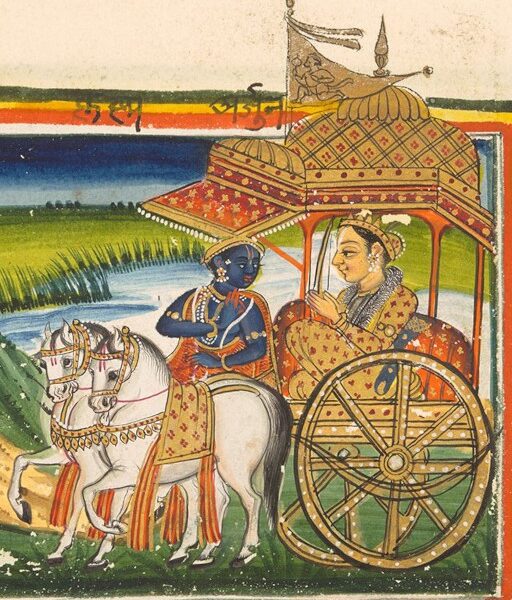
Arjuna is told that he should fight in the battle of Kurukshetra for the interest of Krishna because Krishna wanted him to fight. To be a good man or a nonviolent man is a personal attachment. To act on behalf of the supreme is to act without attachment as a result.
That is perfect action to the highest degree, recommended by the supreme personality of Godhead, Sri Krishna. So you’re going to have the element here also is that duty is there, you’re supposed to do it, but we may have our own personal attachments. Oh no, but I want to be a good person, right? That was the whole difficulty in the beginning of Gita. Arjuna wants to be the good person, right? And to be the good person in this case he’s defined it as being nonviolent, which means not taking part in the war.
So those kind of attachments are not important if they’re not Krishna conscious. So the Krishna conscious person has no duty, therefore being good and nice is also not his duty.
Right?
But he’s doing it because it’s not his obligation. But he’s doing it because it pleases Krishna. Because all living entities are parts and parcels of Krishna. So therefore Krishna seeing them all equally wants you to deal with them all nicely. That’s why you’re doing it. You understand? Because otherwise at this point we may go, No, but there is good action. That’s the problem. In the past the devotees were never dealing nicely with anybody. So what was the problem? They’re not dealing with anybody nicely. What’s the real problem? They’re not recognizing they’re part and parcel of Krishna. Yeah, they’re not recognizing they’re part and parcel of Krishna. But that’s not what’s being presented. What’s being presented is that unless we’re good and nice, people won’t be nice to us and they won’t recognize us and I won’t feel good walking down the street because people go, Oh, there’s a Hare Krishna.
That’s the bottom line. It’s got nothing to do with Krishna. It’s being connected to Krishna. So therefore it’s got some meaning. But the basis of it is not actually Krishna conscious.
Because the culture is not coming from Krishna. The culture is coming from our own mental speculation. That in the modern society at this particular time this way of dealing is considered nice.
But you go back some years. It was not. Let us say, if you go back to the 40s or 30s, right? And everybody has a nice little house and there’s a little lawn in front and everything like that. So then there’s some kids out in the street and they’re playing in the street like that. They hit the ball and go out in the street. The cars are going by. And so the neighbor tells the kids. It’s not his kids. Oh, hey, be careful like that.
They play up here. But they say, but there’s no space. Okay, here, play in the front yard. Would that have been good or not good?
You never know. In those days it would have been considered good. Oh, he cares so much. He’s a community member. He really cares. We’re on this street. So he’s looking out after all of our kids. It’s a community.
He’s playing in the front yard. Oh, he’s affording facility for kids.
If that happens, what would happen? The kids will sue you. Yeah, the kids will sue you. The parents will sue you. Suddenly some guy in his black suit will drive up and then come up and, are you a mister like that? You understand? So it’s not considered correct.
Does that make sense? So it’s just acceptable.
You walk out of the subway and there’s a guy laying on the ground. Previously you’d go over and see about doing something. Now what do you do? You keep walking.
Because if you do that, he may sue you.
Or you try to get involved and then they implicate you in everything.
Does that make sense? So if somebody beat him up, then they’ll beat you up.
It’s just a matter of what’s socially acceptable today. It has absolutely nothing to do with what’s right and wrong. Be very, very clear on that. It’s just what the modes of nature present today as what is the way that these particular souls in bodies that have, you know, walk around on two legs instead of four, call proper social interaction.
Never for a minute be fooled that this has any real basis.
Right?
So the real point is that it pleases the Lord. It’s given by authority. You’re performing it without desire for your own results. You’re simply doing it at least because Krishna wants it this way, so I’m doing it. I may like it or not. And better than that is you’re doing it because, you know, you want to make Krishna happy and this is how he likes it to work. But in any case, you’re doing that because that’s the authority.
Not because, oh, that’s the nice thing to do. So that’s why he’s pointing it out here. You know, to be a good man or a non-violent man is a personal attachment.
It’s simply, we’ll say, no, but it’s so good. You know, the materials, they’re so nice and all that. I mean, it depends which ones you’re talking about. Like that. If they’re all so good, we’d open the newspaper and it’s all nice, good things. But, you know, what is it?
You know, it’s all bad news.
So the point is, is that any good quality you may see is simply the modes of nature. It’s just whatever modes are controlling that living entity at the time. They perform pious work, so therefore they’re manifesting some nice quality. But give it some time and they won’t be. And give it a little more time, they will be. That’s samsara. When you’re at the bottom, or on the way down, generally the tendency is not many good qualities. You know, when you’re going from the bottom to up, you’re manifesting good qualities. It’s just like the moon. When it’s waxing, then you’re seeing more and more light. And when it’s waning, less and less.
That’s all. That’s the modes of nature. So only the devotees have good qualities because they’re connected to Krishna. That’s real. Anything else is illusion. That’s what Krishna’s pointing out. Because he’s already pointing out that you trying to be a good person, you’re a fool. Because you’re only being a good person under the modes of nature. You’re not actually taking control of your life and being God conscious. You know, developing in self-realization. You’re working in ignorance.
Doesn’t make sense? So we see Arjuna, Yudhisthira, they’re the nicest people you can meet. But why are they doing it? Not because it pleases Duryodhana and this one and that. Because it pleases Krishna.
And everybody’s part and parcel of Krishna. Therefore you please Krishna. They’re pleased. Everybody Prabhupada met has something good to say about it. But he’s not doing that out of a sense of being a nice guy. He’s doing that because he sees them all in connection to Krishna.
Yes. So what about if a devotee see a person lying on the street, is he helping him or not? It depends. If it will be help, then you can. But if it won’t be help, you don’t. If he help him, I should not pursue it? Yes, so you don’t. We have service to do. Right? Our service is to preach it. Then we might feel guilty. Guilty for what? For not giving yourself an opportunity to get sued?
Wow, I could have got sued. I just, you know, just completely, I just didn’t see it. There it was right there in front of me.
The natural thing to do is help. But if people nowadays will take help as not help due to the mode of ignorance, therefore you don’t get involved in the mode of ignorance.
You know what I’m saying? We have enough mode of ignorance to deal with in explaining the philosophy of Krishna consciousness. Because that’s the real help. The real help is that they know who they are. The other one, you may help them. That’s natural. But you should also just see that you’re going to be able to do some benefit. If you can, do. But if you can’t, then somebody might criticize that. Who’s this somebody? I mean, outside. Public people. Public people. But then that means you could help them.
You understand? Means it is socially acceptable to help them. I don’t know which.
Somebody said?
You didn’t catch the drift of what we were talking about. You were saying before, if the neighbor chastised your child, you would feel he cares for your child and your child is growing up in a protected environment because everybody on the street cares about children.
But nowadays, if somebody else is not the parent of the child, chastises the parent, the parent will tell them, don’t you talk to my child.
So if it’s acceptable that you could do the proper thing, then you do. But if it’s going to be seen that it’s not, don’t get involved in the material. We already got enough that they don’t want us to preach, that we already got enough obstacle there. So deal with that. Be happy with that.
You know what I’m saying? If it’s socially acceptable to help, you help. But if it’s not, don’t. You know what I’m saying? Because it’s not that, no, I am good, I do these things. No. Our good is we give Krishna consciousness.
Does that make sense?
Going back to your previous point about self -propagation, what we saw, that was exactly what attracted us because we could see the compassion, the compassion. Yes. Everything he said, and it was connected to the mind, spirituality. Yes. He’s saying that the attraction to Prabhupada is that whatever he said and did was for the benefit of the devotees. So they would feel sheltered and everything like that.
Does that make sense? That’s the higher principle. So, what I’m saying is working on these lower social principles then means we have a Vedic standard, but if people aren’t following the Vedic standard, you have to follow the local custom.
Does that make sense?
It’s just the way it works. Like I was saying the other day. You have somewhere up in Garhwal or someplace up in Himachal, up in the mountains there. They have a custom. You know, because the boy, the Vedic tradition is the best is the boy, girl side of the family picks the boy. Right? Because if the girl is interested in the boy, you have a much better relationship than if the boy is just interested in the girl.
Does that make sense?
So, there, there in that environment, because it’s a small simple village like that. You know, once you get an age, if a girl decides she likes somebody, likes a boy, she takes something. I don’t know what it is, but it’s some particular thing. You know, a particular flower or a grass or something she takes. And she goes to the door of the house of the boy, knocks on the door. When the boy comes to the door, she hands it to the boy and immediately runs.
Right? So naturally, she’ll get a head start because he’s not expecting anything. Right? And then he’s suddenly there and then it has to go through, you know, this nice girl and this and that and then suddenly all has to click is that she gave me this because she wants to marry me. Right? But the thing is, is it’ll only, the marriage will only happen if he catches her before she gets to her house.
So now, he has to make that decision right now. You know, do I want to run after this girl or not? Because if he doesn’t, then that’s it. And if he does, he better start right now because she’s got a head start. So it works in that village. You don’t hear of that being practiced anywhere else in India or in the world. But it’s a local custom. It works. Everybody’s cool with it. It’s not against the Vedic principle, but it’s unique.
You know what I’m saying? So, the principles of compassion, this and that, those are standard, but they may have their local way that it’s done.
So you have to see that, you know, it matches.
But, not at the expense of the higher principles of Krishna consciousness.
Is that okay? Yes.
Duty and obligation.
No, they’re the same. Right? Duty is, means, obligation. See, if you have, if you have rights, there’s obligations. Right? So your rights are others’ duties, are others’ obligation. And your obligation is others’ rights.
Does that make sense?
You know, it’s just like the parents’ obligation is to train the child, but their right is to be respected for that.
Does that make sense? They go together. Nowadays, we like to separate them because it makes it really easy. Right? Because if I separate it, then, then, I just, it sounds good, you say rights, but the point is, is rights do have their obligation.
Is that, does that make sense?
Yes. If one cheats, others, within three thousand, that’s remarkable.
If one treats with intelligence other living entities as part and parcel of Krishna, will the sickness in the mind of not seeing them connected with that eventually go away? Okay, by trying to deal with them according to that they’re part and parcel of Krishna, will the idea that they’re not part and parcel of Krishna go away? Of course. It’s just practice. See, it’s just, now we look at everybody as the opportunity for our sense of control and enjoy. Right? That, that, the individual, the situation, because individuals are situations. Right? We look at a situation and whatever’s in that situation, how can we enjoy it? Right? Now, let us say you’re out in a very natural, beautiful environment, but there’s no people. Okay? What’s the opportunity?
Not so much. No, not so much, but I’m saying in that situation what is the opportunity?
The nature, like the Brahman aspect of nature. Yeah. Means you sit back, you breathe in the air, you think it’s very nice, you look around at all the things. Right? That’s what you do. That’s the, that’s the, that’s the standard.
Now what if there was a person there? Then you, you might, you might, you do that, but then you would immediately interact with them. Either to show them that you’re doing that or why aren’t they doing that or, you know, having done that, now what can you, you know, interact with them?
Does that, does that make sense? So it’s just, it’s just a matter of what you can gain from it. Right? You know, or you’re there and it’s so nice and the peaceful and the fresh air and that and then some little animal comes up that’s, you know, still very young and cute and cuddly. Right? So now what do you do? Right? You know, you bend over and try to interact with them. Right? Unless their mother was over there and very big and very big teeth. Right? Then you might not.
Yeah. You understand? So the, the, the, all these things are just what you do. Right? If it’s not set, how can you, how is it you can write a play?
Because you know what people will do in the situation.
Right? So the point is, is if we’re not Krishna conscious then we will see everybody as a way to enjoy ourselves. And we say, no, no, but there are people who are good and just that. But that’s the point. They see themselves as a good person. So now here’s another opportunity in which I can express my, my, my goodness.
Ultimately, there’s no good quality in the material world. You see manifestations of it, but the underlying principle of why the living entity is involved is not. But if it’s connected to Krishna then it really is good. Because Krishna is real. In other words, this is very stark. But the point is, is if we can’t see this then we will, we can be bewildered by sentiment or by lack of it. We’ll be harsh in our dealings because we’re Krishna conscious and we don’t care or we’ll be so sentimental and also forget Krishna. So both sides are forgetting Krishna.
So remembering Krishna is what makes it perfect. It’s actually what makes it nice. You see, Krishna’s devotees, all the interactions are all wonderful.
Hari Das Thakur is dealing with Karmis. It’s wonderful. So it’s being a devotee and being Krishna conscious that makes it perfect. Not that you’re manifesting some good qual, we have to be so this and so that. Right? Look at the verse. Humble. Tolerant. Respecting others. Not desiring any respect for yourselves. Technically that covers every kind of social interaction that there is. But does the verse end there?
No. What’s the next point? Yeah, then you can chant Hare Krishna constantly.
So the point is being able to always be absorbed in Krishna.
Right? But we have to recognize that that’s how it’s going to work. Then in practicing it, it’s very nice and pleasant. But we have to be able to distinguish between matter and spirit. And matter means it’s not connected to Krishna. Spirit means it is. Yes?
Yeah, you could.
You could take karma to the, you know, the intelligence and all that and, I mean, and gyan and then karma to the activity itself. But karma simply means the activity through which whatever is your particular platform of understanding and realization is expressed. Right? Like someone on anamoya, their action is going to express their need for sense gratification.
Pranamoya, it’s going, their action is going to express the need for others to experience sense enjoyment. Right? So that’s what we say here. To be a good man or a non -violent man, that we’ve said it in that state, it means someone on pranamoya.
Right? If he said a religious man, he’s also good and non-violent.
But it’s based on shastra. Here it’s just being good because Arjuna’s being good is not actually based on shastra. He’s quoting shastra to try to back up what he’s trying to do. But it’s not actually shastra, it’s not actually dharma that he’s practicing. He’s practicing artha, nitya, which means pranamoya.
Because he sees himself as a good person and he doesn’t see any benefit by fighting with everybody that he cares for so he’ll lose everybody. Right? Pranamoya means sharing your happiness with others. But your material happiness, your sense gratification. So the point is if you have a kingdom, what do you have? Right? Facility for sense gratification. Now all the people you want to share it with are dead. So what’s the meaning? That’s pranamoya. Right?
Does that make sense? Dharma is, it’s your, their duty as kshatriyas to fight. Now they have something left, they win, they lose, it doesn’t matter. That’s their dharma.
Right? So that’s different. So here he’s pointing out that it’s just on pranamoya, just being nice and good and moral and caring and all these nice platitudes you hear these days thrown around so cheaply.
It’s no different than Arjuna. It’s not connected to Krishna. It’s not, it has no value.
Right? Because even you do it today, will you do it tomorrow?
Right? Or you’ll do for this party, but will you do for that party?
Does that make sense?
Yes. If it’s connected, Krishna becomes anandamoya.
Yeah. So it’s up on the fifth level of consciousness. But generally what you see in modern society is the first or second level.
How would it look like? Manamoya means it’s duty. You’re doing it because you’re supposed to. Right? Vijnanamoya, you’re doing it because by doing it without attachment to action you’ll be liberated.
Right? So you see, in dharma, right, and in moksha, you’re following duties according to shastras. So it’s based in the mode of goodness.
Anamoya and pranamoya is based on the modes of passion and ignorance. Though you can’t connect them. The shastra does connect. You know, what’s proper food, proper cooking, proper clothes, proper ways of dealing. So even these first two platforms become connected through shastra.
So the activities, but one wants to avoid one’s consciousness being on that level.
Does that make sense? The consciousness is not on the level of sense gratification, or extended sense gratification. It doesn’t mean you’re not engaged in the activities. This is where we’ll become confused. Oh, shastra says it’s not to be done, then therefore we don’t do, it means we’re not involved in these kind of activities. No, it’s saying that level of consciousness you don’t do. But it’s not that the activities aren’t done. Dharma, artha, kama, moksha, these are human activities, but they only become perfect when they’re connected to prema.
That’s all. So therefore the shastras define dharma, artha, kama, moksha. So what’s your social system? What is your economics and justice? What is your sense gratification? What’s your liberation?
They define that in detail, right?
And I mean, if people are interested in sense gratification, then they should go to the Vedas, because what they’re dealing with these days is not really, you could call, sense gratification.
They don’t even know how to enjoy it.
So here, therefore, is acting for Krishna, so it’s under the transcendental. They’re under proper guidance of practicing dharma. And they’re doing it without attachment, so moksha is there. So everything is uplifting, right? And the authority will also explain artha and kama.
Does that make sense? So all levels are taken care of, but the focus is on performing your duties under authority to please Krishna without desire for the results.
Right? So when we say that, we have the knowledge and we have the attachment, that’s the jnan, that’s given by moksha. We’re performing the duties properly, and you’re under authority, therefore your karma is working right, your dharma. But it’s for Krishna, so therefore it’s Krishna conscious, not undermined. Does that make sense? That’s why Bhagavatam, in the very beginning, says one should focus on these things. Don’t use dharma for artha, and don’t use artha for kama. You perform your duties of dharma, artha and kama naturally come. But that shouldn’t be your motive, your goal.
Does that make sense?
So it’s about finding the highest principle. Yes, find the highest principle, which is Krishna consciousness, but then you work with the mechanics of what you’re working with. Right? If I say doing the work without attachment, the mechanics is moksha. Right? So it’s jnan, that’s going to be defined by the Upanishads. Right? When I say do your duty, that’s manamaya, that’s dharma, that’s defined by the dharma shastra.
Does that make sense? So it’s wherever the mechanics are. Artha describes manamaya, the other shastras, the kama shastras, describe the senses.
Does that make sense? Yes?
We’re supposed to perform activity without attachment. Yes.
And the activity, although we are detached, we can get detached from the activity we’re not recommending to give it up, because it’s mental pleasure but not for our pleasure. So that’s such a point of detachment, in other words, we are recommended to actually give up the activity. Yes, if it means if giving up the activity is favorable or performing the activity is unfavorable.
But if it’s not, that’s why Krishna in this verse is saying, oh no, it’s the previous, no, self-realized man has no purpose to fulfill in the discharge of his prescribed duties, nor has he any reason not to perform such work. I’m saying because this arose because there’s sometimes the idea that vanaprastha means I’m not getting any benefit out of this anymore. Right? I’ve been doing this a long time and there’s that need for sense gratification, at least with this person who’s not there. And so therefore I’m detached, so I don’t need to do my duty and I will renounce and I’ll become a vanaprastha. Right? But the point is here is that there’s no reason not to perform the work, just because you don’t have attachment to doing it, but if that’s your situation and that’s favorable, you don’t, there’s no reason not to do it.
Favorable. Can you be Krishna conscious?
Does that make sense? You know, either the environment is supportive of Krishna conscious activities and so therefore it’s, you know what I’m saying, right now you’re going to the temple, you’re doing your duties, you know, the person is, you know, managing the temple and everything like that, he comes home in the evening, he interacts with the family, this, that, you know, he takes rest, so he’s able to stay at work all day, I mean, doing his service all day. Now, how much time would it take out of his service, you know, managing the temple, to wash his clothes? But his wife’s washing his clothes, so is it favorable? Yeah, it’s going very smoothly.
Does that make sense? Like that. But if the time spent is so much that he can’t do anything like that and no one’s interested in Krishna consciousness than that, and he’s not a young man where he has desires to fulfill, you know, he’s performed his duties, his children are grown, all these different things, his wife is situated, now it’s like she doesn’t want to do the clothes, she doesn’t want to do this and that, so there’s no need to be together.
Does that make sense? Yeah. But it’s not that, okay, the wife doesn’t do it, now we’ll go over here and now get the brahmacharya to do it.
The point is to simplify your life, not that you’re going to live now as a grihasta who doesn’t have a wife and gets all the facility. That’s not vanaprastha. As we hear, vanaprastha is, you know, tree bark standing out under trees in the rain.
You know what I’m saying? That’s the archetypical vanaprastha.
Now it’s a matter of whether his wife wants to be standing out there with him or not. If she does, then they do it together. And if she’d rather be at home with the kids and grandkids, then she does that.
So we have to see, is it favorable? Does it work?
There’s a cooperation, right? There’s companionship. It’s favorable. But if it’s not, it doesn’t work. But the point is, it can’t be that there’s no purpose to fulfill.
So you’re not fulfilling a purpose by not being involved. In other words, material purposes are material purposes no matter which way you put it. Right? The cow dung patty is wet, the cow dung patty is dry. It’s still cow dung.
Yes?
Yes. So that’s why we have the Shastra.
Favorable for them? No. Dependency means you can be Krishna conscious whether they take part or not. That’s non-dependency.
Whether they can be Krishna conscious.
No, the point is, I understand the point, but you’re changing the…
You’re changing the perspective that Krishna is giving in these particular verses. Because the verse here is not about they need you to be Krishna conscious so therefore you can be in that environment and they’ll be Krishna conscious. It’s talking about the individual not being dependent.
It’s not discussing about that your performance of your duties is beneficial for them. That’s another aspect. Does that make sense? You know, just like we’re discussing furniture. There’s aesthetics. But there’s also price or there’s practicality.
You know what I’m saying? So if we’re discussing practicality, you don’t bring up price until it’s very clear what are the options. You know, if we’re dealing with aesthetics. Because something that’s aesthetically beautiful is not necessarily economically cheap.
You know what I’m saying? Does that make sense? You know, there’s art stuck… There’s art on your refrigerator stuck there by a magnet. Right? And then down at Softbee’s they’re selling art for millions of pounds.
You know what I’m saying? But the point is it’s a matter of what’s the value. You know what I’m saying? For the man sitting there with his little number and all that and going like this every now and again. Then he doesn’t care for the art on your refrigerator. But the art on his refrigerator is more valuable than what he’s buying.
You know what I’m saying? So you have to know when to apply what. So here the point is we’re dealing with that we’re not whimsically defining what’s favorable and not. Gurusadhana Shastra defines. So if somebody’s dependent it is naturally your duty to be involved though you may not have the material attachment either due to your material conditioning or due to your Krishna consciousness.
Because it’s not necessarily that the mature grhastha doesn’t have so much attraction to his wife and that’s due to Krishna consciousness.
It’s not necessarily. He’ll interpret it that way. But it’s not necessarily.
Does that make sense? So we’re trying to get to the point of how do you define what is duty and obligation? What is the Krishna conscious element? Otherwise like you were saying is we will make up our own idea what’s favorable to us in our eyes not necessarily what Shastra says.
So that’s why the Vedic system defines everything very very clearly. So that then one can analyze all the different aspects and then weigh it and then see OK, it should be like this or it should be like that. Whatever is the promise.
Does that make sense? What Krishna is bringing out here is that by performing these activities under the direction of Guru, Sadhu and Shastra without a desire of result for yourself and that is being done to please Krishna that’s what’s being recommended. Nothing more. But this point is being brought out. So this is third chapter so it’s going to be focusing on the element of performance of duty. The next chapter it will focus more on the knowledge behind that. The latter chapters will be within that knowledge what are all the fine technical points how the modes of nature work divine-demoniac nature all these kind of things.
Does that make sense? So that with all these different chapters we have all these different perspectives this is called vichara. All these different perspectives by which then we can appreciate. Does that make sense? Yeah.
You know, if you want to hear but after Gaurapurnima then we’ll be running these classes on Dharma Shastra. That’s when you can really get into the nitty-gritties of that aspect. Okay.
Okay.
Riti, verses 3 through 19 explain that detached work is better than dry renunciation because it is natural and purified. Verses 20 to 26 give another reason why detached work is superior. It sets a good example for the common people to follow. So detached work means activities going on results are being gained through the activity you can become more detached because you’re doing it without attachment. So anything you practice you get better at. Right? Then you’re doing it without attachment means everybody else involved in the activity gets more benefit. Right? If I’m doing it for myself then if others have this same common need then there’s possibility we can share as long as there’s enough and I’m willing. Right? But if I’m not doing it for myself that means whatever’s produced is for someone else or others’ benefit.
Right? So therefore it is better because not only you benefit others benefit. Now they can also benefit Krishna consciously but even if they don’t at least it creates a nicer environment in which Krishna consciousness can be performed. On their platform. On your platform is Krishna consciousness.
Does that make sense? You know, you take care of the family they like you. You’re Krishna conscious they like Krishna consciousness. You don’t take care of the family they don’t like you. They don’t like Krishna consciousness.
Simple. Right? Because they’re materialistic therefore they see only that aspect. So if you function with detached work they’re happy.
Could I also apply that idea to the institution? Could I apply that to the institution? Yes. If I do it on a detached… Yes, because then because the institution is doing it for the benefit you know, spiritual benefit of a broader range so then that’s even better. Right? We’re bringing this out because these things come in the element is you know, Arjuna is a grihastha and this is third chapter we’re dealing with karma yoga so then that aspect you know, the varnasra aspect we’re bringing out more. But the point is is that by Krishna conscious endeavor then that’s the most benefit that’s the best good work. That’s the best welfare work. It’s the most intelligence. The best of engaging the senses. You know, anything. It’s the best standard of relationship. Because everything being Krishna then it’s the process of watering the root. The leaves are naturally taken care of. You know what I’m saying? You know, we have some other system of okay, you take a plastic bag and stick it around the leaves and then the condensation in there between that you’ll get something that leaves won’t dry out so quickly.
Right? But the point is is they’re drying out because the root’s not being watered. You water the root all these other things that do do something.
Right? There is all these little things there’s tons of books out there they tell you all these little things that do do something. But all they do is slow down the drying out process. It will dry out.
So, Gita is saying water the root. All these other processes are taken care of. Because Arjuna is no, I’m watering the root but you know, what about you know, the relatives? What about this? What about that? They’ll all be taken care of. We have to have that faith. That’s, you know, the 241. When you are convinced you’re focused then it works nicely. If you’re not, then it’s many branch.
Right? So many branch doesn’t necessarily mean a gross materialist or a smarta. Because if we say mixed devotional service what is the devotional service mixed with? Right? Either that or the smarta or the gross materialist who doesn’t follow the Vedic. You have these two choices. Right? Is there a third?
Right? So therefore if mixed means those things are there. It’s given in it’s clear extreme example. But the point is mixed means there’s a certain amount of that. So that means then the mind is going into so many other things. So therefore things elements of sense gratification or of, you know, morality or justice or, you know, liberation or being dutiful is more important. So it’s mixed. So we have to understand it’s no. They’re valuable as tools but know how to use the tool. Just if you want to cut the vegetables, you know, for cooking you don’t have to be like a knife, you know, fanatic.
You know, that you have a million of knives and you got this one and that one and I just got this one on eBay and, you know, check this out. No, it’s for cutting subji.
You know what I’m saying? We’re sitting here going wow, you know, it’s the Japanese with all the different things and it’s got this and that. The Japanese guy just picks it up and cuts his tofu. It’s his knife, right? No, that’s what they make, you know. But in America it’s a Japanese knife. You know what I’m saying? The point is it has its point. It’s used. It’s valuable. We’re not saying that dharmartha, karma, moksha aren’t valuable. We’re saying they’re only valuable in connection to Krishna. And since it’s connected to Krishna, how does Krishna want it to be connected to him? That’s the best thing, right? I can cook for you something and you’ll appreciate the sentiment even though the thing I cook for you is something you hate. You hate eggplant so I’ve made you a fabulous eggplant parmesan. Like that. And so, you know, I’m giving him such affection and all that. Yeah, it tastes nice and this and that. But you don’t eat much, you know. You know, and after you go and I say, you know, did he like it and that? Oh yeah, he liked it. I mean, he thought it was a nice gesture but actually he hates eggplant. And then it’s like, oh. So that’s generally what we’re doing. Mixed devotional service and all these other things means we’re offering things to Krishna that he doesn’t really like themselves but that you’re offering it to him. It’s cute. It’s nice.
You know what I’m saying? Does that make sense? So that’s the point. And we may say, no, but it adjusts for the situation, right? You know, the four-year-old kid goes out in the backyard, right? Picks some weeds, you know, some dandelions, this and that. Brings them in with a big grin. Gives it to his mother. Is it valued? Yeah. You know, they’ll be kept. Now, it’s Valentine’s Day. The husband walks in with some dandelions in the backyard. What happens? You don’t get talked to for the next three days.
Right? And the, you know, the, what do you call it? The phone number for the, you know, the fast food place is, you know, on the table there. Right? So he has to bring something else. You know, some roses, something like that.
Is that what you’re saying? So the point is, is depending upon your position, then what works also is varied. So therefore, someone, you know, if it, how do you say?
Someone who’s not very advanced, but they take their duties and then because Krishna said and they’re trying to do it for him, that’s very pleasing to him. Though that particular activity is not necessarily the best. You know, the gopis aren’t doing that. But the principle of surrender and engaging in nature is the same.
Right? But one is fully on Krishna and the other starts with us.
Does that make sense? So Krishna, Krishna here is giving the full range. So he’s pointed out the spiritual platform in the second chapter. Now he’s starting with, starting with yourself and your duties, that’s where we start. But do your duties because you’re supposed to and without attachment. So we’re not saying you can’t start with yourself. But at the end of the Gita, the 18th chapter, then he’s saying, start with Krishna.
Then you use the facilities.
Right? We start with facilities and then include Krishna. We should start with Krishna and then, you know, use the facilities. Work it into the facilities.
Because in America they say use the facilities, go to the bathroom.
You can also do that for Krishna.
Okay, so now, so that’s the one thing. So the dry renunciation means you’re doing nothing. But if you’re doing something, that’s always better because then the social interaction and Vaishnavas live in a social environment. Right? So much else.
Yeah, so it says dry renunciation. It doesn’t say renunciation because to do the work without attachment, that’s renunciation. Dry renunciation means you’re doing nothing.
Then the other is that you’re setting example. So therefore it says, nor is there any reason not to perform such work. It sets example.
3.20 through 6. King says, as Janaka attained perfection solely by performance of prescribed duties, therefore, just for the sake of educating the people in general, you should perform your work. In other words, if you’re above your work, then perform it for others’ benefits. And if you’re not above your work, you perform it to get yourself above your work. So in any case, work goes on.
Right? So that means the social system works. So this idea is, no, we’re renounced, so therefore we shut it down or don’t work. No, it works. It’s just whether you are attached to it or whether you’re not. Or should I say that because of this idea, if I am unattached, I don’t do work. As a group, we lost so much to offer to Krishna in terms of resources. Yeah. Yeah. Because the point is if everybody works together, you have more resources. Don’t work together, then individuals might have more of it. In general, you know, you can do more together. That’s why a social system is there. Means you can go out, you know, and dig around, get a stick and dig around, dig around for your own witchety grunts, right? But, you know, everybody works together, then you can have a more dynamic economic system.
Is that something?
Yeah, I mean, even in my individual self, when I think I don’t need to work and offer that result to Krishna. Yes. So in the end, I end up doing very little Yeah. It means whatever you’re doing, you can offer to Krishna, but if there’s cooperation, you can do more. You know what I’m saying? It’s like how much decoration you can do on Janmasthami, but if 20 people are working, you can do so much more.
Does that make sense? So it works like that in everything.
Whatever action a great man performs, common men follow, and whatever standards he sets by exemplary acts, all the world pursues. O Sanapritha, there’s no work prescribed for me within all the three planetary systems. Right? Now he said this is what you should do. Right? Janaka and other such personalities, they’ve done that. And if you look at it, I don’t have anything to do, but I’m doing it.
O Sanapritha, there’s no work prescribed for me within all the three planetary systems, nor am I in want of anything, nor have I a need to obtain anything. And yet, I am engaged in prescribed duties. Nor do I want anything, in want of anything, nor do I need to obtain anything. We catch why those two?
I and mine. Yeah, I and mine. But what’s the positions that those occupy?
Control and enjoyer. Control and enjoyer, but then philosophically?
Karma and jnana. Hmm? Karma and jnana. Karma and jnana. Jnana?
Yeah, you could. It would also work. I’m thinking more sambandha and prayojana. I’m not in want of anything, means the situation of mine in is not lacking, and there’s nothing that I want to obtain with that situation. Right? Because otherwise, someone would say, oh, well, you can do that because you have all facility. But we can’t be Krishna conscious because we don’t even have enough money to get by.
You know what I’m saying? So the point is, there’s nothing wanting, there’s nothing to gain. Because just because you have nothing wanting doesn’t mean you don’t want everything.
And yet I’m engaged in prescribed duties, right? Even though I don’t have anything or need anything, and yet I’m doing that.
For if I ever fail to engage and carefully perform prescribed duties, he says he uses carefully. He doesn’t just say, I kind of do my duties, you know? I don’t have anything to do, but I kind of do them. You know, just to get by, right? You know, so that others can’t complain. No, he says carefully. It means he’s doing them very, very nicely. But this is also because we have a tendency to think that if we’re detached, that means we don’t care or we kind of… Yeah, if we’re detached, we don’t care. You know? Or if we don’t care, we’re detached. That’s the other, that’s worse. Right? You know, you think, well… You know, but that’s… That’s coming from a… Okay, if I’m detached, then I shouldn’t care. That’s an intellectual process. The other one is, I don’t care. That means I’m detached. Hey, I’m advanced. You know, so… That’s the… So that’s the mind.
For if I ever fail to engage in carefully performing prescribed duties, oparta, certainly all men would follow my path. Right? Because if he doesn’t do it, why should we do it, right? He wrote the rules. He doesn’t follow them. If I did not perform prescribed duties, all these worlds would be put to ruination. I would be the cause of creating unwanted population. And I would, therefore, destroy the peace of all living beings. Right? Because it’s duties that everybody does what they’re supposed to do. Right? Children, you know, are proper. Because then they have… It means, in other words, unwanted population means those children who don’t know what they’re supposed to do.
Does that make sense? You know, it’s the ones who don’t know what they’re supposed to do that make the trouble. Someone who has nothing to do, he makes the trouble.
Does that make sense? It means, generally, those who are… Let’s… Yeah.
As the ignorant perform their duties with attachment to results, the learned may similarly act but without attachment for the sake of leading the people on the right path. It means the common person is doing it because he’s attached to the result. You’re doing the same activity. You’re not attached to the result, but they get… They see, oh, that’s what you should do. Because by doing it… Doing that activity, how that detached person is doing it, that will actually get them the best result. So they’ll get the benefit. Now that detached person… We’re talking here detachment means you’re Krishna conscious. So they’ll see how to be Krishna conscious in the performance of their duties that they’re doing out of attachment. Right? So it’s mixed devotional service but it’s devotional service. One who has no duty to perform is pure devotional service. Right? But the activity doesn’t change.
So as not to disrupt the minds of ignorant men attached to the fruit or results of prescribed duties, a learned person should not induce them to stop work. Right? So you don’t tell them to stop work. You tell them to engage it. Right? Otherwise, they’ll go back to the work. Right? But it’s not because of your arrangement. It’s not like, okay, you know, you’re still, you know, student life and all that. You’ve come to the temple. So therefore, you know, you should act in a more detached way. You know, either your studies will go better or you come study with us and get trained. Then in the future, if you decide to get married, then you’ll have a solid foundation because any duty has to be performed with detachment anyway. Right? So, if your husband performs the activity with detachment, then his family will be even more happy. Right? Then if he’s attached.
So, therefore, that’s to be learned now. But now you do that. So now if this person goes through, then having done that for five years and now decides I want to get married, now is he going to feel bad towards the person who told him to be detached? No, because it was part of the process. Part of the Vedic process. But if you just tell him all this detachment is nonsense and maya and you’re just in maya, give everything up, just do, just surrender. Technically, it’s all correct, but it’s not put into its complete perspective.
Therefore, then they’ll try that and if it works, great. But if at some point when they can’t, then they’re still telling no, no, you got it, it’s all maya. Then when you can’t do it anymore, then you go out into maya. And so now, if you’re in maya, you work under that person’s direction. No. Right? And that they made you feel so bad for being in maya, therefore, are you going to have that natural affinity? No. So therefore, you’re not going to, you know, associate…
Maya’s better. Yeah, at least she’s, you know, open-minded.
Accommodating. Accommodating, yeah.
So, so the point is, that’s the difference, is that it says here, should not induce them to stop work. It doesn’t mean that you’re not preaching about detached work. But you don’t induce them to stop the work. Because their need in the work is mixed.
If someone’s doing because that’s what everyone else does and they don’t need to really do it, that person then you get, why get involved?
Does that make sense? You know, the person’s saying, oh, you know, what are you studying? Oh, I’m doing medicine. You know, what’s your plan? I’m going to do this. I’m going to practice. I’m going to do this and that. I’m going to do these things with the family. Somebody thinks… Then you don’t get them to stop work. You make them Krishna conscious. The other person, you say, oh, what are you doing? You’re in medicine. What’s your plan? That’s no plan. You say, so why are you doing it? Well, my parents, you know, they’re dying. They want to do it. You know, actually, I’m more interested in philosophy and this and that. Then you say, hey, then why are you doing this?
Does that make sense? There’s a difference. So if one’s attached, you don’t induce them to stop work. You teach them how to be detached in the performance of their work. So they’re still working. They’re still situated in that work. They’re still getting the results. But they’re learning how to function where those activities and the results and everything are for Krishna. It doesn’t change the environment. Right? But if someone doesn’t do it, is not attached, right? Then, why should they be? Right? Unless there’s some reason, you know, if the person’s already married, yeah, then you do your degree, you become a doctor and do all those kinds of things because then you can set examples. You know, you can be the Krishna conscious doctor making all the other doctors Krishna conscious. Does that make sense?
Yes? Why whenever somebody’s been lifted out of the material ocean and then whenever they go back to the, like, almost like pinpoint accuracy, back to the same situation? Oh, okay, why would that happen? Yeah, why is that? Because it means that you have constitutional nature and conditional nature. So, conditional nature means your body, mind and words are what they are due to previous activities. So, all the situations that you’ll be in are already defined by previous action. Right? So, but constitutional means what’s the actual nature of the soul and engaging yourself in Krishna consciousness. Right? So, the point is is that here we have the material body so we can connect that to Krishna. So, we’re working on the principle that by body, mind and words we’re engaged in Krishna service. But those body, mind and words were produced by the modes of nature according to our conditioning. Right? So, that’s the prarabdha karma. In the spiritual world they’re also engaging their body, mind and words in Krishna service but their body happens to be their original form.
You understand? But the principle is the same. So, we’re taking the conditional nature but following the principle of the spiritual world. So, if you remove the principle of the spiritual world what do you have left? The conditioning. Therefore, they’ll go back to exactly wherever they were. So, Maharaj, in both cases the principle is the spiritual knowledge. The principle is this. Yes. Spiritual knowledge, spiritual activities is in this chapter especially spiritual activity. So, it means you have knowledge therefore you’re doing the activity of detachment to please Krishna. But right now the emphasis is on work is not given up if there’s a benefit to it. So, in the case of the doctor you mentioned just now. OK. For both cases the principle is how the activities will be Krishna conscious. The detail will be the conditioned nature. Yeah. The conditioned nature means does he need to be married so therefore he needs a degree in that or he may he may find that yeah, he has a very good in, he has connection, he can deal so by finishing his degree he’ll be able to preach on campus, make a lot of people devotees or there’s no facility for that and this and that. He could do more by benefiting people by, you know, stopping that and just, you know, taking part in full time, you know what I’m saying. So you see what’s going to be the most beneficial for that particular living entity. You know, it’s not for you and your arrangements like that. It’s what will be best for them. That’s where Varnashra comes in is what is the best for the individual. But the individual he, it’s best for him but he has his obligations that are best for everybody else. Right?
Is that what you said? it’s the reciprocation. it’s the reciprocation. So, therefore, automatically it works. Right? If you’re working with detachments so you’re 100 % working for others, they’re working with detachments so they’re 100% working for you. It works out a whole lot nicer than I’m 50-50. I’m working 50-50. So, you get your 100% but you had to do half of it and it doesn’t have the same, same taste as if someone else completed it. You know what I’m saying? Yes. Is this regardless of what work? Regardless of what work. It’s regardless of what work. Also very sinful activity. But you start with that. If it’s sinful activities you start, okay, well how, how is, how is it working?
Right? In other words, there’s, there’s principles of cooking so the person is cooking you know, things that are not devotional.
So the point is that it’s still the principles of cooking still apply. Right? And, you know, the restaurant has its, its reputation because of its particular standard of cooking.
So, the principles of cooking that comes from God. So that means the technique, the principles that are there, that’s all from God. So he can be God-conscious while cooking his stuff that’s not fit for God-consciousness. That’s where it’ll start. Then as he goes to that, as that becomes important to him, as the shraddha goes, then, what’s the next step? Sadhu Sangha. So therefore, since that’s unfavorable, then he’ll see, oh, I don’t want to do this. So now he’ll go find a situation where he doesn’t have to cook like that. You understand? But you start there. It’s not a matter, no, you gotta give that up. No, that’s not the point. The point is, it’s not giving, stopping work because then that would be dry renunciation. You’re saying it’s for Krishna, but now, okay, he’s given that up for Krishna. That moment he gave it up, that was for Krishna. Now what is he doing? What is he doing for Krishna right now? Like that. No, it’s nothing. There’s a sentiment, but how do you express it? It’s expressed through work. So that’s why Prabhupada said, you don’t have to change anything, you only have to change the consciousness. You change the consciousness, automatically the elements of body, mind and words will adjust to be favorable if you give proper direction.
Does that make sense? Because the point is, if I just say, just surrender, it’s true, but the point is, is have I thought about it? What is that path of surrender? What are the details? Because Krishna says here, in carefully performing prescribed duties.
Right? You know, so, you know, five pound sledgehammer management is not necessarily carefully. Krishna gets into all fine, fine detail.
Right? You know, means Arjuna has just run off with Subhadra. Right? The, the, all the Yadus are, you know, very agitated and of them, especially Balaram. Right? And you don’t want Balaram to be agitated. Right? It’s not, basically he is the, the creation. So, you just don’t, you know, we’re talking about watering the root, you know, he is the root, the tree, he’s the whole thing. So if he’s agitated, there’s problem. Right? So now, Krishna could just say, hey, you know, I’m the original Supreme Personality of Godhead, Balaram’s my expansion and so, you know, I want him to run off with him, so hey, you know, live with it. You know? And everyone would have just gone, okay.
But would that be nice pastime? Would that be fun? You know? Okay, it’s great if you, you know, you had some, you know, how do you say, authority, you know, you know, control issues, you know, then it might be, no, but that would be great, you know, But Krishna just starts off and goes, you know, the first point he goes, is just goes, well, what do you expect? He’s a kshatriya. He’s not going to accept the girl like a cow in charity, right? Kshatriyas don’t accept charity. So as a kshatriya, he does what a kshatriya, he goes out, he steals a girl, right? You know, he’s a raksha, then they’ll have to go, yeah, right, okay. But that doesn’t mean that they don’t feel bad, that he did it without them knowing, or this or that. So then, you know, the first thing is there, okay, intellectually they’ve accepted it, and it’s also crossed over into their duty. But the next thing is, no, but, you know, he insulted, he came here, he tricked us, he this and that. So then, you know, he’ll have to deal with that. You know, then they’ll say, then he’ll bring out, you know, practical, like that. Okay, so, you know, you feel he tricked you. Okay, you accept that, okay, it’s all right that he stole Subhadra because he’s a satra. So you can’t get, okay, yeah, we’ve got that. But, he tricked us. You know, so we want to do something. Now the point is, what are you going to do? He’s on my chariot, my horses run at the speed of mine. So, who else here has a chariot like that? So, what are you going to do about it? Right? Nothing.
And then it’s kind of like, okay, that’s practical. And that, but at the same time, that just leaves you with nothing. They’re kshatriyas. They have to be right. They have to have done something proper. You know, they have to have worked. Then he says, hey, but he’s one of us. His mother’s Kunti. You know, she’s, you know, he’s family. Then it’s kind of like, okay, cool. You know, so, I think you should invite him back and so we should go and invite him, let’s have the marriage here. And they all go, yeah, yeah, yeah, yeah, yeah, yeah, yeah, So that’s carefully performed, prescribed.
Krishna didn’t just say, just surrender. You know, Bala, no, but, he says, you’re my expansion, just surrender.
You know, he didn’t, he didn’t do that. No, but, I’ll de-expand you. You know, he’s not doing that. So, so it’s, it’s not just that, you know, it’s, I mean, it’s not a one -verse administrative system that has only one application. You know, like, I mean, there’s 700 verses here that you have to work with, right?
Okay. Rather, by working in the spirit of devotion, he should engage them in all sorts of activities for the gradual development of Kṛṣṇa consciousness, right? Because gradual is important. Because otherwise, like, on Tuesday we were discussing, you know, about the, the gradual process of, you know, going through the, the ashrams of going, how you say, you know, bachelor, brahmacārī, sannyāsa, gṛhastha.
Yeah, so, so you were saying, you know, what about this system, you know, like that. So that’s right, Kṛṣṇa says, a gradual development, right? So that doesn’t mean, okay, the brahmacārī, no, the brahmacārī is important because if not, you don’t get good gṛhasthas.
Does that make sense? Prabhupāda said, first-class brahmacārī means first-class gṛhastha. Of course, the first point the ladies bring up is, but the first-class brahmacārī wouldn’t get married. No, no, first-class means he knows his duties and he performs them well. That’s first-class. Now, if he needs to get married, he does that at an appropriate time after he’s trained, right? And then the first-class who decides he doesn’t need to get married, he doesn’t, like that. So that’s the basis of the whole thing. So it’s gradual development. But that gradual shouldn’t be slow. Gradual doesn’t mean slow. Gradual just means step by step. As long as each step takes. Yeah, as long as each step. It could be a moment, it could be a long time. Like you see the ācāryas, you know, they go from śraddha to prema, you know, very quickly, you know. So, but the point is, is that, you know, it’s like, what is it, you know, Śaṅkaracārya was already taking sannyāsa at six, you know, like that. So, you know, the process is a little quicker, like that, you know. But same time he interacted with his parents and everything, very nice everybody, was very affectionate and all that. But he got to the point of sannyāsa, you know, at six, you know. Very small dāndhāra. Yeah, very small dāndhāra, yes. Extremely small dāndhāra. As the Indian kids, it’s small, right?
Okay, does that make sense? So, however long, it could be taken, very short or long, but one should not take any longer than necessary, but one should not take any less time than necessary. It has to be balanced, right? So, just because we’re, in other words, things will be emphasized here, where it’s, where there’s a perception of a weakness, right? But the idea is to bring it to a balance. You know, pendulum swings, I mean, except for like Big Ben, are very valuable.
Yes? In Mahārāja, that process, just to make sure that it doesn’t stagger or it doesn’t take too long, he always confirms it. Yes, yes. Because one is, one is studying, one’s associating with devotees, one’s practicing. By that, one becomes purified. So, one should be sincere to want to progress, then one will. And so, then it will be dynamic. But if one feels, you know, it’s good enough, there’ll always be problem.
Yes? In Mahārāja, this is a situation of Arjuna and Gītā, gradual development of Kṛṣṇa consciousness. Yes, yes, it’s gradual development over half an hour. But it’s gradual, he’s taking it step by step. That’s what he’s saying, careful performance. As a preacher, he’s carefully taking him through the whole thing. First, he points out the spiritual platform, because without knowing that, how do you discuss karma -yoga? Right? In other words, if you haven’t explained to somebody transcendence, you can’t explain to them how to use their exact situation they’re in, in transcendence, right? Devotees have difficulty sometimes with this, because in doing soft preaching, is that they’ll think, no, we don’t get to the spiritual, we’ll just kind of leave them in their position, but they’re not being engaged, right? Because their actual idea is that if you are Kṛṣṇa conscious, you’re giving up more stuff, means in actual, in work. But the actual point Kṛṣṇa is making, you don’t have to give up anything in the work, what you have to change is the consciousness. So you first start with the transcendence, right? Not how the, it means how the soul is situated. Then you get down to their practical, where they are right now. So here, karma-yoga means him as a kṣatriya, as a gṛhastha, as a kṣatriya, right? Because if he was a brahmacārī, there’d be no discussion of battle, right? If he was a vānaprastha, there’d be no discussion, but he’s a kṣatriya who is a gṛhastha. So therefore, his discussion is based on that. So then you discuss where they are in their situation, whatever it is, and how to connect that to transcendence. But if you don’t know what transcendence is, how do you connect it? Then you get into, after that, then into the more knowledge behind it, and then the meditation, and then knowledge is there, that combination, then combining them, right? You know, you take, going through karma, then to jñāna, then combining them, then that naturally comes to the point of meditation, being absorbed in Kṛṣṇa, right? And then who is Kṛṣṇa? So this is the way of going through, this is how you preach.
We just discussed the point that if a person goes away from Kṛṣṇa consciousness, he comes back to his conditioned nature. We are used to the idea that during the process of devotional service, karma kind of changes or goes away. It means it goes away because you’re situated on the spiritual platform, but if you re -situate yourself on the material platform, what material platform do you situate yourself on? So it doesn’t mean that the conditioned nature doesn’t change at all?
No, it doesn’t. That’s the illusion. We say, you’ve got to change your nature, Prabhu. That’s impossible. Kṛṣṇa, in the Bhāgavatam, tells the four Kumāras that their preposition of doing this is for fools. Okay, but then what? Kuntī brings this up. It’s the same thing. You have to be, not know what you’re talking about to say to change your nature. You can’t change your nature. But then what kind of karma then goes away because of devotional service? That’s another thing. First, accept this. You can purify your nature. You can’t change it. Right? So if the guy was a businessman before he joined, and he joins, gives up everything, when he goes back to his other engagements, what will he go back to? He’ll go back to business. Right? So he may have been purified in Kṛṣṇa consciousness. So now instead of running a leather shoe factory, he might sell something else. But he’d still do business. So you can purify nature. There’s no way you can change it. It’s a total, absolute illusion that devotees use. You have to change your nature. That’s why it doesn’t work. That’s why there’s so much social difficulty. Because they say you have to change it. It’s so gross. You have to change it. No, you have to purify. Why do you have to change your nature? Because I don’t want you doing that. I want you doing this. Because I have this five-year plan, and you can fit in here. But if you do that, it’s either in my ten-year plan if I’m that intelligent, or my twenty-year plan if I’m really intelligent. But there’s a good chance I haven’t even thought about it, and you have a nature that I’ve never thought about and wouldn’t have a clue what to do with. So you just surrender so that I feel okay that I can control you.
You understand?
So the point is, no, it’s a matter of purifying the conditioned nature.
You can’t change it. Otherwise, if you could change it, that was Arjuna’s first point. I’ll just change my nature. I’ll just be a brahmana and go out in the forest.
And Does that make sense? So that’s the, yes.
How do you acquire this nature?
By your previous nature.
Yeah. That is Arjuna’s point of view.
What does that matter? What does that matter to you? An eternal associate of Krishna, Nara of Nara, Narayana, Rishi, is there as Arjuna. What do you care how he got that particular nose and that particular ear and eye? Is it going to work for you?
You understand? The point is, is he took his birth in that family. So you take it that he has that nature. Just like Krishna, how did he get his nature? It just is his nature, but he appears in a particular place, situation. So it matches.
You know what I’m saying? He performs the activities of a kshatriya, so therefore he appears in a dynasty of kshatriyas. If he had appeared in a dynasty of potters, then how would he manifest that? It’s nice, his father’s name is Hari, but other than that it’s not going to work.
Does that make sense? Yes.