
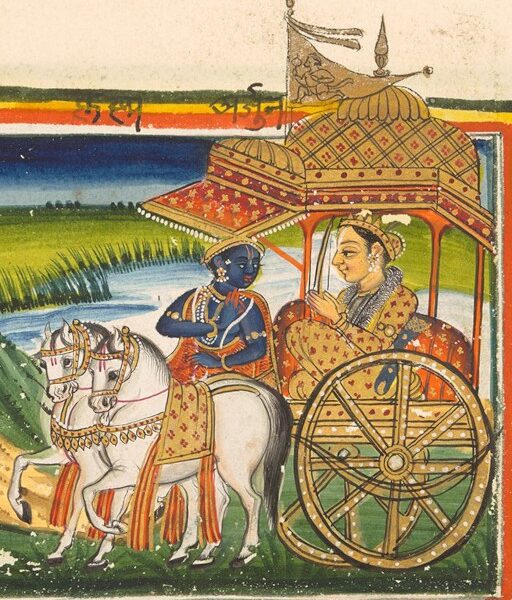
The persons who are almost like animals have no faith in or knowledge of the standard revealed scriptures, and some, even though they have knowledge of or can cite passages from the revealed scriptures, have actually no faith in these words. And even though others may have faith in scriptures like Bhagavad-gita, they do not believe in or worship the Personality of Godhead, Sri Krsna. Such persons cannot have any standing in Krsna consciousness. They fall down. Out of all the above-mentioned persons, those who have no faith and are always doubtful make no progress at all.
Men without faith in God and the revealed word find no good in this world nor in the next. For them there is no happiness whatsoever. One should therefore fall in the footsteps of great acaryas, earn the disciplic succession, and thereby attain success.
So someone who doesn’t have faith in God or the scriptures, then, is not going to do very well at all, right, in any sphere, materially or spiritually, like this.
441. One who acts in devotional service, renouncing the fruits of his actions, and whose doubts have been destroyed by transcendental knowledge, is situated factually in the self. Thus he is not bound by the irreactions of work, O conqueror of riches.
The follower of the Gita becomes free from all doubts. One who follows the instruction of the Bhagavad -gita as it is imparted by the Lord, the Personality of Godhead Himself, becomes freed from all doubts by the grace of transcendental knowledge. He, as a part and parcel of the Lord in full Kṛṣṇa consciousness, is already established in self-knowledge. As such, he is undoubtedly above bondage to action.
So someone who’s performing devotional activities, that means the results will be for Kṛṣṇa. So, in that situation, one’s going to be above bondage. A person who has his doubts, then he’s not going to be able to perform naiṣṭhikārṇī.
And even if he, like you said, if he can quote scriptures or this or that, or even if he follows the Gita but doesn’t have a relation with the Lord, he’ll never actually come to the devotional platform. He actually won’t have the proper understanding. So someone who’s a proper follower of Gita, who follows Gita free from doubt under the direction of a spiritual master, then he’s seeing he’s part and parcel of the Lord, because that’s the message. He, as part and parcel of the Lord in full Kṛṣṇa consciousness, has already established in self-knowledge. So he’s properly situated.
So there’s no room for cultivating or keeping an identity of doubt, right, or faithlessness or doubt in the scriptures. One may have doubts, that’s fine, but one should endeavor to clear those doubts. One can’t take it that that is, you are more thoughtful than others, therefore you have doubts. No, everybody thinks. It’s just that everybody thinks, but they have faith. And the person who’s always doubtful means he thinks, but he doesn’t have faith. He’ll just say, oh, the other’s a sentiment, I’m using intelligence. No, it’s that everybody’s using their intelligence. Just without faith, the actual inspiration doesn’t arise. You know what I’m saying? But they’ll try to cloud it by saying, no, no, but I’m more thoughtful than others, right? You know, they just blindly accept. No, they’re also thinking.
You know, like that.
442. Therefore, the doubts which have arisen in your heart out of ignorance should be slashed by the weapon of knowledge. Armed with yoga, uparata, stand and fight. So one with no faith, he doesn’t get anywhere. But one who acts in devotional service, renouncing the fruits, right, and whose doubts have been destroyed by transcendent knowledge, he is on the platform of self-realization.
Therefore, whatever doubts are there should be destroyed by knowledge. So now he’s making a conclusion.
Because he showed that by having knowledge, what platform you come to, by not having that faith and knowledge, what you end up with. And so, therefore, the person who is free from doubts, he does well. Therefore, Krishna, I mean, Arjuna should remove his doubts with this sword of knowledge.
Once you study Bhagavad-gita under the bona fide spiritual master, Krishna consciousness is awakened by different types of sacrifices to the demigods. Sacrifice to Brahman, sacrifice in celebrity, celibacy, celebrity, the big sacrifice being a celebrity, right? No private time, right? Just paparazzi following you everywhere like that, you know. I mean, it didn’t do well for being a lady Diana, right? The paparazzi got her. So, in other words, it’s a great sacrifice, right? In household life, okay, yes. Okay, sacrifice in household life in controlling the senses, in practicing mystic yoga, in penance, in forgoing material possessions, in studying the Vedas, and in partaking of the social institution called vanashram dharma. Right? So that’s sacrifice. So that’s also why people don’t like it, because it’s sacrifice. Taking part in the modern society, there’s no sacrifice. What’s the sacrifice? Because you’re just doing what you feel is good. So there’s no sacrifice, right? Because there’s no standard. Is there an intellectual standard of how you should live, how you dress, what you should eat, what you do? No, the point is that you can do whatever you want, and if you get in the way of someone doing whatever he wants, then that’s bad, right? So that’s the problem with the Vedic culture, is it defines what you should do. Because there’s sacrifice. So therefore it’s directly opposed to the modern liberal concept. Does that make sense? Though the interesting thing is, is the modern liberal concept isn’t actually liberal. It’s just as narrow-minded as the conservative. It’s just moved to the left instead of moved to the right. Right? Because Kṛṣṇa consciousness includes the elements of importance in the liberal position and points of importance in the conservative position. So that’s broad, that’s liberal.
Because the liberal can’t accommodate the conservative, the conservative can’t accommodate the liberal. So actually Kṛṣṇa consciousness is both. But the point is, is what’s of use in the one is taken. In other words, the interest in the individual, that ability for each individual to develop to their best, that’s what’s important in the liberal. But the point is that whimsicalness, that there is no authority, that doesn’t have any position. And the conservative, that there’s structure, there’s form, there’s authority, there’s respect for authority, then that’s good. What its weakness is, is it doesn’t deal with the individual. It doesn’t accommodate the individual. It’s all the institution.
Does that make sense? So the point is, is when you can apply the institutional values to the individual for their benefit, then that’s the actual Kṛṣṇa consciousness.
Does that make sense? So, because it is also sacrifice, varnāśrama, therefore that’s the problem. Because otherwise, the liberal position is only good for liberals. It’s not good for conservatives.
But the Kṛṣṇa varnāśrama is good for everybody. But again, the liberals, they don’t even like each other. No, no, they don’t. Conservatives have good friends and closer than that. Liberals never do. There are a couple of individuals, you might have one friend, you might not. So if it’s an improvement, then there should be an improvement in the actual interaction between the individuals. But no, each individual has the freedom to do whatever they like. So if everybody does whatever they like, then where’s the common ground to be friends? With a conservative, everybody does the same thing, so they’re all friends. So they don’t feel so good, but they’re all friends. Yeah, or they feel good when it’s like that. It means that, yeah, until a liberal comes around, then they’re great. Right?
Varnāśrama, he wanted to establish brāhmaṇas. See, ISKCON doesn’t have to establish varnāśrama. We have to establish brāhmaṇas and brahminical culture. Brāhmaṇas will then create kṣatriyas. Kṣatriyas will make the varnāśrama.
Is that what you’re saying? Because brāhmaṇas know how it works, but the kṣatriyas won’t do it. Could we say that we can offer varnāśrama now to people who are interested because it will give them information as to how to be successful? That’s there, but the point is that varnāśrama without Kṛṣṇa consciousness is also useful. Yeah, so we’re not interested in working hard to establish varnāśrama if people aren’t going to be Kṛṣṇa conscious.
Devote means it’s there. That’s what we’re saying. We’re establishing the brahminical culture. And then the value in brāhmaṇas, right? The brāhmaṇas is an occupation. So if that’s appreciated, then everything else will work. But otherwise, then it won’t work.
So the point is that individuals can take it and follow it on their own. But as an organized big thing, that’s not for… We’re not worried about that because we’re preaching. You know what I’m saying? You know, just like Viśiṣṭha. He’s the rājabhūra for the king. But he doesn’t worry about establishing varnāśrama. He worries about seeing that the king knows what’s going on. It’s not his field of activity. Yeah, it’s not necessary.
All of these are known as sacrifice, and all of them are based on regulated action. So that’s what all of these regulated actions… So therefore, sacrifice to Brahman, celibacy, household life, controlling the senses, mystic yoga, forgoing possessions, studying the Vedas, varnāśrama. Because they’re all based on regulated action. But within all these activities, the important factor is self-realization. If there’s no self-realization, what’s the meaning or benefit of sacrifice?
You’re going to give up something, but if it doesn’t get you self-realization, then it’s temporary. It’s a waste of time. I mean, we may look at it, well, in this lifetime I’ll get so much, but the point is there’s next life, and the life after that, and the life after that, and then another million lives after that. This just keeps on going. So unless self-realization is the important factor, then none of these have any value.
Does that make sense?
One who seeks that objective is the real student of Bhagavad-gītā. Self-realization.
But one who doubts the authority of Kṛṣṇa falls back. Kṛṣṇa has made some mistake here, we feel it’s not… Then one will fall from that position.
One is therefore advised to study Bhagavad-gītā, or any other scripture, under a bona fide spiritual master, with service and surrender. Because the service means you’ll apply it. The surrender means then you’ll hear it. So the surrender, we accept the knowledge, then therefore we’ll apply it. So that was the thing with submission and service.
A bona fide spiritual master is in the succession from time eternal, and does not deviate at all from the instructions of the Supreme Lord, as they were imparted millions of years ago to the sun-god, from whom the instructions of Bhagavad-gītā have come down to the earthly kingdom. No, Kṛṣṇa is God, it doesn’t change from that. We have to surrender to God, it doesn’t change. Association of Vaiṣṇavas is the only method. That doesn’t change. So all these things, that doesn’t change. That’s what Kṛṣṇa has given us.
One should therefore follow the path of Bhagavad -gītā, as it is expressed in the Gītā itself, and beware of self-interested people under personal engrandisement, who deviate others from the actual path. If devotional service is not the actual purpose, then anything that Gītā is giving is misunderstood.
So it has to come there.
The Lord is definitely the Supreme Person, and His activities are transcendental. One who understands this is a liberated person, from the very beginning of the study of Gītā. So understanding that one’s liberated. The difficulty is that we’re not used to being liberated, so we think we’re not liberated.
You know what I’m saying? That’s the thing. So we continue with our conditioned consciousness, though technically we’re not conditioned, we’re liberated.
Does that make sense? It’s like a bad dream, when you wake up, still you remember the dream and act as if you’re in the dream and are affected by the dream, though you’re awake. So that’s actually the position of the devotees. Because you’re saying, No, but the liberated person… No, all devotees are liberated, actually. If they have faith that Kṛṣṇa is the Supreme Person.
If that’s there… So that’s why if that faith is there, then one’s liberated. If the faith is not there, then what are you going to do? What benefit you’ll get? Because you’re uncovering what’s already there. The soul is by nature on the liberated platform.
So, Mahārāja, can it be possible to be liberated and at the same time also conditioned by some other material nature? It’s not… Here when we say that, he’s liberated, he’s…
What we’re saying here is that the situation you’re liberated, but one’s still conditioned by one’s consciousness.
But the point is when we say someone’s on the Brahmā-Bhūta platform, that means his consciousness is in the liberated state. You know what I’m saying? So generally when we refer to liberation, we’re talking about the consciousness. So here, because the basic point is that he accepts Kṛṣṇa as the Supreme Person, so he’s in the liberated state, but he’s not accustomed to that state, so he’s not able to identify it.
You know what I’m saying? It’s just like you take a small child and put him in a big five-star hotel. To them, they’re just out in the lobby and all that, and it’s very opulent. He’s just going to play in it like he does out in the backyard, because the mentality hasn’t changed.
You know what I’m saying? But basically, the mentality has accepted the most important element of Kṛṣṇa consciousness, but it’s just one has to come to the stage where one is able to be aware of that.
Does that make sense? So it’s an overlapping element. But with time, with training, that’s why by association and training, then one actually understands the situation. Then that child can be trained, and then he appreciates the situation he’s in.
Does that make sense? Yes? Excuse me. To me, it appears that there is no situation of liberation unless your consciousness is on the level of liberation. So if your consciousness is not there, what do you mean by situation of liberation? The point is, the materialist is situated in the material world, so he’s under the control of the modes of nature, but the devotee is under the control of Kṛṣṇa. But according to his consciousness, then Kṛṣṇa is reciprocating with him as the modes of nature. So he’s in a different situation.
But as far as practically being able to take advantage of it, then yes. Until one comes to the stage of bhāva, then one can fully take advantage. But the point is, he’s not in the same situation as the soul who’s nitya-bhāta.
He’s in the situation what’s called the bhāgyajī. He’s a fortunate soul. He’s not liberated, but he’s not conditioned. So he’s bhāgyajī. About nitya-bhātas, maya takes care of them. Yes, maya does take care of them.
Kṛṣṇa is Kṛṣṇa’s energy, so she knows what to do. Kṛṣṇa sanctions things. Basically speaking, He’s sanctioned what goes on. And so because He’s sanctioned what she does, she has the potency to do it. Right? But for the devotee, then it’s still maya will take care of things, but it’s how Kṛṣṇa specifically sanctions. It means what’s going on in the devotee’s life, Kṛṣṇa will at that point sanction or not sanction things. Maya will carry it out, because we’re not seeing Kṛṣṇa directly. If you’re seeing Kṛṣṇa directly, then the internal potency will take care of it. But if we’re not, then the external potency will take care of it. Does that make sense? It’s a subtle difference. You know, it’s like the Yamadūtas. A pious soul, it means they don’t look any different. Their dogs are still with three heads and big teeth, but they’re nice. But they’re still escorted down to Yamarāja’s place, but pleasantly. So in other words, maya takes care, but now Kṛṣṇa is directing exactly how she should do it, rather than she just takes care according to the various modes that are there, and you’re being under the modes.
Just laws means you do something, whatever it is, you’re going to get that result. But the devotee is doing something, or may have done something, but it’s not necessarily that they’ll get that result. Because Kṛṣṇa is involved. That’s why we say Kṛṣṇa karma. So if it’s good for you to get the result, you get it. If it’s not good for you, you won’t get the result.
Does that make sense? You know, so it’s just like Prabhupāda said in his chart, he was supposed to be incredibly wealthy, you know, through business and all that, but Kṛṣṇa didn’t arrange it like that. So everything failed. You know? But then taking up the Kṛṣṇa consciousness, you know, means the mission, the preaching, then all results came. You know, so it’s like, there’s no… Is there any wealthy… Is there any man in the world who could say that he had 108 places, houses, around the world? And not only that, not just a house, but it’s full of people who are willing to, you know, do anything for you.
You know what I’m saying? So no one has that. So the point was, is Kṛṣṇa, it wasn’t going to happen within what we would consider the material sphere.
You know what I’m saying? Like that. So Kṛṣṇa arranges it. So it doesn’t come there, but it comes over here. You know? Or somebody, by going nicely to them, they’ll get interested in Kṛṣṇa. I think Kṛṣṇa may do that in the beginning. But at some point you have to make a decision that Kṛṣṇa is more important than just fulfilling a desire.
So, Kṛṣṇa made Prabhupāda arrive in America with 40 rupees because then what he accomplished would be even greater, or…? Whatever. However Kṛṣṇa, however effect it has. You know, but the point is, is… In other words, like we’ll say, Oh, we don’t have any facility, or no one recognizes us, that’s why we can’t preach. Oh, it’s not the 1960s where everyone was a hippie and it was all just love and peace and God-consciousness. You know, it means no one can say that because the facility’s not there, that’s why we can’t preach. Very often we say Prabhupāda arrived with 40 rupees. Yeah, because that’s all he arrived with. Yeah, but as an example… And that in those days was worth 10 dollars. I mean, no, it was… 40 were four dollars. It was worth four dollars. Right? So that’s what he arrived with. So if we gave you four dollars and sent you off to some new country and said, Oh, you know, spread Kṛṣṇa consciousness. So that’s… So the point is, is it can be done. Like he had three books, we had tons of books.
So, all that kind of element, you know, he had no program, didn’t know who was going to come forward. Now we know how to preach to different groups and different things like that. So, there’s no way one can say it’s not possible to preach.
You know what I’m saying?
You know what I’m saying? Because there’s an idea of what the hippies were, right? You know, what they looked like, what they dressed like. Look at the picture of Prabhupāda in Tompkins Square Park with all the people there. Tell me how many actually looked like hippies. You understand? So most people weren’t.
But it was having its effect.
So the point is, is it doesn’t matter. There’s tons of people there. One or two come forward, then that’s all you need. In a whole country, there’s surely one or two people.
Like in China, there were no hippies there. If there were, they would have shot them. So, but, you know, there’s thousands of them. So, what does that mean? The soul by nature is, you know, God -conscious. Not hippies by nature.
Okay, Lesson 29. Next stage is to worship Kṛṣṇa by all means. So, the last one was…
Okay, God-conscious, Lesson 27. Oh wait, that’s 27, where’s 28?
Okay, no, here we are, page 3. The general process is to first approach the bona fide spiritual master. Okay, so we have, God-consciousness or transcendent loving service of Godhead is never imposed artificially on any living being, but is inherent in him. It can be revived only by practice. So you’re reviving Kṛṣṇa consciousness, you’re not establishing. As we were saying, the soul is liberated, but you have to still revive the consciousness of it. Lesson 27. Then the general process. Okay, Kṛṣṇa consciousness is inherent, you just have to revive it. So, the general process is first to approach the bona fide spiritual master. Then, this lesson, next stage is to worship Kṛṣṇa by all means. So you approach the spiritual master, hear from him, and then worship Kṛṣṇa by any means.
By all means.
3.3. The Supreme Personality of Godhead said, O sinless Arjuna, I have already explained that there are two classes of men who try to realize the Self. Some are inclined to understand it by empirical, philosophical speculation, and others by devotional service.
Empirical means through the senses, right? Through analyzation of what you observe with the senses. Empirical means like objectively provable. Yeah, but that means you have to use the senses to do that. It means what information you get through the senses, you analyze that. So that would be your philosophical speculation, right? So that’s the difference. It’s coming from the senses, then you analyze it. So that’s called mental speculation. When it’s coming from śāstra and you analyze it, then it’s called contemplation, manana, like this. You know what I’m saying? It means that the Māyāvādīs will say they’re doing manana, but technically they’re doing mental, philosophical speculation.
Others by devotional service.
Śānti-yoga and buddhi-yoga are interdependent.
In the second chapter, verse thirty-nine, the Lord explained two kinds of procedures, namely śānti -yoga and karma-yoga, or buddhi-yoga.
Thus far I’ve described this knowledge to you through analytical study. Now listen as I explain it in terms of working without fruitive results. When you act in such knowledge, you can free yourself from the bondage of works. Bhagavad-gītā, 239. Okay.
So He’s described the soul, but the idea is that the soul, without knowing the soul, then in actuality, you’re not going to be able to perform this work properly. The karma-yoga means you understand, I’m not the body, I’m the soul. And then understanding that, then you’re going to work for attaining the Supreme. But you’re going to do it through giving up the results of work.
In this verse, the Lord explains the same more clearly.
Śānti-yoga, or the analytical study of the nature of spirit and matter, is the subject matter for persons who are inclined to speculate and understand things by experimental knowledge and philosophy. The other class of men work in Kṛṣṇa consciousness, as it is explained in the 61st verse of the 2nd chapter. And that is, one who restrains his senses, keeping them under full control and fixes his consciousness upon Me, is known as a man of steady knowledge.
The Lord has explained also in the 39th verse, by working by the principles of buddhi -yoga, or Kṛṣṇa consciousness, one can be relieved from the bonds of action. And furthermore, there is no flaw in the process. So He’s doing the work, but it’s with the proper knowledge. So proper knowledge is everything’s to be done for Kṛṣṇa. But the focus is on doing an activity, rather than just analyzing the situation. Because technically, once they analyze it and understand self-realization, so what are you supposed to do? Act. Act, right. So that’s the thing. So the person who follows śānti-yoga should come to the platform of this karma-yoga, or buddhi-yoga.
Because technically, buddhi-yoga means we’re saying karma -yoga. We see in the 5th chapter, after explaining karma and jñāna, then it’s called action in Kṛṣṇa consciousness.
So that’s buddhi-yoga. You have the knowledge of the jñāna, but it’s applied through the process of karma. So they’re combined. But what you see is the karma-yoga.
You don’t see the devotees sitting around all the day. If not, then it would look something like that lounge area on the side of the airport has the big lounge chairs, and we just have all those devotees just sitting there, meditating and stuff like that. But we don’t. We see the devotees are busy, are active.
Not that the brahmacārīs would like all those armchairs. They have a nice row of them.
You could have them a little. Yeah, but the trick is to have one less than how many people are there. So they always kind of have to adjust, so no one can get attached, right?
But you could probably also do that maybe by having one extra, because then you’d try out the different ones.
The same principle is more clearly explained in the 61st verse.
Because here then you’re controlling the senses and fixes it on Kṛṣṇa. Because that’s what he was saying before. You’re focused on Kṛṣṇa with faith and controlling the senses. So this fixing on Kṛṣṇa, consciousness fixed upon me, means He has faith. And it’s coming in paramparā, from the association of devotees. That is all meant by, fixes His consciousness on me.
Buddha-yoga is dependent entirely on the Supreme, or more specifically, on Kṛṣṇa. And in this way, all the senses can be brought under control very easily. Therefore, both the yogas are interdependent as religion and philosophy. Religion without philosophy is sentiment, or sometimes fanaticism. While philosophy without religion is mental speculation. The ultimate goal is Kṛṣṇa, because the philosophers who are also sincerely searching after the Absolute Truth come in the end to Kṛṣṇa consciousness. So religion technically means varṇāśrama-dharma, because what is the inherent nature. But it’s sanātana-dharma because it’s including the understanding of the nature of the soul.
So then, taking that and engaging in Kṛṣṇa’s service is proper. That’s why it says, one should engage in pious activities in the Lord’s service. That means what’s authorized by the varṇāśrama system.
So, if you have philosophy without… It means you could take it another way. Okay, varṇāśrama without philosophy is sentiment, or fanaticism. Or, if it’s not varṇāśrama, it’s an upadharma, but they think it’s religion. Like that, they have that without philosophy. Then it’s sentiment, or sometimes fanaticism.
While philosophy without varṇāśrama is mental speculation.
Because without varṇāśrama… When it comes to social things, devotees speculate like anything. Why? Because there’s no standard. If one thing is that there’s difference of opinion on how to apply religion, that’s fine, because someone will maybe be seeing more externally the form of it, someone more the principle that’s there. Someone doesn’t understand what the form is, or gets confused because there’s overlapping forms.
Is that what it says? So, that kind of thing exists, that discussion is there. So that’s not necessarily speculation, that’s vijñāra, that’s discussing, or associating with devotees and discussing. But when there is no understanding of the varṇāśrama, then when one tries to apply the philosophy into the individual’s life, then there’ll be no… how do you say?
No understanding how to do that, because there’s no standard.
So that means then… how do you say? What are you going to replace that varṇāśrama with? One’s own conditioned culture. And so then you’ll make rules based on that.
And the fun part is, though they’re claiming to be liberal, they’re actually exactly like the conservatives, without any standard. But they’ll make a broad, sweeping rule that covers anybody, without dealing with the individual.
Because you have to have form. You can’t not have form, you can’t not have authority, and have a social structure.
But the one is going by authority, one is whimsical.
You know what I’m saying? So, the ones that are so conservative, that may just do things they don’t know why they’re doing it, so it appears like they’re ignorant, is actually following a system that’s based on the principle of goodness, though they’re not necessarily in goodness. And the liberal, though it appears he’s more in goodness because of knowledge and all that, he’s making these different things that categorize everybody and everything. And so it actually has that element of… You know what I’m saying? Because it’s not religion, it’s not accepting authority. So therefore, irreligion becomes religion, religion becomes irreligion. So it’s very interesting how one’s situated in one, but the consciousness, their knowledge is the other, and it switches, so therefore they both have problems. You were saying yesterday in the Sunday lecture that when people are in ignorance and just being pushed around by the most, there’s no apparent direction, and it seems like freedom. Because it seems like they can go anywhere, but it’s just because they’re just being tossed around by the most. Yeah, just tossed around in such a way that you don’t notice you’re being tossed around. Does this relate to the liberals?
It was there specifically relating, in the class, it was relating to everybody. It means if you’re a materialist, that’s the way it is. So that was based on the principle saying that you follow these laws given by God, then you’re restricted. But we don’t follow, so we’re free. It’s like the guy who’s smoking the cigarette, he says, I’m free to do as I like, you’re restricted. When we’ll say, actually it’s the other way around. You have to smoke. We’ve chosen not to smoke, and we’re not smoking. It’s our choice. We could smoke, but we decided not to smoke. But you say you’re free, that means you would be free to smoke or not smoke. But you can’t not smoke, so you’re not free. Like that. You’re bound. We’re free. That’s the meaning of ignorance, is that you would see something that is freedom as being restricted, and what’s actually restricted as freedom.
The ultimate goal is Krishna. So it’s not philosophy for philosophy’s sake, religion for religion’s sake. The ultimate goal is Krishna, because the philosophers who are also sincerely searching after the Absolute Truth come in the end to Krishna consciousness.
So the buddhi-yoga means where you use that knowledge of Krishna consciousness in active service.
Buddhi-yoga is better than sankhi-yoga. The whole process is to understand the real position of the self in relation to the super-self.
In other words, the soul in relationship with God. The indirect process is philosophical speculation, by which gradually one may come to the point of Krishna consciousness. The other process is directly connecting everything with Krishna consciousness. Of these two, the path of Krishna consciousness is better, because it does not depend on purifying the senses by a philosophical process. Because if we’re going to purify ourself by a philosophical process, then you have to be very intelligent, actually. And that intelligence has to be a practical intelligence. And one basically has to be pious.
That one would value.
Of these two, the path of Krishna consciousness is better, because it does not depend on purifying the senses by a philosophical process. Krishna consciousness is itself the purifying process. And by the direct method of devotional service, it is simultaneously easy and sublime. Because it’s easier to engage in an activity than to sit around and analyze it constantly, and that’s all you do. So it’s easy and it’s sublime. It’s transcendental. Well, the speculation is not necessarily transcendental.
It’s understanding the difference between, but it’s not that it’s situated technically transcendentally.
Because there’s still the element of I and mine and all these other… So here you’re taking the essential point of this, is that it doesn’t depend upon purifying the senses by the knowledge. In other words, if you have knowledge, it’ll make it easier. That’s what was recommended before, that our journey should slash this ignorance by the sort of knowledge. But if you can’t do that, whatever little… It means technically you are, but it may be only a small amount of knowledge. You’re applying it in Krishna consciousness. In other words, you’re using the elements of karma yoga.
And so by that, knowledge and detachment come automatically. So as it comes, then you’re more able to take advantage of the knowledge in the application in the service. So therefore the senses become more controlled, they’re less illusioned. So then the service is more, you know, of a better quality. So there’s more knowledge when renunciation comes. So just by following the process, all knowledge and all detachment will come. But the idea is, one should take advantage of that knowledge and detachment that do come in Krishna consciousness and reinvest it back into the process.
In other words, devotees become more intelligent, more detached, and then they take up teaching material knowledge to the karmis.
You know what I’m saying? So the thing is, no, you’re supposed to reinvest that back into the Krishna conscious process.
Okay, you need an occupation, you need money, fine. But are they using that ability within their Krishna consciousness? Use it within your occupation, great. But is it being used within your Krishna conscious practice? So this would be something that happened to those who come to Krishna conscious because they want something more? Can be. It can be also just that they lose faith. Get distracted. Get distracted, something. It means either the senses come up, because it’s there. It’s the anxiety of just the material phenomena. Because we’re trying to enjoy it and it doesn’t work. Or we want facility, we don’t have it. We want knowledge, we don’t have it. So any of these three then can be distracting.
And at the same time, it has to have the faith. So that faith is lost. So that’s why when we’re looking at different situations that come up within Krishna consciousness, the difficulty of the individual devotee’s ability to practice Krishna consciousness. Someone can practice nicely or someone can’t practice nicely. Or they’re practicing nicely and then they’re not practicing nicely. We generally don’t have a problem if someone wasn’t practicing nicely, now he is practicing nicely. Hey, wait a minute, just yesterday he was completely in maya, how is it today? No, we don’t generally complain about that one.
But one has to know this combination of the philosophy and religion.
We know what the standard is and we know that the individual’s soul is independent. He may take it seriously or not. So if he takes it seriously, then he advances. If he doesn’t take it seriously, he gets distracted.
Does that make sense? So then we’re not worried that, oh, he got distracted, therefore, if he can’t do it, how will I be able to do it? The point is, as it’s said, to give an example, is that if you’re sitting in a trench somewhere and the enemy is firing, if you stick your head up, you’ll get shot. But the point is that it doesn’t matter whether you’re a private or you’re a general. Whoever sticks their head up gets shot. You know what I’m saying? Does that make sense? So if the general sticks his head up and gets shot, then you can’t say, oh, then we’re all going to be shot. No, don’t stick your head up. That’s all.
Does that make sense? Because the point is, as the point was there before, the category of faithless person, one category is those who, in spite of having faith, doubt if they can attain perfection. So also, then, you won’t get. But they’ll attribute it, no, this devotee fell down, and so, therefore, if he can’t make it, I can’t make it. So he thinks it’s because of that, that devotee falling down, that’s why I’m not advancing. No, it’s because you don’t have the faith that you can advance.
Does that make sense? So they think that if they can find one symptom, then that’s not necessarily the right symptom, but just a symptom. Yes, something, because otherwise you have this historical element where a senior devotee goes away and then so many people say, well, if he can’t make it, I won’t make it. So then they all disappear. So hundreds of devotees just disappear like that. But the reason they’re disappearing is not because the senior man went away. It’s because they lost faith that they could advance in Christian Confidence. That’s what it says. They will fall down. But ignorance and faithless persons who doubt the revealed scriptures do not attain God Confidence. They fall down. And so explaining all these different things, then Baladeva gives a footnote in this point to say, those who, in spite of having faith, doubt if they can attain perfection, they’re also the last category of faithless persons.
Do you understand? So it’s within devotional service. So it’s not, there’s no situation that can stop one’s Krishna Consciousness. So if one has that faith, because if God is everywhere and in everything, that means that all times, places and circumstances, you can be God Conscious. It’s not dependent on anyone else.
The practice is not. One has to have heard that practice from a bona fide spiritual master, coming into Parampara, in the Association of Devotees. But the practice of it is self-realization. Self, meaning yourself, not everybody else. International Society for Everybody Consciousness, like that. No, it’s self-realization.
Does that make sense?
Does that make sense? Yeah. And the point is, is we always have to remember here, very important, the Vaishnava principle of iron and fire. Right? Not the Krishna concept of eternal damnation. If you put it, let’s say we have a piece of iron. We put it in the fire, what happens?
Fire. What if we take it out of the fire? It stops. Yeah. Okay. But now, can we put it back in the fire again? Or is there a rule that now, once coming out, if you put it back in, it won’t get hot again? Like that. They bring in all the stuff, all the old cars and this and everything, and dump it into the thing, and they start melting it, and it’s not melting. And then someone goes, Oh no, this stuff must have been heated before, so you can’t heat it again. Okay, we’ve got to get rid of this. No, it melts. Right? So, iron and fire, it gets hot. You take it out, it gets cold. You put it back in, it gets hot. You take it out, it gets cold. So you can do that as many times as you want. And many people do that. Yes. That’s another. That’s not the point. The point is that one may say, No, but you heard from the spiritual master, but he’s not with us now. So that means he wasn’t bona fide spiritual. No, that’s when the iron’s in the fire. It works. You take the iron out of the fire. Now you don’t listen to him. Now he’ll tell you some new agey thing, and this and that, and you need to get an enema, or something like that. Then that’s not, you don’t have to worry about that. Thank you. Right? Does that make sense? But if one is in the fire, then it works. We have to understand this, then we as an individual can progress. So there’s no question that we feel we can’t attain perfection. Or there’s something wrong, or we’re doubtful. No. It’s here. Krishna’s saying this. Arjuna’s on a battlefield in front of everybody there, and everybody’s going to get killed. But he has faith.
So it works. It’s like the place is full of people, and at the end there’s only going to be seven people left. Seven out of 640 million. So why are you worried if the temple disappears? All 23 of them. And that’s it. Oh no. When 640 million disappear, if there’s still anybody left, you’re doing okay. That’s pretty good. Does that make sense? That was the point of Bhaktisiddhanta Sarasvati Thakur in his final instructions, that don’t worry that others aren’t taking Krishna consciousness seriously. You take it seriously. You’ll be successful. Whoever takes it seriously, they’ll be successful. Who doesn’t take it seriously, won’t be successful.
Does that make sense? So that’s the point. Just a question about the spiritual master. Suppose when the spiritual master for a disciple disappears, can we say that the principle of the instruction, spiritual master, he can receive instruction from other? Yes, of course. It’s the same instruction. It’s just that there’s a root. There’s a connection there. So the connection to the Parampara, connection to the hearing of and practicing those instructions have been made. Because the point is, initiation means you’re going to follow the instruction. You’re committed to following the instruction. That’s the point of Diksha. The liberated soul doesn’t need the Pancharaka process of Diksha because they’re liberated. They’re going to follow. They don’t have any material distraction.
Does that make sense?
But the conditioned soul needs a formality to say, this is the guy you’ve got to listen to. The liberated soul, then they’re naturally attracted to Krishna. So when they hear about Krishna, they will follow that person. So there’s not a problem there.
Like the six Goswamis. There’s no Pancharatric initiation between them and Lord Caitanya. But everybody mentions they’re direct disciples. Why? Because they’re liberated. So on the Bhagavata platform, Siksha is initiation. For us, Siksha is initiation, but Siksha along with the rituals so that you know that you’ve been initiated.
So the point is, if the Diksha Guru goes, the only thing lacking is that continuance of Siksha.
Does that make sense? So all it is, is that the other Siksha Gurus that you have, then you take shelter there of the Siksha. Because the Diksha can’t give the Siksha. But the connection’s been made. So there’s no need to redo the connection. It’s the Siksha that keeps the connection alive. The problem is keeping the connection alive, not whether one’s connected. You know what I’m saying? The neophyte view of it will think, I don’t have the connection, because they take it on the bodily platform. It’s the Vapu that’s important, not the Vani.
Does that make sense? So it’s just a matter of that. So that’s why when one takes up Krishna Consciousness, there are so many persons that, they value their instruction and their example. So once one takes initiation, one maintains all those relationships. So one has the Diksha Guru and Siksha Guru. Therefore, Sri Guru and Vaisnavam’s cha means it’s not just one. It’s the Diksha Guru and Siksha Guru. The Diksha Guru’s the root, but the Siksha is what nourishes the Diksha.
Does that make sense? So if you think, oh no, I’m to be chased, and all the other relationships to get rid of, then if the Diksha Guru goes away, you’ve got problems, because where is your Siksha connection?
Does that make sense? So it’s very simple, the process. We like to make it complicated.
You know, it’s just like, your brahman thread breaks, you put on a new one. But generally, those who follow the Vedas, when your brahman thread breaks, you don’t talk until, you can’t talk or eat or sleep until you put on a new one.
But what’s the point? What’s the actual purpose? To put on a new one. But the lazy person, as long as he’s eating, sleeping, then what does he care about? A new thread. And talking, of course. But if you say you can’t talk, you can’t eat or sleep, then he’s going to get a new brahman thread real fast. An action will be three or four hours. Like if he just had breakfast, and while he’s washing his hands, he broke the thread, okay, he’s got until lunch. Right? But that’s all. That’s the maximum it will be. So you’ll find that within a very short time they get a thread. That’s the only purpose. It’s not that there’s something, if there’s no thread, you can’t change it. No. So that’s the thing. We like to make it complicated. Someone was just telling me the other day, if your thread breaks, get a new one. No, get a new one. They want to make it hard. It’s got to be difficult. Yeah, no, you have to crawl on your knees backwards around the gurukul three times. Okay, yeah. You should try saying that sometime. I’m afraid people will take it seriously.
That I’d be at some temple somewhere, Maharaj, you know, you said about… I’m sorry, I’m worried. That’s why I never like it when they start the sentence, Maharaj, you said… Are you sure that I said what you said?
Okay. 3.4. Not by merely abstaining from work can one achieve freedom from reaction, nor by renunciation alone can one attain perfection. You think, if I don’t work, then there’ll be no bad reaction. So that’s how I’ll do it, because that’s what these other processes work by. And nor by renunciation I’ll get perfection. So I don’t deal with anything, therefore I’m not connected, attached to anything here, so I’m liberated. Without purification of heart, sannyāsa is simply a disturbance in sansāyati. Renounced order of life can be accepted when one has been purified by the discharge of the prescribed form of duties which are laid down just to purify the hearts of materialistic men.
You’ve been purified by the discharge of the prescribed duties that are laid down to purify the hearts of materialistic men. It means, in other words, you’ve engaged the elements of your life, either as a brahmacārī or as a gṛhastha, in the Lord’s service completely, because that’s what sannyāsa is. Sannyāsa means you’re performing work that’s just for Kṛṣṇa. The result is for Kṛṣṇa. So the activity, while it’s being performed, results are already Kṛṣṇa’s. But you may be doing it where it’s yours and then giving it to Kṛṣṇa and eventually getting to that platform. When we get to that platform, that’s sannyāsa.
Without purification one cannot attain success by abruptly adopting the fourth order of life, sannyāsa. So here he’s specifically saying sannyāsa as an order, not sannyāsa as the mentality. Because the point is, if you practice sannyāsa as the mentality in these prescribed forms of duties, then the sannyāsa as the form will have meaning. Because the form and the mood go together.
Of the two, it’s the mood that makes… Just because you practice the form doesn’t make it work. It’s because you’ve practiced the mood, then the form will come.
According to empirical philosophers, simply by adopting sannyāsa, retiring from fruitive activities, one at once becomes as good as Nārāyaṇa. Think that you’ve given up all those activities so that renunciation makes you as good as God.
But the point is, it’s the mentality. It means that’s the thing, they take God as a position. What about God’s mentality? Because if you can take sannyāsa and become God, then that means there must be a mentality that goes with it.
But Lord Kṛṣṇa does not approve this principle, that just because you took sannyāsa, now you’re Him. And being God, He has the right to approve or not approve of such things. Nice try. Yeah.
Without purification of heart, sannyāsa is simply a disturbance to the social order. On the other hand, if someone takes…
If someone takes to the transcendental service of the Lord, even without discharging his prescribed duties, whatever he may be able to advance in the cause is acceptable by the Lord, buddhi -yoga.
Even though he hasn’t properly performed his varṇāśrama duties before taking up Kṛṣṇa consciousness, he’s still qualified to take up Kṛṣṇa consciousness.
But the sannyāsa order, unless he has performed all his prescribed duties and become purified, then only he can accept it. Does that make sense? So here, devotional service, therefore, is superior. Because anybody can take it up, no matter what their position. That’s why I said before, even the most sinful of sinners.
Like that. So one could make a pretty good list. Like that. So who’s the most sinful of sinners, they can take up Kṛṣṇa consciousness. Because it doesn’t require any previous… In other words, Kṛṣṇa consciousness, being the inherent natural position of the soul, which is the point that’s being made, there is…
Anybody can take it up. There’s no previous requirement.
And the thing that keeps one progressing in it, or you could say one has taken it up, is one has faith. The faith is there, one progresses. No faith, one doesn’t progress.
Right? So it’s not dependent upon karma or jñāna. Right? The Vedic system is. Right? In other words, for perfect varṇāśrama, it’s dependent upon following the rules and regulations properly. That means you have to be pious. Right? So to perfect oneself through varṇāśrama, basically in this age, is impossible. But, by engaging the culture that is there in varṇāśrama, in the Lord’s service, as part of one’s devotional duties, then that helps us, keeps us, you know, properly situated. And then, through that process of engaging in the Lord’s service, it’s the devotional service, the buddhi-yoga, that gives the realization by which we can come to Kṛṣṇa.
So that’s the…
And everybody can take it up. And anybody can take it up, even the most sinful. Because someone who’s the most sinful of sinners cannot take up varṇāśrama. Or follow Pañcarātra.
But devotional service, they can. Like Pañcarātra is a unga of devotional service. So, having taken up the devotional process, they could follow it. But like the smartha follows Pañcarātra. But the smarthas, they’re born in aristocratic, Brahmin families, that they’ve been Brahmins, you know, from the time of their father, all the way back to whichever prajāpati, twenty-one of the prajāpatis, of grandsons or great-grandsons, or sons of Brahma, that they’re from.
Right? So, when we say smartha, it means they are the pious ones.
So, that’s what we talk about, when we say, by piety, that will not get you devotion. Because the smarthas aren’t becoming devotees. But they’re following Pañcarātra.
Right? But they’re not understanding a connection to the Lord. Are they going to the heavenly palace? That’s generally their interest.
You know, smartha generally means they’re a follower of Jainism. So, most of the time, it’s Vedic. But they do, you know, Pañcarātra elements will be there when they do worship. So, they don’t really necessarily have a problem worshiping Deities. It’s generally all Vedic. You know, which means you have to be even more pious. Because Pañcarātra, by initiation and instruction, then you’re qualified. But the Vedic, unless you actually have the material piety, you can’t really follow it. So, that’s why devotees, the first thing you do is not establish Kṛṣṇa vānaśrama, you establish Kṛṣṇa consciousness.
Then, by following Kṛṣṇa consciousness, then you’ll have the piety to utilize the benefits of vānaśrama. We’re not trying to establish vānaśrama. It’s just that it’s the more useful of the social systems.
Does that make sense?
Whatever he may be able to advance in the cause, is accepted by the Lord. sva-bhāmaḥ yasya dharmasya trāyate mahato bhāyataḥ Even a single slight performance of such a principle enables one to overcome great difficulties.
So, Kṛṣṇa consciousness, because it’s real, just even a small amount of it will give perfection. You don’t need a whole bucket load, right? Just a small amount is all that’s required. But on material, unless you have bucket loads of piety, you don’t get much. Right?
You know what I’m saying? The guy comes along with 50 paise and wants to invest in business. He’s not going to get so far. You need a lot of money. But Kṛṣṇa consciousness, even as a drop, still, it has effect. It’s real. It’s similar to the karmakānda rituals, that if you do one detail wrong, it doesn’t work at all. Well, you look at how did it work out for Tvāṣṭa.
I think it’s Tvāṣṭa. He was the father of Viśvarūpa. Okay. Viśvarūpa was the three-headed brāhmaṇa who got his head cut off by Indra. Okay. Yeah, not good. Huh? Right? So Tvāṣṭa, because his son was killed by Indra, he performed a yajna to kill Indra. He wanted to get a demon who was Indra’s enemy. In other words, he would go after Indra and kill him. But in chanting the mantra, because when you’re dealing with these Atarvaveda mantras, you have, I forget what it’s called, but you have a marking that’s above, it’s placed above a short vowel. What it means is that short vowel, even though grammatically, I mean, by the word it’s short, but by grammar it becomes chanted as long, by Vedic grammar, not by classical grammar.
And so then he chanted that short instead of long.
And because of that, he got someone who Indra was his enemy. So Indra was out to get Viśvarūpa, not Viśvarūpa was out to get Indra.
You know what I’m saying? So that’s one syllable. So Prabhupāda says in the Karmakānda Yajnas that if you chant one syllable wrong, you don’t get the effect. He means it. He’s actually being nice. Yeah, yeah. And when we’re talking about these yajnas, we’re not talking about us. We sit down and we sit there and chant for 20 minutes and then go take prasad. It means something like, let’s say, a soma yajna. It’s a nine-month to prepare, and then I think the yajna itself is like three months or something. So it’s one year. Generally, most of these things you can do them in one year, but it takes the whole year.
Is that what you’re saying?
That’s why they’re so special. It says, I think to do a soma yajna, it says if you don’t have enough store of grains and everything that you could live on that with your family for three years, then don’t even bother. Because in that one yajna, all that’s going to be used. In the yajna for the brāhmaṇas, feeding, all these different things. If you don’t have that, don’t even bother.
I’ll stick with devotional service. Yeah, devotional service is a lot easier. When Prabhupāda is saying that we don’t care for the rules, we follow devotional service, he means we don’t care for all those. He doesn’t mean that now you apply that on the rules of devotional service and say we don’t care for the rules. That’s what he’s saying.
3.5. Everyone is forced to act helplessly according to the qualities he’s acquired from the modes of material nature. Therefore, no one can refrain from doing something, not even for a moment. Nothing else. You have to scratch your head or do something. The soul is always active. It is not a question of embodied life, but it is the nature of the soul to be always active. So it’s not the being in the body, because that’s what the Māyāvādas will say. You’re in the body, that’s why you’re active. But if you’re not in the body, then the soul is inactive, is peaceful. No, it’s the soul is active. Because otherwise, if it was the body, why isn’t the body walking around? You know, just like you see a body walking around, you kind of go, oh, hi, how are you doing? Oh, no, another zombie. And then you just walk off. It’s like that.
What’s with this place? So many zombies. Are there any living people here? So you don’t have that as a problem. Like that. So the point is the soul that’s active. When the soul’s in the body, it’s active. When the soul’s not in the body, it’s not active.
Without the presence of the spirit soul, the material body cannot move. The body is only a dead vehicle to be worked by the spirit soul, which is always active and cannot stop, even for a moment.
Kids are the perfect example.
As such, the spirit soul has to be engaged in the good work of Krishna consciousness. Otherwise, it will be engaged in occupations dictated by illusory energy. It means you’re going to do something. So it’s either Maya tells you what to do, or you follow what you’re supposed to do for Krishna. That’s all. But activity, there’s no such thing as not doing. The Mayavadis may say that it’s a possibility, but they’re always very active. They’re traveling around, lecturing, preaching, doing their pujas, doing all kinds of this, doing charity work. They’re always busy. They’re never sitting around doing nothing, despite what they say. You never see them doing nothing.
In contact with material energy, the spirit soul acquires material modes, and to purify the soul from such affinities, it is necessary to engage in the prescribed duties and join in the shastras. Because the modes will have you do all kinds of things. So you have to follow what’s in the shastras. But then the shastras are so perfect, you can find what your modes are, how to engage them within the shastra. So in other words, you don’t have to change what your interest is in. You just have to do it under the authority of scripture.
Does that make sense?
They’ll say, oh no, it’s not my nature to do this. Then if there’s nothing in shastra that has anything for you, then that means you’re a tribal. And so acknowledge that. And acknowledge that the others who are following are humans, and they’re superior. And then offer respect.
But that won’t happen. No, I can’t follow this. But they’ll try to establish themselves in a position better than those who are following. That’s not allowed. That’s illegal. If really there’s nothing in the Vedic culture for you, then okay, then go live in the forest. That’s the place for you.
Now, whether that forest is made of trees or cement, that’s another thing. Option.
But if the soul is engaged in his natural function of Krishna consciousness, whatever he is able to do is good for him. So in other words, do something in Krishna consciousness. Because the point is, tribals also take prasad. They like singing, they like dancing, they like hanging out with each other. So you can do that for Krishna. So that goes back to the point before. Even if he is unable to do all the things, still, something is good.
Does that make sense? That’s the advantage of devotional service.
So the purgatory process is necessary for reaching this point of Krishna consciousness. So there must be some restriction. Otherwise then one’s going to be too distracted.
Therefore sannyasa or any purificatory process is to help reach the ultimate goal of becoming Krishna conscious, without which everything is considered a failure. So sannyasa is worthwhile as a purificatory process to help one get to Krishna consciousness. But it’s not that sannyasa is Krishna consciousness.
Does that make sense? Just like Grihastha is not Krishna conscious, and Brahmacarya is not Krishna conscious. Krishna consciousness is Krishna consciousness. We were speaking about the ashram.
But in the ashram you have to have the mentality of sannyasa before you take the order of sannyasa, right? That’s always recommended. Unless you’re so pious and so dutiful that you’ll do what you’re supposed to anyway. Yes, but couldn’t we actually say then that sannyasa, proper sannyasa, is actually Krishna conscious? It is Krishna conscious. That’s why we’re saying is that whatever order works for you according to your nature, you know, someone’s attached to attachment, someone’s attached to detachment. So someone’s attached to attachment gets married. Someone who’s attached to detachment takes sannyasa. But the point is it’s supposed to be a purificatory process to help reach the ultimate goal of becoming Krishna conscious. So as long as the idea of entering into it is for Krishna conscious reasons, right? So when Prabhupada asked devotees, why do you take sannyasa? They said, well, you know, people will respect you and listen like this and that. And then Prabhupada laughed. He turned to the other sannyasa and said, hey, he wants to take sannyasa for, you know, how you say, prestige, you know, social position. No, it’s for Krishna consciousness.
You know what I’m saying? Because we’re so focused on the element of the karma yoga within buddhi yoga that we think the activity itself is the Krishna consciousness. No, it’s the consciousness. While you perform the activity, it’s the Krishna consciousness. But there’s recommended activities. That’s why it always says prescribed duties.
So the prescribed duty, doing that. So the sannyasa has a value in obtaining Krishna consciousness because then it gives you that time to not get involved in many things and to focus on direct activities of devotional service. Right? You understand? Because nowadays someone says because people respect you or not. It doesn’t matter. I’ve walked into the manor in London, walked around, taken darshan and walked out. And even though it’s full of devotees, no one notices you there. So it’s not that sannyasa, automatically people notice you.
You know what I’m saying? So the thing is, it’s important for your own development.
You know what I’m saying? The grahastha is busy at home. That’s why he’s not giving the lecture.
You know what I’m saying? When you give class in the morning at the temple, who’s sitting there? The brahmacharis. And there will be a couple of grahasthas. But if you ask the president how many are in the community, 300. So the point is, it gives you an opportunity.
And in the evening, then the grahasthas will be there for a short time until they have to go home. You know what I’m saying? So the point is, it gives an opportunity.
It’s not that it makes it, therefore you can do that. Because knowledge of Krishna consciousness is what’s required. And so someone who has that can preach. So that will be gained by engaging your nature in Krishna’s service.
But if the soul is engaged in its natural function of Krishna consciousness, whatever he is able to do is good for him. So whatever it is, then he’ll do it. By doing that, you get knowledge and detachment. Like that. So the point is, what asrama you’ll be fully engaged in.
You know what I’m saying?
So that’s the point. The person who is the brahmachari, he’s always thinking of facilities of family life. Better he gets married, because once you’re married, then you only think about how much you have to. Keep yourself from Covid. Yes. You know what I’m saying?
Does that make sense? The person who, detachment is a thing, then all the things that you have to deal with in the family life, that’ll be overwhelming. So they’ll be distracted by that. So in either case, they’re distracted. One is thinking he wants it, the other is thinking he doesn’t want it. So therefore, one’s situated in it, one’s situated out of it. Does that make sense? That’s how it works. We use it as a prestige thing and climbing the ladder and stuff like that.
So it’s a fact that people tend to listen more to sannyasis?
There is that element, but it’s not… We’re taking it that the sannyas order makes for the Krishna consciousness.
It’s not that. It’s someone who has something to say. You listen to them.
Does that make sense? So if a devotee genuinely feels like he has something to say and he wants to preach, then he would maybe be aware that if I take sannyas, people would tend to listen to me more. Can, but it’s not necessarily like that. You know what I’m saying? The point is you have something to say, people want to hear it. You don’t have something to say, no one wants to hear it. So it’s not because of the order. Like Janani Vastu gives a class, everybody shows up. Is he a sannyasi? No. He’s a brahmacari. So therefore it has nothing to do with the order. There may be the element of certain aspects of just social, but that’s not the real reason. The point is the kirtan’s good, nobody cares.
Govinda Maharaj does the kirtan. People like it. What order is he in? Sannyasi. Okay. Madhav does kirtan. What is he? He’s a grhastha. Sripala. Grhastha. Indudumna. Sannyasi. It doesn’t matter. Who’s good at kirtan, you want to be at their kirtan.
Does that make sense? That’s the real thing. So the order of life is only to help in the individual’s execution of Krishna consciousness. That’s the point. It’s not that… Because otherwise they were saying that Varunasrama makes it work. No. It’s Varunasrama is an assistant to devotional service. So devotional service is hearing and chanting about Krishna. Therefore, the Varunasrama will help in that. But it doesn’t mean that… It’s not that that’s what makes it work. Oh, he’s a sannyasi. That’s why. No, it’s not that.
Does that make sense? Because there are sannyasis who come, no one wants to go to their class. You know what I’m saying? And there’s grhasas who come and you want to go to their class. So it’s nothing to do with that.
Technically, if you really look, analyze. It’s not. It’s just what situation is easier for you. That’s all.
All it is, is that if one’s a brahmachari sannyasi, one generally has more time for the direct activities.
You know what I’m saying? So that’s why you’ll see a predominance of those performing the direct activities in a leadership role, because they have more time for it.
Does that make sense?
That’s the advantage. Because it affords more time. But if one’s going to have more time, they’ll always be thinking about Krihastha. He betters his Krihastha. And then does how much time he’ll do anyway.
But in other words, the Krihastha performs devotional service, not thinking about Krihastha.
Thank you.