
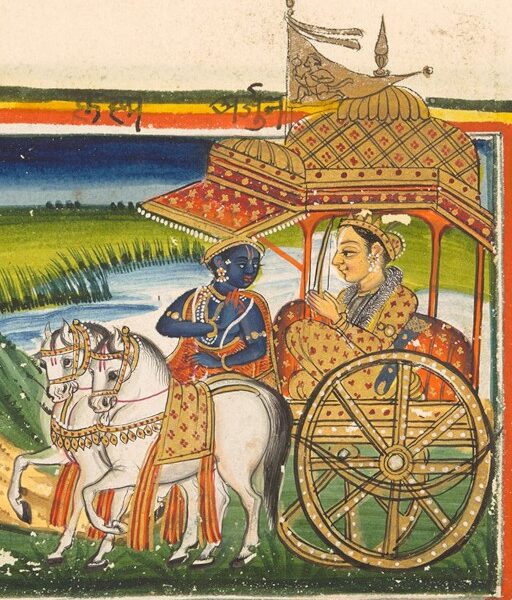
Abandon all varieties of religion and just surrender unto Me. I shall deliver you from all sin, for the actions do not fear.
So Krishna being perfect, then you approach Him through the spiritual master by following the spiritual master’s instruction when it comes to this point of full surrender, right, because there’s an application of the instruction. So in doing that, then one should not be in anxiety, right, because we’re looking at it that I’m doing my work, therefore I’m being taken care of, right? I do my work, I get the results, right? I’m dealing very properly with all the different people, therefore I have good relations, I have a standing in society, right? I’m following all the rules of the Ayurveda, so my health is good. Does that make sense? You know, I know the skill of my occupation, therefore there’s success.
Does that make sense? You know, pretty straightforward, no? So in this verse then, Krishna’s saying, no, but when it comes to the point where those aren’t the reasons that you’re endeavoring, because all those reasons, though good and pious, are all technically for ourself, right? The reason we’re healthy is because we want to be healthy. The reason that we’re good at our skill is because we want the results of that skill. The reason we’re good at relationships with other people and all the social proper dealings in family and community and everything is because we want to be respected in that way or we want a particular, you know, emotional experience.
Does that make sense?
So here Krishna’s saying, because those are all religion. Religion of health is Ayurveda. Religion of the social systems and all that is your civics, your dharma-shastra, artha-shastra, nitya-shastra. They explain how to deal with people, how to establish yourself in your occupation, how to establish yourself socially, right? And then your pancharatra, how to establish yourself in your home, in your family, in your own personal sovereignty, you know? Does that make sense?
So the consideration here is that we’re doing this because we want that result. But now Krishna’s saying you give up all religion, all varieties of religion. Religion means the inherent nature of something, and therefore you’re dealing with it on that inherent nature, right?
Does that make sense? So then one may be in anxiety, well, how will I be taken care of? Will I be happy?
Right? So Krishna’s saying here, do not fear. I will deliver you from all sinful reactions. Do not fear, right? Because bad health is what? Is it a pious reaction? No, it’s a sinful reaction, right? So we’re following, let’s say, the Ayurved, so that, you know, properly, so that there’ll be no bad reactions. We won’t have any ill health, right?
So it’s following that religion for a good, the pious result.
So Krishna’s saying here, He’ll deliver us from all sinful reaction.
You know, it’s not that our endeavor within Ayurveda is going to deliver us from the lack of health due to bad, you know, impiety.
No, it’s that we’ve surrendered to Krishna.
We’re only endeavoring to take care of Krishna. Krishna will take care of us. Does that make sense? So that has the wide range of, if there’s a necessity to do your service to Krishna, health is required, then you’ll follow those, but not because you want to be healthy, because it’s required to do service for Krishna.
Does that make sense? It’s a difference in mentality. It’s not a change in the effort. This is how most will take this. Like, I think it was the standing in Hawaii, the devotees can’t go into, I think Singapore, you know, is because the local pandits, then they say, oh, here, it says, you know, give up all varieties of religion. So we’re saying, you know, to give up religion, so we’re not pious people. And based on that, they’ve kept this out for the last 40 years.
You understand? So this is misunderstood, that this means give up all varieties of religion means you’ll take up a sinful lifestyle, because that’s what the normal people do. You’re either pious or you’re sinful. So we’re talking about giving up piety means sin has been given up by following the authority. But following authority, we’re doing that for our own purpose, our own benefit, but we follow it to please Krishna.
That’s the point. So it’s moved to the next level. And so, therefore, that is through the instruction of the spiritual master. That’s what is being given, right? That’s how we’re coming across this. Otherwise, we wouldn’t know. You’re going in outside the paramparās and all this thing, then the people are just talking about being good, be pious, be nice, you know, be nice to your neighbor, you know, all these different things. So every culture has their list of, you know, pious social things that you want to do to fit in nicely and make it comfortable for yourself and everyone else. But here, it’s only through the association of the devotees and specifically the instructions coming from paramparā that we learn what is actually devotional service. The others, it’s devotional, but it’s not pure devotion.
You know what I’m saying? We’re not saying that someone who is doing things for a pious things or has that faith in the Lord, that is not some element of devotion. We’re just saying it’s not the ultimate devotion, it’s not eternal devotion. So, therefore, it’s not pure, right? God’s eternal, we’re eternal. So, therefore, interaction between is eternal. So, if something is not eternal, that means it’s not pure because only the material world is temporary.
So, surrender unto Śrī Kṛṣṇa destroys all sins. In the Seventh Chapter, it was said that only one who has become freed from all sinful reactions can take to the worship of Lord Śrī Kṛṣṇa. Thus, one may think that unless he is free from all sinful reactions, he cannot take to the process, to the surrendering process, right? In other words, until I’m pious, I can’t actually surrender to the devotional process, so I’ll focus on becoming pious.
To such doubts it is here said that even if one is not free from all sinful reactions, simply by the process of surrendering to Śrī Kṛṣṇa, he is automatically freed, right? That’s how someone is becoming a devotee. Not because he’s already this great, pious person, right? I mean, if there are any great, pious persons, you please forgive us.
But the point is, is that it’s because of the surrender to Kṛṣṇa, Kṛṣṇa is already freed. So, here we see Prabhupāda’s bringing up something very interesting here. It’s because we would generally take this, that this is for the very advanced devotee, right? But before that, then there’s no question of that. But actually, Prabhupāda’s pointing it out here, that the newest person, the one who’s taken up, he’s already, this process has already functioned. It’s just how much, right? Someone joins Kṛṣṇa consciousness because they’re attracted to Kṛṣṇa, right? But not nearly as much as, let’s say, Mother Yaśodā, you know? So therefore it doesn’t situate oneself within the Lord’s pastimes, because that has to be complete. But it’s still the same principle. There’s not a different process, not that there’s one process and then there’s the secret process.
No. Even in these mundane systems where they have their process and then they have the secret process, the secret process is only the philosophy and, you know, metaphysical understandings of the already mechanical process that they’ve been doing from day one. But it’s either not understood, right? And so they think it’s two different things. Or, you know, they’re just, you know, making a show, making a look, you understand?
All it is is a matter of understanding what you’re doing, appreciating, seeing the depth, the breadth of it, right? As we were mentioning, bhāva-sādhanā, the first stages is varṇa-dāsa, right? One understands, no, śravaṇa-dāsa, that one hears about your position, you know, of who you are in relationship to Kṛṣṇa, right? But that starts when you meet the devotees and they tell you you’re not this body, you’re spirit, soul. It’s still the same process. That just matures, you know what I’m saying? Adjusting with Kṛṣṇa consciousness, that I am a servant of God, adjusting with that. So it’s the first major adjustment when one, you know, decides to associate with the devotees instead of the non-devotees. So that means one’s adjusted. And then there’s adjustment of applying the philosophy and all these things into one’s life, right? And that just keeps going. But that comes to one’s adjusted with one’s eternal position in relationship to Kṛṣṇa, right? It’s the same thing, right? Always being absorbed in thinking with Kṛṣṇa, right? That full surrender to just only doing things like this, where, you know, Kṛṣṇa’s what’s important and everything else is only in support of that, right? So these later stages of bhāva and prema are just the perfection of that. It’s one process. There are, but there are distinct stages that it goes through in its maturation.
Does that make sense? You know what I’m saying? It’s just like, let’s say, you know, you’re cooking something, right? So first of all, you go into the kitchen. Is there anything there, right? Yeah, hopefully, in the kitchen. But if you look at the counter, is your preparation there? No, there’s nothing there. But the idea’s there, so the principle is there, right? So then you collect the ingredients, you put them all together. So you can say there’s stages, you know? There’s the śūnyavāda stage when you go in and there’s nothing there, right? You know? You know, it’s just like that. And so then, you know, it just starts going through. Then you collect the stuff, then you start mixing what goes first, then like this, and then you start the cooking process.
Does that make sense? So, all throughout, there’s symptoms, right? There’s something in the bowl, and it’s there, and it’s not ready to cook. That’s a stage. But it’s not that that is the cooking, or that is the goal. It’s the process, right? So this is the upāya-bhakti. Fala-bhakti simply means what you’re trying to get is already there, but it doesn’t change the process.
Does that make sense? So symptoms, now there’s something in the bowl, now there’s something in the pot, on the fire, you know what I’m saying? And now it’s, you know, it’s very wet, and then it starts to get more dry. But you’re not looking for dryness, or looking for wetness, or looking for ingredients. You’re looking for the finished preparation.
Does that make sense? So if you understand the finished preparation is what you want, right, then it’s, it, you get to that point. But if not, you don’t. Just like, you know, take example. Mother’s making cookies, right? So you make cookie dough, right? So does an adult like to eat cookie dough? No. But do kids like to eat cookie dough? Yeah. So if the, if someone is eating cookie dough, what do you call them? A kid. You understand? So if all they’re interested in is the work of Kṛṣṇa consciousness, but not the result, you call them a karmī.
You understand? If they’re interested in the knowledge of Kṛṣṇa consciousness, but not in the actual ultimate result, they’re called a jñāni, right? Or the meditation in that Kṛṣṇa consciousness, they’re called a yogi. Does that make sense? So all it is, is they’re interested in only a part of it, not in the total process.
Right? So, so nothing changes. All it is, is it matures, it just gets better and better. And the nice thing about it being eternal, because if the process doesn’t change, here’s the other way of looking, another way of looking, the process doesn’t change. It’s not that what you’re doing changes. Also, the, the expanding and developing and getting better and better also doesn’t change.
You understand?
So all you, the difference between the upāya -bhakti and the falla-bhakti is, upāya can go quicker or slower, you know, be focused or not, continue or stop. But falla-bhakti won’t.
You understand? All it is, is it’s the true being situated. It’s the true niṣṭa. Right? It’s the true taste, the true attachment, the true ecstasy. Right? It’s the true sadhu-saṅga, the true faith. So all, it’s just, it’s in its completeness.
Is that what I said? Yes. Questioner 2 No, I think, is that process to surrender? Prabhupāda No. Questioner 2 Yes, the goal and the process is the same thing. Prabhupāda The goal and the process are the same. It’s just that process means it hasn’t attained perfection. And when it gets to the point of goal, where the goal is the process, the process is the goal, then it is on its perfectional platform. It’s just that the activities of Kṛṣṇa consciousness are so perfect that the soul and God are totally satisfied. But it’s a matter of getting to that stage.
Does that make sense? It’s that getting to that stage that, because we’re not used to being always active. We have this idea that if I sit back, I’ll enjoy. Right? But, you know, if you’re just sitting back in your room, the spa’s down on the fifth floor. You don’t go there, you don’t enjoy it. You know, the pool’s on the third floor. Right? You know, golf, you’ve got to go outside.
You understand? There’s endeavor, but there’s this idea, I’ll just sit back and everything will just happen to me. Everyone will come, you know, I don’t know. It means, you know, pick you up. You know what I’m saying?
So, you know, you’re the big, powerful, all -controlling man, but somehow or another, you know, your mother can feed you and everyone will think it’s cool. You know, I’m not sure how they’re working all this out.
Does that make sense? Right? Because, because, yeah.
You could have a system of strings. Strings. No, you already have that system. It’s called the three modes. It’s already going on. Strings are already happening. You know?
Okay.
To such doubts it is said that even if one is not freed from all sinful reaction, simply by the process of surrendering to Śrī Kṛṣṇa he’s automatically freed. There’s no need of strenuous effort to free oneself from sinful reaction.
Need of strenuous effort, right? It means, that means it’s a separate effort, just focused on that. That’s strenuous. No, it’s just as Kṛṣṇa consciousness goes, the need to focus on that aspect because of its relationship to the service, that’s necessary. Right? It means that if you don’t focus on stirring the preparation while you’re cooking, you know, it’ll burn. And because you don’t want to burn preparation for Kṛṣṇa. Right? That’s why then you’re stirring. But it’s not that you focus just on stirring, you know, going back and forth. What are you doing there? Stirring. Why are you stirring? You’re supposed to stir. What do you mean? Why do I stir? Everybody stirs.
You don’t stir?
You don’t stir. You don’t stir. It’s not separate.
Right? Yes.
One should unhesitatingly accept Kṛṣṇa as the supreme savior of all living entities. With faith and love one should surrender unto Him. Right? So here there’s this very nice balance between Kṛṣṇa’s the savior, but as His representative, right? Who’s going to save.
Right? Does that make sense? And then all the imminent aspects of the Lord. Right? The Brahman and Paramātmā. How He’s pervading everything. There just so that we can take advantage and see Him everywhere.
Did you catch that one? Just did the father, son, and holy ghost.
You understand? Because it just said to you, He’s the savior.
Okay.
So we say all that. Savior of all living entities. Faith, love, surrender. So we’ve said all the same words, but somehow or another we didn’t have a guitar and we’re not so annoyed.
Right? Does that make sense? So it’s the same thing because it’s in its balance, in its harmony. So that’s the whole point. One should unhesitatingly accept Kṛṣṇa as the supreme savior of all living entities. With faith and love one should surrender to Him. That’s what’s there. So unhesitatingly accept Kṛṣṇa, so we may need the understanding of the philosophy heard in the association of devotees, that faith and love by that commitment and that reciprocation that develops in the association of the devotees under the direction of the spiritual master. So then we are able to fully surrender. Right? But we’ve already started the process by taking it up. The reason that we’re in Kṛṣṇa consciousness is because we’ve already started this process of surrendering.
Right? But we have this idea of I and mine, I’m the controller, I’m the enjoyer. So we think I am applying the principles of religion, therefore I am getting my good result. So it’s just a matter of those time of those going. Kṛṣṇa is religion, Kṛṣṇa is all that. So therefore it’s just Kṛṣṇa. So then we fully surrender to Him. It doesn’t change. It just changes perspective. We think it changes because it changes from I’m God to Kṛṣṇa’s God. So then there’s a big, big major change. No, nothing. Because we’re not God, the world doesn’t change when we understand we’re not God. You know what I’m saying? It always was like that.
You know what I’m saying? Does that make sense? So that’s the point is that for us it’s a major, you know, change, but it’s not. The world stays just as it was. What changes is our perspective. So then everything just comfortably falls into place.
Ricky. Those who are unwilling to surrender to the spiritual master are unable to accept the instructions of the Lord.
So that’s the whole point. It comes down to the instructions, following the instructions. It’s not something else.
Lesson 21. The last words of Kṛṣṇa are acceptable only to those who have undergone transcendental training. Right? To appreciate that, then it’s transcendental training. Oh, just one point before. Have we seen it that devote, someone’s, you know, some devotee is preaching to someone who’s just coming in contact with Kṛṣṇa consciousness. Do they ever use this Sarva-dharma-praditya -jāga principle as one way to convince them to take up the process? No? They don’t tell them to surrender? You should just surrender to Kṛṣṇa and give your life to Kṛṣṇa. You understand? They’re using that principle. That’s what I’m saying. And so it works. The person then is convinced, becomes a devotee. So it’s just a matter of taking that and continuing that and maturing. Right? Like that. Does that make sense? So how much you can accept what is the meaning of this surrender is to what degree one will advance.
Does that make sense?
1867. This confidential knowledge may never be explained to those who are not austere or devoted or engaged in devotional service, nor to one who is envious of me. Right? So this is confidential knowledge. So we’re just saying, you know, God is there, you’re His servant, so surrender. We’re not getting into this fine of a point. Right? The point being made is this will only be appreciated as we’re cultivating Kṛṣṇa consciousness. Because we’re making an endeavor to cultivate Kṛṣṇa consciousness, therefore it can be appreciated. Right? If someone’s not cultivating Kṛṣṇa consciousness, then these fine points of the process, right, that unchanging process, that will not be appreciated.
The non-devotees cannot understand Bhagavad-gītā. Persons who have not undergone the austerities of the religious process, who have never attempted devotional service in Kṛṣṇa consciousness, who have not tended a pure devotee, and especially those who are conscious of Kṛṣṇa only as a historical personality, or who are envious of the greatness of Kṛṣṇa, should not be told this most confidential part of knowledge.
Actually, the purpose of Bhagavad-gītā is not understandable to those who are sensuous. Even if one is not sensuous but is strictly following the disciplines enjoined in the Vedic scripture, if he is not a devotee, he cannot understand Kṛṣṇa. Right? So it’s not just because he controlled the senses, he’s very knowledgeable, he’s very austere, regular. All the good things that we would say that we would want to have in our own practice, it still is not enough to understand Kṛṣṇa. And definitely then he’s saying the sensuous, who are just committed to that, they can’t understand, because to them it’s just engagement of the senses is all they’re looking for. Any opportunity, they see that. So just as in any opportunity they can find some sensuous focus, for the devotee in any opportunity he can find Kṛṣṇa.
Right? So they’re so busy in one, they can’t understand the other. Right? Just like the devotee’s not interested in the sensuous, the sensuous won’t be interested in Kṛṣṇa. But then we might say, no, but then the pious person here, he’ll be able to. No, he won’t either. Right? He’s very sense-controlled, pious, does his duties, he also won’t be able to. His point is his bhakti comes from bhakti. So bhakti comes from the devotees. If you haven’t engaged, because it says engaged in devotional service means you’re engaged under the devotees with the devotees. So until that’s happened, it won’t be able to.
And even when one poses himself as a devotee of Kṛṣṇa but is not engaged in Kṛṣṇa conscious activities, he also cannot understand Kṛṣṇa. There are many persons who are envious, who envy Kṛṣṇa because He has explained in Bhāgavad -gītā that He is the Supreme, that nothing is above or equal to Him. There are many persons who are envious of Kṛṣṇa. Such persons should not be told of Bhāgavad -gītā, for they cannot understand. There is no possibility of faithless persons understanding Bhāgavad-gītā and Kṛṣṇa. Without understanding Kṛṣṇa from the authority of a pure devotee, one should not try to comment upon Bhāgavad-gītā.
Śrīla Baladeva Vidyabhūṣana writes in his commentary to 1867, the Lord says, The scripture should not be spoken by you to a person who does not have sense control. Even if he does control the senses, it should not be given to a non-devotee who has no devotion to you, the speaker, and to Me, the Supreme Lord, the maker of the scripture. And even if he controls the senses and has devotion to you and Me, you should not teach him if he has no desire to hear it. You should never speak it to that person who envies Me, the Supreme Lord, possessor of eternal form and qualities, to that person who attributes material form and qualities to Me. The declension nominative case is used for the envious person instead of dative, which was used for the others in the list to point out its particularly degraded nature.
Because the others, this dative is because sensuous is their goal, like this. They’re trying to, or being a good person is their goal. But they’ve used the different, the nominative case for the envious person because he thinks he is the controller, he is the doer.
Does that make sense? So you get, there’s that person who he focuses, he’s just, I’m the doer, I’m the one that go, I get everything done, I am, like this. While others, it’s more as I want this, I want that, therefore I’m doing this. Right? Does that make sense? So, so that, because that one, if they’re only situated there, they can’t even have normal relationships. Because it’s only about themselves. You know what I’m saying? The point is, is whatever one’s position, one should be looking at the other. Right? Does that make sense? The masculine position in Sambandha should be looking at Prayojana. The feminine position in Prayojana should be looking at Sambandha. Right? Because then you can have relationship. But if it’s just situated in its own place, it can’t interact. So therefore it’s lower.
Does that make sense? Right? Nice subtleties. This is the advantage to grammatical explanations. Right? You know, problem is, is at least English doesn’t have that as a consideration. No one worries about it.
That’s the niceness of Sanskrit. That’s what I said before, is that someone wants to be a jnani, if he doesn’t know Sanskrit, it’s not going to happen. Because it’s all happening in the grammatical logic. You know, as far as the tech, if all you’re dealing with, going to deal with in your life is the technicalities of the language, the logic of it, the argument, argumentation of it, then you have to know the technicalities of the language to appreciate it. But the devotee, even though he doesn’t know the technicalities, because he knows Krishna through the association of the devotees, right, and it’s specific here, and under the authority of the spiritual master, then he still gets all the benefits.
Right? Because it’s not based on karma, jnana, yoga. They’re all secondary. So that means devotional service on its own is the problem. Yes? You had something?
Yes. I don’t fully understand how it says the nominative case is for the envious person. Is the person who explains the scripture to those who are… No, the envious person, means it says here.
He has no desire… The person who envies the Supreme Lord, the last one, because he’ll attribute material form and qualities and everything like that.
The person who envies me. Envy is a quality of identity.
Right? So it’s within sambandha.
Right? So sambandha is also the position of the nominative case. It means that’s where the subject is. Right? Well, prayojana, that’s where the object is. Avideya will be the verb. You understand? So it has its place. Locative is in the sambandha. Right? Causative is in the sambandha. It may also have the element of prayoja, something you want to get, but where it is coming from. Dative will be in the prayojana. You know what I’m saying? Instrumental will be also in the avideya. Because it’s assisting the verb.
You understand? That’s why we’re there. Because Krishna is the subject. You know, the sambandha. Radharani is the object. She is the prayojana. Right? And so then the activity between them, their pastimes, that’s the avideya. So that’s the verb. So we’re instrumental. Jivas are assisting that. So that puts us within the pastimes and assisting. You understand? But also if you look at sac-cid -ananda, so we’re citpotency.
Right? Which is in the position of avideya. But we’re not the verb. We’re not the doer of it. We’re the assistant of the doer. So that’s our position. That’s jivas.
You understand? So the grammatical will bring out those elements.
Does that make sense?
Yes.
This grammatical explanation, it’s interesting that Prabhupada actually hints to it in the commentary when he says, our historical personality, all who are, especially those who are envious of Krishna, especially those who are conscious of Krishna only as a historical personality or who are envious of the greatness of Krishna’s soul. He actually subtly mentioned this. Yeah, yeah. Yeah, yeah, that’s good. Yeah. Who only sees him as a historical position of that, because that means they’re only seeing the sambandha-aste.
Right?
They’re not seeing the whole element, Krishna as a person, you know, so sac-cid-ananda. They’re only dabbling a little bit with the sat, but even there they think it’s material, you know, so it’s simply the material sat, which ignorance. Therefore envious.
Because the spiritual position of sambandha is not envy.
Riti. Yes.
You know, we’re taking that risk for Krishna.
You’re doing it to please Krishna. I’m saying, but if you specifically know, then you avoid that, but you don’t know. But the point is, is you’re discussing the whole point of the position of the jiva, position of God, position of the material world and the relationship between them. That’s what you’re focusing on. You’re not focusing on this fine points here. You know what I’m saying? The philosophical points you can deal. You know what I’m saying? But you have to be careful how much you’re dealing with. Means the person who’s open to it can handle it. Then you can point out this difference between the activity and the actual devotion.
Like that. But for some people who are so rooted in the external, they can’t separate. As soon as you separate the two, they won’t do the activity. You know what I’m saying? So their piety is based on their external vision. So you don’t want to disturb that. Right? But you just want to improve the quality of what they’re dealing with. As they become purified by the association of the ponies, then they’ll be able to appreciate it.
I’m sorry. Someone’s here.
Hrithi, verse 1867, states that one should not reveal the most confidential knowledge to the non -devotees. In the next verse, the Lord says the same knowledge should be given to the devotees.
1868, for one who explains the supreme secret to the devotees, pure devotional service is guaranteed, and at the end he’ll come back to Me. Bhagavad-gītā is meant for the devotees.
Generally it is advised that Bhagavad-gītā be discussed amongst the devotees only. Those who are not devotees will understand neither Kṛṣṇa nor Bhagavad-gītā.
Those who do not accept Kṛṣṇa as He is and Bhagavad-gītā as it is, should not try to explain Bhagavad-gītā whimsically and become offenders. Bhagavad-gītā should be explained to persons who are ready to accept Kṛṣṇa as the Supreme Personality of Godhead. It is a subject matter for the devotees only and not for philosophical speculators. Anyone, however, who tries sincerely to present Gītā as it is, will advance in devotional activities and reach the pure devotional stage of life. As a result of such pure devotion, he is sure to go back home, back to Godhead. So Mahārāja mentions that the topmost occupation of a brāhmaṇa is to study and to teach.
So Kṛṣṇa here is making it. Someone who is doing this, that’s the best.
So that’s the idea, is to study and teach. That’s the topmost.
Because then, in the association with devotees, then all that will be going on very nicely. That’s why one associates with devotees, to hear about Kṛṣṇa.
Lesson 22. Only one who is thus purged of all vices can put his faith in the last words of Kṛṣṇa.
7.25. I am never manifest to the foolish and unintelligent. For them I am covered by my internal potency. Therefore they do not know that I am unborn and infallible. He is covered by his internal potency. That leaves them in ignorance under the external potency.
Kṛṣṇa is not revealed to the non-devotees and the common man. It may be argued that since Kṛṣṇa was visible to everyone, when He was present on this earth, how can it be said that He was not manifest to everyone? But actually He was not manifest to everyone. When Kṛṣṇa was present, there were only a few people who could understand Him as the Supreme Personality of Godhead. In the assembly of Kurus, when Śrī Śrīpāla spoke against Kṛṣṇa as being elected president of the assembly, Bhīṣma supported Him and proclaimed Him to be the Supreme God. Similarly, the Pāṇḍavas and a few others knew He was the Supreme, but not everyone. He was not revealed to the non-devotees and the common man. Therefore, in the Bhagavad-gītā, Kṛṣṇa says that, but for His pure devotees, all men consider Him to be like themselves. He was manifest only to His devotees as the reservoir of all pleasure, but to others, to unintelligent non-devotees, He was covered by His internal potency. So even you see God, you can actually see Him, it doesn’t mean you’ll understand who He is. So even in the end, well, unless God shows Himself, then how do I have… He’ll never understand, even if God did, they wouldn’t know, they wouldn’t explain.
Because definitely they’re not going to expect some blue guy to show up.
It’s just not going to happen.
Yes. Because it’s His yoga māyā. If He wants to reveal Himself, then you know. If He doesn’t want, you won’t know. So therefore, to perform pastimes, you have to see the person, right? It’ll look kind of funny, everyone’s walking down the road and saying things, and you can’t see who they’re interacting with, it won’t work out so well. So when Kṛṣṇa’s present, then you can see Him, but whether you can appreciate Him or not is another thing. That’s up to Him. As you surrender, He reciprocates.
Does that make sense? So for these pastimes, sometimes He doesn’t reveal Himself. Like Lord Brahmā, he didn’t understand. But that was, you know, part of the fun. You know, He’s sitting there and all the cowherd boys, first let Him get worried. You know, He’s come back, all the cowherd boys are still there. They’re still just playing and doing exactly what they were doing before. So then He gets worried about His own mystic power, because He thought, I’m so, you know, powerful. And He thought, oh, you know, let’s try something here. You know, so He takes all the cowherd boys and puts them in a cave, puts them to sleep. So He doubts Himself, His own prowess. Then He goes back and, no, they’re still there. So then that removes that doubt on that level. Okay, no, I did do it. Because the other thing is, I didn’t do it. And then, you know, He may think, no, you did do it. But still they’re there. So that means there’s something bigger at work than your mystic potency. So then when He comes and looks and that, then they all start turning into Viṣṇu -mūrtis.
Does that make sense? So what is necessary for the pastime? Kṛṣṇa will reveal.
Right? Does that make sense? Because it’s just what’s necessary.
You say that some covering is necessary for pastimes as well? I mean, covering is always necessary.
You know what I’m saying?
You know what I’m saying? You know, you’re sitting there and, you know, it’s a very nice opportunity and everyone’s saying, well, yeah, no, you come here, yeah, this is great. You know, he’s doing all this work and all that. And then you don’t go, excuse me, it just came to mind, you know, I really had some serious diarrhea this morning. You know, does it matter? No, so therefore, you know, covering is normal. The point is, is etiquette is what kind of covering you use for what kind of situation.
Right? So in other words, these persons who always talk about truth and all that, they’re socially dysfunctional people.
They’re not as far as knowing relationships and how to act. They’re not real. They don’t understand the real way to interact. Because the point is, oh, you didn’t say this, you lied. No, it’s not a matter of that.
It’s not a lie. It’s a matter of, you know, certain situations.
You know what I’m saying? Because you’re dealing on what is the situation now? What’s appropriate for that?
You know what I’m saying? So facts don’t make relationship.
Only someone who’s grossly involved in the externals would think that it does.
You know what I’m saying? It’s the mood between the persons that makes the relationship.
You know what I’m saying? You know, the girl’s blind, and the boy is very ugly. But he’s a real nice person. So what’s the reality? What’s the fact?
No, but, yeah, that’s the fact. But what’s the actual point? What’s the actual relationship? Yeah, very nice. So it doesn’t depend upon facts. It depends upon quality of interaction.
So the point is this. To be involved in anything, there’s always a covering, because you’re just focused on that. Otherwise, if you see all things, know all things all at once, then how is there going to be any interaction?
You know what I’m saying? So therefore, depending upon the situation, then Krishna’s covered by his Yoga Maya, and that aspect is revealed.
You know what I’m saying? By Kunta, what’s the main focus is that God is great. But in Goloka, it’s not that God is great because He’s God. God is great because He’s a great God.
You know what I’m saying? In Dvaraka, they deal according to the rules, and in Vrindavan, they don’t deal according to the rules. You know, it’s not rule-based. They follow etiquette, but it’s not rule-based. That’s all I was trying to say.
My illusion pastimes, but pastimes means fun.
What’s so fun about going to the toilet, you know? What’s so fun about the freezing cold bath at Varanasi in the Ganga in the winter? How is that fun?
You know what I’m saying? So that’s the point. They say that, but the point is that then if it’s pastimes, then that means that the living entity has made that commitment to that. That means there is a living entity. But if it’s all illusion, then illusion’s illusion, so it’s not a matter of pastime illusion, it’s just illusion. It’s not real. It doesn’t matter if it’s good, bad, or ugly. It’s just all illusion.
You know what I’m saying? So, they only say it because in saying that, they’re acknowledging that they are an individual, and that they have made this decision. Because what they’re trying to do is attribute to themselves the element of supreme. But if supreme can decide to have pastime, that means that supreme has qualities, has feelings.
But they’re going to say there are no feelings. So that means that the covering is only maya. So there wouldn’t be any individual. Because there’s still no individual. Just because you think there is, doesn’t mean that there is. According to the philosophers. But they’ll use that as an argument. Because they can’t actually deal, they can’t actually prove that it’s all one. And there’s no variety, there’s no qualities.
But they will say that to a person who does believe in it. So then they’ll, you know what I’m saying? A cheating person will quote religion to a religious person, so the religious person doesn’t understand they’re cheating.
You understand? So that’s all they’re doing.
That’s why we use the term word juggling. Because you just move the word here. You take a sentence, you move the words around, you can sometimes get very far out different meanings. So what they do is juggle until they find the meaning they want. So those verses they can juggle, they focus on those. The ones they can’t juggle, they don’t deal with. Vedanta Sutra, Shankaracharya did not comment on every verse. He left many, many verses.
The Vaishnavacharyas comment on each and every verse.
Because he only dealt with those that you could, that would be supportive of his philosophy. And ones that weren’t supportive. Then he just, you know, finessed them. Because if you don’t write a commentary, no one looks at it much. And the ones where there’s commentary, you focus there.
You know what I’m saying? It’s just like when someone says a general statement, then you’ll find that one exception. And you’ll try to base your case on one exception.
There’s not a second exception.
You know what I’m saying? So it’s like that. It’s the same principle. You know, what agrees with you, you support. What doesn’t agree with you, you just ignore. Even if it’s very big.
Similarly with modern science? Yeah, modern science, modern academics, everything. They just, those facts that they like, they accept those. And those that they don’t.
That’s it.
Right, yeah.
Right, he’s covered by his internal potency. We’re covered by Maya.
That’s the difference.
We don’t have any internal potency.
7.26 Oh, Arjuna, as the Supreme Personality of Godhead, I know everything that has happened in the past, all that is happening in the present, and all things that are yet to come. I also know all living entities, but me, no one knows. He says, all living entities. He doesn’t say, you know, a lot of them or most of them. He says, all. So there’s unlimited living entities, and he knows each and every one of them. Like that. So, that’s God.
Krishna knows everybody. Unlike the ordinary human being, Lord Krishna clearly says that He completely knows what happened in the past, what is happening in the present, and what will happen in the future. In the fourth chapter, we have seen that Lord Krishna remembers instructing Vivasvan, the sun-god, millions of years ago. So, footnote. The Personality of Godhead, Lord Sri Krishna, said, I instructed this imperishable science of yoga to the sun-god, Vivasvan. Vivasvan instructed it to Manu, the father of mankind. Manu, in turn, instructed it to Ikshvaku, Bhagavad -gita 4.1. Krishna knows every living entity because He is situated in every living being’s heart as the Supersoul. So, in the material phenomenon, He’s entered into everything. So, why wouldn’t He know it? So, He knows what happened in the past, because He doesn’t change bodies, so He doesn’t forget. He knows everything in the present because He’s there. And, because He knows how everything works, He knows what they’ll say in the future.
Well, I know you’re sitting over there. Does that mean you’re not independent?
I think everybody in this room knows you’re sitting there. Does that restrict your independence?
Knowing is one thing. Controlling is another.
Does that make sense?
It means, in other words, Krishna’s sitting in your heart and seeing whatever you’re doing. So, if your independence means you do what you want to do and nobody knows, that you don’t have.
But you can do whatever you like, that you can do. But it’s not that people won’t know. Krishna knows what you’re doing.
Does that make sense? That’s called privacy. That’s not called independence.
Yes.
Krishna, He can be personal with every living entity.
That’s a question, that’s a statement, or it’s a half-question, half-statement? So, He can be personal with every living entity, but the living entity is not personal with Him. Is that just a bad habit? Is that a bad habit, that Krishna’s personal with us and we’re not personal with Him? Basically, from time immemorial, we think we’re the supreme controller and enjoyer. So, why would you recognize someone else who’s… You know what I’m saying?
You know what I’m saying? You show up dressed as Napoleon Bonaparte, right? You know, so… And then you notice over in the corner there’s a little gathering and there’s another guy as Napoleon. So, are you going to recognize him, go up and say, Hey! You know, like this, you know? No. You’re kind of going to ignore him.
You’re going to try to be better at it than he’s better at it. Your three-quartered hat’s better than his three -quartered hat.
No?
That’s the thing.
So, it’s the idea of becoming used to actually real relationships. Because we’re not used to real relationships. We’re used to dealing with dead matter. Because… But the thing is, we can say, Oh, that’s… No, I consider more than that. No, but we think we’re dead matter also. So, it works out. You know, it doesn’t work out that you’re, you know, a total, you know, insensitive guy. It means you think you’re dead matter. Someone else is dead matter. So, the dead matter interacts with dead matter. You know, so it’s two rocks. They get on good together. You know, Hi, how are you? Alright, great. Cool. You know, what is a little, you know, funny this guy? Yeah, I know. I wish the sun would come out. You know, like this, you know? It’s, it’s… You know what I’m saying? It works good. You know, like this before. Puppets with strings, you know.
That makes sense. So, now we’re getting used to that we actually deal with the person.
Right? That’s why the Vedic literature is there. That’s why the Vedic literature is so difficult for us on one level. It’s because it’s, it’s, it’s, it’s expecting us to act, you know, in such a way that we consider other people as persons, not just as parts of our plan. Well, I’ll go to this one, and I’ll ask him, and he’ll get this done, and that one will do that for me, and then, you know, we’ll go out to this, and I’ll get this, and you know, like this. That’s generally how we look at things.
Does that make sense? We’re not looking at it as the thing, you know, I’m feeling bad at it, bad day at the office, so I’ll go home, and then my wife will, you know, support, and the kids will be there, I’ll feel better. You know, and it sounds, yeah, oh yeah, great. But the point is, did you, where’s the consideration of them? No, they’re just part of your plan.
So that’s the thing, is we have to learn how people aren’t just part of your plan. You have an obligation, you have, because they’re an individual who also has their plans.
So that’s why the Vedic culture is so difficult. Because I don’t want to, you know, I don’t want to, you know, wash my feet after going to the bathroom, because it’s a problem for me. Yeah, but this means other people value a clean environment, like the deities, and devotees, you know, and Brahmins. So they don’t like you coming with your dirty feet and messing the place up. Because it changes the mood, changes the atmosphere. And we’re thinking, no, this is a problem, this is not practical, this is Kama-Yuga problem, this is, you know, all these different things. The point is, is yeah, but if you want to be a person that can, you know, and deal on that way, then you have to consider all these things.
That’s why we don’t like it, it’s personal. We’re impersonal.
Let me see. That’s the point.
Yes.
That’s personal. It’s the same thing, it’s the same process. But, generally speaking, because we bump into people and whether we are, we’re conscious of them before we bumped into them or not, they’re standing there. So we’ll get a lot more practice of this principle dealing with devotees. But the idea is, doing that, then one will be able to apply that to Krishna as a person. You know what I’m saying? Because we may recognize Krishna as a person in everything we do or not. But, you know, the other person is there and they talk and they seem to, somehow or another, strangely enough, have feelings and desires other than what we would like them to have. You know, like that.
Of course, we’re working on it, you know.
So the idea is that we’re not accustomed to actually dealing on the personal platform.
You know, we interact. But I said it’s dead matter interacting with dead matter. It’s not actually real people interacting with real people. Because it’s not based on the soul. Right? Somebody who’s considered a more improved individual will deal on the mind, the emotions and the intellect or on the senses. Right? Not just the obvious. And so we’ll say they’re more improved than others. But it’s still, it’s just that they’re dealing with subtle dead matter instead of gross dead matter.
You know. But it is an improvement because the subtle is one step closer to the consciousness. So that’s why it’s an improvement.
Does that make sense? You know. And someone who’s emotional platform, then the intellectual will be given, you know, some other respect. You know. It’s kind of seen in a different light.
So those elements are there, but they’re still based on dead matter. So it’s only when you get to the level of consciousness that you’re actually dealing on the level of soul. You recognize you’re conscious, you exist, they’re conscious, they exist. Right? They have their feelings. So what is my position in relationship?
And what is their position? And so therefore what’s my relationship? So that’s only defined by, as we said before, religion.
Right? But there it’s just a matter of I’m this person, they’re that person. So that I have this nature, they have that nature. So therefore the harmony between these two, there’s a balance.
Like what you have, how you put that together.
Does that make sense? You know, because it gives a different effect. You know, it’s just like, you know, if you’re making olive oil, if you put the boiling water into the to the hot, you know, how you say, suji, farina, like that, or do you do it the other way around? You know, there seems to be two schools of thought. But you get a different effect. You know what I’m saying? You put the sugar in the water or you put the sugar at the end, you get different effects.
You know what I’m saying? So that’s, that’s what one’s dealing with how to balance, what effect is there. So knowing what that relationship is, what’s the what’s the actual purpose of that, you know what the activity is. Because you can get all kinds of results. People are getting all varieties of results. But it’s not necessarily it’s the result that they would want. Because they perform the wrong activity for that situation. In another situation, it’s fine. It works perfectly.
Does that make sense?
So, to learn that individuals, you know, are people. God is a person. And so, to base it on what is the actual personal situation obligation. That is something to get used to.
Right. But this much can be done only if we ourselves recognize that we are a person. Yes. Yes. Yes.
No.
Because that’s called self-realization. Until you realize yourself, how will you… Because the point is means the point is just like we were saying, the husband or wife gets married. Okay? What have you married? The bodies. Right? So unless you know your dead matter, how are you going to understand their dead matter? And so, how are you going to understand the relationship between your dead matter and their dead matter? You know what I’m saying? So if you don’t know the body, the mind, the intelligence, the senses that you have, how are you going to be able to understand their body, mind, intelligence and senses? So how are you going to have a relationship?
Right? So still, self-realization.
You know, they’ll say, oh, self-realization, that’s philosophy. But now we’re talking real life. No. There is no such thing as real life outside of self-realization. Self-realization is the only real life. Everything else is illusion. But, the point is, but we’ll still be bewildered. Though we may be quite good, and we might be on the material platform quite successful. But the point is, is the soul, even though they’re perfectly successful, nothing goes wrong. Everything goes right. Because they’re following religion to such perfection that they’re never getting any sinful reactions. But still, will the soul be satisfied?
Right? Because there’s still birth, death, old age, and disease.
You know what I’m saying? So, the soul still won’t be satisfied. So, unless you can see that religion in relationship to the actual soul, the ultimate form of self.
Right? Then, these lower three aspects of self won’t have that full meaning.
So, when we’re saying self-realization, we mean all these levels. But, the consciousness is the primary.
Right? And the body, mind, and words are the secondary.
Right? Because whatever your consciousness is, that’s how body, mind, and words will be engaged. Your devotional, they’ll be engaged devotional. Their material, it’ll be engaged materially.
Right? So, self-realization is the only process for making anything work. I mean anything. You want to brush your teeth, it’s still self-realization. Unless you know the difference between your toothbrush, your hand, the toothpaste, your mouth, your teeth. Right? You know, your esophagus is in your mouth. Your palate is in your mouth. Your cheeks are in your mouth. You know, under your tongue is in your mouth. You know what I’m saying? But so, unless you know all these, how do you brush your teeth? How do you tell the difference between your teeth and something else? Which end of the toothbrush? Which side of the end that has the brush on it?
You know what I’m saying? Which part of the hand? You know, if I take the brush and hold it like this with it sticking down, you know, you could do it, it’d be kind of hard. You know? But if I put it this way, then it’ll be easier. You know? And if you have more finesse, you’ll hold it a little bit differently. You know?
Does that make sense? So, it’s still all about having the proper knowledge. You still are doing, but we’ll just say, oh, that’s just practical.
All we ever said was, self-realization is practical.
Right? We want to make it look as if it’s not practical because we don’t want to get involved in it. Okay, I’ll accept the consciousness level, but still, the body, mind and words is all mine. You know? But, because it’s identified as matter, interacting with matter, it’s not, you can’t actually say it’s personal.
Does that make sense? It’s not actually personal.
It’s only when the soul is interacting with the soul through the medium of body, mind and words, then that’s personal.
Right? And that is also not going to be enough. You have to understand the Supreme Soul, who is the source of all these other souls, and His relationship with the souls and the body, mind and words, the dead matter, the field of activities.
Then it becomes complete.
Right? So then you can balance everything because God created it in a particular way. Right? We’re living entities. The body, mind and words aren’t.
Right? They’re temporary.
So you have to understand all these three letters. So you have to understand God, the living entity, and matter. You know, because when we say matter, we’ll say, oh, the matter, the field, you know, outside. But the field is defined as the body. Because it’s only through the body you can therefore perceive what’s around you. And you can only deal with what’s around you according to what body you have. You’re in a human body. You’ll deal with the same field in one way. The dog will deal in another. The bird in another.
So it’s the body.
Right? And then what you perceive through the senses. So that becomes your field. That’s what we mean, the material. So we’re saying the material means your body. We’re not the body. But if we’re not the body, we’re not the situation either. You understand? But why is it we can engage the situation, but not the body? We’re not the body, Prabhu, so the body doesn’t have to follow any rules. But then that means we don’t have to follow rules in the situation either. Because the situation is only the expansion of the body.
But we’re quite happy with it. So that means we’re ignoring self-realization.
You know? We’re accepting God, we’re accepting the soul, but we’re not seeing the relationship and the material energy with God. Because if it’s God’s material energy, and He defines how it works, therefore He says, a man does this, a woman does this, a parent does this, a child this, an administrator this, the general, the citizen that. That’s the way God set it up. We can’t say, well, we’re not the body so we can whimsically do whatever we want. No, it’s still God’s rules. It’s still God’s bodies. We’re not the body, but the body still belongs to God. You know what I’m saying? We’re not the body so I can whimsically do whatever I want with the body. No, you were doing that before, without philosophy. I am the body, I’ll do whatever I want. Now, I’m not the body, I’ll do whatever I want. What’s changed? Right? In practical application, nothing’s changed. But because I use some philosophy, now it seems like it’s a completely different thing and it’s bona fide. No, it’s never been bona fide. You have to know God, a chit, a chit, and a short, three.
So that can be explained, you know, to anybody.
It’s interesting, you know, when you’re talking about every body, no body, some body.
You know what I’m saying? And it’s all about bodies.
You know, I have to take the process of surrendering means to put our consciousness in relation with Kṛṣṇa? Yes, the consciousness in relation with Kṛṣṇa instead of with the body. But it doesn’t mean the body is out of the consideration.
Instead of it being that you are the body and trying to enjoy the body is your goal, it means you’re not the body, and so the activities of the body are used to please Kṛṣṇa instead of ourselves. When we think we are the body, then the endeavor of the body is for ourselves. When we understand we’re not the body, then the endeavor of the body is for to please Kṛṣṇa. In any case, the body will be active, and the result will be for someone’s pleasure.
So it’s just a matter of whether that end result is us or Kṛṣṇa.
Does that make sense? So it’s very, very straightforward.
Okay. Yes, next point. But only a Kṛṣṇa conscious person can know Kṛṣṇa. But despite His presence in every living entity, a Supersoul, and His presence as the Supreme Personality of Godhead, the less intelligent, even if able to realize the impersonal Brahman, cannot realize Śrī Kṛṣṇa as the Supreme Person. Certainly the transcendent body of Śrī Kṛṣṇa is not perishable. He is just like the sun, and māyā is like a cloud.
In the material world, we can see that there is the sun, and that there are clouds and different stars and planets. The clouds may cover all these in the sky temporarily, but this covering is only apparent to our limited vision. The sun, moon, and stars are not actually covered. Similarly, māyā cannot cover the Supreme Lord. By His internal potency is not manifest to the less intelligent class of men. So His internal potency is arranged in workings, You don’t have to dare cover it. You don’t have to dare cover it.
You know what I’m saying? You know, you’re sitting in your room, you’re doing something, and the door is open, and then somebody’s coming in. You don’t, you know, necessarily appreciate standing outside, staring in. You go, get up, go and close the door. Right? But now, to them you’re covered, but to you you’re not covered.
It’s not that you close the door and now you can’t see yourself.
You have to go open the door, keep the door open.
Why is it the internal potency covers the impersonal acting living entities? No, the internal potency arranges that. It’s not that we’re covered by māyā. The arrangement is you’re covered by māyā. And that’s because living entities acting in an impersonal way, it’s not fun for Kṛṣṇa. It’s not fun for Kṛṣṇa. Would you find it fun if somebody was dealing with, you know, in the room with you about everything around and all that, but nothing to do with you?
Completely ignoring, don’t even know you’re there.
But here in the material world we have like special needs. Special needs. Special needs and things, and autism and things like that. Special needs. So they, you know, they just like, you know, they’re there, but they’re not. And they’re like, you know, they’re also in the society, isn’t it? I’m not catching the connection. I’m saying like, even though they’re not dealing properly, they get removed from the party because they’re not dealing properly. You know, whereas here in the material world, like… It means someone is situated what’s best for them, for their situation. You know what I’m saying?
You don’t have special needs issues, do you? Okay.
Yes, the point is, it’s like you have someone who’s a criminal, so you remove them to an environment where everybody’s a criminal. So then, you know, they can… Sit right in. Yeah, they all can kind of, you know, relate to each other. You know what I’m saying? You know, so it’s just like when you meet somebody on the street, you know, oh, hi, how are you? How are things going? And things like that, right? You know, one criminal meets another criminal they’ve never seen before. What’s his first question? What are you in for? Yeah, what are you in for?
You know what I’m saying? He’s not going to say about the weather, or hi, how are you, or, you know, looking a little down today, you know. What’s the problem? Are you in here for life? You know, it doesn’t… It says, what are you in for? In other words, they’re criminals, and so what criminal activity did you do?
You understand? So it’s the same thing. We’re just accustomed. So for them, that’s normal etiquette. So from here, oh, hey, yeah, what are you into? Yeah, well, I’m into, you know, snowboarding. Oh, wow, cool, I’m into that. You know, like that. So it’s the same thing. It’s just, what criminal activities are you into? And I’m into these criminal activities.
You know what I’m saying? You know, so that way then all the murderers will hang out together and all the thieves will hang out together. You know, like that. So they all get together.
Yes? Would you suggest that we don’t talk to, unless we are really more conscious, to talk soul to soul and not to talk body to body? If you can do it, great.
You might find some would… It might be appreciated, you know, if nobody’s talking to each other unless they could talk on that platform, you know. But, no, the point is it’s through the engagement of the senses that we practice doing it properly. Does that make sense? So it’s not that we stop the process. It’s a matter of trying to apply it. Of course, if we’re applying the process badly, and by your talking everybody is disturbed, then by not talking it might be a great social benefit. But other than that, then the point is it’s through that interaction that you start to apply the knowledge and you see, okay, I spoke there, what went wrong? So therefore my own conditioning got in the way of dealing. Or you could say, well, it was all their conditioning, but the point is, well, how should I deal with their conditioning? That’s why the Vedas give all these different etiquettes and everything, because everybody’s conditioned. And so how you deal with a particular conditioning in what situation, you know what I’m saying? Like the child, at home he’s the center of attention, but in public he’s not the center of attention. So if he tries to or is allowed to, then that’s against the social norm, like that. But if he’s at home, you know, then therefore he can be more of a sense. That’s the natural, that’s natural, you know what I’m saying? But nowadays people don’t discriminate, you know, like that. You know, the kids, you know, you’re standing in the airport, standing in the line, somebody’s kid’s yelling and screaming and they don’t bother, just let him run around, like that. You know, and then you notice everybody else is just sitting there accommodating the transfer. I can’t control the kid, you know, this is crazy. All right, kid, lie down, come on. It’s all, you know, you hear all this stuff, you know, standing there in the line, you know. You know, and then finally, you know, something happens and then, you know, the security man comes over and says, ma’am, you know, you’ve got to do this and that, and then, yeah, they went at the hat, finally, you know. You know what I’m saying? So the thing is there’s norms, so that’s why they’re there, so that all the living entities in a particular situation can get what they need from it. But of course, you know, by the situation, you know, it restricts what you can get. You know what I’m saying? If you’re in a situation and you’re hungry, you know, and you look into the bowl and there’s one crumb in there, you know, then, you know, you would have to admit that that situation does change your ability to fulfill your desire, right? Now, if you look in the bowl, you know, there’s so much in the bowl, it’s falling out of the bowl, then that changes again the situation. But due to false ego, we don’t want to acknowledge, right? Because we want to be the controller. We don’t acknowledge that the situation has changed, therefore, how much I want to get from the situation is not possible, right? And it’s because I have to consider others, right? Does that make sense? You know, if I look in the bowl and there’s three pieces of something, then great, it means I get three pieces, right? But if I look in the bowl and I notice the three pieces, then I look up and notice two other people looking in the bowl, like that, that means now I’m only going to get one, unless I’m really fast and I’m drunk, like that. But, you know, that may work out good immediately, but in the long run, it may not work out so good, right? Does that make sense? So we don’t want to acknowledge that the situation has changed, therefore, you know, I’m comfortable, relaxed at home, I dress in this way, I go to the temple, I still want to dress in the same way, because it’s all about ourself. No, but now others are there, so they expect some adjustment. Does that make sense? Yes.
Yes.
No, no, that doesn’t, that’s just amusing.
Because he’s not unconfident, he doesn’t lack confidence, so it’s not that we don’t notice him or acknowledge him as God, and that therefore has some position. It’s like, let us say, the person is a good actor, right? But no one recognizes him. You know, he’s just, you know, doing something down at the local, local, you know, how you say, community center, and, you know, they’re doing something for Christmas, so he has a little part in the thing, and that’s all, right? No one recognizes him, but he’s a good actor. And there happens to be someone who is a relative of someone, you know, who came and, you know, happened to be there, they didn’t really want to be there, they’re obliged to be there, and so they were there, but then they saw the play, and then they noticed, this guy’s a really good actor, right? And so then they have, you know, they have connections, so then they say, hey, why don’t you come and try out for this? And then he does, and then he’s in a sphere that he’s recognized.
Does it actually change his acting ability? No, he’s still the same quality of actor, but one, he’s been recognized, one, he’s not. So in the one, he may not have so much confidence, in the other, then he has more confidence. So it’s not a matter of we’re recognized, we have more, not recognized. With God, there’s no, he doesn’t have that problem. He’s God, he knows it, right, because he’s in full knowledge. So God knows he’s God. For us to think we’re God, that’s an illusion, but for God to know he’s God, that’s not an illusion.
Does that make sense? So therefore, it doesn’t bother him that the living entity thinks he’s God, and so it’s not a matter of competition, it’s a matter of, it’s sad that, you know, the living entity, who could be so happy in relationship to God, is so miserable trying to find happiness through dead matter, which has nothing to do with him. And so it’s sad that each one like this. So that’s the individual. But then the problem is, is this individual, in their sad situation, is making another living entity’s situation more sad. That will annoy God.
One living entity, in his illusion, bothers another living entity in their illusion.
You know what I’m saying? You know, it’s like, does that make sense? Yeah. Just in continuation of this soul, some preachers, they say that actually Krishna is a person, he’s so absorbed in his own mira, he doesn’t really care for what is going on here, because there’s like no interest for him here. It means on one level it’s true, he doesn’t have any interest because there’s no interaction, but it doesn’t mean he doesn’t have interest in the living entity. Because if that was true, that he had no interest, why would he be here as super-soul?
Right? So that means that everything, look at it, if we say in every atom, in between every atom, that’s a lot of super-soul. You know what I’m saying? It means you just take a panoramic vision, you know, like that, and so how many atoms are we dealing with here? So there’s that many super-souls, right? Because otherwise he didn’t have to come that many times, you know, he could just, even just be in the heart, you know, not be in between every atom and in every atom, he could just, you know, that would be good enough, no? You know? Does that make sense? Or only be in the heart of those who are more religious or, you know, like that, but it’s, you know what I’m saying? No, it’s just he’s there in everything. So that means he cares, but it’s not of interest. The living entity’s of interest. It’s just like for the man, his child is of interest. But, you know, what the child is doing out with his, you know, stupid punk friends, that’s of no interest to him. But he’s still interested in the child.
Does that make sense? Yeah, so that’s the idea. It’s just a matter of, that element is correct, but it’s just a matter of how you’re applying it. So what you would, if you’re talking about, you know, Krishna’s only into the past because of the love and affection of the devotees, so therefore the material world is nothing here of interest. So it’s to emphasize the personal interactions with the devotees is so special. Because we think this place is great. You know, so if this is, if, you know, because it has so many things and so much variety, and people, and happening, and flavors, but God doesn’t even have any interest in it. So that means what he’s in must be so much greater. You know what I’m saying? Even the demigods, it says, you know, Prabhupada mentioned, I mean, nectared devotion, in the Kali Yuga, they don’t even come here to pass urine. It’s not even good enough for that. You know, it’s just like, you know, you have to pass, you make a choice in the bathroom you go into. You know, if there’s a dirty one and a clean one, you go in the clean one, you don’t go in the dirty one. So, you know, so they don’t even come here to pass urine. It’s just so bad. And we’re going, hey, this is great, you know.
You know, so that’s the demigods.
Does that make sense? So it has its application making a specific point, but in relation to what we’re talking here is that God cares, that’s why he’s here, that’s why he’s created it, that’s why he’s made the facility.
But it’s not of interest to him. But he cares. It’s a difficult concept.
It’s just like the father cares, so then the child will be, you know, dressed and fed and that, so they get an allowance, they can go out and buy stuff. What they buy and what they eat is not of much interest to the parent.
But still, they care about the person, they create the facility.
Does that work any better?
So the point is, it’s personal. The reason the material world isn’t of interest to the Lord is because what is going on here is personal.
The soul is identifying with dead matter, so it’s dead matter with dead matter. So how much, what really goes on there? So with dead matter, you know, we take the two rocks and we start a conversation, we all find it amusing. But the point is this, Krishna enters the material energy and makes it all appear that it’s all happening.
So the living entities that identify as the rocks, they really think there’s a happening scene going on.
So that’s what’s going on. We see it’s all happening and all the feelings, emotions, but to you it’s real emotions, right? To the doctor, it’s just chemicals. Oh, they have this, so this hormone’s acting, or this has come up, or this thing like that, or because of this, then that creates this kind of depressive thing, or that creates the energy. So they’re looking at it just on how the chemicals in the body are kind of washing around, and therefore what experience. But that won’t satisfy you.
Because to you it’s a real experience.
You know what I’m saying? Because it’s natural for the soul in that situation to have that experience. But you don’t have the spiritual body, you’re not dealing with something of reality. We’re dealing with the illusion, because in the spiritual world you are that body. Right? But in the material world you’re not, so you’re having to take dead matter and make it respond and act as if it was living.
Does that make sense? So God’s arranging all that. But he does that with a spark of his splendor, so how great is God, if this whole material phenomena is just a spark of his splendor?
So that’s why the past tense is so much greater.
But only a Kṛṣṇa conscious person, you know, Kṛṣṇa. But despite his presence in every living entity, a Supersoul, and his presence as the Supreme Personality of Godhead. Did we read this? Yeah, we already read this. By his internal potency. Oh, by his internal potency, it’s not manifest to the less intelligent class of men. Remember, less intelligent doesn’t mean stupid, on the, you know, by the IQ tests and stuff like that. Less intelligent means that their intelligence is not applied to understanding God. So they may be stupid and not understand, or they may be very high, you know, high intelligent, but it’s still less intelligent. Because it’s not, you’re not doing what should be done.
You know, it’d be like the person, you know, goes in, he can make the fabulous menus, cooks all these different things, finishes the preparations, you know, puts them into the nice, you know, the different, you know, how you say, serving dishes, you know, garnishes them nicely, sets them up, you know, it’s so attractive, so perfect, it smells and all that, and then walks off and no one ever eats it. So would we say this man is intelligent? We’d say this guy’s stupid. But you’d say, no, Kai, the guy’s a five-star chef. You know, he’s very smart. You know, the way he uses, no one uses, you know, his inspiration is so great, he’s so intelligent, but no one’s eating the food. There was no plan that anyone would eat the food. It was just cooked. So we’re going to say he’s intelligent? No. So therefore, all this intelligence, and one can’t see God, that’s less intelligent. Yes. So does this apply to any kind of misapplication? Any kind of misapplication is less intelligent. That’s why we see, we’ll use it for the jnanis, we’ll use it for the karmis, so it applies across the board. But we have our definition of less intelligent. Less intelligent basically means one is unable to take advantage of a particular situation to get the best benefit.
You know what I’m saying? Does that make sense? Right? But we’re only considering, you know, something, sense gratification, money, you know, these kind of things. But it’s the same thing, but you’re not including God. Right?
It makes sense, doesn’t it?
As it is stated in…
Similarly, Maya cannot cover the Supreme… By His internal poems, He is not manifest to the less intelligent class of men. As it is stated in the third verse of this chapter, out of millions and millions of men, some try to become perfect in this human form of life, and out of thousands and thousands of such perfect… perfected men, hardly one can understand what Lord Krishna is. Even if one is perfected by realization of impersonal Brahman, or localized Paramatma, he cannot possibly understand the Supreme Personality of Godhead, Sri Krishna, without being in Krishna consciousness. Right? So even if one is liberated by this…
knowledge, you know, of Brahman or Supersoul, still you can’t know Krishna, because He is covered by His internal potency. So the internal potency is the one who doesn’t want Krishna bothered.
Yes. And Maya? Maya doesn’t want Him bothered either. Okay. So they… They work together. Go over it.
But they’ve worked it out. The internal potency is senior, and external potency is junior.
You know? That’s the problem. They’ve got teamwork. And you’re not going to be able to apply the, you know, political element of beta, you know, that split the, you know, okay, you know, they’re cooperating, let’s create something between them, will they stop cooperating? And then and that we can get… No, it’s not going to happen. Because it’s the same person. Yeah. So it’s not going to work. Okay.
Riti, in the next verse, the Lord will explain why those who are not purged of all vices cannot know Him. 7… 727.
O Skainabharta, O conqueror of the foe, all living entities are born into delusion, bewildered by dualities, arisen from desire and hate. Right?
Those who are bewildered by desire and hate cannot understand the Lord. The real constitutional position of the living entity is that of subordination to the Supreme Lord, who is pure knowledge.
When one is deluded into separation from this pure knowledge, he becomes controlled by the illusory energy. Right? Also we see here is that a separatist is defined as someone who is performing devotional service in the mode of passion or ignorance. Because they don’t actually have this proper knowledge. He’s deluded into separation from this pure knowledge. Right? The pure knowledge is I am the soul, Krishna’s supreme soul, and I have a relationship there. So he’s deluded by that. Because ignorance and passion will make it that it’s all about ourselves. Only in goodness, then you can see it as it is. Right?
Deluded.
Hmm.
Deluded. How do you say?
Illusioned. Deluded and illusioned. The application of illusion. The application of illusion. Right? Means you’re illusioned, but deluded means you become illusioned. He becomes controlled by the illusory energy and cannot understand the Supreme Personality of Godhead. The illusory energy is manifested in the duality of desire and hate.
Due to desire and hate, the ignorant person wants to become one with the Supreme Lord and envies Krishna as the Supreme Personality of Godhead. So illusory energy is manifested as duality.
Because for the devotee, there’s no duality. It’s all about Krishna. But for us, this is good, the opposite is bad. But for the devotee, it’s, you know, this I’ll engage in Krishna’s service and that I’ll engage. Or that’s not useful because it’s not engageable in Krishna’s service. So it all becomes, there’s one definition.
Does that make sense? So the good and bad of something is its connection to the Lord. Well, we’ll do good and bad in connection to our senses.
Right?
Pure devotees who are not deluded or contaminated by desire and hate can understand that Lord Sri Krishna appears by His internal potencies. But those who are deluded by duality and nescience think that the Supreme Personality of Godhead is created by material energies. Here also it gets interesting here.
Who are deluded by duality and nescience So nescience is ignorance. So in this case, the duality would represent passion because you want something or don’t want something else. Right? Because someone in ignorance can’t really understand what they want or don’t want or what is actually good or not good. Right? But passion is a very clear definition. I want this, I don’t want that. Like that.
You know, of course they go together, but still.
But those who are deluded by duality and nescience think that the Supreme Personality of Godhead is created by material energies because they think the living entity, the soul, is created by material energies. Right? It’s just a combination of matter. So then they’ll think that God is also just a manifestation of the better parts of matter. You know? Because we’re thinking that, you know, heaven is the place and so gods are there, so naturally. But it’s still the same. It’s just finer material energy. We’re not taking it as separate. It’s beyond.
This is their misfortune. Such deluded persons symptomatically dwell in dualities of dishonor and honor, misery and happiness, woman and man, good and bad, pleasure and pain, etc. Thinking, this is my wife, this is my house, I am the master of this house, I am the husband of this wife. These are the dualities of delusion. Those who are so deluded by dualities are completely foolish and therefore cannot understand the Supreme Personality of Godhead.
You know? So as we mentioned before, it’s that the ideas go to the heavenly planets. You follow religion, you’ll get to a heavenly situation. Right? So that means, in technical speaking, there’s not any difference between here and there. That’s just better of this. So it’s not seeing that there’s the spiritual world and the material world. It’s actually just a better material situation, a less better material situation. Right? And so, then all these things are there. You know? Honor and dishonor, misery and happiness, man and woman, good, bad, pleasure and pain. Those are just… That’s normal. There’s no definition that there’s something beyond this. And if there is, then it’s just all one. It’s just the, you know, the Brahman understanding.
But it’s not that, no, there’s something beyond this that’s transcendental. And then there’s the same. Then there’s the material that’s reflected.
Right?
7.28 Persons who have acted piously in previous lives, and in this life, and whose sinful actions are completely eradicated, free from the dualities of delusion, and they engage themselves in my service with determination. Right? Because the dualities are there, then one becomes bewildered, so the determination is not so great. Because determination comes, because there’s focus. Focus comes because there’s proper knowledge. Right? And so, only that, they’re freed from delusion. Right? In other words, if there’s delusion, there can’t be focus. Therefore, there can’t be any determination.
One can be delivered from delusion in the association with devotees. Those eligible for elevation to the transcendental position are mentioned in this verse. For those who are sinful, atheistic, foolish, and deceitful, it is very difficult to transcend the duality of desire and hate. Only those who have passed their lives in practicing the regular principles of religion, who have acted piously, and who have conquered sinful reactions, can accept devotional service and gradually rise to the pure knowledge of the Supreme Personality of Godhead. Then, gradually, they can meditate in trance on the Supreme Personality of Godhead. This is the process of being situated on the spiritual platform. This elevation is possible in Kṛṣṇa consciousness in the association of pure devotees. From the association of great devotees, one can be delivered from delusion.
And we have to, it means here, it means Prabhupāda’s using these terms. Prabhupāda, Kṛṣṇa uses these terms, so we have to use their definitions, applied in their way. So, great means, you know, connected to Kṛṣṇa.
But they’re always speaking about Kṛṣṇa, thinking about Kṛṣṇa. This is the great soul.
And then, acted piously means performing devotional service. Practicing the regular principles of religion, that means the devotional process.
Say, if someone, only someone who’s doing that can gradually rise to the pure knowledge of the Supreme Personality of Godhead. To know Kṛṣṇa, like he says, as He is. Otherwise, everybody knows God. But to know Him as He is, then that’s only through the devotional service. Hmm?
Okay. This will end here. We’ll continue after with 23.
Jai Nithyānanda.