
Suffering while in the body and changing the body is called struggle for existence. So what I was saying before about struggle, so this is now the very specific detail of what struggle is. The individual soul is transmigrating from one body to another, and his present body and present activities are the background of his next body. One gets a different body according to karma, and he has to quit this body in due course.
So what is in this body means that is there from what was last body. So the last body was the background of this body. This body is the background of the next body.
It is stated here that the subtle body, which carries the conception of the next body, develops another body in the next life. This process of transmigrating from one body to another and struggling while in the body is called karsati, or struggle for existence.
So here then, one has to struggle means one has to go through these temporary situations of one body to the next. And then there is also, of course, the struggle of taking care of the body. But that we are kind of used to. But the point is that one doesn’t have to be going through the struggle of actually having to change from one body to another. Is that a sense? That’s not actually necessary.
The subtle body you carry, so you have a mentality. So according to that, then you require certain senses to be able to carry out that mentality.
And so that means that that senses needs a particular kind of body to be in.
So therefore the next body is created by our mental state now. So whatever it is when we end the body, then that mental state, that will collect the senses, the consensus, then the body goes around that, then you have the next birth. Does that make sense? You know, pretty straightforward.
So that’s called struggle for existence. Regarding the existence when we die, that’s what we remember? Yes. It feels like there’s a chance. You’ve been practicing, you’ve been devoting, and then you die of, I don’t know, a car crash or whatever, and who knows what you said about at the last moment, what about the whole previous? Well, generally what you think is, what are you going to think about? You’re going to think about something that you find as comforting, you know, or shelter, or something you’re attached to, or worried about.
You know what I’m saying? It’s not that, you know, you’re just about to have a car crash and that sets off, you know, thinking of, you know, year six, how you say, serial 11 of Friends.
You know what I’m saying? This is just like that episode. Yeah, they’re going to court. Yeah, so, you know what I’m saying? It’s going to be something, there’s going to be an attachment to, you know, attachment to somebody or something. So it will be the biggest. Huh? So it will be… It will be whatever’s the biggest, because you have a very short time, so it’s very limited, so then you’re very practical, you go to whatever’s the biggest. So that’s the point, if Krishna’s the biggest, you’ll go there. And if it’s not, if the family is, or your position, or something, then it’ll go there. That’s why it’s always said is, add Krishna to everything, because then you see that Krishna’s the important element. The problem’s not that you’re doing other things. The problem is as if that’s more important or equal to Krishna. You know what I’m saying? Taking care of the family, having money, having facility, that’s not the problem. The problem is if you think they have a value separate from Krishna, and that Krishna’s not the main value, you understand? So Krishna’s the main thing, and this is one way to express that. Using your money nicely for Krishna, or engaging the family in Krishna consciousness, you know, keeping things nice for Krishna, that’s the main. Then these others are just ways to do it, right? The Vamacarya does that also. He keeps his little corner, his locker, or whatever he has, and he keeps his little stuff nicely, because it’s Krishna’s place. They give him ten rupees to go out for this and that, to catch the boat and all that, so he uses it for service. Or he walks and buys sweets, like that, which he offers to Krishna.
So it’s the same principle. So if that’s always there, Krishna is the essential point, not that this is important to me, and I’ve connected it to Krishna, that’s the beginning. But it should come to, Krishna’s what’s important. So if Krishna’s important, then, and everything that’s important, Krishna will be what will be thought of.
Means you have that aspect, is that because of our sincerely endeavoring, Krishna will, because he’s knowledge remembers, forgetfulness, but that’s based on us. We have that kind of sincerity, then Krishna will take care of it. But in any case, one won’t fall down out of the devotional process, even if one takes the forget. But if one is distracted by material things, those are more important, like that, or take shelter there, then one will go there. So there’s every chance, because of piety, one will go to the heavenly planets. Because you’ll have family there, you’ll have wealth there, you’ll have everything there.
And I was going to say, the thing you won’t have to worry about is Hitler on acid, but then you might have Moishasura or one of these other asuras like that. So, yeah, it’s the same thing, just better quality.
So it happens, it happens.
So in other words, it’s still the material world, but it’s a better quality material world. You know, so then, you know, yeah.
Cold change? Yeah, cold change, like that.
Bling bling? Yeah. The bling has fragrance.
So, so, yeah.
But this is all called the struggle for existence. So even if one’s on the heavenly planets or any of these other situations, higher or lower, it’s still a struggle because you have to change bodies. So that’s a problem. That’s always going to be a problem. So that was the point. When the living entity misuses his independence, he struggles very hard in the material world. So it means he’s constantly changing bodies. Right? But the point was being made before, the oneness, is that because there is no material body, so it’s infallible. So one is always on the spiritual platform. Right? There’s no duality.
Duality is, it’s just a misconception in us. There is actually no duality anywhere. It’s all the Lord’s purpose, but because we don’t see the Lord, just like if we’re looking at a principle, then two of seemingly opposing details don’t have, they’re not opposing, they’re harmonious. But if we don’t see the principle, then they’re just opposing elements. So what’s happening is that the conditioning, we just see details. Right? So therefore, then there’s always this hot, cold, this, that. If it’s temperature, then yes, there’s hot and there’s cold. But if you’re not looking at the principle of temperature, you’re looking at, so then it’s too hot or it’s too cold. So we increase the field and then we see that it’s all part of the same thing. Yes. So the point is you add God. So as soon as you add God, then it’s harmonious. So then there’s a oneness to it. Because it’s all harmonious and that is going according to God’s will. Right? But the variety doesn’t change, the individuality doesn’t change. It’s just the use of independence. Right? Because God’s independent. He doesn’t have to interact with others, but he likes to. Right? That’s where the pleasure is. So in the same way as our independence, we like to act separate from the Lord. Then we’ll say, no, but I’m interacting with everybody else. But we’re interacting with everybody else for our own purpose. We’re not acting with everybody else actually for a higher purpose.
Does that make sense? We have a friend because we’re lonely. It’s not that they’re lonely, so we go out looking for lonely people.
And that’s why we’re afraid. That’s why we make God impersonal, because if he’s a person, he actually cares what we’re doing. Yeah, that is a problem. It’s a problem. Yeah. So most of the Genesis are rule makers. So those who are attached to rules and are comfortable in following rules, then that’s very good. If you don’t follow the rules, then of course, I say the devil has a spot for you. Yeah, like that. But the point is, no, it’s just a person. That’s why the rules are there. Because if it’s rules, then it’s a matter, okay, you have to follow or not. So people who have those modes, it’ll be easy. Those who have an organized life, rules are good. Those who don’t, it’s a problem. But even if you have organized, you’re following the rules, so it’s good enough. You know what I’m saying? Like you see, deists, then they tend to be very organized people. Yes. You know, like that, because they’re organizing things, because God’s not. You know, he’s beyond, so he’s not controlling. I’m controlling it. You know, ultimately, of course, he’s there, but I’m the one controlling the material world. You know, so yes, he’s the lord of the spiritual world and he, you know, gives his mercy and he gives his benedictions and all that, and by his grace, you can go there. But while you’re here, then I’m in charge. This is my place. Yeah, you know, so that’s the whole thing. So that’s the difficulty with these things, is that it’s rules, but the point is, is there’s the rule maker. And the rule maker, if he’s a person, then that would mean, why did he make the rules like that? Rather than just, he’s God, we don’t discuss the personal. And there’s rules, so what’s in between, we don’t really worry about. You know what I’m saying? It’s unspoken. You know what I’m saying? Just like culturally, there’s so many things that they’re unspoken.
You know what I’m saying? People get up and go to the bathroom. You don’t ask what happened. You know? You know what I’m saying? Like that. It’s just unspoken. People know the whole process, but at the same time as they don’t apply it to the situation.
You know what I’m saying? So that’s what they’ll do in the religious process. God’s there, he made the laws, he’s the controller. But, having said that, then we come here, then as long as I follow the rules, then it doesn’t matter what I do. Now we just take that a little further, then the point is, if I do whatever I want to do, then that’s fine.
Right? And then, for those who like organization, then I make up the rules.
You know what I’m saying? Because there’s those who just do whatever they do, and there is no pattern, or they don’t notice the pattern everybody else does, but they don’t worry about it. They’re not expecting everybody else to follow the pattern. But then there’s those who want a structured environment, so they make the rules.
Does that make sense? So it’s just going these steps and steps further. So one will say, well how does this happen? No, because the essential point is I’m the controller and enjoyer, so therefore I do whatever I want to do. So now whether you follow structure or not, and whether the structure is God-made or man-made, but it’s still only when it becomes person, then it changes and it becomes actually glorious.
Right? And then this case is that how much do you involve Krishna? So is Krishna the primal point or is he the secondary?
I mean, in the mind, of course, is the ultimate goal, Krishna is the primary, but in the actual practical application, being conditioned, we may not notice how much we’re involving Krishna or not. You know what I’m saying? That’s why Krishna doesn’t take it as a fault. It’s just, it’s a beginning stage. And with time, that will go away.
So we only speak about it to make it clear that it exists not that, you know, oh, you don’t have Krishna there, so therefore you’re a nonsense rascal. No, that’s not the point. Krishna says you’re saintly. Because the devotee is attached to different things, and so Krishna may not be the primary element there.
But the point is, in a sense, ultimately Krishna is. That’s what matters. That’s why the process starts with giving up the result is for Krishna. Even if, you know, you identify that this is mine and it’s my activity and I got the result, but the result goes to Krishna. So all those points are weak, but that the result went to Krishna then it makes it all perfect.
Then as we understand, I’m serving the Krishna, I start to do this for Krishna, how he likes it done, then it becomes more perfect. So that’s why the person is still a sadhu. He’s perfect. But there are weaknesses. And we’re not saying that there’s not weaknesses. So on the day to day, but then on the final test, then, you know, it’s going to depend a lot on how strong or weak it was. But at the same time, if one’s dependent upon Krishna, anybody can pass the test.
Does that make sense? Because all that means is just thinking of Krishna. That’s all.
Yes?
Question inaudible Well, even the uttamadakar is accepting authority. His shastras, their gurus, their Vaishnavas are there, so that’s not a problem. Because you have authority on the spiritual platform. It means that Krishna is the Adi Guru, and then down from him coming in the parampara is the line of devotees, the line of instruction. So what was discussed before is that God comes himself and sends the devotee to give the instruction by which one by following will get out of the material world. So there’s that line of authority. And generally no one has too much problem with that. It means the principle no one has any problem with. God is there. He made the rules. We follow the rules. It’s good. So then we may have a difficulty with our understanding of the rules because of the overlap that we’ll see in authority of managing the material world. This problem of what we’re seeing in the deification is that we’re managing in this way, but to do it the way we understand Krishna’s saying that is a bit more complicated but it would be so much easier to do it this way and it’s for Krishna anyway the results for Krishna. So then the tendency would be to do that simpler way. And the results for Krishna so you get benefit like that. But at the same time because it’s simplified you have to see was it just you had a very clear understanding of the principle Krishna was talking about so in a very easy way you got it done or you just saw that there was a simpler way to do it so you did it but you didn’t see a bigger picture that six months down the line there’d be a problem.
So now we want to control that. In management there’s a hierarchy. There has to be someone in charge and people who follow. And that keeps going back also. So you have these two. One is that your managerial or administrative authority or just socially organized and then you have the spiritual authority. So for the Uttamadakari then he has the spiritual authority and he follows that perfectly. But he has no problem being in the material world that someone who has a particular skill may be the managerial authority over him even though they’re a neophyte and he’s an Uttamadakari. It doesn’t matter because you’re just trying to get something done. They know how to decorate the temple and so then they take charge and it’s not a problem you work under them because that’s what you do in the spiritual world. Someone’s in charge and you work under them. Because they’re the spiritual authority and the managerial authority and it’s the same thing.
Here if it’s the same it’s ideal but if it’s separate it doesn’t matter.
They’re the same, it’s ideal, but if they’re separate it doesn’t matter.
So those kind of elements are there. So they wouldn’t have any problem functioning in a society where the managers are not that advanced because you’ll see the advancement in his practice of sadhana or maybe class or dealing with devotees.
Does that make sense? Because it’s in their own personal practice that that’s where you see it. It’s not because you’re a better manager that makes you that’s what your quality of advancement is. We’ll tend to connect the two because one is any art practiced for more time generally you become better at it. If there’s a carpenter who’s been a carpenter for the last 40 years and one who’s been for 10 years you would take it naturally that the one 40 years has more experience therefore is better. So if we say yes he’s been a temple president for the last 30 years we’ll generally take it he’s quite good at it.
And we’ll also take it that means he’s more advanced. But it can be that it is like that. That would be ideal. That would be proper. But it can be he’s just a good manager focused on that. But he has his attachments and he hasn’t really moved on from there. But he’s able to give the proper time and effort into his temple management. So therefore the temple is going very well. And so you could take it on the thing on how to manage a temple you take him as a serious authority. But when it comes to some interpretation of a purport and how to apply it into a situation he may not be the perfect person to have.
But doing that much service for so long there should be some understanding.
Because any devotion rendered then knowledge and detachment are automatic. So there would be something. Now if they’re taking advantage of it or not you know. So it can be they also have so much understanding but because they’re so absorbed in the management they don’t even notice what they have.
Does that make sense? You know because they’re busy managing so they’re not necessarily giving a class. But they do. It’ll always turn into Mr. Ghostly. You know stuff like that. Does that make sense? It seems also that sometimes we have very advanced devotees who may not have the best communication skills or communication managerial ability. See the communication skill it’s still a material quality of that particular conditioning.
So if they don’t have it’s fine. But it doesn’t mean that they can’t discuss Krishna consciousness it just means you have to find that environment.
So generally privately they do better than publicly. So that’s there. But it will be generally a little it won’t necessarily be there. Generally you’ll find that they can’t communicate nicely when it comes to material arrangements.
But spiritual then it’s not necessarily that that would be an obstacle at all. Because subtleties in the spiritual then it’s like you catch it you get more depth. If you don’t catch it still the main point is there. But in the management you take it for granted that the subtlety is how it’ll work and then in your mind you told everybody and in everybody else’s mind you never mentioned anything.
Yeah. So if you say yes so we wanted this so we can make it really nice and so because this guy’s coming to sunnat. And then afterwards he comes around and says hey where’s this? Why didn’t you put up the decoration? Why didn’t you do this? And they go you know well you never said anything. No I said make it nice. You know as they say well how do we know nice means put up the decoration. Nice could mean make it clean. Nice could mean you know the brahmacharis are in the foyer fighting over Mahaprasad. You know nice could mean so many things. He’ll have in his mind that we did this festival and we did that and this festival we did this and that. So in his mind he put it all together and that’s nice.
But that’s a management.
But if we say it’s Krishna consciousness you know we should make everything nice so that everything is done nicely for Krishna. Then if somebody thinks nice means manage it nicely. Someone else thinks decorate nicely. Someone else means cook nicely for Krishna. It doesn’t matter.
You know what I’m saying? Because they’re going to think according to their nature and so it will work perfectly. So I would say you probably will find that discussing Krishna consciousness there would be no problem. Right? Because there’s no obstacle to the spiritual. But for material that’s where you are.
Some devotees they were asking one pujari He’d been a pujari there for I think 25 -30 years So they wanted to know how they could fix themselves like him. So they asked him Why haven’t you done any other service for so long? Nobody asked.
And he went off. Nobody asked.
Nobody asked. And he’s satisfied. So that’s why nobody asked. He’s doing it so nice.
15.9. The living entity thus taking another gross body obtains a certain type of ear, eye, tongue, nose and sense of touch which are grouped around the mind. He thus enjoys a particular set of such objects. The living entity suffers when he adulterates his consciousness. In other words if the living entity adulterates his consciousness with the qualities of cats and dogs I guess that’s way before cats and dogs. Human beings and cats and dogs were all put together.
In his next He adulterates his consciousness with the qualities of cats and dogs. In his next life he gets a cat or dog body and enjoys He can’t have them both at once unless of course he becomes a cheetah. Then he can kind of get both. Consciousness is originally pure like water. But if we mix water with a certain color it changes. Similarly consciousness is pure for the spirit soul is pure. But consciousness is changed according to the association of the material qualities. Real consciousness is Kṛṣṇa consciousness. When therefore one is situated in Kṛṣṇa consciousness he is in his pure life. But if his consciousness is adulterated by some type of material mentality, in the next life he gets a corresponding body. So that would also go with the point that if he doesn’t mix the consciousness, if it’s pure then he’ll get a spiritual body. But if it’s adulterated by some kind of material mentality then he gets a material body. Because the point is whatever is the nature of consciousness then you get a corresponding body. If it’s pure then a pure body. If it’s not pure then you get a material body.
So this suffering, so then we’re going through the line is that when his consciousness is adulterated he gets the gross body. The gross body is the suffering. And then when you misuse the independence then you get a gross body.
So you see is that it’s all based on the consciousness. So the consciousness is independent of the Lord, you get a material body. The consciousness, you know you’re attached to this or that within the material sphere, you get that kind of body. The consciousness maintains in pure you continue with that process. Your consciousness becomes pure you go back to the spiritual realm. So it’s all consciousness.
So it’s a science. So they say, oh that’s theory. This is not. This is hard science. Because it explains exactly what goes on.
And enjoys.
What, the cat and dog?
Because why would there be a cat or dog? Why would you think about a cat or dog?
You hate cats and it just every time you walk around the corner the cat stares and jumps on you. So you’re just driving around the corner and then this big Mack truck comes out of nowhere so then you think of the cat.
Is that how it works? No, I mean like The point is, why would you be thinking of a cat or dog?
My focus is on The cat or dog?
What do we call about cat enjoyment or dog enjoyment? Krishna says about associating with different modes of nature and then he enjoys life. So that’s the point. The pig is sitting there in the sewer on a hot day and he’s happy. You’re walking around out there with your head roasting in the sun. He’s not. He’s in the sewer and he’s enjoying life.
No? I think he is. So do you.
You understand? The only real enjoyment of the soul is in connection with Krishna. Anything else, that’s not different. Therefore then we can say the living entities, not only human beings and the cats and dogs but even the greater controllers. So the cats and dogs and humans get all thrown together because the point is that the living entity under the modes thinks he’s enjoyed because if you’re the controller and enjoyer then you’re only going to be comfortable that you’re enjoying. You want to control in a certain way and so you arrange the situation. You have a particular set of senses that you’ve arranged the situation specifically for those senses. Right? You know how I say tailor made. And so then getting that you’ll consider yourself happy.
No?
Yeah, that’s the same thing again. He considers himself happy. But everybody in the material world is considering themselves happy. There is no one who’s happy. But then he doesn’t enjoy. Then he thinks he enjoys like he gets covered up by… We’re taking it from their platform. We’re going through this according… That’s why he says…
An individual soul is transmigrating from one body to another and his present body and present activities are the background of his next body. Why didn’t they say what was before? They’re just saying what you’re in now according to that is what is next. So putting into the perspective of the living entity, he thinks he’s enjoying.
But I mean that’s all there is in this material world. If you have a reflection, you know, you have the mirror, everyone’s dancing in the mirror, it’s all happening like that. Is the reflections in the mirror enjoying?
No. So they’re not. But if you identify with one of them, then you’ll think that’s great.
You know what I’m saying? So that’s it. So he enjoys. He controls his environment and tries to enjoy the results of that.
In other words, this point is being made is that he suffers and he gets a body according to his consciousness. That’s the point. If we’re discussing whether it’s his enjoyment or not that’s another topic.
So the point is that this is on consciousness, right? Specifically if it’s adulterated, the result you get another body. Material. Does that make sense?
No, it’s just you’re just stating facts.
In a very simple, straightforward way. The consciousness is polluted, you get another material body. Consciousness is not polluted, then you go back to Godhead.
Is that okay?
The foolish, 1510. The foolish cannot understand how a living entity can quit his body, nor can they understand what sort of body he enjoys under the spell of the modes of nature. But one whose eyes are trained in knowledge can see all this. Because see, for God, it’s not a problem that the living entities are trying to enjoy. It’s not that by them enjoying, his enjoyment is any less.
You know what I’m saying? It’s he’s enjoying anyway. So he doesn’t have a problem that others may enjoy. The difficulty is that the level of enjoyment that you could gain and the level of enjoyment that you’re getting, those are very different. You know, you’re talking about unlimitedly, billions of times difference in quality. Therefore, and because the natural position is relationship with God, to avoid that relationship with God means that he will not be happy with that because you will not be happy in that. Your natural position is to interact with God. So if you do that, then you and he are happy. Does that make sense? Because you’re interacting and therefore the situation is auspicious for the living entity like that, then God is happy.
You know what I’m saying? And so because he’s happy, that’s how you’re going to be happy.
So it’s not that he pointed out the other day and said spiritual life, you could say, is the ultimate self-centered activity, because it’s just on the self. Because otherwise it’s on the body, it’s on the mind, it’s on possession. So it’s not actually self-centered.
So here it’s self-centered, so it’s about the self. And you’re getting the highest benefit. So others are working for themselves, but they’re getting lower benefits. Here they’re getting the ultimate benefit.
Does that make sense?
The foolish cannot understand the change of body and their stay in a particular body. Every living entity is quitting his body under certain circumstances. He is living under certain circumstances, and he’s enjoying under certain circumstances, under the spell of material nature. As a result, he is suffering from different kinds of happiness and distress, under the illusion of sense enjoyment.
He’s under the illusion of sense enjoyment, so that’s why I always mention enjoy, because everyone does everything to be happy. You know what I’m saying? It’s cold, so the dog is sitting over the shade, the sun moves, he gets up, goes over where the sun is, lays back down. If it goes again, he gets up, moves over. It’s in the summer, and he’s in the shade. If the sun moves, and he’s out in the sun, he gets up, moves over in the shade. So he’s doing it to be happy, because then you consider, I’m enjoying.
So then that’s the principle. So God doesn’t have a problem with that. The problem is that the living entity has left his natural position, so they’re not happy. And that happiness is naturally in relationship with the Lord.
So therefore, he can use the point that they’re enjoying. We wouldn’t use that term, because we don’t like it that others are enjoying. We’re not enjoying, nobody’s going to enjoy. And if you can’t enjoy this material world, everybody should know that. So why use the term enjoyment?
They’re hawks and dogs, they’re suffering. You know what I’m saying? No, there’s a dog, they think life is fine. The cat thinks it’s fine.
The dog’s laying down there, next to the fire, the cat’s laying on top. So the cat thinks, great, this dog’s nice and warm. And the dog’s thinking, wow, this is great, this cat’s nice and warm.
So both of them are enjoying.
Does that make sense?
Multi-layered.
As a result, persons who are everlastingly fooled by lust and desire lose all power to understand their change of body and their stay in a particular body. They cannot comprehend it. Those who have developed spiritual knowledge, however, can see that the spirit is different from the body and is changing its body and enjoying in different ways. A person of such knowledge can understand how the conditioned living entity is suffering in this material existence. So now he can say, he can understand how they’re suffering. They think they’re enjoying, but he can see how they’re suffering. So then we could also take it from the point that it’s not that by having developed spiritual knowledge, then you’re wondering, how do we say that we’re all enjoying when actually we’re suffering?
Right? Yes, that’s what I’m saying here. Because of developed spiritual knowledge.
But the point is here is that they think that, so this is the whole point, they’re all talking about the living entity. You know, the individual living entity thinks he’s enjoying. So now we come to that point is that by this change in the consciousness, right, the independence is not being applied properly. So therefore was Pandava Pandava sitting back there? He was. Because I looked and he wasn’t there. And then I’m talking and I look back and he’s there. I look away and he’s not there again. Am I just, you know, thinking that he should be here and that he’s here? It’s just, you know, it would be nice if he was here so that I’m seeing things.
So others also saw. If it’s an illusion, then we’re all in this together. Okay.
So that process is that he’s misusing his independence, so he comes under the modes of nature, right? So therefore he suffers. That suffering means that he has a material body. A material body is based on his consciousness, right? He’s misapplied his overall concept of consciousness from being I am servant of God to please the Lord, to I am the controller and enjoyer, right? That being in place, that brings him under the material. Then what specific ways he wants to control and enjoy, that he gets that specific kind of body, right? And that will continue until he comes back to the transcendental position that I am serving to the Lord, right? Okay? So therefore someone under that they cannot understand how this is working, right? Only someone who is independent. Ah, he is independent.
Okay. We had a discussion while you were gone. I was looking and you weren’t there. Then I looked, you were there. Then I looked again, you weren’t there. Then I had a doubt whether you actually were there. You know.
Yeah.
Okay. Then vritti. Lesson three described the precarious condition of the demoniac soul struggling for existence in the material world. Lesson four, in contrast, describes the divine souls who cooperate with the Lord. So then here, also looking at that, is defined, because you’ve defined before this, the divine is the demoniac. So being going from body to body, that’s the demoniac. Because generally we take it that going from body to body, we’re the nice guys. Then there’s the really nasty ones. They’re the demoniac. You know, but what we also have to remember is that you’ll have various levels of definition of this. You know, the full, complete is if it’s in connection with the Lord, then it’s correct. And if it’s not, it’s wrong. Right? Then, within what’s wrong, then you have, you know, those who are how you say, following the laws of God but not acknowledging God. Right? And those then who are not, they’re wrong. Right? They’re the, you know, so, in other words, those on the transcendental platform, those are divine. Those who are not, that’s demoniac. Within the demoniac, then the ones who accept, you know, the authority of the scriptures and all that, then they’re divine. And the ones who don’t are demoniac. Then amongst that then ones who, you know, have some kind of, you know, follow social rules and don’t bother each other, they’re divine. And the ones who bother everybody else, they’re demoniac.
Does that make sense? So it keeps going down. So you always have this, there’s the ultimate point of following the laws of God to please God. That’s the actual standing. Following the laws of God for yourself, then that’s pious, but it’s not actually standard. It’s still self-centered. Then not following laws of God’s God’s laws, then that’s that brings it down again. Does that make sense? So you can always find within it, you know what I’m saying, you’re trying to butter your toast.
So then the point is, if you pick up the knife from the wrong end that’s wrong. If you pick it up the right way, then that’s the wrong way.
Does that make sense? So you always have to get smaller and smaller and smaller and smaller.
If you picked it up from the wrong side, then there’s a flatter side and there’s the edge. So if you use the flatter side you’ll get better results than if you use the edge.
Or if you use the edge, then you can use the edge on the back or the edge on the front, whichever one’s more flat, one’s curved, one’s flat. Does that make sense? It just keeps going down, down, down, down.
Buttering when the toast is hot? That’s another whole discussion. Whether one butters when the toast is hot or cold.
As I said before, there’s many different opinions on these things.
It should be about getting as much butter as possible, shouldn’t it? That one, one would expect, but then there are those that it’s not about the butter, the butter adds to it, but it’s the crunch that’s important.
A whole other concept. No, I had that the other day, because I was saying about you put it like this, and they kind of looked at me like, are you crazy? Then it becomes soft and you lose the crunch. And I was kind of saying, who cares about the crunch? It’s about the butter. And they’re saying, no it’s not, it’s about the crunch. So then I think, oh, okay. I didn’t realize that there were different schools of thought. This is where our paths part.
We’ve come a long way together at this point.
Okay, so now, lesson four, contrast in contrast described the divine souls, right? So before that was the demoniac. Now there’s demoniac are going to go from body to body. Whether there’s more piety, less piety, you know, like that. More sophistication, less, it doesn’t matter. That’s the cycle.
Lesson four, the spiritualists remain in complete harmony with the plan of God by cooperation. Because as before, you use your independence not cooperatively, then you end up in that cycle. By going through those layers, right? The first is that you come into the material world. That brings you here. Then you’re under the modes. So that means then in secondary, now how you want to control and enjoy that then defines how you’re going to stay here. So when you understand that I am the servant of God, that corrects the primary in fault. And then you engage your nature in the Lord’s service, that corrects the secondary.
As a support to correcting the primary. Does that make sense?
Therefore, without being attached to the fruits of activities, this is 3.9 3.19 Cool.
One should act as a matter of duty for by working without attachment one attains the supreme.
Now whether you want to come to the platform of the supreme supreme, right? But there’s only one supreme.
I mean, they’re good singers but they’re not, yes. The perfect activity is to act on behalf of the supreme.
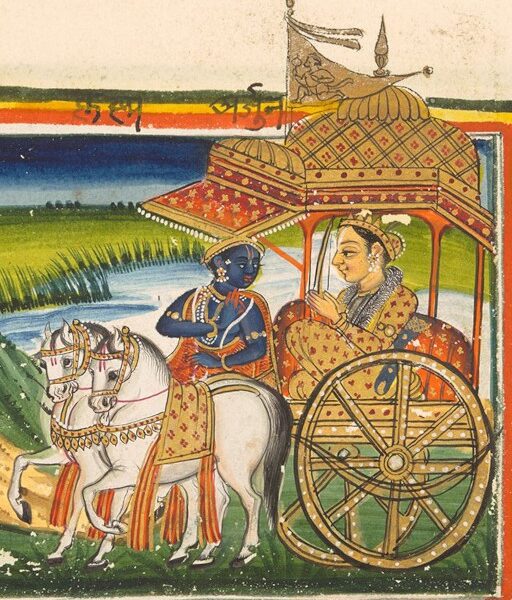
Arjuna is told that he should fight in the battle of Kurukshetra for the interest of Krsna because Krsna wanted him to fight. To be a good man or a non -violent man is a personal attachment. But to act on behalf of the supreme is to act without attachment for the result. So here, being a good man or a non-violent is a personal attachment. But we’ll take it, no, no, no, it’s good. No, it’s a personal attachment, you call it good. You know, like we had the other day, the nutrition or violence, non-violence, all these different things they come up and we’ll say, no, they’re inherently good. No. That’s our personal attachment.
That’s our personal attachment.
But to act on behalf of the supreme is to act without attachment to the result. Because then you can engage that area that you like to be involved in but for the supreme, so the result’s for him. Then it’s in harmony. Otherwise, we say it’s good. And not that it’s not good. But there’s no connection to the supreme. So you’re just a nice demon instead of a not-nice demon. That’s all. You know what I’m saying? So the demoniac mentality means it’s not connected to the Lord. So better to bump into a nice person with demoniac mentality than a not-nice person with demoniac mentality.
As we’ve discussed, it’s better Hitler on acid than Hitler not on acid. One devotee actually pointed out that Hitler was on amphetamines. That’s what I was going to say. Because the guy who’s on acid is just going to sit there and feel cool. Yeah, but he’s on amphetamines and he’s going to go out there and try to take over the world.
You know what I’m saying? Hippies didn’t try to take over the world. Not really. So then, that’s the point.
Yeah, if he had said, you know, Hitler on meth or something, then you’d go, then you’d get one.
Vedic rituals.
That is the perfect action of the highest degree recommended by the Supreme Personality of Godhead, Sri Krishna. That is perfect action of the highest degree. In other words, good is, you know, you would say that that’s perfect action. But good being done for Krishna, then that is the highest degree. So the point is that it’s done for the Lord. Because whether you’re the violent man or the non-violent man, that doesn’t matter. Kings are supposed to, in times of need, be violent. If the police aren’t violent with someone who’s bad, you know, it’s just like you have some people and they have, you know, taking a thing of opinion. Some people have hijacked a plane, it’s full of people, and they have their guns and bombs and everything like that. So that would be considered not a good situation. So now if some guy walks up there and says, you know, you’re very dedicated to your cause and all that. But it would be really nice if you just let all these people go. You know, all things like that. So we might think that that might not be so effective. But then, you know, if suddenly out of nowhere, you know, five guys dressed all in black go in there and shoot them all in, you know, three seconds and then everybody’s freed, then we’ll say that was great. Right? Why? Because it was violence.
But we’ll say, no, but the violence protected all these people. Right? Because these other people were going to use violence. So therefore, a violent situation, if you can correct it in a non-violent way, great. But if not, then you have to use violence to correct it. So therefore, the police are there, the army is there, all these different elements are there because there are those who do not work according to what they should be doing.
Does that make sense? So in that way, then, to establish the proper order of things, violence is necessary. Only because there are people who are, you know, violent. Now, if you have people who are non -violent and you use violence against them, that would be considered improper.
Yes? But we also have, like, a definition of violence that is something that’s not beneficial for Krishna consciousness. Basically, violence would mean, yes, that it doesn’t have an ultimate benefit in Krishna consciousness.
Right? So that aspect would mean whatever is done whimsically is violence.
Or doing a fight is not violence. Yes. But his going to the forest would be. So just like the modern, you know, how do you say, enlightened intellectual may consider so many things to be non-violent, but technically, because it has nothing to do with the Lord, it’s all violence to the soul. Or that has social violent problems. You know what I’m saying? That they only figure out 10, 20, 30 years later. You know, they followed this, but now it’s like there’s no concept of authority or there’s no other things like this. So one would say that it was peaceful, but it wasn’t peaceful. It was anti-authority.
So you can’t call that peaceful.
You know what I’m saying? You know, it was political. You don’t call something political peaceful. You know, peace means living in harmony. That’s a different discussion. You might have a political system that’s more harmonious, but it doesn’t mean that it by nature is like that.
Maybe even goes as far as to say politics is inherently non-harmonious.
Not necessarily. It can be done. Like we see Yudhisthira Maharaj and others. They can fight because it’s part of the social system. You require it. You know, as we’re saying, you require it. But at the same time, it has to be directed by what is harmonious, which means by the Brahmins. But they are directed by the Shastra. So that means it’s not whimsical.
So that’s the point. You can’t have the mode of passion and ignorance be the lead of society. You have to have the mode of goodness.
And mode of goodness is not even enough. It has to be pure goodness. So it has to be following the scriptures in connection with the Lord. Then that is the ultimate perfect action to the highest degree. So when it’s connected to the Lord, then it’s the perfect action.
Then there may be some discussions about the detail of its application may be better or not so effective. But that is done for Krishna. When the result is for Krishna, then that’s perfect at the highest degree. Then within highest degree, you have variation. So that’s why a devotee doing something for Krishna, even if it’s not socially acceptable or done so well in a sophisticated way, it’s still at the highest degree.
Now it’s just a matter of working out that within the highest degree, it’s of better and better quality.
Does that make sense? So that’s why whatever the devotees are doing, they’re trying to do it for Krishna, then it’s seen as progressive. Now then they can learn what is more in line with doing it for Krishna.
That always can be done.
Otherwise can’t he see non-violence in violence and violence in non-violence? Yes.
The Arjuna example, it looks pretty violent, what he’s doing. But there’s a non-violence because it’s being done for the Supreme.
And then those who are, like you said, with the example with Politico, where there is violence in non-violence.
Yes, because the point is that if you break down authority there, where else do you break it down? Because God’s the ultimate authority.
Because on both lines, the spiritual line and the organizational line, He’s the head.
Because if you break it down in the authority, in the teachers or in the community heads or in the governance, like that, the intellectuals, then you break it down in authority. It means you have a revolution.
What’s the problem with the revolution?
They revolt, they may get some result, but then within some time it changes again. Because the people are just there going along. They respect authority, but they don’t know what to do about it. They’re not happy that they’re not being dealt with in a proper way by the authority. But they’re accepting authority. Then you go and say that they’re bad authorities, we can remove them. So then the public goes in and removes them. But now if you want to organize them, you have to have an authority. Now if that next authority doesn’t do things how they are pleased with, they’ll remove him also.
So now it’s authority is only there to please us, rather than the element that we’re supposed to assist authority. It’s supposed to be authority is trying to please you, but you’re also trying to surrender and serve authority.
So they look at authority from authority’s viewpoint, not from their own viewpoint.
Does that make sense? So it breaks down. So what happens is they become the authority.
And then that means things will be whimsical. There is no higher authority than just whatever we feel.
So that’s why it’s the mode of ignorance, because where’s the direction? Each person feels differently, so how do you organize that? At least mode of passion there’s a clear line of authority. Thank you.
I mean in this way we’re taking by that definition that anything done connects with the Lord is non-violent, because the soul is engaged in its proper activity. Anything that’s not done that connects with God consciousness is violent, because it’s against the nature of the living entity. The living entity will suffer because of that. So we wouldn’t directly say that this is it’s in that category. If it’s connected to the Lord, then it’s non-violent. Because it’s progressive for the soul. If it’s not in connection with the Lord, it’s actually violent, because it’s against the nature of the soul. Can we be connected to the Lord without the principle of the soul? How would one? No, you can’t. It means you have to have it. What I’m saying is that there’s a progression there. I wouldn’t just take it automatically, because otherwise without knowing the progression, someone would take it and apply it. Because then they would be applying it according to their personal attachment, instead of the philosophical definition.
That’s where we have a problem. When it’s defined on the ultimate sense in just the philosophical point then we generally don’t have much problem with it. But when we try to apply it in the secondary, within the realm of our attachments, that’s where all the difficulties come in.
Does that make sense? We say your food should be offered to Krishna. No one has any problem. But we say you should offer this kind of food to Krishna, then immediately there’s a problem.
Does that make sense? A general group of people, devotees, karmis, because we’re getting everything from God, we should show that appreciation for what God has given us, by what we get, offering that back to God. And everyone would say, wow, that’s great, yeah, that’s nice. But then we say it should be vegetarian, then half the audience goes, hey, wait a minute.
It’s always going to be dealing with the consciousness I’m the controller and enjoyer, that we’ll get, but what do we bring it down to? How we’re trying to control and enjoy, so our personal attachment that’s where the differences of opinions come in.
In other words, if there’s no need to address that, always stick on the primary level. And if any doubt comes up because of wording you’ve used or examples, take it back to the primary level. But once the primary level is established, then one can deal with the secondary level.
Personal guidance. It is, it’s good, but that personal guidance is the community of devotees. You know what I’m saying? So, therefore if you have one person that guides you on everything, great, but if not you get guidance in one area from one person and guidance in another area from someone else. You know what I’m saying? You have, you know, cooking, there’s certain ones that you are inspired by Kirtan, somebody else, management, someone else, and their personal sadhana someone else. So in that way one can get inspiration from so many different places. That’s why it always mentions the association of the Vaishnavas. You know, the first point is to approach the Guru, but having done that, then one continues the next stages in the process always in the association of the devotees.
Yes? Yes?
Authority, does it mean something in line with Guru Sadhana Shastra?
Depends upon what you mean by in line with Guru Sadhana Shastra. It means that the work itself, its goal is to, you know the result is for in line with Guru Sadhana Shastra or the actual method of management that they’re using is in line with Guru Sadhana Shastra. You know what I’m saying? Because this is what we’re meaning about the primary and secondary. Is that the point is the person’s managing and in his mind he’s doing this to please Krishna. So that’s correct. The point is then on the secondary level he’s applying his conditioning you know, into the principle of management so he may be doing a good job of management or may not be doing a good job of management.
But his motivation is correct. So therefore there’ll be spiritual benefit but you need to, because you’re working with devotees, you need to be able to adjust that within the conditioning it’s applied properly.
Does that make sense? So it’s not that because it’s not applied properly it’s not devotional or because it’s devotional it doesn’t matter what I do. You know there’s two things. Ultimately it’s for Krishna but then how well am I doing it for Krishna?
Does that make sense? So then it’s just, you know, judged by the results the devotees are happy, you know, you get the result like that then you’re doing okay. But if you’re not getting the result or you’re getting the result and nobody’s happy, you know, does that make sense? Or if everybody’s happy they’re not getting the results and I’m not sure That’s weird. Yeah, yeah. They were happy you didn’t get the results Your service to Vaishnavas is to not do anything because if you do something then they’d be getting disturbed. So you’re not doing anything, the Vaishnavas are very happy That’s a good question The point is, is the mechanics of it correct or not?
So where’s the problem? We said there’s two. There’s the mechanics of it and there’s the consciousness.
No?
Okay, so then you can point out that different mechanics wouldn’t work very nice You give suggestions.
That’s not an option Or we’re fun We shoot the guy and then do it the right way You know what I’m saying?
So that’s there. And if it’s not then you do it and you do it however is the best you can do to do it for Krishna because it’s being done for Krishna The mechanics are right, then managerially there’s nothing wrong just the consciousness is not right. But if your consciousness is right then you get the benefit from doing it for Krishna So in other words there’s not really a need to not follow authority Somewhere else. You want to know down at the post office The point is if you’re working for somebody then that’s just kind of the way it goes You don’t like it, go work for someone else You know what I’m saying? Because they’re doing what they think is the right thing to do You have an opportunity. You can say something, do And if not, then yeah Either don’t and change shot Or you can say something and then they will inspire you to change Either way But at the same time the second one may not come on your resume Vedic rituals like prescribed sacrifices are performed for purification of impious activities that were performed in the field of sense gratification It means the field of sense gratification, if it’s not done for a higher purpose then it’s sense gratification So it’s impious So by the Vedic rituals in that then they purify these impious activities by bringing them in line with what’s the proper way to do things But still one has to bring it to Krishna But action in Krishna consciousness is transcendental It’s transcendental to the reactions of good or evil work You have good work or evil work but it’s transcendental to that because it’s pleasing the Lord These other things are nice but they don’t actually deal on the platform of the living entity, the soul The Krishna conscious person has no attachment for the result but acts on behalf of Krishna alone Because results, that’s where you do an activity for a result A result is there because of some concept of relationship So if the relationship is with God then the result is for God If relationships between you and dead matter then it’s about what you’re going to get from dead matter But if it’s for Krishna then it’s a matter of If we see there then it’s what’s going to be pleasing to Krishna Because otherwise if we don’t see Krishna in it technically we’re dealing with dead matter We’ll say it’s a person, it’s my friend or some other relationship but actually you’re dealing with dead matter because the body is not the friend You know what I’m saying?
A Krishna conscious person has no attachment for the results but acts on behalf of Krishna alone Engages in all kinds of activities but is completely not attached So all kinds of activities means whatever is his prescribed duties, doesn’t matter All those kinds of things he can do but he’s not attached because it’s for Krishna He says all kinds of activities, that’s what it means All the variety of activities You don’t get a broader variety of activities than what’s defined by Varanashram Because most people they’re in one place within that and that’s their world But to understand Varanashram you have to understand everybody’s world But if not at least your world Kings such as Janaka attain perfection solely by performance of prescribed duties. Therefore just for the sake of educating the people in general, you should perform your work So Janaka just by performance of prescribed duties but he did that by doing it for the Supreme He didn’t do something else but he engaged his occupational duties in the Lord’s service. He had different devotees they would offer different things. So his prescribed duties So therefore by doing that then you set a proper example.
You get the benefit everyone else gets the benefit How to save it That’s more in connection generally with the devotees and Tadiya and everything like that Occupation sometimes is categorized in Dasyam like that but it’s to be understood it’s not the Varanashram that is the devotional service. That’s why Rupa Goswami in Nectar of Devotion goes to great length to explain Dasyam doesn’t mean Varanashram Dasyam means engaging yourself in the Lord’s service. So that means you’re engaging Varanashram. It’s not the Varanashram It’s devotional service.
Yes So Varanashram is Sambandha and Dasyam is Abhidheya Yeah you could say that It’s just how you situate yourself. It’s the field. But Abhidheya is what you do with it. So therefore that field you connect to Krishna. So it has to be Varanashram. So you connect it to Krishna Whatever it is. You may be looking at it very big or looking at it very small Does that make sense? So it’s like you look in the basket and there’s potatoes and nothing else. So that’s the field Then you engage that in Krishna’s service. That’s the devotion. So it’s not that the potatoes are devotion.
So in that way Varanashram is not devotion It’s not the symptom of devotion. Maybe the symptom of piety but not of devotion. Devotion is the engagement Does that make sense? Yes In history, there are some examples like Ksatriya, who are like being in a position like Arjuna. Is there a similar example?
Are there?
It’s not exactly the same That’s kind of unique in itself Because otherwise there’s common elements that are brought out here and there. But what’s chosen is something that gets the point across. So then that’s what will be the most most full You won’t have a fratricidal war as big as that It’s like mentioned the two greatest battles that have ever happened in the universe The Kurukshetra battle and Ravana and Rama Ultimately the demoniac mentality of that greed and just wanting more That lust is there, so it’s being applied to something that’s not yours So one is to the kingdom and the other is to the wife So basis proper for war but it’s not A Krsna conscious person acts in order to give a good example Lord Krsna and Arjuna, the Lord’s eternal friend had no need to fight in a battle of Kurukshetra but they fought to teach people in general that violence is also necessary in a situation where good arguments fail If that fails, then there’s battle because it says of political principles then good arguments is the best one to use but if that doesn’t work, then the other most effective is war because giving gifts and threatening might work, might not work but also war, you’re not sure of the outcome but conciliation, then that generally works you keep talking until you work it out Does that make sense?
If you have a discussion and you lose the discussion, you still have your briefcase and all your papers but if you have a battle and you lose, then you don’t have anything to work with Does that make sense? So it is considered second on effectively getting something done but the first is always conciliation so good arguments Although one who is situated in Krsna consciousness may not have any interest in the world he still acts to teach the public how to live and how to act because they’re working on the external platform so if they live and act in a proper way, then it will work out nicely for them but if they don’t act in the proper way, then how are they going to progress? because the progression, they’re taking it as external and so if the external is going in a Krsna conscious direction then there’s progress then you can try to, with association, add the consciousness Does that make sense? So that’s why then there’s an example because it’s not what you’re doing that’s proper it’s the consciousness of which is done It’s also quite extreme, an example of mine is on a battlefield, if Arjuna is able to do it and think of Krsna, then one should be able to rush around in the kitchen with the pots If you have a problem with your brother or sister, you should be able to work it out 140 millions Of course your mother may not appreciate what you did to the pillows in the living room but at least you worked it out Pillow fight for Krsna Experienced persons in Krsna consciousness can act in such a way that others will follow So experienced persons, means when you’re able to perform the activity nicely in Krsna consciousness then that sets a very good example But even if not, if the consciousness is correct, that sets an example At least you’re trying to do things for Krsna Does that make sense? But the point here is not that you’re an expert in material activity therefore you’ll set the example, no, because if it’s not Krsna conscious, what’s the use?
Otherwise, why pick Arjuna? Why not pick somebody else on the battlefield?
You know what I’m saying? If you look at it, Arjuna fought through the whole 18 days Abhimanyu, in one morning half a day, took out one Akshahini the enemy, so if he had stayed around till sunset that would have been two, they had 11 So basically speaking, one quarter of the army he would have removed in one day But Arjuna was there fighting through the whole 18 days, so Abhimanyu is quite good You know, he’s not bad So, but he’s not the prominent person Arjuna is the prominent person, because he’s connecting it to Krsna So we’ll continue with this 18, how to say, pages Om Hare Krsna Hare Krsna Krsna Krsna Hare Hare Hare Rama Hare Rama Rama Rama Hare Hare