
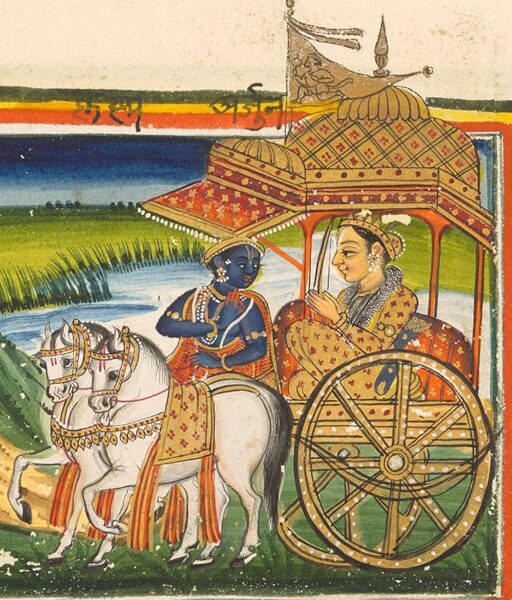
Sometimes, to our surprise, we see some very, what we would call, high devotees coming out of the temple. No, but the point is that it is māyā as such. That is why the story of Bhārata Murāja is in the Bhāgavatam. Because otherwise we get shocked, oh, they could never… No. The point is that until you come to the platform of prema, then there is always a chance.
But the point is that devotional service is not lost.
It is just talked about so strongly so that one will be careful.
But otherwise it is not that something can’t happen. It is not that, well, if it happened to them, then what is my chance? No, everyone is individual. And, you know, what their weaknesses are, their strengths are, that is different. So their faith in Kṛṣṇa consciousness is greater. That is why they are more at bay.
But it does not mean that they do not have also anarthas that if they are not careful about, they can get distracted by. We always have to remember devotional service and one’s conditioning are two different things. Right?
Does that make sense? But we tend to equate them as the same. Because we are engaging the conditioning in the Lord’s service, it becomes nondifferent from the service. In one sense, yes. But in another sense, no. Right? Because what is the problem? Because we think, you know, we are the body. Right? So we are doing devotional service because the body is doing devotional service. Does that make sense? So the whole point is, is it being engaged, that makes it spiritualized. That is what Prabhupāda uses the term, spiritualized. It itself is not inherently spiritual. So you spiritualize the body, the senses, the occupation, you know, one’s situation, you know, like that. Does that make sense? So that is how it works.
So he is not a high devotee means, you know, he is not developing very seriously. So he does not say he is not a devotee. That is the point. He is just not a high devotee.
So the point is, is he may be a devotee, but he is not a high devotee. You know what I am saying? So here is that one should not think he can commit nonsense. That is the point. If you think you can commit nonsense, therefore you go ahead. Accidental means, you know, there is the battle with māyā, and, you know, generally speaking, if one is careful, then one can progress nicely. But it is not that she can’t win a battle. She won’t win the war, but she might win a battle. Does that make sense? So that is the point, is that as long as one is committed to it, then one will continue, because then one will be successful, one will win the war. It does not matter how many battles you have lost, as long as you win the war. Does that make sense?
9.31. He quickly becomes righteous and attains lasting peace, O son of Kuntī. Declare it boldly that my devotee never perishes.
Sometimes we see that those devotees, especially near the heart, there is a big satsang. It means like Ramananda, he is very big in weight.
But then that means there wasn’t so many big devotees.
Bhagavata was big. Gurudāsa I think at one time was big, but I don’t know. Transcendental was tall. Tall also, you count tall then also, yeah. So anyway, like they disappeared and then they… They disappeared. After, I don’t know, before, never. So you are worried that there is a transcendental Bermuda Triangle. All these advanced devotees are disappearing.
And you want to know where it is so you can walk around.
Some of them they came back. Some of them they came back. And even here, you know, they have memories. Some, because they fell from their high position, they came back. But some they didn’t.
Some they didn’t. But you don’t necessarily know that they… That they didn’t, you know, or that they ever actually really left. Some of them were not actually leaving. Oh, okay. But the point is, is what is their commitment? You know, obviously do they think something else other than Kṛṣṇa consciousness is the real thing? Or it’s that it’s just not something that they can be, you know, are somehow or another able to get themselves absorbed in? Yeah, so if that’s there, then it means, then, you know, it’s not very well situated. But the point is, it’s whatever service they’ve rendered won’t be lost. So it’s that, you know, if the situation changes, then they’re inspired again, then they’ll take it up, then they’ll move very quickly. Does that make sense? So that’s why sometimes you see someone, they join, they’re like everybody else, and suddenly they move to a very elevated position very quickly, because they’ve done these things before.
All right, does that make sense? Yeah.
Okay. This is also why one should not be surprised if the second generation, you know, sometimes it goes well and sometimes it doesn’t. You understand? Because they are that devotee.
You understand?
So we say that should never happen, then fine, but then there shouldn’t be grihasthas, because otherwise then where will they take birth? You know, like that.
Does that make sense? So, yeah, it means all these things are here. See, the general principle is given, then one is supposed to apply it to the particular situation. So it’s not that if you describe five different scenarios, then you’re covering what could happen. Now, you know, it’s part, you know, part from this one, part from that one, part from here, you know, it’s like that. Does that make sense? So in other words, it’s not, it’s a…
Okay, 931.
He quickly becomes righteous and attains lasting peace. O son of Kunti, declare it boldly that my devotee never perishes. So he quickly becomes righteous, because the quickly here is just, you know, we’re talking, you know, it may take a little while, but quickly, we’re talking about if you take up Krishna consciousness in one lifetime, go back to Godhead, that’s quick. Right? So then quickly just means within, you know, it’s not a long time. You know, we’re talking, well, that’ll be, well, he did that, so it’ll be hundreds of lifetimes. No, it’s not. Eternal damnation is a figment of people’s imagination. It doesn’t exist. There’s no concept of it. So, so like that. And declare the devotee never perishes, because once one is committed to the process, then one won’t be lost in it, even if one gets distracted, then one will come back to that same position and continue.
So there’s hope.
This should not be misunderstood. In the seventh chapter, the Lord says that one who is engaged in mischievous activities cannot become a devotee of the Lord. One who is not a devotee of the Lord has no good qualifications whatsoever. The question remains then, how can a person engaged in abominable activities, either by accident or intention, be a pure devotee? This question may justly be raised. Generally, a devotee who’s engaged in the nine kinds of devotional service is engaged in the process of cleansing all material contamination from the heart. He puts the Supreme Personality of Godhead within his heart, and all sinful contaminations are naturally washed away.
Continuous thinking of the Supreme Lord makes him pure by nature. According to the Vedas, there’s a certain regulation that if one falls down from his exalted position, he has to undergo certain ritualistic processes to purify himself. But here there is no such condition, because the purifying process is already there in the heart of the devotee, due to his remembering the Supreme Personality of Godhead constantly. Therefore, the chanting of Hare Kṛṣṇa, Hare Kṛṣṇa, Kṛṣṇa Kṛṣṇa, Hare Hare, Hare Rāma, Hare Rāma, Rāma Rāma, Hare Hare, should be continued without stoppage. This will protect the devotee from all accidental fall-downs. He will thus remain perpetually free from all material contaminations. So by being fixed in chanting, one can avoid all this. But if there’s a problem, if one still remains fixed in chanting, then very quickly everything will be… And so if he’s not so fixed in chanting, then he’ll just be slower. Good.
If one tries to chant more than normal and maintains a posture… How do you define normal?
Who, in your estimation, would be normal? The minimum.
So normal is minimum. So somehow the dishes got off the table into the sink, but the table was not washed and the dishes were not washed.
And that’s normal.
I forget what it’s called, prescribing on birth. Okay, there we go.
Okay. And then for some time is able to continue… The minimum prescribed number. The minimum prescribed number is able to continue for some time, but then it becomes clear that there’s some reaction or kickback from the mind. It’s too much. Too much. But it is the minimum, so one can be satisfied that one is doing the minimum, that one’s not doing any more. But more than that, I’m talking about if somebody’s doing more than the minimum… More than the minimum. Oh, it means that if they go back to the minimum, then why not? It means that you have… It’s just like you have comfort for you, that comfortable situation, so that situation where you feel, I’m doing the minimum, then you can be comfortable and slide back into that. Okay. It means that the idea is that one doesn’t make a vow to do more rounds, unless one is very confident at that. So what would be the thing is if one wants to do more chanting, and in finding the time here and there because of that desire, he finds that there’s a number that he always is consistently able to maintain, then he can, in his mind, decide, okay, now I’m going to chant that much. But it’s already a practice. But he shouldn’t just, you know, get like a… Janmasthami, okay, so he chanted more rounds, so now every day I’m going to chant more. No, he should have the determination that if he has time, and he’ll try to find the time by not doing something else, then he chants more. But I would see that it’s regulated. Sixteen is what can be chanted. You know what I’m saying? One can be doing activities and engagements and still chant sixteen, so that’s why that number is picked. Practical? Yeah, it’s a practical number.
You know, that number has been used, you know, basically could say, you know, over, you know, a hundred years now. So it’s worked.
Because Krishna’s in control of the mind and modes of nature, and then… Yeah, you could say, yeah, he’s in control of the mind. But he does it through the modes of material nature, so you could say he’s in control of the modes, the modes that are in control of your mind. Okay. And then because Srila Prabhupada, he initially said sixty-four rounds, so he’s going to do it, so then thirty-three. And then he said, okay, maybe sixteen. It was like, so then did Krishna back the words of his Guru Gauri and, like, turn down the, like, intensity or something of that? No. See, the thing is, sixty-four is the standard number that you, by being associated with that, one will be situated very strongly and one will progress very nicely. Right? Does that make sense? So the point is this. You do sixty-four rounds of japa, or you do sixteen rounds at forty-eight rounds worth of service. You understand? So it’s not that you’re doing sixteen rounds and doing nothing else. The idea is that if you can’t, if you’re not able to absorb yourself in the chanting in that way more, then you absorb yourself in service.
Does that make sense? So that way, between the service and the rounds, it makes up sixty-four.
That’s how it’s done. That’s how, obviously, the platform is very nice. Yeah. No, it’s very good. If we accept that, then the whole thing works very nicely, but we’re afraid that something will be lost or something won’t be gained. Right? Because we have faith that there’s another subject other than Krishna that has value. Right? That’s before Kumar’s point. There isn’t anything else. There’s only Krishna. So the subject matter, if it’s connected to the Lord, it has meaning. If it’s not connected to the Lord, it doesn’t actually have meaning.
Is that so?
Thirty-two. O son of Pita, those who take shelter in Me, though they be of lower birth, women, vaishyas, merchants and shudras, workers, can attain the supreme destination.
It is clearly declared here by the Supreme Lord that in devotional service there is no distinction between the lower and higher classes of people.
In the material conception of life there are such divisions, but for a person engaged in transcendental devotional service to the Lord, there is not. Everyone is eligible for the supreme destination. So saying here is that in the material conception there are divisions, in the spiritual there’s not. So that means as far as the soul goes, there’s no distinction. So everybody, no matter what their situation, can attain to pure Krishna consciousness. But when you’re dealing with the material aspect, there is material qualification.
You know what I’m saying? Yes? Can we say that from a spiritual point of view, you said that we have to do service and… I always worry about when somebody says, you said. You said. What did I say? You said. That we can attain this pure platform, transcendental platform, either by service, not either. Both by service and by philosophy. And the philosophical understanding. If we women are less intelligent, means this path is closed, blocked, halfway through? Are we… Is this one of those rare moments from the horse’s mouth kind of… No. No? No. It’s just a question. For personal information, how much can we… No, see, the thing is, is philosophy, there’s… Philosophy is a principle. And then there’s so many details. You know, it’s the same as the culture. There’s this principle. Then there’s so many details of application. So the principle, anyone can understand. It’s just, the details may get complicated.
Does that make sense? So, that depends on the individual. So you will have… It’s not that the woman couldn’t be expert at philosophy. But it’s just generally not as important. It means intellectual satisfaction is not the main position.
It’s more emotional satisfaction. Because the intellectual satisfaction would be satisfied by principle. You know what I’m saying? It’s very clear, it’s very straightforward. And so, that works very well. Then you have those that they like details, so they’re only satisfied on the intellectual platform if it gets, you know, into so much detail. Does that make sense? So it’s just a matter of value of priorities. Because it’s not just women, it’s everybody. That’s why it gives this list. You know, women, vaisyas, and shudras.
Right? And so, therefore, if you’re taking… Yeah, okay. Then, does that half answer it?
Okay. Then, the other aspect is that less intelligent doesn’t mean less academic ability. That’s generally how it’s interpreted.
But, as we mentioned in the first point, that’s already defined there. You know what I’m saying? Because women are very expert in certain things, but they’re just expert in what’s important to them. You know what I’m saying? You know, it’s just like… Yeah.
So, like, you know, the curtains match with this, or what you’re wearing, it all matches, or to get the clothes and the accessories to match, or to match the clothes and accessories to the actual situation you’ll be in. That’s very developed. Men generally don’t worry about that so much. You know, if they do, then you might worry about that. Right?
So, the point is that that’s all intelligence, because they’re discriminating. No, that one won’t go over there, this one, that shade won’t work here, that shade’s good, it all matches, but that won’t fit the situation. So, that’s intelligence, but it’s just been applied there, because by applying it there, then one will get emotional response. One will be able to function in that emotional environment comfortably. Does that make sense? So, intelligence has been used. So, it’s not that academic ability’s not there. Does that make sense? To have knowledge and all that. But, it’s generally practically applied in something that will generate, you know, a relationship.
Does that make sense? Well, for the men, the intelligence is used, you know, to get something accomplished.
As I say, the women are accomplishing something, but it’s within the field of emotion, while the men are accomplishing something, so within the physical platform, not the emotional platform. Right? Because the senses and the intelligence are connected, so the men work in that area. Does that make sense? So, here, when the Shastra says women are less intelligent, it’s not meaning, you know, academically or practically. Does that make sense? What it’s meaning is that the distinction between intellectual, emotional, and sensual, the women don’t make that distinction. It’s one aspect, that you’re emphasizing this a little more, emphasizing that more, but it’s one thing. So, because of that, when you come to the point of, you know, because we said knowledge is being able to discern between matter, spirit, and the Lord of both. Right? So, the women can tell, okay, this is spiritual, this is material. Right? And this is what, you know, Krishna. But the point is, is because of attachment, then, you know, that element of dependency, that attachment, then, even though one can discriminate, one won’t necessarily act according to that. That’s where less intelligent is. So, the Vedas, when they’re talking about intelligence, they’re not talking about the IQ or anything. That’s how, basically, most men in the world, you know, would prefer to interpret that point. But, as we see the sages who are liberated, to them it doesn’t matter. They don’t have a need to control and enjoy women, so they wouldn’t want to say they’re less intelligent, so you can control them. Right? You know what I’m saying? That was, you know, the advantage of the Darwinism, is then you could use it to explain that this group of people, then we can control and enjoy. Right? Because they’re less developed, so, therefore, we can control them. Does that make sense? So, the principle is there. It’s just, as this, you know, they can control the women less, then you shift it over and make it philosophical and apply it somewhere else. You know what I’m saying? So, that’s not what it means. Though, most people will interpret it that way. And that’s why the women get bewildered, because, you know, they can learn as many shlokas and are as good at skills as much as the men, and this and that, and so what’s the big… What do you mean? You know? It means that, when it comes to the actual practical application between detachment and attachment, the women can’t apply it. You know what I’m saying? They can go from attachment to material to attachment to Krsna, but they can’t go from attachment to maya, detachment from maya, and then attachment to Krsna. You know what I’m saying? They can go attachment to maya and simultaneously attachment to Krsna, therefore, detachment from maya, but it’s not the detachment that is of interest. You’re only detached because, you know, there’s nothing of value there. Or you use detachment to simply encourage their relationship. Does that make sense? But it’s not a situation or a positioning for women. Men, though, go from attachment to detachment to attachment again to the spiritual. If they can do it also more simultaneously, better. But if not, then that kind of regulation they can do. That’s why it says, spiritual husband, religious wife. Right? Because the wife was not going to be spiritual. She’ll be religious either on the material platform or on the spiritual platform. Right? It means acting according to nature. The man can take that, be in that position where it’s not material and not transcendental.
You know, it’s just the Brahman platform. Does that make sense? So for the women, it’s either personal here or Bhagavan there. But Brahman and Paramatma aren’t a big deal. Does that make sense?
Is that clear? So that’s what it means by less intelligent. So that’s why it’s recommended that the women connect themselves to men. Because then their discrimination, you know, is there so they can appreciate it. So that if the man brings that point there, then it makes it easier to follow. Does that make sense? That’s the idea. And then in their sadhana, the philosophical study should be emphasized as well? It should be emphasized, but for, you know, how much fits in, how much works. You know what I’m saying? So naturally, in student life, there’s more time. And when one’s retired, there’s more time. And in between, then it gets a bit busy. You know what I’m saying? So it’s how much you can put. So if the intellectual aspect, you know, within the woman’s purview is more valued, then more time would be spent there. If less is there, then less time would be spent there. But still, there’s a minimum. There should be still hearing. That’s why there’s the Bhagavatam class. That’s like minimum. One probably expects that one will read outside of that. Does that make sense? That’s the idea.
Does that make sense? So, in other words, the woman will be convinced because it makes sense, because it works within the concept of relationship. Right? The man thinks about it makes sense because it spiritually is logical. You understand? So that’s why I said it’s not, it’s, that’s not the reason. So as long as the woman’s in a good environment where whatever she likes to do happens to be spiritual, then that’s good. You understand? Because the idea is the woman’s going to do what she wants to do. There’s no, no, no, there’s not going to be a variation on that, you know, like that. So, but the, the, so the point is, is the men should create an environment that whatever the woman does is connected to Krishna. You know what I’m saying? She is going to dress nice. So therefore, you create opportunity that she can dress nice and then go to the temple.
Does that make sense? So that, like that. So it’s, it’s going to, does that make sense? So that’s why the position of being dependent because then that, that, that works. Then, then the whole thing, so the feminine nature is not a disadvantage when it’s applied in its natural form. It’s a disadvantage when the woman wants to function in the man’s world because the man’s world is not designed to generate emotion.
So the woman working in there, there’s not a whole lot for them, so then they’re going to waste time there and then they’re going to have to search for the emotion. You know what I’m saying? So, so it’s a waste, so there’s not, there’s going to be a lack of satisfaction. So even if you come across the philosophy, then one will have issues with it. You know, on, on who’s in control, this and that, all these different things. And then more time is wasted.
Is that what you’re saying?
Yes. Is that what Prabhupada means when he says it’s really an advantage in spiritual life that they can use their emotion and connection to Krishna, to go, as you said, to make it… Yeah, yeah. It’s an advantage, but it’s only an advantage if it’s a protected environment because in a protected environment, it’s always pious and there’s not going to be anything to distract. You know what I’m saying? The man bumps into somebody, he says something stupid, it may annoy him for a little bit, but then it’ll go away. But the woman, it may last longer and then something has to be done about it. There’s so many… becomes very involved.
You know what I’m saying? So if it’s in a protected environment, then it’s an advantage because everything that you do connects to Krishna nicely. Because the point is this, the brahminical ashram is what? Right? It’s the lifestyle of someone who’s engaged in spiritual upliftment.
So therefore the brahminical occupation is exactly the same thing. The brahminical occupation is only ashram. Right? So studying, right? And doing puja, giving in charity, these are all parts of ashram. So you study, that means someone’s teaching.
You know what I’m saying? You’re giving charity, someone’s receiving it. So it’s all part of ashram. So they don’t have a separate occupation. Kshatriya, Vaishya, Shudra, that’s separate.
You know what I’m saying? And then where are women situated? In the ashram. So their occupation is within the ashram. So technically speaking, they have the same opportunities, the brahmins. Right? But this is where the lesson tells it comes in. They would rather give that up and then move out to work with the Kshatriya, Vaishya, and Shudras outside. You know, get harassed by the… There’s already enough trouble at home. They want to go out and get more trouble. Right? The men come home for shelter. But the women want to leave the shelter and go out there and get their teeth kicked in.
Right? And then if they get their teeth kicked in, then, oh, we’re women, you can’t do that. Kind of like, wait a minute, you’re equal with the men, so we can kick in the men’s teeth. You can kick in your teeth.
You know what I’m saying? So it’s not seeing the advantage. So that’s why, just like we could say the brahminical occupation has an advantage over all the other occupations in that it can so much more easily be engaged in the Lord’s service. It’s not that all the other ones can’t be. It’s just easier. It’s more… Like you’re doing puja, it’s easy to be Krishna conscious. You’re on a battlefield, you know, lopping off heads. You know, it may be more difficult to connect it, though you can. You know, Arjuna did a good job of it. Does that make sense? You know, you can’t say he only lopped off one or two. You know, there’s lots of heads, you know. That day he killed Jayadratha, he had to get through the…
samsaktikas. I think they’re called samsaktikas. It means someone who’s taken a vow that they’re going to kill this person, they get the first right on challenging that person. Right? Because they’ve taken a vow. So the samsaktikas took a vow that they’re going to fight with Arjuna. So he had to fight with all those 25… And they weren’t just, you know, guys off the street. You know, 25,000 means the guys on the chariot. Now, with the guy on the chariot, there’s tons of guys that are there on the ground and horses and this and that, you know. Does that make sense? So when you say, you know, the king was fighting, you don’t just mean him himself. It means him and his whole army, right? So 25,000 kshatriyas with all of their men and stuff like that. He had to fight with them first because they had first challenged. Then after that, then he had to get over to where Jayadratha was. And it was arranged that the samsaktikas would challenge him on this side of the battlefield, but Jayadratha would be on that side. Right? And it’s not just like, you know, clear open field, you know, eight-lane highway or something like that. You know, German laws, you know, like that. So he could just go away. He has to get through, you know, all the battles, you know. He has to drive around and this and that. So it’s not easy. So there was a race like that. He did have an expert driver. Yes, he did.
Good driver. Always good to have a good driver.
So it’s difficult, right, but can be done. But so therefore, the women’s duties, being within ashram, it’s so much more of an advantage to connect to Krishna. You know what I’m saying? So the situation itself is more advantageous. The mentality of it’s personal is advantageous. So they don’t have a problem with the impersonal. Only if they have problem with men, then they have a problem with authority. But it’s still personal because it’s all about themselves as a person. Right? If the men get into that kind of funk, then it’s kind of like you get rid of being a person. Like that. But the women will never leave being a person. Does that make sense? So that’s an advantage. So the idea of the Vedic culture is everybody is able to apply their advantages, you know, to the best result.
So if one is saying something else, then what the Vedic version is defining, it means one doesn’t actually know what one is dealing with.
You know what I’m saying? You know, the car is made out of metal, and it’s got round things on it. You know, this lotus, you know, made out of metal, it’s got round things. One here, one here, one here. Right? And one here. So it’s got four round things. This has got four round things. So why can’t we take this to Calcutta? You know, why is it the car always takes everything like that? Everyone neglects this pot.
Right? And then you get enough people and talk enough about people who don’t know what a car is and driving and all that. Or they’ve seen the car but they don’t understand the process of driving. And if I have enough of those people, then after a while I get a movement going.
But if people actually understand what driving is, they would never buy it. So they say, no, you can’t drive this. You can drive a car, and the pot holds water.
You understand? So, people who don’t understand what the masculine -feminine nature is, what the principles are, how it works, they can come up with all these wonderful different sociological ideas, but they don’t know what they’re talking about. It’s that simple. Right? Right? People taking advantage, misusing their position. That’s another thing. Correct that. But don’t come up with some new idea that doesn’t have any reality.
Does that make sense?
All right.
Hmm? What is it that makes somebody have issues with how people deal with them? Because they haven’t been dealt with properly. You said… What? Yeah. You did say…
Attached… Attached to where you stay, food arrangements, how people deal with you.
There meant how people deal with you would mean that that was in relationship to, you know, you speak gently, they speak gently, or, you know, the kind of environments you like to be in, to have exchange, or, you know, what kind of words are used, or how they treat you, you respect others, they have to respect you. You know, things like that. It’s just, that’s all what is the social…
social level. You know what I’m saying? One social level that unless you use, you know, nice, you know, fancy words, then they consider, you know, they’re insulted because, you know, they’re talking with an uneducated person. And sometimes a guy in the street use a fancy word, he gets insulted because he says, if I don’t understand it, then, you know, you’re, you know, insulting me. You know, so it’s just like… You understand? So everyone has a conditioning of what they consider is proper social.
But how come, how come, like, one… one… oneself has, like, parameters that it’s like, this is okay, this is not okay? That’s called conditioning. Right.
You know what I’m saying? Like, sitting there is okay, and if I drop you out in the middle of the lake, you consider it not okay. Right? If I drop you out in the middle of the lake on top of… on a luxury yacht, then you might consider it okay. You know what I’m saying? So the parameters are naturally there. You know, but if I drop a fish, the fish is sitting here, it’ll say it’s not okay. I drop it out in the middle of the lake, it’ll say it’s okay.
So according to the particular senses you have in that, then something’s okay or not okay.
And, uh, what’s the difference then? So then, like, the dog can’t be changed as a dog, but it can be made a nice dog or a bad, bad dog, you know, according to… No, you don’t have to make it a bad dog. It’s not meant to be a bad dog. Okay. That’s why they invented newspapers for bad dogs. Okay. And, uh, so then, the… because sometimes there’s reflexes from the body, you know, if it stubs the toe, you know, or something like that, you know, then there’s reflexes. Although Prabhupada, he stood on a drawing pin whenever somebody was putting up a picture, you know, and he walked in and then he stood on the drawing pin and it went right into the heel, you know, and the ladies, he said, uh, he said that he didn’t say anything, he just went down and took the pin out of his foot and then just sat on the thing and continued in, you know, he didn’t say anything. So, but there are reflexes, you know, so… I mean, what’s… where are we going with this? The point is that, because that would… The point is not the tag. That would usually, no, that would usually get a response, so there’s reactions, you know, what I’m saying is there’s reactions that happen and then according to one’s conditioning, then, uh, in certain circumstances they end up being, like, reactions, you know? Does that make sense? Well, I don’t know what the principle that we’re discussing here, see, because the thesis hasn’t been presented. Oh. Um, I guess I’m trying to, I’m trying to… It means, in other words, the elements of the environment, you give it, but what’s the point you want to make? That’s not clear. Well, you can’t, like, you can’t help it whenever you, like, how much can you help it whenever your conditioning responds to something? The point is, is conditioning is there because, because it’s something you’ve wanted. So, conditioning can be, therefore, purified by wanting that. Right. You know what I’m saying? Because, the, the, whether it’s in a pure state or an impure state, that you can have some say over. What it is, it’s, it’s there, fixed from last life. You know, and you don’t want to fix another one, a better one for, you know, for the next life, you know, in the way the material platform. So, therefore, you’re simply creating the situation on the spiritual platform.
Does that make sense?
The person is an active person, so he’s active doing something useful rather than active doing something not so useful.
You know what I’m saying? Like Guy Fawkes, he was an active person. But it wasn’t, you, you would say exactly, you know, what, at least the, the persons in the position of rulership were considered, you know, proper activity.
You know what I’m saying? But, he, he likes to be active, he could do the same thing somewhere else and it would be considered okay.
Yeah, I see.
So, yeah. So, is it okay to do discernment, you know, for the discrimination for the particular situation? Is it okay to, like, you know, like in a restaurant if somebody mistreats the customer and the customer according to their conditioning then they will react in different ways, you know?
But still, I’m not clear exactly what you’re trying to say. I’m just, I was just wondering about that as well. It means everyone’s going to react, but it’s according to training. Now, you know, the, if the waiter doesn’t deal properly and you respond, you know, roughly, then, why is that? Someone trained you to respond roughly? You know, you were sitting at a table and you kind of became meek and all that and your father said, don’t become meek, you know, we’ve got to put, you know, show these guys who it is. We’re the customer, we’re always right. You know, like that. And then, then, then the next time you got up the courage to say something and all that, well, what’s that? That’s for Buddhas. You know, you’ve got to say like this. You know, like that. Is that how it works?
Is that, is that how… An example? No, I’m just saying, is that how they were trained? Or the person where they act badly and then the person responds in a cultured way, but in such a way to make the waiter understand he’s not behaving properly, but he didn’t break any etiquettes and didn’t use any rough language or say it in a rough way. That happened just automatically or that was trained.
You understand? In other words, the second one was trained. The first one is just, you know, untrained response.
You know, so the one is you’re not behaving nice, so I’m going to make you, you know, feel bad about that. The second one is that you’re not behaving nice, so there’s etiquette is being broken, so you have to act according to the etiquette.
You know what I’m saying? Because the one is, you know, what kind of waiter are you? This, that, this. So they should be a waiter and this and that. The other one is, no, you’re the waiter. Act like one. Like that. It’s not a matter of the position, your position and my position are going to change. It’s just, you’re not acting according to your position in relationship to me as a customer. So therefore, adjust that and then let’s life go on. You understand? So that takes training because then one is able to see that everyone has a position. Everyone has a duty. And so, according to that, if everyone does their duty according to the position they’re in at the time, then it’ll work.
Like that. You know, so it’s training. It’s training.
Yes?
Yes. Yes.
Yes. Yes.
Yes. Yes. Right here is higher as the ability to discriminate between matter and spirit. Right? And to able to act on that. Yes. Because Intellect means the positioning of the chip potency is in action, in abhideha.
Right? Dho Sambandhas is knowledge.
Is that making sense? But where we see knowledge in its full form is when the knowledge is applied. Otherwise, having the knowledge, that’s knowledge, but when you apply it, that’s what you’ll say. Right? Does that make sense? So, yeah.
But also, we know that unless you have the higher attachment, you cannot detach really. That’s there, yes. Yes, that’s there. So that’s why they have to be cultivated at the same time. You know what I’m saying? So the two are cultivated at once, while the woman may not need to cultivate both, just the attachment to Kṛṣṇa.
You know what I’m saying?
So we’re on 232, right? Oh, we’re on the next page, actually.
Okay. Everyone is eligible for the supreme destination. In the Śrīmad-Bhāgavatam 2.4.18, it is stated that even the lowest, who are called cāndalas, dog-eaters, can be purified by association with the pure devotee. Therefore, devotional service and the guidance of a pure devotee are so strong that there is no discrimination between the lower and higher classes of men. Anyone can take to it. The most simple man taking shelter of the pure devotee can be purified by proper guidance.
It’s interesting to note that even though he said this, women vaiśyas, śūdras, the conversation is not about them.
You understand? The conversation is about lower birth.
You know what I’m saying? So these are some examples, right? But here he’s talking about the cāndalas and that. They’re also, you know, you wouldn’t count them as, okay, well, they’re not women, they’re not vaiśyas, they’re not śūdras, right? So they’re not included here.
Like that. It just means anything where the situation of appearance isn’t ideal for spiritual development.
Does that make sense?
Cāndalas pretty much includes everybody else. Yeah, basically, if you say cāndala, you could count all the other kinds of, you know, below śūdras. Mixes of mixes. Yeah, like that. Yeah, because a cāndala is a mix. No, yeah, no, cāndalas are just a mix. But it’s an inverted backwards mix. So that already makes it, it gives the element of being a mix of a mix. That’s why it’s there. But it’s still, it’s still a pure mix. Like that.
Does that make sense?
I mean, if you want to have some fun with it, then you could say is that, you know, you know, because the cāndalas here, they eat dogs. So in the first world, they’re not eating dogs. So that means, you know, then the mentality must be lower than that.
Yeah.
You know, because a dog’s a dog, okay? You know, it’s like that. So that, that’s low. Yeah. You know. Mom’s best friend. Yeah, like that. Yeah. Okay, eating friends is not good. Okay. Yeah, but eating cows is worse, right? You know, because they’re worshiped. Mother. Mother. Yeah. Friend to mother. Eating your friend or eating your mother, which is worse. It depends on which society you’re in. It’s like that.
Okay. So devotional service, one is strongly situated in something, some service, and one has the association of advanced devotees, then one will progress very nicely, right? So that, therefore, it doesn’t matter. So this is, this is within, this is the conclusion within. The Lord comes Himself, or His devotees come to instruct everyone, and no one, everyone is eligible to have that instruction and advance and go back to Godhead, right? So in other words, the thesis and the conclusion must basically be the same thing, right? Does that make sense? And then in between you give all your details, you know, and how you’ve come to that understanding, right? In other words, you give the thesis, then your reasoning and examples, that’s where you explain why it’s there. Does that make sense? And then the conclusion comes right back to, therefore, right? You know. Does that make sense?
Generally, the association of those born in sinful families is not accepted by the higher classes, but the process of devotional service is so strong that the pure devotee of the Supreme Lord can enable people of all the lower classes to attain the highest perfection of life. This is possible only when one takes shelter of Krsna. As indicated here by the word vyapahsvaritya, one has to take shelter completely of Krsna. Then one can become greater than great jnanis and yogis, right? But not on the material platform, you know what I’m saying? What you know and what you’re able to do materially, that remains, you know, by Krsna’s grace it may develop, but it’s not that devotional service and that have, they’re two different things.
You know what I’m saying? I invest my money, I mow my lawn. It’s not because I’ve invested my money the lawn gets mowed, it’s because I mow the lawn the money’s invested. They’re two different things. So, so, someone from a sinful birth, then devotionally there’s no difference between one living entity and another. Anyone can take up the process and the association of devotees in advance and go back to Godhead, right? But what skill they’ll be good at is still the same. You know what I’m saying? So if the guy was a plumber, he still will be a plumber.
Does that make sense? By occupation.
But if he’s engaged all day in just hearing and chanting about Krsna, then, you know, generally there’ll be no need of plumbing because he doesn’t need to make money, right? If the DV sync gets plugged, he can fix it.
Does that make sense? So, so, we have to understand is these two don’t come, don’t, they don’t cross. You know? You know, because there’s no need. Because anything can be engaged in Krsna’s service, so there’s no need for it to change. By Krsna’s grace, one becomes a very expert, but it’s expert because of its connection to Krsna, not on its own.
Does that make sense?
You know, he may go out, go out and become the greatest, most famous plumber in the country like that by Krsna’s grace, you know. Mario. Super Mario.
He’s the only famous plumber I know. Oh, okay. True.
You have super models, you have super plumbers. Yeah, so greater means on the platform of reality, because we have to remember the material world, that’s the platform of illusion, right? Because we think this is better than that. No, it’s all Brahman, so it doesn’t matter that this one’s better than that one.
Because the point is, is they can all be engaged in the Lord’s service. So that means any position is fine.
Does that make sense?
Does that make sense? So guys offer artiks, the one says, the other, you know, my artiks are better than yours because I can do bigger circles than you. And the other guy says, well, yeah, but your arms are longer, you know, like that. So? Dead? You know what I’m saying? That’s not how it works. We’re just adding in our material conditioning.
Does that make sense? So unless you’re in charge, then it’s not good, it’s not a high level. No, it does, any position.
What about mentally disabled people? They cannot read, they cannot maybe comprehend philosophy? No, they can comprehend, because the principles they can understand. Because philosophy is not comprehended by intellect.
It’s transcendental. It’s only comprehended because Krishna allows you to comprehend it. So therefore the uneducated person may know more in actual philosophy than someone who has a degree in philosophy from the university.
Because the other one knows so many details, but he doesn’t actually know what it’s for. Like if you went up to, you walked up to the chair of the philosophy department at a big university and said, okay, you’ve studied all the religions and philosophies of the world, what’s the conclusion, what’s the essence? You wouldn’t get it. You could go university to university to university, you’d never get any answer. There is no conclusion. There is no conclusion. That’s what they all say. Yeah, there is no conclusion. And then it’s kind of like, well, then why study it? Why are you wasting your time? Why would you waste your time with something that there is no conclusion?
You have to make a living. You have to make a living. Okay, well then that’s fair enough, you’re making a living.
So don’t get puffed up. Yeah, yeah.
Does that make sense? So you had one disciple, Bhaktisiddhanta Saraswati Thakur. He used to work in the garden, like that, work in the garden. I’m not sure if he also worked in the ghost shower, but like that. That’s all he did all day, like that. But when it came to philosophical conclusion, he was very expert.
So then one day they had someone who was an academic in philosophy and religion and all that. When he wanted to know more about this, then Bhaktisiddhanta Saraswati Thakur sent him to this devotee.
Because he understands by doing service. He has faith, he does service, he associates with devotees, so he actually understands. Does that make sense? But if one has academic ability to learn, then he learns it and teaches it. Like someone has to teach it. Does that make sense? But when it says it’s open to everybody, it means that.
Like a conclusive truth is just to pop Rasamalai in your mouth and remember Krishna?
Yeah, that can work as an application of the conclusion. That he takes Krishna? Yeah, the idea is always remember Krishna, never forget. So if that makes you remember, then you can do that all day. All of Rasamalai’s. Everyone. What service? Oh, Hare Prabhupada, what service do you do? I eat Rasamalai.
Didn’t Prabhupada say at one time that you can eat your way back to Godhead? Yeah, he did. You have that much faith and appreciation and excitement to see Krishna. Like Darshan, you know. Usually it wears off. Yeah, you know, you have your tape and you record it there. And when they bring up Vishad, you push go again.
Like that.
Like that. You know, and then you eat so much, you do Dandavats. It’s all under different elements. It’ll be there.
Like that. I think Madhu Mangal once was explaining to Krishna about all the different ecstasies that are there. And he was explaining them all in connection with food. You know, generally it’s a connection. You know, the voice chokes off and all the hairs stand on end. And so then, you know, he was saying, when I smell the food then my hairs stand on end. Or no, when I hear about, you know, that was lunch and his hairs stand on end. And he smelled and these other symptoms and all that. And then when he tastes then, you know, he becomes stunned and, you know, so like that. So it is possible.
That’s not on puja. Yes.
Then one can become much greater. Okay, yeah. So that’s the principle.
So, vritti, samsara dhāt. Here some may raise a doubt. Is it possible for an ordinary person to approach Godhead? Right, because now we’re ending one adhikāraṇa. So the whole idea is one adhikāraṇa is complete in itself. And it deals with the doubt to establish the adhikāraṇa. But having established this point and it’s been accepted, it naturally raises another doubt. You know, because then you have to apply it. You know what I’m saying? The first one is just that you accept it. And then having accepted it, now how do I apply it? So now the doubt comes up here. Here some may raise a doubt. Is it possible for an ordinary person to approach Godhead? Right, because you’ve said, okay, that’s that, you know, all these different things. But, you know, just an ordinary person.
In Śrīmad-Bhāgavatam 1.8.20, Queen Kuntī says, You Yourself descend to propagate the transcendental science of devotional service into the hearts of the advanced transcendentalists and mental speculators who are purified by being able to discriminate between matter and spirit. How then can we women know You perfectly? So here, the advanced transcendentalists are able to to discriminate between matter and spirit. So that’s the point that’s being… So she’s saying, how then can we women know You perfectly? Right, so the point is on matter and spirit. Right, not on, you know, how many verses you know or anything else like that, what skill you can do. Does that make sense? That’s the point that’s being made. And you’ll notice that any time this point is being made very strongly and clearly, you know, it’s always made by a woman. It’s not made by a man. Men never say this. In the śāstra, it’s always the women that say it.
You know, unless Krishna wants to say it, it doesn’t matter. He can say whatever he likes.
Does that make sense? So Kuntī says it here. Other places, the Bhāgavatam, when it comes up again, like when the Urvāsī with Pūrū Rāvasa, there she gives three verses. So she’s saying that. If a man was saying that, then he could make some complaint. But a woman’s saying it, so you can’t really complain. You just kind of hope that everyone will forget and stop talking about it. You can’t complain.
Does that make sense?
In Bhāgavad-gītā the Lord says, Out of many thousands among men, one may endeavor for perfection. And of those who have achieved perfection, hardly one knows Me in truth. Right? So what He’s saying is that ordinary person, they can approach. So here He’s saying, you know, how can we women know you? And then out of thousands among men, you know, then hardly one knows Kṛṣṇa.
Like that. So is it actually as available as you say? Right? Does that make sense? So that brings us to the next adhikāraṇa. Which is adhikāraṇa five.
What adhikāraṇas are there?
There is only five.
So that means to the end of the book. Now we’re on this. There’s six?
Ah, there’s another page.
Okay, so six. Okay, adhikāraṇa five. Lessons thirty-two to thirty-seven. The confidential servants of Godhead explain that any man can attain to the transcendental loving service of Godhead by his own occupation. So that’s the point, is that their own occupation. So that’s why it’s any man can do it. Because the process is taking your occupation and connecting it to the Lord. So any man can do that. That means any occupation.
Now in this thing, the brain madly quarrels through all occupations. It goes, well what about a butcher? You know, like that. Okay, cool. Give another one. And then the stock.
Bullfighter. Bullfighter, okay. Another one?
You’re right. I know.
Oh, it’s time for your question.
I mean, general word is called pimp. Pimp. Like that. But that’s if it’s a man. He’s generally the one who goes and gets people. But the one who manages generally is a lady, a senior lady. And she’s generally called the madame. You know, like that. So, ashram leader?
Maybe. Depends upon where. And when. I believe in Darwin they had such a program. You know what I’m saying?
It’s just, we’ll go through and we’ll catch one or two and then that’s it. You know, like that. So, it’s not. But there’s a principle that’s there. So, that can always be applied. Like, I don’t know if I mentioned the one. We were flying from New York to India. So, we stopped in London. They got all the devotees. They had hired a full plane. You know, they got a jumbo jet. And then so many from America got on and flew to London. And then so many from Europe got on there. And then, you know, flew to India. And then when we were in London. Then, you know, I think it was Sunday and that. So, then we all shaved. So, there’s this one devotee who was there in the bathroom. And he would give you like a perfect shave in 90 seconds.
You know, no cuts. Nothing missed perfect. I mean, it was like, you know, like that. And so, as he’s shaving, going through, so quick but not like frantic. Just like so expert. And basically, everything.
I don’t exactly remember. It doesn’t make much of a difference. But whatever it is. You know, I mean, in other words, Sikhis were still there. Ears were still left on. And there was no stubble sticking out here and there. Right? So, going through and as he’s shaving my head. And I’m going, wow, you’re so good at this. You know, were you a barber before you joined? And he just very pleasantly, a matter of fact, he says, no, I was a butcher. That’s kind of like the conversation ends.
Utilize his profession.
Yes. So, Adhikara 5. The confidential servants of God had explained that any man can attain to transcend the loving service of Godhead by his own occupation. Right? So, here, anybody. So, the previous one is that the Lord or the confidential service is going to come and preach. And now it’s being said is there and the preaching is anyone can attain by engaging themselves in the Lord’s service. So, Lesson 32. The four castes are scattered all over the universe according to acquired qualities of the modes of nature. 415. According to the three modes of material nature and the work associated with them, the four divisions of human society are created by me. And although I am the creator of the system, you should know that I am yet the non-doer being unchangeable.
Yeah. So, the four castes, they’re changing. Right? They’re scattered all over. Like that. So, it means everything, the whole human society is all according to this. So, whether it’s on this planet or any of the other planets, they’re still functioning. Brahma, you know, on the high plane. He’s a Brahman. Right? Although the sages on, you know, the tapa, loka, what’s that you have? Maharjana, tapa, and satya. Yes. So, the jana. It means all of them. Maharjana, tapa, and satya. All of them are Brahmans. Right? Basically speaking. So, then, that’s there. You know, Indra and all that, they’re generally following the ksatriya kind of thing. Right? So, you have different places that they’re following different aspects. So, it’s throughout the universe. It’s not just here.
Okay. But, Krishna, even though all this is going on, he’s in control of it, but he’s still the, he’s not the doer, the individual living entity. It’s their desire is what is causing them to be involved in whatever they’re involved in. You know, pushed by the modes of nature. Like that. Lesson thirty-three. Like that. The Brahmanas, the ksatriyas, the vaisyas, the sudras. Right? So, here are the four castes. They’re scattered all over. And, so, that means Brahmas, ksatriyas, vaisyas, and sudras. Brahmas, ksatriyas, vaisyas, and sudras are distinguished by the qualities born of their own natures in accordance with the material modes. Right? How you tell is what are the qualities, but not something else. Right?
It doesn’t say the particular work. It says the qualities. Oh, chastise of the enemy. Peacefulness, self-control, austerity, purity, tolerance, honesty, knowledge, and wisdom. No, wisdom and righteousness, religiousness. These are the natural qualities by which the Brahmanas work. Heroism, power, determination, resourcefulness, courage in battle, generosity, and leadership are the natural qualities that work for the vaisyas. Farming, cow protection, bitumen. Farming? No, you said vaisyas instead of ksatriyas. Oh, ksatriyas. Farming, because vaisyas is right below it. I didn’t even see that one. Farming, cow protection, and business are the natural work of the vaisyas. And, for the sudras, there’s labor and service to others.
Manu is like that also. It has chapters on… It means it has six chapters on brahmanas.
Right? And then it has, basically, you could say, yeah, I mean, in general, three specifically on ksatriyas. Right? Two that ksatriyas manage, but, you know, others have to take advantage. And it has half a page on vaisyas, and like this, you know, you know, basically two sentences on the sudras. Like that, you know. Because, I mean, it’s not Manu’s business to tell, you know, you hold a hammer like this, and then you whack like this, and don’t get your own fingers, you know, just pick with a nail. Like that. You know, so they don’t do that. Raj? Yes? What about their qualities? Are there descriptions like loyalty or something for sudras? That’s described, but that’s also one sentence. Okay. What are the general qualities? Sudra. Sudra means chastity. Chastity. Yeah. So the point is that you, you know, stick to your doing your work nicely for whoever you’re working for. You deal nicely with the person who you’re working for. You deal nicely with anything connected to the person you’re dealing with. And you understand what is the mood or the spirit of that work, and try to catch that and do the work in that way. That’s chastity. So that principle applies, you know, because the position is the shudras or the brahmacaris also.
Maharaj? Vedi-bhakti and vanasrama. Some devotees say that we don’t need to follow vanasrama because we have vedi-bhakti. Vedi-bhakti is pancaratra, stele worship. So do they live outside the temple? They live in the temple. They live outside the temple. They live outside the temple. So then how are they going to apply the pancaratra? Does the pancaratra talk about their toilet paper?
How are they going to engage that? How are they going to engage their sex life? Dealing with their wife, dealing with their children.
You know what I’m saying? How are they going to deal with all that? How do they serve the Shah?
You know what I’m saying? How do they sit on the couch?
Who gets to choose what they’re watching on television?
That’s the concept of pancaratra. You understand? Pancaratra won’t talk about anything about it. It’s a kaina. So it’s directly connected to the deity or in direct support of what’s directly connected to the deity. That’s what pancaratra deals with. So if that’s what you do, then you don’t have to worry about it. You know, if you’re a full-time pajari or a full-time preacher and don’t do any of these other things, you don’t need it, no.
Because whatever is there in the Veda that’s required has already been lifted and is there in the pancaratra.
But if you’re doing anything outside of that, then what’s your authority?
Right? So they won’t follow the Vedic, so what do they follow? They follow whatever’s the social and political norms of the particular social environment as a karmi that they grew up in. End statement.
It’s nothing else other than that. If they’re European, they will apply European values in their life. If they’re British, they’ll apply that. If they’re American, they’ll apply that. If they’re South American, they’ll apply that. If they’re Oriental, they’ll apply that. That’s the way it is.
You know what I’m saying? So, that is to be replaced by varnasra. So devotees can’t figure out why we don’t have community. Why not? Because if you stick a bunch of people from all these different backgrounds together, their value systems are totally different. Philosophically, they’re all the same. Right? But the problem is by religion, because varnasra, another name for varnasra is called religion.
You know what I’m saying? Most don’t catch that. So devotees are Vaishnava by philosophy, but there’s something else by religion. You take the first world, then it’s Protestant. Right? There are Catholics in the first world, but the culture is not dictated by the Catholics. It’s dictated by the Protestants. So, that means that the devotee would be Vaishnava by philosophy, Protestant by culture. He’s from one of these more out-of -the-way places that are on the edge of that, then they’ll probably be Catholic by culture.
You know what I’m saying? Or something else. You know, Shinto, or Buddhist, or Jewish, or something, you know what I’m saying? Something will be there.
You know what I’m saying? But the point is that we’re supposed to be Vaishnava by philosophy and Vaishnava by culture. So culture is defined by religion. Religion is varnasra.
That’s why for us, varnasra, sanatana dharma, brahminical culture, you know, devotional service, they’re all one thing, because here it said, the confidential service of God explained any man can attain to transcendental level of service by his own occupation. Who defines occupation? It’s going to fall into brahmins, ksatriyas, vaisyas, and shudras. There’s not a fifth occupation.
You know what I’m saying? Does that make sense? So, whether it’s pious or sinful, it still will fit into here. You know, you’re a modern academic. It’s not technically a pious situation, but it’s a brahmin.
You understand?
So that’s the way it works.
I’m not sure how you’re coming to that conclusion.
You know what I’m saying? That means you’re saying, if we’re talking the culture here, but the point is of being a devotee. A devotee is you accept the philosophy in whatever you understand you’re connecting to the Lord. So if you’re very absorbed in whatever you understand, then you’re rightly situated. The problem is those areas where you’re not connecting to the Lord, then instead of it being according to Vedic culture, which is designed to that all the activities are meant to be connected, whether you connect them or not. But the lecture culture is never meant to be connected to the Lord. It’s not designed that way.
You know what I’m saying? They have some things in there. If someone’s really, really religious, okay, he goes one day a week to his place of worship. You know what I’m saying? It’s a little bit more than there’s a few other services you can go to, you know. Does that make sense? Then before he eats, he’ll say some prayers. He may, before he sleeps, say some prayers. And, you know, before his child does their academic exams, he’ll say some prayers. And if there’s some trouble, he’ll say some prayers. But that’s it. When he’s gambling. Hmm? When he’s gambling. Yeah, when he’s gambling. Yeah, yeah.
Does that make sense? So the point is that means the whole rest of the lifestyle. What he cooked, how he eats it, you know, how they behave when they eat, that’s not included. How he dresses, how he sleeps, how he takes a bath. Does he take a bath?
You know what I’m saying?
So none of that’s included. So where are they going to get that from?
So the Vedic gives definition for everything. There’s nothing that’s not defined in the Vedic culture. So that means everything can be connected because there’s some rule that God gave. You know what I’m saying? So it’s so much more of an advantage. It would be so much more easy to follow, be Krishna conscious by philosophy and, you know, I say, Varnashram by religion.
So much easier. Like that. It’s an advantage. But the point is, is it’s so perfect, even if one doesn’t understand that, the process will still work. The difficulty is, is, you know, there isn’t any etiquettes. Is there an etiquette in the Western, in the Western modern practice, is there an etiquette in how a teenager should deal with their parents?
You know, like that. Or how the parents should deal when they don’t get along with each other in connection to the kid.
Can the parents fight in front of the child? It means in the modern thing they can, if you’re a little old school, you don’t do that. But old school means it’s based on a religion.
You know what I’m saying?
Does that make sense? So, so, all these things is, there is no definition. So it’s very weak in being able to be connected to the Lord, because if you can’t define it, how are you going to understand how it works to connect it? You know, and if one says, no, but there’s plenty of followers of the Vedic culture or devotees, it says, yeah, but just make them devotees and then everything’s fine.
The problem is not being a devotee. Their problem. The other one is that they don’t have a culture and they’re not a devotee.
Is that what I’m saying? Yeah, so it’s just…
Can you use the words Vaishnava by philosophy and also Vaishnava by culture? Yeah. So Vaishnava by culture means as the Acharya has defined it here, which means, means following Vamana Asa, the Vedic, because that was what his question was about, about, you know, we’re devotees, so we don’t need to follow the Vedic. But the point is, this Vedic is there if you’re functioning in the capacity of Brahma, Satya, Vaishya, Sudra, Brahmacharya, Grihastha, Vanu, Rasa, Vinyasa. If you’re not functioning according to that, you’re just a paramahamsa and you have no, no attachments to anything. Hey, you don’t need it. But then in that case, you don’t need the pancharatra either. You just need chanting the holy name.
You know, it’s like, in other words, the sris, the madras, all those who, you know, are strictly situated in pancharatra, but when it comes to their family life, they follow Varanasa. Because pancharatra doesn’t deal with family life. There’s only worship of the deity.
You know, so it will explain how you’d eat and how you’d sleep and get up and take a bath and get dressed. But it doesn’t say how you’ll deal with the family. It’s not part of pancharatra. That’s Vedic.
All right? So if someone’s not a family person and they want to make that comment, then on one level we can agree. Because whatever’s important from Varanasa has already been included in pancharatra. Because pancharatra is only taking from Varanasa and just which parts are directly connected to the Lord. That’s all.
All right? Does that make sense? But if you’re dealing outside of that, you know, if one is a family person, then the only thing that deals with family is Varanasa.
Right? You know, means your brahmacarya means, okay, grihasta, vanaprastha, that’s all about there. You know, sudra, I mean, brahmacarya, vaisesudra, that’s all about…
So six of them are about grihastas.
And only two of them are not.
Does that make sense? Because the brahmacarya’s lifestyle is his occupation. The sannyasi’s lifestyle is his occupation. Same with a brahmana, but he’s a householder.
So six are dedicated to those who are in the grihastas.
Right? So therefore, that’s necessary.
Om Hare Krishna Hare Krishna Krishna Krishna Hare Hare Hare Rama Hare Rama Rama Rama Hare Hare