
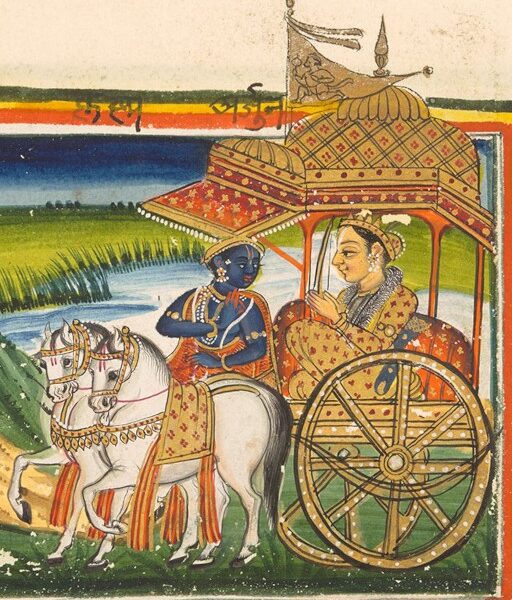
Lesson 30, page 63.
God consciousness, which is transcendental, is never revived by dint of work, knowledge or mystic powers. It can only be revived by devotional service.
So it’s an important point because otherwise the tendency is we’re going to think that by performance of some activity, the activity itself is what’s going to revive the work. I mean revive the, you know, God consciousness. But because it’s transcendental, there’s nothing from this plane that can actually contact it. Right? Because if the Lord is not interacting with the external potency, right, that means He can’t be contacted by it. But He’s always interacting with His internal potency. So that means that if we are contacting the internal potency, then we can contact Kṛṣṇa. Yes.
Yes, by consciousness. But that means also, as we see here, it’s because this is the part on the Lord descends Himself or the devotee comes. That means it has to be in the paramparā. Right? So the authorized line, then the chip potency is flowing through that. So that’s the internal potency. So then by interacting, by performance of activity on that platform, then you can contact Kṛṣṇa. But we shouldn’t make the mistake, it’s because I did the work, that’s why I’m Kṛṣṇa conscious. Or I had the knowledge, that’s why I’m Kṛṣṇa conscious. Right here? Or my mystic power, that’s why I’m Kṛṣṇa conscious. No, it has nothing to do with that. Right? That’s only a medium. You know, it’s not because I used this spoon, that’s why we cook so good. You know? No, the spoon has nothing to do with it. It’s the ability of the person. Right? Does that make sense? So the medium is important.
Right? We can’t sideline the importance of the medium that’s used. But we have to recognize that it’s secondary.
That’s what’s important. Because if it’s primary, then it’s not that if you’re first, you’re first, and if you’re second, you’re last. That’s great if you’re racing a car. But if you’re not in a race, the point is, first is first, and second is second. Right? So first is primary, and second means it’s supportive of primary. Right? Does that make sense? So what we’re trying to do is identify what’s primary.
Right? So primary is God consciousness.
Right? That’s always the primary element. Everything else is secondary.
Right? So we have a mind. So the mind itself and engaging the mind, that’s secondary. That is engaged in Kṛṣṇa consciousness, that’s the primary. We have intelligence. Right? We have knowledge. That’s secondary. If that’s engaged in the Lord’s service, then that’s what you want to do. Because the service. Right? The body, the senses are there. We have so many skills we can do with them. That’s very nice. But it’s still all secondary to engaging in Kṛṣṇa service.
Does this make sense? It’s very simple. Just being able to make it. Yes. Every devotional activities would be primary? Yes, direct devotional service are primary. But it’s not because you’re moving your mouth and all that, that that’s why it’s happening. It’s because it’s coming in the line, in the paramparā, so it has that potency, and you’re doing it to please Kṛṣṇa. Right? Then it’s devotional service. Because the man on the street, he sees the devotees, ah, Hare Kṛṣṇa, like this. So he’s chanting, and he’s in contact with the direct. But because he doesn’t understand, you know, and it’s coming in paramparā, but he’s not God -conscious. So therefore, it’s not counted as devotional service. It’s counted as ajñāta-sukṛti. Right? So it’s bhakti-sukṛti. It’s devotional piety. So it’s never lost. It’s also eternal. But it will take a volume of that to develop, to turn into devotion. But when you’re God-conscious, then you immediately get the devotional benefit. Does that make sense? So still, even with that, in that, being God-conscious, you know, is the primary element. Right? Then, in being God-conscious, you perform the activity, or use the knowledge, or like that, to please Kṛṣṇa. Right? Then that other thing, you know, becomes an ideal medium. Right? Then it becomes perfect. But otherwise, it’s not, not so perfect.
Inattentive means you’re doing it to please Kṛṣṇa, but you won’t get much out of it. In other words, you’re doing the activity in paramparā. It’s authorized.
But, because, means you’re God-conscious, but at the moment you may not be manifesting that. So that just means you’ll get less benefit. Right? But if you’re God-conscious, you get more benefit. Does that make sense? You know, so it’s like…
Because the point is, it’s relationship that’s important. You know, it’s just like you sit down, and you have a very nice meal, but you’re distracted. Then the whole meal will go by, and it’s kind of like, you know, did I eat? What did it taste like? You don’t know. You know? So, then, so, you know, of course, the body’s nourished and all that, but as far as the experience of eating goes, you didn’t get much. Right? So, the point is, it’s in Kṛṣṇa consciousness, but as far as the relationship with Kṛṣṇa and developing that, that’s not much happened.
Right? Does that make sense? You know, so at least the good part is you’re chanting the Lord’s name. The bad part is that you’re chanting the Lord’s name, and with the Lord, but not paying any attention to the Lord. You know? So at least, you know, that endeavor’s been made. It’s a first step. You know?
Does that make sense? So one wouldn’t say, well, just be honest, you’re not thinking of the Lord, so do something else. No, that’s not the point. You know what I’m saying? It’s just like, better the kid’s in the house, not interacting with you, you know? Well, you know, better he’s in the house and interacting, but both are better than being somewhere else and interacting.
Does that make sense?
Yes?
Consciousness and desire. Yeah, no, they’re connected, because that’s how you tell that something’s conscious.
Right? Because there’s desire. You know? So I was just thinking, that means, I don’t know, somehow or another, this last week, I don’t know, something that starts, you know, very strange, wake up in the morning, there’s all these funny things in your head. This morning I woke up with the thing that, you have a thing called a weight. I mean, not by here, but weight meaning, it’s a dead person who gets up and tries to kill you. Right? You know, it’s a very popular theme, and, you know, how you say it in, you know, novels and movies and stuff like that. But the problem is, is that, why would it want to kill you? Why would it make the endeavor? Why would it be discerning between ways of killing you? Unless there’s desire. So if there’s desire, that means there must be consciousness. So there must be a soul. Right? So the dead body can’t do that. Right? So, therefore, you can be peaceful in sleep, that, you know, down at the morgue, the doors aren’t going to open and all the bodies are going to get out and come after you. Right? You know, like that. You know, because there is no soul, so they can’t do that. Does that make sense?
Yes. No, but what if it is doing that? So that means that there’s another living entity. It means a soul has to be there for that to happen. In regards to attentive, while chanting, apart from practice and time, are there any other specific techniques that women use in asana to maintain their attentiveness? Well, I mean, you have also, it’s not that means because you’re working there, but knowledge is also very important. Association is important. I mean, the most important is association. So if you’re with others who are paying attention, then you’ll tend to notice that. Because you can, you know, by the particular form that’s there, by the particular mood that’s there, you can get an idea of what is the particular, yeah, what’s the particular flavor that’s happening, what’s their consciousness and all that. So you can tell others are serious, they’re focusing on the name and all that. So then you would then remember and be inspired, right? That’s the one thing. Or hearing them, you become purified from their chanting, and then you pay more attention to yours. The other is knowledge, that we understand how this is Krishna and the benefits of associating with Krishna, what’s been gained by others in that association. Does that make sense? So between that then, but of the two means the associations are most important. So if that’s available, always take advantage of it. And if not, then you have the knowledge, but the knowledge is still gained by association, right? So it still represents the Lord and the devotees.
Does that make sense? So association is always the thing, so you associate either directly or with the instruction.
Does that make sense? Okay.
Okay, 8.22. The Supreme Personality of Godhead, who is greater than all, is attainable by unalloyed devotion, although He is present in His abode, He is all-pervading and everything is situated within Him. So here is bringing in the Bhagavan and all the aspects, Bhagavan, Brahman, Paramahansa and Bhagavan. He is situated in His abode, but at the same time He is all-pervading and everything is situated in Him.
Does that make sense? So it covers all those different… Situated in Him means situated in who? You know, in Paramatma, right? All-pervading, that’s the Brahman, right? So His qualities are pervading everything, right? And whatever is pervading and is functioning because of that, it’s still situated in Him.
Like that.
Okay. To enter Krsna’s supreme abode or the innumerable Vaikuntha planets is possible only by bhakti, devotional service. As clearly indicated here by the word bhaktya, no other process can help one attain that supreme abode. The Vedas, Gopala Taupali Upanisad, 1.21, also describe the supreme abode and the Supreme Personality of Godhead, eko vasi sarvajah krsna. In that abode there is only one Supreme Personality of Godhead, whose name is Krsna. He is the supreme, merciful Deity. And although situated there as one, He has expanded Himself into millions and millions of plenary expansions.
So even though He’s available everywhere, He’ll only be obtained by unalloyed devotion.
So unalloyed devotion means then you can associate in His abode. But if devotion is there, then we’re associated, because He’s everywhere anyway. So then we can associate. So as much as we are able to appreciate the Bhagavan aspect, the personal aspect, to that degree, then we are able to relish that association. And if not, then Krsna is everywhere, so we are associated with Him. He is the name we are associating, just we won’t get as much benefit.
As somebody says, as in anything. You’re distracted in anything, you won’t get the same benefit as if you’re focused.
Because what you’re focusing on anyway is Krsna. It’s just whether you recognize that or not. But in the holy name and devotional activities, then you’re dealing directly with Krsna. It’s non-different, but the principle is the same.
Yes.
In this connection, the benefit would be rasa.
It means rasa is there, we can appreciate, but you’re establishing your relationship, you’re appreciating the relationship.
Does that make sense? And in that appreciation, then that rasa is… The more you appreciate the relationship, the more that rasa is able to be tasted, the more that’s tasted, the more you appreciate the relationship. It means Radharani is tasting the full relationship, so therefore the situation is also full. So as you say, Krsna is her worshipable Lord unconditionally. It doesn’t matter what He does or anything like that. So the situation and the taste of that is to its fullest extent. Does that make sense? So each nourishes each other. Sambandha nourishes… Prayojana prayojana nourishes sambandha. Because anything from prayojana always comes back to sambandha. It makes the field bigger.
It means, in other words, if affection has been expressed, it means the basis of the relationship or the field is now bigger that much by that affection. It’s been enriched that much. Then based on that, there’s more interest to do some activity that gets a result. Having performed that activity, there’s more affection shown, so therefore it enriches the field more. So they both nourish each other. Because the one’s the masculine person, the one’s the feminine. So they’re always going on. It’s not just one. Because we’ll have the tendencies, we just do this and then it’s done. Because we have this idea that there’s only one thing. Because we don’t function in relationship.
Does that make sense? In other words, the karmis and the jnanis, the weakness of both of them in this perspective is that they’re both the object of what they’re dealing with is not connected to the Lord. Right? So they put themselves as the subject. And then for the materialist, then there’s some material form. And then that material form is his object of endeavor. So the… how you say? Yeah, it’s the object of endeavor. So then his relationship is with the thing. It’s not with God and it’s not actually with anybody else. It’s just that others are also interested in that same thing. Then they’re part of their friends. They’re part of the scene. Like that. And depending upon the type of friendship, then we’ll call it parental, conjugal, friendship, servitorship, like this. But it’s still only in relationship to your relationship with things.
Does that make sense? So they’re dealing with things and not seeing God. Because that’s what’s the actual… what’s the taste that they’re getting. The impersonalists, it’s also the same. They see Brahman, but they don’t see the person God has. So again, it’s them and Brahman.
And their activities are between themselves and Brahman.
Right? So that’s why the karma and the jnan itself is not devotional service. But it’s a good medium. So now if you see the activity, the object and the activities as ways to serve Krsna, then we stop being the subject, that I’m doing the activity towards that object. Now I become an instrument, that I am taking part in the activity. So the activity is not between, meaning by location between me and the object, but it’s myself, the object, and the activity are one aspect. And then it’s between the Lord’s internal potency and Him. Does that make sense? So then we get situated properly. Because the problem is we think we’re the subject, we’re the Lord, when we’re not, we’re the instrumental. Does that make sense? Yes. So the karmis and the jnanis have the same problem. So one is dealing with knowledge and renunciation, the other is dealing with endeavor and attachment.
But they both make the same mistake, is that the Lord is left out of it, and that they are in the position of being the controller and enjoyer.
You understand? So that’s why on one level we’ll make a distinction, but on another level we won’t. And that’s why also is connecting with the Krishna, it doesn’t matter for us, because we’ll say, no, if it’s knowledge, it’s higher. No. Knowledge is to be used, because when you perform an activity, you have to have knowledge, and you have to have the activity. So karma and jnana are both required, you know, to perform devotional service. Because the potency means knowledge and activities. So all it is is that knowledge and activities that’s separated from the Lord, right? For the materialist.
And so, therefore, then someone focuses more on karma and someone focuses more on jnana. So if you don’t include the Lord, then you have an identity, you know, as the subject.
Does that make sense? Otherwise, how do you act, right? Because in the field you have to identify yourself in a particular way. So if you’re, therefore, the doer, then you get that title. Therefore, you’re a karmi or you’re a jnana. And then within karmi, then what kind of karmi? Within jnana, what kind of jnana?
Does that make sense? So like that, just like the person’s a sportsman, but depending on what he deals with, we’ll call him that kind of sportsman. He’s a race car driver, he’s a skier, or he’s a bungee diver, or something else. He’s a video game player.
Does that make sense? And he does what all those other guys does and doesn’t even have to leave the comfort of his living room.
Right? But for the devotee, the identification is not what’s important because he’s assistant, so he’s not the doer. So an assistant’s an assistant.
So you don’t identify that so much. Just like when we cook lunch and somebody asks, oh, this is very nice, who cooked? They’re not going to say, wow, this is great, what spoon did you use?
Which burner did you use? That’s not the question. It’s who cooked.
Does that make sense? So that’s why for the devotees, karma and jnana aren’t identified separately. It’s just bhakti yoga. Or in the stage of sadhana, it’s buddhi yoga. So all these three things mentioned, the karma, the jnana and the yoga, then are just part of the process. We know them individually, we’ve studied them individually, but they’re used together. So it doesn’t matter what the proportion is. But if there’s a mix, then we’ll call someone a karma yogi or a jnana yogi or jnana yogi. But if it’s pure, we don’t identify the mix. We don’t identify what medium is being used.
Does that make sense? Then we call them devotees. Then we just call them devotees.
So that’s how we look at it. So for the devotees, karma and jnana, you need them both to function.
Because the karmis and jnanis are trying to function separate from the Lord, then they focus on one or the other. Of course they use both, but the focus is completely on one, so therefore the identity is there. That’s why we call them by that name. So then we get the tendencies, oh, there’s karma and that’s bad, or there’s jnana and that’s bad. No, knowledge and activities are fine if they’re connected to the Lord. But when they’re not connected to the Lord, that’s when we identify and say, this is karma and this is jnana. But if it’s connected with the Lord, then we say this is sambandivyan and devotional activities.
Does that make sense? So as an instrument in the process, there’s knowledge and there’s activity. So being very expert in a field, having vast knowledge, that’s fine as long as it’s connected to the devotional process. So then, us being a servant, being an instrument, having knowledge, having skills, and therefore assisting in the interaction between the Lord and His internal potency, then it’s perfection.
But if we don’t engage it in the Lord’s service, then all the knowledge in the world and all the good activities in the world are useless.
They’ll get you a material result, but they’re useless because you’ll stay here. And for us, the soul, useful is eternal. So that means getting out of the material platform to the transcendental platform, to our relationship with the Lord.
Does this make sense?
Does that make sense? So why sometimes it’s said, this is all useless, and other times it says this is great? It’s simply if it’s connected to Krsna, it’s great, and if it’s not connected, it’s useless.
Does that make sense?
We are assisting the spiritual potency of the Lord. Yes. No, because it doesn’t mean that one won’t be in direct contact. Just like we’re chanting the name, we’re directly in contact with the name. We’re directly in contact with Krsna. But we’re chanting as assistants of our spiritual master, which means then the parampara. So we shouldn’t be worried that if I take up this position of servant, and therefore I’m not the prominent person, not the direct, direct person, that I won’t have direct interaction with the Lord. But actually, interaction can be direct, but the relationship’s not direct. Just like the grandchild and the grandfather, then they have plenty of direct interaction, but the relationship’s not direct. The grandson means he’s the son of the son.
So that’s the point. Many times we take, oh, no, but then you won’t have relationship. I mean, you won’t be able to personally interact with Krsna, because I’m so far in the back, thousand times they’re moving, I’m way back there.
Does that make sense? So then they’re worried that I won’t have… No, that’s not it. The relationship is not direct.
And so the point is, is because interacting with people is what has flavor. Interacting with things doesn’t have the taste that interacting with people does. So if in a relationship so many more people are involved, so how much taste is there?
Does that make sense? Like that. So that’s the point.
Lesson 31.
Okay, so this is the now conclusion of this whole point of the Lord descending and giving His instructions. Lesson 31. No one is barred from approaching Godhead. Simply by willing to approach Him, one becomes purified at once.
So, I mean, at once. It’s not that, oh, no, but it’ll take a long time. We only say it’ll take a long time because we’re conditioned. The point is, it’s not the natural position.
So therefore, just desiring that immediately one is qualified for it. Because that’s actually what you’re supposed to do. Does that make sense? You know, the son is there and somehow or another he’s forgotten his relationship with his father. So he’s out wandering in the streets and doing whatever he’s doing, right? Does that make sense? So there’s no connection. But now if he thinks he remembers that relationship, he’s immediately qualified to interact because that’s his natural position.
Does that make sense? Yes. So here he becomes purified at once because otherwise we’ll take it that, oh, no, I have to go through so many things. That’s because karma and jnana are so difficult because it is the quality of the knowledge you have or the quality of your work that gets you the result you want. But here it’s simply the desire, right? Because desire means, desire is what is the basis of action, right? If there’s no desire, then there’s no goal, there’s no activity, right?
Does that make sense?
9.30. Even if one commits the most abominable action, if he’s engaged in devotional service, he’s considered saintly because he’s properly situated in his determination. Very interesting what verses Prabhupada picks to establish this point that anybody can be connected, right? Like that.
Sometimes, however, it may be seen that a person in Krsna consciousness commits some act which may not be taken, which may be taken as most abominable, socially or politically.
So that deals with political correctness.
But such a temporary fall-down does not disqualify him.
In the Srimad-Bhagavatam it is stated that if a person falls down but is wholeheartedly engaged in the transcendental service of the Supreme Lord, the Lord being situated within his heart purifies him and excuses him from that abomination. Very important to note these definitions here. Because we’ll tend to put the emphasis on why shouldn’t one deride a devotee for an accidental fall-down. We don’t put a why shouldn’t one deride a devotee or why shouldn’t one deride a devotee or why shouldn’t one deride a devotee. We’ll put why shouldn’t one deride a devotee for an accidental fall-down.
Like that. And generally speaking, as far as I’ve seen up to now, anyone I’ve bumped into, their definition of accidental is there was absolutely no plan whatsoever. It was just like the animal sees something, he just eats it. You know, like that. That if there’s any planning at all, right? Like you think, wow, you know, something, Maya catches you and so I can do this. Just that you’ve thought that, now it’s not accidental anymore because it’s a plan. So now it turns into first degree, right? So amongst devotees, there is no second degree, third degree, or manslaughter in the way of fall-down. It’s all first degree.
But it doesn’t work like that. The difference, just like you have the knowledge and activity, if you’re Krishna conscious, it’s devotional. You’re not. It’s useless. It’s just karma and yama. In the same way, if he’s wholeheartedly engaged, that’s accidental. But if he’s not wholeheartedly engaged, he’s actually committed to this, that this is superior to devotional service.
Then that’s planned. Because now, devotional service has become the secondary and the other things become the primary.
Yes? How can I break up the Samoginis? If a person falls down… Because we’re taking it that, why would this come at this point? What it means, look at the last point. This will be based on the last point. The Adhikaranas flow from one into the next. So now, he’s been said, God consciousness, which is transcendental, is never revived by dint of work, knowledge, or mystic power. It can be revived only by devotional service. That means devotional service has absolutely nothing to do with the material platform. So that means that it doesn’t matter what you’re doing, the transcendental platform is different from that. So that means it’s not ideal. Your ideal is, the consciousness is good and the activities are pious. Because the pious activities are engaged in the Lord’s service. So being situated piously and being in Krishna consciousness, we’ll take that as the natural place. And that is the natural place. The spiritual world, basically speaking, it’ll all be piety. But still, you can’t apply this fully by using the term pious from the material standpoint. Otherwise, then you run into a problem with Krishna and the gopis. Because we’ll say, that’s impious. But piety is what’s connected to Krishna, in actuality. What’s not connected to Krishna is impious. Though with impiety, there’s better impiety and less better impiety. This fall down is not connected to Krishna, usually. The fall down is not, but what is the fall down? What is happening in the fall down? What’s being engaged? Could we say… Yeah, but work, knowledge or mystic power. Some.
There’s something else other than that.
Census means work. You know what I’m saying? Census means work. You know, figuring out how to get it to work, that’s knowledge. You know, if you have any other influence, that’s your mystic power.
You know what I’m saying?
So…
So, we are thinking that because of karma, we think, I do the activity, that’s why I got the results. So therefore, this activity, you know, can’t have any connection to God consciousness. Right? Which is fine. But the inverse is that, then we think, because I’ve done this activity, therefore, that’s why I deserve Krishna consciousness. You understand? It has the weakness both ways. That’s why this one is, you know, would be before. So it’s very clear as that, otherwise we can’t understand this. Because we’ll take it that pious activity is actually the cause of devotional service.
Does that make sense? Okay. And for the jnani, then it’s a lack of renunciation. So, because he’s fallen down, so he’s not engaging the senses. I mean, he’s engaging the senses. So therefore, that’s why it’s not, because renunciation is what’s, is the actual cause of devotional service. And now, if the guy’s fallen down philosophically, the jnani has no problem with it, other than it’s just a different philosophy than his. And that’s the real reason that it’s a fall down, because it’s different from what he’s thinking. But that he’s philosophically fallen, that’s not the problem. You understand? So our own conditioning comes into this, because if this can be appreciated, because ultimately you have to look at that all souls are Krishna’s servants, and they’ve only been covered. So that means just being in the material world, technically speaking, it’s just fallen devotees. Right? But the difference is there’s a demarcation made between those who have understood they’re devotees and those who don’t. Right? And then within those who have, then we make it into knistamadhyamanu. You know, just how much they’ve realized.
Does that make sense? So, the point is, is, one is wholeheartedly connected to Krishna, but at the same time one is, you know, distracted.
Does that make sense?
Yes? No? You have to think about it.
Okay, let us say that the child is in the kitchen, and the mom’s not around. Okay?
And there’s the cookie jar. Right? And he is stealing a cookie. Okay? Now, is there the possibility that he could know this is not right? Right? And he’s not actually feeling too good about it not being right. Right? But, he’s hungry.
So the cookie will be stolen and eaten. Right? Or, could we also have another scenario where the kid is going to steal the cookie. He couldn’t care less that it’s, you know, it doesn’t bother him at all that it, he doesn’t think, I’m stealing a cookie. It’s just, I’m hungry and there’s cookies. You understand? That’s the difference.
So we’re taking, no, you couldn’t be devoted, you can’t, the two can’t happen at once. This is the Hollywood concept of devotional service. You’re either a celebrity or you’re a nobody.
You know what I’m saying? Pure devotee, otherwise there’s schmuck. It doesn’t work like that. The thing is, is when one is determined that devotional service is not as important, that’s when we would say it’s a fall down and we’re not saying accidental. Because the devotee is determined, yes, Krishna consciousness is the most important. So being fallen in that condition, that’s accidental because that’s not actually what’s planned.
Does that make sense? See, our idea of accidental means, you know, we picked up the, we go to the oven, we open the door, you know, we take out the tray, but, you know, we didn’t realize that if you use wet cloths, the heat goes through it instead of using a dry cloth, so between the oven and the counter, the heat gets us and we drop it. So let’s say that’s an accident because there was absolutely no plan.
You know what I’m saying? But that’s very nice, but the problem is, then how does one explain mixed devotional service? How can there be jnana yoga, jnana-misrabhakti or karma-misrabhakti?
So, in other words, if we don’t accept this point here, then what we’re saying is, you know, it’s either you’re, you know, a pure, unalloyed devotee or you’re nothing. There is no gradation in between. Because to accept the gradation, we have to be able to accept that the same principle is there, whether it’s applied to a positive example or a negative example.
Does that make sense? And if devotee is not dynamic in Krishna consciousness, will we classify him as unalloyed?
Not dynamic, no.
Depends upon on one level, of course. Means anything below, anything that’s not pure is actually fallen, conditioned. Right? And even pure, until it’s pure unalloyed, then, you know, that’s the standard. You know, so pure unalloyed is the standard. Pure is good. It’s well-situated. And then anything below that isn’t. But the point is, if we focus on that, then we won’t be inspired. And, because we’re not inspired, we’ll take that and find fault in everybody else, so no one’s a devotee. So we’ll take up the pessimistic, so no one can do it, so therefore it can’t be done. So therefore I just slide back into whatever was my conditioning before, and, you know, what can you do, because we can’t do that. The same thing that inspires also has to be applied on the other side. But it has to be done carefully that it’s not, oh, then it’s fine to do that. Because as soon as it’s fine to do that, makes it prominent. It’s not fine to do that. But one is doing that.
You know what I’m saying? Does that make sense? So, yeah.
Does that make sense? Because the point is, is that misera aspect is just there, it’s just whether you’re dealing with something pious or whether you’re dealing with something impious. Basically.
Does that make sense? It’s just the situation, but the consciousness is the same. Because consciousness is the soul. That’s different from the body, mind, and intelligence.
We forget that. We take it, no, I’m the body, therefore, whatever the body does, that’s the devotional service. Because that’s me. So, therefore, if something’s done wrong with that, then that also then is sinful. And it can’t be devotional service.
It’s our attachment to morality. Because we have to remember that unless someone was from a Hindu background, you know, and basically in line with the Vaishnava philosophy, any religion that’s ever been thought of or practiced before, then that is based on morality is spiritual. Morality is religion. But it’s not, it’s sub-religion.
Right? Does that make sense? So, it’s not, so we take pranamoy as the actual standard of human existence.
Right? It’s the method, you know, it’s the situation, and many times it’s even the goal. We forget. Because we have the conditioning to think it’s already spiritual, so therefore if it’s spiritual, then it’s also naturally the goal. We just have to add Krishna to our pranamoy.
Right? And so then when this doesn’t go right, then this fall down, then what’s the next thing? Because it’s gone against morality, so now what must be established?
Justice. Right? Because that’s the other thing in there. Because you’re not going to get any economics out of it. It means if you can, by you taking that and leading a charge in this, if that’ll give you some political clout, then, you know, you’re getting all three at once. Hey, that’s like a windfall.
That’s great.
So, the point is then justice is the thing, because you’ve done something wrong on the material platform, so there must be retribution. Because the material platform being used, you know, according to morality, is spirituality. So therefore, it’s very important, you’ve gone against this, therefore, that’s a great sin.
Does that make sense? So, this is the weakness that’s there, the misunderstanding. So we see as it’s going through. So as long as it’s applied on the pious situation, we catch it, you know, fairly easy. Some little work is there to discriminate between the two, but when it’s applied to the impious, that’s where it falls apart again. Because the conditioning is such, one, the conditioning is we don’t discriminate.
But we generally can say, okay, good, bad. But then when it gets to, discrimination is brought to the point of being able to tell what’s actually good and what’s actually bad, then again we have a problem. So good is only if it’s connected to the Lord, bad is if it’s not. So the devotee who’s very pious and does everything right, never does anything, but, you know, is always critical of devotees and everything because of their being nicely situated morally, like that, they’re not actually very dynamically situated. You know, and that really wild, crazy guy who doesn’t follow all the etiquettes and always trying to do some service and all that, though it’s a disturbance on one level, but he’s actually more dynamically situated in Krishna consciousness.
Right? Because, you know, you don’t have the ego of, you know, that I’m better because of this. You know what I’m saying? Generally people who are crazy, you know, in their activities, don’t have an ego that they’re better. Otherwise how can they share their insanity? You know what I’m saying? They’re very willing to share it. You know what I’m saying? The one who gets everybody else, you know, convinces them to be involved in their insanity, that guy has false ego. But the guy who is himself is just very spontaneous and natural and insane. There’s no ego.
Does that make sense? So it’s very, it means the idea is we have to be able to see these points, like that. It says sometimes, however. So it can’t be taken as a standard. And it shouldn’t be happening. But sometimes it does. It may be seen. So he’s using sometimes, however means despite all the proper things. It may be seen.
Commits some act which may be taken as most abominable. He also says maybe because generally speaking if devotees say this activity is wrong, the basis of it is not based on the Shastra.
And the fun part, the really fun part is the guys that are the ones that have real serious doubts about the Vedic, you know, Vedic and Varanasi, are we really Vedic? No, we’re, you know, Prabhupada. We don’t worry about all these things. But when it comes to something of morality, you know, especially sexual, that they’ll always quote Dharma Shastra. You know, they’re really hardcore. No, no, no, you know, this and that. You can’t do that. But they have no idea what’s in the Shastra.
It’s really interesting if you know it. They’ll always do it. Why? Because they’re coming from the platform of morality. As we described before, some of the platform of morality which is Niji, they’re always going to get their work done, which means in this case justice.
They’re always going to quote Dharma to get their work done. Not that they are going to follow it. It’s only a tool to get their work done. So it’s not like the religious Dharmic person who understands the Shastra and their position, acts according to it. And he says, according to Dharma, it’s this. Because it’s very different. You know, if the one says it, it’s just, you can see, it’s just something that they use. The other person has got all the weight of their whole, like their identity and existence. I’ve seen the two, you know, like that. There was some Ramanuja, you know, practicing, you know, Brahman, like this. And there was a problem with this. Sanyasi fell down. And it’s just, he couldn’t relate to it at all. It’s just, it can’t happen. In Dharma, it doesn’t happen. You know, why hasn’t he gone to Prayag and drowned himself? You’re dealing with a whole different thing because it’s coming from the platform of Dharma. They’re just so, how could it be otherwise? It’s not a matter of, you know, who’s this guy, this, that, you know, he’s a nonsense. No, it’s just, why wouldn’t this happen? You know, it’s an identity. While the other guy says, no, no, it’s this and that, you know, take him out and do this and that. You know, all this. You can see it’s just management. It’s just political. So they’re only quoting the Shastra to get their political work done.
Does this make sense? It’s very different, the platforms like that. So when you talk about this anamoy, pranamoy, manamoy, there are levels of existence, of consciousness. So consciousness is, you know, being the actual symptom of the soul. It’s the most intense of the situations.
That’s why when Prabhupada is situated on anandamaya, it’s such a different platform.
Does that make sense? And in anything, as long as anandamoy comes through, we’re very pleased with it. But if dharma, artha, kama, and moksha comes through, then depending upon which artha tax is for, we’ll be pleased or not. If we’re into moksha, then dharma, artha, kama, we’re not going to be very pleased with. Dharma is okay as long as it’s the renunciation side. But if we’re into dharma, then the other ones aren’t going to be. If we’re into artha, then if you’re into kama, then nothing else matters. You know what I’m saying? Is that what you’re saying? Yes. The thing is that in this discussion that there’s a double pressure on the sadhaka because of his own misconceptions and because of the society. And then it’s very difficult to get out from this situation when somebody’s fallen but wants to, you know, practice devotional service sincerely. And then there’s no support because himself, he doesn’t know, and then the society doesn’t give any support. It actually, you know, it really presses the person down. No, it’s difficult, but because devotional service is independent, it’s not depending on any situation, even in that situation, one can still be engaged in devotional service. It may not be ideally that one’s in one’s natural kind of service. Does that make sense? Like Prabhupada, if a devotee was a manager and then he got into a fallen condition, then he would rearrange that he’s still managing, but there would be some element of association or something else that would give some further strength.
He wouldn’t remove him from his position.
Does that make sense? Because otherwise without body, mind, and words being engaged, how do you progress? Yeah, this is my question. Yeah, so I’m just saying Prabhupada would do like that, and when you see devotees come back, things were dynamic. So then there’s also faith on everybody else’s side. I’m going to fully commit myself to this endeavor, but if I get distracted, then I’ll still have support, and I’ll still have the opportunity. But what here is that there’s a manager, he does something wrong, you’re removed from management. Then the difficulty is that means anybody who does anything wrong technically will have to be removed. So it will create an insecurity. And then, as long as it’s like that, at least, what can you do? It’s consistent. But if that happens, but in the same situation, one’s removed and one’s not, then it even starts to get weirder. So then not only is there that lack of commitment, but there’ll also be a lack of appreciation of authority.
So those things will come. But devotional service, fortunately, is independent of all this. So on one’s own, one can chant, one can do things, it just means there may be only more opportunity for direct devotional activities, or just engaging those activities just connected in what you can arrange in your own life. So the process can still be followed. On your own. On your own. Yeah.
That’s what’s so nice about it, is that because the point is this association that, you know, if one can constantly have the physical association of devotees, and then that way being taking advantage of their example and precept, then that’s the best. But if not, one has had the association of devotees. Right? So then, one can still take advantage of what one has gained from them in the past. Because what’s done on the devotional platform is eternal, so it still is relevant now. It still has potency now. Just remembering it, it still has the same potency as when you saw it.
So it’s not as ideal, but it still works. That’s what’s so great about the devotional platform. And you don’t have to worry that, but what happens if in the same way is that, okay, but you’ve seen it, but what happens if someone hasn’t seen it, and his lifestyle is such that therefore the devotees wouldn’t include him and all that? That won’t happen. Because if you’re brand new, it doesn’t matter what you’ve done or what you’re doing, they’ll encourage you in Krishna consciousness. It’s only when you’ve been around a while, then that’ll be a problem. They’ll apply morality. Because no one applies morality to the new devotee. Right? Because somehow or another, there’s also this element of karma, which is a religious thing. It’s not a transcendental perspective. It’s that if you’ve done, you can do whatever you want before devotional service, and once you’ve come to Krishna consciousness, anything you do wrong, then that’s it. You’re finished. So eternal damnation is only applied if you’re a devotee, not if you weren’t a devotee.
We can’t lose such a valuable, how you say, theology here. We have to work at it somewhere.
So the problem comes then is that no, but he was a devotee. The point is when you’re not acting in that way, then that’s the material platform. It’s still illusion. So illusion’s illusion. You know what I’m saying? Krishna consciousness isn’t the activity. Krishna consciousness is the consciousness. So we’re taking the activity, again it comes back, but we’re taking the activity is the Krishna consciousness.
So it really doesn’t change the situation.
In fact, it makes it easier, because now they’re a devotee, they accept authority, they accept Shastra, so you’d be able to preach more on that and get more done. Or the same amount of preaching done to a non-devotee would get much less results. Like that, but it’s not seen. So it’s funny. But this one did this, no, but he wasn’t a devotee. If you bloop and disappear and nobody knows where you are, and you do whatever you want, and then you come back, it’s okay. But if you’re in the temple, you just go home, but you’re still considered part of the community, and you do the same thing, then, oh, you were a devotee, so you can’t be, you know, you can’t be forgiven. You understand? So the difficulty comes is that it’s all these perspectives, though well-meant, are still mundane. Because they’re still trying to establish that, you know, work, knowledge, and mystic power are actually directly devotional service, rather than they themselves can’t establish devotional services. Consciousness.
So if the consciousness is still there, then the primary elements is there to work with. But what’s the problem is it’s not being applied to the secondary aspects to serve Krishna.
So that’s how you can have the consciousness.
And, you know, it doesn’t mean the consciousness is in its greatest state, but it’s still there. You know, because basically speaking, any devotee who’s even not engaged much at all, that would, you know, in the old, archaic terms, be considered that they had blooped. We always have to remember this term blooped was used, I think, by Prabhupada. Because he said, you know, as the soul falls in, it’s like when the water blooped. You know? So, because Prabhupada’s very expert at… The traditional Indian standard is you don’t make a sound. You say a word that makes the sound.
Does that make sense? You know, it’s like, going, you know, the dog, or going, bow-wow.
Like that. So the Vedic is, you don’t make sounds like that. You say words that do the same thing. So there are problems. Yes?
Normally you’re going to go back and make a big splash.
Yeah, yeah. It’s no big festival.
In other words, it wasn’t a cannonball, right? Off the high board. You know, it’s just a bloop.
Very nice. Yeah. So, that someone’s in that condition, basically, it would be hard to find someone who is not still thinking of Krishna and the spiritual master and all that. Though they’re just so overwhelmed by maya that they’re engaged in those activities. So that’s the meaning, is that they’re still properly situated. So therefore, if you can now just give them association, it immediately comes back. But now if we say, oh, because you’re in this position, you know, that’s it. You can’t come to the temple. You can’t associate. Then you’re not going to get it.
Does that make sense? It’s difficult. But it has to be very maturely dealt with. Especially if there’s a problem. If the person has a problem in a certain situation, then you arrange they’re not in that situation. You find another situation which will engage their nature. But if the problem’s outside their situation, you know, the guy’s a manager, but he had a problem with a girl. That has nothing to do with management. But if he’s a manager and then he has a problem within that, or he’s a treasurer and he steals money, then he might, okay. He has to keep account of things. So you give him things to keep account that aren’t money. You know, like how many squares of camphor in the closet.
Like that. You know, in other words, he takes care of, let’s say, the bogo go down. You know, like that. There’s no money involved. So he’ll keep that and keep account records and everything very nicely. Does that make sense? So you find where the nature will be done in the situation. So there he’s managing, but then maybe he shouldn’t take care of the brahmacharini ashram. Right? You know, like that. So that you can make adjustments. So he says the idea is to be fully engaged and to be in the situation what will work for you. Does that make sense?
Usually just get lost. No, it’s just get lost. But the point is that’s Nityananda Prabhu’s point. If we’re going to say get lost, if we actually go into it, basically everyone would have to get lost.
That’s the thing. That’s the… I was always, you know, one level appreciative of the difference between the followers of the Old Testament and the followers of the New. Because in the New Testament it’s always everything is so like, you know, clinically squeaky clean.
You know, it’s just like, you know, everything gets sidelined for the squeaky cleanness. But in the Old Testament there isn’t one person who didn’t do something wrong. I mean, none of them, top to bottom. Everybody did something wrong. And still, they’re respected.
You know what I’m saying?
Oh, they’re still doing something wrong, yes. But that’s another thing. But the point is that how do you say? But the principle is that if the prominent activity is there, then the distraction you don’t worry about. You know, you can work to see that it doesn’t happen again. But it doesn’t distract that therefore everything that was good before is thrown out. Like that was a very common thing before. You know, they’d be there and there’d be something happening and you’d be using something of somebody who’s senior. As soon as they bloop, everything about them is just removed. You know, so if they did a kirtan and that and you were listening to the tape, and it says, oh, you’re still listening to him? Yeah, he blooped last week. What? You know, take it out. That’s it. Yeah, yeah.
If they wrote a book, you know, you don’t read that part. But it’s not like, no, that was devotional service. Now they’re not doing that. So now maybe you don’t listen to their kirtan.
But does that make sense? I would say it’s only quite recently that, you know, listening to a Chutananda or Vishnujaan and all, it was all right. Otherwise, from back in the 70s and 80s, like that, no one listens to anything. Like that. And then it’s kind of like, you know, then it’s put together and it’s kind of like that. And it’s okay, because it means, in other words, they did something. And that’s not lost. If it’s eternal, it’s not lost. You know, what they’re doing not as a devotee, that you don’t worry about.
Does that make sense? Yes.
It’s not rarely. It says, it may be seen. Because if we use rarely, then we’re trying to say, well, there’s very less, but if it’s a little bit more common, then it’s not rare. So I remember one Maharaj quoted his godbrothers telling him that after 30 or more years of practice, they still struggle with habits, bad habits, before they join. Because it’s not planned.
You don’t plan to be attached to whatever it is, where you stay, or your food arrangements, or how people deal with it. You don’t mean that, but it just keeps coming up. And every time it comes up, then you get overwhelmed by it. You know what I’m saying? So, but, you know, but the thing is, what’s socially or politically acceptable will just let slide. So that sometimes it may not be useful in devotional service, but because it’s socially, politically alright, we won’t think that it’s a problem.
Right? Does that make sense? The point is that something’s a problem because Krishna says it’s a problem.
Does that make sense?
But still, as long as we’re trying to better ourselves, it’s actually not so much a problem. As long as you’re trying to better yourself, there’s not so much of a problem. But if you’re having a difficulty with it, you know, it becomes more prominent, then it itself is a problem because it’ll be getting in the way. You’re forgetting Krishna more than that, but it doesn’t mean that you’re not remembering Krishna. But that’s why it has to be dealt with. So anything has to be dealt with in that way. So the difficulty is, one’s coming forward in it, you know, like that, but if one goes back to the stage, but the point is that if one could move forward from that position before, you know what I’m saying? Because generally speaking, someone’s not going to fall to a position that they weren’t already fallen in before. You know what I’m saying? You know, the guy who was doing drugs may fall back into doing drugs, but if he never did drugs, there’s a good chance he’s not going to, as a devotee, fall into using drugs. You know what I’m saying? So the point is, if from that platform you progressed before, why can’t you progress now? The difference is you’re more God conscious, so it should be easier, but you need that support. Just as you progressed before because of the support of the devotees, so you progress now because of the support of the devotees.
Is this makes sense?
Yes?
Well, devotees would many times be dealing like this anyway, but Prabhupada wouldn’t deal like that.
If we don’t implement it, it’s simply because we don’t understand it, because we’re still thinking that karma and jnan are the cause of devotional service.
it’s not saying that what they’re doing wrong is now right. No, it’s still wrong, but the situation is still proper.
You know what I’m saying? Because we’re talking about consciousness. The consciousness is still situated in that Krishna is still the ultimate goal.
But the engagement, their karma, their jnan and their yoga, that’s got a problem now, because it’s not favorable for engaging. So one has to be able to discriminate which things still are engaged, because it’s only by devotional service you’ll be purified. There is no other method. In other words, retribution on the platform of dharma or artha, kama, moksha, none of these reform the living entity, because if they did, then this wouldn’t be said only by devotional service. Because they would do it. Then we say, by proper use of work, knowledge, and mystic power, then that will get you to this level of transcendental realization. It’ll get you up to the pure platform, but not pure unalloyed, you know, or something. But it doesn’t say any of that. It says, it’s not going to do… I can never remember. Bhaktis?
Is that how you say it? Bhaktis. No. It means nothing. Bhaktis. Bhaktis. Yes.
What’s the difference between pure and pure unalloyed? Pure and pure unalloyed. Pure unalloyed is prema. Pure means there’s still the element of the absorption in Krishna, you know, by our definition, is not complete yet. Because pure devotional service is good enough to get you to the spiritual world. But only pure unalloyed will get you to vraja. But pure basically will get you anywhere else.
So, some of the… No.
That means the subtle elements, effects of the impurities of being conditioned, those are worked out by… when it comes to the point of samadhi in bhava sadhana.
Because the absorption is complete. So all that’s removed. Now it’s a matter of learning and everything that you’re… every, you know, body, mind and words are now always engaged in the Lord’s service. Because here is that the consciousness has come to the proper level. Right? So now you can dynamically work. But you still… the moods that are there, you know what I’m saying? Because it has to move from bhava to prema. Right? Once it’s prema, that’s pure unalloyed. Right? For us. But others, they come to the platform, in Vaikuntha they come to the platform of prema. But we would call it pure devotional service. Because there’s still the element of salokya, sarupya, samidhya, sarashtra.
So it’s pure, but it’s not pure unalloyed. It means it’s pure, but it’s mixed with other transcendental elements.
Does that make sense? But it’s not… Does that make sense?
The material contamination is so strong that even a yogi fully engaged in the service of the Lord sometimes becomes ensnared. But Krishna consciousness is so strong that such an occasional fall-down is not at once… is at once rectified.
Wow.
That is so funny. See, below fall-down there’s a no. And after no, there is… after fall-down there is an at. So those are the next words. So, N-O-I doesn’t mean anything in English. N-O-S doesn’t mean anything. N-O-A doesn’t mean anything. But N-O-T does.
So, the brain pulls a fall-down not at once like that. It’s weird. It’s weird. How do you say it? It probably hasn’t been noted yet. It’s dyslexia where you move things, but there’s words, there’s sentences. This is that you can take anything from anywhere as long as it fits. That’s really weird.
Krishna consciousness is so strong. See, what happens is we’re thinking that morality is a major thing, and Krishna consciousness is better than that.
Solid better, but not unlimitedly better. Not to the point where morality doesn’t have any real meaning compared to Krishna consciousness.
Do you know what I’m saying? Does that make sense? I have some, how do you say, the radium on my watch and the glow from that and the sunshine, and the sun itself.
Does that make sense? That distance we’re not making. There’s morality which is solid and then beyond that is Krishna consciousness.
So as long as the morality gets in the way, you can’t get to Krishna consciousness except through morality. Morality is the way. It is the light.
Does that make sense? So the problem is no. The element of morality is the secondary element that’s engaged in the Lord’s service. The engagement is the devotional.
Morality itself doesn’t have any value.
It’s just the nicer illusion.
Otherwise, which is better? Is the roadrunner better? Or is the coyote better?
I want to say the roadrunner. You want to say the roadrunner. More effective? No, I’m just, which is better? Which has the real substance and which is completely illusion? They’re both illusions.
So that’s the thing, is in the material world we can say, OK, I like the roadrunner, I like the coyote. Like that. How can you like the coyote? He always ends up… You know, so… He has the acne things. Or you’d have to pick something else or both characters are nice. Like that. I’m not sure which one. Like that. Winnie the Pooh and Eeyore or something like that. So the point is, which one is substance and which one is illusion? They’re both illusions. So the point is, illusion, you know, someone’s in illusion and they’re sinful. Someone’s in illusion and they’re pious. They’re both in illusion. So the only thing that corrects it from illusion is God consciousness.
So it’s attachment to the morality that that’s the cause of devotion. Only if you’re moral you can be Krishna conscious. No. Only if you’re moral then that would be, you would be, how do you say?
It would be appreciated by others, the Krishna consciousness. Right? Because others can take example. You know, you could work with others and they wouldn’t be disturbed by your, you know, activities that wouldn’t be appropriate.
Does that make sense? So, therefore, that’s a better situation on the material planet. Right? And so therefore, that’s why it’s called pious because it’s a better thing to use in Krishna service.
But still, it’s the consciousness that makes Krishna conscious.
So, the point is Krishna consciousness is so strong that you can correct.
Right? It says material contamination is so strong that even a yogi, so they’re trying to point out material nature, even you’re nicely situated, it can distract you. But, having been distracted means maya is so strong, devotional service is so strong that it will rectify. Right? And it says at once. Maya may take a while. Right? Or she may be quite quick. But in any case. But it’s at once.
Does this make sense? So, because of this, that’s why then the seventh offense of the holy name is there. Because you don’t calculate it like that. If you calculate it like that, then that’s abominable.
But if you’re not calculating, then it may happen. But devotional service at once is rectified. So we can say even though maya is so powerful, Krishna consciousness is so much more powerful. You know, and here when we say, and when we say material contamination, we mean all levels, karma, jnana, and yoga. So that means we mean everything. We don’t mean one specific thing. We don’t mean the particular thing that’s socially or politically acceptable to us. We mean the whole thing. So that means that little corner of perspective that we have is a small portion of that so strong.
Right? But it still is Krishna consciousness in its position of so strong that it’s so much stronger than the material energy. Does it make sense? Those with the kind of addiction to justice and morality, they have accepted material illusion to be substance? Yeah, it means they’re accepting it as substance and the person who’s in illusion, that aspect of it is still substance for them. So what you’re having is two material platforms fighting with each other. But the problem is the one the moralist will claim, or the religionist will claim that they’re speaking from the spiritual platform. But from the spiritual platform it’s the soul. Right? Because you begin the spiritual platform from Brahman. So Brahman is in the material energy, and they get covered by illusion. So all you have to do is remove the illusion and everything’s fine. So where’s the need of retribution? There would be no retribution. So therefore it can’t be spiritual.
Does that make sense? That’s why the Sixth Canto is making, it’s a very major point in Sixth Canto, is there is no retribution in Kṛṣṇa consciousness.
And that’s why the example is giving of Ajāmila.
Because Ajāmila is not just, you know, he was a Brahmin boy who got distracted. He was a high-class Brahmin boy who is married, has young, dependent, beautiful wife, and two parents who are dependent upon him, and he walks off with the prostitute.
Like that. Does that make sense? And it’s not that, OK, he’s a young guy, and he’s doing all this nonsense. It happens, OK, and then he gets it together, the Yamadūtas and all that, you know. Like that. He’s 80 years, 88 years old, when his last son is born. And remember, it was a son. That means there’s plenty more fire still there. He could still go on. You know what I’m saying? Like that. this is there. And so, in that state, and then he just called his son’s name. He had no, he wasn’t thinking about the Lord.
Right? And so now this guy is saved. How is that possible? So therefore that example is given, because there’s plenty of room there for the moralist and the religionist to, you know, lift up a sweat. You know what I’m saying? Does that make sense? So, it’s being pointed out, no, it doesn’t matter. Devotional service is beyond that. But, that’s why we see, even though it’s beyond it, Bhaktivinoda Thakura has been constantly saying, situated in your proper religious duties, avoiding sinful activities. Because the sinful activities are too distracting.
Right? Does that make sense? That’s the problem. Sinful activities are so distracting, that’s why they’re avoided.
You know what I’m saying? And then we had the other day, the problem is the ksatriyas. There’s so much impassioned that these activities that for some would be considered sinful, for them in certain situations are not. Because they’re not going to be any more distracted.
You know what I’m saying? Does that make sense? The guy has eight wives, you know, and he bumps into some other lady. It’s not going to be that much of a distraction.
Does that make sense? So, all these things, he’s got all the power, all the influence, whatever he wants to eat or drink, it’s all there. So if he gets overly absorbed in that, it’s just overly absorbed in already a passionate situation. But for the others, there isn’t that volume. So for the brahmins, it’s just totally avoided. The vaisyas, it should be avoided. And the shudras, you know, it’s recommended they avoid it.
Does that make sense? So the thing is, it’s no big deal. So he’s pointing out that it should always be avoided. So we’re not saying it’s okay, because then it’s like, oh, if you’re saying this, then you’re saying we don’t have to be more… No. This is again the same all or nothing.
So what we see is there’s the same anarta that just has so many heads, you know, it’s like a hydra or something. Cut off one and a few more grow. You know, we apply it there and you move it into one. No, but over here, you know, it still stays here. No, no. And over here, no, it’s like that. So that’s the difficulty. You know, just this verse hits it head on. All the other verses hit side things and we can adjust with that. But this verse hits it head on.
And so then the difficulty is that it really then puts to test our understanding of the difference between the material and the spiritual. We’re not saying that it’s all right, you can remain that way. That’s why it says accidental. Accidental means you don’t mean to be there.
You know what I’m saying? Once distracted that you make plans within that position, does that make sense?
It was not my boss.
You know what I’m saying? He chanted Narayan’s name, but he wasn’t blastering the devotees. He wasn’t considering the name to be equal to or non-different from the demigods. He wasn’t, you know, not following the order of the spiritual mass. In fact, he was following the order. Narada Muni came and told him the name is son Narayan. Just for this purpose, right? Because the point is, is he’s old, right? You know, so it’s just any time he may be checking out, right?
Right? So the point is, is where is he going to take shelter? He’s going to take shelter in the youngest. So if that one is Narayan, then he’s going to, he’s going to call his name.
You know what I’m saying? He was attentive? Yeah, he was attentive, like that, you know. He wasn’t, he wasn’t, you know, committing sinful acts on the strength. He wasn’t thinking it was a karmakanda activity. You understand? So it was offenseless. But we’re not saying that it was pure shudhana. We’re just saying it’s offenseless.
You know what I’m saying? And so it’s nama-bhasa.
Right? So he’s not a mayavadi. He didn’t think that he and the name are non-different. So it’s not prakabimba nama-bhasa. It’s just nama-bhasa. So nama-bhasa puts you on the liberated platform. You may realize it or not. But, you know, the guy across the, you know, there’s, you know, fifteen punks across the street, and as you go by and they go, hey, hi, Krishna, like this and that, they don’t know that when they’re tanning, they’re on the liberated platform.
They’re actually liberated. But as soon as they finish that, then they say, hey, let’s go get something to eat. Then they just fall back into their conditioning.
But if at that point they went, hey, hi, Krishna, and then, you know, they started chanting the pure name, they would stay on the liberated platform. But because of conditioning, they just come back. Does that make sense? So that means, when one’s chanting, one’s on the liberated platform. Then you add to that how much devotion is there, so how much you appreciate Bhagavan.
Does that make sense? So he’s on the liberated platform. So that was the whole point with that Gopal Chakla. Haridas Thakur is saying that with nama-bhasa, you’re liberated. He said, no, you know, these great, you know, sannyasis, they go through so much trouble, and they don’t come to the liberated platform. How can you just chant the name inattentively, and you say that they’re on the platform of mukti? You know, so he didn’t appreciate that at all. Does that make sense? But it’s attachment to the platform. No, because mukti is no big deal. So if that’s no big deal, one chanting, if one chanting can remove all the sin of the universe, then what’s the big deal? The point is, is you get them regularly chanting in proper association.
Does that make sense? That’s what you’re trying to do.
Is keep them on the liberated platform so they don’t keep falling off. Move them a little farther in on the shelf.
Maybe put a trampoline.
Yeah, yeah.
Okay.
No one should deride a devotee for some accidental falldown from the ideal path. For, as explained in the next verse, such occasional falldowns will be stopped in due course. This is the point. Right there. That really is in the face. Says, such occasional falldowns, okay, yeah, will be stopped in due course. He didn’t say, you know, such occasional falldowns, if they’re stopped immediately, then okay. In due course. It may take some time before it stops.
Right? Because then that throws out the argument of, accidental means there’s no plan, because then if it’s there it will in due course. Because they take Krishna consciousness as more important than this sinful activity. So because of that, then chanting, associating with devotees, then slowly, slowly it’ll be, one will pull oneself up. Because if you perform devotional service, knowledge and detachment come. Right? So you have the devotional activity, you have the association, right? You have the knowledge, but that knowledge, that renunciation is not great enough. So, as one performs, it becomes great, it’s given up.
Does that make sense? So we’re not taking this as the regular. So we’re talking about when it’s severe. Because if we apply this to anything that’s not pure devotional service, then, you know, who’s going to be inspired? Does that make sense? So, therefore, our perspective that we take, and Prabhupada made note of that, is our preaching and our interpretation, when we present it to others, is always from the point of validate.
In other words, it’s connected devotional service, therefore it’s counted as devotional service. Right? But if anyone becomes proud, then we’ll bring in Viswanath’s perspective, just to put things in perspective, just to create the proper harmony there, that, you know, yes, pure devotional service starts at prema.
You know, like that.
Before that, it’s only sadhana. Right? But, as Balade points out, sadhana is being done for the purpose, ultimate goal of pure devotion, therefore it’s counted like, so that there’s no contradiction. You know, people say, oh, there’s a contradiction between them, the prospect. No, all they’re doing is pointing out one thing and pointing out another.
You know what I’m saying? This book is very important. At the same time, point out, there’s, you know, in the printing, they didn’t do this so good. So, is that contradictory? No, it’s two different points.
So, there’s no contradiction in the Acharyas, never. You know, some who are uninformed may try to say that, but there is no. There’s never. Because the liberated souls have one perspective.
You know, detail is different, but perspective is the same.
Does that make sense? Either way, how is it that the Vrajabhasis, they come to Kuruksetra, right? The Durgabhasis come to Kuruksetra. Do they have a problem? They can interact very easily, no problem. Culture is very nice. In fact, they’re going, different ones are talking to different ones, and this and that. It’s all working very nice.
Does that make sense?
So, the point is there’s one perspective, that Krishna is the center of everything. That’s a detail on what is the general mood of that perspective, of that, you know, Krishna is the center. And then, within that, you have the finer detail of the particular rasa. Does that make sense?
Okay.
This looks serious.
This looks more serious.
All right. It’s interesting that you said about Krishna as the center, and then that, those relationships are going on very nicely. And, like, if one is more Krishna conscious, then automatically these twenty-six qualities of the devotees, they will arise. Yes, yes, that’s right. So then, whenever somebody does something wrong in the body of devotees, then they’re treated with compassion and tolerance. Yes, they would be. Means it’s not that the problem, if it’s known, is not dealt with. But it’s dealt with with the idea to it’s removed so that your service can go on. The idea of just, authority just removes you from service and doesn’t situate you, then that’s not actual, that’s not being responsible.
Does that make sense? The point is, if this is engaging them, then that is, or they weren’t properly engaged, you know, like that, so therefore they were distracted, so they should do this service. You know what I’m saying? You know what I’m saying? The person’s not a manager, and he’s in a position of management because of his own insecurities and lack of faith and authority. So, because of that, he’s disturbing others, and then he gets distracted, and because of that, and then you can say, well, that’s because he’s not a manager. But he can do this service, so he should do that. Then he’ll be able to absorb body, mind, and words. You know, but to do that, you may have to convince him, because now you have to deal with issues on why he was a manager.
You know what I’m saying? So that’s more difficult than he is a manager, but now you just have to see how to situate in management that, you know, this problem won’t bother him. You know, was it just something that just came up so he can stay in the exact same position, or is there some aspect in the position he’s in that needs to be adjusted so that he can do that?
Does that make sense?
Maharaj, sometimes the management makes it more difficult that you should not give a class or something like that. But the point is, what’s the reason? You know what I’m saying? Do they know less philosophy or, you know, like that? You know what I’m saying? So the difficulty comes is that it comes down to is the mundane element that this person will be disturbed if you’re giving the class because they think it’s the class is the devotional service.
And worst off is that you see that they only point out places where, you know, just like anybody, means those points are the same points as the feminist movement and everything else is what they perceive as prestigious. So giving a class is prestigious rather than it’s a service. You know what I’m saying? If one has a brahminical nature or a preaching nature like that, then giving classes is the service that keeps his intellect and that involved. You know what I’m saying? So then to remove from that, that would mean you’re removing from the position of giving service. And the reason for that is because moralists will be disturbed.
But somehow another disturbing moralist has never been high on Gaudiya Vaishnava’s priorities. In fact, the opening of Nectar of Devotion, the opening of, what’s it?
Ananda Vrindavan Chandra. I can’t remember. That some of these books by the Acharyas where they’re going to talk about relationships with the Lord, not the philosophy in the way of just you’re not the body, not the tattva, but they’re going to talk about the applied tattva or the relationships or the rasa like this. The first thing in the introduction of the book, they basically say if you’re a moralist or a religionist, then put the book down now. Because you won’t understand it, so you’ll get no benefit. Not only that, you’ll criticize, so you’ll make offense. If you like your position you’re in now, do not put the book down. If you want to be turned into a little pile of ash like that, go ahead.
So, that’s never been high on our priorities.
Because the point is good qualities are part of devotional service. So the reason that manifesting a bad quality is a problem because it’s not useful in devotional service, not because the public will or will not like it. Right? Consideration of dealing with public is what words and what examples they can relate to. Not the philosophy. Philosophy is as it is. That’s the difference. As it is. Does that make sense? The Mayavadi philosopher takes Gita and gives a commentary, right, according to his conditioning.
Right? And so he’s a Mayavadi, so he thinks he’s doing the best thing. And he’s representing spirituality.
Right? Does that make sense? The person who’s politically correct, they interpret the philosophy to make it the philosophy itself politically correct. Not the wordings. No, the philosophy.
Does that make sense? Because when you say the word the person goes, oh, that’s not politically correct. Do they give you an alternative word? Never.
Because political correctness is the position of perspective. So all they’re doing when they then do their soft preaching is give their interpretation on the holy name. So there’s no real difference between their presentation and, you know, the respected, you know, professor’s, you know, interpretation.
Just what happens to be karma and what happens to be jnan. That’s all.
Does that make sense? It’s still not as it is. As it is means the philosophy’s not changed. You just, according to the audience, what words and what examples. That’s the opening of the Mahabharata. It says right in, I think, you know, like the second paragraph or the third paragraph, that Suta Goswami, he spoke in accordance to what would be appreciated by the sages because he’s sitting in an assembly of sages. Right? And I’m assuring you, it’s all sages. So he’s using those things that they would appreciate.
Does that make sense? So that’s the way, that’s amazing. So the point is is if the devotees have been too blunt, it’s not that there was a problem with the philosophy. It’s they didn’t adjust the wording and the examples for the audience.
Right? Does that make sense? And that doesn’t also mean that you wouldn’t say something that they may take, take, not offense, take issue with. If you are clever enough to present it in such a way that that will bring out the basic thing and then you can clear it. Like Prabhupada would do that. If they know that someone had a real issue about something, he would take great pleasure in speaking the philosophy in a way that completely just, you know, every little thing that every platform could bother them on, he would say it. Because then they’ll really think about it, really focus and say, no, but Prabhupada, this, this, this. And then Prabhupada will give the solution and then bang, it all just goes away. Oh, okay.
Is that what you’re saying?
So that’s the whole point. Yeah, because here the point is no one is barred from approaching Godhead.
That’s the whole point, so that it doesn’t matter. The sinful person is not. The nicely, you know, practicing devotee is not. The new devotee is not. The fallen devotee is not. Nobody is.
But everybody is according to their situation.
Therefore, a person who is situated in Krsna consciousness and is engaged with determination in the process of chanting Hare Krsna, Hare Krsna, Krsna Krsna, Hare Hare, Hare Rama, Hare Rama, Rama Rama, Hare Hare, should be considered to be in the transcendental position, even if by chance or accident he is found to have fallen.
So he’s determined in his chanting that this is what’s important. So then if something else happens, that is happening in indirect areas.
If one is fallen in the process of chanting, then you have a problem.
You’re applying the chanting with the concept of karma or dhyana, like that, that you think, no, I’ll get liberation for chanting or I’ll get material facility for chanting. One, you’ve approached the Lord, so as long as you see He’s the supreme authority. But if you think that the name is not or something else, then there’s a problem. But if they understand that Krsna is the supreme, this is His name, and by chanting you develop love of God, then they’re situated properly. Therefore a person who is situated in Krsna consciousness, that means in the consciousness, and is engaged with determination in the process of chanting, that’s the point. It’s not saying that determination and all the other things, no, no, but a brahmana wouldn’t do this, or a ksatriya wouldn’t do this, or like that, yeah, a brahmana or ksatriya wouldn’t do that, but that’s the material platform. They’re chanting. They’re chanting with determination.
That’s how you tell. The other things are the material platform. Those aren’t the cause of devotional service. They’re to be engaged in devotional service. So then one sees best how to see that they’re, you encourage that actual situation, which is the Krsna consciousness being absorbed in the holy name.
Does this make sense? Right? So here now Prabhupada’s given that definition. This is what it is. Sometimes, however, it may be seen the person in Krsna consciousness commits some act. So we’ll take Krsna consciousness, it means anything, but because we take the activity to be the Krsna consciousness, therefore we’ll say, no, no, but they can’t, no. He’s saying no in the holy name. These others are simply consideration of your conditioning that that is now connected to the Lord.
Is that what he said?
The words sadhur-eva, he is saintly, are very emphatic. So he’s saying they’re emphasized. So depending on the word. They are a warning to the non-devotees that because of an accidental fall down, a devotee should not be derided. He should still be considered saintly even if he’s accidentally fallen down. So that means the non-devotee shouldn’t get upset that if a devotee does something that’s not exactly appropriate. And we shouldn’t support them. Yeah, okay, yeah, the public doesn’t like this and so, you know. Does that make sense? It’s not a matter like that. Because so much of the time is that you say, I was just, someone the other day was just telling me.
Yeah, there was a conference. Did I mention this? They had this conference here like two years ago. It was all, you know, it’s a New Age conference kind of thing. Anybody who’s into anything New Agey from any aspect in the world. You know, and religions and everything that kind of like approach the kind of everybody’s all, you know, it’s like the essence of the me generation. Right, you know, just kind of bringing it all together. Me generation. So all that, you know, and everything is perfect and hunky-dory and everything like that. And so you have all these people who, you know, are there, who are into, you know, their particular religion or New Age aspect and all that. There’s this program going on. Somehow or another, they invited Jayadvaita Maharaj to speak.
So now he comes in there, you know, and as normal, it doesn’t matter the audience, then he says it as it is, you know. And he makes it very obvious, you know. You know, what’s the position of the New Age and this and that and very, very blunt. Now, this is the interesting thing. Is the devotees, they were all who had organized. No, you can’t say that and this and that and like that. That’s not political. All these different things. But the people who are actually the karmis, they thought it was great.
In fact, one of them who was, because these were all major people, they weren’t just, you know, because it’s in India. So locally, if there were a few of them from Calcutta, they may come. But otherwise, the delegates that were there were the guys who were in charge of countries or regions like that.
So one of the guys in charge of one country in the West, he invited him, hey, you come and do programs in my country. It’s great. I like what you say. And he’s not a devotee.
Because it’s just so clear and it’s just so exact.
So many times they say, oh no, you can’t have this. We have to change this in Prabhupada’s books because the academics wouldn’t like this. Or the ladies wouldn’t like this. Or this one wouldn’t like that. But only devotees say that. The karmis don’t say that. They don’t like it. They don’t even read the book. If they read the book, they like it.
Does that make sense? So only we’ll discriminate. So we can see, so we have to be, so here when it says the non -devotee, then it means there’s a warning to the non-devotees. So therefore, neither the non-devotees or us supporting the non-devotees.
Does that make sense?
He should still be considered saintly even if he has accidentally fallen down. And the word mantavya is still more emphatic. If one does not follow this rule and derides a devotee for his accidental fall down, then one is disobeying the order of the Supreme Lord. The only qualification of a devotee is to be unflinchingly and exclusively engaged in devotional service.
Because that’s the thing. The only qualification, unflinchingly, exclusively engaged. That’s it. It’s not what you’re doing. It’s that your consciousness is there. So you can say, yes, so here, unflinchingly and exclusively, therefore he’s fallen, so he’s not unflinchingly and exclusively engaged. Yes, but is the person making that comment? Because I can guarantee that the person who is wouldn’t make the comment.
Does that make sense? What is the position of Prahlada Maharaja’s classmates?
They’re demons. They live a demoniac lifestyle.
Right? You know, they’re known as rakshasas. What does that mean? You eat people for lunch.
Like that. So now is he going, ooh, rakshasa, I’m not going to talk to him. No. He just says, here’s souls who don’t know Krishna, and he just explains Krishna consciousness.
Right? And they accept it.
Right? So I guess being a rakshasa takes on a whole new meaning when you say inviting someone over to lunch.
Like that. They say to you, we’ll have to have you over for lunch. Yeah, you’ll have to have me over for lunch. Two lunch or four lunch. Yeah, yeah. You can say two lunch, you can say four lunch. You can say four lunch. You should come over for lunch.
I mean, they don’t say come over as lunch. You have to remember, rakshasas are sophisticated.
If they’re daityas, they’re sophisticated. If they’re danavas, they’re not. Like that. So they’re daityas. You’re coming over for lunch, not coming over as lunch. That’s the unsophisticated. Like Hidimba. He’s unsophisticated.
Like that. They’re sophisticated. Yes.
No.
Because what is their basis that it’s that it’s Yeah, yeah, of course. But the thing is, non-devotee can also be a non-devotional attitude. And then I find this sentence, you know, if you don’t follow this rule then you’re disobeying the order of the supreme order. So if I don’t show this to somebody then it’s not going to change your attitude. No, that’s why you don’t worry about it. That’s the Well, unless it affects you. It means if it affects you as an individual then you try, but still devotional service goes on even without that. It can always happen. That’s the beauty of it. Because here it’s being defined. One of course got engaged in determination in the process of chanting. So that one can do anywhere. So I’m finishing on exclusively engaged means that’s the focus is on the chanting. So if you find yourself in a situation where you’re like forever going to be let’s say judged for something you did Right.
Yeah, yeah, that’s all. In other words, there’s an aspect of it where there’s an attachment that one needs to address. It’s not that what has been the activity of the service itself has a problem but it may be some mentality towards the service or an aspect of the service. Does that make sense? The guy’s cooking is great and all that, but he has an attitude. He thinks he’s the best cook in the world or he has a whole philosophy about cooking and eating that’s not important and other things like that. So Krishna will pinpoint those points.
Does that make sense? So there’s always that element that says, yeah, it means we as an individual just look at it that way. But the point is, this is being addressed to the others like that because they’re the problem. And then also for ourselves, like if we know someone did something and the situation wasn’t rectified still we should not think about it or meditate because we know that Krishna’s going to rectify it. Yeah, unless we’re in a position to rectify it, then why worry about it? You know, are you going to worry about the national deficit in Sierra Leone?
The point is, does it affect you?
And can you do something about it?
If you can, then great. If you can’t, don’t worry about it. You know what I’m saying? In other words, the Nitya is don’t worry about something you can’t do anything about. You know, and it gives the example of like a flood comes, you can’t do anything about it.
Like that. So why lament? Oh, if the flood hadn’t come, it came, it’s here. Deal with it. You know, like that. So the point is don’t lament. You can do something, do. If it works, great. If it doesn’t work, then don’t worry about it. You just figure out how you can be determined in your devotional service. Is that what you’re saying? Yeah. Yes.
Yes, of course.
But at the same light, they’re also subject to ours.
No, no, no, but I’m saying no, no, no, not that. If one is a temple devotee, you have to live in the light of the conditioning of the authority, but the authority also has to live in the environment that who’s under it is also conditioned.
You know what I’m saying? So the quirks that you know, this bhakta always after the feast or even before the feast steals a bucket of halavah and sticks it in the closet, right? So he has to deal with that. So there’s tons of those and then now and again, which are pretty straightforward, they do a pretty good job on, but occasionally then they do something that wasn’t ideal, but then that’s their position of fall down. So then that’s not criticized in that way. They as a person, no, they as a person then you deal with them as a person.
Does that make sense? So they’ll have that, but in other words, it’s like Vena. Vena, as long as he didn’t stop the Vedic process, then he’ll make sure that no other nonsense makes any nonsense, because he’s the biggest nonsense. Like that, you know, it’s a typical political method.
Just like that. So, but when he opposed the Vedic process, then he was useless. So as long as the temple is going nice, everything’s going well, but they have their, how do you say, idiosyncrasies, then it’s just a matter, if that’s the prominent thing, but if the idiosyncrasies get in a way that nothing can function, then that has to be addressed. But otherwise, if you can address it and help them, nice, otherwise they have others that are on their level or above them that they’ll work on that. You know.
You know, so you can approach them if you can, you can approach an authority that could do something, and then if that doesn’t work, you leave it at that, because then it’s still in Krishna’s hand. Is that it? Who should end it? We’ll continue. Om Hare Krishna Hare Krishna Krishna Krishna Hare Hare Hare Rama Hare Rama Rama Rama Hare Hare The Bhagavad-gita. Some of it I’ll talk to you in the Gita. Jai Nidai. Go with the Bhagavad-gita.