
So, lowest of mankind. So that also then indicates that they generally tend to be a bit sophisticated, educated, sophisticated, like this, but there’s no interest in God. So that’s why it places them as the lowest. It means your foolish also is low, but it’s more culturally low. The other one is then, by mentality, is actually even lower, because the other one is just simple, like that. But if one’s a devotee, then even though one may be very simple or unsophisticated, but it still doesn’t matter, one’s still a sādhu. Yes? When we say one hundred percent engaged in Kṛṣṇa consciousness, means it’s mainly by activities? One is accepted, even though it may be neither, what it means? One hundred percent engaged. Engaged can mean anything, because each individual will be different. It means hearing, chanting, remembering, pādaśā, it means any of the nine processes, like that. So the body, the mind, the words is always engaged in the Lord’s service. So it doesn’t matter which one. Like we were describing Bhaktisiddhānta Sarasvatī Ṭhākura, when he defines kīrtana, I mean chanting like that, then it means doing any service that one is fully absorbed in for Kṛṣṇa. In other words, if the platform is being done on the pure platform, or naiṣkārmīya, that naiṣkārmīya is being done to please Kṛṣṇa, then it doesn’t matter what service you’re doing. It’s all considered chanting.
So that’s why when he says sixty-four rounds, then that means either it’s on the beads, if you can do it, or it means an equivalent in service. It means absorption. Not distracted or something that’s motivated or something that would be done for yourself, but then you’ll give the result so much. He’s meaning that it’s being done to please Kṛṣṇa. So it’s Kṛṣṇa’s work. So you’re associating with Kṛṣṇa’s name, associating through doing work for Kṛṣṇa, like that. So then naturally the mind would say, eight hours of absorption and then I can space out. Well, you could say that, but then that would mean your eight hours aren’t absorbed, because if you could absorb for eight hours, it’s highly likely you could then turn that off. And if you can turn it off, it means there’s a good chance you didn’t actually turn it on.
You know, like that. So they go together. So you have your blanket today.
As far as the atheistic are concerned, it is not necessary for the Supreme Lord to appear as He is to destroy him, as He did with the demons Rāvaṇa and Kaṁsa. The Lord has many agents who are quite competent to vanquish demons. Are there no Mack trucks? But the Lord especially descends to appease His unalloyed devotees, who are always harassed by the mnemoniac. Therefore, the prime purpose of the Kṛṣṇa avatars is to satisfy His unalloyed devotees. So Māyā can take care of the demons very easily. It’s not that He requires to come to kill the demons. No, Māyā has already got that under control. Everybody dies. The mortality rate is 100%. We don’t have anything in the history books that says everyone dies, but this guy, I don’t know, he’s still around. You know, babbling something we can’t understand is English. It’s so old, you know, like that.
So she takes care. So the real reason that Kṛṣṇa comes is to interact with the devotees, to please the devotees. Because there in the material world it’s very difficult. So then Kṛṣṇa comes to interact with them. Does that make sense? That’s the main thing.
So that’s the special purpose, you could say, why He does. Okay, and then, further the thesis. No one can know God, Lesson 22. No one can know God unless he explains himself or he’s explained by his confidential devotees. So the Lord Himself or His devotees descend to reclaim the fallen conditioned souls. But how is that done? It’s by explanation, right? So when we say association, it doesn’t mean we just sit there, you know, like that. It means that there’s interaction and that’s based on Kṛṣṇa consciousness. So discussions about Kṛṣṇa. So either Kṛṣṇa describes or the devotee describes. Like that. Does that make sense? So that then makes the complete thesis.
So 4.1. The Personality of Godhead, Lord Śrī Kṛṣṇa, said, I instructed this imperishable science of yoga to the sun-god, Vivasvān. And Vivasvān instructed it to Manu, the father of mankind. And Manu, in turn, instructed it to Īkṣvāku.
Okay, so how should Bhāgavad-gītā be accepted? Because, so now it’s like, you’re given this knowledge, right? The Lord of the devotee comes, they give this knowledge. And they give that. So how should one take that knowledge? How should one accept that knowledge? Because Bhāgavad-gītā is as good as the Vedas. Being spoken by the Supreme Personality of Godhead, this knowledge is āpuruṣaya, superhuman.
Since the Vedic instructions are accepted as they are, without human interpretation, the Gītā must therefore be accepted without mundane interpretation. The mundane wranglers may speculate on the Gītā in their own ways, but that is not Bhāgavad-gītā as it is. Therefore, Bhāgavad-gītā has to be accepted as it is from the disciplic succession. And it is described herein that the Lord spoke to the sun-god. The sun-god spoke to his son Manu, and Manu spoke to his son Īkṣvāku. Right, so without mundane interpretation, means there can’t be any application of, you know, the purpose of karma and jñāna being applied upon it. Right? The position of pure devotion, that’s what is being presented, that’s what’s being given. Yes?
Krishna instructed Bhāgavad-gītā to kṣatriyas.
So why so? Why so? Why to kṣatriyas? Why not to the, how you say, a little girl who lives down the lane, or…
What’s the problem with instructing it to kṣatriyas? No, I’m not understanding this. If brāhmaṇas instruct this, so they can guide kṣatriyas. Or, in purport, it’s something like confusing. Something like confusing. But what’s confusing?
You know what I’m saying? What’s the confusion? Confusing means, why to kṣatriyas and why not to brāhmaṇas, something like that. And why not to brāhmaṇas? There are so many things that are spoken to the brāhmaṇas.
You know what I’m saying? All your Upanishads generally are there. It doesn’t matter who it’s spoken to, it’s a matter of who hears it, because… One is, this is coming down, but the point is, is here, Manu is going to see that mankind is doing it, the kings are going to make sure. So what is it saying? It’s saying that one’s activities should be connected to the Lord. Does that make sense? So that’s for everybody. It doesn’t matter where it’s spoken. You know what I’m saying? I mean, he could have explained it to the Pāṇḍavas while they were in the forest, or all these different things, but at that time, then that’s when the intensity or fullness of the service is very absorbed and all that. Does that make sense?
Well, if they live by it, then they can run their kingdoms by it. But everybody knows Bhāgavad-gītā. The first time you hear about Bhāgavad-gītā is Nanda Mahārāja is quoting Bhāgavad-gītā.
Right? He’s out with the cowherd men and there’s some difficulty, so he’s quoting Bhāgavad-gītā. I think that one where he was swallowed by the snake or something like that. So that’s before Kṛṣṇa’s gone to Mathura and Dvaraka and before the battle of Kuruksetra. So how is that?
You know, it means He’s coming down in the Paramparā. It doesn’t matter who’s in the line. Does that make sense?
Okay, so mundane wranglers, they’ll take it and apply their own speculation. They’ll look at the logicalness of it and take a word here and there and apply it to their own concept of karma or jñāna like that and try to then judge it by there. Does that make sense? They’re not taking it as it is. It’s āpuruṣeya. It means it’s beyond the human ability. So therefore it’s taken as it is so that one can appreciate it. Not that we take what parts we like and what parts we don’t like or look at it. Well, is he actually objective here or whatever is being applied for two. The supreme science was thus received through the chain of disciplic succession and the saintly kings understood it in that way. But in course of time the succession was broken and therefore the science as it is appears to be lost. Because Prabhupāda is always saying as it is means in its state as the method of pure devotional service. So that way it was lost.
So why is Bhāgavad-gītā not meant for demoniac persons?
It is clearly stated that the Gītā was especially meant for the saintly kings because they were to execute its purpose in ruling over the citizens. Certainly Bhāgavad-gītā was never meant for the demoniac persons who would dissipate its value for no one’s benefit and would devise all types of interpretations according to personal whims. As soon as the original purpose was scattered by the motives of the unscrupulous commentators there arose the need to re-establish the disciplic succession. So we understand these unscrupulous commentators, they’ve always been there. It’s just always. It’s not that, oh now it’s different. No, all these things are there. It’s just the volume. Do you know what I’m saying? Does that make sense?
Bhāgavad-gītā, accepted as it is, is a great boon to humanity. But if it is accepted as a treatise of philosophical speculations, it is simply a waste of time. Right.
Waste of time. But we say sometimes that if a person just keeps the book, looks at it, or something, it’s still on the absolute because this is the words of Kṛṣṇa. Why is it a waste of time? Means if it’s accepted as a treatise of philosophical speculations, not that it is.
Because most people would just read it. They don’t know what it is. They have no opinion about that. Do you know what I’m saying? Philosophical speculation generally means they have a proclivity towards philosophy. So they try to create their own, speak in their own way. But even that person, because they’re hearing it as it is, then… In other words, they’re getting the Gītā with the commentaries. So if they just had the Gītā itself, then it’s going to be a problem. And then especially if you get it with one of the demoniac commentations, the unscrupulous commentators, then it becomes even worse. But here it’s as it is, so even if they try to speculate, it makes it hard, because Prabhupāda’s purports are always so clear.
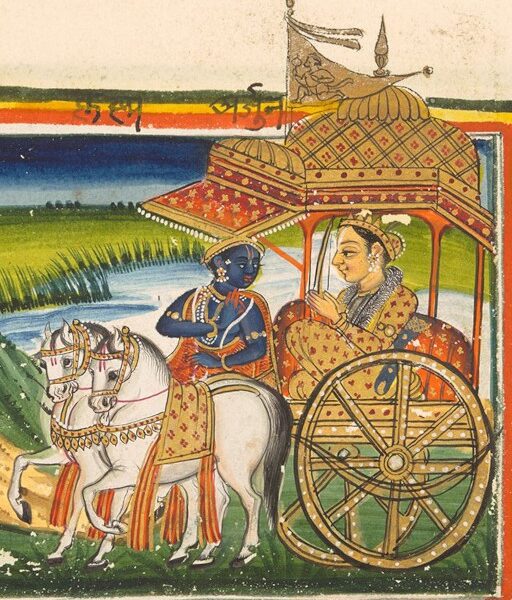
4.3. That very ancient science of the relationship with the Supreme is today told by Me to you, because you are My devotee as well as My friend, and can therefore understand the transcendental mystery of this science.
Why did Lord Kṛṣṇa select Arjuna to receive the knowledge of Gītā, and what is the real service to the cause of the Gītā? There are two classes of men, namely the devotee and the demon. The Lord selected Arjuna as the recipient of this great science, owing to his being a devotee of the Lord. But for the demon it is not possible to understand this great mysterious science.
Because the demon, his point is that they’re going to control and enjoy material energy. It’s possible, it’s doable, it’s desirable, that’s their idea. So Gītā will never actually have any benefit for them, because that’s the first thing that it’s doing, it’s saying, no, you do your work not for your benefit, as a sacrifice to the Supreme. So it’s starting off there. So Arjuna’s coming from the principle that we can enjoy here, so therefore we’ll fight, we’ll win, we’ll enjoy. But he’s understanding we’ll fight, we’ll win, but we won’t enjoy, because there’ll be no one to enjoy with. You know what I’m saying? Does that make sense? You take your new, just got, how do you say, everything designed just the way you wanted it, you take your rolls, you drive it out in the middle of the desert, you get out, walk up to the front, lean on the front there, strike a pose, look around, there’s no one there. Kind of like that. Okay, you get back in your car, and then you drive back. It doesn’t mean anything. No one’s there to notice what’s the meaning. You know what I’m saying? What does it mean to be the emperor of the world if there’s no one there? You know what I’m saying? It’s like some Twilight Zone kind of thing. The world’s been destroyed and you’re the only one left, so technically that means you’re the emperor of the world.
Does that make sense? But the person doesn’t seem to appreciate that situation. Does that make sense? Yeah. So the idea is that they’re going to do it for themselves. They’re not going to do it for someone else. They’ll do it for others because then they’ll get a benefit.
I take care of my friends because then they’ll take care of me. No, you take care of your friends because Krishna says that’s how you deal with friends. So pleased is Krishna. So the point is, Krishna’s pleased, therefore friends take care of you. Not that I arranged, I took care of them, now when I need they’ll take care of me. No, that’s for the demon. That’s the demoniac mentality.
So therefore the Gita won’t have any meaning for them.
Does that make sense? Yeah. The question that was asked earlier on was a subsequent question of an original that was asked in our class, the Bhakti Shastri class, and that is, if the Gita was spoken to Arjuna, how come he’s not in our disciplic succession as the first person, but Brahma is and Narada thereafter?
The point is, he’s speaking to him and there’s so many lines. Krishna also speaks to Brahma. He speaks that he’s spoken to Arjuna.
You know what I’m saying? Krishna also spoke to the four Kumaras. He spoke to, you understand, the Lord Shiva and all that. So it doesn’t necessarily, that has to be our line.
The question was asked in the class was, why is Arjuna not part of the disciplic succession? He is part of the disciplic succession. He’s just not specifically in our line.
The point is, is that you’re connected.
You know what I’m saying? Like in a house, right? You have plugs in the wall and you want to plug in your computer. So is it a different electric line that you plug in on this side of the wall or on that side of the wall?
It doesn’t matter. So the point is, is that the chit potency is moving through the instructions of the acaryas. So why does he have to be in our line? You know what I’m saying? Ramanujacarya, was he bona fide? Did he hear spiritual topic matter? But that goes back to Krishna and he’s not in our line.
You understand? So if there’s four lines, what’s the problem?
Are those four lines chosen by Krishna?
Well, generally, yeah. I mean, sometimes they do it by raffle tickets or occasionally they do it by bingo, like that, yeah.
But generally, Krishna picks them, yeah.
Is that okay? You know what I’m saying? Why does it have to be in our line?
It just has to be in a line that’s bona fide.
I mean, you’re studying Gita. Where are you getting that from? Our line.
Right? Because Gita is a body of knowledge. It’s not just a book. It’s always been there. The Gita personified sits in the court of Lord Brahma. So it means it’s always been there.
In other words, the Gita is the, you could say, the summary study of the Upanishads.
Right? In Puranic form.
The summary study of the Upanishads in sutra form is Vedanta sutra.
What does that make sense? So this is smriti-prastha.
So you have sruti-prastha, smriti-prastha, and jnaya. So that’s by logic. This is smriti.
Okay? The Upanishads are sruti.
Okay? Thank you.
There is a number of editions of this great book of knowledge. Some of them have commentaries by the devotees, and some of them have commentaries by the demons. Commentation by the devotees is real, whereas that of the demons is useless. Arjuna accepts Sri Krsna as the Supreme Personality of Godhead, and any commentary on the Gita following in the footsteps of Arjuna is real devotional service to the cause of this great science. Right? In other words, how he understood it and how he’s applying it, then, if one interprets Gita, then that will be proper. Then it’s in that line. You understand? See, the difficulty is this. Yeah. Okay.
Yes.
The commentaries by the demons, that can be called as interpretations, or… Can be? Because, like, what I see is, especially in India, when we say, hey, you have your common interpretation, we have our own interpretation. That’s because they like to use those words because it puts it on equal ground, but it’s not. You have that which is in parampara, and then you have that which is speculation. Right? Just like, let us say, you have, you know, somebody who is, you know, authorized in the Western academic system. Right? And he is the authority in a particular subject matter. And you also, you know, have a liking to that subject matter, and you’ve studied it yourself, and so you come up with your own paper, your own thesis. Now, can you say to that academic that, well, that’s your opinion, and this is my opinion. You know, so, you know, there’s two, just two different opinions. He’ll say, no, his is authorized and yours is not, because, you know, what’s the connection? So the point is, just because they can read, you know, they have a mouth, that doesn’t mean that they’re qualified for a commentary. It has to be in parampara. It has to be authorized. Right? That means, in other words, if God is speaking this, you’re not coming in a line from God, so therefore, like that. But they’ll say, no, but, you know, it’s Supreme Brahman, and we’re all Brahman. So it’s great. So if you’re Brahman, then you don’t need to talk. So therefore, why is there commentary? Right? The commentary is an external illusory manifestation of words. So therefore, since your opinion is as God, you know, the form is illusory, Arjuna is illusory, the conversation is illusory, then they should stay out of it. Those who think it’s real, they can comment on it. You know what I’m saying? It’s not fair that you say, you know, all talking is nonsense, and then you’re, you know, talking, constantly explaining to people how it’s nonsense. It’s like that. I can’t remember who used to do that. Mayer Baba, one of those guys. He would do like that. You know, going to a teacher, you don’t need to go to a teacher and all that, but he had plenty of disciples that were, you know, committed to following his, you don’t need to go to a teacher. You know, it’s like this. They’re nonsense. Yes.
Did the Bhaktisiddhanta Saraswati or Bhakti Vinod Thakur comment on Bhagavad Gita? Bhakti Vinod Thakur has a commentary on Gita.
I don’t think Bhaktisiddhanta Saraswati commented on it.
Did Srimad Bhagavatam, right? Yes, Bhagavatam, Caitanya Bhagavatam, I think, Caitanya Saraswati, Caitanya Bhagavatam, Srimad Bhagavatam.
In these three verses, In translation, we have the word science. Science of yoga, science of relationship.
So, is it the same thing? Science of yoga means, relationship means the connection. What’s the connection? So, yoga means that connection, but you can also, when you say yoga, that generally would mean application. You know what I’m saying? So, it can either be the science, the science, like that. That would be indicating, specifically, you could say the sambandha-jnana, specifically, and the yoga would be talking more about the abhidheya. But at the same time, it can also be meaning, the science means the whole process.
Like, so sambandha-abhidheya-payojanam.
Because it’s very often mentioned in the, in the book. Yes, yes. Because they’re trying to bring out, it’s the science, rather than just the sentiment. Means, because the point is, is the real science includes the mood, the sentiment. That’s why he’s saying that only these persons can do, because they don’t have the right mood. You have the right mood, you can understand. You don’t have the right mood, you won’t understand. It’s just like, in the classroom, the kids are all playing. So, they won’t learn properly. Why? Because their mood’s not proper. Yes. Right? So, this, that’s, when we open the introduction to the Gita, that’s the first point, the spirit of Gita. Right? If the mood is right, then the, the, the subject matter will have some meaning to you. And you can see, see therefore what you can gain from it. Right? And then, what would be the process to gain that. But unless the mood’s right, then, then the other, the, you won’t be able to actually apply it. So, that’s why the demoniac mentality won’t be able to appreciate the Vedic literature. It means not the Paravidya. It means the Aparavidya, maybe. But, even that, they’re only getting the external. As we saw before, it’s being, that the same knowledge is being given in different ways by different sages. But, the purpose is to serve the Lord. Right? Just like, Gita’s explaining how he’s going to fight on the battlefield.
Right? And be, and, and be a devotee and surrender himself and elevate himself. And we don’t have a problem. He’s not getting into technical detail about how to fight, because Arjuna already knows that. Right? But he’s giving the technical science how to connect that. Okay? Now, if, so, therefore we’ll call this, you know, Bhagavad Gita. Right? Now, if we take that same knowledge and apply it on how to, how to, what’s the mentality and how to connect the activities of our life, depending upon what situation we’re in or what occupation, that’s called varnasrama dharma. Same knowledge. You know what I’m saying? How to, how, how to maintain one’s health, you know, on the physical, mental, intellectual platform in connection with the Lord, that’s called Ayurveda. You know what I’m saying? Okay? So what happens is people just take the external element of it. And so, then they kind of, they miss. You know what I’m saying? So it’s not something different. We’ll make it into something different. You know, because we always, there always has to be these, duality means there has to be a difference. You know, the sameness we’re not seeing. So, the science means that the, the mood and the, the activity, the knowledge, the activity are all perfectly combined.
Right? That’s the real science. Otherwise, if there’s too much of the path, you know, it’s not going to work. Or if it’s too intellectual, it’s not going to work. Or there’s not enough endeavor, it won’t work. You know what I’m saying? So, so it has to be properly balanced.
Like that. That’s why it’s a science. You know? You know, some will say, no, it’s not a science, it’s all about the feeling. But there’s still a science of feelings, nectar of devotion. If you look at, it’s a, it’s a science of how the feelings work.
Right? Because they work in a specific way. From that, you can understand what are the moods and everything else. Right? Because form is always there. Form is the feminine element.
Right? So the science is what is the principal element, what’s the secondary, and what’s their relation. Right? So therefore, that is, you know, that whole thing is the science, but at the same time, that actually operating is yoga.
Is that okay? Yes. So technically, this idea that you have to bring a synthesis about of religion and science is actually is a misnomer. Because metaphysics is actually philosophy.
You know what I’m saying? Like that. So you’re already trying to establish how to understand something and how and does it exist. Right? I mean, that’s their philosophy. Right? That they’re going to use their senses and then through mathematics measure that. You know, that’s just collecting information. That’s not the science. Don’t make that that’s the science. No. It’s what you’re doing with that information. That’s the… You know what I’m saying? So the point is it’s God’s creation, so you’re just analyzing God’s creation. But, you know, since it’s not obvious there must be something subtle. Right? So that means the metaphysics is there. So, previously all these things were they were all part of the thing they were called natural science. But because the natural science could also be followed by those who practice religion. Right? And then there’s always the idea that there’s some direction. Then they have what’s called the pure science. Which is without any direction. Right? And somehow or another that’s more scientific. Right? If it’s random, then it’s scientific. You know, pure science. But if it’s guided and directed in a logical path, that’s not pure science. You understand? So, they’re just like the Mayavadis and everybody else. It’s good up to a certain point and then their philosophy completely falls apart because it’s totally contradictory and not, you know, worthy of someone who claims to be so intelligent.
You know? Because if it’s just a matter of seeing things and that, then the kids go out and they look at things all day. Babies would be the greatest scientists because everything goes in their mouth. It’s all checked. Everything. You know, here’s this nice thing, you know, check it out. goes in the mouth. You know, everything goes in the mouth. you know, then they’re the greatest scientists. They’re trying to know the world, you know, get in touch with their surroundings, you know, stuff like that. But it won’t be because what are they doing with the information? So, what you do with the information, where’s the science of that? That they just make up.
But even that, how do you define psychology?
You know what I’m saying? The whole point is, is how do you interpret that, you know, because the guy did this then that means, you know, he was upset with his mother, you know, because she didn’t do this for him. You know what I’m saying? That means there’s some value system.
You know what I’m saying? So, they’re interpreting.
But, the point is, is they, to do what they’re doing, they accept a certain amount of interpretation. You know, it’s just like, you know, you buy something, you know, they have these, what do you call them? You buy bulk stuff, right? You know, the company is buying, you know, 200 tons of this particular, you know, natural ingredient like that. And so, it’s allowed, you know, so many bugs per ton, you know, like that. It’s just, you know, everyone is just, it’s just accepted. You know? And they’ll say, this is, you know, this is pure. If it has more bugs than that, then it’s not pure.
You know? So, it’s like that. It’s just, the science is, there’s a certain amount of subjectivity, right? And that is, otherwise, they can’t function.
You know, they’d be just like the babies, you know, just experiencing. So, there’s a certain amount of subjectivity, but, because they all accept that, then it’s science.
You understand? That’s all.
Yeah, so, so, therefore, like, the demoniacs, the commentators, then they have their own basic theories. And so, they’ll all accept, okay, you have your commentary, we have ours, and like this. But, for us, it’s not, it’s, we have yours, you have ours. It’s not two different things. It’s, there’s, there’s God’s opinion, there’s God’s direction, what it’s meant for. That’s why you say, as it is. And these others, they’re speculations.
You know? You could say, that’s not fair, but the point is, it’s from God’s perspective, you know, to kind of, like, argue with that.
Yeah, but I don’t understand because I’m born again materialist. Born again materialist.
Yeah.
Yeah. Just as fanatic. Yeah, yeah. Yeah.
Okay, lesson twenty-three. Okay, now we’re giving our reasons. You know, why he’s coming and only he or his devotees can explain. The person, his descent or so-called birth is different from that of any ordinary beings. Four-five. The Personality of God has said, many, many births, both you and I have passed. I can remember all of them, but you cannot, O subduer of the enemy.
So, what is the difference between the part and parcel of the living entity of the Lord? Devotees like Arjuna are constant companions of the Lord and whenever the Lord incarnates, the associate devotees also incarnate in order to serve the Lord in different capacities. Arjuna is one of these devotees and in this verse it is understood that some millions of years ago when Lord Krishna spoke the Gita to the sun-god Vivasvan, Arjuna in a different capacity was also present.
But the difference between the Lord and Arjuna is the Lord remembered the incident whereas Arjuna could not remember. That is the difference between the part and parcel of the living entity and the Supreme Lord. Because Krishna is all-knowing and all, you know, complete consciousness, so he knows all these things. But for him it’s the interaction with the devotees that’s nice. But according to how the devotee looks at him, that’s how the Lord can reciprocate. So it’s not important that the devotee remembers.
Right? Because if he remembers, you know, then it might become repetitive.
A few remember. Because they, I mean, a few means, yeah, some are, they remember not their own, but like you see Jambavan. Then he remembers because he’s Chiranjeeva, so he lives as long as Brahma does. So that means every Treta Yuga Lord Ramachandra comes and performs his pastimes. So that’s quite a few pastimes he’s been involved in, you know, thousands of them. So then he’s inspired because the Lord each time makes a variation.
So then he’s sitting there telling all the, you know, the monkey army, wow, last, one time he did like this and another time like that and now he’s doing like this and, you know, like this is going on about, you know, how they built the bridge like that. Does that make sense? So the Lord will create that variety because he’s unlimited. So if the devotee is not remembering, then it’s, it’s, he’ll, it’s some new, you know, he’s, he’s small like that. The internal supra-sakti is as unlimited as the Lord. So therefore as much variety that he appreciates then the supra-sakti can generate. So in the Jivas is following in the line of the supra-sakti then he can take part in that unlimited variety and manifestation.
Although Arjuna is addressed herein as the mighty hero who could subdue the enemies, he is unable to recall what happened in his various past births. Therefore, a living entity, however great he may be in the material estimation, can never equal the Supreme Lord. Anyone who is a constant companion of the Lord is certainly a liberated person. But he cannot be equal to the Lord. So, on the platform of being the soul, he’s minute, the Lord’s unlimited, so he’s not the same. As a great personality, you know, subduer of these enemies, so he’s conquered basically everybody who’s fought in the universe. And so, but still he’s not equal. Right? Like that. He’s a constant companion, he’s a liberated person, still he’s not equal. You know, so there’s always that difference. Right? Because if there’s no difference, where’s the relationship? Rasa. Right? Does that make sense? The, the, the taste is in the difference. The glory is in the difference.
Isn’t that the French saying?
No? The glory is in the difference. The victory is in the difference.
Ah, so, so you’re not the Lord then.
No, he’s French.
Ah, yes. Maybe that’s it. OK. We also note herein that a living entity forgets everything due to his change of body. But the Lord remembers because he does not not change his satchitananda body. Right? Because he’s the same person, so he’s not changing. Right? He’ll change the form he takes, but it’s not change, actually change the body. So for him, it appears as birth, but it’s not actually birth. That’s why he said so-called birth.
But the advaita, which means there’s no distinction between his body and himself. Everything in relation to him is spirit, whereas the conditioned soul is different from his material body. Right? So it’s dvaita. There’s duality there. But for the Lord, he’s advaita, means there’s no difference between him and his body. That doesn’t mean he doesn’t have a body and have qualities. The difficulty is that we will take it that advaita means there is no distinction. No, advaita just means there’s no difference.
And everything in relation to him is spirit. So he is, it’s all spirit to him.
And because the Lord’s body and self are identical, his position is always different from that of the ordinary living entity, even when he descends to the material platform. So ordinary means he’s, in the material world, he’s a body. That’s ordinary. Right?
So the Lord, when he’s dealing with the material platform, but he’s dealing with his inferior energy, which is also spirit. Right? And so the point, what material world is because the living entity thinks that it’s separate from the Lord. So there’s an illusion there. But the illusion is on the living entity, not on the Lord. Right? Does that make sense? It’s like the psychiatrist, he goes into the insane asylum and he moves about. But that doesn’t make him insane.
Right? It means that to the inmates, he’s just another person there. Right? You know. But the point is that he’s not affected by their illusion. Like that. At least that’s the theory.
I think that’s the greatest, the most suicides in any profession or in the psychology profession. You know. So, the, the, yeah. Maharaj Joshi’s going to say about like, you know, the association. But that’s another thing because they’re not the Lord. But the point is that the Lord, he’s moving here as we’re in illusion. He’s not. But the material energy’s the same thing. You know, it’s just like you’re walking down the hallway and it’s a hallway, you know, and it’s pretty blank and boring. But to one of the other inmates, it’s, you know, something, you know, the Amazon jungle or, you know, it’s Waterloo, right? Like that. You know, stuff like that.
Right? Yes. The previous kind of pastimes, like the Lord has his pastimes in every yoga almost the same, just some. It’s generally the same. Right? Well, it’s just like, means if you look at it, basically your schedule every day is the same. But at the same time there’s a difference. Yeah. Maybe it’s boring.
No, but with us, it’s the modes of nature are doing it. So, therefore, it is boring. It’s meant to be boring.
You know what I’m saying? It means the man does what he does every day. Right? And he’s technically not bored. Right? Does that make sense? The lady, she makes the variety. No? Now, let’s say she doesn’t want to make the variety. Why wouldn’t she want to make the variety?
Hmm? Not inspired. And so, what does that mean for those around her?
No variety. But is it just by chance that they experience no variety? Or is it totally and completely and absolutely down to the last detail planned? Yes. So, and why would that be? Because they’ve been a good boy or not? No. Okay. So, the living entity in the material world is not being the good boy. Right? And so, therefore, then Maya arranges that it will be boring.
And just when they’re about to give up, then she gives a little variety. And then, then, then, the new one’s inspired again.
Does that make sense? Hmm?
Here.
When the living entity is changing the gross body, the subtle body stays. Yes. Then, then, why we are forgetting? But, what does Krishna say He is in relationship to memory. And His Yeah, so that’s because Paramatma deals with that.
So it’s not that the point is this, he doesn’t forget, right? And it appears Maya doesn’t forget either. That was last life, forget about that one. Oh, I’m sorry.
But why always a Mack truck, okay, when a Volvo, okay, I don’t know. You understand? So it’s, yeah, because you’ve always wanted these things, and even if you don’t remember, the Lord remembers, therefore you get these things. You know what I’m saying? It’s just like the parent still has the idea to take the teenager to that, how you say, that ice cream place that they always used to go to, and the teenager, why would we go there? No, but it was their favorite place. Come on, you know what I’m saying? Because they forget. The parent doesn’t.
Okay, verse six. Although I am unborn and my transcendental body never deteriorates, and although I am the Lord of all living entities, I still appear in every millennium in my original transcendental form. Explain how the Lord remains transcendental in spite of being in the material world. Lord has spoken about the peculiarity of His birth. Although He may appear like an ordinary person, He remembers everything of His many, many past, quote-unquote, births. Whereas a common man cannot remember what he has done even a few hours before. The Lord says that He appears in His own body. He does not change His body as the common living entity changes from one body to another. The conditioned soul may have one kind of body in the present birth, but He has a different body in the next birth. In the material world, the living entity has no fixed body, but transmigrates from one body to another. The Lord, however, does not do so. Whenever He appears, He does so in the same original body, by His internal potency.
He appears exactly in His eternal body, uncontaminated by this material world. Although He appears in the same transcendental body and is Lord of the universe, it still appears that He takes His birth like an ordinary living entity. And although His body does not deteriorate like a material body, it still appears that Lord Kṛṣṇa grows from childhood to boyhood and from boyhood to youth. But astoundingly, He never ages beyond youth. So it’s only up to that point.
At the time of the Battle of Kuruksetra, He had many grandchildren at home. Or in other words, He had sufficiently aged by material calculations.
Still, He looked just like a young man, twenty or twenty-five years old. We never see a picture of Kṛṣṇa in old age because He never grows old like us. Although He is the oldest person in the whole creation, past, present and future, neither His body nor His intelligence ever deteriorates or changes. Therefore it is clear that in spite of His being in the material world, He is the same unborn, eternal form of bliss and knowledge. Changelessness is His… changeless in His transcendental body and intelligence. So what form He wants to take, that might change. But He doesn’t…
but He Himself is still the same person. It’s not like us, we actually completely change. And the facilities we have, what kind of, you know…
Yeah, our abilities, what we can do, anything, what situation we’re in, the social, it’s all created from our previous activities. But for the Lord, then, He just comes in His own form. So His internal potency creates, you know, what will be the uniqueness of that particular manifestation.
Yes.
Because there are certain associates. And so if that’s the kind of thing that… I mean, it’s like this. They’re equals as friends, right? You have… you have… you have those… you have equals… you have friends who are older, friends who are younger, friends who are equals, right? So now, how will they be equals if, you know, Krishna… Arjuna looks like he’s 125 and Krishna looks like he’s 25, you know, it would be a bit of a… You know what I’m saying? You know, otherwise, when they come into assembly, they’re either going to turn to Arjuna and go, Hey, who’s the kid? You know? Or they’re going to turn to Arjuna, you know, how you say, you know, Krishna and go, Hey, who’s the rascal? You know, like that. You know what I’m saying? It’s always going to be a problem, but they look the same. You know, so the queens will look the same in all times.
Suryasena looks a bit older. Yeah, Bhishma does. You know, like that. But you also have to remember, in that age, that they all lived a thousand years. That would be standard.
Right? No, they live a thousand. Kali, you live a hundred.
Yeah, yeah. But it’s still a thousand of our years. So then, you know, it’ll take… you could say it takes a little longer. You know, they’ll be in that position for longer. You know, it’s the old age that’ll come, but later. So the middle section becomes a little longer. But then it’s not a valid point about his being 125, and he’s still not looking old if they live for one thousand. It means he’s pretty young. It’s not astonishing.
Yeah, but sometimes everybody else has a beard and all that, so I guess they just have that for longer.
So then one could say, you know, is that an advantage, right? You know, instead of having to shave for 50 years, you have to shave for, you know, 900 years. You know, like that.
Imagine if you grow, like, in Kali Yuga, and then when you turn 100, you just keep living for 900 years. Yeah, we didn’t say at which point it continues from, you know, because it says maintains for a while.
I do realize that we tend to project. Yes. So here we are in Kali Yuga, and we’re living it for lucky, you know, up to 100.
And I am starting to realize something Prabhupada said in class one day, you know, in old age there’s so many complaints. And I was very, very surprised when I realized that Arjuna doesn’t go back to the spiritual world. I actually felt, like, sorry for him, or felt like it was unfair that he has to stay here. But in previous ages, they didn’t have to, like, suffer so much emotionally like we do in this Kali Yuga. So, like, Arjuna, he gets old and he has to die. That doesn’t seem like fun. But he’s not affected as, like, we are probably affected? No, but he left when, you know, after Krishna left. They all left at that point. See, they’re eternal associates, so then they also are the same kind of thing. Because Arjuna, that manifestation is only within the material world. When Krishna performs his pastimes here, Arjuna is one of those eternal associates that’s always with him. Like that. So I’m thinking that as Jiva, he is always eternally in the material world. Yes. Yeah, yeah. That’s his position.
But he’s always with the Lord, so what’s the problem? I mean, we’re thinking here, as you know, that Krishna and, you know, Dvaraka and that, but that’s, Arjuna’s there. Well, I mean, he was, you know, he lost his kingdom, he had to live in the forest for a while. But that’s only if you’re attached to it’s a problem. You’re not attached to it. I take this rock here, pick it up, throw it in the air. Is it a problem? No.
You know what I’m saying? I’m projecting it. Yeah, because we’re attached, therefore it’s a problem. You’re not attached, it doesn’t matter. People all over the planet getting old and we just don’t care. When we get old, then there’s a problem.
So you can see the principle is attachment.
You’re not attached, it doesn’t bother me. But as we see, as long as the Lord stays, then the associates stay. When he goes, they go. Right? Because then they have a pastime somewhere else.
Right? So, you know, Krishna left, Arjuna went back to Dvaraka, you know, mentioned with the Yudhisthira, and then they all left for the Himalayas. So it all happened. Yeah, but then they went up there and got old and had to suffer the cold and, you know, whatever. No, no, from there they just went to the heavens and planets. It’s immediate. When they’re walking up through there, then they’re falling off the mountain and they’ll go. Falling off the mountain and leaving their body? Dying?
It’s again, if you’re attached, it’s just like this. Even though we’re saying it’s an old body, why would you be attached to it? Because you’ll hurt when you fall. You’re an old, old body. You know, it means now if you were 16 years old and just at your sweet 16 and all that, somebody put a bomb in the cave, now you might have something to lament about. You know, like that. You understand? But, you know, that’s Krishna’s point to Arjuna, is that Drona, I mean, Drona and Bhishma are old, so they’ll get young bodies, so that’s a good thing.
Well, the interim is like it hurts. It only hurts if you identify with the body and you think about the body. If you think about Krishna, then it doesn’t hurt.
So we hear. I mean, you see it every day in life. Like we gave the example the other day. You know, a fire starts in the house and the mother’s out in the front yard, you know, gossiping with her friends, and even though it’s a dangerous thing, she’ll run in the house to get the kids, she won’t notice the fire. Like that.
So it’s just a matter of focus.
Does that work? Yes, matter of focus.
They’re focused. It’s not a problem. It’s hard for me to understand how they were so focused. They’re gambling away their kingdom and then they’re gambling away their life, and, you know, like, they’re not attached.
You have to be not attached to gamble away your wife, no?
The point is, is they’re attached to Krishna. So if everybody just sits around and stands there, like, you know, on the Battle of Kurukshetra when the universal form was there and all, you know, God’s so great and all this and that, you know, and in the background, you know, very Requiem is playing, you know, when God walks in, you know, stuff like that. Then it would be a, it wouldn’t be very fun. Well, from my values, it seems if they were so attached to Krishna, they wouldn’t be there gambling away. But what would they be doing?
What should they be doing? If they’re the perfect devotees, what should they be doing? They’re not gambling. So what should they be doing instead?
Okay, well, at the Rajasuya sacrifice, Yudhisthira Maharaj arranged that 100,000 qualified brahmanas would sit down at one time and be thanked.
And then when that group finished, and they were, you know, when that group finished, so then they would make arrangements for the next group, they would play the drum. You could hear that drum playing all constantly all day.
So when he, at Rajasuya sacrifice, you could understand, he was feeding millions of brahmanas.
Because we’re putting it that morality has a real sincere meaning.
It has substance. And it’s the real cause of devotional improvement or human improvement. But it’s not. It’s attached to Krishna. The gambling’s an illusion.
It’s not actually there.
You know what I’m saying? But we’re saying the material world’s real. But it doesn’t have any real meaning. It’s only real meaning is this connection to Krishna.
Right?
A challenge, right? Because otherwise then how will you take it that your king, you know, is qualified? He’s a man.
You know, he can’t handle, you know, some dice or you know what.
Well, wouldn’t it be considered stupid to manage a kingdom? You have to sit there all day with spies. You have to deal with your court all day. This one took that. He left his money with this guy. Now he doesn’t want to give it back. Or he left his money with that. But the other guy borrowed it to buy for something else. And now if he wants it back, it’s not there. That’s who has to deal with all that. Like that. And that’s one law. There’s, like that, there’s 18. So isn’t that stupid?
You know, he could go to the forest and sit there in one kopan and not worry about it. He gets married, he has to have unlimited saris and bangles and this and that and fancy food. Now isn’t that stupid?
You know what I’m saying?
You understand, if you get into it, material life is stupid. Everything about it is stupid. So the only reason it has any value is because of its connection to Krishna.
So therefore, you know, all the nice arrangements and everything that the residents of Vrindavan made for Krishna, it’s valuable because it’s connected to Krishna for his pleasure. Now you reflect that into the material world. And so what we’re saying is that, you know, when Krishna, you know, does certain, you know, plays, you know, he plays games that have dice with the gopis in the spiritual world, that’s cool. But when that’s reflected in the material world, that’s nonsense. You know, and Mother Dashoda, she cooks for Krishna, then that’s cool. And when it’s reflected here, that’s also cool.
So we’re just making our judgments on the reflections. You know, we have this whole huge wall here of reflections. Okay, this reflection is good, that one’s not good. That one’s over here is good, that one’s not.
You understand? That’s what we’re doing. The point is, how else do you want him to lose his, means like this. Okay, we have Duryodhana, and we have Yudhisthira, right? And Duryodhana is, you know, you know, a bit, you know, not so Krishna conscious and everything, you know, like that. He’s a bit, but he’s a good guy, right? And he does all his duties. So when the Pandavas and all that come, he accepts them, you know, wholeheartedly as his cousins. And then they all grow up together. And Yudhisthira is the oldest, so naturally he’s the king, and all that, like that. You know, with time somehow or another, you know, some program or something, you know, let’s slip that, you know, Karna actually is the oldest. And so then he becomes made the king, you know, like that. And everything goes on nicely, and then they all, you know, Dhritarashtra retires to the forest, because he’s old and everything, and then Yudhisthira and all that, then they carry on like that. And then their sons, they have five sons, and then, you know, the oldest of them, Yudhisthira’s son, becomes the king. And then, you know, everything goes on, you know. And Krsna’s there in Vrndavana, and, you know, everything’s great. And, you know, Kamsa’s, you know, really likes his nephew and everything. And, you know, everything’s really good, you know.
Great, no? Perfect. And not only that, because they’re very wealthy, the emperors of the world, they do lots of prasadas.
It used to be that, in like former ages, that everybody was happy and everything was going on. And also, as far as Duryodhana, Balarama wanted Subhadra married Duryodhana.
Yeah. So. That’s an important so.
So. Such a bad guy, if Balarama didn’t mind him. It means he’d be a fine husband. It doesn’t mean he’s a great, it doesn’t mean he’s a devotee.
See, the thing is, is you’re combining that good material qualities are automatically devotional.
This is the weakness.
That’s the point, is it’s only because it’s connected to Krsna that it’s useful.
Right? And Krsna, things that are connected to Him, since connecting things to Him is what’s actually the purpose of life, He, as a person, has certain things that He likes connected to Him. Right? You’re going to connect food to Him. He has certain food He likes. He has clothes. He has what He likes. So that’s why it has some meaning. But you’re giving it meaning, even though it may not be connected to Him.
Do you understand?
Yes. So this is where we have, that’s where we’re getting into that analyzation.
But four is that you have to be able to define what actually is devotional service and what’s not. Then because of this, devotees are falling prey to this and their presentation, no, we have to be good, nice people. And that will impress everyone and then everybody will become a devotee. But it’s not working.
The more you use that, the less people are taking interest in the society.
Because if they want to be good and nice, we don’t talk about it that much and we’re not that good and nice. You want to be good and nice, you know, go find some, you know, somebody like a, you know, the JW’s going, you know, door to door or something like that. We won’t even do that because it’s not politically correct. But they go door to door. Everybody goes door to door, you know. You know, we’re saying, no, go out on the street, not good. You know, the Mormons go out on the street. They’re the fastest growing religion in the world, right? And they do what we say is no one will accept.
You know what I’m saying? So this is the problem is that we come up with these ideas and what is good?
You know what I’m saying? Good will be our definition from the particular social strata that we grew up in. It won’t be above it. It won’t be below it. You know what I’m saying? The person, the parent grew up and, you know, he used to, you know, smoke marijuana. So if his kid’s smoking marijuana, it’s not good, but, you know, it’s not the end of the world. But if he shoots heroin, that’s it. You know, he’s got a problem. But if the father grew up shooting heroin, the kid’s shooting heroin, ooh, now he’s got a real serious problem. You know, we’ll have to work on this.
No?
You didn’t understand?
In other words, what the parent went through before joining Krishna consciousness, for them that was normal life. And then they became a devotee. So if, you know, they were smoking dope, then they became a devotee. So if the kid grows up and he starts smoking dope, it’s not the end of the world. Because I was smoking dope, and then I became a devotee. So he can still become a devotee. But I didn’t shoot heroin, so therefore if he got into heroin, now he’s really off track. You understand? But I’m saying now if the parent had been, you know, using heroin, then, you know, he would say, oh, this is a very difficult situation. He won’t say that you’re completely off the rails. You understand? In other words, it’s going to go by your conditioned background. That’s the weakness. And then if we say that’s Krishna consciousness, no. That’s what you have to engage in Krishna service because of your position. But to say the rest of the world’s got to do that, that’s a problem. If it’s like we chant Hare Krishna, we take prasadam, you’re like that, and therefore the rest of the world’s got to do that, that’s fine. But if it’s, you know, we’re middle class and we have these certain kind of middle class values, and therefore the rest of the world has to have that, that’s the term that Prabhupada would use about these speculative commentators.
Demonic. Yeah. It’s just demonic. It’s atheistic. Because you’re saying it’s good without connection to Krishna. So it’s actually atheistic. Because it only has value and meaning if it’s connected to Krishna. So if the gambler is connected to Krishna, it’s fine. If it’s not connected to Krishna, it’s not fine. So it’s the pastime on how they lose the kingdom. Otherwise, if it’s not unfair, why would the whole world rally behind, you know, Yudhishtira if they were good, or Duryodhana if they were bad? If it was just two persons that had a fight and one won and the other one lost, would the whole world come together?
You know what I’m saying? It’s like America’s out in Iraq and they’re fighting there. How much support do they get? Not so much. But, fighting Afghanistan, there was a lot of support. Why? Because something happened that was unfair. It’s the same guys. You have the same people living out in the desert. Just one has caves and one doesn’t, you know? Like that. And so, why is it one battle the American public thinks is great, one battle they don’t think is very great at all? Propaganda wasn’t strong enough? No, it’s because… Is the world okay to be in Afghanistan? No, but the point is… No, here, wait. Don’t do that. Stick to the point. Is because something was unfair. The 9-11, that would be considered unfair. So, therefore, the whole world rallied behind. No one had a problem with America going to war because it was unfair.
You know what I’m saying? But, there wasn’t anything to really define the unfairness in Iraq. Right? There was an idea that they were, how you say, weapons of mass destruction. But then, when they kind of investigated, they found it wasn’t really there. You know, of course, they’re being, you know, safe than sorry. So, you know, that’s another point. So, that’s not the discussion. What we’re saying is that there wasn’t something clearly unfair about it.
So, therefore, it has no support.
You know what I’m saying?
Does that make sense? I don’t understand. You don’t? Playing with Arjuna and his situation. If the gambling match wasn’t unfair, why would the world rally behind Yudhishthira?
Do you understand? Yeah. See, you’re looking at it just, there’s certain activities that are very nice, and certain activities that are not very nice, and our whole life is going to be based on that. But the thing is, is you’re trying to rally the world. You know what I’m saying? Okay. So, was Krishna’s divine plan, and also the fact that he was a Kshatriya, and that was his duty, and he was doing his duty because he was conscious of Krishna. He was Krishna conscious. Yes. Because Manu doesn’t recommend gambling for the Kshatriyas.
Because the point is, is if you’re challenged to it, but why should you be gambling in the first place? Because the person who challenges can also lose everything. So, it’s not a recommended, a recommended, how do you say, activity.
Well, did I lose something? Krishna told him, okay, do this?
I mean, I understand the thing about, because it happened, then the whole world was behind him, because it was an unfair thing. I mean, ultimately we know that it was Krishna’s plan. Yes. But the point is, is, does he have to tell them for it to happen?
Well, I would get advice.
It’s like this, your, it means, your, your, your father, who is your authority, is inviting you to the gambling match. And it’s not wrong for Kshatriyas to gamble. For you it is, but for them it’s not.
Arjuna, he has a problem with Urvasi.
Right? But Urvasi doesn’t have a problem. Because they say that’s human morality, that’s not our morality.
Does that make sense?
You know, it’s just like, like, swans, they mate for life. Okay? Pigeons don’t. So now should we go out and, you know, start marching around with placards and everything, and about all these, you know, disgusting degraded pigeons that, you know, can’t be, how you say, what do you call it? Anonymous. Yeah. Yeah, like this and that, you know. You understand? So the problem is, is we’re taking what works for us and expecting that everybody else has to do that. That’s the problem.
It’s a natural thing, but that’s why with training we have to know what is our duty, and how we fit into society, and how everybody else does. This is the advantage of Varanashram. But the problem is, is the people who need to understand it technically the most are the ones that are the most opposed to it. Because why? Because then it stops mental speculation on the social platform. This is what you are. This is what you do. This is your social position.
You know what I’m saying? Then it defines what your relationship is. You know, but for this facility that you could do anything, then makes for that the kids absolutely couldn’t care less about their parents. And they don’t care about the teacher. They don’t care about education. All they want is, you know, as much facility as possible to enjoy however they like, and no one should tell them anything. So, and the parents will be thinking, my kid is so different from me. No, the kid is exactly like you. He’s just a little more bold. That’s all. That’s all. He’s exactly the same.
This is the problem. Because it’s not scientific, then everybody’s thinking, oh, what’s going wrong with the society? It’s all, everything’s changing. No, it’s exactly the same way it’s always been.
Like that. Does that make sense? So the difficulty is that we will impose our own values on Krishna consciousness, and that’s speculative.
You know? And then we’ll say, oh, this is bad. But the point is, it’s, there are, that’s why there’s rules. You know what I’m saying? Okay, the eight-year-old kids are in the closet having sex. Is that a problem? Okay. What if they’re 18?
Okay. So, but that means there’s different rules for different people.
Yeah. Yeah. So therefore, if ksatriyas gamble, don’t worry about it.
Like that. But if brahmanas are gambling, or vaisyas or shudras are gambling, then it’s a problem. But we see that ksatriyas can gamble, but it doesn’t mean that the, the, how do you say, the weaknesses of gambling don’t, you know, the troubles that come from gambling, they don’t get. But the point is, if they’re ksatriyas, they’ll work it out.
You know what I’m saying?
It’s just like, let us say you’re, you’re walking around at some, in some unknown area, and you come across an abandoned house. You know, old, run-down, abandoned, you know, old doors and windows and that, jungles growing around it. A brahmana can’t go inside. What he can see, he can deal with that. But if he can’t see, he doesn’t go inside. But a ksatriya can.
Because the brahmana goes inside, there’s a tiger there, the brahmana gets eaten. Not good. Right? The ksatriya goes inside, you know, the tiger jumps, you know, then he kills him. Like that. You know, or if there’s, if there’s dacoits there, then the, you know, the ksatriya, you know, collects them up and, you know, like that. But the brahmana would get into trouble. You understand? So that’s why the Dharma Shastra is there, is there is a nature of a brahmana, but we don’t accept that. You know, just like, okay, brahmanas do this, ksatriyas don’t. But if we say brahmanas, they’ll do, you know, yajnas and this and that, ksatriyas won’t. That’s why now we’re all devotees, we can do anything. You know? You know what I’m saying? So we very whimsically apply the rules and we’ll find that it’s always in line with what we value, you know, you know, from the mundane platform. Always. Does that make sense?
Does that make sense? You know, it means, it means the person who, it’s like this, if they were, you know, an officer in the army, then join Krishna consciousness, they don’t have problems with the concept of violence connected to war. But if they were out there waving their flags and, hell no, we won’t go, when they join Krishna consciousness, they still have a problem that Bhagavad Gita is happening on a battlefield.
You know what I’m saying? It’s just the condition of nature.
Yeah.
So, but the thing is, whatever position we’re in, it doesn’t matter. We take that and we use that to our own advantage in Krishna consciousness. The difficulty is, we don’t apply our position to someone else because everyone’s unique. Everyone’s position is different. The general principle is there, it always applies. But the detail will always be different. You know, like for us, to eat this is not good, but for someone else, then it’s good.
You know what I’m saying? Does that make sense? You know, it’s just like, I think we mentioned this, you know, food in the mode of goodness is fatty.
You know, but we’ll have the idea that no, it can only be healthy if there’s no oil in it at all. If there’s no oil in it at all, one, it’s either you’re sick, or it’s not in the mode of goodness. Because it’ll be too dry, it’s in the mode of passion. Or, you know, it’ll have some other weird thing about it, so it’ll be in the mode of ignorance.
You understand? Yeah, it helps to know this because then we can learn to not pass judgment. That’s the whole, that’s why the devotee doesn’t have that difficulty with passing judgment because he knows the position, but he knows the standard. He knows if it’s right or wrong according to the standard, but he’s not passing judgment that that person is in that position. No, it’s from that position, now what are they going to do about being Krishna conscious?
Does that make sense?
This is a case of, I already know the answer from last discussion, but is it all right to smoke?
Okay, okay. But, let’s say, as a general principle, then smoking wouldn’t be recommended, right? Because we know the standard. Okay? Although, you could smoke mauling, which is good for your lungs. What’s mauling? It’s an herb, it’s an herb. Yeah, but how many puffs and which way you’re taking it? There’s rules, you know? If you’re smoking herbs, you can only take three puffs. You take more than that, it’s bad for you. You can only take it in through the mouth, blow it out the mouth. You can’t blow it out through the nose. So, in other words, you can’t do that, you know, that one, I mean, at least in where we grew up, we called it French smoking, where you take a puff and fill the mouth, and then you let it out and let it go into the nose. Like that. Then you get more of the flavors and everything. These are all that ruin the sinuses. So, Ayurveda gives rules on smoking herbs, and herb doesn’t mean marijuana.
You understand? So, even there, there’s rules.
So, the point is, Prabhupada finds one devotee, he’s doing this, he’s carving a deity, and he has, and Prabhupada walked in unexpectedly, and the devotee’s pack of cigarettes is sitting on the head of the deity. Right? And so then Prabhupada, you know, comments about the smoking, so he says, okay, so, therefore, you can smoke two cigarettes a day. One after breakfast, one after lunch. That’s it. And so, so the point is, you get rid of a problem by regulating it. So then the devotee, understanding that picture, and all this and that, and that, you know, that association with Prabhupada, then he gave up the smoking. Right? He didn’t even have to go through the process. You understand? But the point is, it’s regulation. So the smoking is bad, but the point is, it’s the person who’s smoking. Now, what to do about that?
You know what I’m saying? Just saying it’s bad doesn’t work. You have to be able to apply something to the situation so they can move forward from there. You know what I’m saying? But you pointed out it’s bad, so someone who has, you know, is either health conscious, or they’re dutiful, or whatever it may be, and then by hearing that, they just stop. Then that works. You know what I’m saying? But if it doesn’t stop, then you have to figure out how to regulate it.
You know what I’m saying?
Means the actual standards are in dharma-shastra.
You know what I’m saying? Like that.
Is that what you’re saying? So, it’s a very sophisticated system that can accommodate basically four different situations, spiritual situations, and four different occupations.
No Western culture can do that. You know what I’m saying? The kings, they don’t respect the Brahmins, the Vaishyas, or the Shudras. The Vaishyas don’t respect the Shatyas or the Shudras. The Shudras don’t respect the Brahmins, Shatyas, or Vaishyas. Any political system you use from the West, it means one is prominent, all the others can go junk.
Isn’t it? So, Vedic is the only one that can run four at once. It’s not that the devotees, it’s a lower system. It’s so sophisticated, they can’t understand it. But they’re so proud, they can’t admit that they’re not qualified enough to understand how to use it.
Does that make sense? It’s like I bring some very sophisticated machine, and then it’s, oh, we don’t need this, this is not important. No, it’ll do the job ten times better than whatever else you’re using, but we’re not intelligent enough to be able to use it. That’s the problem. So it’s not that Varanashram is lower than this, you know, so-called enlightened middle class, you know, first world idea. It’s just so much more sophisticated. It already includes that. But the problem is it includes it. It’s not the exclusive viewpoint.
You know what I’m saying? So the kid that doesn’t want to be educated, he wants to be out working and making money because his family needs it. No, he has to go to school, you know, like that. So that’s the whole point is that it’s very arbitrary.
You know what I’m saying? It’s according to our own value systems.
Does that make sense? So the idea is know who you are, then you can know who others are. Then you can have the interaction. But if you can’t know who you are, how do you know who anybody else is? I mean, now, I mean, we learn by growing up, which I can just say you learn values. Yes, but you have to be, but someone who knows what the standard is has to be teaching it. Because otherwise, then from one family to the next, the standards are different. You know, it’s just like the kids that go around. You know, the one family that, you know, you wash the dishes and everything, then you sit down to watch TV. The other ones, they all watch TV and then, you know, somebody has to do it afterwards. Someone else, they happen the next day. Someone else, the maid does it so you don’t have to worry about it. You know, so it’s like, you know, does that make sense? So it doesn’t, it’s each house will have their very own, you know, which is fine, but the point is, is the basis on which they’re making that individual life choices, there’s no common standard. That’s why there’s no community.
Community means the fundaments on which you make the decisions for your life choices are common. Not that what you do is common. You know what I’m saying? But the Westerners can get it together if they have a club where everybody does the same thing. Okay, everybody skis. Right? No, but what they do other than that is completely different. You know? Or, you know, they play pool or, you know, they’re in a book club or, you know, so there’s something, an external activity that’s common. Therefore, they can say we have community here. Right? But the Vedic concept is no, the principles are what’s common. But the detail of application is different.
You know what I’m saying? Could you use your example when dishes get done? Right, they get done. Or you order takeout and you don’t have to worry about it. But still someone has to take out the garbage. So it’s still a problem. Or unless you go and always eat somewhere else. But then you need money. Or you have to have a lot of friends. I do remember this one situation.
I remember reading or hearing where there was a Vaishnav and actually his occupation was preparing betel nut and he only had one cup. And so all day he would, I think it was betel nut or whatever, he had to mix, his occupation was making some intoxicant. And then at the end of the day he only had the one cup. So then he would clean it and he would use the cup to offer to his deity. Interesting.
See the betel nut is an intoxicant for us, not for, you know, those on a higher platform.
But the point is, is betel nut is offered to the deities. We don’t eat it. Yeah. No, he was offering, it was his occupation to sell it to people. Yeah. You heard this? No, but the point is, is nobody sticks their dirty finger in it. You know what I’m saying? The problem is not that it’s betel nut, the problem is that it’s his utensil that he’s using for the deity. Because if he has a business, he’s a grihasta. So a grihasta makes a difference between his utensils and the deity’s utensils. But a renunciate doesn’t have to. Renunciate has a water pot, the water pot’s for everything. It’s also for the deity.
You know what I’m saying? So that’s the problem. It’s not, it’s not what’s in the pot.
You know what I’m saying? Because betel nut is offered to the deities, so it’s not that that’s a problem. You know, if he had been, you know.
But it’s betel nut, but we also don’t know the line. We’re the only Vaishnava line that doesn’t eat betel. The others eat, if they’re grihastas. If they’re renunciates, they don’t. The grihastas, it’s not a problem.
It’s a problem when they spit it, but it’s not a problem.
You understand? Because we’re going for a finer point of, of, of focus that, that it gets in the way.
You understand what I’m saying?
It’s not an intoxicant. It’s an intoxicant for a sadhaka who’s living a renounced life, but it’s not for someone who’s not living a renounced life.
Yes, yes. So it’s just a matter of a cultural thing. Navya has been saying he had been, you know, how you say, he was the guy that would, you know, how you say, prepare the, the heroin for injecting in his thing like that, and, you know, and other things like that, and then using that for the deed. Then you could say, okay, that’s an intoxicant. But the point is this betel is not. What’s going to be in the pot? There’s only going to be two things in the pot. Either the, you know, the ketchu or whatever it is, the red stuff, or lime, the white stuff. That’s all that’s going to be there. And nobody touches it other than him.
You know what I’m saying? So it’s not that the pot will get contaminated. So what I’m saying is the problem, and so even if he was making for the deities, he’d use the same stuff. Right? Generally avoid the lime, like that. You know, but the, but the point is, it’s his pot. That’s the difficulty.
You know what I’m saying? So he’s so poor, he can’t make a distinction in the pot.
You know what I’m saying? Like Kolavesa Sridhara is getting upset that Lord Caitanya is drinking from his water pot. Because in his mind, it should be a separate pot.
So our example is Kolavesa Sridhara, in this case. You know, these other kinds of things. Like that. Otherwise they pull something out of the Purana somewhere, and don’t quite understand it. I’ve heard it from some Hindu guy, who also didn’t quite understand it. And so then it passes down, because I’ve never heard the story before. You know, like that. Because the point is this, why are these stories there?
Why would they be there?
Because what happens when we bump into them?
They illustrate some point, but I’m saying, but these ones, the point they’re illustrating is so, the approach is so different.
What’s happening here? You can use it as a loophole.
That’s, some could use it as a loophole, but it would be still hard to get around, yes. We get distracted. We get distracted, because we’ve got an idea of what is Krishna consciousness. And so these things, the Shastra gives them just to shake us up, so that we know that Krishna consciousness is actually the mood of being Krishna conscious. Right? Not the form. The form is there, because that’s the form that Krishna likes the best. These other forms, it’s not to Krishna’s, you know, that wouldn’t be what Krishna would consider ideal. Right? So the point is this, but if the devotion is there, even if something’s not ideal, it still works.
Does that make sense?
And I think that was part of the point of the story, that he had a devotion. Yes, like that. But the point is, is that he didn’t have something separate to the Lord, so that’s still used. But the point is, is he didn’t just take it as it was and just used it. He would clean it very nicely. You know? You know what I’m saying? Because we’ll consider, okay, he just takes it and rinses it out, because that’s generally what we would do. You know? And only because one’s a, you know, how do you say, trained and educated Westerner, then one would take some, you know, some kind of those mild, you know, scouring agents and scrub it very nicely, but your common person doesn’t do it, and so the savages of India definitely wouldn’t do all those things. But they would probably, you know, clean it with dirt three times before being used, and it would have come out shiny. So it would actually be more cleaned than a Westerner would consider the standard of cleaning. They would say, well, that’s fanatic. You know? But how could he use this? That’s fanatic. You know? You know what I’m saying? So that’s the difficulty, is the speculation doesn’t have any standard.
You know? And one thing is that, you know, you don’t know where you’re going to stand. You could do something and then everybody, you know, takes your side. You could do the same thing and everybody’s against you. It’s just, you know, it’s just, you know, which way the, you know, the wind’s blowing. Right?
Yes?
I would expect so. But even if he doesn’t, I wouldn’t worry about it.
Devaki, you know, about Krishna’s so-called birth, and Devaki is Krishna’s mother, and so that she’s pregnant with Krishna so that she had a transcendental body.
You know what I’m saying?
The point is, it’s arranged by Yogamaya. So whether the detail is or not, then we’d have to look into the commentary of the acaryas. You know what I’m saying? But that’s not, the point is, what makes it so-called birth is he doesn’t actually take birth because he’s the same person as he is. You know what I’m saying? You know, at the party when the lady jumps out of the cake, it’s not a new lady, you know, and then afterwards she doesn’t cry, and I just, you know, my mother’s now spread all over the floor. I pick her back up. Devaki, you know what I’m saying?
Does that make sense? So Yogamaya is arranging so it appears that he takes birth.
Does that work?
Sorry, I was too wild.
Does that make sense?
Because sometimes absurd works better than… I don’t understand.
So we’re, so are we clear on the point then that Krishna’s so-called birth, then he is, his body, transcendental body never deteriorates like that? Okay. 4.9. One who knows the transcendental nature of my appearance and activities does not, upon leaving the body, take his birth again in the material world but attains my eternal abode. Because there’s nothing, Krishna is working under his internal potency. The jiva would be working, the jiva’s from internal potency but is not working under internal potency because they’re trying to enjoy the internal potency. So they’re put under the external potency. Right? But Krishna, as we said before, he’s not under the external potency because it means the internal potency is his. So him trying to, him enjoying the internal potency is normal. He’s not interested in enjoying the external potency. Right? Because he’s not interested in interacting with, on any platform that’s not on the platform of love.
Right? So for him it means towards the devotee, the devotee means it’s towards him. So the non-devotional attitude means the relationship is based not on the interaction with the person but what you’re going to get from the thing, the medium.
Does that make sense?
Let’s say, you sit down with some, invite some friends over, take prasad and all they worry about is the taste of the food. They don’t interact with you. You kind of feel they missed the point. They appreciate the prasad and all that. Nice, but maybe you could stretch it with such great cooking that they don’t even notice that we’re here. It’s so absorbed and stuff like that. But there’s a good chance you wouldn’t be satisfied.
You understand? In other words, the medium is there to assist as the secondary. The primary is the relationship.
Does that make sense? So the living entity has got the idea it’s the medium that’s important. Right? And not only that, it’s for ourselves rather than for the other person. Do you understand? So two things are wrong here. Generally we only take it as one is wrong. Right? Two is wrong. One is who it’s for. The second is what’s primary and what’s secondary.
Just like I said, the person is doing some big project, he’s working really hard, you know, really spending time, always thinking, calling, this, that, but he doesn’t deal necessarily with others well or spend time with his friends or his family or doesn’t necessarily deal with those who are junior to him nicely. Why? Because he thinks the activity itself is the devotional service rather than it’s the medium of the devotional service. Because that’s his nature. That’s why it’s the medium for him. It’s not someone else’s nature. That’s why they’re not doing it.
You know what I’m saying? It’s someone else’s nature to be assisting.
Does that make sense? So it’s the medium. It’s not the devotional service. So we’ll make the mistake and therefore we get distracted by the forms rather than the mood of devotion, you know, as being primary. Does that make sense?
But of course, if one doesn’t have that mood, one starts with the form because that you can see. You can deal with the senses. So you start with that, like the new devotee. You engage him in physical activities. Right? And then with time the heart becomes purified and then they start to appreciate the devotional quality of that activity they’ve been doing.
Does that make sense? So it works out. But one can’t remain on that platform. That make sense? So one, the result is for someone else and two, the relationship with that someone else is more important than the medium you’re using to express that relationship.
Does that make sense?
So, therefore, Krishna doesn’t have a problem with that. It’s always about his devotees and the medium is never more important.
Does that make sense? And for Krishna, the best part, because he only works with the Yogamaya, the medium is the devotee. So for him there isn’t a difference because he is non-dual.
We’re not non-dual.
We are separated energy.
Does that make sense?
Does that make sense?
So if you understand how Krishna, he’s not dealing with material energy, therefore it’s not a matter of the rules of the material energy apply on him. So he can appear to take birth but have nothing to do with maya, nothing to do with this whole process.
Does that make sense? You know, it’s up to him how he wants to arrange it.
Okay, what is the process for attaining liberation? The Lord’s descent from his transcendental abode is already explained in the sixth verse.
One who can understand the truth of the appearance of this personality of Godhead is already liberated from material bondage and therefore he returns to the kingdom of God immediately after quitting his present material body. But he’s already liberated because he understands the nature of Krishna’s activities. And technically the devotee is liberated. It’s just a matter of appreciating that one is.
Does that make sense? One would say, no, no, no, it’s not possible. You’re in the holy dhamma. Where is that?
Material world is the spiritual world. But do we appreciate it?
That’s the point. We’ll be busy, okay, where to stay, where are we going to eat today? And we ate there and we got sick, now where are we going to eat? And then where do we take the water so we get that from here and there? You know, and stuff like that. Does that make sense? It’s getting colder, you know, so got to talk to the guy downstairs, can we get more blankets and this and that, right? But where are you? The spiritual world. So are we appreciating that we’re in the spiritual world? Not necessarily.
Right? Does that make sense? So remember, that’s how we got here, was that same mentality.
Does that make sense? That’s why the medium has to be secondary. And the relationship with Kṛṣṇa and the service to Kṛṣṇa, that mood has to be the primary. Then you have to do what you need. It’s cold, you need more blankets. You have to have proper food, you have to have proper water. But it doesn’t become the primary.
So, oh no, but if I’m sick, I can’t serve Kṛṣṇa. You can serve Kṛṣṇa whether you’re sick or not. You can always remember Kṛṣṇa. So when I’m healthy, then I can do nice service. No, you can do it any time.
Does that make sense? Each has its own special trouble. That’s how it is. Being healthy, you have to go to all the programs. And being sick, you don’t. But being sick, you can’t eat anything, you don’t have any energy, so you can’t do it. You know, each has its own speciality.
Okay.
One who can understand the truth of the appearance of the Personality of Godhead is already liberated from material bondage, and therefore he turns to the Kingdom of God immediately after quitting his present material body. Right? Here’s another thing. He returns to the Kingdom of God immediately after quitting his present material body. And Prabhupāda makes it very clear that basically everybody goes to Gokula, and only very rare someone will go to Goloka. Straight. Right? So what does that mean? That means Gokula is the Kingdom of God.
Right?
Like that.
Does that make sense? Yes. Going to Gokula, does that mean you go to the place where the Lord is performing His pastimes in the world and you don’t have any last remnants? Means you’ve already done all that through meditation. So meditation means in Bhāva-sātana, means meditation in Bhāva-bhakti, you’ve already done that and come to the platform of prema. So that means you already have a position, you have service, you have a family, you have everything. Because if you show up in Goloka, right? And then they go, Oh, you know, where are you from? What are you going to say?
Well, I’m from the Bronx.
We’re from Toya and Toytoy. You know, it’s not going to work. Nobody’s going to buy it. It’s like, where’s that village?
Well, it’s kind of an island, you know. Oh, you mean Govindasthali? No.
Do you understand?
Means you already have the residence, you have your position, you’ve already come to the platform of the love of God. So now, then if one goes directly there, but that’s why it says the rare personality, means it’s possible and there may be those occasionally who do it. But it’s not the standard. The standard is one goes to Gokula and then develops, comes to the platform of love of God, right? And then goes to Goloka. But there’s no difference. Because the same Krishna will be there, the same associates will be there, the same dhamma, the same everything.
We get to Gokula. Let’s just say, history.
Well, we have a vision to see the beauty of it. You’re worried that you’ll get there and you’ll miss the scenery.
You want to know if they have one of those bus tours, you don’t have time.
Yeah.
Yeah, but the point is, why don’t we have the vision?
Which means we are using your own words, but covered by… Right, yes. So we’re covered by Maya. So therefore, we relate to the cover. And when we get to Gokula, we relate to the real Dhamma?
Of course.
So we just see what we are used to seeing.
I got this understanding that we actually never left the spiritual world, and then, when we finally go back, it’s kind of like we just wake up in a dream and we already really have our situation there. Because we have the situation, but we are physically located here.
But the point is, you already have your situation there, just you’re not taking advantage of it because we’re covered by the material illusion. Because this is what we’re identified with.
But you see, the difficulties are mixing two things. You’re mixing consciousness, and you’re mixing time and space with it. Remove the time and space, it works. Try to apply the time and space, you won’t get it, it won’t come out properly.
You know what I’m saying? Because the material world is consciousness.
But at the same time, it does have a location.
So being in the material world means you’re within this part of the cosmic creation.
Yes, that’s all it is. But that’s it. But the point is, you’re saying we never left the spiritual world. You have left the spiritual world because of the consciousness. Because the location is established by consciousness.
So you change the consciousness, you’re in the spiritual world. So Prabhupada’s walking around here, but he’s in the spiritual world. But he’s within the facility afforded by the inferior energy.
You know, so therefore it’s an inconvenience.
We don’t notice it. Like here. I want to take that pen over there. I have to get up and go over there. Because there’s time and space. In the spiritual world, I can see the pen, I can see my hand. I can just close my hand and grab it, right? In the spiritual world you can do that. But it’s not that your arm gets longer like here. It’s just there’s no space. So you can just take it. So that’s an inconvenience.
You know, you have to do anything. You’ve got to get up and move around for the simplest things.
That’s because you’re applying time and space. That’s why it’s a contradiction. That’s what I’m saying.
The point is, it’s there, but are you functioning in it? Do you know who you are? So how… It means unless you appear there, then you’ll be able to use it.
You know what I’m saying?
Yes, you do that, but then there’s also the element of the pastimes.
You know what I’m saying? You’re putting it also into like the mystical, where it’s just a matter of just waking up and it’s right there. It means you’ll wake up, but when you wake up, you’ll be there.
You know what I’m saying? What does it mean by meditation? It means the body’s here, and you’re there.
You know what I’m saying? It’s not that we’re sitting there in Gokul Vrindavan, and we’re asleep in a corner somewhere. Yeah, that’s what I’m saying, is you’re applying time and space. That’s not what that means.
It’s just like this. Now, in the insane asylum, is the doctor in the regular world, or is he in the insane asylum?
And where is the patient? Is he in the insane asylum, or in the regular world?
You understand? So, the point is, if he goes nuts, he’s in the insane asylum, but if one of the patients there comes back to normal, they’re not there anymore. But they’re situated there physically, but they’re not actually there anymore, because the same location can be either.
You know what I’m saying? So, we’re taking it as location. It has its location, but it’s consciousness that actually defines it.
You know what I’m saying? Because the consciousness is there, therefore, you know, the best expression for the psychiatrist is not in this insane asylum. He’ll go out and he’ll be like that, so it’s in a different place. But it’s not that his consciousness is different being in the insane asylum. He’s still the same person, the same values, same relations.
You know what I’m saying? So, you have this simultaneous element of location and of consciousness.
So, it’s the consciousness that defines it, but then to facilitate that consciousness, there’s location.
Yes, so one will be there by meditation, but one is still physically here, or one leaves the body and then one is physically there.
Mars, sometimes the living entity is described to be a spark. A spark. You want to know how big is this spark? Well, sometimes the body has senses because the living entity has senses, so a spark doesn’t bring much differentiation.
Well, because you’re taking it, that’s the analogy, it’s a spark of a fire. But we’re talking about, that’s dead matter. We’re talking about a spark of consciousness.
It means, remember we were discussing the thing about the mind is there, it’s just covered. Intelligence is covered, the senses are covered. It’s the same thing. Just that they’re being applied. Because it’s not the body that is the senses.
Do you understand? It means we’re able to see through the eye, so it affords that facility, but it’s not actually the sense. It’s not seeing. Eyes aren’t seeing.
So seeing is beyond that. So that’s inherent in the living entity. That’s because it’s inherent in the Lord. Is the living entity actually present in their spiritual form within the material body?
No. So, I heard that they, when they come, venture to nature, well, they hang off those spiritual forms, like, you know, these kind of, you know… Yeah, yeah, basically. That’s the example given.
But it doesn’t mean that the soul doesn’t have his inherent forms. Just because he’s in the material body doesn’t mean that that inherent nature is not there.
You know what I’m saying?
See, there’s a principle on these things. As we get into such, you know, exacto blade, you know, cutting detail, but what’s the point? You know what I’m saying? What’s the principle? The principle is you’re conscious, you can take advantage of one’s natural spiritual position, one’s not, one’s covered. And the mechanics of that, we get so much into mechanics that aren’t important. The mechanics that are important is that from false ego then comes the intelligence, from that comes the mind, from that comes the other things. So, you understand? So, this is the real problem.
So, when false ego’s there, that’s when we get entangled. No false ego, we’re not entangled.
Right? And to think we’re God, that’s also false ego.
Right? So, we’re servant of Krishna, you know, that’s real ego. Then all the material covering is gone, though one still has the material body.
You know what I’m saying?
You understand what I’m saying? That’s what we’re trying to get to. So, we’re using these examples to get to that, but instead we get off into the example of, well, how much, you know, like this, you know. Here’s a ten thousand, you know, cut it into a hundred pieces and each one in a hundred pieces, you know. What if one of the pieces is a little smaller than the other? So, are some of the small souls smaller than the other souls? You know what I’m saying? So, these kind of details, they miss the point. Interesting topics, but they’re not exactly in connection with what you’re trying to understand, because what you understand you have to be able to apply. Because it doesn’t matter if you’re one ten thousandth but the hair is a little bigger or smaller than someone else’s. The point is, is you are on the liberated platform, you’re not affected by maya. You’re not liberated, you’re affected by maya. So, the point is, is that it’s not natural for the soul to be affected by maya. So, we have to get over that.
It’s hard though, sometimes, because these topics are very tempting. They are tempting, yes. And we spend a lot of time discussing them.
Moments in attention, you’re like, oh, look at the feet, and it’s like, uh-oh, anything stay on the track? Yes.
So, it means you’re Hungarian? Bulgarian. Bulgarian? Yes. Okay. From the northern part? Yes. Okay. That’s when you raised your hand and used two fingers.
So, what’s from the southern? Huh? Everywhere, no one uses two fingers. They use one over the head, like this or that. There’s nothing there today. Oh, here he is. He does five fingers, but not together. They’re always out. So, it depends on where you’re from. You use different movements.
But the two, then, I was thinking, okay, so they must have all been mud ones before.
Like that. So, we’ll have to end here, because it’s time. But we’re going to continue where we left off at 10.30. Okay.
Thank you.